
Reviewed · STREET ART
East End London Instagrammable Street Art and Graffiti Tour
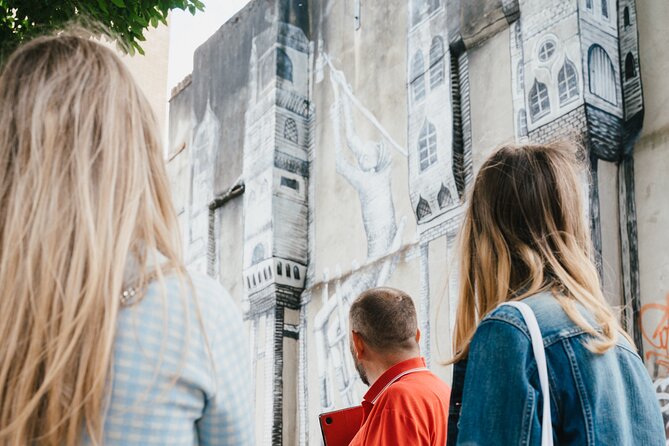
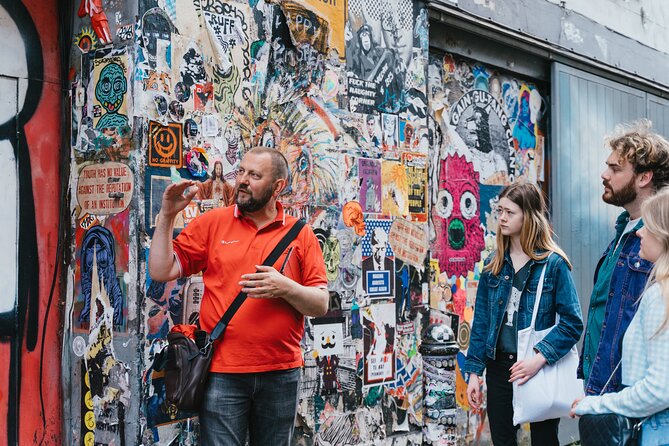
East London’s street art is not confined to one famous wall. It spreads through backyards, side streets, old yards, shopfronts, and entire building faces. This two-hour walking tour leads you from Whitechapel through Brick Lane and Shoreditch, where the best discoveries often appear after you turn a corner or look up.
I like the mix of celebrated names and lesser-known work. You may see Banksy, but you’ll also encounter Phlegm’s thin, strange creatures, ROA’s enormous bird, Stik’s simple figures, and Ben Eine’s bold lettering. I also like that you get to make your own street art, rather than only photograph someone else’s.
The main consideration is pace. There are many stops, and several last only five minutes. If you want long photo sessions or a serious art lecture at every wall, this may feel brisk. The available score is 5 from 16 reviews, with 100% recommending the experience, but the tour remains best for people who enjoy walking, quick discoveries, and an informal look at London’s creative side.
Key points to know before you go
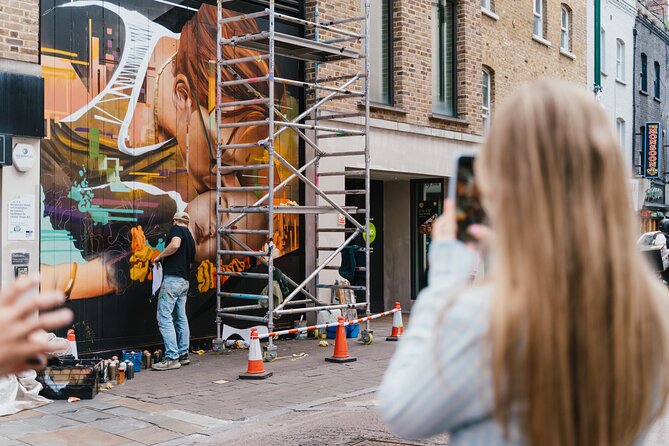
- Banksy is only one part of the story: You’ll see protected Banksy pieces, but the tour gives equal attention to artists such as Stik, ROA, Martin Ron, Otto Schade, and Thierry Noir.
- The route keeps changing: Street art is painted over, altered, or removed, so the exact finish and some stops can shift with the artwork.
- Brick Lane supplies the character: Expect narrow yards, sticker-covered walls, old murals, bold lettering, and quick changes from one style to another.
- You get photo-friendly viewpoints: Several stops are chosen so you can step back, find a better angle, and pose with the work.
- You make your own art: The tour includes an opportunity to leave a small piece of your own in the sticker area at The Seven Stars.
- The practical format is simple: Meet at 11:00 a.m. at 80 Whitechapel High Street and finish near Liverpool Street Station, with a maximum of 20 people.
Why this East London walk feels different from a standard London tour
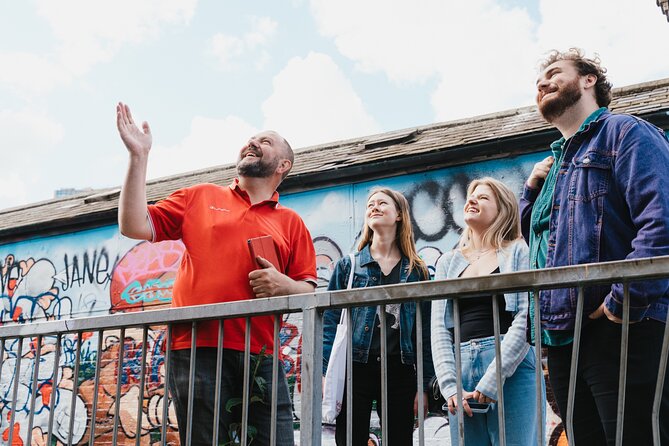
This is not a tour of grand buildings or famous royal landmarks. It shows you a London made from paint, paste-ups, stencils, lettering, and arguments over who gets to use a wall.
The route begins near Whitechapel High Street and moves toward Brick Lane, Shoreditch, and the edge of the City. That change matters. You start in the older, rougher-feeling streets around Brick Lane, then move toward newer buildings, hotels, glass, and metal near Liverpool Street.
Street art also changes quickly. A wall that looks permanent may be covered within days. Allen Gardens is a good example. Its walls are used by graffiti writers who work mainly with letters. Some pieces are so stylized that they are almost impossible to read, yet the shapes and colors work like abstract art. Photograph what you see, because it may not be there for long.
The guide adds the missing context. You learn about the old graffiti wars, local communities, artistic styles, and the difference between a painted mural, a stencil, a sticker, and a letter-based piece. That context turns a pleasant walk into a better way to read the neighborhood.
A few more London trips to weigh up
- London Bike Tour: Landmarks, Secret Gems, Pub Stop & Street Art
★ 5.0 · 943 reviews - Shoreditch Street Art Tour London
★ 5.0 · 481 reviews - The Original London Street Art Tour
★ 5.0 · 303 reviews
Heneage Street begins with art tucked out of sight
The first stop, Heneage Street, sets the tone. Two large works sit away from the main flow of the street, in small backyards where you might otherwise have no reason to look.
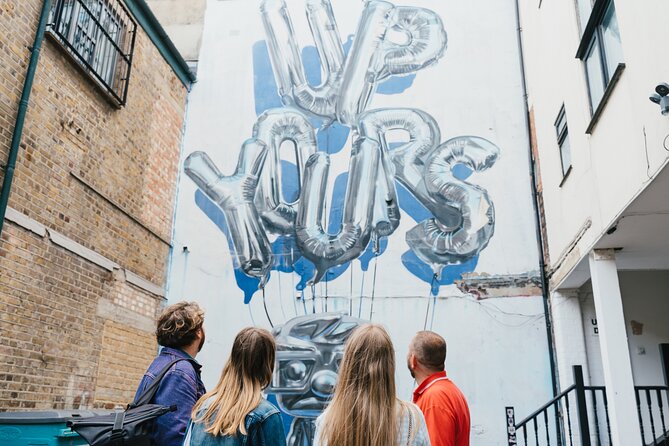
Phlegm’s work features his familiar long, slim creatures walking on stilts above layers of tags. The scale is impressive, but the details reward a closer look. Across the street is a piece by FanakaPan, known for silver helium balloons. The artist takes a familiar animated image and twists it into something more unusual.
Allow a moment to look upward. These are not quick sidewalk decorations. Their position on full walls means you need to study the building as part of the artwork.
Brick Lane rewards a second look
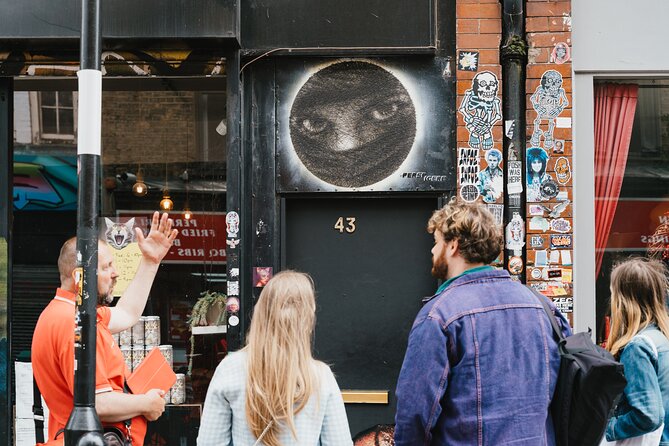
On Brick Lane, the guide points out work by Dan Kitchener and Perspicere. These pieces are painted on doors, so they are smaller than the giant murals. Their size is part of the appeal. You first see them from a distance, then move closer to notice the technique and fine detail.
This is a useful lesson for the whole tour: street art is not always about scale. Some of the most effective work asks you to slow down and find the right viewpoint. Brick Lane gives you enough space to step back, compare angles, and take photographs without treating the wall as a flat backdrop.
At The Seven Stars, the mood becomes more informal. A narrow, dirty-looking yard can seem uninviting at first, but its walls are covered with stickers. Stickers are a distinct art form, with their own styles and layers of history. Here you may get the chance to become the eighth star by leaving a small piece of your own art.
Princelet and Hanbury streets show the area’s human side
Princelet Street brings a stronger community story. Shoreditch has long been a home for refugees and immigrants, and a work by Stik honors the Muslim community and its long connection with the area.
The piece uses a simple form and strong color. It has also been defaced and repainted several times. That repeated repair is part of its meaning. The work is not presented as untouchable art behind a rope. It belongs to the street, and its survival depends partly on people choosing to restore it.
Hanbury Street offers a dense mix of styles. A huge bird by ROA draws you in, but the wall has much more to see: stickers, black-and-white slogans by Wrdsmth, smaller changing works, and a large upside-down man by Martin Ron.
Martin Ron’s figure appears to balance on one hand. Look at how the painting uses the building’s existing features. The work has been in place for around 20 years, which is a very long life for graffiti. That longevity gives it a special place in the neighborhood, even as nearby pieces continue to change.
Same country, a completely different day out:
- Stonehenge, Windsor Castle, and Bath from London
★ 4.5 · 18,662 reviews - London Big Bus Hop-On Hop-Off Tour with Optional River Cruise
★ 3.5 · 10,803 reviews - London Small Group Tour of Historical Pubs
★ 5.0 · 10,422 reviews - Stonehenge, Windsor Castle and Bath with Pub Lunch in Lacock
★ 4.5 · 7,402 reviews
Dray Walk and Allen Gardens explain how walls evolve
On Dray Walk, look for broccoli. Adrian Boswell started placing broccoli images around Brick Lane, and the motif appeared in different colors and forms. The joke grew large enough that part of the street became known as Broccoli Lane. Boswell now has a gallery and sells broccoli images in frames.
It is an amusing stop, but it also shows how street art can create a local visual language. A single repeated idea becomes a marker of place. You may spot realistic broccoli, bright rainbow versions, or a piece attached directly to a wall.
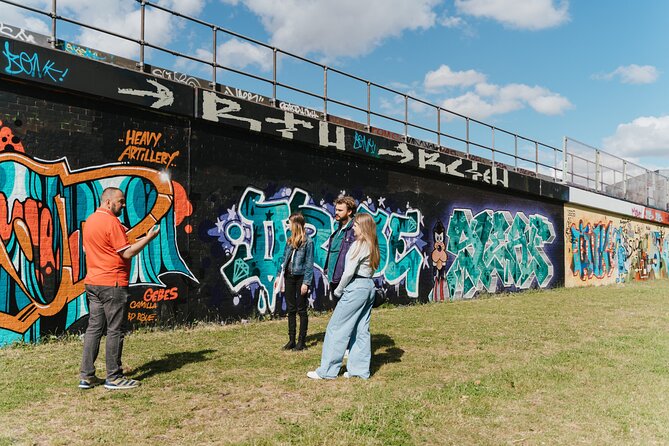
Allen Gardens takes you farther from the main street and into a graffiti park surrounded by painted walls. This is one of the best places to understand how quickly the scene changes. Some work may last only a few days before another artist paints over it.
The lettering here can be hard to decipher. That is intentional. Graffiti writers often push letter shapes until the original word becomes almost unreadable. You do not need to decode every name to appreciate the color, rhythm, and balance of the designs.
Leaving the park, the route continues to Buxton Street. Look up for the number 5, where a collaboration brings several artistic styles together. This stop is brief, but it reinforces an important point: many walls are shared projects, with artists adding sections rather than working alone.
Ebor Street moves from rough walls to modern Shoreditch
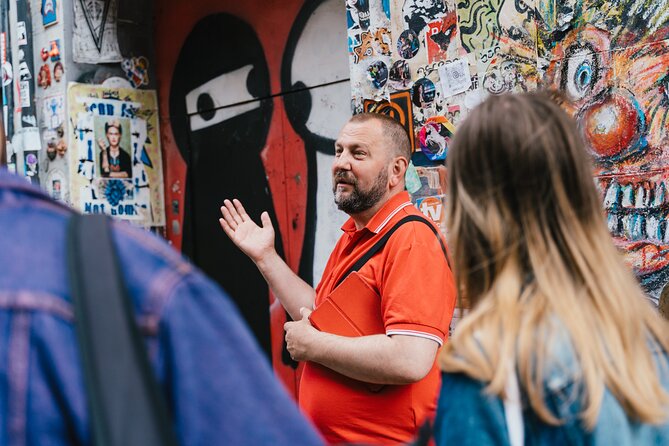
Ebor Street marks a change in mood. The route moves away from Brick Lane’s older, rougher feel toward the trendier and more modern side of Shoreditch. The street still has plenty of graffiti, but the setting feels different.
You may see large painted advertisements alongside smaller pieces. Neon’s pink portraits are especially distinctive. The paint appears light and misty, as if the spray is brushing the surface, yet the faces emerge with clear expressions.
The second Ebor Street stop focuses on Ben Eine. His large letters are easy to read from far away, a sharp contrast to the complicated writing at Allen Gardens. Eine keeps a consistent letter style while changing the fonts from work to work. Some are curved and decorative, some are sharp, and others are square and direct.
I like this pairing because it lets you compare two opposite approaches. One artist makes the viewer work to read the wall. The other gives you the message in large, clear forms. Both depend on shape, spacing, and scale.
Rivington Street brings Banksy into the discussion
No London street art walk would feel complete without Banksy, and Rivington Street provides several old works. The pieces are protected behind glass panels, which creates a useful question rather than a simple photo opportunity.
Does protection preserve street art, or change its character? Is a piece still part of the street once the public has enclosed it? The guide invites discussion about the art market, changing trends, and personal taste. That openness is valuable because street art is not only about identifying famous names.
You will also see work by Otto Schade. One soldier seems to appear in two halves until you move to the corner and see the full image. Schade’s other pieces are easier to recognize, since they look as if they are made from ribbons. The stencil technique gives these works a sense of movement and energy.
Along the next section of Rivington Street, watch for the colorful heads of French artist Thierry Noir. Noir is known for painting bright characters on the Berlin Wall in the 1980s, and his London work carries the same cheerful, graphic quality. These figures provide a welcome lift after the more complicated lettering and serious political questions found elsewhere.
A preserved Banksy wall and Shakespeare add surprise
At art’otel London Hoxton, part of a wall once painted by Banksy has been removed from its original location and installed outside the hotel. It is an unusual form of street art preservation. You do not need to stay at the hotel to see it, since the piece is displayed from the street.
This stop raises a practical issue for anyone interested in urban art: when a wall is moved, what happens to its connection with the place where it was created? The tour treats that question as open for discussion, not as a simple right-or-wrong matter.
At Hewett Street, the subject changes from modern spray paint to William Shakespeare. A statue of Shakespeare sits on a bench marking the grounds of the Curtain Theatre. You can sit beside him for a photo, then look nearby for graffiti depicting Romeo and Juliet.
The location connects theater and street art in a playful way. Shakespeare’s work was first performed in public spaces like this, and the mural brings one of his best-known love stories back into the area.
The final walls lead toward Liverpool Street
New Inn Broadway features one large building covered by several artists. Different colors, methods, and sources of inspiration meet on a single wall, including a small policeman. The result feels like a shared graffiti wallpaper rather than one artist’s statement.
The route then heads toward Shoreditch High Street and the glass-and-metal buildings of the City. This change in scenery gives the tour a natural ending. You have watched the older street-art areas give way to London’s modern financial center.
Before the finish, the guide returns to the graffiti wars. The subject is serious, but the outcome includes some excellent art. This final discussion helps connect the individual murals to the larger question of who controls public space and how a neighborhood decides what belongs on its walls.
The stated finish is within walking distance of Liverpool Street Station. The exact end point can change as the art changes, so plan around reaching the station area rather than a precise doorway.
What the $49 price gets you
At $49 per person, this is not a cheap way to fill two hours in London. It is, however, a reasonable price if you want a guide to locate works that are easy to miss and explain the people, styles, and local disputes behind them.
All admission at the stops is free, so the cost pays for the guided route and the art activity rather than entry tickets. That makes the tour good value for someone who would otherwise spend time searching for murals and finding only the most obvious walls.
The group can include up to 20 people. That is small enough to keep the walk manageable, though it is not a private tour. Since some stops are in narrow yards, a larger group could feel crowded during photo sessions.
The tour is booked an average of 91 days ahead, which suggests you should reserve early if your London dates are fixed. Confirmation arrives at booking, and the experience uses a mobile ticket.
Timing, walking, and who should book
The start time is 11:00 a.m. The walk lasts about two hours and includes many short stops, with several locations receiving only five minutes. You should wear comfortable shoes and expect to be on your feet while moving between streets, yards, and parks.
Most people can participate, and service animals are allowed. The route is near public transportation, beginning at 80 Whitechapel High Street and finishing near Liverpool Street Station.
I would choose this tour if you like photography, contemporary art, local neighborhoods, or the small stories behind ordinary streets. It also suits someone who has already seen London’s major sights and wants a different view of the city.
I would skip it if you want a slow art museum experience, a long Banksy-only tour, or a route with little walking. The Banksy pieces are part of the program, but they are not the whole focus. The real strength is the range of artists and the way the route shows how quickly public art can change.
Free cancellation is available until 24 hours before the start time for a full refund. Changes or cancellations inside that period are not accepted, and the tour requires a minimum number of participants.
Should you book this East London street art tour?
Book it if you want an energetic introduction to Brick Lane and Shoreditch, with plenty of photo stops and enough background to help you understand what you are seeing. The chance to make your own street art adds a hands-on touch, while the Banksy, Stik, ROA, Martin Ron, Ben Eine, and Thierry Noir works give the walk strong variety.
The best reason to go is not one famous wall. It is the route’s view of East London as a place where art is made, altered, protected, argued over, and sometimes painted away. For $49, that is a fair trade if you value local detail more than formal museum presentation.
FAQ
Where does the East End London street art tour start?
The tour starts at 80 Whitechapel High Street, London E1 7QX, UK.
What time does the tour begin?
The stated start time is 11:00 a.m.
How long does the tour last?
The walking tour lasts approximately two hours.
Where does the tour finish?
It finishes within walking distance of Liverpool Street Station. The exact end point may change depending on the street art available at the time.
Is Banksy included on the tour?
Yes. The route includes old Banksy works on Rivington Street and a preserved section of a Banksy-painted wall at art’otel London Hoxton.
Can I make my own street art?
Yes. The tour includes an opportunity to create your own street art, including a chance to leave a small piece in the sticker-covered area at The Seven Stars.
How many people can join the tour?
The maximum group size is 20 people.
Can I cancel for a full refund?
Yes. You can cancel at least 24 hours before the experience start time for a full refund. Cancellations or changes made less than 24 hours before the start time are not accepted.
Just added around London
- Private The Beatles Taxi Tour in London★ 5.0 · 12 reviews
- Dinner and Jazz Cruise on the River Thames★ 4.0 · 140 reviews
- Airport Coach Service from Heathrow to Oxford★ 3.5 · 67 reviews
- The Alfred Hitchcock London Walk with Sandra Shevey★ 5.0 · 15 reviews
- Thames Beachcombing★ 4.5 · 100 reviews
- Tower of London & 30+ London Sights Walking Tour★ 4.5 · 33 reviews
- Ted Lasso London Taxi Tour★ 5.0 · 5 reviews
- Ted Lasso Tour of Richmond with Private Guide★ 5.0 · 25 reviews
Street Art, compared.
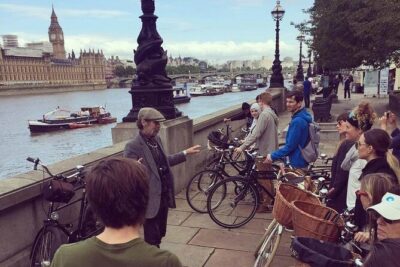
London Bike Tour: Landmarks, Secret Gems, Pub Stop & Street Art
Read our review →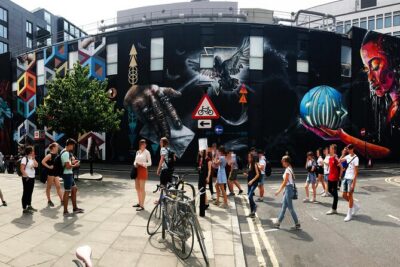
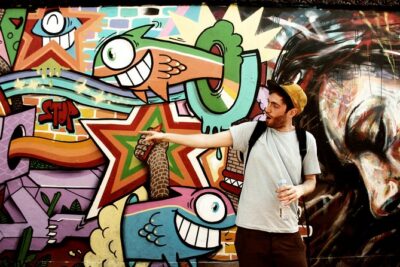
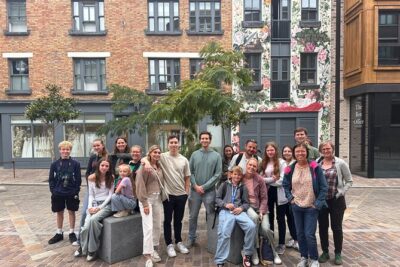
Shoreditch Street Art and Graffiti Tour (Private Group Booking)
Read our review →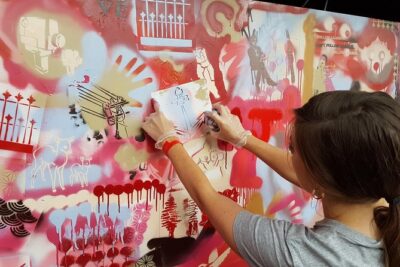
Street Art Tour and Spray Painting Workshop in London
Read our review →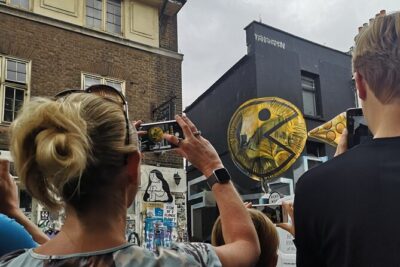
Bristol Street Art: Banksy Exploration Game and Tour
Read our review →
London Street Art Tour of the East End Semi-Private 12ppl Max
Read our review →Browse the lists this tour appears in