
Reviewed · CITY TOURS
Slavery and City of London Walking Tour
London’s slavery story is written into places many people hurry past. This walk connects the Roman wall, the former East India House, a coffee-house site tied to Caribbean sugar, and the Bank of England, showing how trade and power shaped the City.
I like Sam’s lively, well-informed guiding and the way the route links familiar landmarks to lesser-known details. I also like the short format: at about 90 minutes, it gives you a focused history lesson without taking over an entire day.
The main point to check is the finishing location. The details give both Aldgate Underground station and St Paul’s Underground station, so confirm the exact endpoint before setting off. The walk may also run closer to two hours, so leave some breathing room.
Key points to know before booking
- The Roman wall opens the story: See the remains of Londinium and learn that the enslavement of Britons reaches back to Roman Britain.
- The City’s trading institutions take center stage: Former East India Company offices, the Bank of England, and the Royal Africa Company connect slavery to power and finance.
- Jamaica Wine House has an important past: It occupies the site of London’s first coffee house, once linked to the sugar trade and plantations in the West Indies.
- Abolition is part of the route too: Granville Sharp and John Newton help bring the story beyond commerce and exploitation.
- The group is capped at 35: That is large enough for a social outing, but still much smaller than a big bus tour.
- The walk costs $27.43: For a compact, guide-led history tour in central London, the price is reasonable if you want context rather than a list of postcard stops.
A serious London story told through ordinary streets
This is not a standard City of London sightseeing walk with a few dates added on. Its purpose is to show how slavery and colonial trade were tied to institutions you can still see, or at least locate, in the financial heart of the capital.
That approach matters because the City can feel like a wall of offices, churches, banks, and narrow lanes. Without a guide, it is easy to admire the buildings and miss the people, money, and decisions connected to them.
Sam’s method, based on the route and the way he explains it, is to join architecture with oral history and images gathered through his studies. He also brings in Roman and Victorian London, so the walk is not limited to the 18th-century transatlantic trade.
The subject is difficult, but the tone is not simply bleak. The route includes the people and places involved in abolition, creating a fuller account of British history. You will hear about exploitation, but also about resistance, campaigning, and the eventual abolition of the transatlantic slave trade.
A few more London trips to weigh up
- Tour for Muggles The Ultimate Harry Potter Walking Tour in London
★ 5.0 · 4,684 reviews - London Jack The Ripper Guided Walking Tour
★ 5.0 · 3,131 reviews - Changing of the Guard Guided Walking Tour in London
★ 5.0 · 1,793 reviews
Starting beside the Tower of London
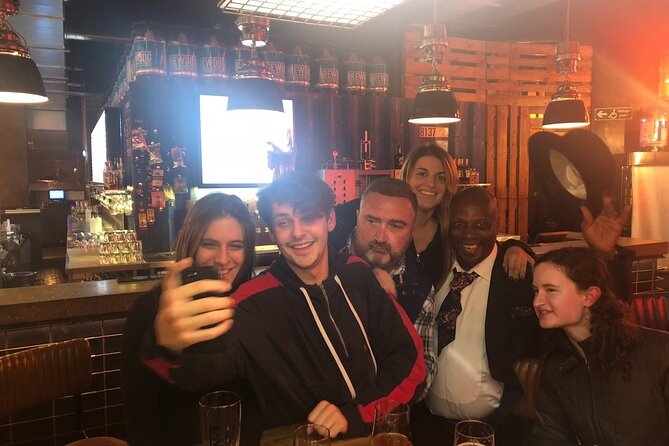
The walk begins at Tower Hill Tram, Trinity Square, close to the Tower of London. The opening stop is the Ordnance Office, where Granville Sharp worked.
Sharp was one of the leading British opponents of slavery in the 18th century. Starting with him gives the walk an early human focus. You are not only looking at companies and financial systems, you are also introduced to someone who challenged them.
The Tower area is a practical meeting point. It is well served by public transport and gives you an immediate sense of London’s long layers of power: medieval authority, military administration, royal history, and the later commercial world of the City.
The route is not a tour inside the Tower of London. The stop is about the Ordnance Office and Sharp’s connection to the site. If you want to visit the Tower itself, plan that separately and do not expect the walking tour to include admission.
The Roman wall and the first uncomfortable chapter
The first main stop is the Roman wall of Londinium. You will see surviving sections of the old boundary, including remains that are still visible beneath or beside later buildings.
The wall helped define the Roman settlement founded around 2,000 years ago. One of the walk’s most striking points is that Roman Britain also involved the enslavement of Britons. The Romans complained that the Britons were lazy, a detail that adds a sharp, human note to the discussion.
The route also places emphasis on an African Roman emperor connected with the building of the wall. That detail complicates the familiar image of Roman London and gives you a broader view of the people who shaped the city.
Only about five minutes are assigned to this stop, so expect a concise explanation rather than a long archaeological talk. That is probably the right choice for this route. The wall sets the time scale and establishes that London’s story of forced labor did not begin with Britain’s later empire.
East India House and the machinery of trade
The next major point is the former site of East India House on Leadenhall Street. This was the headquarters of the East India Company, one of the most powerful commercial organizations in British history.
The company relied on slave labor and trafficked in enslaved people from East and West Africa. The value of stopping here is the direct connection between a corporate headquarters and the systems that produced wealth across the British world.
You will not find the original East India House building intact as part of this experience. The interest is in identifying the site and understanding what took place there. That makes Sam’s explanation especially useful, since the City’s present-day buildings can otherwise conceal the role of earlier institutions.
This is one of the tour’s strongest teaching points. Slavery was not separate from British business. It could be linked to offices, shareholders, trade networks, and decisions made in London.
Same country, a completely different day out:
- Stonehenge, Windsor Castle, and Bath from London
★ 4.5 · 18,662 reviews - London Big Bus Hop-On Hop-Off Tour with Optional River Cruise
★ 3.5 · 10,803 reviews - London Small Group Tour of Historical Pubs
★ 5.0 · 10,422 reviews - Stonehenge, Windsor Castle and Bath with Pub Lunch in Lacock
★ 4.5 · 7,402 reviews
Fenchurch Street and the Gilt of Cain
At Fenchurch Street, the route reaches Fen Gardens and the Gilt of Cain sculpture. The monument commemorates the abolition of the transatlantic slave trade.
This stop shifts the focus from the institutions that profited from slavery to the public memory of abolition. It also gives the group a physical object to consider rather than relying only on a spoken account.
The sculpture makes an important distinction. Ending the transatlantic slave trade did not instantly end slavery itself, and the history of abolition cannot be reduced to a single law or date. The walk’s wider route helps place this memorial within the commercial story that came before it.
The stop lasts around ten minutes. That should give you time to listen and take in the sculpture without turning the experience into a long museum visit. Fen Gardens is also a useful pause in a route that otherwise moves through streets and building fronts.
Jamaica Wine House and the sugar economy

The Jamaica Wine House marks the site of London’s first coffee house, the Jamaica Coffee House. Its name points to Jamaica, and the location was once a hub for the sugar trade and the plantation economy of the West Indies.
This is one of the most memorable stops because coffee houses are often presented as charming places of conversation, business, and new ideas. Here, you are asked to consider the commercial supply chains behind that social world.
The connection between a coffee house and Caribbean plantations shows how ordinary habits in London were tied to distant labor. Sugar was not an abstract product. Its production depended on plantation slavery, and London businesses helped finance, insure, trade, and consume the results.
The Jamaica Wine House is a working establishment today, but the tour focuses on the site’s earlier role. Do not confuse the stop with a scheduled drink or meal. The value is in seeing how a familiar name and a familiar London venue open onto a much larger economic story.
St Mary Woolnoth and John Newton
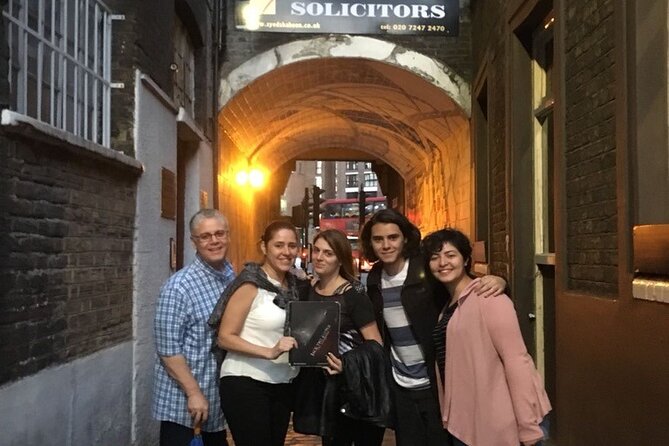
St Mary Woolnoth is a compact church near Bank station. It was once served by John Newton, the abolitionist who became rector there.
Newton’s place in the story is complicated. He had been involved in the slave trade before becoming an outspoken opponent of it. That makes the church an important stop because it allows the guide to discuss personal change alongside wider political action.
You will see how a church can connect to the commercial center around it. The surrounding streets were shaped by banking and trade, while Newton’s later work helped challenge the moral basis of slavery.
The stop is scheduled for about ten minutes. That is enough for a focused explanation, though anyone wanting a detailed account of Newton’s life would need more time elsewhere. Here, he functions as a bridge between the trade economy and the abolition movement.
The Bank of England and institutional responsibility
The Bank of England Museum receives one of the longer stops, about 15 minutes. The institution has apologized for the involvement of some former directors and governors in the slave trade and has promised to remove their statues and paintings from public display in its Threadneedle Street building.
This section is valuable because it moves the discussion from individual merchants to the institutions that supported Britain’s financial life. The Bank of England is one of London’s most recognizable names, and placing its past connections within the walk makes the history harder to treat as something distant or unrelated.
The stop is outside-focused in the route information, so do not assume that a museum visit is included. The point is the Bank’s connection to the story and the way public institutions address their past.
You may also find this part useful if you want to think about how historic buildings and public memorials are handled today. The route does not leave the subject in the past. It shows that institutions still have choices about what they display and how they acknowledge earlier actions.
The Royal Africa Company and the City’s leadership
Another important building on the route represents the involvement of London’s civic elite in the transatlantic slave trade. Sheriffs, mayors, and aldermen of the City met there as shareholders in the Royal Africa Company.
This detail is central to the tour’s argument. Slavery was not only the work of distant plantation owners or anonymous merchants. City leaders, investors, and business networks could have a direct financial stake.
The stop also helps explain why the City of London deserves special attention. The City is a distinct legal entity within London, with its own historic civic structures and police force. Its compact boundaries held a remarkable concentration of decision-making power.
The building itself may not immediately reveal its former role. That is exactly why a guided walk works well here. Sam’s commentary turns a passing facade into evidence of how civic office, finance, and colonial commerce overlapped.
St Paul’s and the walk’s final view
The route takes you toward St Paul’s Cathedral, one of London’s defining landmarks. St Paul’s is not simply a photo stop here. It provides a grand closing backdrop for a discussion about the wealth, institutions, and public figures that helped shape Britain.
The published route says the walk finishes by St Paul’s Underground station on the Central line, while the meeting details give Aldgate station as the endpoint. Because those directions do not match, you should confirm the final location before booking or on the day.
If the route does end at St Paul’s, you will be well placed for further sightseeing in the City, the cathedral, or transport toward central London. If it ends at Aldgate, you will be near another useful Underground connection and the eastern edge of the City.
Either way, the final section gives the walk a clear sense of place. You are not studying slavery in an isolated classroom. You are looking at the buildings and streets where money, policy, and public life met.
What Sam’s guiding adds
The guide’s name is Sam, and the strongest feature of the experience is his ability to connect small physical details with a much larger story. His background includes authorship of books about the area, and his talks cover Roman and Victorian London as well as slavery and abolition.
The approach appears conversational rather than purely scripted. That matters on a walking tour because the best moments often come when a question leads to a detail about a building, a nursery rhyme, a street name, or an overlooked fragment of the Roman wall.
Sam is also described as clear, funny, and engaging. That does not make the subject light, but it can keep a serious 90-minute talk from feeling heavy or repetitive.
You should expect interpretation, not a silent procession from plaque to plaque. The route works because Sam supplies the links between places that might otherwise seem unrelated.
Is $27.43 fair value?
At $27.43 per person, this is fairly priced for a small, guide-led London walk. You are paying for a focused subject, a qualified local guide, and access to context that is difficult to gather from street signs alone.
The group limit is 35 people. That is not an intimate private tour, but it is still more manageable than a large coach outing. If the full group attends, stand close to Sam at each stop so you can hear clearly, especially near busy City streets.
The price is best value for someone who wants a historical theme rather than a broad introduction to London. You will see famous places, but the experience is not designed to cover every major landmark or provide extended entrance time at the Tower, Bank of England Museum, or St Paul’s Cathedral.
It is also a good supplement to a first visit. You can take a classic sightseeing tour separately, then use this walk to understand what lies behind the familiar views.
Timing, transport, and practical points
The start time is 12:00 pm, at Tower Hill Tram, Trinity Square, London EC3N 4TH. The meeting area is near public transport, which makes it practical to reach from other parts of London.
The stated duration is about one hour and 30 minutes. Some accounts of the walk describe it as taking closer to two hours, so I would allow two hours when planning lunch, a museum booking, or a train.
The route includes several outdoor stops and requires ordinary walking between them. Good weather is required, and the experience can be moved or refunded if poor weather leads to cancellation.
You receive a mobile ticket, and confirmation is provided at booking. Most people can take part, but the tour does not describe special accessibility arrangements, so ask the provider if you have mobility needs or need exact information about the walking route.
Free cancellation is available up to 24 hours before the start time. Cancellations or changes made inside that window are not refunded or accepted, and the experience may also be canceled if the minimum number of participants is not reached.
Who should choose this walk?
I would choose it if you want to understand London through the links between trade, slavery, abolition, religion, finance, and civic power. It suits history-minded people, first-time visitors who want something beyond the usual sights, and anyone who likes seeing familiar streets explained in a new way.
It is also a good choice for a short afternoon activity. The route is focused, the stops are close together, and the walk ends near useful Underground stations, subject to confirming the endpoint.
You may want to skip it if you are looking for interior visits, long free time at major landmarks, or a general tour of London’s top attractions. The subject is specific and serious, and much of the experience depends on listening to the guide rather than entering buildings.
Families with older children may find the Roman wall, the City’s unusual legal identity, and the changing role of public memorials especially useful. The subject of enslavement is not softened, so parents should decide if the tone suits their group.
Should you book the Slavery and City of London Walking Tour?
Book this walk if you want a clear account of how London’s commercial and civic center was connected to slavery, and how abolitionists challenged that system. The strongest reasons are the thoughtful route, Sam’s engaging delivery, and the way it turns ordinary City streets into evidence.
At $27.43, it offers good value for a focused 90-minute history experience. Confirm the endpoint, allow up to two hours, and come ready to walk and listen. If you want London history with more substance than a standard landmark checklist, this is a worthwhile choice.
FAQ
How much does the Slavery and City of London Walking Tour cost?
The listed price is $27.43 per person.
How long does the walking tour last?
The stated duration is approximately one hour and 30 minutes. Some descriptions of the experience indicate that it may take closer to two hours, so allow extra time.
When does the tour start?
The start time is 12:00 pm.
Where does the tour begin?
The meeting point is Tower Hill Tram, Trinity Square, London EC3N 4TH, UK.
Where does the walk finish?
The meeting details list Aldgate Underground station, while the route information says the walk finishes by St Paul’s Underground station. Confirm the exact endpoint before the tour.
How many people can join the tour?
The maximum group size is 35 participants.
Is the ticket available on a phone?
Yes. The experience includes a mobile ticket, and booking confirmation is provided at the time of reservation.
Can I cancel for a full refund?
Yes, if you cancel at least 24 hours before the experience start time. Cancellations made less than 24 hours before the start are not refunded. If poor weather or an insufficient number of participants causes cancellation, you will be offered another date or experience, or a full refund.
Just added around London
- Private The Beatles Taxi Tour in London★ 5.0 · 12 reviews
- Dinner and Jazz Cruise on the River Thames★ 4.0 · 140 reviews
- Airport Coach Service from Heathrow to Oxford★ 3.5 · 67 reviews
- The Alfred Hitchcock London Walk with Sandra Shevey★ 5.0 · 15 reviews
- Tower of London & 30+ London Sights Walking Tour★ 4.5 · 33 reviews
- Thames Beachcombing★ 4.5 · 100 reviews
- Ted Lasso London Taxi Tour★ 5.0 · 5 reviews
- Ted Lasso Tour of Richmond with Private Guide★ 5.0 · 25 reviews
City Tours, compared.


Liverpool City Sights Hop On Hop Off City Tour – 24hr Ticket
Read our review →
1.5-hour Oxford City and University Walking Tour
Read our review →
City Sightseeing London Hop-On Hop-Off Bus Tour & Bookable Extras
Read our review →
City Sightseeing Oxford Hop-On Hop-Off Bus Tour
Read our review →
Browse the lists this tour appears in