
Reviewed · TREASURE HUNTS AND CITY GAMES
Hidden Gems Tour of the City of London
The most interesting part of this City of London walk is how quickly the modern financial district gives way to Roman London. In about two hours and 20 minutes, you move past St. Paul’s Cathedral, the London Mithraeum, Guildhall, Leadenhall Market, and the Tower of London while hearing how Roman settlers shaped the city. I especially like the Roman focus and the chance to see famous buildings alongside places many people walk past without noticing.
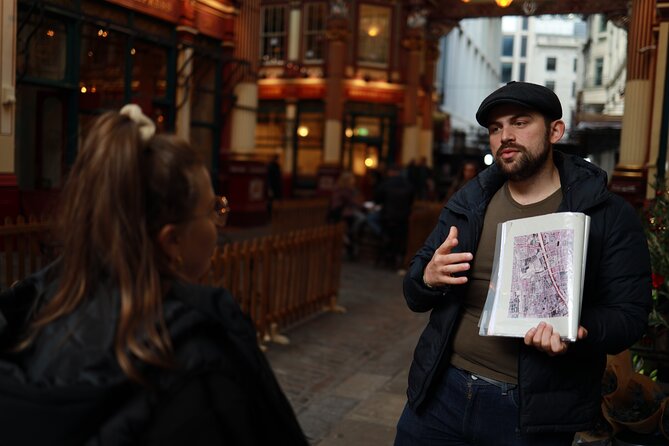
I also like the small maximum of 20 people and guide Nick’s personal, story-led approach. He is described as passionate about London and good at drawing people into the conversation. The main drawback is that this is an outdoor walking tour with several major sights viewed from the outside, so you should not book it expecting full visits to St. Paul’s or the Tower of London. Comfortable shoes are essential, and lunch is not included.
Key points at a glance
- Roman London takes center stage: The London Mithraeum and the old City streets give the tour a clear historical thread.
- A strong run of famous landmarks: You see St. Paul’s Cathedral, the Bank of England, Royal Exchange, Monument, Leadenhall Market, and the Tower of London.
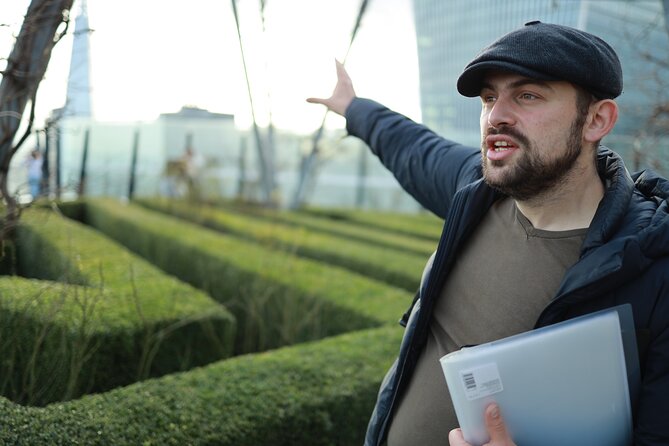
- Garden at 120 adds a modern pause: The free viewing platform offers broad views across London’s skyline.
- Guide Nick brings local detail: His enthusiasm and knowledge of streets, buildings, and overlooked corners are central to the experience.
- A manageable small-group walk: The group is capped at 20 people, allowing more room for questions than a large coach tour.
- Good value at $24.69: You get a substantial guided introduction to the City, though admission fees for St. Paul’s and the Tower are extra.
Why this walk works so well in the City of London
The City of London is compact, but it packs an astonishing number of eras into a small area. Roman streets, medieval churches, Georgian civic buildings, Victorian commerce, and modern towers can appear within a few minutes of one another.
That makes a walking tour especially useful here. On your own, you can admire the dome of St. Paul’s or photograph Leadenhall Market, but it is easy to miss the story beneath your feet. A guide can connect the Roman settlement of Londinium with the city’s later role as a center of government, trade, banking, and ceremony.
This tour also gives you a useful balance of major sights and less obvious stops. You are not simply marching from one famous attraction to the next. The route includes the Mithraeum, Guildhall, Garden at 120, and All Hallows by the Tower, places that add texture to the better-known landmarks.
At $24.69 per person, the price is modest for a guided walk lasting more than two hours. You are paying mainly for interpretation and local direction, not entry to attractions. That is important: the tour price does not include admission to St. Paul’s Cathedral or the Tower of London, and lunch is also your responsibility.
More Treasure Hunts and City Games in London
- London Soho Food Tour with 7+ Tastings of Delicious Hidden Gems
★ 5.0 · 366 reviews - Private London Tour with a Local: Custom Highlights & Hidden Gems
★ 5.0 · 119 reviews - Highlights & Hidden Gems With Locals: Best of London Private Tour
★ 5.0 · 93 reviews
Starting near Blackfriar and St. Paul’s Cathedral
The tour begins at The Blackfriar, at 174 Queen Victoria Street, with a 1:30 pm start. From there, the route takes you into the oldest part of central London and includes St. Paul’s Cathedral as an early highlight in the published route.
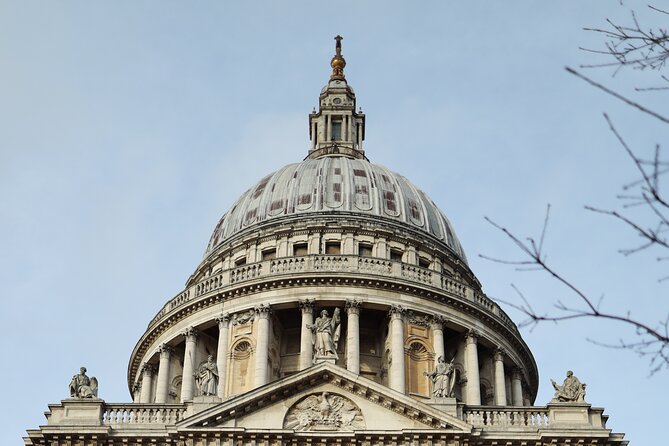
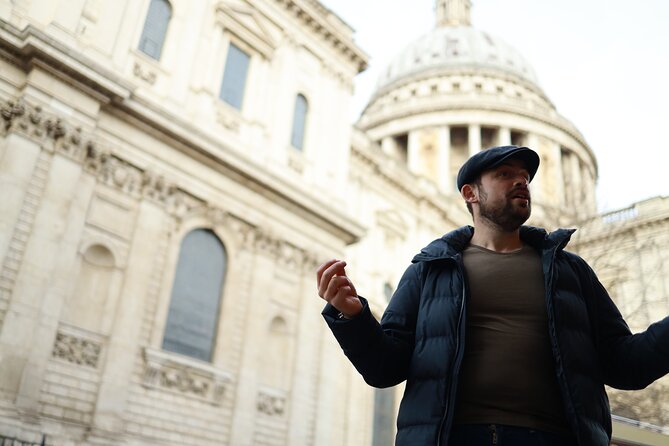
You should think of this as an exterior visit and photo stop rather than a cathedral admission. The stated stop lasts about 15 minutes, and admission is not included. That is enough time to take in Sir Christopher Wren’s great dome, hear about its place in the City, and get your bearings before moving on.
St. Paul’s is an excellent opening sight because it immediately gives the walk scale. Its grand design reflects the rebuilding of London after the Great Fire of 1666, while the streets around it hint at much older layers. The value here comes from the explanation around the building, not from trying to squeeze in a full interior visit.
If you want to tour the cathedral inside, plan that as a separate activity. The walk does not provide the admission ticket, and its schedule is built around seeing the wider City rather than spending a long period in one attraction.
Guildhall and the City’s civic center
Guildhall is one of the important civic stops on the route. It has served as the ceremonial and administrative center of the City of London for more than 800 years, giving you a useful counterpoint to the financial buildings nearby.
This is where the tour can help explain that the City of London is not simply a cluster of offices. It has its own historic civic identity, institutions, ceremonies, and traditions. Guildhall has seen medieval feasts and modern city functions, so it gives the walk a strong sense of continuity.
The stop is especially worthwhile if you enjoy the relationship between architecture and power. The building is not just attractive stonework. It represents how the City governed itself and how commercial influence grew alongside civic authority.
The available schedule does not give a separate time allowance for Guildhall, so the exact length may depend on the guide’s pace and the group’s questions. That flexibility can be useful, though you should expect an overview rather than a full guided visit of the interiors.
The London Mithraeum and Roman Londinium
The London Mithraeum Bloomberg SPACE is one of the most distinctive stops. This ancient Roman temple offers a direct link to the city’s first major period of urban development.
The temple was dedicated to Mithras, a Roman deity, and its presence shows that Londinium was more than a military outpost. Roman London had religious life, commerce, administration, and communities with different customs. The Mithraeum helps turn the phrase Roman settlers into something more concrete.
The stop lasts about 15 minutes, and admission is free. That makes it one of the best-value parts of the route. You can see a major archaeological site without paying an extra ticket, while the guide supplies the setting and story that a quick visit alone might not provide.
The short time limit is the only thing to keep in mind. If Roman archaeology is your main interest, 15 minutes may feel brief. Still, the Mithraeum gives the whole walk a firm historical anchor, and it is more unusual than simply viewing another grand facade.
Same country, a completely different day out:
- Stonehenge, Windsor Castle, and Bath from London
★ 4.5 · 18,662 reviews - London Big Bus Hop-On Hop-Off Tour with Optional River Cruise
★ 3.5 · 10,803 reviews - London Small Group Tour of Historical Pubs
★ 5.0 · 10,422 reviews - Stonehenge, Windsor Castle and Bath with Pub Lunch in Lacock
★ 4.5 · 7,402 reviews
Bank of England, Mansion House, and the Royal Exchange
The walk then moves through the heart of the City’s financial district. The Bank of England, Mansion House, and Royal Exchange are close enough to form a natural lesson in how London’s commercial power developed.
The Bank of England has served as the country’s central bank for more than 300 years. Its neoclassical exterior is impressive, but the more useful point is its role in the financial system. Wars, economic crises, and industrial change all affected the institution and the City around it.
Mansion House offers a different angle. It is the official residence of the Lord Mayor of London and has been used for civic events since the mid-18th century. Its Georgian character and ceremonial role help show that the City’s story is about public life as well as money.
The Royal Exchange brings trade into the picture. Founded in 1565 by Sir Thomas Gresham, it was created as a place where merchants and traders could meet and conduct business. The building was rebuilt after the Great Fire and again in the 19th century, so it also gives the guide a chance to explain how London repeatedly rebuilt itself.
I like this section because the three buildings are not interchangeable sights. The Bank represents national finance, Mansion House represents civic office, and the Royal Exchange represents trade. Seen together, they make the City’s present-day role easier to understand.
The Monument and the story of the Great Fire
The Monument to the Great Fire of London is another key stop. Designed by Sir Christopher Wren, it commemorates the fire of 1666, which destroyed much of the City and led to a major period of rebuilding.
The column is a simple but powerful reminder that the streets around you are not all medieval survivors. Much of the City was reshaped after the fire, and Wren’s work became part of that new architectural identity.
The Monument also gives the guide a chance to discuss resilience without reducing the event to a single dramatic story. The fire changed the physical City, affected its people, and influenced the way London was planned and rebuilt.
The information provided for this tour does not include admission to the Monument or time to climb it. The stop is best understood as an exterior view and history lesson. If you want the summit views, check separately before visiting because that would require extra time and a separate ticket arrangement.
Leadenhall Market, a photogenic change of pace
Leadenhall Market is one of the most attractive stops on the walk. Its ornate structure and covered passages provide a sharp contrast to the heavy stone of the Bank of England and the formal scale of the Royal Exchange.
You get about 15 minutes here, with admission free. That is enough for photographs and a quick look around, though it is not a long market visit. The setting is as important as the shopping. The architecture gives you a glimpse of the City’s commercial past, while the market remains a pleasant place to pause.
I would save a little camera space for this stop. The market’s roof, ironwork, and passageways offer more visual variety than many of the surrounding office streets. Your guide can also help you see it as part of the City’s working history rather than just a pretty photo background.
The short visit means you may not have time to stop for a meal here. Since lunch is not included, you should eat before the tour or plan food after it, depending on your schedule.
Garden at 120 and the London skyline
Garden at 120 supplies the tour’s modern viewpoint. The free viewing platform looks across the London skyline and gives you a broader sense of how the old City now sits among newer towers and major landmarks.
The planned stop is about 20 minutes, making it one of the longer pauses. That extra time matters because a viewpoint is best enjoyed without being rushed. You can take photographs, identify parts of the route, and compare the old churches and civic buildings with the newer high-rise district.
This is a smart inclusion. A history walk can sometimes keep your eyes fixed on the past, but Garden at 120 reminds you that London is still changing. From above, the route’s mix of old and new becomes easier to read.
The viewing platform is free, but conditions can affect how much you see. The tour information does not promise a particular level of visibility, so treat the views as an added benefit rather than the sole reason to book.
All Hallows by the Tower and the final approach
All Hallows by the Tower is an especially rewarding stop for visitors who like old churches. It is described as the oldest church in the City of London, with more than 1,300 years of history.
Its location near the Tower of London gives it a strong place in the final part of the route. The church has witnessed major events from the Norman Conquest onward and survived the Great Fire of 1666. Inside, you may find historic displays and artifacts, including a Roman pavement.
This stop pulls several parts of the tour together. You have already heard about Roman London, the Great Fire, civic power, and royal history. All Hallows connects those themes in one small religious building.
The itinerary does not provide a separate duration or guarantee an interior visit, so ask the guide about access on the day. The church may be open, but the walk’s timetable and local conditions can affect what you see.
Reaching the Tower of London at Tower Hill
The tour ends at Tower Hill, London EC3N, after a final stop at the Tower of London. The stated time at the Tower is about 20 minutes, and admission is not included.
That makes the ending practical. You get a close look at one of London’s most important historic sites, then remain in a good area for continuing your sightseeing. You can take photographs of the walls and surrounding area, hear about royal intrigue, imprisonment, and executions, and decide if you want to return for a full visit.
Do not confuse the 20-minute stop with entry to the Tower complex. A proper Tower visit needs much longer and requires its own admission ticket. This tour gives you context and an outside introduction, which can make a later visit more meaningful.
Ending at Tower Hill also gives the walk a clear historical arc, from Roman London near the center of the City to the fortified royal site at its eastern edge.
Pace, group size, and what to wear
The walk lasts approximately two hours and 20 minutes. That is long enough to cover a large number of sights but short enough to fit into a busy London day.
The group maximum is 20 people. That is not a private tour, but it is small enough for the guide to hear questions and keep the group together more easily. The feedback about Nick points to his willingness to include each person and explain details in an engaging way.
You should wear comfortable walking shoes. The tour is entirely described as a walking experience, with several outdoor stops and no promise of extended indoor seating. London weather can change quickly, so practical clothing is sensible, though the supplied information does not specify any weather policy.
The tour is offered in English. Service animals are allowed, public transportation is nearby, and most people can participate. If you need a specific access arrangement beyond those points, confirm it before booking because no detailed accessibility information is provided.
Who should book this City of London walk
I would choose this tour if you want a compact introduction to the oldest part of central London and prefer stories over a simple list of landmarks. It suits first-time visitors, history fans, and London residents who suspect they have been walking past important places without seeing them properly.
It is also a good fit if you have already visited the West End and want a different side of London. The route focuses on the City, Roman remains, financial institutions, old churches, and the Tower area rather than the usual Buckingham Palace and Westminster circuit.
You may want a different experience if your main goal is to spend substantial time inside St. Paul’s Cathedral, climb the Monument, or explore the Tower of London. Those sights require separate tickets and more time.
The guide is a major part of the value. Nick is named as the guide associated with the experience, and the available feedback repeatedly points to his enthusiasm, local knowledge, and ability to make small facts interesting. The best reason to book is not just the number of stops. It is the chance to understand why those stops belong in the same story.
Is the $24.69 price worth it?
At $24.69, this is a fair price for more than two hours of guided sightseeing in central London. You receive a structured route, historical explanation, and access to free places such as the London Mithraeum and Garden at 120.
The value is strongest if you are unfamiliar with the City’s layout. A guide can save you time and help you notice details that are easy to miss when you move between landmarks on your own. The small group size adds to that value.
The price is less attractive if you want paid attraction entry included. You will need to budget separately for St. Paul’s Cathedral and the Tower of London, and you should not expect lunch or a full interior tour at every stop.
You can cancel for a full refund if you do so at least 24 hours before the 1:30 pm start time. Changes or cancellations made inside that window are not accepted for a refund.
Should you book it?
Book this walk if you want Roman London, City institutions, striking architecture, and the Tower area explained by an enthusiastic local guide. Its greatest strength is the way it links places that can otherwise feel unrelated, from the Mithraeum to the Bank of England and from Leadenhall Market to the Tower.
Skip it if you want a full indoor visit to the major attractions or if a long walking route would be uncomfortable. For most history-minded visitors, though, $24.69 buys a useful and lively orientation to one of London’s most layered districts.
FAQ
How much does the Hidden Gems Tour of the City of London cost?
The price is $24.69 per person.
How long does the walking tour last?
The tour lasts approximately two hours and 20 minutes.
Where does the tour start?
The meeting point is The Blackfriar, 174 Queen Victoria Street, Greater London EC4V 4EG, UK.
What time does the tour begin?
The start time is 1:30 pm.
Where does the tour end?
The tour ends at Tower Hill, London EC3N, UK.
Is the tour offered in English?
Yes. The experience is offered in English.
Are admission tickets included?
Admission is not included for St. Paul’s Cathedral or the Tower of London. The London Mithraeum, Leadenhall Market, and Garden at 120 are listed with free admission.
How large is the tour group?
The maximum group size is 20 people.
What should I wear for the tour?
Wear comfortable shoes because this is a walking tour.
Is lunch included?
No. Lunch is not included.
Can I cancel for a refund?
Yes. You can cancel at least 24 hours before the experience start time for a full refund. Cancellations or changes made less than 24 hours before the start time are not accepted for a refund.
Just added around London
- Private The Beatles Taxi Tour in London★ 5.0 · 12 reviews
- Dinner and Jazz Cruise on the River Thames★ 4.0 · 140 reviews
- Airport Coach Service from Heathrow to Oxford★ 3.5 · 67 reviews
- The Alfred Hitchcock London Walk with Sandra Shevey★ 5.0 · 15 reviews
- Tower of London & 30+ London Sights Walking Tour★ 4.5 · 33 reviews
- Thames Beachcombing★ 4.5 · 100 reviews
- Ted Lasso London Taxi Tour★ 5.0 · 5 reviews
- Ted Lasso Tour of Richmond with Private Guide★ 5.0 · 25 reviews
Treasure Hunts and City Games, compared.

Fun, Flexible Treasure Hunt Around Manchester with Cryptic Clues & Hidden Gems
Read our review →
Fun, Flexible Treasure Hunt Around York with Cryptic Clues & Hidden Gems
Read our review →
Fun, Flexible Treasure Hunt Around Bath with Cryptic Clues & Hidden Gems
Read our review →
Fun, Flexible Treasure Hunt Around Oxford with Cryptic Clues & Hidden Gems
Read our review →
Fun, Flexible Treasure Hunt Around Birmingham with Cryptic Clues & Hidden Gems
Read our review →
Fun, Flexible Treasure Hunt Around Chester with Cryptic Clues & Hidden Gems
Read our review →
Fun, Flexible Treasure Hunt Around Brighton with Cryptic Clues & Hidden Gems
Read our review →
Fun, Flexible Treasure Hunt Around Cambridge with Cryptic Clues & Hidden Gems
Read our review →Browse the lists this tour appears in