
Reviewed · JACK THE RIPPER TOURS
Jack the Ripper Private Immersive Tour
Jack the Ripper’s crimes are only part of this walk. The tour also shows you the poor, crowded Whitechapel of 1888, where lodging houses, workhouses, unemployment, and hunger shaped nearly every choice. You move through the actual streets tied to Elizabeth Stride, Catherine Eddowes, Polly Nichols, Annie Chapman, and Mary Kelly while your guide builds the story with photographs and sound.
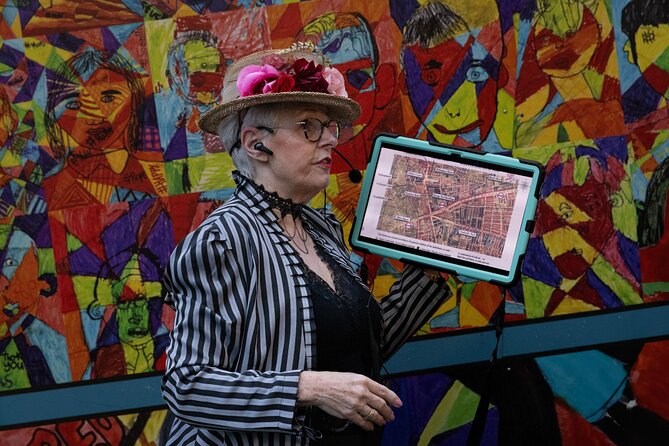
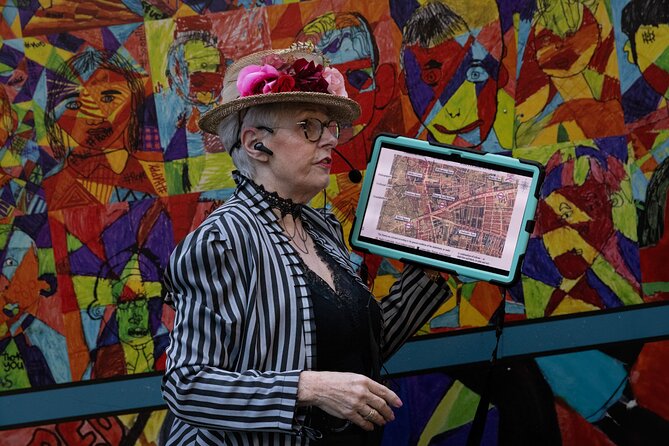
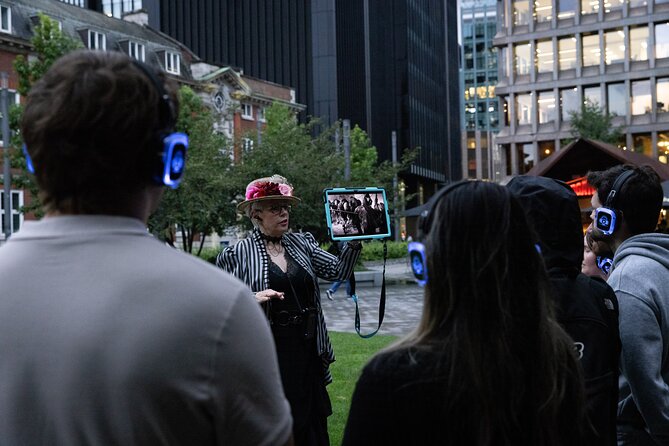
I like the small-group private format, which lets you ask as many questions as you want, and I like the 14-inch tablet photos that make old murder scenes and victims easier to picture after dark. Guide Jenny brings energy, clear opinions, and a detailed grasp of the case.
The main caution is the length. You walk and stand for about two and a half hours with no planned break, and one past booking caused confusion over the headphones and the type of tour reserved. Confirm the exact format before you go, especially if you have hearing or mobility concerns.
Key points to know before walking into Whitechapel
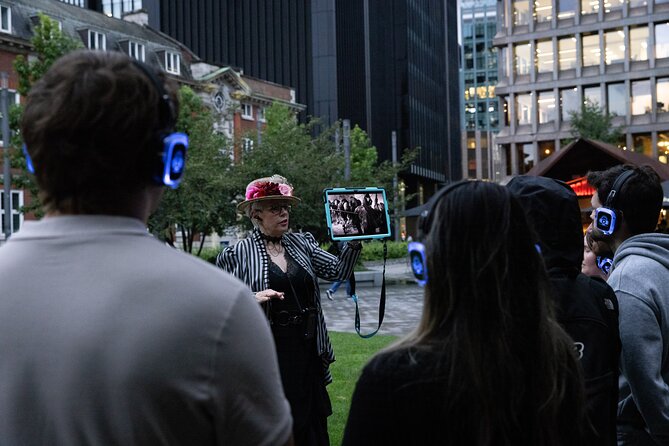
- Fourteen-inch visual guide: Jenny uses photographs of the victims, streets, letters, and crime scenes to connect today’s buildings with events from 1888.
- Two-and-a-half-hour route: The walk begins near Aldgate Station and finishes near Liverpool Street, with many stops but no scheduled rest break.
- Private participation: Only your group takes part, giving you room to ask questions and discuss competing theories.
- Victims beyond the canonical five: The route includes a discussion of a possible earlier victim associated with Professor David Wilson’s research.
- Police and press clues: You examine the Goulston Street writing, the Lusk letter, the police search, and the newspaper campaign that fed public fear.
- Evening atmosphere: Music, street cries, and newspaper headlines are used to suggest the sounds of Whitechapel in 1888.
Starting near Aldgate with the city’s poorest residents
Meet at Aldgate Station, close to the Dorsett City Hotel. The opening takes only about six minutes, but it gives you the basic frame: the murders, the neighborhood, and the way this part of London looked in 1888.
The next stop, on the green beside St Botolph’s Aldgate, is more important than its short eight-minute timing suggests. You hear about homelessness, common lodging houses, workhouses, and the lack of steady employment. That context matters because the case is often reduced to names, dates, and gruesome details. Here, you begin to see how poverty narrowed the choices available to many women in the area.
The old photographs shown on the tablet help with this part. In darkness, a photograph is easier to study when it is large enough for the whole group to see. I would still keep your expectations realistic: modern London has changed greatly, so the photos are doing much of the work.
More Jack the Ripper Tours in London:
- London Jack the Ripper Guided Tour with Ripper-Vision
★ 4.5 · 4,840 reviews - London Jack The Ripper Guided Walking Tour
★ 5.0 · 3,131 reviews - Ultimate Jack the Ripper : Guided Tour of London
★ 5.0 · 1,495 reviews
Mitre Street and Mitre Square: two murders in one night
At Mitre Street, the story turns to Elizabeth Stride. You hear about the hours before her death and how Louis Diemschütz found her body near the gateway to Dutfield’s Yard. The guide uses images of the location and the victim to help you follow the sequence.
The next stop, Mitre Square, concerns Catherine Eddowes, whose body was found on August 30, 1888. This section explains how Police Constable Edmund Watkins discovered her during his beat and why the City of London Police reacted so strongly. Eddowes was killed less than an hour after Stride, making this one of the most striking parts of the route.
You also follow the police search toward the clue found at Goulston Street. The walk is useful here because it explains the practical geography of the case. These were not abstract locations on a map. Officers had to search streets, yards, and passageways while two separate police forces worked within different jurisdictions.
At Goulston Street, the group pauses opposite numbers 108 to 119, where the famous writing was found. The guide explains what happened after its discovery and why the Metropolitan Police and City of London Police did not simply operate as one force. That division still exists today, and it gives this part of the story a useful civic angle.
Wentworth Street and the question of an earlier victim
At Wentworth Street, the tour steps outside the usual list of five victims. The guide discusses a woman whom Professor David Wilson has identified as a likely victim, even though she is not normally included in the canonical five.
This is a good place to judge how you feel about disputed evidence. The guide presents the murder, the site, the victim, and the discussion that followed. If you enjoy examining theories rather than hearing only a fixed version of the case, this stop adds value. If you want a tour limited to the most widely accepted victims, it may feel like a detour.
The timing is brief, about eight minutes, so you will not get an extended academic debate. You will get a clear explanation of why the case may be wider than the standard five.
Brick Lane, Polly Nichols, and the pressure of lodging money
As you turn onto Osborn Street toward Brick Lane, the audio setting changes. Music suggests the sounds that once came from pubs and music halls. It is a small detail, but it helps shift the tour from a list of crime scenes to a picture of a working neighborhood after dark.
Near the Frying Pan pub, the guide discusses Polly Nichols. This was described as the last place where she had a drink. Her story is tied to the urgent need to raise money for lodging, a reminder that even a small sum could determine where someone slept that night.
You hear how two men found her body in Berner’s Street and sent for the police. Photographs of Nichols and the murder site appear on the tablet. The visual material is especially useful here because it keeps the victim from becoming just another name in a sequence of crimes.
As you leave Brick Lane, street vendors and police questioning form part of the soundscape. The guide explains how officers sought information from local people and asked about suspicious men. These effects work best if you enjoy theatrical presentation. They are not meant to recreate the past with documentary precision, but to give the walk a stronger sense of place.
A few more London trips to weigh up
- The Premier Classic London: Private 4-Hour Tour in a Black Cab
★ 5.0 · 2,737 reviews - Stonehenge Inner Circle Private Tour from London with Bath Visit
★ 5.0 · 1,909 reviews - Private Tour: Black Taxi Tour of London
★ 5.0 · 1,153 reviews - Private London Arrival Transfer – Airport to Hotel / Accommodation
★ 3.5 · 1,085 reviews
Hanbury Street and the life of Annie Chapman
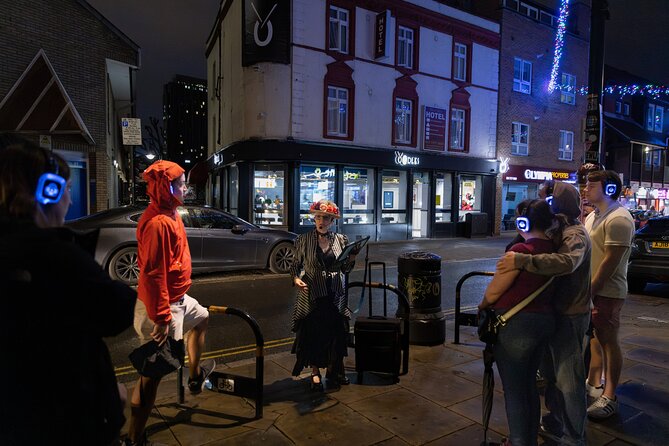
Hanbury Street brings you to the murder of Annie Chapman. The guide talks about her life and the events leading to September 8, 1888. You hear that Mrs. Long saw Chapman less than an hour before her death with a man outside number 27.
The account then follows the movement toward the backyard of number 29, where Chapman was killed. The tour does not avoid the brutality of the crime. If graphic material is difficult for you, this is one of several points where you may want to focus on the social and police history rather than every physical detail.
The guide also discusses a prominent suspect who was later discounted. That is useful because the case has gathered so many theories over time. A good walking tour should help you separate documented events from later speculation, and this section gives you a chance to ask where the evidence becomes uncertain.
Wilkes Street and the fear created by newspapers
On Wilkes Street, the story widens again. You hear how local anger grew as the murders continued, and how newspapers helped spread fear through lurid reporting. The street also offers a chance to look at houses dating from the 1700s, along with the people who built them and the reasons for their construction.
This stop is a reminder that the area was not created for the Ripper story. The streets had their own lives, buildings, trades, and residents long before 1888. The tour links those surviving structures to the social conditions that made the murders so alarming.
At Puma Court, you examine one of the letters sent to the police or press. More than a thousand letters were sent in connection with the case, but the guide focuses on two that continue to attract attention. Newspaper sellers are heard calling out alarming headlines as you leave, showing how the press helped turn individual crimes into a citywide panic.
The Ten Bells, Spitalfields, and the Lusk letter
Near Commercial Street, opposite the Ten Bells pub, the guide discusses the pub’s connection with Mary Kelly and the surrounding district. You also hear about Spitalfields Market and the way the Ripper case has caused arguments and controversy over the years.
Christ Church Graveyard receives attention here because it mattered to homeless people at the time. Basic needs that many people now take for granted could become sources of conflict among people without shelter. This detail brings the tour back to daily survival, rather than keeping the focus only on the killer.
At Brushfield Street, you pause at the entrance to the London Fruit and Wool Exchange building. The topic is the Lusk letter, which arrived in a box with a piece of human tissue that might have come from a victim. Photographs of the letter and its recipient make the material easier to understand.
This is among the more unusual pieces of evidence in the case, but you should treat it as evidence connected to the investigation, not as proof of the killer’s identity. The guide’s role here is to explain why certain letters received more attention than the hundreds of others.
Mary Kelly’s final stop near Liverpool Street
The final stop is in the central courtyard of the London Fruit and Wool Exchange. It is the closest point on the route to the room where Mary Kelly was killed. Kelly is described as the youngest of the five canonical victims and the only one murdered indoors.
Her story receives the longest treatment, about 15 minutes. You hear what led up to her death and a graphic account of the murder. You also hear about suspects from the time and later theories, ending with Jenny’s own view of who may have been responsible.
This final section is likely to be the strongest fit for serious true-crime fans. It brings together the clues, the suspects, the limits of the evidence, and the guide’s personal theory. You are not simply told that the mystery remains unsolved. You are given a possible explanation and the chance to test it with questions.
Afterward, the guide directs you toward Liverpool Street Station by the shortest route. That is handy, since the walk ends after a long period on your feet and close to a major transport point.
How the private format affects the experience
The tour is described as private, so only your group takes part. That matters more here than it would on a simple sightseeing walk. The subject raises questions about evidence, police procedure, victim identification, and suspect theories. A private group gives you more freedom to pause and ask Jenny to explain a point.
Jenny is the named guide associated with the experience. Her approach is energetic and visual, with photos shown on a tablet and a clear personal theory about the killer. Her communication before the tour has also been praised, so keep an eye on the booking messages and contact her if the meeting details look unclear.
There has been at least one problem involving mixed booking information. The provider explained that an automatic system sent different confirmations and that the fully immersive version is reserved for private groups of five or more, while the public walk does not use that same format. Before setting out, check that your confirmation clearly states the tour type, group size, and headphone arrangement.
Headphones, hearing, and the two-and-a-half-hour walk
Hi-tech headphones are listed as included. Some participants have found that the headphones help them stay connected to the guide while walking, especially when sound effects are part of the presentation.
The equipment has not worked the same way for everyone. One past participant reported receiving audio through a guide’s microphone and speaker rather than private headphones and had trouble hearing. If you are hard of hearing, tell Jenny at the beginning and ask to walk near the front. The provider has also said that sound levels may be kept low because local residents have complained about noise.
This is not a gentle stroll with a café pause. The tour lasts about two hours and 30 minutes, includes repeated walking and standing, and is not recommended if you have difficulty walking or standing. Wear comfortable shoes and bring water, since bottled water is not included.
The experience is listed for Monday through Thursday from 3:00 PM to 9:00 PM during the stated operating period of February 26, 2026, through March 18, 2027. It requires good weather and a minimum number of participants. If weather or the minimum group size causes cancellation, you are offered another date or a full refund.
Is $47.52 a fair price?
At $47.52 per person, the price is reasonable if you value a long guided walk with a private group, visual material, sound effects, and plenty of room for questions. You are paying for interpretation rather than entry to a museum or attraction. Every stop is outdoors and admission is free.
The value depends on your interest. A casual visitor who wants a quick ghost story may find two and a half hours too long. A true-crime fan who wants the sequence of events, the police jurisdictions, the letters, the victims’ lives, and a guide’s theory gets much more for the money.
The visual tablet and headphones also affect the value. They are central to the format, so clarify that they will be available for your booking. If you are arranging the walk for a larger private group, ask whether the version you are buying includes the full sensory presentation.
Free cancellation is allowed up to 24 hours before the start time. Changes or cancellations made later are not refunded, and weather or minimum-participant rules can affect the schedule.
Who should book this Whitechapel walk?
I would choose this tour if you already know the basic Jack the Ripper story and want more local detail. The route gives you the victims’ names, police actions, newspaper panic, housing conditions, and physical geography in one evening.
It also suits London residents who want to see Aldgate, Whitechapel, Spitalfields, Brick Lane, and Commercial Street through a darker historical lens. You will visit ordinary streets rather than spend the whole evening in a busy tourist zone.
I would be cautious if you dislike graphic crime stories, need frequent seating, or expect a guaranteed personal headphone for every participant. The tour is also less suitable for anyone who wants a strictly academic account with no theatrical sound effects or guide theory.
Should you book it?
Book this walk if you want a focused, atmospheric look at Whitechapel’s 1888 murders, and if you can comfortably walk and stand for 150 minutes. Jenny’s photos, sound effects, victim stories, and explanation of police divisions give the case more shape than a simple list of murder sites.
Before paying, confirm the exact booking format and audio equipment. With that small bit of preparation, the tour offers strong value for serious Ripper fans and a surprisingly social-history-minded look at one of London’s most notorious crimes.
FAQ
How long does the Jack the Ripper Private Immersive Tour last?
The experience lasts approximately two hours and 30 minutes.
Where does the tour begin?
The meeting point is Aldgate Station in London, near the Dorsett City Hotel.
Where does the tour finish?
The route ends on Bell Lane, and the guide directs you toward Liverpool Street Station by the shortest route.
Is the tour private?
The activity is described as private, with only your group participating. The provider has also stated that the fully immersive version is currently available only for private groups of five or more, so confirm the format when booking.
Who guides the tour?
The guide named in the tour information and participant feedback is Jenny.
Are headphones included?
Hi-tech headphones are listed as included. Because one past booking involved a different microphone and speaker arrangement, confirm the equipment for your reservation if audio quality is important to you.
Does the tour include bottled water?
No. Bottled water is not included, so bring your own.
Is the tour suitable for people with walking difficulties?
No. The tour involves about two and a half hours of walking and standing with no planned break and is not recommended for people with walking or standing difficulties.
Are service animals allowed?
Yes. Service animals are allowed.
Can I cancel for a full refund?
Yes, if you cancel at least 24 hours before the experience start time. Cancellations or changes made less than 24 hours before the start are not refunded. If poor weather or insufficient participation cancels the tour, you are offered another date or a full refund.
Just added around London
- Private The Beatles Taxi Tour in London★ 5.0 · 12 reviews
- Dinner and Jazz Cruise on the River Thames★ 4.0 · 140 reviews
- Airport Coach Service from Heathrow to Oxford★ 3.5 · 67 reviews
- The Alfred Hitchcock London Walk with Sandra Shevey★ 5.0 · 15 reviews
- Tower of London & 30+ London Sights Walking Tour★ 4.5 · 33 reviews
- Thames Beachcombing★ 4.5 · 100 reviews
- Ted Lasso Tour of Richmond with Private Guide★ 5.0 · 25 reviews
- Ted Lasso Tour of Richmond★ 5.0 · 152 reviews
Jack the Ripper Tours, compared.
London Jack the Ripper Guided Tour with Ripper-Vision
Read our review →
Ultimate Jack the Ripper : Guided Tour of London
Read our review →
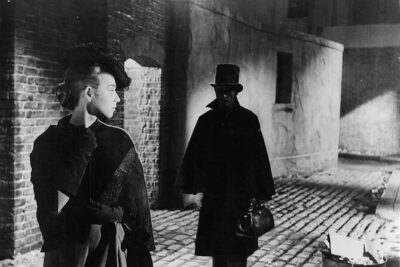
London Jack The Ripper Small-Group Walking Tour
Read our review →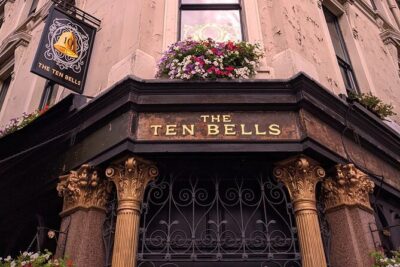
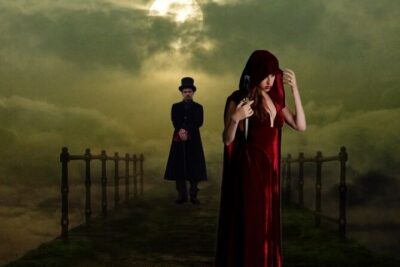
The Original Jack the Ripper Coach Tour of Haunted London
Read our review →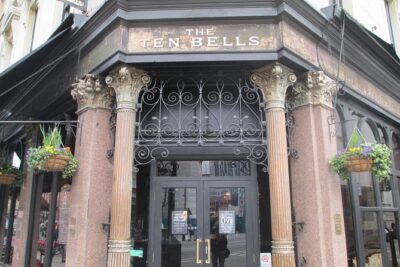
Browse the lists this tour appears in