
Reviewed · JACK THE RIPPER TOURS
Jack the Ripper and Victorian London Beyond the Shadows
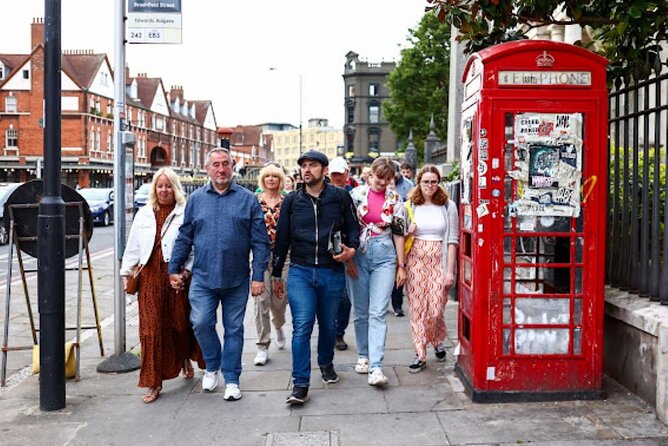
Jack the Ripper is only part of this East End walk. The stronger subject is the world around the murders: poverty, crowded streets, prejudice, unstable work, and the difficult lives of the women whose names are too often reduced to a grisly crime story. Guide Nick builds the evening around those human details, then connects them to the changing streets of modern London.
I like the victim-focused approach, which treats Elizabeth Stride, Catherine Eddowes, and the other women as people rather than props in a murder mystery. I also like the local setting, from Brick Lane to the Ten Bells pub and Goulston Street, because you see how the old East End fits into the neighborhood you are walking through today.
The main consideration is simple: this is a long evening walk, about two and a half hours, and you will cover plenty of ground. The subject includes murder and hardship, so it is not a light sightseeing stroll. Some details are unsettling, and the route can feel less atmospheric if you are expecting preserved Victorian streets at every turn.
Key points to know before you book
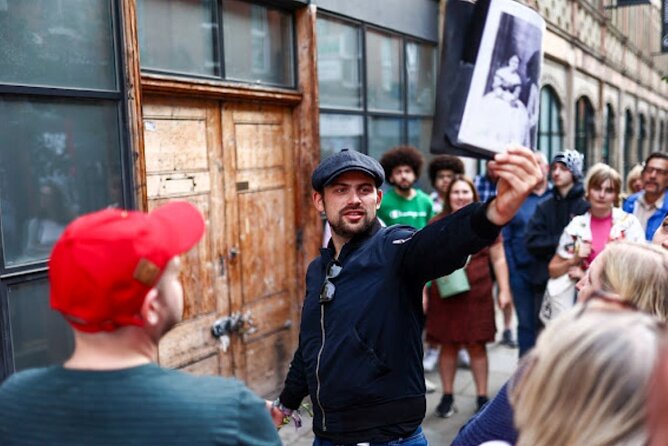
- Nick’s approach centers the victims: You hear about the women’s lives and working conditions, not only theories about the killer.
- The East End is the real setting: Brick Lane, Spitalfields Market, Ten Bells, and Goulston Street all add context to the case.
- The tour lasts about two and a half hours: Wear comfortable shoes and expect a substantial amount of walking.
- The evening start adds atmosphere: The walk begins at 7:30 pm, when the streets take on a different feel.
- The guide keeps it interactive: Nick uses photographs on an iPad, asks questions, and welcomes discussion.
- The price is modest for the length: At $24.98 per person, the tour offers a detailed London history lesson as well as true crime storytelling.
A different kind of Jack the Ripper tour
Many tours built around Jack the Ripper focus on identifying the murderer. This experience takes a more careful route. The killer remains part of the story, but the larger question is how Victorian London shaped the lives of the people involved.
That change in emphasis matters. The women killed in 1888 are often described with one blunt label, even though their circumstances were more complex. Here, you hear about their struggles for shelter, income, safety, and dignity. The murders are placed within the social conditions of the East End instead of being treated as isolated acts of violence.
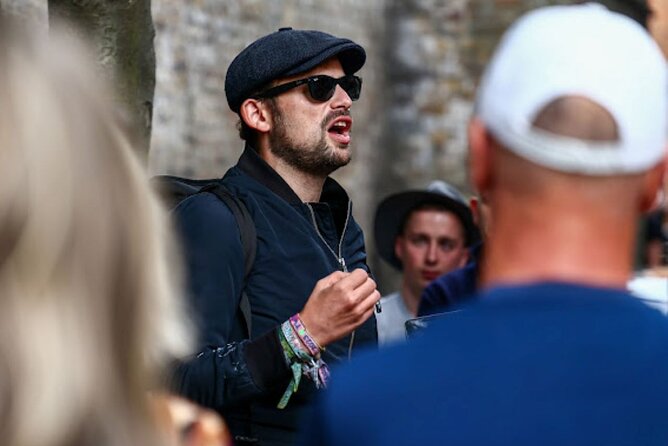
Nick is the guide most often associated with this experience. He is described as a trained historian and a native of the East End, which gives him a useful connection to the streets and local development. He also brings a theatrical touch without letting the performance overwhelm the facts. One account names Matt as the guide, so the guide may not always be Nick, but the central approach appears to remain focused on informed storytelling and audience participation.
The use of an iPad with period photographs is a practical touch. Old images can be hard to picture from a modern street corner, and photographs help connect the people and places to the time. You should still expect a spoken walking tour rather than a museum-style presentation.
More Jack the Ripper Tours in London:
- London Jack the Ripper Guided Tour with Ripper-Vision
★ 4.5 · 4,840 reviews - London Jack The Ripper Guided Walking Tour
★ 5.0 · 3,131 reviews - Ultimate Jack the Ripper : Guided Tour of London
★ 5.0 · 1,495 reviews
Starting at Braham Street at 7:30 pm
The meeting point is on Braham Street in London’s E1 area, with the walk beginning at 7:30 pm. Your mobile ticket and booking confirmation should be ready, and it is wise to arrive with enough time to find the meeting place without rushing.
The start time is one of the tour’s strengths. You are not looking at the East End in bright afternoon light. As the evening develops, the route gives you a better sense of how darkness, narrow streets, poor lighting, and crowded housing could have shaped daily life in 1888.
That said, night tours need a little more planning. You will want comfortable shoes, a coat suited to London weather, and a charged phone. The tour operates in English, and most people can take part, but you should be comfortable standing and walking for much of the evening.
The group can include up to 40 people. That is not a tiny private walk, so you may occasionally need to move close to hear the guide. On the other hand, the group size is still manageable for a street-based tour, and the guide’s interactive style helps keep the experience from feeling like a speech delivered to a crowd.
Brick Lane and the East End’s changing identity
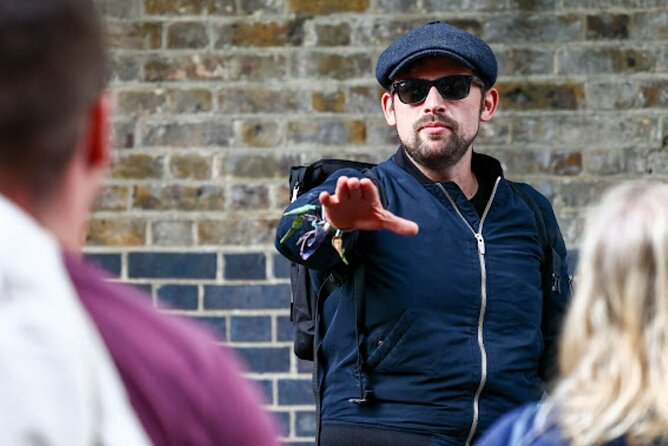
Brick Lane is not just a backdrop for the opening part of the story. It helps explain the economic and cultural forces that shaped the East End in 1888 and the way the area changed later.
You will hear about the struggles of people who lived and worked along these streets, then look at how the neighborhood developed over time. The modern East End is known for food, markets, art, and a mix of communities, but the walk asks you to remember that this was once an area marked by deprivation and insecurity.
That contrast is useful. You can see a neighborhood that is lively and culturally varied today while learning how hard life could be for many residents in the Victorian period. The point is not to pretend that the past survives untouched. It is to understand how London’s districts change, and how old social problems can be hidden beneath a fashionable modern appearance.
Brick Lane can also be busy, especially around its food and shopping areas. That energy may make it harder to hear at times, and it can soften the eerie mood some people expect from a Ripper walk. In exchange, you get a more honest sense of a working London neighborhood rather than a staged horror set.
Spitalfields Market adds modern London to the story
Spitalfields Market is included as a key stop and also serves as the end point at 65 Brushfield Street. Today, it offers food, clothing, and music-related finds, with locals and visitors moving through the market area.
The market gives the tour a welcome change of pace. After hearing about Victorian hardship, you see a part of the East End that has been remade for modern shopping, dining, and leisure. It is a reminder that the same streets can carry very different meanings across generations.
The market is also useful for practical reasons. Since the tour ends there, you can continue your evening with food or a look around the area. The experience does not return you to Braham Street, so check your onward route from Spitalfields before setting out.
As with Brick Lane, the modern activity may not suit anyone seeking a purely dark or old-fashioned atmosphere. I see that as a fair trade. This tour is about the East End beyond the shadows, and the present-day neighborhood is part of that story.
Same country, a completely different day out:
- Stonehenge, Windsor Castle, and Bath from London
★ 4.5 · 18,662 reviews - London Big Bus Hop-On Hop-Off Tour with Optional River Cruise
★ 3.5 · 10,803 reviews - London Small Group Tour of Historical Pubs
★ 5.0 · 10,422 reviews - Stonehenge, Windsor Castle and Bath with Pub Lunch in Lacock
★ 4.5 · 7,402 reviews
The Ten Bells pub and the pull of the case
The historic Ten Bells pub is linked to the Jack the Ripper case and has appeared in documentaries and films about the murders. It is one of the most recognizable stops on the route, and its connection gives the evening a strong sense of place.
A pub tied to a notorious case can easily turn into a gimmick. The value here depends on how the guide handles it. Nick’s style, based on the supplied details, is to use the location as a doorway into the period and the people connected to it, rather than treating the pub as proof of every popular claim.
You should expect discussion of the case, the surrounding streets, and the way the Ripper story has been shaped by later books, films, and television programs. That distinction between documented facts and later myth is important. The tour aims to challenge misconceptions, particularly the habit of describing all the victims in simplistic terms.
The Ten Bells stop is atmospheric, but the pub itself is not presented as a private attraction or exclusive venue. The experience is a street walk, so you should not assume that you will sit down for a drink or receive a pub admission. The location is part of the route and the storytelling.
Goulston Street and the events of September 30, 1888
Goulston Street is another significant stop. It has links to the Ripper case and to the unrest that followed the double murders of Elizabeth Stride and Catherine Eddowes on September 30, 1888.
This part of the walk connects crime with public reaction. The murders did not happen in a vacuum. Fear, rumor, anger, and suspicion spread through the East End, and the events affected how people viewed the police, the press, and their own streets.
The route lets you follow the geography of the case rather than hearing the story as a list of dates. Moving from one location to another helps you understand how close these places were and how quickly a night could turn dangerous. The guide’s chronological method is particularly useful here, since the sequence of events can become confusing when you only know the famous names.
Goulston Street may not look dramatic to a modern eye. That is part of the lesson. London changes, buildings disappear, and ordinary streets can carry stories that are not obvious from their present appearance. The guide has to create the connection with words, maps, and photographs, and Nick appears to do that with care.
The people behind the headlines
The most valuable part of this experience is the attention given to the women. You are not asked to see them only as victims in a famous criminal case. You learn about the hard choices and social pressures that shaped their lives.
The tour also places their experiences within Victorian East End society. Poverty was not an abstract backdrop. It affected where people slept, how they found work, how safe they were, and how quickly illness or unemployment could push them into crisis.
That context makes the case more troubling, but also more meaningful. You come away with a clearer sense of why the murders caused such fear and why the women deserve to be remembered beyond the way they died.
Nick’s tone is described as respectful, factual, and sympathetic. He is also funny and theatrical at times, which can help keep a two-and-a-half-hour walk moving. The humor does not appear to replace the seriousness of the subject, but anyone sensitive to crime-tour entertainment should know that the guide uses a lively presentation style.
How the storytelling works on the street
This is an interactive tour. You can ask questions, and the guide works to involve the whole group rather than speaking only to the loudest people. That helps families and mixed-age groups stay connected to the story.
The guide also uses period photographs on an iPad. The images give you something concrete to look at while standing in places that may have changed greatly since 1888. If you enjoy asking questions, you will likely get more from the experience. Nick is described as someone who enjoys talking about the subject, so curious participants should make use of that.
The chronology is another advantage. The case contains many names, dates, locations, and competing ideas. A guide who moves in order through the events can make the material easier to follow than a tour built around disconnected spooky anecdotes.
Still, the experience is not a formal academic lecture. Expect strong storytelling, discussion, and interpretation. If you want a strictly neutral presentation with every point reduced to a footnote, this may feel too theatrical. If you want facts placed into a human and local setting, the format should work well.
Is $24.98 good value?
At $24.98 per person, this is a fairly accessible way to spend an evening in London. You receive about two and a half hours of guided walking, local context, period images, and a route through several East End locations.
The value improves if you want more than a simple who-did-it story. Brick Lane, Spitalfields Market, Ten Bells, and Goulston Street give you a broader view of the district, while the discussion of Victorian living conditions adds substance. You are paying for the guide’s research and storytelling as much as for the places themselves.
The price is less compelling if you only want to see a few famous Ripper landmarks and take photographs. Much of the experience depends on listening, imagining the past, and asking questions. There is no museum entry, meal, or listed indoor attraction included.
The tour is frequently booked well ahead, with an average booking time of 63 days. That does not guarantee that every date sells out, but it is a good reason to reserve early if the 7:30 pm start fits your plans.
Who will enjoy this East End walk?
I would recommend it most strongly to:
- True crime fans who want a factual and less sensational approach
- History-minded visitors interested in Victorian London
- People curious about the East End’s social and cultural changes
- Families with older children who can handle serious subject matter
- Visitors who enjoy asking questions and taking part in discussion
- Repeat visitors who want to see a side of London beyond central landmarks
The walk may not suit anyone with limited mobility or anyone who dislikes extended evening walks. The information says most people can participate and service animals are allowed, but it does not promise a fully step-free route or provide a detailed accessibility assessment.
You should also think about the emotional tone. This is a respectful presentation, but it still deals with murder, poverty, and fear. It is not designed as a casual pub crawl or a playful ghost walk.
Practical details that matter
The tour begins at Braham Street, London E1, and ends at Spitalfields Market, 65 Brushfield Street, London E1 6AA. Since the start and end points differ, plan your route home from Spitalfields rather than assuming you will finish where you began.
The experience is offered in English and comes with a mobile ticket. It is near public transportation, which helps with both arrival and departure. Bring a phone, but do not rely on it as your only way to find the group. Arriving early gives you time to check the meeting point calmly.
Free cancellation is available up to 24 hours before the local start time for a full refund. Changes or cancellations made inside that 24-hour window are not accepted for a refund, so keep the cut-off in mind when arranging an evening during an unpredictable London stay.
Should you book Jack the Ripper and Victorian London Beyond the Shadows?
Book this tour if you want the Jack the Ripper story placed inside the real East End, with attention to the women, Victorian poverty, and the neighborhood’s later development. Nick’s strengths are his local connection, period photographs, interactive style, and careful focus on facts and victims. The 2.5-hour length also gives the subject room to breathe.
Skip it if you want a short, purely sensational crime walk, a seated presentation, or a route with little walking. At $24.98, it is good value for a detailed evening tour, but the value comes from the guide and the storytelling rather than from paid attractions.
For most history buffs and thoughtful true crime fans, I would book it, wear comfortable shoes, and arrive ready to listen closely. The best reason to go is not to learn one more suspect’s name. It is to leave with a better understanding of the people and society behind one of London’s most famous crimes.
FAQ
Where does the tour begin?
The tour begins at Braham Street, London E1, United Kingdom.
Where does the tour end?
The tour ends at Spitalfields Market, 65 Brushfield Street, London E1 6AA.
What time does the tour start?
The scheduled start time is 7:30 pm.
How long does the experience last?
The tour lasts approximately 2 hours and 30 minutes.
How much does the tour cost?
The listed price is $24.98 per person.
Is the tour offered in English?
Yes. The tour is offered in English.
Is a mobile ticket available?
Yes. The experience includes a mobile ticket.
How many people can join the tour?
The maximum group size is 40 people.
Are service animals allowed?
Yes. Service animals are allowed.
Can I cancel for a full refund?
Yes. You can cancel at least 24 hours before the experience start time for a full refund. Cancellations made less than 24 hours before the start time are not refunded.
Just added around London
- Private The Beatles Taxi Tour in London★ 5.0 · 12 reviews
- Dinner and Jazz Cruise on the River Thames★ 4.0 · 140 reviews
- Airport Coach Service from Heathrow to Oxford★ 3.5 · 67 reviews
- The Alfred Hitchcock London Walk with Sandra Shevey★ 5.0 · 15 reviews
- Tower of London & 30+ London Sights Walking Tour★ 4.5 · 33 reviews
- Thames Beachcombing★ 4.5 · 100 reviews
- Ted Lasso Tour of Richmond with Private Guide★ 5.0 · 25 reviews
- Ted Lasso Tour of Richmond★ 5.0 · 152 reviews
Jack the Ripper Tours, compared.
London Jack the Ripper Guided Tour with Ripper-Vision
Read our review →
Ultimate Jack the Ripper : Guided Tour of London
Read our review →
London Jack The Ripper Small-Group Walking Tour
Read our review →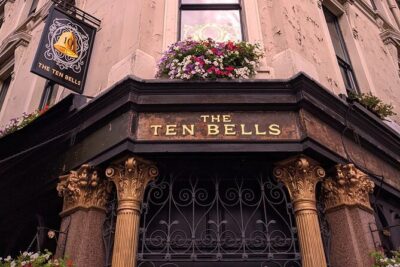
The Original Jack the Ripper Coach Tour of Haunted London
Read our review →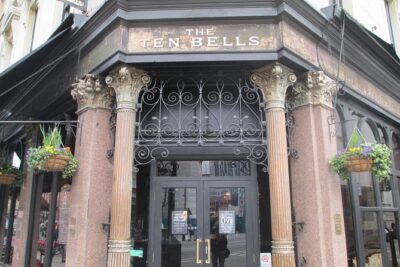
Browse the lists this tour appears in