
Reviewed · JACK THE RIPPER TOURS
London – Jack the Ripper Small Group Tour
Jack the Ripper’s crimes become far more unsettling when you walk the streets where they happened. This two-hour, 15-minute evening tour moves through Whitechapel and Spitalfields, linking four murder sites with the poverty, lodging houses, pubs, and streets of Victorian London.
I like two things in particular: Richard Walker treats the women as people rather than props in a grisly mystery, and his radio microphone and earphones let you hear every word beside noisy roads. The iPad images also help you picture streets that have changed greatly.
The main drawback is the format. You spend long stretches standing while Richard tells the story, and this is not a spooky ghost walk built around gore. You need comfortable shoes and a moderate level of fitness.
Key points to know before booking
- Victim-focused storytelling: Learn about the five women, their living conditions, and the assumptions made about them.
- A genuine small-group feel: The tour allows up to 15 people, far fewer than the 30 to 40-person groups often seen nearby.
- Useful listening equipment: A radio microphone and earphones make Richard easy to hear in busy East London.
- Four murder sites and several suspects: The route connects crime scenes with police and FBI profiling theories.
- A brisk 1.5-mile walk: Expect a useful amount of walking, but also time spent listening in place.
- A historical rather than horror experience: It suits true-crime and social-history fans more than visitors seeking scares.
What kind of Jack the Ripper tour is this?
Many Jack the Ripper walks lean hard into fog, blood, sinister music, and the familiar image of a top-hatted killer hunting prostitutes. This one takes a different route. Richard Walker focuses on what can be established, what was assumed, and how the victims lived before their deaths.
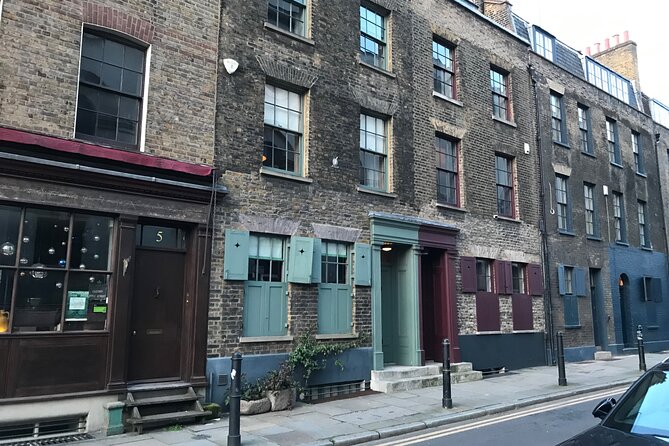
That approach gives the evening more substance. You hear about Whitechapel as a working-class district, the lodging houses where people rented beds, and the harsh choices faced by poor women in 1888. The murders remain central, but the women are not reduced to names in a police file.
You will also hear theories. Richard examines a suspect connected to the first killing, another who fits both a Scotland Yard geographical profile and an FBI profile, and a third linked to Mary Kelly’s story. The point is not to pretend the case has been solved. It is to show how different pieces of evidence have been used, and how weak or uncertain some accepted claims can be.
That makes this a good choice if you enjoy weighing evidence. It is less suitable if your idea of a successful night means a frightening performance with dramatic reenactments.
More Jack the Ripper Tours in London:
- London Jack the Ripper Guided Tour with Ripper-Vision
★ 4.5 · 4,840 reviews - London Jack The Ripper Guided Walking Tour
★ 5.0 · 3,131 reviews - Ultimate Jack the Ripper : Guided Tour of London
★ 5.0 · 1,495 reviews
Starting opposite the London Hospital
Meet at 279 Whitechapel Road at 7 p.m., opposite the London Hospital. This opening location connects to Emma Elizabeth Smith, who died after a brutal attack on April 3, 1888.
Smith is described as the first victim of the Whitechapel Murders, a wider series of attacks that helped create the climate of fear around the later Jack the Ripper killings. Beginning with her gives the tour useful context instead of dropping you straight into the most famous crime scenes.
You are out on a city street from the start, not entering a museum or private attraction. Admission at this stop is free, and the opening talk lasts about 10 minutes. Arrive ready for an evening outdoors, since there is no indoor introduction built into the experience.
Buck’s Row and the first murder
The next stop is Buck’s Row in Whitechapel, the site associated with Polly Nichols, described here as Jack the Ripper’s first victim. Richard reconstructs when, where, and how the murder occurred, then introduces the first suspect.
This is where the tour takes on its crime-scene-investigation style. Rather than simply naming the street and moving on, you consider the physical setting and the practical question of how an attack could happen swiftly and quietly.
The value of this stop is its attention to uncertainty. Witness statements, police conclusions, and later theories do not always line up neatly. Richard’s presentation asks you to separate evidence from ideas that have been repeated so often they can sound certain.
The stop lasts around 20 minutes. That is enough time for a detailed explanation, but it also means you may be standing in one place for a while. If you need frequent seats, this format could be tiring.
Brick Lane, lodging houses, and the police profile
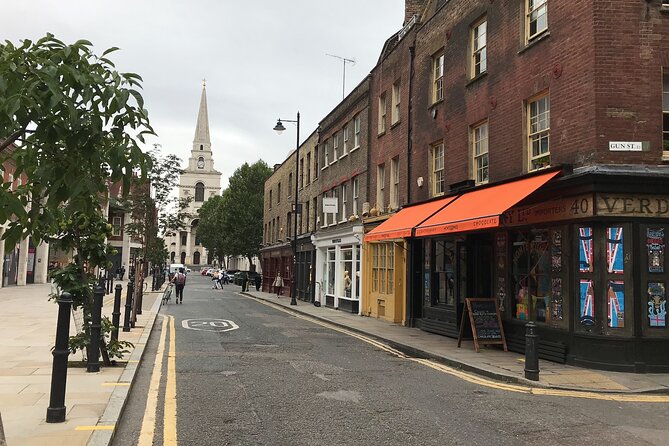
Brick Lane is best known today for curry restaurants and East London food culture, but on this walk it becomes a map of the victims’ world. The route follows the eastern boundary of the area where all five women lived at the time of the murders.
You hear about Thrawl Street, which ran from Brick Lane toward Commercial Street, and Wilmott’s Lodging House, where Polly Nichols stayed. Flower and Dean Street also enters the story because the third and fourth victims lived there. Richard explains why Scotland Yard believed the killer might have lived nearby.
This is one of the strongest parts of the route for anyone interested in detective work. Richard compares a Scotland Yard geographical profile from 2008 with a profile created by FBI Special Agent John Douglas in 1988. The profiles are used to examine a second suspect, not to present a final answer.
The Brick Lane stop lasts about 20 minutes. It combines street geography with social detail, helping you understand why location matters in an unsolved case. It also gives you a feel for how close the murder sites and lodging houses were to one another.
Same country, a completely different day out:
- Stonehenge, Windsor Castle, and Bath from London
★ 4.5 · 18,662 reviews - London Big Bus Hop-On Hop-Off Tour with Optional River Cruise
★ 3.5 · 10,803 reviews - London Small Group Tour of Historical Pubs
★ 5.0 · 10,422 reviews - Stonehenge, Windsor Castle and Bath with Pub Lunch in Lacock
★ 4.5 · 7,402 reviews
Christ Church Spitalfields and the Ten Bells
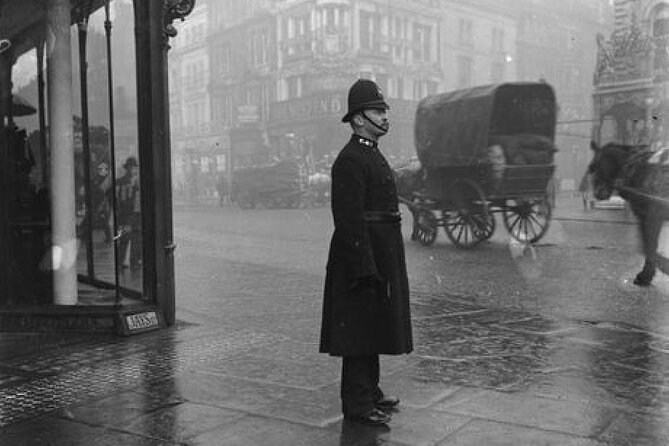
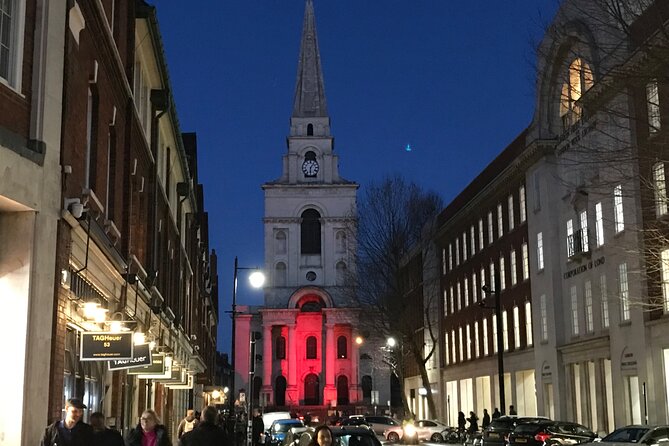
Christ Church Spitalfields brings a striking architectural pause to the route. The church is a major work by Nicholas Hawksmoor and faces the Ten Bells pub.
The pub takes its name from the church’s bells and is linked to the women who drank there. The building has become one of the best-known Jack the Ripper landmarks, but Richard uses it as part of the neighborhood story rather than as a theatrical prop.
You spend around 15 minutes here. Admission to the church or pub is not included, and the tour does not promise an interior visit. Treat this as an exterior stop with historical explanation.
This location also shows how much the area has changed. The church and pub remain visible, while the old streets, housing, and social conditions have been altered or redeveloped. Richard’s period images help bridge that gap.
Old Spitalfields Market and Victorian poverty
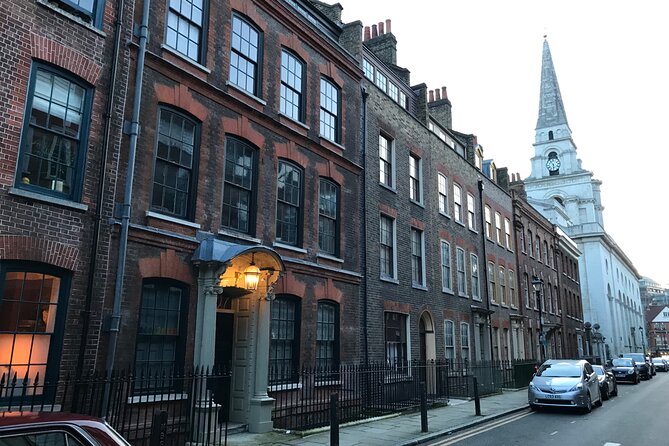
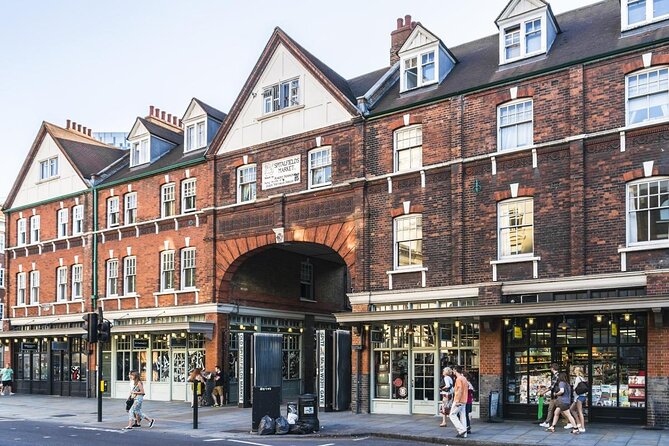
Old Spitalfields Market has served as a community center for centuries. On the tour, it is connected with the American writer Jack London, who witnessed severe poverty in Victorian London.
That detail widens the story beyond murder. You begin to see why lodging houses, markets, pubs, alleys, and churches mattered so much to people living on the edge of poverty. The setting was not just a backdrop for crime. It was a place where work, shelter, drinking, charity, and survival overlapped.
This stop lasts about 15 minutes and admission is free. The market is also a useful point of orientation because the modern area feels very different from the one Richard describes. The contrast between present-day Spitalfields and the period images is part of the appeal.
Spitalfields, Dorset Street, and Mary Kelly
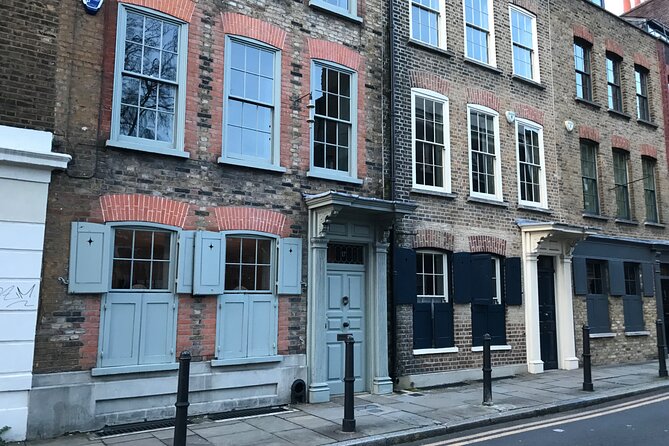
The final section takes you into Spitalfields, where Richard describes the worst street in London and traces the lives of Annie Chapman and Mary Kelly.
Chapman, identified as the second victim, was living in the area until the night she was murdered. Mary Kelly lived and died here as well, but Richard presents her as a different kind of victim, with a background that leads to a third suspect.
This final stop lasts about 20 minutes. It brings together the route’s main ideas: the lives of the women, the geography of the killings, the realities of poor housing, and the limits of the evidence.
Mary Kelly’s story is also where the tour’s tone can feel heaviest. Richard still avoids turning the deaths into a horror show, but the material is serious and sometimes disturbing. You should be comfortable discussing historical violence without expecting graphic stage effects.
The walk ends at 126A Middlesex Street, beside Liverpool Street Station. That is convenient after a late evening because the station serves the Central, Circle, Hammersmith and City, Metropolitan, and Elizabeth lines.
Richard Walker’s guiding style
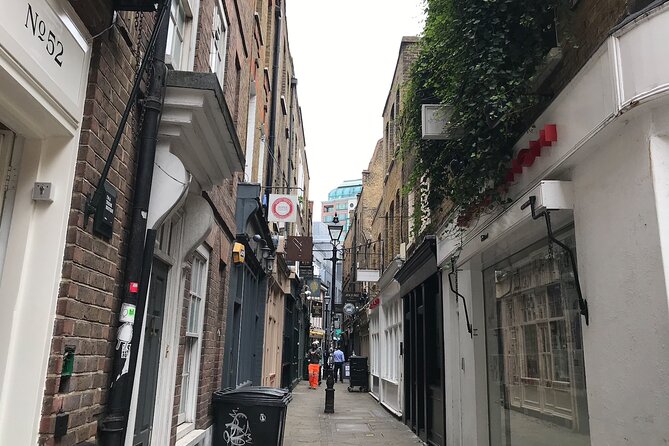
Richard Walker is the guide and the clear personality at the center of this experience. His style is enthusiastic, conversational, and built around research. He uses an iPad to display historical images, and the radio headset system is especially helpful when traffic or crowds make ordinary guiding difficult.
The equipment matters more than it may sound. On a street walk, a guide can be hard to hear when the group is spread out or standing near a busy road. The earphones let you look around without constantly leaning toward the speaker.
Richard also welcomes questions, though the amount of interaction depends on the group. Some groups ask plenty; others mainly listen. If you want a discussion, bring questions about suspects, police methods, or the social conditions of Whitechapel.
The tour’s small size adds to that possibility. The stated maximum is 15 people, and groups may be smaller. That is still not a private tour, but it is a major contrast with the 30 to 40-person groups you may pass during the evening.
How the price compares with the experience
At $41.67 per person, this is not the cheapest way to hear about Jack the Ripper in London. You are paying for a focused walk with a specialist guide, a small-group limit, audio equipment, period visuals, and a route that connects several locations.
I think the price is fair if you care about clear guiding and detailed explanation. The headset alone solves one of the most common problems on city walks, and the smaller group makes it easier to stay close, ask questions, and follow the evidence.
The value is weaker if you mainly want a quick stroll through atmospheric lanes. The tour spends time on victim biographies, geographical profiling, and competing theories. You may prefer a cheaper, larger group if you want broad entertainment rather than careful examination.
Tea and coffee are not included. You might want to eat beforehand or plan a drink afterward, though the provided details do not promise a refreshment stop.
Walking, timing, and what to wear
The tour starts at 7 p.m. and lasts about two hours and 15 minutes. It covers roughly 1.5 miles, or 2.5 kilometers, but distance is only part of the physical demand.
You will walk between stops and also spend time standing while Richard speaks. Wear comfortable shoes, and dress for London weather. The tour is not suitable for people with walking difficulties, and a moderate level of fitness is advised.
Because it takes place after dark, staying with the group matters. One practical advantage is that Richard leads you through East London’s streets, so you do not need to work out the route while listening to the story.
The tour is offered in English and uses a mobile ticket. Confirmation is sent when you book. The experience runs on Thursdays and Fridays according to the supplied tour information, so check the available date before making evening plans.
Who will enjoy this walk most?
I would choose this tour for someone who has read about the case and wants more than the standard list of suspects. Richard’s willingness to question accepted assumptions makes it useful even if you already know the basic story.
It also suits people interested in Victorian society, urban poverty, policing, and the history of Whitechapel. The Jack the Ripper material is the hook, but the neighborhood context gives the walk its lasting value.
Families with older children may find the presentation manageable because it is not built around graphic scares. Still, the subject concerns real murders, so parents should decide if the material suits their children.
True-crime fans should note the balance carefully. You will hear about suspects and methods, but the strongest emphasis is on the victims and the facts that can be examined. If you want gore, ghosts, or a theatrical villain, choose another style of tour.
Should you book it?
Book this walk if you want a serious, personal look at Whitechapel, guided by Richard Walker and supported by period images, audio equipment, and competing theories. The small group and victim-focused approach give it more care than a standard crowd-led mystery walk.
Skip it if you want a seated experience, frequent stops for coffee, or a frightening horror production. For everyone else, the combination of four murder sites, East London history, and a practical look at the evidence makes the $41.67 fee reasonable. Remember that the booking is non-refundable and cannot be changed, so choose your date carefully.
FAQ
How long does the Jack the Ripper tour last?
The tour lasts approximately two hours and 15 minutes.
What time does the tour begin?
The tour starts at 7 p.m.
Where does the tour begin?
It begins at 279 Whitechapel Road, London E1 1BY, opposite the London Hospital.
Where does the tour end?
It ends at 126A Middlesex Street, by Liverpool Street Station.
How many people can join the tour?
The maximum group size is 15 people.
Is the tour suitable for people with walking difficulties?
No. The tour requires a moderate level of physical fitness, covers about 1.5 miles, and includes extended periods of standing.
Are food and drinks included?
No. Coffee and tea are not included.
Is admission to the Ten Bells pub or Christ Church Spitalfields included?
No. Admission at Christ Church Spitalfields is not included. The provided tour details do not promise an interior visit to either location.
Just added around London
- Private The Beatles Taxi Tour in London★ 5.0 · 12 reviews
- Dinner and Jazz Cruise on the River Thames★ 4.0 · 140 reviews
- Airport Coach Service from Heathrow to Oxford★ 3.5 · 67 reviews
- The Alfred Hitchcock London Walk with Sandra Shevey★ 5.0 · 15 reviews
- Tower of London & 30+ London Sights Walking Tour★ 4.5 · 33 reviews
- Thames Beachcombing★ 4.5 · 100 reviews
- Ted Lasso London Taxi Tour★ 5.0 · 5 reviews
- Ted Lasso Tour of Richmond with Private Guide★ 5.0 · 25 reviews
Jack the Ripper Tours, compared.
London Jack the Ripper Guided Tour with Ripper-Vision
Read our review →
Ultimate Jack the Ripper : Guided Tour of London
Read our review →
London Jack The Ripper Small-Group Walking Tour
Read our review →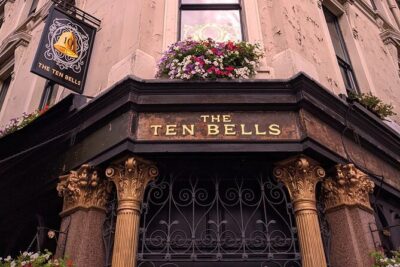
The Original Jack the Ripper Coach Tour of Haunted London
Read our review →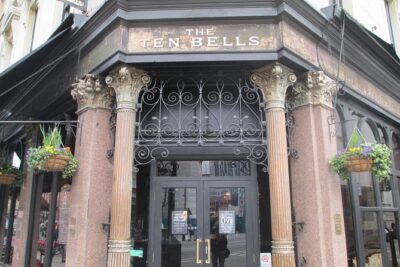
Browse the lists this tour appears in