
Reviewed · PHOTOGRAPHY SESSIONS
London Photography Tour – Private Tour
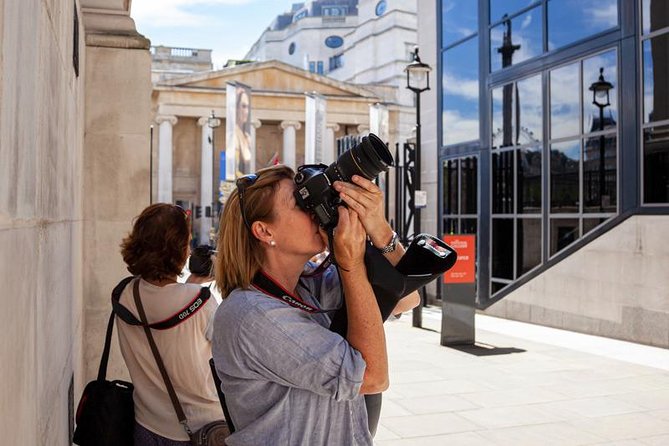
The clever part of this private London photography tour is that the city becomes your classroom. Instead of simply collecting snapshots of Big Ben and red buses, you learn why one angle works better than another, how light changes a scene, and how to make your camera behave. Guide Lou is an experienced Fine Art photographer and teacher who works with cameras ranging from SLRs to smartphones.
I like the one-to-one coaching, which lets you ask about your own camera rather than sit through a generic lesson. I also like the route: it links Trafalgar Square, Piccadilly Circus, Whitehall, Parliament, Westminster Abbey, and the London Eye in one half-day walk. The main consideration is price: at $336.40 per person, this is a serious spend unless you value private instruction or can use a group discount.
Key points at a glance
- A private lesson on London’s biggest sights: Only your group takes part, so the photographer can adjust the pace and advice to your skill level.
- Practical camera coaching: You work on aperture, depth of field, shutter speed, focus, white balance, framing, and lens choice in real settings.
- A strong central London route: The tour runs from Charing Cross to the Victoria Embankment area, passing major sights rather than staying in one district.
- Useful for beginners and experienced photographers: You can bring an SLR, digital camera, or smartphone and ask for help with the equipment you already own.
- A chance to review your progress: The route includes a short working break to look at your photographs and decide what to improve next.
- A fully outdoor experience: No attraction admissions are included, and the tour operates in all weather, so dress for London’s conditions.
Why this tour is more than a sightseeing walk
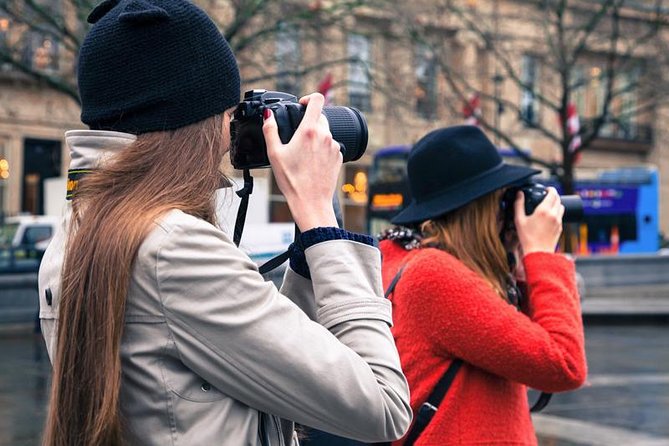
A standard sightseeing walk asks you to keep up and take notes. This tour asks you to slow down and look. At Trafalgar Square, that may mean deciding how much of the National Gallery belongs in the frame, using the fountains as foreground, or waiting for a street entertainer to add movement.
That change in purpose is valuable. You still see many of central London’s familiar sights, but you pay attention to lines, scale, shadows, people, and background clutter. A professional photographer can spot the small problem you may miss, such as a distracting sign behind a statue or a bright patch of sky pulling attention away from your subject.
The private format matters here. If you are new to photography, you can spend time on basic camera handling without feeling rushed. If you already understand exposure, you can move on to stronger composition, portraits, or using different focal lengths. A family or couple can also share the lesson while keeping the group limited to people they know.
The tour is conducted in English and lasts about four hours. It is not a sit-down photography workshop. You spend the time walking between locations, making photographs, checking settings, and talking through choices. Comfortable shoes are a must.
A few more London trips to weigh up
- Professional Photoshoot in London Photographer
★ 5.0 · 102 reviews - Private landmarks photoshoot for families and couples
★ 5.0 · 92 reviews - Professional Private Photoshoot in London
★ 5.0 · 63 reviews
Trafalgar Square: start with composition and light
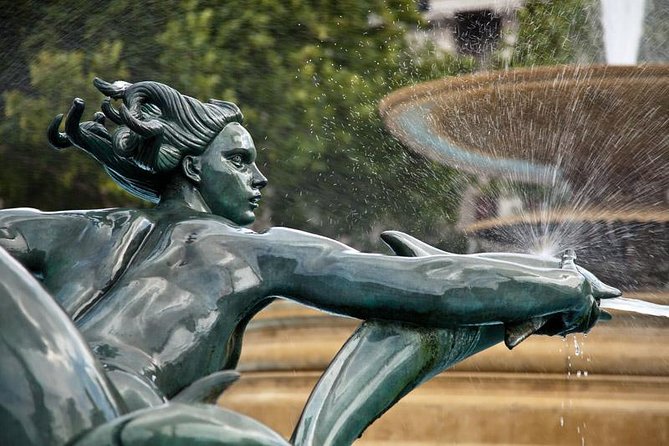
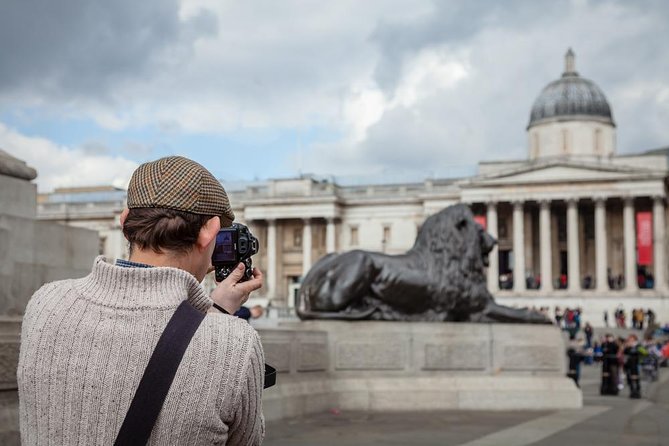
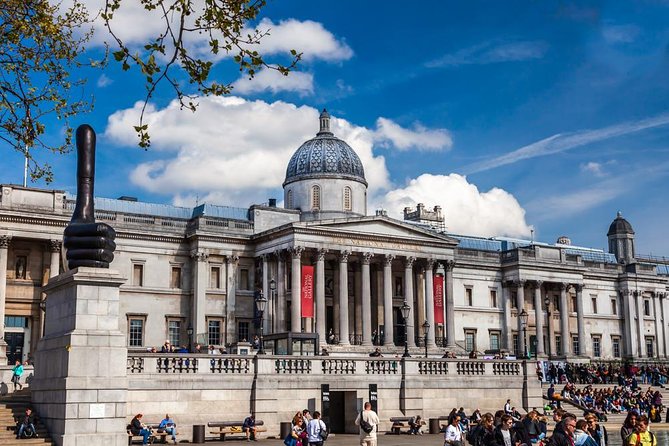
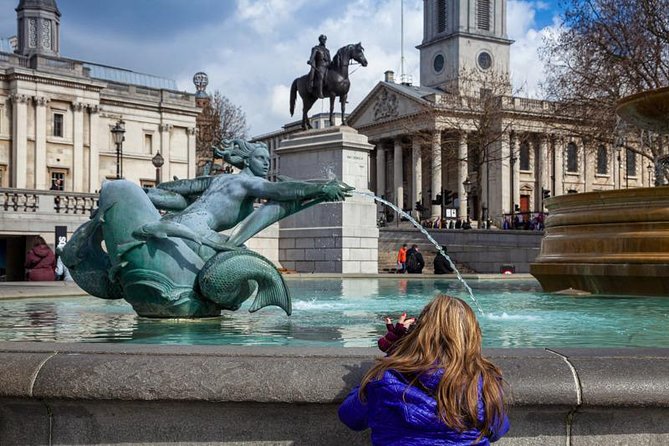
The meeting point is at Charing Cross, a handy rail and Tube location. From there, you head to Trafalgar Square, where the grand scale can overwhelm a camera. The square offers the Landseer lions, fountains, statues, the National Gallery, street performers, pavement art, and long views toward Whitehall.
This is a good opening lesson because it gives you many subjects at different distances. You can practice framing a statue tightly, using the fountains to lead the eye, or setting a wider view that includes the surrounding architecture. You also work with aperture and depth of field, which helps you decide whether the background should be sharp or soft.
Street entertainers and chalk artists offer a chance to photograph human activity instead of only monuments. The challenge is that Trafalgar Square can contain plenty of visual noise. Your photographer’s help with composition and lens choice is most useful here, where a small change in position can clean up a busy frame.
The scheduled time is about 35 minutes, the longest single stop early in the tour. No admission ticket is needed for the square.
The National Gallery: use architecture as a subject
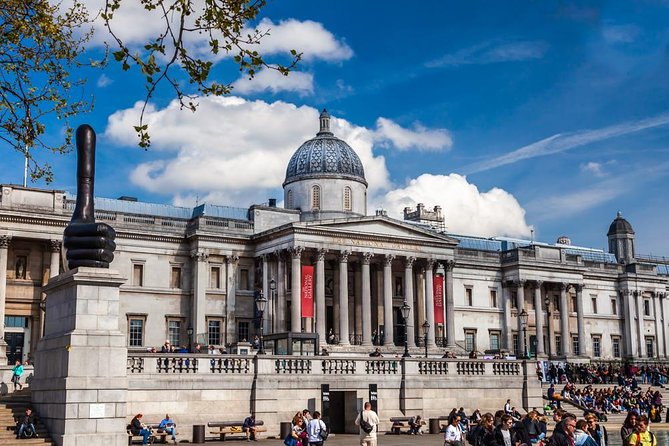
The National Gallery receives about 15 minutes from the outside. The focus is not on visiting the collection, but on photographing the building and its setting.
Here you work with angles of view, focusing, and depth of field. The building’s columns, steps, repeated lines, and broad facade give you a chance to make a more deliberate architectural image. Try changing your position before changing your camera settings. A few steps to one side may create stronger symmetry or reveal a useful contrast between the structure and the open square.
The short stop is enough for instruction, but it is not a museum visit. If you want to see the paintings inside, plan separate time before or after the tour.
Leicester Square: statues, gardens, and portrait practice
The walk continues to Leicester Square, a natural place to shift from formal architecture to smaller compositions. The square includes gardens, fountains, and a prominent statue of William Shakespeare, along with a statue of Charlie Chaplin.
You practice framing, light, aperture, depth of field, and general camera handling. A statue is a useful portrait subject because it does not move, giving you time to try several settings. You can also look for details rather than photographing the whole figure every time.
Leicester Square is linked with film premieres and red-carpet events, but the photography lesson does not depend on celebrity sightings. The value is in learning to find fresh angles in a place you might otherwise record with a quick phone picture.
The stop lasts about 25 minutes. The route is described as leisurely, though you should still expect a fair amount of walking over the full four hours.
Same country, a completely different day out:
- Stonehenge, Windsor Castle, and Bath from London
★ 4.5 · 18,662 reviews - London Big Bus Hop-On Hop-Off Tour with Optional River Cruise
★ 3.5 · 10,803 reviews - London Small Group Tour of Historical Pubs
★ 5.0 · 10,422 reviews - Stonehenge, Windsor Castle and Bath with Pub Lunch in Lacock
★ 4.5 · 7,402 reviews
Piccadilly Circus: turn everyday London into photographs
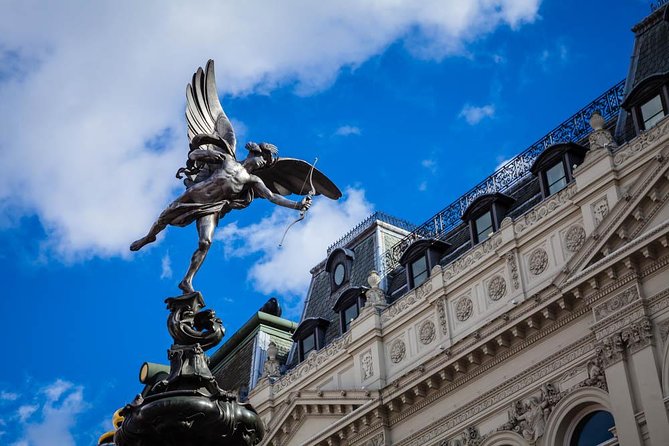
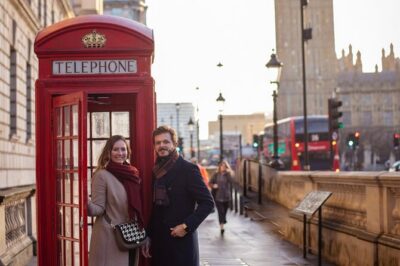
From Leicester Square, the route uses side streets and small shops before reaching Piccadilly Circus. This section gives you a mix of classic London subjects: red telephone boxes, red buses, the Statue of Eros, and banners above Regent Street.
It is also one of the best places to practice seeing. A bus may provide color and scale. A telephone box can frame a street view. A statue may work better from a low angle, while a shopfront could become a study in reflections and repeating shapes.
The photographer covers camera handling, composition, light, white balance, and new ways to read a familiar location. You also take a short working break to review your progress. That pause is important. It gives you a chance to notice if your pictures are too dark, soft, crowded, or loosely framed before the most important stops arrive.
This section has about 45 minutes, making it one of the more useful blocks for hands-on practice. You are not only being shown a subject. You are being asked to make choices.
Whitehall and Horse Guards Parade: photographing movement
The route then heads through Admiralty Arch, Horse Guards Parade, and Whitehall. Here the mood changes from commercial London to ceremonial London. You can photograph mounted guards and sentries in colorful uniforms, then use the setting for imposing portrait-style images.
The technical lessons become more specific. You work on aperture values for portraits, shutter speed to freeze action, focusing techniques, and fill flash. Mounted guards are a good reason to discuss shutter speed, since movement can turn a carefully framed photograph into a blur. The photographer can also help you decide where to focus and how much of the surrounding setting to retain.
This stretch includes the Cabinet War Rooms, statues honoring the Women of the Second World War, and a fine Westminster Tube sign. Those details widen the subject range. You can photograph people, horses, monuments, signs, and architecture without changing neighborhoods.
The scheduled time is about 40 minutes. Conditions around guards and horses can change, so the exact photographic opportunities may depend on what is happening at the time of your visit. The tour promises guidance, not a guaranteed close-up or posed portrait.
Big Ben and Parliament Square: classic images with a purpose
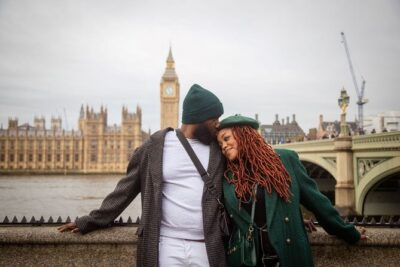
At Westminster, you photograph the Houses of Parliament and Big Ben, along with a red telephone box in this familiar setting. The sight is iconic, but that does not make it easy to photograph well. Wide views can lose the detail of the clock tower, while tight views can leave out the relationship between the tower, river, and surrounding buildings.
The stop at Big Ben is about 15 minutes, followed by about 30 minutes in Parliament Square. In the square, the photographer guides you toward statues of Winston Churchill, Mahatma Gandhi, and Nelson Mandela, using the Houses of Parliament as a backdrop.
This is where scale and placement matter. A statue can look flat if the background is too bright or cluttered. A modest change in angle may place the figure against a cleaner section of stonework or sky. You can also compare a portrait view with a wider image that shows the statue’s setting.
The route does not include entry to the Houses of Parliament. You photograph the exterior and nearby public spaces.
Westminster Abbey: scale and architectural detail
Westminster Abbey is photographed from outside during a stop of about 15 minutes. Its royal and national associations give the building strong subject value, but the architecture is the real lesson here.
You work on composition, framing, scale, lens choice, zoom selection, and creative aperture settings. A building this large can be difficult to fit into one frame. You may choose a wider view to show the full facade, then switch to details such as stonework, windows, or pointed arches.
This stop is short, so prepare to work efficiently. If architectural photography interests you, keep an eye on the edges of your frame and check that vertical lines do not distract from the subject. Your photographer can help you decide when to step back, change focal length, or focus on a detail instead of forcing the whole building into one picture.
The London Eye and the river: finish with scale
The final listed stop is across the river from the London Eye, where you photograph the wheel from a distance. At 443 feet, or 135 meters, it is a clear lesson in scale and proportion.
The photographer discusses framing, lighting, lens choice, depth of field, shutter speed, focus, and camera handling. River views and passing activity add changing elements, so you can compare still architectural images with pictures that include movement.
This is a useful ending because it brings together many of the tour’s earlier ideas. The London Eye can be photographed as a full circle, partly hidden behind another subject, or set against a wider river view. The best choice depends on the light and the camera you bring.
The tour ends around Victoria Embankment. Since no refreshments or lunch are included, plan your own meal or coffee before or after the walk.
What you actually learn with your camera
The instruction is practical rather than abstract. You are using the settings at the moment they matter, with a real subject in front of you.
Across the route, you can expect help with:
- Aperture and depth of field
- Shutter speed for action
- Focus and focusing techniques
- Composition and framing
- Light and exposure
- Angles of view
- Lens choice and zoom selection
- White balance
- Fill flash
- Basic handling for your own camera
The photographer can work with all types of digital cameras, including smartphones. That makes the tour more approachable than a lesson aimed only at interchangeable-lens cameras. Still, you will get the most technical depth if you bring a camera with manual controls and know how to access its basic settings.
Bring a fully charged battery and extra memory cards. The route offers many chances to make photographs, and it would be frustrating to stop early because your card or battery is full. You review your photographs during the tour, but the included service is instruction and progress review, not a promise of edited images or a separate photo package.
Is $336.40 per person good value?
At $336.40 per person, this is not a budget sightseeing tour. You are paying for a private professional photographer, a four-hour route, instruction tailored to your equipment, and exclusive use for your own group. Group discounts may improve the arithmetic if several people share the experience.
The value depends on your goal. If you only want someone to point out London sights, the price is hard to justify. You can see these public places on your own. If you want to improve your photography and leave with stronger pictures plus skills you can use on future trips, the cost makes more sense.
The private setup is especially useful for a parent and teenager, a couple with different experience levels, or a serious beginner who wants patient help. One participant brought a 17-year-old daughter with an SLR, and the format worked for both of them. The lesson can also suit a more experienced photographer who wants feedback on composition and exposure rather than a basic introduction.
No attraction admissions, lunch, or drinks are included. That keeps the tour focused, but remember to budget for your own refreshments.
Who should book this private London photo tour?
You should consider it if you want to:
- Learn how to use the camera or phone you already own
- Photograph London’s major sights with more care
- Get personal help instead of a large group lesson
- Improve composition, focus, exposure, or sharpness
- Give a photography-minded teenager or family member a useful activity
- Combine sightseeing with a creative skill
It may not suit you if you dislike walking, want extensive time inside museums and churches, or prefer a relaxed sightseeing tour with little instruction. The route is active and outdoor-focused. You will also need to be comfortable working around public spaces, changing light, and the normal unpredictability of central London.
The tour operates in all weather. Dress appropriately, and remember that service animals are allowed. Most people can participate, and the route is near public transportation.
My call: book it for the lesson, not just the landmarks
I would book this tour if photography is part of the reason you want to visit London. The route covers a remarkable number of major sights, but the real product is the teaching. Lou’s strongest role is not simply showing you where Big Ben is. It is helping you understand why a photograph works and how to repeat that result elsewhere.
The best fit is a small private group that wants active coaching and is willing to spend four hours walking and practicing. If you want only sightseeing, save the money and explore the route independently. If you want to return home with better camera habits, hundreds of possible images, and a clearer eye for composition, this private format offers a focused way to do it.
Free cancellation is available when you cancel at least 24 hours before the start time. Tours are in English, and confirmation is provided when you book.
FAQ
How long does the London Photography Tour last?
The tour lasts approximately four hours.
Where does the tour start?
It starts at Charing Cross, London WC2N 5DP. Charing Cross rail and Tube stations are the nearest listed stations.
Where does the tour end?
The tour ends at Victoria Embankment, London, UK.
Is this a private tour?
Yes. Only your own group takes part in the activity.
What language is the tour conducted in?
The tour is conducted in English.
Can I bring a smartphone instead of a camera?
Yes. The experience is suitable for all types of digital cameras, including smartphones.
What equipment should I bring?
Bring your own camera, a fully charged battery, and additional memory cards for the extra photographs you may take.
Are attraction admission tickets included?
The listed stops have no admission charge included, and the itinerary focuses on photographing the exteriors and public areas. The tour does not include entry tickets to attractions.
Does the tour include food or drinks?
No. Refreshments, lunch, and other food or drinks are not included.
What happens if it rains?
The tour operates in all weather conditions. Dress appropriately for the forecast.
Can I cancel for a refund?
You can cancel at least 24 hours before the experience start time for a full refund. Cancellations or changes made less than 24 hours before the start time are not accepted for a refund.
Just added around London
- Private The Beatles Taxi Tour in London★ 5.0 · 12 reviews
- Dinner and Jazz Cruise on the River Thames★ 4.0 · 140 reviews
- Airport Coach Service from Heathrow to Oxford★ 3.5 · 67 reviews
- The Alfred Hitchcock London Walk with Sandra Shevey★ 5.0 · 15 reviews
- Tower of London & 30+ London Sights Walking Tour★ 4.5 · 33 reviews
- Thames Beachcombing★ 4.5 · 100 reviews
- Ted Lasso London Taxi Tour★ 5.0 · 5 reviews
- Ted Lasso Tour of Richmond with Private Guide★ 5.0 · 25 reviews
Photography Sessions, compared.
Professional Photoshoot in London Photographer
Read our review →
30 Major London Attractions Walking Tour With Photos
Read our review →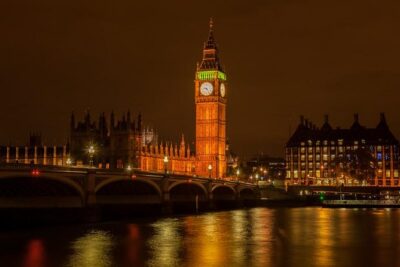
Browse the lists this tour appears in