
Reviewed · BOURNEMOUTH TOURS
Private Tour Winchester
Winchester’s story is unusually concentrated. In about 90 minutes, this private walk links an Anglo-Saxon king, a medieval Jewish businesswoman, a great Gothic cathedral, a royal wedding, Winchester College, and Jane Austen’s final days. Dr. Lillian Gonzales often leads the tour, though a trained guide such as Sam or Michele may take your group.
I like the private format, since you can ask questions and set the pace. I also like the human side of the history: Licoricia’s life and Austen’s connection keep the tour from becoming a parade of dates and royal names. The main drawback is the walking. Winchester is hilly, the cathedral entrance is not included, and a soft-spoken guide could be hard to hear outdoors.
Key points at a glance
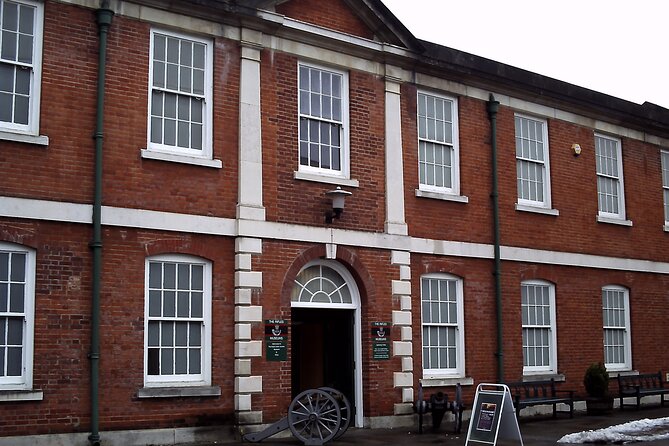
- Licoricia of Winchester: Begin with the story of an important medieval Jewish woman at the Arc.
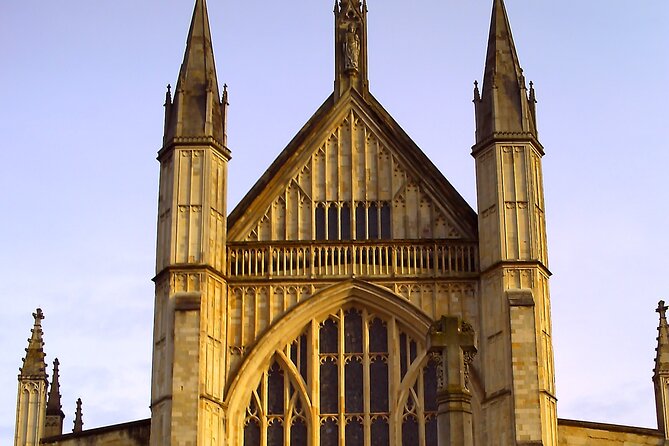
- Winchester Cathedral: Hear how a modest Anglo-Saxon foundation became one of England’s great Gothic churches.
- Jane Austen and Winchester College: Connect the city’s elite education and literary past near the place where Austen died.
- Wolvesey Castle: See the remains of the bishop’s palace and hear about the breakfast held for Mary I and Philip II of Spain.
- King Alfred’s Winchester: Finish near the Guildhall and the statue honoring the Anglo-Saxon king.
- Short private walk: The tour lasts about 1 hour 30 minutes, costs $34.53 per person, and runs in English.
Why Winchester makes a fine first history walk
Winchester was once the capital of Wessex and one of the most important centers in England. That gives this walk a clear purpose: you are not simply ticking off old buildings, but following the changing role of one city across several centuries.
I especially like the way the tour moves between grand institutions and individual lives. King Alfred and bishops provide the large political story. Licoricia, Jane Austen, and the people who lived around these landmarks bring the city down to a more personal scale.
The private setup matters here. A group of your own can ask about royal politics, religion, medieval trade, Jane Austen, or almost any other question that comes to mind. One guide, Sam, was completing a master’s degree in history at the University of Winchester, while Dr. Gonzales has a PhD in history. The team’s backgrounds vary, so it is worth noting at booking that the exact guide may not be Lillian.
The advertised price is $34.53 per person. For a private 90-minute introduction, that is fair value, especially if two or more people share the booking. It is less of a bargain for a solo visitor, but a private guide can still be worthwhile if you want a quick orientation before spending more time in the cathedral and central Winchester.
A few more England trips to weigh up
- The Premier Classic London: Private 4-Hour Tour in a Black Cab
★ 5.0 · 2,737 reviews - Stonehenge Inner Circle Private Tour from London with Bath Visit
★ 5.0 · 1,909 reviews - Private Historical Walking Tour of York
★ 5.0 · 1,324 reviews
Starting at Winchester Railway Station
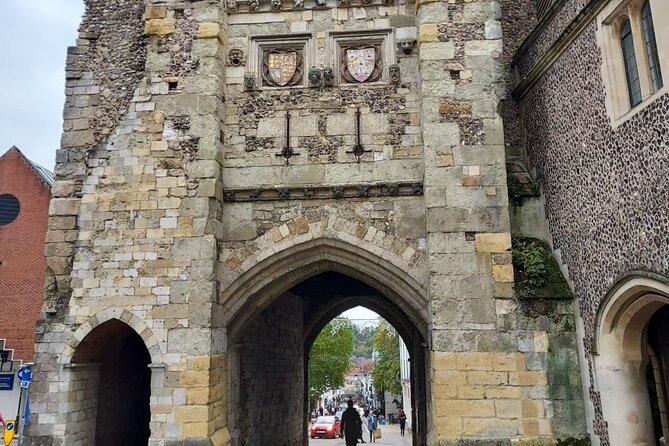
The meeting point is Winchester Railway Station on Station Road. This is practical if you arrive by train, and it gives you a definite place to begin rather than asking you to search for a guide in the middle of town.
From the station, expect a walking tour rather than a vehicle-based sightseeing trip. Private transportation is not included, and the route takes you through the city on foot. Wear shoes with good grip, particularly in wet weather. One useful bit of advice from the tour experience is to choose waterproof footwear if rain is forecast, since puddles can soak ordinary shoes.
You should also allow for Winchester’s hills. The tour information says it is not recommended if you struggle with inclines. The guides can adjust the pace, and Michele has been praised for allowing a slower walker to take things comfortably, but the route is still a city walk with some uneven and sloping sections.
The tour is offered in English. Service animals are allowed, and the activity is near public transportation. Most people can take part, but the hill warning is the practical point to take seriously.
Licoricia at the Arc
The first short stop is at the Arc, where Winchester Library now exhibits a statue of Licoricia of Winchester. You spend about five minutes here, with no admission charge.
This is a smart opening. Licoricia was an important Jewish woman in medieval Winchester, and her story gives you a view of the city beyond kings, bishops, and stone walls. Her life also opens questions about medieval commerce, wealth, religion, and the place of Jewish communities in English towns.
Do not expect a long museum visit at this stop. The point is the guide’s explanation, not an extended look at an indoor collection. If Licoricia interests you, use the private format to ask follow-up questions. The tour’s strongest moments often come when the guide explains how ordinary people and minority communities fitted into the larger story.
I like that the walk begins with a person rather than a building. It signals that this is meant to be a history lesson with human detail, not just an architectural circuit.
Winchester Cathedral and its long transformation
The cathedral is the major landmark on the route, and the guide spends about 15 minutes discussing it. The cathedral entrance fee is not included, so the tour’s treatment is an exterior and historical introduction unless you arrange your own admission separately.
The story begins in the Anglo-Saxon period, when Winchester was already a major religious center. From there, the guide explains how the church developed into the Gothic building you see today. A particularly useful subject is the work associated with Bishop William of Wykeham, whose changes helped give the cathedral its Gothic form.
That context is valuable because a large medieval church can otherwise become a blur of arches, windows, chapels, and tombs. With a guide, you get a sense of the decisions behind the building: who paid for it, who controlled it, and how religious power shaped the city.
The 15-minute allocation is enough for orientation, but not enough to cover every feature inside. If you want to see the cathedral’s interior properly, plan separate time and budget for admission. This is one of the clearest limitations of the tour: the cathedral is central to Winchester, but entry is an extra cost and the guided portion is brief.
Rain can make this stop less comfortable, since much of a walking tour involves listening outdoors. The good news is that guides such as James and Lillian have continued with tours in poor weather, and enthusiasm need not disappear when the sky does.
Same country, a completely different day out:
- Stonehenge, Windsor Castle, and Bath from London
★ 4.5 · 18,662 reviews - London Big Bus Hop-On Hop-Off Tour with Optional River Cruise
★ 3.5 · 10,803 reviews - London Small Group Tour of Historical Pubs
★ 5.0 · 10,422 reviews - Beatles Magical Mystery Tour
★ 5.0 · 9,266 reviews
Winchester College and Jane Austen’s final connection
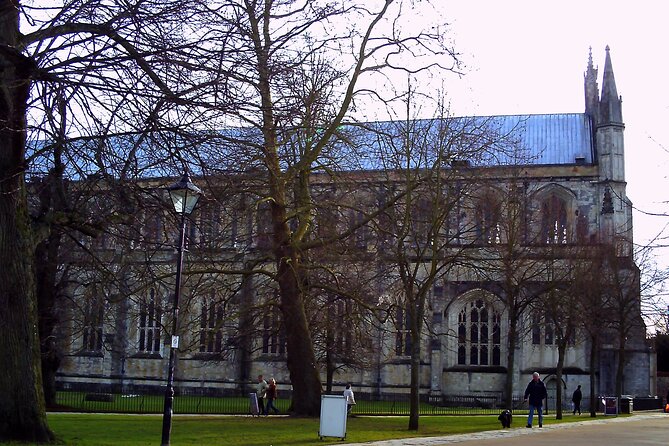
Another stop takes you near Winchester College, one of the United Kingdom’s leading schools. The building is an important part of the city, and the walk also points out its connection to the house where Jane Austen died in Winchester.
This section blends education, architecture, and literary history. Winchester College represents the city’s long connection with elite schooling, while Austen’s final days offer a quieter and more personal link. The contrast is useful. Winchester was not only a royal and religious center. It was also a place of learning and, later, a setting tied to one of England’s best-known novelists.
The supplied route description does not assign a precise time to this stop, so the amount of detail may depend on your guide and your questions. That is another reason the private format helps. If your group cares more about Austen than medieval church politics, ask the guide to give that part extra attention.
You should not expect a dedicated visit to the house where Austen died from the information provided. The value here is the explanation of the connection as you walk through the city, not necessarily an interior tour.
Wolvesey Castle and the politics of bishops
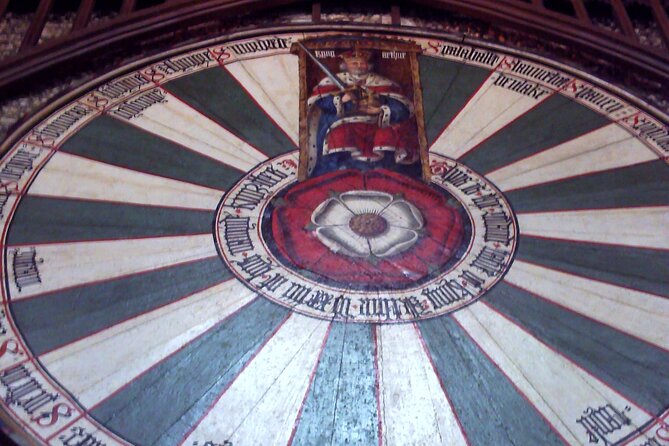
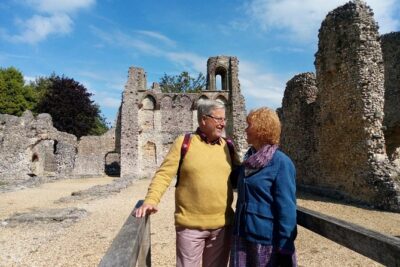
Wolvesey Castle is a five-minute stop at the ruins of the former palace of the bishop of Winchester. Admission is free.
Ruins require a little help from the imagination, and this is where a good guide earns the fee. The remaining stone does not tell the whole story by itself. Your guide supplies the building’s former importance and explains how a bishop could wield serious political and economic power.
The most memorable event linked to the site is the breakfast held there for Queen Mary and Philip II of Spain during their wedding. That detail gives the ruins a direct royal connection and helps you picture Wolvesey as a working palace rather than a lonely fragment of masonry.
Five minutes is a short stop, so you will not get a full archaeological study. Still, it is a well-chosen pause in the route. After the cathedral’s religious grandeur and the college’s institutional identity, Wolvesey shows another kind of power: the authority of Winchester’s bishop.
Ask about the relationship between the cathedral and the palace if that subject interests you. The walk is strongest when these buildings are explained as parts of one city, rather than as unrelated sights.
The Guildhall and King Alfred’s statue
The Winchester Guildhall serves as the gateway to the final stop, the statue of King Alfred. Alfred was the great Anglo-Saxon king associated with Winchester and Wessex, so his presence provides a fitting close to the walk.
The statue is not just a photo stop. It brings the tour back to the early period introduced at the cathedral. By ending with Alfred, the guide reinforces Winchester’s role before and during the formation of England, then leaves you with a clear figure to remember.
The Guildhall also helps mark the transition between old Winchester and the modern city. You finish in a more central setting, rather than returning to the railway station. The precise ending point is described separately at booking, so check the final location before setting off.
This is a good place to continue exploring on your own. The guide can point you toward further sights, and several guides have offered suggestions for what to see beyond the formal route. Since the walk ends in a different location, you can also use the rest of the day without retracing the entire route to the station.
The guides make the biggest difference
The most important variable is the person leading your group. Dr. Lillian Gonzales is presented as the main guide, but the tour is also handled by members of her trained team. Guides named in the experience material include Sam, Michele, Michelle, and James.
Lillian is especially suited to people who want detailed historical explanation. She has been praised for connecting politics, religion, royal figures, Jane Austen, and everyday life. Her approach also includes acting out or animating parts of the past, which can make names and dates easier to remember.
Sam’s background is in history, including postgraduate study at the University of Winchester. One important caution is that a guide’s speaking style may not suit everyone. A previous participant found Sam too quiet and monotone, even though the provider explained his academic background and prior tour experience. If hearing a guide clearly is important to you, ask for a strong, audible speaking style when booking.
Michele has been especially accommodating with a slower pace, and James has been described as friendly and informed, including during rainy weather. The overall pattern is clear: the team has a strong history focus, but the tone and delivery can differ from guide to guide.
Is 90 minutes enough?
Ninety minutes gives you a useful introduction, not a complete tour of Winchester. The route covers several major themes without asking you to spend half a day on one subject.
That short length is a strength if you are arriving by train, building a wider Southeast England itinerary, or want a framework before exploring independently. It is also a good choice for families or mixed-interest groups that need a manageable walk.
The tradeoff is speed. The cathedral receives about 15 minutes, and Wolvesey Castle about five. The stops at the Arc, the college area, and the Guildhall also work as focused explanations rather than long visits. You will see and discuss key places, but you will not have time for an exhaustive examination of every building.
I would use this tour as an introduction. Afterward, you can decide where to spend your own time, particularly at the cathedral or around the places connected with Jane Austen.
Who should book this private walk?
I would recommend it to you if you enjoy history but want a guide who can explain why Winchester mattered. It suits couples, families, and small groups who prefer their own pace and questions rather than a large scheduled walk.
It is particularly good for:
- People interested in Anglo-Saxon England and royal history
- Visitors curious about medieval religion and political power
- Anyone who wants a local angle on Jane Austen
- First-time visitors arriving at Winchester Railway Station
- Groups that want a short orientation before exploring alone
It may not suit you if you want extensive time inside Winchester Cathedral, a completely flat route, or a guaranteed tour led by Dr. Gonzales herself. The description allows for trained team members, and the cathedral admission is extra.
The activity is available daily from 10 a.m. to 7 p.m. during the stated operating period. It is often booked well ahead, with an average booking lead time of 39 days, so popular dates may require planning. Free cancellation is available up to 24 hours before the start time. After that point, the payment is not refunded, and changes are not accepted.
Should you book the Winchester tour?
Book it if you want a compact, private introduction to Winchester’s royal, religious, medieval, and literary past. The price is reasonable for a private 90-minute walk, and the route picks strong landmarks rather than filling the time with minor sights.
Before booking, be clear about three things: the route is hilly, the cathedral ticket is separate, and Lillian may not be your guide. If those points work for you, this tour should give you the context to make the rest of your Winchester visit more rewarding.
FAQ
Where does the Winchester tour begin?
The tour begins at Winchester Railway Station, Railway Station, Station Road, Winchester SO23 8TJ, UK.
Where does the tour end?
The activity ends at a different location from the meeting point. The exact ending details are provided at booking.
How long does the tour last?
The tour lasts approximately 1 hour 30 minutes.
Is Winchester Cathedral admission included?
No. Admission to Winchester Cathedral is not included in the tour price.
Is this a private tour?
Yes. Only your group participates in the private activity.
Is the tour suitable for people who struggle with hills?
The tour is not recommended if you struggle with hills because Winchester is a very hilly city.
What is the cancellation policy?
You can cancel up to 24 hours before the experience start time for a full refund. Cancellations or changes made less than 24 hours before the start time are not accepted for a refund.
Just added around England
- Private The Beatles Taxi Tour in London★ 5.0 · 12 reviews
- Dinner and Jazz Cruise on the River Thames★ 4.0 · 140 reviews
- Airport Coach Service from Heathrow to Oxford★ 3.5 · 67 reviews
- The Alfred Hitchcock London Walk with Sandra Shevey★ 5.0 · 15 reviews
- Tower of London & 30+ London Sights Walking Tour★ 4.5 · 33 reviews
- Thames Beachcombing★ 4.5 · 100 reviews
- Ted Lasso London Taxi Tour★ 5.0 · 5 reviews
- Ted Lasso Tour of Richmond with Private Guide★ 5.0 · 25 reviews
Bournemouth Tours, compared.
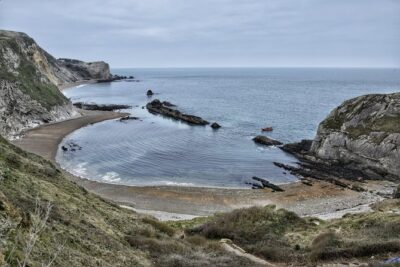
Lulworth Cove & Durdle Door Mini-Coach Tour from Bournemouth
Read our review →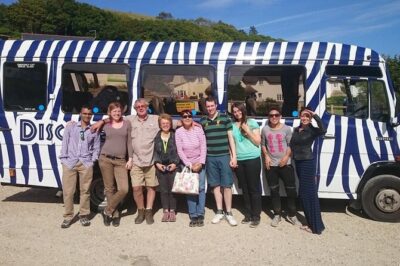
Full Day Jurassic Coast Mini-Coach Tour from Bournemouth
Read our review →


2 DAY TOUR | Jurassic Coast, Glastonbury, Stonehenge & Salisbury
Read our review →
Bournemouth Tour App, Hidden Gems Game and Big Britain Quiz (1 Day Pass) UK
Read our review →
Browse the lists this tour appears in