Reviewed · 3-HOUR EXPERIENCES
Tate Britain London Private Guided Tour – 3 hour
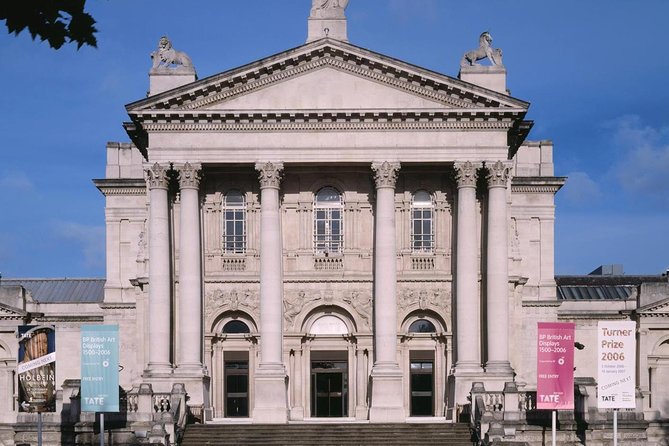
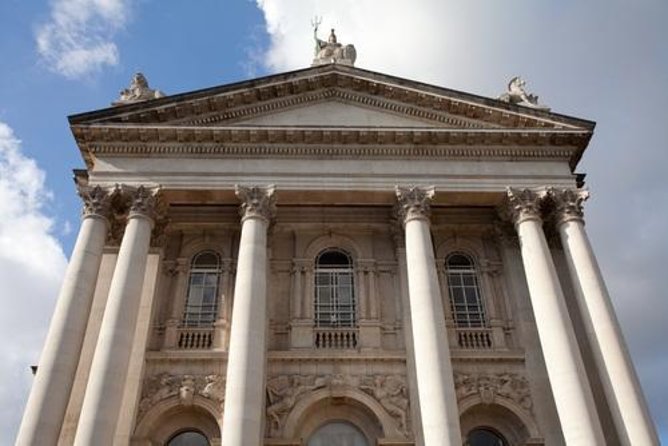
Tate Britain holds five centuries of British art under one roof, and this private three-hour tour gives you something a large group cannot: time to stop, ask questions, and shape the visit around what catches your eye. Guide Robert M. leads the experience, bringing art history to life with stories, context, and a lively sense of humor.
I like the custom itinerary, which lets you focus on artists such as Turner, William Blake, or David Hockney instead of marching through every room. I also like the private format: the guide works only with your group, so you can ask about a puzzling painting without worrying about holding anyone up. The main consideration is that temporary exhibitions are not included, and the group-size information should be checked carefully because it is described as covering up to five in one place and up to six in another.
Key points at a glance
- Robert M. is the named guide: His art-history expertise, clear explanations, energy, and entertaining stories receive the strongest praise.
- Three hours inside Tate Britain: You have enough time for a serious look at selected works without trying to cover the entire museum.
- A route shaped around you: Ask to focus on Turner, Blake, the Pre-Raphaelites, modern British art, or a broad tour of the collection.
- Permanent collection admission included: The experience covers Tate Britain’s main collection, but temporary exhibitions are separate.
- Private group pricing: The listed price is $267.37 per group, rather than per person, with the stated capacity needing confirmation at booking.
- Easy central London meeting point: Start and finish at Tate Britain, Millbank, London SW1P 4RG, near public transportation.
Why Tate Britain works so well for a private tour
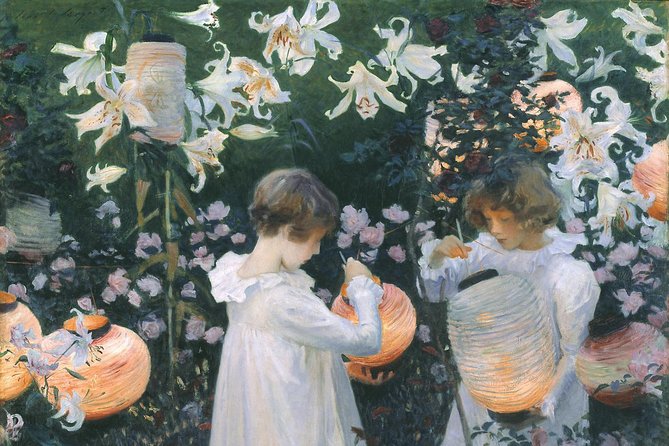
Tate Britain is not simply a museum of famous paintings. It traces the changing idea of British art across roughly 500 years, from grand historical works and royal portraits to modern and contemporary pieces. That range can be exciting, but it can also leave you wondering where to begin.
A private guide gives the collection a human shape. Instead of reading every wall label, you can spend more time looking at the works that matter to you. A good guide can explain why a painting was made, what its first audience might have understood, and how it fits into wider changes in British culture.
That is particularly useful at Tate Britain because the collection includes artists with very different aims. J. M. W. Turner’s atmospheric paintings demand a different kind of attention from the sharp social observations of William Hogarth. Henry Moore’s sculpture asks you to think about form and space, while Francis Bacon can be unsettling in a completely different way.
Your guide can connect those works without making the museum feel like a classroom. The aim is not to memorize dates. It is to leave with a clearer sense of how British art changed over time and why certain artists still matter.
A few more London trips to weigh up
- Westminster 3 Hour Walking Tour and Visit of Churchill War Rooms
★ 5.0 · 967 reviews - Private Guided Tour of The Victoria and Albert Museum – 3 Hour
★ 5.0 · 74 reviews - British Royal 3 Hour Walking Tour!
★ 4.5 · 53 reviews
Meeting Robert M. inside Tate Britain
Robert M. is the guide named for this experience, and his role is central to the value of the tour. The strongest praise focuses on his command of the collection, his interpretation of art, and his ability to keep three hours moving at a comfortable pace.
That combination matters. A guide who knows facts but cannot explain why a work matters may leave you cold. A guide who is entertaining but thin on substance can make the visit pleasant without making it useful. The comments about Robert point to both sides: strong art-history knowledge, thoughtful interpretation, energy, and humor.
You can also ask questions throughout the visit. In a private group, that freedom changes the rhythm. If one painting puzzles you, you can stop there. If your group is especially interested in a particular artist, you can spend more time in that area rather than following a fixed public-tour script.
The tour is offered in English. If Robert is guiding your booking, you can expect a presentation built around explanation and conversation rather than a silent walk from room to room.
A three-hour route through five centuries
The stated itinerary is one stop, Tate Britain, but that single stop contains a broad sweep of British art. Three hours is long enough to look closely at major works and still keep a clear pace. It is not long enough to see every important object in detail, so a focused route is a strength.
You might begin with a broad introduction to the collection, then move through selected artists and periods. The exact order can suit your wishes. The guide may use major works as anchors, then bring in nearby paintings and sculptures to explain a movement or a change in style.
That format is better than trying to cover the museum room by room. You will remember a few strong ideas and images more easily than a long list of names.
The collection includes works associated with:
- J. M. W. Turner and John Constable
- William Blake and the Pre-Raphaelites
- David Hockney and Francis Bacon
- Henry Moore and Lucian Freud
- Van Dyck, Rubens, Hogarth, Reynolds, and Gainsborough
- Canaletto, Millais, and John Singer Sargent
This list gives you a sense of the range. You can move from royal and aristocratic portraiture to landscape painting, poetry, sculpture, abstraction, and modern figurative art without leaving the museum.
Turner, Blake, and the British tradition
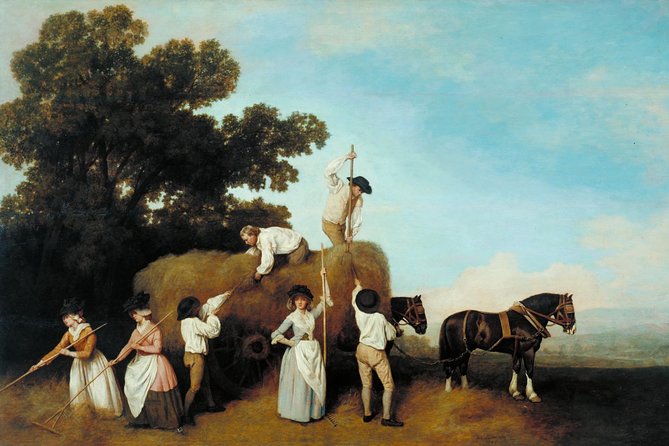
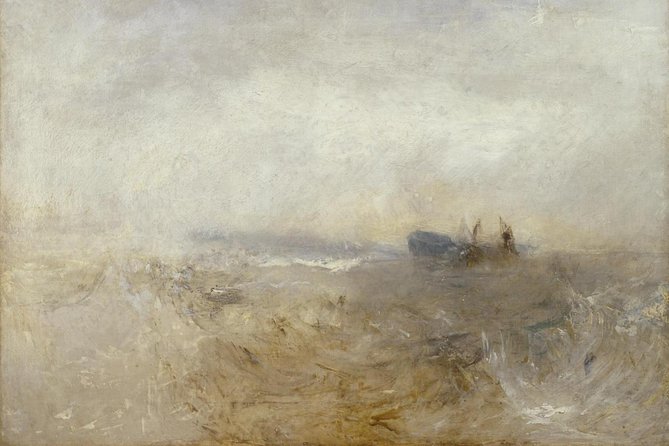
Turner is one of the clearest reasons to visit Tate Britain. His work can look simple at first glance, especially when color and light seem to take over from solid outlines. A guide can slow you down and help you see what is happening in the paint, as well as how Turner challenged the expectations of his time.
Constable offers a useful contrast. His paintings are tied to close observation of the countryside, while Turner often pushes toward sensation and atmosphere. Seeing both artists with a guide helps you understand that British painting was never one single style.
William Blake brings another kind of change. He was an artist, poet, and visionary whose work does not fit neatly into ordinary categories. His pictures reward questions, especially when you want to understand how his writing and image-making belong together.
The value here is not just naming Turner or Blake. It is learning how to look at a work that may seem strange, old-fashioned, or difficult at first. Robert’s reported strength in interpretation is especially useful with artists whose ideas are not obvious from a quick glance.
Same country, a completely different day out:
- Stonehenge, Windsor Castle, and Bath from London
★ 4.5 · 18,662 reviews - London Big Bus Hop-On Hop-Off Tour with Optional River Cruise
★ 3.5 · 10,803 reviews - London Small Group Tour of Historical Pubs
★ 5.0 · 10,422 reviews - Stonehenge, Windsor Castle and Bath with Pub Lunch in Lacock
★ 4.5 · 7,402 reviews
Portraits, drama, and the Pre-Raphaelites
Tate Britain’s collection also gives you a strong look at the way British artists portrayed power, beauty, literature, and everyday life. Van Dyck and Rubens bring the grandeur of European court painting. Reynolds and Gainsborough show how portraiture became a key part of British artistic life.
Hogarth provides a different mood. His work is often packed with social detail and sharp observation. A guide can point out details you might miss on your own and explain how humor and criticism work together in his pictures.
The Pre-Raphaelites bring another visual shift. Millais and his fellow artists favored intense detail, literary themes, and a close attention to color and surface. Their paintings can be visually appealing, but they also raise questions about Victorian ideals, storytelling, and the relationship between art and nature.
This is where an entertaining guide earns the fee. There are many details to notice, and a well-told story can help you remember them. The most useful explanations do not simply tell you what to think. They give you a way into the work, then leave room for your own reaction.
Modern British art, from Moore to Hockney
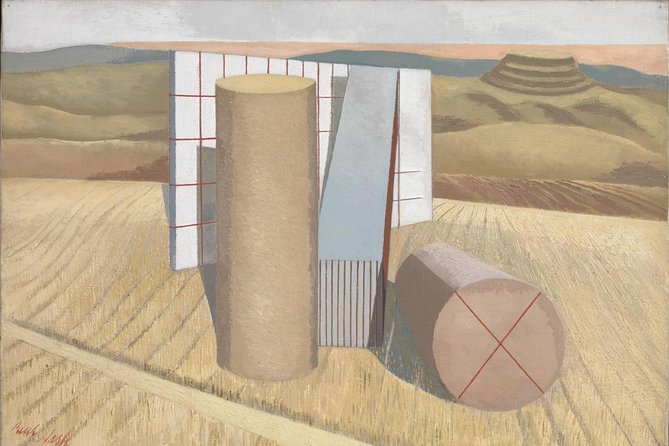
The later galleries show how sharply art can change across one museum collection. Henry Moore’s sculptures reduce the human body to powerful shapes and spaces. Looking at sculpture with a guide is helpful because you need to consider more than the front view. Form, balance, openings, and the surrounding room all affect what you see.
Francis Bacon brings a much more troubling kind of physicality. His distorted figures can be difficult to look at, but they are also a strong example of how modern British artists moved away from traditional portrait likeness. A guide can provide context without smoothing over the discomfort.
Lucian Freud continues the interest in the human figure, though with a different kind of intensity. David Hockney offers yet another turn, with work that can feel more open, playful, or connected to modern life.
You may want to tell Robert in advance if you prefer modern art, historic painting, sculpture, or a balanced route. The custom format is most useful when you make your interests clear. If your group has mixed tastes, ask for a route that gives each person a few works to anticipate.
What three private hours really buy you
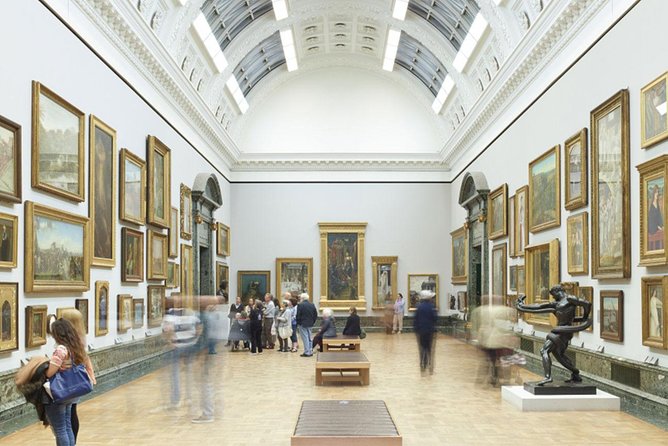
The price is listed as $267.37 per group. That is a significant outlay for three hours, but it is not a per-person charge. If you have a full group, the cost can compare favorably with several individual tickets for a specialist experience, especially since admission to the permanent collection is included.
The value depends heavily on your group size and interest in art. For one or two people who only want a quick look at a few famous works, the price may feel high. For a family or group of friends who want explanations, questions, and a route suited to their interests, the private format makes more sense.
You are paying for time and attention as much as for museum entry. A public tour may offer a standard route, while this experience lets your guide adjust the discussion. You can ask why a painting matters, compare two artists, or request more detail about a movement.
The capacity information is not perfectly consistent. The main price is described as being for a group of up to six, while another description says up to five. Confirm the permitted group size before booking so there are no surprises.
Practical details that affect your visit
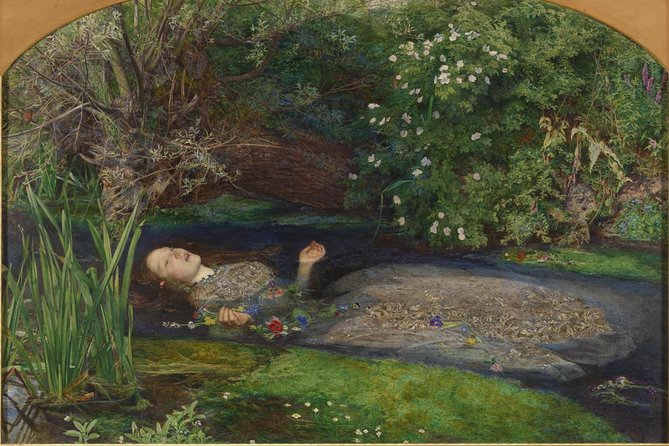
The tour begins and ends at Tate Britain, Millbank, London SW1P 4RG. It is near public transportation, and the meeting point is straightforward because you do not need to transfer between several sites during the experience.
A mobile ticket is provided, and confirmation is received when you book. The activity is offered in English. Service animals are allowed, and most people can participate according to the supplied access information.
Plan on the full three hours. This is not a quick orientation followed by free time. You will be with the guide for the stated duration, moving through the collection and stopping for explanations and discussion.
Admission covers Tate Britain’s permanent collection. Temporary exhibitions are not included, so check the museum schedule if a special show is a major reason for your visit. You may need a separate ticket for that part of the museum.
Free cancellation is available if you cancel at least 24 hours before the start time. Changes or cancellations made inside that window are not accepted for a refund, and the cut-off follows London local time.
Who will get the most from this tour
I would recommend this tour to anyone who wants more than a quick museum visit but does not want to spend hours preparing an art-history plan. It suits first-time visitors, families with different levels of interest, and adults who want to ask direct questions.
It is also a good fit if you already have favorite artists. Tell the guide that Turner, Blake, Hockney, Moore, Bacon, or the Pre-Raphaelites matter most to you, then let the route build around those interests.
The format may be less useful if you prefer wandering alone or want to spend your entire visit in a temporary exhibition. It is also not designed as a full survey of every work in Tate Britain. Three hours gives you a thoughtful selection, not complete coverage.
The strongest evidence about the guide points to Robert M.’s ability to combine serious art history with warmth and humor. The experience should suit you if you want a guide who explains what you are seeing without making the visit feel stiff.
Should you book the Tate Britain private tour?
Book it if you value personal attention, want to ask plenty of questions, or feel unsure how to approach five centuries of British art. The private rate becomes more appealing with a larger group, and the custom route lets you avoid spending precious time on periods that do not interest you.
I would skip it if your main goal is a temporary exhibition, since that is not included, or if you are happy to explore Tate Britain on your own. Before paying, confirm the group-size limit and tell the provider which artists or periods you want to see.
For the right group, this is a focused and flexible way to make sense of Tate Britain. Robert M.’s reported mix of expertise, enthusiasm, and humor is the main reason to choose it over a basic museum visit.
FAQ
Where does the Tate Britain private tour start?
The tour starts at Tate Britain, Millbank, London SW1P 4RG, United Kingdom.
Where does the tour finish?
The activity ends back at the Tate Britain meeting point.
How long does the tour last?
The tour lasts approximately three hours.
Is admission to Tate Britain included?
Admission to Tate Britain’s collection is included.
Are temporary exhibitions included?
No. Temporary exhibitions are not included in the tour.
Is this a private activity?
Yes. Only your group participates in the private tour.
How many people can join the group?
The price is described as covering a group of up to six, while another description says up to five. Confirm the exact limit with the provider before booking.
Who is the named guide?
The named guide is Robert M.
What language is the tour offered in?
The tour is offered in English.
Can I cancel for a full refund?
Yes, if you cancel at least 24 hours before the experience start time. Cancellations made less than 24 hours in advance are not refunded.
Just added around London
- Private The Beatles Taxi Tour in London★ 5.0 · 12 reviews
- Dinner and Jazz Cruise on the River Thames★ 4.0 · 140 reviews
- Airport Coach Service from Heathrow to Oxford★ 3.5 · 67 reviews
- The Alfred Hitchcock London Walk with Sandra Shevey★ 5.0 · 15 reviews
- Tower of London & 30+ London Sights Walking Tour★ 4.5 · 33 reviews
- Thames Beachcombing★ 4.5 · 100 reviews
- Ted Lasso London Taxi Tour★ 5.0 · 5 reviews
- Ted Lasso Tour of Richmond with Private Guide★ 5.0 · 25 reviews
3-Hour Experiences, compared.
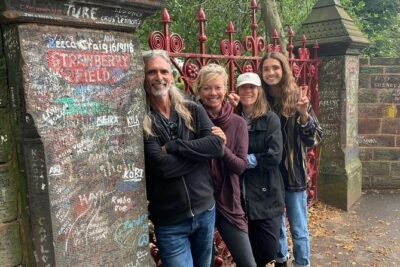
Private 3-Hour Guided Beatles Classic Tour of Liverpool
Read our review →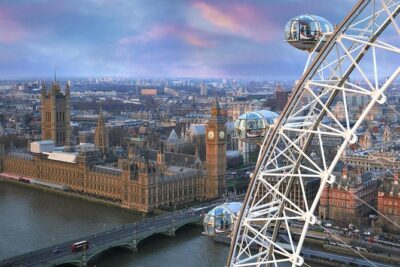
Westminster 3 Hour Walking Tour and Visit of Churchill War Rooms
Read our review →
Bath Tour – 3 Hour Private Tour with Local Guide, £220 per group
Read our review →
Private Guided Tour of The Victoria and Albert Museum – 3 Hour
Read our review →