
Reviewed · CHURCHILL WAR ROOMS TOURS
Private Tour, World War 2 London, including entry to Churchill War Rooms
The most powerful part of this tour happens underground, where London’s wartime command center remains much as it was during World War II. You enter the Churchill War Rooms with a private guide, then walk through Whitehall and Westminster to connect those cramped rooms with the memorials and monuments built above ground.
I like two things here. First, the private format lets you ask questions and set the pace instead of following a large group. Second, the tour links Churchill’s headquarters with less obvious military memorials, including the Chindits plaque and the Battle of Britain Monument. The main drawback is the price: at $349.35 per person, you need to value personal guiding highly to see this as good value.
Key points at a glance
- Churchill War Rooms entry is included: Spend about two hours exploring the underground headquarters of Britain’s wartime government and the Churchill museum.
- A private guide shapes the visit: Only your group takes part, with a Blue Badge, local, and professional guide leading the experience.
- Whitehall adds the wider wartime setting: Parliament Square, the Cenotaph, and nearby military monuments put the War Rooms into the city around them.
- Look for the small Chindits memorial: Your guide explains how these troops operated behind Japanese lines in Burma.
- The tour ends at the Battle of Britain Monument: You get a concise explanation of the air campaign and suggestions for more London museums.
- The cost reflects personal attention: The tour is useful for short visits and travelers who dislike large groups, but the price is high for three and a half hours.
Starting underground at the Churchill War Rooms
Meet your guide at Clive Steps in central Westminster at 2 p.m. From there, you enter the Churchill War Rooms, the bunker used as the headquarters of the British war department during World War II.
Allow roughly two hours for this part. That is the heart of the experience, and it deserves the time. The rooms are not just display cases about the war. They show the working spaces where decisions were made, messages were sent, and military plans were handled while London faced the threat of attack.
Many rooms have been left unchanged. That detail gives the visit its force. You see the practical limits of underground government work, including the tight conditions in which staff carried out essential jobs. Your guide explains how the people working there viewed their role and why many felt proud of the contribution they were making.
The private setting helps most here. The War Rooms contain a great deal to take in, and it can be easy to move through them without understanding how the pieces connect. A guide can point out which rooms mattered, explain how the command system functioned, and answer questions as they arise.
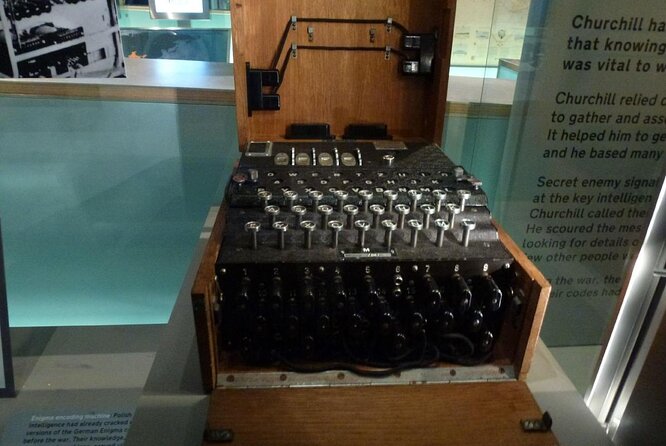
Cryptography is another important subject. The tour covers advances in codebreaking and their effect on the war. The supplied details do not promise a technical lecture, so expect useful context rather than a specialist course in wartime signals. Still, this is one of the better reasons to take a guide, since the importance of cryptography is easier to grasp when someone connects it to the decisions being made upstairs and across the wider conflict.
More Churchill War Rooms Tours in London:
- Westminster 3 Hour Walking Tour and Visit of Churchill War Rooms
★ 5.0 · 967 reviews - WW2 London Walking Tour & Churchill War Rooms Entrance Ticket
★ 4.5 · 933 reviews - London in WW2 Walking Tour with Churchill War Rooms Visit
★ 5.0 · 721 reviews
Churchill beyond the cigar and speeches
Part of the War Rooms is devoted to Winston Churchill himself. The museum presents him as prime minister and wartime leader, but also as a family man, writer, and artist.
That broader view makes the Churchill section more interesting than a simple collection of famous speeches. You get a sense of the man behind the public image, including the less polished and more personal parts of his life. One memorable item is a wanted notice offering a £25 reward for the capture of a young Churchill after his escape from prison during the Boer War.
A private guide can make these displays feel less scattered. Galina has been particularly effective for visitors who want Churchill explained in clear, lively terms. Marina has also been praised for making the museum accessible to a family group, while Denisa has been noted for combining historical detail with attentive help throughout the outing.
Guide quality matters more here than at a simple monument. The War Rooms already provide plenty to read, so the guide’s job is to select, explain, and tell the stories well. Most of the guide feedback is very strong, especially for Galina, Marina, and Denisa. One assessment found the guide pleasant and well informed but less compelling as a storyteller, a fair warning that a paid private tour can depend greatly on the individual assigned.
Parliament Square and the wartime city above ground
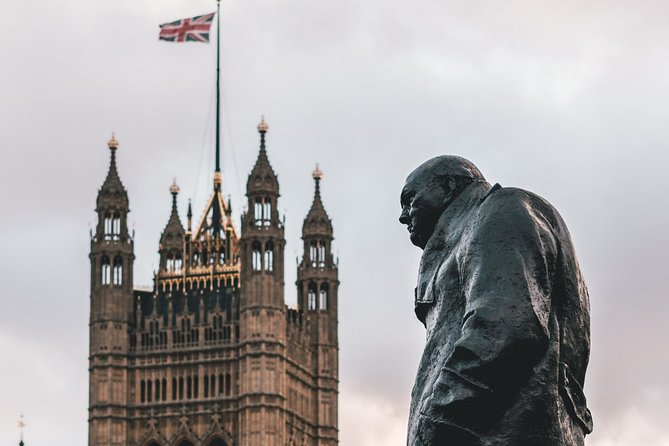
After the bunker, you spend about 20 minutes around Parliament Square. This is a useful change of scale. You leave the narrow underground rooms and see the public buildings, statues, and memorials that represent Britain’s political and military life.
Your guide points out monuments in and around the square, including details that are easy to miss from a passing walk. The description promises both obvious memorials and less visible ones near ministerial buildings. This section is not a museum visit, and no extra admission is needed, but it helps connect the War Rooms to the government district above them.
For a first visit to London, Parliament Square can be crowded with people focused on photographs and famous buildings. A private guide gives you a clearer purpose. You are not just looking at the area as a landmark stop. You are learning how the wartime command center fitted into the surrounding seat of government.
The time is short, so do not expect a full tour of every monument in the square. Think of it as a focused outdoor extension of the War Rooms.
Whitehall and the Cenotaph
The walk continues along Whitehall for about 30 minutes. This broad ceremonial street is closely tied to Britain’s military memory, and it hosts a major parade each year commemorating both World Wars.
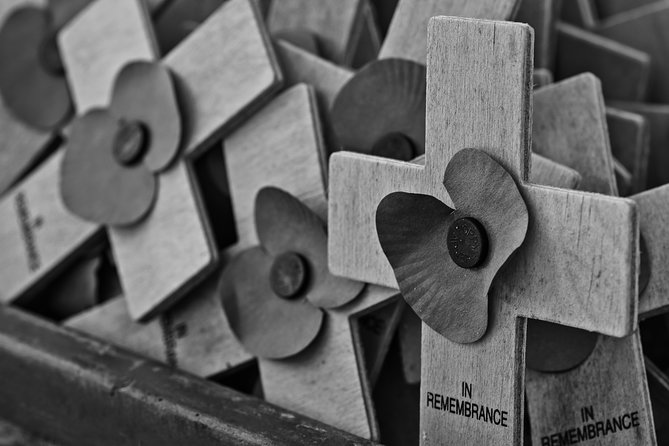
The key stop is the Cenotaph, often described as an empty tomb. Your guide explains the meaning of the monument and points out the poppy wreaths and banners placed there. These details add a human touch to the formal setting. The Cenotaph is not simply another grand stone monument. It is a place of remembrance, and the wreaths show how that remembrance continues in the present.
This part of the tour works best if you pay attention to the small details rather than rushing toward the next famous view. The outdoor sections also give you a chance to ask questions about Britain’s wartime memory, the role of Whitehall, and how public commemoration differs from the working world shown inside the bunker.
London weather can change quickly. The tour operates in all weather, so wear suitable shoes and bring clothing for rain or wind. You will be walking between stops, and the organizers recommend a moderate level of fitness.
A few more London trips to weigh up
- The Premier Classic London: Private 4-Hour Tour in a Black Cab
★ 5.0 · 2,737 reviews - Stonehenge Inner Circle Private Tour from London with Bath Visit
★ 5.0 · 1,909 reviews - Private Tour: Black Taxi Tour of London
★ 5.0 · 1,153 reviews - Private London Arrival Transfer – Airport to Hotel / Accommodation
★ 3.5 · 1,085 reviews
Embankment and the Chindits memorial
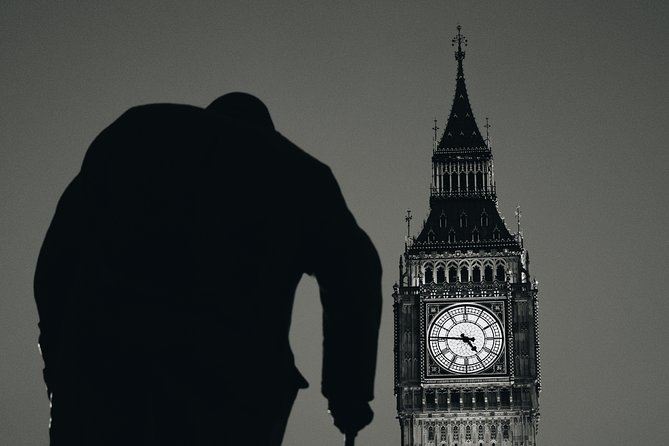
The 20-minute walk along Embankment focuses on memorials for specific military groups. The most distinctive subject is the Chindits, a force that operated far behind Japanese lines in Burma.
The Chindits memorial is small compared with the larger monuments nearby. That makes it easy to miss if you are walking alone, but it also gives the guide a useful teaching opportunity. You learn who these men were, how they worked behind enemy lines, and why their methods influenced later military operations.
This is one of the strongest features of the route because it moves beyond the best-known names. Churchill, the Cenotaph, and the Battle of Britain are familiar subjects. The Chindits stop adds a less expected story and shows how a short explanation can change what you notice in a city street.
Do not expect a long stop or an elaborate memorial complex. The value comes from finding the plaque and understanding its importance. If you enjoy military history beyond the usual headline events, this may be one of the most rewarding moments of the outdoor walk.
Finding the Battle of Britain Monument
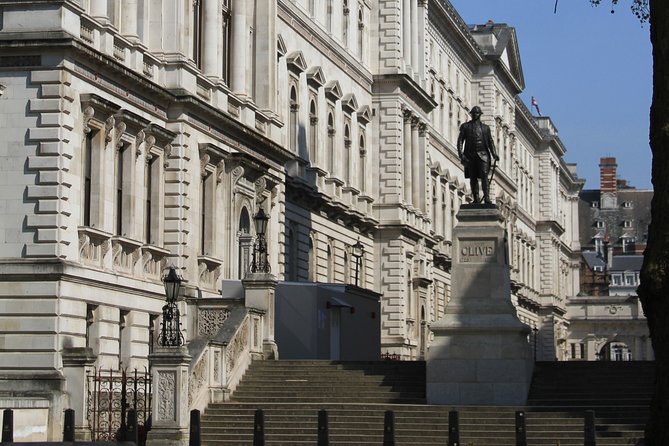
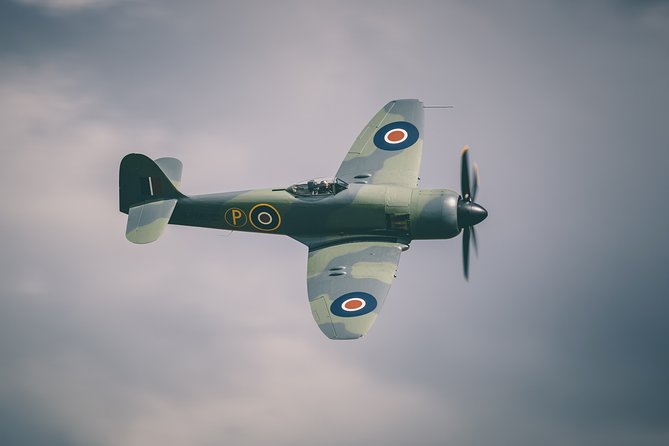
The final stop is the Battle of Britain Monument, reached after about 20 minutes. The guide helps you find the memorial and explains how the Battle of Britain affected the course of the war.
The monument gives the tour a clear ending. You have moved from the rooms where national decisions were handled to the public memorials that remember the people and campaigns behind those decisions. The guide’s explanation is intended to be concise, with enough context to show why the battle mattered without turning the final stop into another long lecture.
At the end, your guide can suggest additional London museums and help with plans for the rest of your stay. This is especially useful if you have only a short time in the city and want to continue with related subjects. One guide, Denisa, was also able to help a group make the right connection back to its hotel, while Galina went out of her way to help locate a restaurant after the tour. Those actions are not formal itinerary stops, but they show the practical help a private guide may provide.
The stated end point is Trafalgar Square. No transport is included, so plan to continue on foot or make your own arrangements from there.
What the private format is really worth

The tour costs $349.35 per person. That is a serious price for an experience lasting about three hours and 30 minutes, even with admission to the Churchill War Rooms included.
The private structure is the main reason to consider it. You receive a guide dedicated to your group, rather than sharing attention with a large party. That matters if you have specific questions, different ages in your group, or someone who prefers not to join a crowded tour. It also lets you pause for clarification and ask for extra context at the monuments.
The price is harder to justify if you mainly want entry to the War Rooms. The museum itself contains extensive material, and a self-guided visit may suit you if you like reading at your own pace. One critical assessment felt that the guiding was good but not engaging enough to match the cost. That is the key value concern.
A private tour can also be a better fit than a free guide in another London attraction because the purpose and route are different. Still, you should be honest about what you are buying. You are paying for personal attention, historical explanation, and a carefully linked walk, not for a full-day experience or a long list of included attractions.
Group discounts are available, but no specific discount amount is provided. For a larger private group, the per-person cost may become easier to accept, depending on the final booking terms.
The guide makes the difference
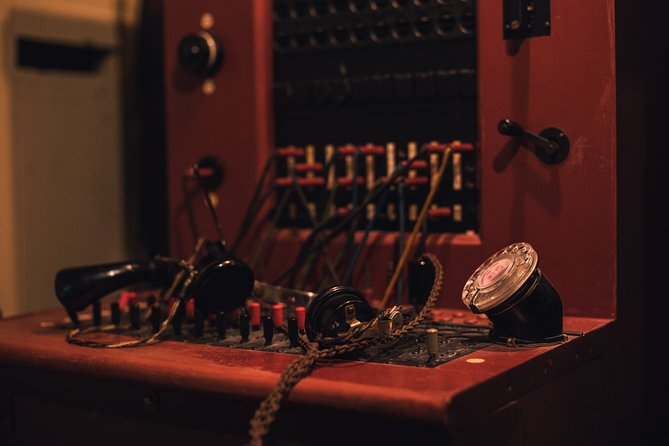
The strongest praise is aimed at the guides. Galina is repeatedly singled out for her passion, clear explanations, and ability to make Churchill feel like a real person rather than a distant political figure. She also keeps the detail under control, which matters in a museum with a great deal to see.
Marina is praised for being personable and for making a family visit special. Denisa is described as friendly, caring, and helpful with practical matters as well as historical information. These qualities are important because the outdoor portion involves moving through busy central London, while the indoor portion can feel dense with information.
At the same time, do not assume every guide will have the same storytelling style. The available feedback includes one balanced assessment of a guide who was pleasant, accommodating, and well informed, but not especially entertaining. You should book this experience for the private format and subject matter, not on the assumption that every guide will deliver the same performance as Galina, Marina, or Denisa.
The listed guide credentials include Blue Badge, local, and professional guiding. Those qualifications are reassuring, but they do not remove the personal element. A good private guide listens to what interests you and adjusts the level of detail. That is the feature to value most.
Who should book this London history tour?
This tour suits you best if you:
- Have only a short stay in London and want the War Rooms plus nearby military landmarks in one outing.
- Prefer a private experience to a large group.
- Want to ask questions about Churchill, wartime government, cryptography, or military memorials.
- Are visiting with family members who need a flexible pace.
- Enjoy lesser-known stories, such as the Chindits, as much as famous wartime events.
- Want a guide who can offer suggestions for museums, restaurants, and the rest of your London visit.
It may not suit you if you are focused mainly on keeping costs low or prefer to explore museums without a guide. You should also think about the walking. The route includes several outdoor stops and operates in all weather, so it is not ideal if you want a completely indoor activity.
Children must be accompanied by an adult. Food and drinks are not included, and the tour is offered in English with a mobile ticket.
Practical details before you reserve
The meeting point is Clive Steps, London SW1A 2AH, near central Westminster. The start time is 2 p.m., and the tour finishes at Trafalgar Square.
The total duration is approximately three hours and 30 minutes. The War Rooms account for about two hours, followed by short outdoor stops of around 20 minutes at Parliament Square, 30 minutes at Whitehall, 20 minutes at Embankment, and 20 minutes at the Battle of Britain Monument.
Wear comfortable shoes and dress for the forecast. Since the route includes walking outside in all weather, rain protection is sensible. You should also leave enough energy for the museum, where the amount of information can be substantial.
Confirmation is provided when you book. You can cancel for a full refund up to 24 hours before the start time. Cancellations or changes made less than 24 hours before the start are not accepted for a refund.
Should you book it?
Book this tour if the Churchill War Rooms are a priority and you want a private guide to make sense of them, then extend the subject into Whitehall and Westminster. The combination of underground rooms, public memorials, and the lesser-known Chindits story gives you more than a single museum visit.
I would be cautious if the price is your main concern. At $349.35 per person, the tour needs an excellent guide to feel worthwhile, and the feedback shows that guide quality can vary. For a family, a couple seeking personal attention, or a short-stay visitor who values efficiency, it can be a memorable choice. For a budget-minded visitor who enjoys reading independently, admission and a self-guided visit may offer better value.
FAQ
How long does the private World War II London tour last?
The tour lasts approximately three hours and 30 minutes.
Is entry to the Churchill War Rooms included?
Yes. Admission to the Churchill War Rooms is included in the tour cost.
Where does the tour start?
The tour starts at Clive Steps, London SW1A 2AH, in central Westminster.
Where does the tour end?
The tour ends at Trafalgar Square, London WC2N 5DS.
What time does the tour begin?
The listed start time is 2 p.m.
Is the tour private?
Yes. Only your group takes part in the private tour.
Is food included?
No. Food and drinks are not included.
Can I cancel for a full refund?
Yes. You must cancel at least 24 hours before the experience start time to receive a full refund. Changes or cancellations made less than 24 hours before the start are not accepted for a refund.
Just added around London
- Private The Beatles Taxi Tour in London★ 5.0 · 12 reviews
- Airport Coach Service from Heathrow to Oxford★ 3.5 · 67 reviews
- The Alfred Hitchcock London Walk with Sandra Shevey★ 5.0 · 15 reviews
- Dinner and Jazz Cruise on the River Thames★ 4.0 · 140 reviews
- Tower of London & 30+ London Sights Walking Tour★ 4.5 · 33 reviews
- Thames Beachcombing★ 4.5 · 100 reviews
- Ted Lasso London Taxi Tour★ 5.0 · 5 reviews
- Ted Lasso Tour of Richmond with Private Guide★ 5.0 · 25 reviews
Churchill War Rooms Tours, compared.
Westminster 3 Hour Walking Tour and Visit of Churchill War Rooms
Read our review →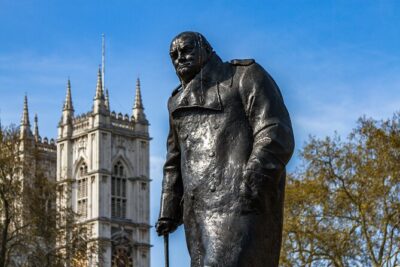
WW2 London Walking Tour & Churchill War Rooms Entrance Ticket
Read our review →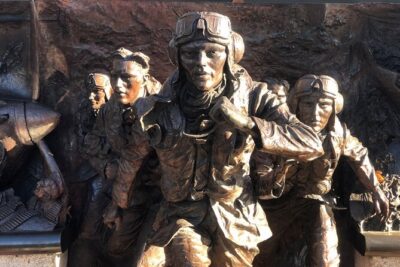
London in WW2 Walking Tour with Churchill War Rooms Visit
Read our review →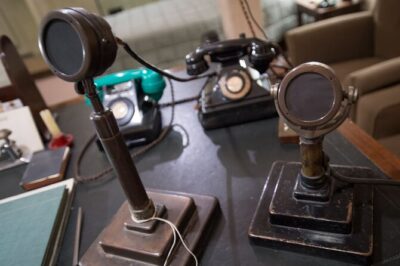
Churchill War Rooms “Behind The Glass” and Private Car Tour
Read our review →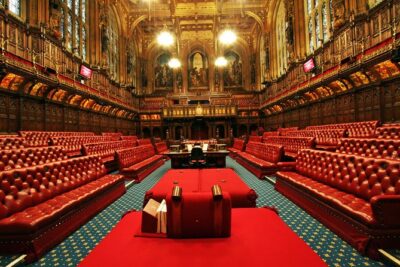
Darkest Hour – Parliament and Churchill War Rooms Private Tour
Read our review →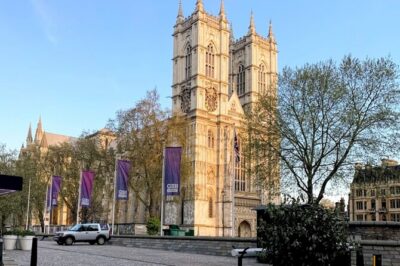
Private Tour: Westminster Abbey and Churchill War Rooms Tour
Read our review →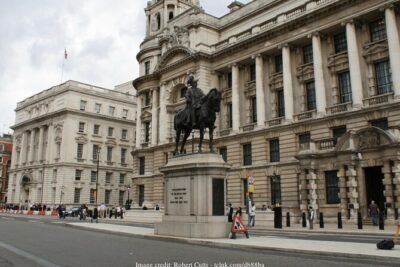
Churchill War Rooms: Private Westminster Underground Bunkers Tour
Read our review →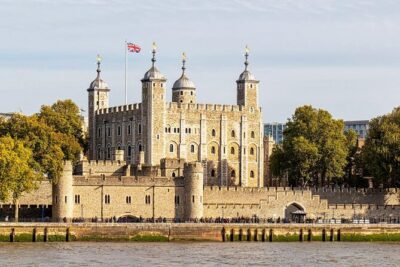
Best of London Tour: Tower of London and Churchill War Rooms
Read our review →Browse the lists this tour appears in