Reviewed · LONDON TOURS
Shakespeare Promenade
Shakespeare’s London is not confined to the Globe Theatre. This small-group walk leads you from the Thames to Shoreditch, following old playhouse sites, Roman walls, cathedral streets, and the Barbican’s unusual walkways. The most revealing stop is New Inn Yard, where England’s first playhouse once stood and where the Shakespeare Museum is now located.
I like the maximum group size of six, which gives you room to ask questions and hear the actor guide clearly. I also like the theatrical approach used by Dee, who brings the period to life with lines from Shakespeare’s plays rather than giving you a dry list of dates.
The main catch is physical. You will walk for about two hours, use steps and stairs, cross roads, and need to keep up with the group. The tour is not recommended for people with mobility problems or for anyone who finds sustained walking difficult.
Key points to know before you book
- Follow Shakespeare’s London from the Thames to Shoreditch, rather than spending the whole tour around the Globe.
- Cross Millennium Bridge for broad city views, then see the Globe from the north bank of the river.
- Visit several former playhouse sites, including Blackfriars, the Fortune, and The Theatre.
- Hear Shakespeare performed as well as explained, with an actor guide using quotations and theatrical storytelling.
- Enjoy an unusually small group, with no more than six people on the walk.
- Plan for stairs, road crossings, weather, and a 20-minute interval at the Barbican.
Why this walk gives you a fuller picture of Shakespeare’s London
The Globe gets most of the attention, but Shakespeare’s working world spread across a much wider part of London. This route takes you through the City, past St. Paul’s Cathedral and Guildhall, then north toward the Barbican and Shoreditch.
That broader route matters. You see where theatres, churches, city walls, inns, and burial grounds fitted together. You also get a sense of how much modern London has been built over the older city. At some points, you are looking at a plaque or a small ruin rather than a grand surviving building, so this is best for people who enjoy connecting fragments.
The guide is an actor, not simply a person reading dates from a script. Dee has been praised for mixing explanation with performances and lines from the plays. That approach suits the subject. Shakespeare’s London was a place of public speech and performance, and a little drama makes the lost playhouses easier to picture.
The group size makes a real difference. With a limit of six, you should have a much better chance to ask about Shakespeare, theatre, Tudor and Jacobean London, or the modern buildings along the route. This is not a large procession where you lose the guide at every crossing.
Other London days people book alongside this one:
- Stonehenge, Windsor Castle, and Bath from London
★ 4.5 · 18,662 reviews - London Big Bus Hop-On Hop-Off Tour with Optional River Cruise
★ 3.5 · 10,803 reviews - London Small Group Tour of Historical Pubs
★ 5.0 · 10,422 reviews
Starting beside the Thames and crossing Millennium Bridge
The meeting point is outside the Tallow Chandlers Company at 4 Dowgate Hill. From there, the walk heads toward the Thames and follows the river path on the north bank.
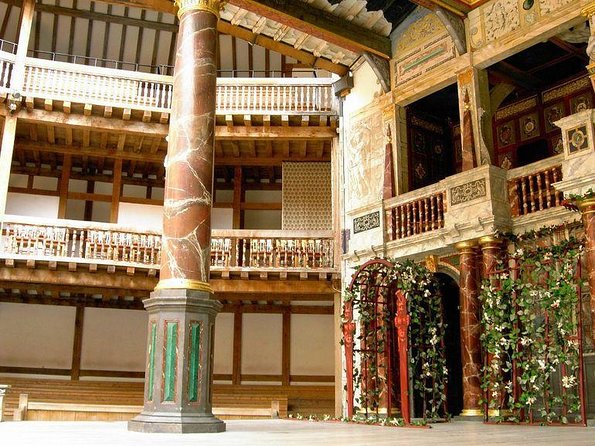
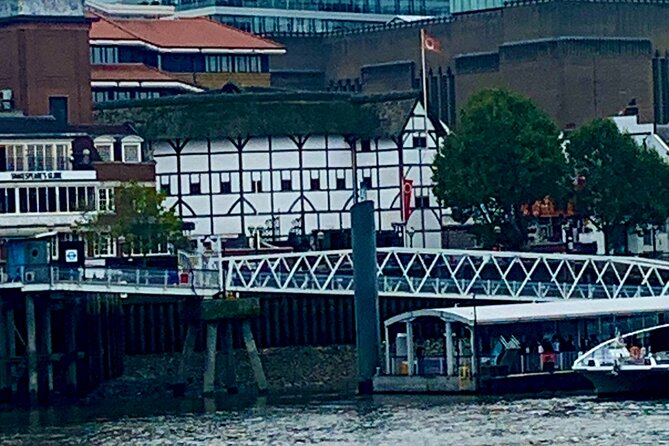
The river section lasts about 20 minutes. You will see the Globe Theatre across the water, which gives you a useful angle before the route continues toward Blackfriars. The view is part of the appeal. Instead of entering a reconstructed theatre straight away, you first place it within the wider riverfront setting.
The walk also includes Millennium Bridge, one of London’s best pedestrian crossings for city views. You can expect open sightlines toward the river and major landmarks, though the experience is still a walking stop rather than a long photo break. Keep your camera handy, but listen as you go.
This opening section is easy to understand and a good way to settle into the tour. It also shows the balance of the walk: some Shakespeare sites are visible buildings, while others survive as names, plaques, or traces in the street plan.
Blackfriars and the lost playhouses
At Playhouse Yard, the group pauses for about five minutes. The site once held the Blackfriars Dominican Monastery and later the first and second Blackfriars Playhouses.
This is the kind of stop that rewards context. You are not looking at a complete theatre, so the guide’s explanation does the heavy lifting. Dee can help you picture the change from religious site to theatre site and explain why Blackfriars mattered in the story of London performance.
The short stop also keeps the walk moving. If you want a long archaeological visit, this is not that. It is a compact explanation attached to an ordinary London street, which makes the past feel close to daily city life.
St. Paul’s, Cheapside, and the Guildhall statue
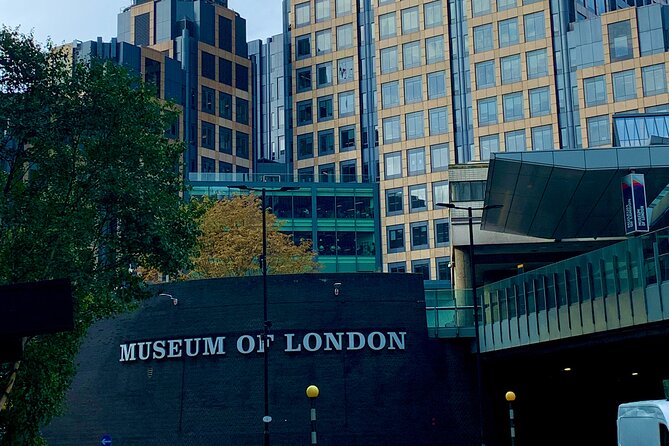
The route circles St. Paul’s Cathedral along Cheapside and continues up Milk Street. This part takes roughly five minutes, so expect an exterior look and historical commentary rather than entry into the cathedral.
St. Paul’s gives the route a strong city centre anchor. The surrounding streets connect Shakespeare’s world with London’s civic and commercial life. You will also see how quickly the walk shifts from the river to busy central streets.
At Guildhall, the group spends about ten minutes. You will see the Shakespeare statue of Heminges and Condell on Love Lane, with Shakespeare’s folio held at Guildhall. You will also view Guildhall itself and hear about its history and speech.
This should be one of the more rewarding urban stops because it connects Shakespeare to the people who helped preserve and publish his work. The folio reference gives the discussion a clear focus, while the Guildhall setting adds civic weight.
Do not expect to enter every building on the route. Most of the stops are exterior views, and the price does not include general entry fees. The value is in the guide’s interpretation and the number of sites linked together.
Same country, a completely different day out:
- Stonehenge, Windsor Castle and Bath with Pub Lunch in Lacock
★ 4.5 · 7,402 reviews - Tower of London and Crown Jewels Exhibition Ticket
★ 4.5 · 6,677 reviews - Thorpe Park Admission Ticket
★ 4.0 · 5,915 reviews - Stonehenge, Windsor Castle and Bath Full Day Guided Tour
★ 4.5 · 5,346 reviews
Roman London and Shakespeare’s Silver Street lodgings
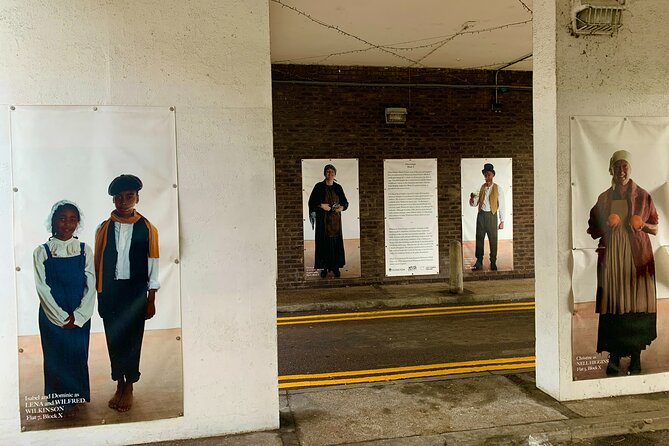
On Noble Street, you see remains of the Roman wall of Londonium. The stop lasts about five minutes, then the route continues to a plaque marking Shakespeare’s lodgings on Silver Street.
The Roman wall may seem far removed from Shakespeare, but that contrast is exactly what makes the route work. London’s story did not restart with the theatres. Roman remains, medieval institutions, early modern homes, and modern office districts all occupy the same city.
The Silver Street plaque is another modest physical trace. It will not feel like a grand museum visit. Instead, you get a location clue, followed by an explanation of how Shakespeare’s life fitted into the streets of London.
I would keep your expectations realistic here. The stops are brief, and you need to pay attention to the guide’s words. If you prefer large exhibits and long time inside historic buildings, this walk may feel too light on objects. If you like street-level history, the small markers are part of the pleasure.
The Barbican Highwalk and a 20-minute pause
The route then reaches the Barbican Highwalk, a distinctive walkway through the Barbican estate. The guide explains the estate and Barbican Centre while pointing out views that many people miss when they stick to street level.
This is a sharp change in mood. One moment you are following old city streets, and the next you are on raised walkways among a major postwar complex. The setting gives you a break from conventional historic London and shows how the city kept rebuilding itself.
A 20-minute interval takes place at the Barbican. Restrooms are available there, and the stop should help you refill your water bottle or catch your breath. Bring your own bottled water, since no food or drink is provided.
The walk includes steps and stairs, so the Highwalk section is not suitable for everyone. You also need comfortable walking shoes. An umbrella or raincoat is sensible in London, especially because much of the route is outside and the experience goes ahead through ordinary city weather unless conditions cause a change.
The Barbican Centre and the Royal Shakespeare Company
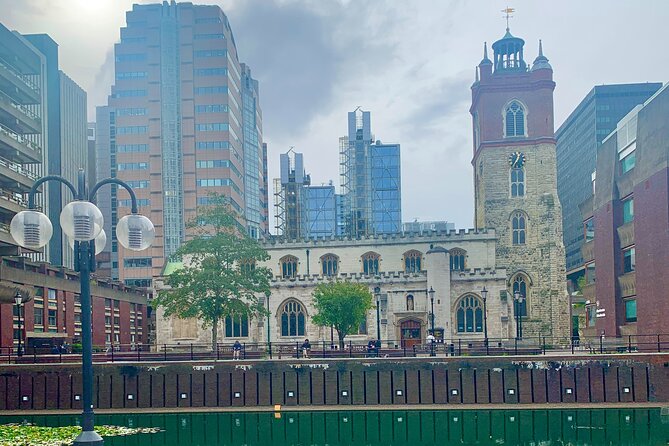
The tour enters the Barbican Centre, where you learn about the building’s history and its connection with the Royal Shakespeare Company, which has its London home there.
The stop lasts about ten minutes. It is the one point clearly marked with admission included, although the tour does not otherwise include entry fees. Here, the story moves from Shakespeare’s original theatre world to his continuing place in modern British performance.
That link is useful. You are not only looking backward at a playwright from four centuries ago. You are also seeing how his work remains tied to a major performance institution in London today.
The Barbican section also gives the walk a little shelter and a place to pause. Still, the tour is not a full visit to the Barbican Centre or a theatre performance. You are there for the guide’s explanation and the building’s connection to the Royal Shakespeare Company.
Bunhill Fields, the Fortune Playhouse, and the edge of Shoreditch
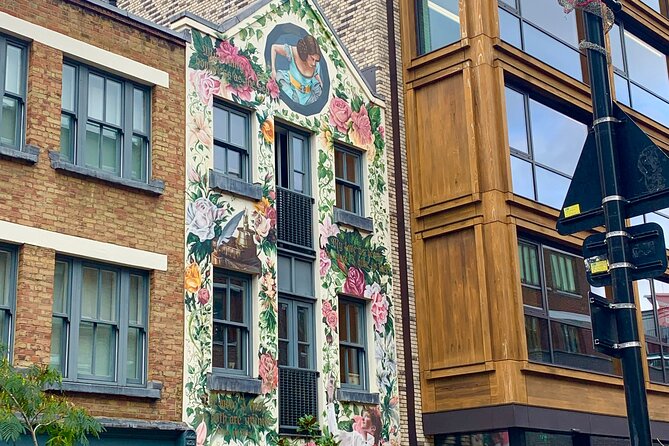
From the Barbican, the route goes up Whitecross Street and passes the site of the Fortune Playhouse. It then crosses the boundary toward Shoreditch and reaches Bunhill Fields, a historic burial ground.
This section adds another layer to the story of theatre and city life. The Fortune Playhouse site reminds you that several important theatres once operated beyond the small area most people associate with Shakespeare. Bunhill Fields shifts the subject toward death, memory, and the way London has marked its past.
The stop at Bunhill Fields takes about ten minutes. It is not presented as a separate cemetery visit with extended free time. Instead, it forms part of the walk’s steady movement north, with the guide connecting the burial ground and theatre sites to the districts around them.
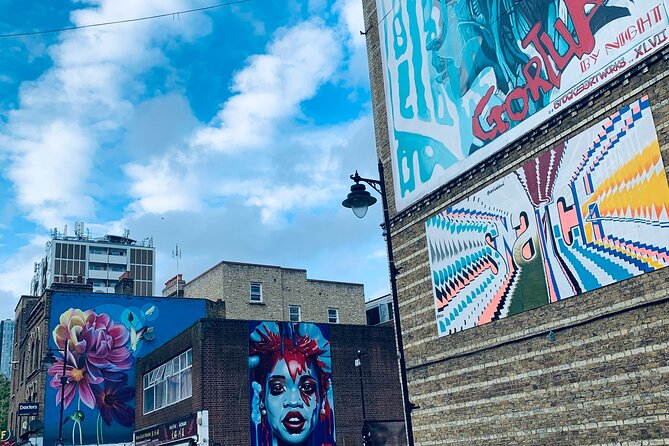
The route through Shoreditch continues for about 15 minutes toward Curtain Road. Shoreditch is now a modern district, so the contrast between present-day streets and early theatre history is especially clear. You will need to watch traffic at road crossings and stay with the group as the route moves through active streets.
New Inn Yard and England’s first playhouse
The walk finishes at New Inn Yard, about five minutes from the end of the route. This is the site of The Theatre, described as England’s first playhouse, and it is now the location of the Shakespeare Museum.
For many people, this is the tour’s strongest final point. The Globe is famous and visually easy to grasp, but The Theatre helps explain where London’s purpose-built playhouse tradition began. The museum site gives the story a present-day destination, even though this experience does not include a museum entry.
The ending is in Shoreditch, outside the new Shakespeare Museum. From there, the location is about 10 minutes from Old Street Tube on the Northern Line and about 15 minutes from Liverpool Street on the Central Line. That makes it fairly easy to continue sightseeing, find food, or return to central London after the walk.
The end point is not the starting point, so plan your day around a one-way route. That is a benefit if you want to see more of London, but less convenient if you have left belongings near Dowgate Hill.
What the $23.08 price really buys you
At $23.08 per person, the main purchase is the guide’s time and the route design. You are not paying for a series of expensive admissions. Nearly every stop is viewed from outside, and the walk includes no refreshments.
I think the price is fair for a maximum six-person group and a two-hour experience led by an actor. You are paying for a carefully connected story, not just directions between landmarks. The cost is especially reasonable if you value questions, performance, and local details more than indoor exhibits.
The value is weaker if you want guaranteed access to major attractions. You do not enter the Globe Theatre, St. Paul’s Cathedral, Guildhall, or the Shakespeare Museum as part of this experience. The Barbican Centre is included as a stop, but this is not a ticketed theatre or museum tour.
The mobile ticket is useful, and confirmation arrives at booking. Free cancellation is available if you cancel at least 24 hours before the start time. Changes or cancellations inside that period are not accepted for a refund.
Who will enjoy this walk most
I would choose this for adults and older teens who already have some interest in Shakespeare, theatre, London history, or city architecture. It also suits people who enjoy being shown places they might otherwise walk past.
The theatrical delivery is a major part of the appeal. Dee has used quotations from the plays and short performances to explain Shakespeare’s life and work. If you like lively interpretation, this can make the walk memorable. If you prefer a quiet, purely factual tour, the acting may feel like more than you need.
The tour is not suitable for children under 16. It is also not recommended for people with mobility issues, difficulty walking, or trouble keeping up with a group. Expect stairs, road crossings, and a total duration of about two hours including walking time.
Service animals are allowed, and the route is near public transport. There is no stated provision for food or drink, so bring water. Wear shoes you can walk in comfortably, and carry rain gear.
Should you book Shakespeare Promenade?
Book it if you want Shakespeare connected to real London streets, not just a visit to the Globe. The route covers an impressive spread of sites for about two hours, and the group limit of six gives the actor guide space to respond to your questions.
I would be less keen on it for someone seeking long indoor visits, a museum collection, or a leisurely pace with frequent stops. The route is active, most admission is not included, and some locations are marked only by plaques or surviving fragments.
For an adult who enjoys theatre and likes a guide who performs as well as explains, this is a strong-value introduction to Shakespeare’s London. Dee’s use of play quotations and theatrical storytelling adds the human touch, while the ending at The Theatre site gives the walk a clear purpose.
FAQ
How long does Shakespeare Promenade last?
The experience lasts approximately two hours, including walking time. A 20-minute interval takes place at the Barbican.
Where does the tour start?
The tour starts at the Tallow Chandlers Company, 4 Dowgate Hill, London EC4R 2SH, UK.
Where does the tour finish?
The walk finishes at New Inn Yard in London, outside the new Shakespeare Museum. The end point is about 10 minutes from Old Street Tube and 15 minutes from Liverpool Street.
Is the Globe Theatre included?
The route views the Globe Theatre from across the Thames. The supplied information does not include entry to the Globe.
Does the tour cross Millennium Bridge?
Yes. Crossing Millennium Bridge is one of the listed highlights, and the bridge provides broad views of London.
What is the largest group size?
The tour has a maximum of six people.
Is food or drink provided?
No. Food, drink, and refreshments are not provided by the host. You should bring your own bottled water.
Is the tour suitable for children?
No. The experience is not suitable for children under 16.
Is the tour accessible for people with mobility issues?
The walk includes steps, stairs, and road crossings. It is not recommended for people with mobility issues or for those who have difficulty walking or keeping up with a group.
Just added around London
- Private The Beatles Taxi Tour in London★ 5.0 · 12 reviews
- Dinner and Jazz Cruise on the River Thames★ 4.0 · 140 reviews
- Airport Coach Service from Heathrow to Oxford★ 3.5 · 67 reviews
- The Alfred Hitchcock London Walk with Sandra Shevey★ 5.0 · 15 reviews
- Thames Beachcombing★ 4.5 · 100 reviews
- Tower of London & 30+ London Sights Walking Tour★ 4.5 · 33 reviews
- Ted Lasso London Taxi Tour★ 5.0 · 5 reviews
- Ted Lasso Tour of Richmond with Private Guide★ 5.0 · 25 reviews
London Tours, compared.
Stonehenge, Windsor Castle, and Bath from London
Read our review →
London Big Bus Hop-On Hop-Off Tour with Optional River Cruise
Read our review →
Stonehenge, Windsor Castle and Bath with Pub Lunch in Lacock
Read our review →
Tower of London and Crown Jewels Exhibition Ticket
Read our review →
Stonehenge, Windsor Castle and Bath Full Day Guided Tour
Read our review →