
Reviewed · JACK THE RIPPER TOURS
Jack the Ripper – What About the Women?
Jack the Ripper tours often turn a terrible set of murders into a story about the murderer. This walk takes a needed different path. You follow the women who were killed, hear about their work, families, hardships, and choices, and learn how Victorian poverty shaped life in the East End.
I like the focus on the women rather than the myth. I also like the way the tour connects the murders to real places, from Whitechapel Road and the Ten Bells Pub to Brick Lane Mosque and Mitre Square. The main drawback is that this is a two-hour walk at night, with several stops but plenty of time on your feet.
Key points to know before booking
- A victim-centered tour: The focus is on six women and the society they lived in, not on glorifying Jack the Ripper.
- A useful East End route: You walk through Whitechapel, Brick Lane, Spitalfields, Petticoat Lane, and Aldgate.
- A fact-based presentation: Guides such as Cecily and Ellie explain what is known while avoiding lurid images and guesswork.
- A small-group setting: The maximum group size is 20, which helps with questions and hearing the guide.
- An evening experience: The walk begins at 6:30 p.m. outside Aldgate station, giving you a nighttime view of East London.
- Good value at $34.28: For two hours with an experienced guide, the price is fair, especially if you want social history rather than a standard crime tour.
Why this Jack the Ripper walk feels different
The central idea is simple: the women should not disappear behind the name of the man accused of killing them. That choice changes the tone of the whole experience.
You hear about Martha Tabram, Polly Nichols, Annie Chapman, Mary Jane Kelly, Elizabeth Stride, and Catherine Eddowes as people. Their deaths remain part of the story, but they are not treated as entertainment or as a string of gruesome puzzles.
The tour also corrects a common mistake. The women are often described as prostitutes first, with little effort made to explain the conditions around them. This walk looks at homelessness, unstable work, alcoholism, addiction, poverty, and the limited options available to working-class women in Victorian London.
That broader view matters. It helps you understand why Whitechapel had so many lodging houses, workhouses, charities, and emergency shelters. It also shows why women living on the edge of poverty could be exposed to danger without reducing them to a stereotype.
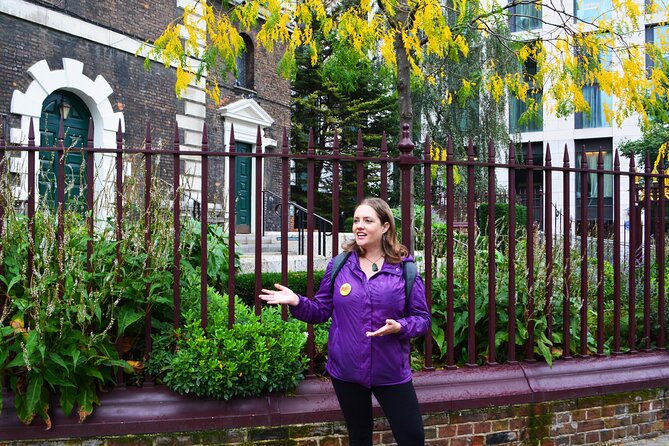
The guides bring different strengths. Cecily is praised for clear speech, warmth, and strong command of the subject. Ellie is also noted for her grasp of the women’s lives and the East End itself. If hearing clearly is important to you, the small group and frequent stops may make this easier than a large, crowded walk, though the tour is still outdoors and street noise can vary.
More Jack the Ripper Tours in London:
- London Jack the Ripper Guided Tour with Ripper-Vision
★ 4.5 · 4,840 reviews - London Jack The Ripper Guided Walking Tour
★ 5.0 · 3,131 reviews - Ultimate Jack the Ripper : Guided Tour of London
★ 5.0 · 1,495 reviews
Starting on Whitechapel Road with Martha Tabram and Polly Nichols
Meet outside Aldgate station on Aldgate High Street at 6:30 p.m. The meeting point is easy to reach by public transport, and beginning here puts you close to the historic edge of the City of London and the old East End.
The first stop is Whitechapel Road, where the guide introduces Martha Tabram and Polly Nichols. This opening section lasts about 20 minutes and sets up the social world behind the murders.
You learn about dosshouses, workhouses, spikes, and other forms of accommodation used by poor people. These words can sound dry in a book, but they become more useful when tied to the women’s daily choices and the narrow routes open to people without steady money or secure housing.
The guide also points out charities still working in the area today. That link between Victorian poverty and present-day support work gives the stop more purpose than a simple look at where a crime happened.
I particularly value this beginning because it gives you context before the darker material. You are not dropped straight into a murder story. Instead, you get a picture of the street, the class system, and the pressures that shaped the lives of people in Whitechapel.
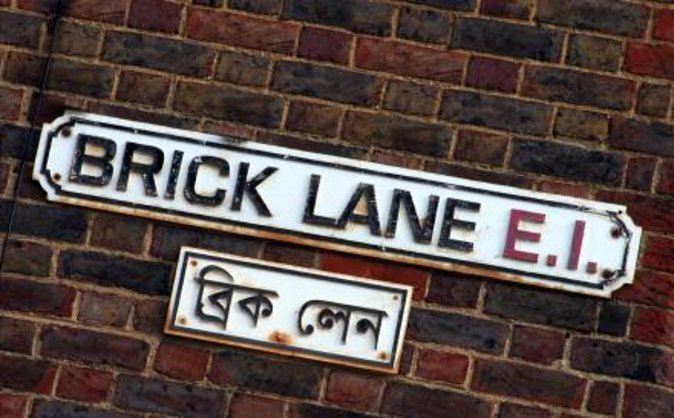
Brick Lane, Polly Nichols, and the East End’s changing identity
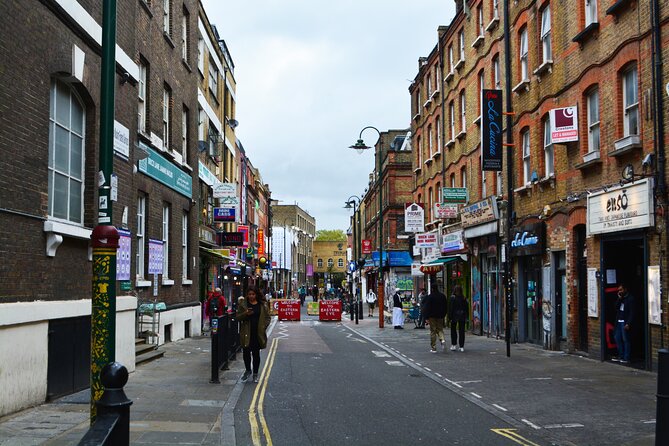
The route continues to Brick Lane, one of the best-known streets in East London. Here the tour stops at the site of the pub where Polly Nichols spent her final night.
This section looks at Polly’s life and the problems of alcohol and addiction in Victorian society. The point is not to judge her. It is to ask what addiction meant in a period with little modern support, widespread poverty, and few safe choices for women living alone.
Brick Lane also provides a wider story about immigration. At the Brick Lane Mosque, the guide explains how different communities came to live and work in the East End.
That makes this more than a murder walk. You begin to see Whitechapel and Spitalfields as places shaped by movement, trade, faith, and changing populations. The modern street scene sits beside older buildings and reminders of earlier communities.
This stop lasts about 15 minutes. Brick Lane is an active part of London, so you may encounter traffic, pedestrians, and street noise. Stay close to the guide and keep your attention on the commentary rather than expecting a quiet lecture setting.
Spitalfields, Annie Chapman, and the Ten Bells Pub
At Spitalfields, the tour visits the former Truman Brewery, once described as the largest brewery in the world. The site helps explain the scale of local industry and the number of people who once depended on East End work.
Nearby is 29 Hanbury Street, where Annie Chapman was found on the morning of September 8. The guide uses the location to talk about Annie’s life, rather than treating the address as a shock stop.
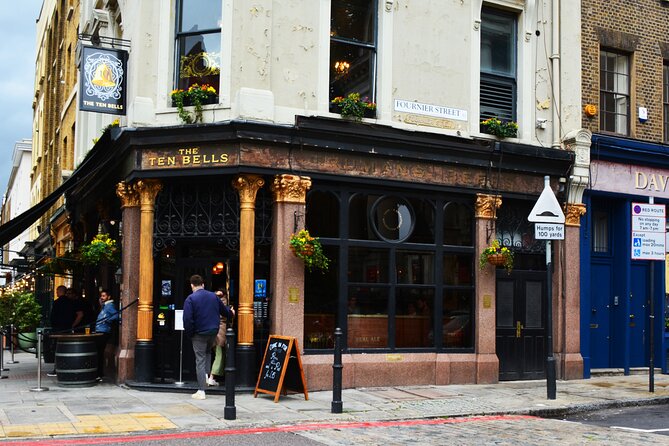
Around the corner, at the Ten Bells Pub, you hear more about Annie and the pain she experienced in her personal life. This is one of the route’s more memorable places because the pub has become closely linked with the Jack the Ripper story.
The name itself carries a lesson about public memory. The pub was once renamed the Jack the Ripper pub, but pressure from the Reclaim the Night movement helped bring back the name Ten Bells.
That detail shows how present-day people have challenged the way violence against women is packaged for entertainment. It also fits the tour’s larger aim: remember the women, question the old labels, and be careful about turning real suffering into a marketing theme.
This section lasts about 10 minutes. You will not spend a long time inside the pub, and the tour does not promise a pub visit. The value is in hearing how the site has been interpreted and contested over time.
Same country, a completely different day out:
- Stonehenge, Windsor Castle, and Bath from London
★ 4.5 · 18,662 reviews - London Big Bus Hop-On Hop-Off Tour with Optional River Cruise
★ 3.5 · 10,803 reviews - London Small Group Tour of Historical Pubs
★ 5.0 · 10,422 reviews - Stonehenge, Windsor Castle and Bath with Pub Lunch in Lacock
★ 4.5 · 7,402 reviews
Old Spitalfields Market and the contrast of Victorian London
Old Spitalfields Market opened in 1887, the year of Queen Victoria’s Golden Jubilee. The Whitechapel murders began the following year, making the market a useful place to consider the sharp differences of Victorian London.
On one side was royal ceremony, economic power, and public celebration. On the other was overcrowded housing, insecure work, hunger, and poor health. The market gives the guide a physical setting for explaining those contrasts.
You then walk to Crispin Street to see the former site of a refuge for working-class people that was considered effective. This is an important counterpoint to the usual grim picture of the East End. Not every institution failed, and local support could make a real difference.
Across the street is the former site of Mary Jane Kelly’s residence. She is described as the last victim in the series and the most mysterious of the women connected with the murders.
Mary Jane’s story is often surrounded by speculation. A good part of this tour is the effort to separate what can be supported from what has been repeated because it makes a dramatic tale. The guide keeps the focus on the person and the period rather than building another legend.
The Old Spitalfields section takes about 15 minutes. You can expect several stops close together, which gives the route a steady pace but leaves limited time for extended independent exploring.
Petticoat Lane and the working East End
The walk then reaches Petticoat Lane Market, the former center of the East End textile industry. This stop is brief, about five minutes, but it adds useful economic context.
Textiles shaped the area’s jobs, streets, and communities. By including the market, the guide shows you the East End as a place of work and trade, not only as a backdrop for murder.
This is also a point where you can look around at the mixture of older streets and modern businesses. The tour includes local details such as street art, shops, restaurants, and signs that are easy to miss when you are following a map by yourself.
The stop is short, so do not expect a full market tour. It works best as a quick piece of the larger story.
St Botolph’s Church and the final walk to Mitre Square
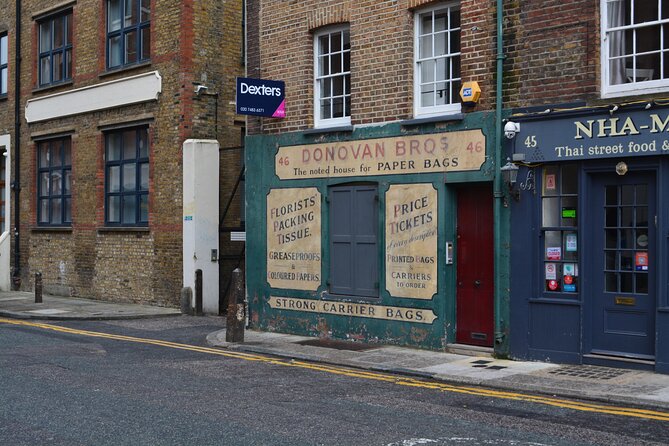
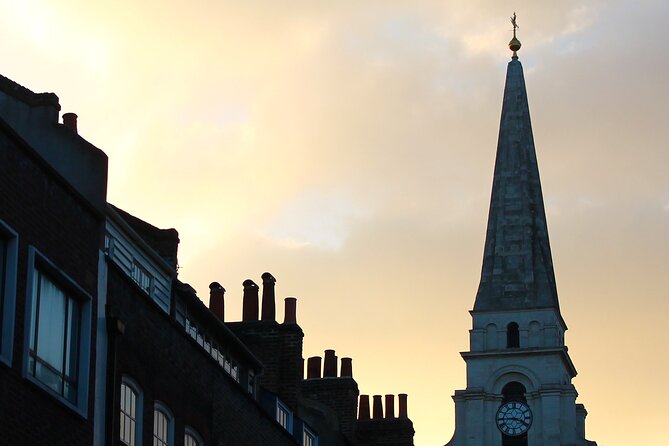
At St Botolph’s without Aldgate, the guide introduces Elizabeth Stride. Originally from Sweden, Elizabeth had difficult beginnings in Gothenburg before making her way to London.
Her story widens the tour’s reach beyond the immediate neighborhood. The East End was connected to other parts of Britain and Europe, and Elizabeth’s life reflects the movement of people across borders in search of work, security, or a new start.
The final stop is close by in Mitre Square, where Catherine Eddowes was found. The guide describes Catherine as a spirited woman from Wolverhampton and gives attention to her life and character.
This closing section lasts about 25 minutes, making it the longest stop on the route. It brings together the themes introduced earlier: migration, poverty, the vulnerability of women without stable resources, and the way later generations have remembered the murders.
The published meeting information gives Spitalfields Market as the end point, while the route description says the walk finishes close to Mitre Square. Since those locations are not identical, I would confirm the exact final stopping place before setting up a dinner reservation or another evening activity.
What the two-hour format means for you
The walk lasts about two hours and includes frequent stops. You will cover a fair stretch of East London, but the pace is broken up by commentary and pauses at the main sites.
There are places to sit if needed, according to the tour details, though this is still a walking experience. Wear comfortable shoes and plan for changing evening weather. The tour requires good weather and may be moved or canceled if conditions are poor.
A maximum of 20 people keeps the group smaller than many city walks. That matters here because the subject is detailed and personal. You have a better chance of hearing names, dates, and explanations clearly, and you can ask questions without shouting across a large crowd.
The tour is offered in English only. Most people can participate, and service animals are allowed. Since much of the experience takes place on public streets, expect the normal noise and movement of central London rather than a private, controlled setting.
The lack of grisly photographs is a real benefit. The tour still deals with murder, addiction, poverty, and the suffering of families, but it does not rely on graphic images. Families with mature children may find it suitable, and the approach is less likely to turn the evening into a scare attraction.
The $34.28 price and what you receive
At $34.28 per person, the price is reasonable for a two-hour guided walk in central London. You are paying for an experienced guide, a planned route, historical research, and the ability to connect sites that might otherwise seem unrelated.
The value is strongest if you want interpretation. You can walk through Brick Lane, Spitalfields, and Aldgate for free, but a map alone will not explain the women’s lives, the old accommodation system, the Reclaim the Night campaign, or the social forces that shaped the district.
It is less valuable if you want a theatrical ghost walk, a long look at police methods, or a detailed account of the killer’s identity and clues. This experience deliberately gives those subjects less space.
The average booking point is 27 days ahead, so it makes sense to reserve early if the 6:30 p.m. time fits your plans. Free cancellation is available up to 24 hours before the start time. Cancellations or changes inside that window are not refunded or accepted, and a weather or minimum-group cancellation brings the choice of another date, another experience, or a full refund.
Who should book this East London walk?
I would choose this tour if you have read about the victims and want to see the places connected with their lives. It is also a good fit if you are new to the Jack the Ripper story and prefer a grounded introduction to Victorian London rather than a killer-centered retelling.
Families with mature children can consider it because the guide does not use grisly images or focus on graphic descriptions. The subject remains serious, so parents should decide if the themes of murder, addiction, and poverty suit their children.
History fans will get the most from the sections on housing, immigration, charity work, industry, and working-class life. The tour also suits visitors who want to explore a part of London beyond the usual Westminster and South Bank route.
I would skip it if you dislike evening walks, need a fully indoor activity, or want a traditional mystery tour built around clues and suspects. The experience is social history first and true crime second.
Should you book it?
Book this tour if you want the women remembered as people, not just names in a murder case. The route covers a useful slice of East London, and the focus on Whitechapel life gives you more to think about after the walk ends.
Cecily and Ellie bring a clear, personal style to the subject, with explanations that work for newcomers and people already familiar with the case. At $34.28, the tour offers solid value for two hours, especially in a small group.
Before booking, be ready for an outdoor evening walk and confirm the final stopping point, since the route description and end-point details differ. If that suits your plans, this is one of the more respectful and useful ways to approach the Whitechapel murders.
FAQ
Where does the tour begin?
The tour begins at Aldgate High Street, London EC3N 1AH, outside Aldgate station.
What time does the tour start?
The scheduled start time is 6:30 p.m.
How long does the walking tour last?
The experience lasts approximately two hours.
What areas does the route cover?
The route includes Whitechapel Road, Brick Lane, Spitalfields, Old Spitalfields Market, Petticoat Lane Market, St Botolph’s without Aldgate, and Mitre Square.
Is the tour focused on graphic crime details?
No. The tour centers on the lives of the female victims, Victorian society, and working-class life. It does not use grisly pictures or make the killer the main subject.
Which women are discussed?
The tour discusses Martha Tabram, Polly Nichols, Annie Chapman, Mary Jane Kelly, Elizabeth Stride, and Catherine Eddowes.
Is the tour offered in English?
Yes. The tour is offered in English.
How large can the group be?
The maximum group size is 20 people.
Can I cancel for a refund?
You can cancel up to 24 hours before the start time for a full refund. Cancellations and changes made less than 24 hours before the tour are not refunded or accepted.
Just added around London
- Private The Beatles Taxi Tour in London★ 5.0 · 12 reviews
- Airport Coach Service from Heathrow to Oxford★ 3.5 · 67 reviews
- The Alfred Hitchcock London Walk with Sandra Shevey★ 5.0 · 15 reviews
- Dinner and Jazz Cruise on the River Thames★ 4.0 · 140 reviews
- Tower of London & 30+ London Sights Walking Tour★ 4.5 · 33 reviews
- Thames Beachcombing★ 4.5 · 100 reviews
- Ted Lasso London Taxi Tour★ 5.0 · 5 reviews
- Ted Lasso Tour of Richmond with Private Guide★ 5.0 · 25 reviews
Jack the Ripper Tours, compared.
London Jack the Ripper Guided Tour with Ripper-Vision
Read our review →
Ultimate Jack the Ripper : Guided Tour of London
Read our review →
London Jack The Ripper Small-Group Walking Tour
Read our review →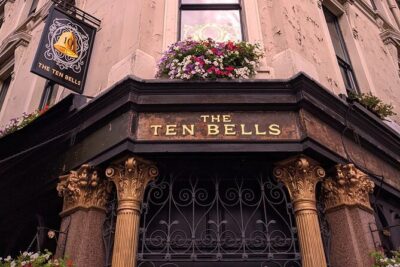
The Original Jack the Ripper Coach Tour of Haunted London
Read our review →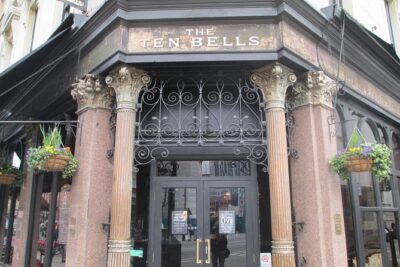
Browse the lists this tour appears in