
Reviewed · THAMES RIVER CRUISES
Thames Beachcombing
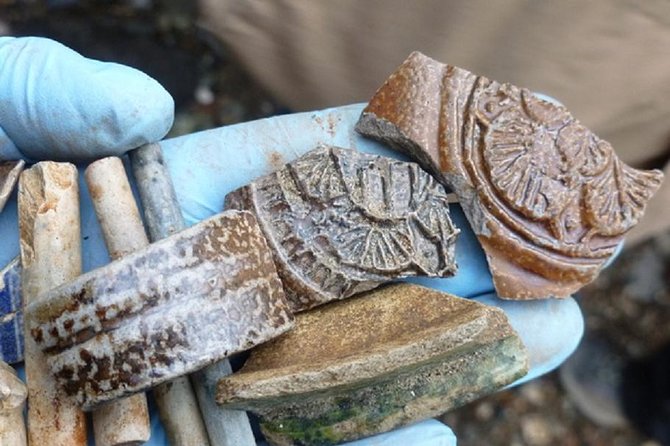
The best part of Thames Beachcombing is the chance to handle small pieces of London’s past instead of viewing them behind glass. At low tide, the muddy foreshore can reveal clay pipes, pottery fragments, roof tiles, and even marks left by the people who made them.
I like the hands-on search and the time Robert spends explaining what you find. I also like the modest price, $41.41, for a two-hour activity with gloves, bags, and a local guide. The catch is that the meeting place and start time change with the tide, and the foreshore can be slippery, stony, and muddy.
Key points at a glance
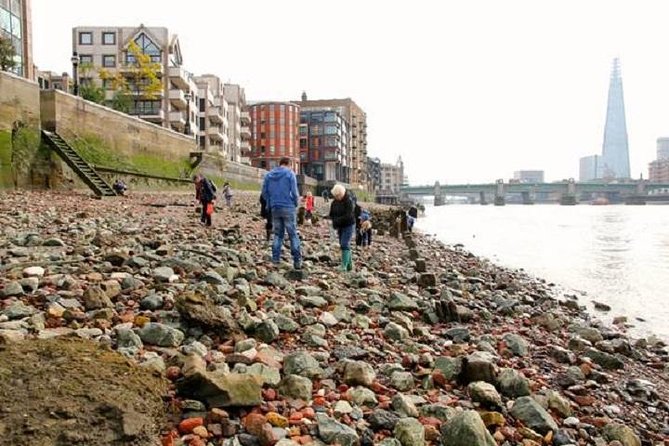
- Search the Thames at low tide: The exact foreshore location changes during the year, based on tide conditions.
- Find real fragments of London: Possible discoveries include clay pipes, pottery, tiles, and objects from before the Great Fire of London.
- Get your finds explained: Robert helps identify objects and gives them historical context at the end.
- A relaxed, small-group activity: The experience is described as small group, with a maximum of 20 people.
- Bring sturdy footwear: Wellington boots or hiking boots are required for the rough foreshore.
- Good for families and curious adults: Children under 16 need an accompanying adult, and children as young as five have taken part.
Why searching the Thames feels different from sightseeing
London’s big sights tell the city’s story from above ground. Mudlarking lets you look down.
The Thames foreshore is not a tidy archaeological site with numbered displays. It is a working tidal edge, exposed for a short time and covered again by the river. You search with your eyes, pick up an object, and ask what it might be. A broken piece of pottery can become a clue about a former household. A clay pipe fragment can point to a period when smoking was common. A tile may have been part of a London roof long before modern streets took shape.
That uncertainty is the fun. You are not promised a spectacular prize, and the activity should not be treated as a guaranteed treasure hunt. You might find a genuine old fragment, or you might mostly collect ordinary debris. The guide helps sort the interesting from the unremarkable.
I especially like the way this turns London history into a shared investigation. You are not simply listening to a talk. You are searching, comparing, asking questions, and learning from the objects in your own hands.
More Thames River Cruises in London:
- High-Speed Thames River Speedboat in London
★ 5.0 · 3,971 reviews - London Tootbus Hop on Hop off Bus Tour and Thames River Cruise
★ 4.0 · 3,834 reviews - Westminster to Greenwich Sightseeing Thames Cruise in London
★ 4.5 · 2,969 reviews
Meeting the guide and getting ready
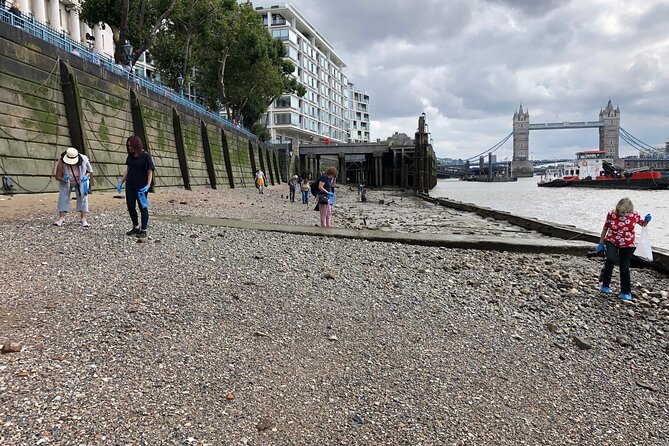
The meeting point is somewhere in London along the Thames foreshore, but the exact location and time are supplied by the guide. That is not a minor detail. The river’s tides determine when the foreshore is accessible, so you should not expect a fixed daily departure from one permanent address.
Robert provides gloves and plastic bags, then explains what to look for. A short introduction with photographs may help you recognize likely finds before you start. This matters because the foreshore can appear to be a jumble of stones, brick, glass, and broken pottery at first glance.
The supplied equipment keeps the experience simple. You do not need to pack specialist tools, and the activity is based on looking with your eyes only. That limitation is important: this is careful beachcombing, not digging or excavation.
The group can include up to 20 people. The experience is also presented as a small-group tour, which should give you a better chance of getting an object identified than a large walking tour would. Still, group size may affect how long you wait to ask about a find, particularly when several people discover something at once.
One and a half hours along the exposed foreshore
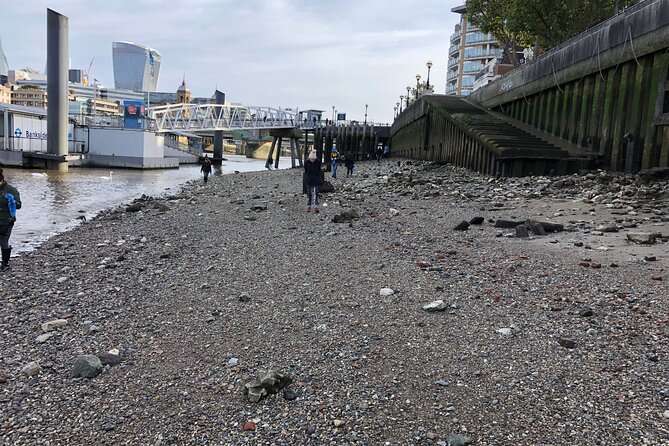
The main search lasts about 1.5 hours, within a total experience of roughly two hours. You walk along a stony section of the Thames bank while looking for objects washed or uncovered by the changing water.
The pace is leisurely rather than athletic. One rating describes it as an unhurried morning, which fits the nature of the activity. You need moderate physical fitness, but this is not a long-distance hike. The hard part is the footing. Mud, stones, and uneven ground make sturdy boots more useful than fashionable shoes.
This is also an activity where patience pays off. You may not spot anything at once. Then a small curve of pottery, a patterned tile, or a piece of clay pipe catches your eye. The pleasure comes from noticing details that would be easy to miss during a normal walk beside the river.
The location can change from one outing to another. Sites have included areas near Putney Bridge and around Cannon Street, while other sections of the foreshore may be used at different times of year. That variation is useful if you book again, since different stretches can offer different kinds of objects and views.
One point to keep in mind is that not every location will produce the same number or variety of finds. A more productive stretch can make the search feel thrilling, while a less generous section may require more patience. The guide can add value in either case by explaining what you are seeing rather than measuring success only by the number of pieces in your bag.
What you might find in the mud
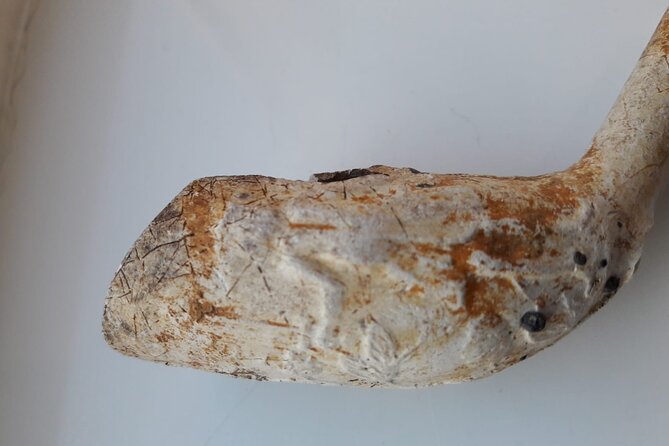
Possible discoveries include clay pipes, pottery fragments, roof tiles, ceramics, and other small objects. Some people have found tiles dating from before the Great Fire of London, while another discovery included a fingerprint impression left in the handle of an old bowl.
Those examples show why identification at the end matters. A fragment can look like a piece of broken building material until someone points out its age, shape, or manufacturing mark. Robert helps you understand what you picked up and places it in a wider story about London.
Clay pipes are especially appealing because they are recognizable and easy to carry. Pottery can be harder to identify, but the shape, glaze, and thickness may offer clues. Tiles can connect your small find to the buildings that once lined the city.
You should keep expectations sensible. The activity does not promise a specific artifact, and you may not find an item worth taking home. The appeal is the search itself, plus the chance to learn why a seemingly ordinary fragment matters.
At the end, Robert looks at the group’s finds and helps separate the more interesting pieces from common material. That group discussion adds another layer to the outing. You learn from your own discoveries and from what other people have found.
Same country, a completely different day out:
- Stonehenge, Windsor Castle, and Bath from London
★ 4.5 · 18,662 reviews - London Big Bus Hop-On Hop-Off Tour with Optional River Cruise
★ 3.5 · 10,803 reviews - London Small Group Tour of Historical Pubs
★ 5.0 · 10,422 reviews - Stonehenge, Windsor Castle and Bath with Pub Lunch in Lacock
★ 4.5 · 7,402 reviews
Robert’s role makes the difference
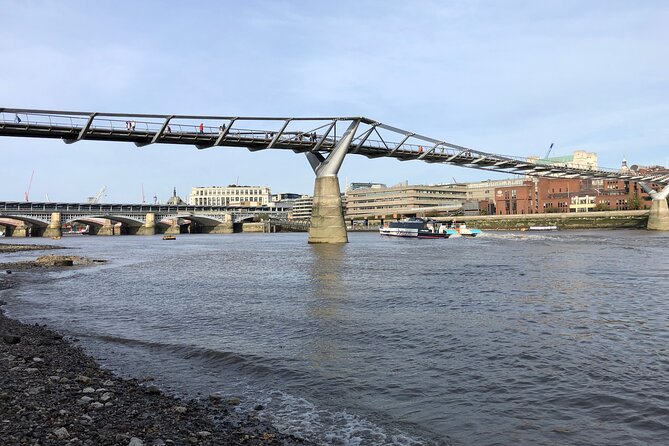
A foreshore search can be done alone, but a guide changes the experience. Without context, you may collect fragments without knowing if they are old, modern, useful, or simply interesting.
Robert is described as approachable and helpful, especially when identifying objects during the search. His role is part naturalist, part history guide, and part treasure-hunt referee. He can explain what to look for, answer questions as they arise, and offer historical context once the search is over.
The strongest feedback centers on his explanations and practical help. Several ratings describe him as well informed and encouraging, with one person returning to the activity in hopes of exploring another stretch of the Thames with him.
The experience is not entirely dependent on a brilliant presentation, though. One outing at Putney Bridge was considered enjoyable but had a less energetic guide. That is worth noting because the setting provides much of the entertainment, but the quality of interpretation still matters. If you want a formal lecture with a carefully staged story, this may feel loose. If you enjoy learning by asking questions as you go, the format should suit you well.
Is $41.41 good value?
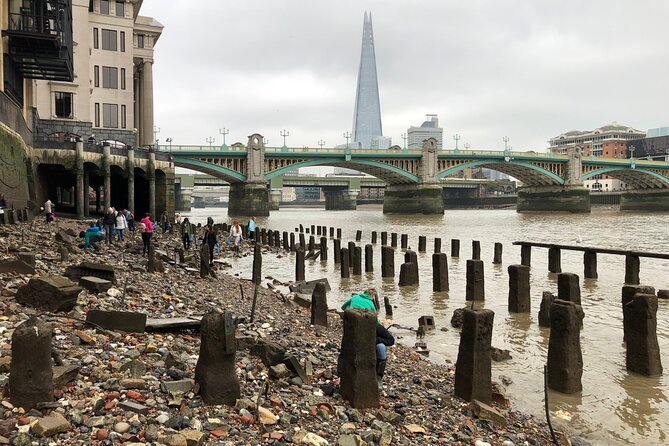
At $41.41 per person, Thames Beachcombing sits in a reasonable range for a two-hour guided London activity. You receive a local guide, gloves, and bags, with no extra admission charge listed.
The value depends on what you want from a tour. You are not paying for a major monument entry, a meal, or transport. You are paying for access to a tidal setting, guidance in spotting objects, and help understanding what you find. For someone interested in archaeology, social history, or hands-on activities, that can be a better use of money than another standard city walk.
The price also makes sense for families and repeat visitors. The activity offers something different from the usual London circuit, and you do not need a full day to fit it into your plans. A Sunday morning search can leave the rest of the day open.
The main uncertainty is the result. A museum ticket gives you a guaranteed collection. Mudlarking gives you a chance to find something, not a promise. I would book it for the experience and the setting, with any old artifact treated as a bonus.
What to wear and bring
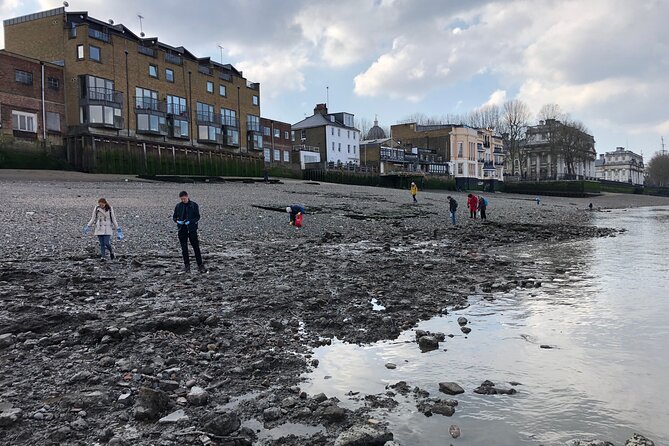
Take the footwear instruction seriously. Wellington boots or hiking boots are recommended because the foreshore is muddy and stony. Trainers may be uncomfortable or unsuitable, particularly if the ground is wet.
Wear clothes that can handle dirt. Gloves and plastic bags are provided, but the supplied gloves may not fit small children well. One family found that gloves kept slipping from a five-year-old’s hands, so you may want to bring smaller gloves for young children.
A small bag for personal belongings is sensible, though the supplied information does not list a separate equipment requirement. Keep your hands free enough to search, and expect to bend down repeatedly while examining the ground.
Good weather is required. If poor weather forces cancellation, you are offered another date or a full refund. The river environment is exposed, so conditions can affect comfort even when the activity goes ahead.
Bringing children to the Thames foreshore
This can work well for families. Children aged five and eight have stayed engaged throughout a session, helped by the hunt for objects and the guide’s use of pictures before the search began.
The activity gives younger children a clear task: look carefully, pick up only suitable objects, and ask what they are. That is more absorbing than asking them to stand quietly through a long historical talk.
Children under 16 must be accompanied by an adult. You should also consider the footing and the mud. A child who dislikes getting dirty or struggles on uneven ground may find the foreshore tiring.
For a family booking, I would prepare children for the possibility of finding only small fragments. The excitement comes from discovery, not from bringing home a dramatic artifact. Smaller gloves are worth packing if your child’s hands do not fit standard adult-sized pairs.
Timing, transport, and booking details
The experience lasts about two hours, with around 1.5 hours spent searching. It begins and ends at the meeting point, and the area is near public transportation.
Because the location and time change through the year, you should wait for the guide’s instructions rather than heading to a standard Thames landmark on your own. Confirmation is sent within 48 hours of booking, subject to availability.
This is an activity to book early if it is important to your schedule. It is booked an average of 67 days ahead, which suggests that popular dates can fill well before a London visit. Tide-dependent activities have fewer workable time slots than ordinary walking tours.
You can cancel for a full refund up to 24 hours before the start time. Changes made inside that period are not accepted, and late cancellations are not refunded. Check the local cut-off time carefully, especially if you are booking from another time zone.
Who should book Thames Beachcombing?
I would recommend this most strongly to you if you like history that feels physical and immediate. It suits people who enjoy finding small details, families looking for an unusual London activity, and repeat visitors who have already seen the major sights.
It is also a good match for anyone who prefers a slow, focused outing. Several hours of searching the riverbank can feel almost meditative, especially if you enjoy sorting, comparing, and noticing patterns.
You may want to choose another activity if you need a fixed itinerary, guaranteed sights, or step-free, polished conditions. The meeting details change, the ground is muddy and uneven, and the objects you find are unpredictable.
The rating is 4.7 out of 5 from 100 ratings, with 93 percent recommending the experience. That matches the main strengths: an unusual setting, a hands-on format, and strong guide support. The lower marks point to a real issue, too: the exact stretch of river can shape how satisfying the search feels.
Should you book it?
Book Thames Beachcombing if you want to see London from the river’s edge and enjoy the thrill of finding a small piece of the past yourself. Robert’s help with clay pipes, pottery, tiles, and other fragments adds real value to what could otherwise be a simple walk through mud.
Go prepared for boots, changing meeting details, and uncertain results. If you accept that the outing is about searching and learning rather than striking archaeological gold, $41.41 is a fair price for one of London’s more unusual two-hour experiences.
FAQ
How long does Thames Beachcombing last?
The experience lasts approximately two hours, including about 1.5 hours of searching along the Thames foreshore.
Where does the tour begin?
It begins in London at a Thames foreshore meeting point. The exact location and start time change during the year, and the guide provides those details.
What can I find while mudlarking?
You might find clay pipes, pottery fragments, ceramics, roof tiles, and other objects exposed or washed onto the foreshore. Some participants have found tiles dating from before the Great Fire of London.
Are gloves and bags provided?
Yes. The local guide provides gloves and plastic bags for the activity.
What should I wear?
Wear Wellington boots or hiking boots because the foreshore is stony and can be muddy. Clothing that can get dirty is a practical choice.
Can children join the experience?
Yes. Children under 16 must be accompanied by an adult. The activity requires a moderate level of physical fitness, and young children may need smaller gloves because the provided gloves may be too large.
Can I cancel for a refund?
You can cancel at least 24 hours before the start time for a full refund. Cancellations or changes made less than 24 hours before the experience are not accepted, and late cancellations are not refunded. If poor weather causes the experience to be canceled, you are offered another date or a full refund.
Just added around London
- Private The Beatles Taxi Tour in London★ 5.0 · 12 reviews
- Dinner and Jazz Cruise on the River Thames★ 4.0 · 140 reviews
- Airport Coach Service from Heathrow to Oxford★ 3.5 · 67 reviews
- The Alfred Hitchcock London Walk with Sandra Shevey★ 5.0 · 15 reviews
- Tower of London & 30+ London Sights Walking Tour★ 4.5 · 33 reviews
- Ted Lasso London Taxi Tour★ 5.0 · 5 reviews
- Ted Lasso Tour of Richmond with Private Guide★ 5.0 · 25 reviews
- Ted Lasso Tour of Richmond★ 5.0 · 152 reviews
Thames River Cruises, compared.
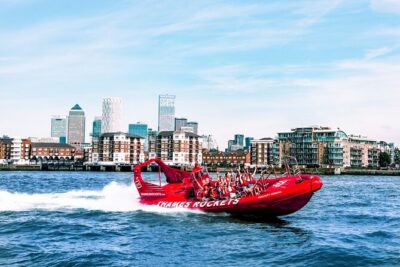

London Tootbus Hop on Hop off Bus Tour and Thames River Cruise
Read our review →
Westminster to Greenwich Sightseeing Thames Cruise in London
Read our review →

Uber Boat – Single Journey River Thames Cruise
Read our review →
Hop-On Hop-Off Sightseeing River Cruise on the Thames
Read our review →
Lunch River Cruise on the Thames with 2-Course Meal
Read our review →
Browse the lists this tour appears in