
Reviewed · DOVER TOURS
Battle of Britain Experience, White Cliffs of Dover & Canterbury
The most powerful part of this day is its sense of place. You look across the Channel from Dover’s cliffs, see the old gun positions that guarded Britain in 1940, then visit the former fighter station at Hawkinge where the Battle of Britain was fought from the air. The history is not kept behind glass alone. It is tied to the fields, roads, cliffs, and villages around you.
I like the small private format, limited to your own group of up to seven, and I like the way the day joins wartime history with Canterbury’s older sights. Anthony, the guide named in the experience details, is praised for his calm manner, local knowledge, and ability to shape the commentary around a group’s interests.
The main drawback is time. Canterbury receives about three hours, but that must cover the cathedral, old streets, food, and any river activity you choose. The museum also deserves its full two hours, so this is best for people who want a focused day rather than a slow, unplanned visit.
Key points at a glance
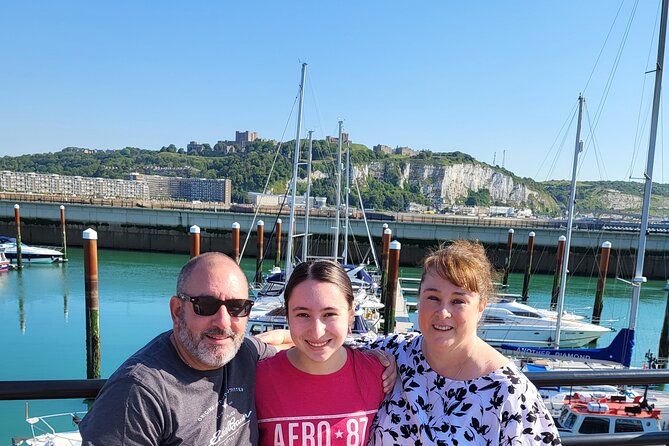
- Original 1940 gun positions: Walk around three gun emplacements and a machine-gun post at Dover’s Western Heights.
- A private day for up to seven: You travel in an air-conditioned vehicle with private transport and parking included.
- Hawkinge’s wartime setting: The museum occupies the site of a former Fighter Command aerodrome and includes its original Watch Office.
- Personal stories from the Few: See pilot effects, aircraft remains, and copies of original 1940 combat reports.
- A film-location stop: Photograph The Jackdaw pub in Denton, used in the 1968 film The Battle of Britain.
- Canterbury after the war: Finish with time for Canterbury Cathedral, St Martin’s Church, local food, pubs, and the River Stour.
Why this Dover and Canterbury day works
This is not simply a transfer between Dover and Canterbury with a few stops added. The route gives you a clear story. You begin by looking toward the sea and the threat of invasion, move to the memorial for the RAF aircrew who defended Britain, then visit the airfield from which many of those missions were flown.
That order matters. At the White Cliffs of Dover, you first get the geography. The Channel is close. France may be visible on a clear day. Dover Castle and the harbour sit below, while the wartime structures remind you that this was a defensive coast, not just a scenic viewpoint.
Later, Canterbury changes the mood. Its churches and medieval streets reach back far beyond the Second World War. You can use the final three hours for a major historic sight, a meal, or a simple walk through the city. The day has both a clear subject and enough variety to keep it from feeling like a museum-only outing.
Other England days people book alongside this one:
- Stonehenge, Windsor Castle, and Bath from London
★ 4.5 · 18,662 reviews - London Big Bus Hop-On Hop-Off Tour with Optional River Cruise
★ 3.5 · 10,803 reviews - London Small Group Tour of Historical Pubs
★ 5.0 · 10,422 reviews
Starting from Canterbury at 9:30 am
The standard meeting point is outside Canterbury West station, and the advertised start time is 9:30 am. Pickup can also be arranged at a railway station or hotel in or around Folkestone, Ashford, Canterbury, or Dover, within 20 miles of Dover Port. You need to give your preferred pickup or drop-off point when booking.
Private transport makes the route practical. Kent’s wartime sites are spread across the countryside, and moving between them by public transport would be awkward. Parking fees and transport are included, and the vehicle is air conditioned.
The first drive from Canterbury to Dover’s Western Heights takes about 30 minutes. You travel through Kent countryside rather than spending the morning on a long motorway transfer. That makes the drive part of the experience, especially when your guide links the places outside the window to the events of 1940.
Because this is a private activity, you can ask questions as you go. Anthony has been especially praised for explaining military events clearly and for adjusting the day to a group’s interests. That matters here, since the subject can range from aircraft and combat tactics to personal stories and local geography.
Dover’s Western Heights and the Channel view
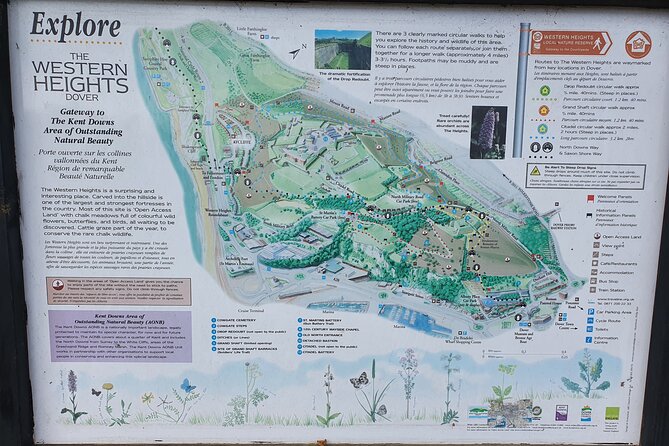
The first stop lasts around 30 minutes and has no separate admission charge. It is not the usual crowded cliff-top photo stop. You visit a discreet point at Dover’s Western Heights that large groups cannot easily reach.
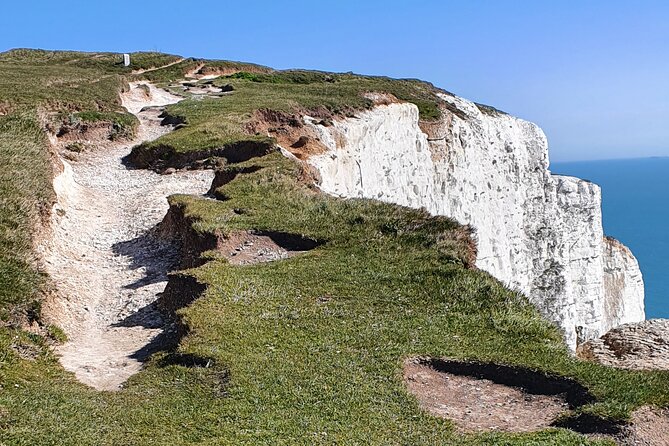
From here, you can photograph Dover Castle and the harbour, look across the English Channel, and possibly see the French coast in clear weather. The view also helps you understand the military logic of the area. The water is not an abstract boundary on a map. It is a short stretch of sea between Britain and continental Europe.
The wartime remains are the key detail. Three original gun emplacements and a machine-gun post were built in 1940 as part of Britain’s coastal defences. They give the stop more weight than a standard white-cliffs viewpoint.
You should take care on the ground. The site is uneven, overgrown in places, and includes concrete wartime structures. Most people can take part, but this is not a polished paved attraction. Wear sensible shoes and expect a short walk around rough surfaces.
Thirty minutes is enough for the view, photographs, and a brief explanation. It is not enough for a long walk along the cliffs, so you should not book this day expecting a full coastal hike.
The Battle of Britain Memorial at Capel-le-Ferne
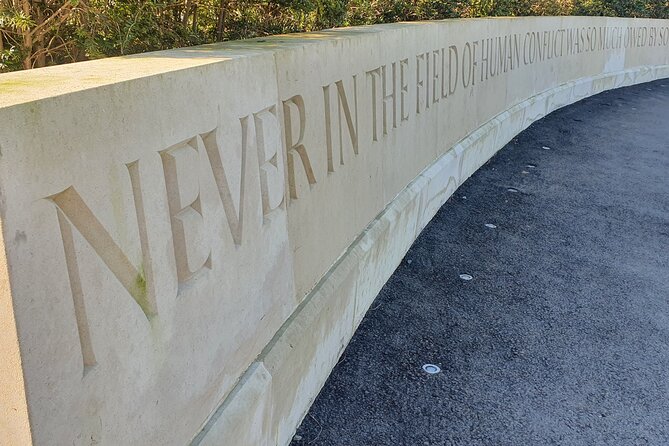
A drive of about 15 minutes brings you to the Battle of Britain Memorial at Capel-le-Ferne. The site looks directly over the Channel and has uninterrupted sea views, but its main purpose is remembrance.
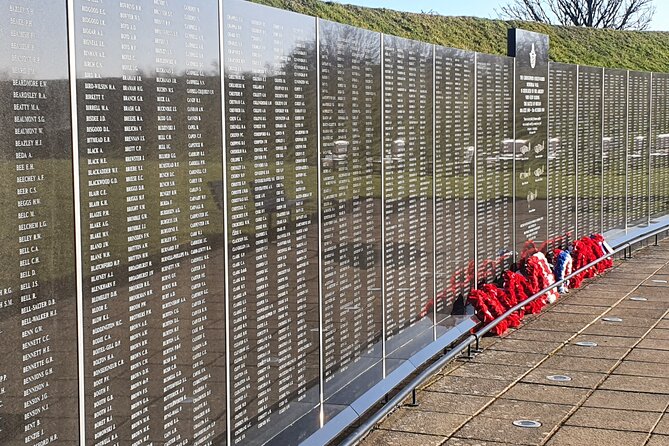
The Memorial Wall records the names of the aircrew known to have flown at least one sortie with an accredited Royal Air Force squadron or unit during the Battle of Britain. The names appear in alphabetical order, without rank or decoration. That presentation gives equal weight to every person who took part, from experienced aces to pilots who may have been lost on a first mission.
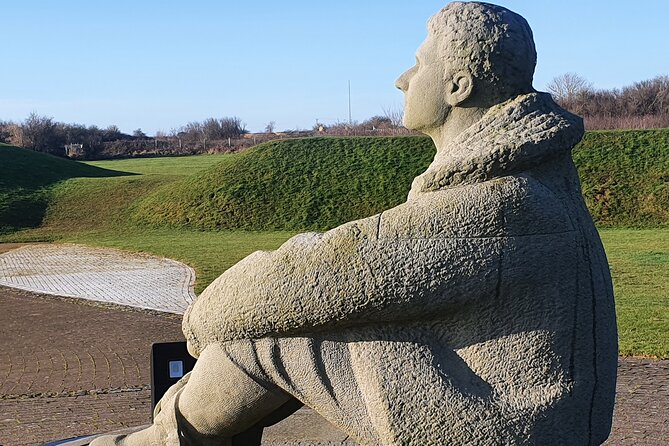
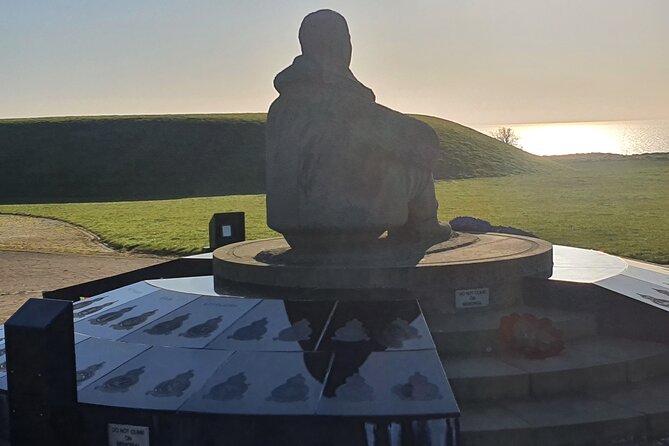
At the center is the statue of a fighter pilot facing the sea. He wears an Irvin jacket, which hides his rank, nationality, and record. It is a restrained design, and the lack of personal detail makes the statue represent all of the pilots rather than one famous figure.
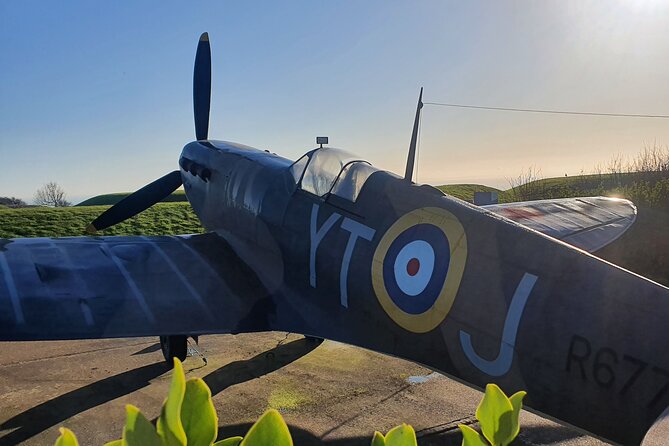
You can also see replicas of a Spitfire, Hurricane, and Stuka. A shop sells books and souvenirs, while the cafe serves refreshments with commanding views. The stop lasts around 45 minutes, which should give you time to see the memorial, take in the view, and get a drink if needed.
This is one of the strongest parts of the day for anyone interested in the human side of the Battle of Britain. The museum later supplies objects and aircraft remains. Capel-le-Ferne gives you a quiet place to consider the people behind the machines.
Same country, a completely different day out:
- Beatles Magical Mystery Tour
★ 5.0 · 9,266 reviews - Liverpool: “Blue Route” – City & Beatles Tour
★ 5.0 · 8,562 reviews - Stonehenge, Windsor Castle and Bath with Pub Lunch in Lacock
★ 4.5 · 7,402 reviews - Oxford University Walking Tour With University Alumni Guide
★ 5.0 · 6,905 reviews
Hawkinge museum and the fighter station’s remains
The next drive takes about 15 minutes, followed by roughly two hours at the Kent Battle of Britain Museum in Hawkinge. Between November and February, the visit may take place at Manston instead, so check the location for your date.
Hawkinge is important because the museum occupies the site of a former Fighter Command aerodrome. Several original buildings remain, including the former Watch Office, and those structures help place the collection in its working setting.
The museum holds the world’s largest private collection of Battle of Britain artefacts, including material recovered by aviation archaeologists in Kent during the 1970s and 1980s. You can see remains from Spitfires and Hurricanes, along with personal items connected to pilots whose aircraft were shot down or crashed in the county.
The value here is not just the number of objects. Aircraft wreckage can look anonymous until someone explains what it is and how it was found. Personal effects make the story more direct. Your guide explains what fighter pilots faced while waiting to be scrambled, entering combat, trying to survive, and returning to duty.
Copies of original combat reports from 1940 are included among the historical materials available during the tour. These can help turn a broad military story into a sequence of decisions, risks, and outcomes.
Two hours is a sensible amount of time. It lets you see the main collection without rushing and gives your guide room to explain the stories behind selected objects. If your interest is aircraft engineering or military history, you may want even longer, but the rest of the route is part of the appeal.
The Jackdaw in Denton and a small film connection
After Hawkinge, you drive through Kent countryside to Denton, a picturesque village with a stop of about 15 minutes. The purpose here is simple: photographs of The Jackdaw pub.
The building featured in the 1968 film The Battle of Britain. Christopher Plummer’s character, Squadron Leader Harvey, drives there to meet his wife, played by Susannah York. You do not visit this stop for a long tour or a meal. It is a quick look at a recognizable film location and a pleasant pause between the museum and Canterbury.
The stop works best if you have seen the film or enjoy historic cinema locations. If not, it remains a brief village photo stop rather than a major attraction. That is also why the 15-minute timing feels right.
Three hours in Canterbury
From Denton, the route passes through Barham and Bridge before reaching Canterbury, with the drive taking no more than about 30 minutes. The final three hours are flexible, but you should decide in advance what matters most.
Canterbury Cathedral is the obvious choice. The UNESCO World Heritage site traces more than 1,400 years of British history and explains the arrival of Christianity through St Augustine in AD 597. Admission is not included. The stop description gives a price of £17, while the general tour information lists £21 per person, so confirm the current fee before you go.
If you enter the cathedral, allow enough time to look beyond the main interior. Its importance is tied to the long religious and political story of England, not simply to its architecture. The cathedral can easily use much of your allotted time, especially if you want to read the displays and explore properly.
Nearby St Martin’s Church is described as the oldest church in England, dating to AD 587. It offers a smaller and quieter historical stop. You can also walk along the River Stour or take a punt, though the experience details do not promise a particular river schedule or included boat ride.
Food and drink are another good use of this final block. Canterbury has characterful places to eat, including a medieval timbered pub associated with Chaucer’s Canterbury Tales. You can also sample beer and other drinks from Britain’s oldest brewery, founded in 1698.
Lunch is not included. You can choose in-house catering at Capel-le-Ferne and the museum, based on your appetite and budget, then eat in Canterbury if you prefer. I would plan this rather than leave it to chance, since three hours can pass quickly once you add a cathedral visit and walking time.
Is the private price good value?
The stated price is $1,227.68 per group of up to seven. That is a high total for one day, but the comparison should be made against a private vehicle, guide, parking, and the ability to bring a full group without paying a separate tour price for each person.
For seven people, the cost works out to about $175 per person before optional cathedral admission and food. For two people, it becomes much more expensive per person. The value is strongest for a family or group of friends that would otherwise need to arrange a car, pay for parking, and coordinate several hard-to-reach sites.
The Battle of Britain museum admission is included. Canterbury Cathedral is not, and lunch is also separate. You should budget for those extras if they are part of your plan.
This tour is also paying for interpretation. The guide does not merely point out a cliff, a memorial, and a museum. The route is designed around the 1940 defence of Kent, with original reports and personal stories helping connect the sites. If you want only transport and photo stops, the price may feel steep. If you want a full day led by a specialist guide, it makes more sense.
The experience is typically booked about 47 days ahead, which is useful planning information for a busy UK itinerary. It is offered in English, with mobile ticketing and pickup options.
Who should book this experience?
You should consider this tour if you have a strong interest in the Second World War, aviation, military sites, or the history of southern England. It is also a good fit if you want to combine Dover and Canterbury without renting a car.
Families and mixed-interest groups can make good use of the format. The cliffs, memorial, film stop, and Canterbury give the day some variety, while the private setup lets your guide spend more time on the subjects that interest you most.
This is less suitable if you want a long walk on the White Cliffs, extensive time inside Dover Castle, or a full day devoted to Canterbury. Those activities are not the focus. The cathedral is optional, and Dover Castle is viewed from the first stop rather than visited.
The day runs about eight hours and ends back at the meeting point. Free cancellation is available up to 24 hours before the start time. Changes or cancellations inside that window are not accepted for a refund.
Should you book the Battle of Britain Experience?
Book it if you want the Battle of Britain told through real places: coastal defences at Western Heights, the Channel view from Capel-le-Ferne, an airfield museum at Hawkinge, and the villages around them. Anthony’s calm, personal guiding style is a major part of the appeal, especially if you enjoy stories more than a standard audio-guide visit.
For the best value, bring a group of several people and decide how you want to use your Canterbury time before the day begins. Choose the cathedral if its long religious history matters most, or keep the afternoon for walking, food, and the city’s old streets.
Skip it if your priority is a relaxed coastal hike or a deep visit to Canterbury alone. For a compact, private Kent day that links the Battle of Britain with Canterbury’s older past, this is a well-planned choice.
FAQ
Where does the tour start?
The standard meeting point is Canterbury West Station, Station Road West, Canterbury CT2 8AN.
What time does the experience begin?
The advertised start time is 9:30 am.
Can I arrange pickup outside Canterbury?
Yes. Pickup can be arranged at a railway station or hotel in or around Folkestone, Ashford, Canterbury, or Dover, within 20 miles of Dover Port. You should provide your preferred pickup or drop-off point when booking.
How long does the tour last?
The experience lasts approximately eight hours and ends back at the meeting point.
How many people can join the private tour?
The price covers a private group of up to seven people.
Is transportation included?
Yes. Private transportation in an air-conditioned vehicle is included, along with parking fees.
Is admission to the Battle of Britain Museum included?
Yes. Admission to the Battle of Britain Museum is included in the tour price.
Is Canterbury Cathedral admission included?
No. Canterbury Cathedral admission is optional and is not included. The provided details list the fee as £17 in one place and £21 per person in another, so confirm the current price before visiting.
Is lunch included?
No. Lunch is not included. You can choose food at Capel-le-Ferne or the museum, or eat in Canterbury.
Is the Dover Western Heights site suitable for everyone?
Most people can participate, but the site has uneven ground, overgrown areas, and concrete wartime structures. Take care while walking and wear suitable footwear.
Just added around England
- Private The Beatles Taxi Tour in London★ 5.0 · 12 reviews
- Dinner and Jazz Cruise on the River Thames★ 4.0 · 140 reviews
- Airport Coach Service from Heathrow to Oxford★ 3.5 · 67 reviews
- The Alfred Hitchcock London Walk with Sandra Shevey★ 5.0 · 15 reviews
- Tower of London & 30+ London Sights Walking Tour★ 4.5 · 33 reviews
- Thames Beachcombing★ 4.5 · 100 reviews
- Ted Lasso London Taxi Tour★ 5.0 · 5 reviews
- Ted Lasso Tour of Richmond with Private Guide★ 5.0 · 25 reviews
Dover Tours, compared.

Dover Shore Excursion:Post-Cruise Tour to London via Canterbury and Leeds Castle
Read our review →
Dover & White Cliffs Tour; Canterbury, Coastal Towns & Castles
Read our review →
Private transfer from Dover to London hotel or airport
Read our review →


Dover Cruise Ship to Leeds Castle via Canterbury, Villages & back
Read our review →
Chauffeur Transfer: Dover Cruise Port to/from Heathrow Airport
Read our review →Browse the lists this tour appears in