
Reviewed · BLACK CAB TOURS
Black Taxi Tour Of London
London sightseeing works best when you can stop for the view instead of watching it slide past a crowded coach window. This private four-hour black taxi tour gives you a driver-guide, a roomy cab, and a route that can be adjusted around your interests, from royal London to Beatles sites or Charles Dickens.
I like the flat group price for families and small groups, and I like the way guides such as Morris, Bryan, Brian, Dave, and Tony are able to explain the city while handling its famously tricky roads. The cab’s large windows and glazed roof also make a real difference for photos.
The main drawback is the cost for a small party, especially if only one or two people are riding. Four hours gives you a useful overview, but you will see many landmarks from outside rather than touring their interiors, and one past booking included a pickup mix-up that forced a customer to rearrange plans.
Key points to know before booking
- A private route for up to six people: You set the priorities, avoid waiting for a large group, and keep the same cab and guide throughout.
- A strong first-day introduction: Westminster, the City of London, St. Paul’s, and the Thames bridges help you understand how London fits together.
- A glass-roof black cab: Wide windows, a glazed roof, and air conditioning make sightseeing easier in traffic and on rainy days.
- Guides with different strengths: Morris is often praised for family-friendly storytelling, while Bryan, Brian, Dave, and Tony are noted for flexibility, local detail, and careful assistance.
- Pickup is included in central London: Hotel or Airbnb pickup and drop-off are free within five miles of Trafalgar Square.
- Best for limited time: It suits a first visit, a short stop before a cruise, or anyone who wants an orientation without a full-day walking schedule.
Why a black cab works so well in central London
A private taxi changes the rhythm of sightseeing. You are not waiting for a coach to fill, following a fixed loop, or losing time at stops that do not interest your group. You can ask to linger at a landmark, add a subject such as The Beatles, or let the guide choose a route that fills gaps in your London knowledge.
The cab is also a practical viewing platform. The wide windows let you look up at clock towers, statues, and church domes, while the glazed roof gives you a better view of London’s dense architecture. Air conditioning is another useful touch, especially when the cab is sitting in traffic.
You can request stops and explain what matters to you. Past guests have used the flexibility for major landmarks, Charles Dickens’s house, Abbey Road, food interests, and lesser-known corners that are easy to miss on your own. If you have already booked entry to the Tower of London or Westminster Abbey, tell the guide so your four hours do not repeat too much of your independent sightseeing.
The driver-guide format is important. You are not simply being transported between photo spots. Guides including Morris, Bryan, Brian, Dave, and Tony are described as trained black cab drivers who explain the city as they go. That combination lets them tell you what you are looking at while making the most of London’s streets.
More Black Cab Tours in London:
- The Premier Classic London: Private 4-Hour Tour in a Black Cab
★ 5.0 · 2,737 reviews - Private Tour: Black Taxi Tour of London
★ 5.0 · 1,153 reviews - London Sightseeing Private Black Cab Tour with Hotel Pick Up
★ 5.0 · 917 reviews
The royal entrance at Apsley House and Wellington Arch
Apsley House sits at the grand address Number One London. It was the home of the Duke of Wellington and dates to 1825, giving you a useful opening to the story of Britain’s military and political past.
Across the road is Wellington Arch, now facing Constitution Hill near Buckingham Palace. The arch was moved from its original position and once carried a huge statue of Wellington. After the duke died, Queen Victoria had that statue removed and sent to Aldershot Barracks. A smaller Wellington statue now marks the original position.
The quadriga on top was added in 1912. It shows Nike, goddess of victory, riding a chariot and is among Europe’s largest equestrian statues. This is a good example of the kind of layered detail that makes a guide valuable. You see an arch, a statue, and a palace approach, but you also learn how public monuments change with politics and royal taste.
Expect this to be primarily an exterior stop unless you arrange something different. The tour price does not list admission to Apsley House or any other attraction, so ask in advance if you want time inside.
Westminster Hall, Parliament, and Big Ben
The Palace of Westminster is the center of the classic London view. The site was linked to a royal palace under William the Conqueror, but fire destroyed the original building in 1512. Another fire in 1834 destroyed most of the complex, leaving Westminster Hall, the Jewel Tower, and the Crypt.
The Houses of Parliament you see today were rebuilt between 1834 and 1870 by Augustus Pugin and Charles Barry. The Gothic Revival design is deliberately dramatic, with pointed details, towers, and a long riverside frontage on the north bank of the Thames.
Westminster Hall is the oldest surviving part of the complex, dating to 1097 under William Rufus. It is easy to overlook from the road, so this is a place where a guide can point out what survived and why it matters.
Big Ben is technically the nickname of the Great Bell, not the whole tower. The tower was renamed Elizabeth Tower in 2012 for Queen Elizabeth II’s Diamond Jubilee. Pugin designed it in the Gothic Revival style, and the clock began operating in 1859.
This part of London can feel familiar before you arrive. You have likely seen the clock tower in films and photographs. The value here is not just checking off the view, but hearing the distinctions between Big Ben, Elizabeth Tower, the clock, and the Palace of Westminster.
Downing Street and Westminster Abbey
Downing Street links the political heart of London with Whitehall and Trafalgar Square. Number 10 is the official residence of the Prime Minister, while Number 11 is used by the Chancellor of the Exchequer. The street was built in 1680 by Sir George Downing.
Security means you should expect to view Downing Street from outside rather than stroll casually along it. That is fine for a quick orientation, though the stop may feel brief if you want a long photo session.
Westminster Abbey brings a different kind of history. Formally the Collegiate Church of Saint Peter, it is a Gothic church and the setting for every English and British coronation since William the Conqueror. It has also hosted 16 royal weddings and contains the tombs of many monarchs.
The building began in 960, then received major changes under Henry III in the 13th century. Later work took place during the reign of Henry VIII. The two towers visible today were added in the 18th century by Nicholas Hawksmoor, a student of Christopher Wren.
The abbey is a Grade One listed building and a World Heritage Site. Its interior deserves serious time, but this four-hour tour is better understood as an orientation unless admission and a longer visit have been arranged separately. You can use the cab to learn what to see inside, then return on your own with a timed ticket.
Same country, a completely different day out:
- Stonehenge, Windsor Castle, and Bath from London
★ 4.5 · 18,662 reviews - London Big Bus Hop-On Hop-Off Tour with Optional River Cruise
★ 3.5 · 10,803 reviews - London Small Group Tour of Historical Pubs
★ 5.0 · 10,422 reviews - Stonehenge, Windsor Castle and Bath with Pub Lunch in Lacock
★ 4.5 · 7,402 reviews
London’s bridges from the Thames
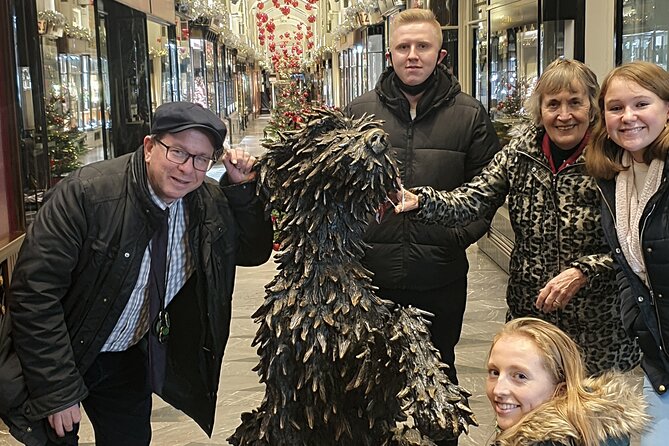
The bridges section gives you a feel for London as a river city. The original London Bridge began as a Roman-era wooden crossing, then became the first stone bridge over the Thames between 1176 and 1209. That medieval bridge was almost 906 feet long and carried houses, shops, restaurants, and a chapel.
Today’s London Bridge is the third stone bridge on the site. It is less ornate than Tower Bridge, but its location helps explain how the City of London developed around the river crossing.
Tower Bridge is the photogenic star. Built between 1886 and 1894, it combines a suspension bridge with bascule sections that lift like a seesaw to let ships pass. The name bascule comes from French and refers to balance or seesaw movement.
You may also hear about Albert Bridge, linking Chelsea and Battersea. Its lighting is especially striking at night and has made it useful as a film location. The bridge was once considered unstable, which explains the sign asking troops to break step on the north side. Its nickname, The Trembling Lady, is a memorable detail that many visitors would miss without a guide.
The practical point is that London’s bridges are not interchangeable photo stops. London Bridge speaks to commerce and the old city. Tower Bridge shows Victorian engineering. Albert Bridge adds a more decorative, residential side of the Thames. A private cab lets your guide connect those separate views.
Victoria Embankment and the route along the river
Victoria Embankment runs beside the north bank of the Thames from the Palace of Westminster to Blackfriars Bridge. Construction took place between 1865 and 1870 under Joseph Bazalgette, whose work narrowed the river and reshaped the central waterfront.
The route includes Victoria Embankment Gardens, memorials such as the Battle of Britain memorial, and permanently retired vessels including HMS President. It is a useful stretch for understanding how public gardens, transport routes, sewage works, and river engineering transformed London.
This is also a good section for photographs because the river opens up the view. The cab’s glazed roof helps when tall buildings and monuments rise above you, though traffic and short stopping areas can limit how long you stay in one place.
St. Paul’s Cathedral and the City of London

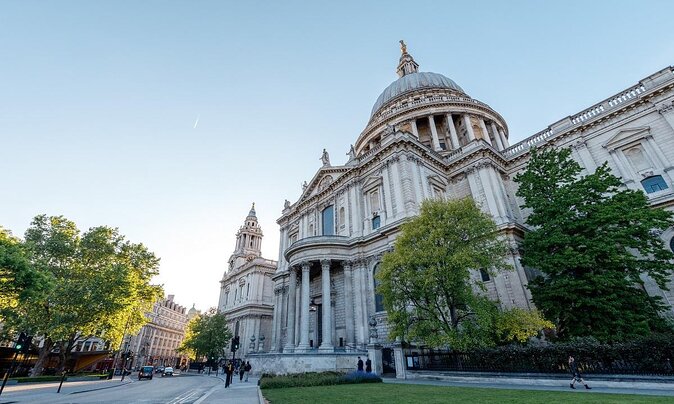
St. Paul’s Cathedral gives the tour a strong finish in the City. A church has occupied the site since 604 under Bishop Mellitus, and four cathedrals have stood here. The current building was designed by Christopher Wren between 1675 and 1710 after the earlier medieval cathedral was destroyed in the Great Fire of London in 1666.
Old St. Paul’s was built between 1087 and 1314 and was once the largest building in the United Kingdom. Wren’s replacement uses an English Baroque style and rises 365 feet at the dome. The dome weighs about 65,000 tons, and Wren himself is buried beneath it.
The cathedral sits on Ludgate Hill, the highest point in the City of London. It served as one of the world’s tallest buildings between 1710 and 1967 and remains the Anglican cathedral and seat of the Bishop of London.
As with Westminster Abbey, the tour is not an interior admission experience according to the included features. Still, the outside view and the guide’s explanation provide a useful map of the City. You can return later to pay for entry, climb the dome, or attend a service if that suits your plans.
What the guides add to the four hours
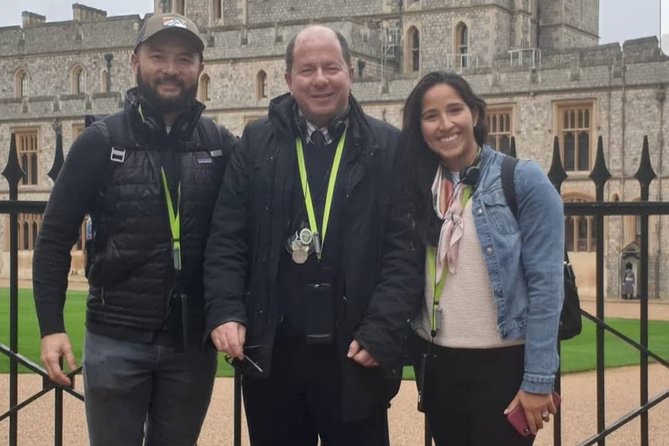
The strongest part of this experience is the human element. Bryan is described as flexible and willing to adapt the route during the ride. Brian is praised for knowing London’s roads and for keeping the pace moving. Dave has assisted people who cannot walk far, collecting the cab and bringing it closer after a short walk.
Morris appears especially suited to families. He has been praised for being patient with children, answering questions, adding lesser-known places, and adjusting the route to interests such as The Beatles. One family even received help finding Cornish pasties after the tour, an unusually personal bit of follow-through.
Tony is noted for careful driving, hospitality, and strong local explanations. Individual guide requests may be possible, but the supplied details do not promise a particular guide, so contact the company before booking if a named driver matters to you.
The tone of the tour can be shaped by your group. Ask for a broad introduction, a history-heavy route, royal London, literary London, music sites, or a mix of famous and less familiar places. You should be clear at the start about walking limits, food stops, photo priorities, and attractions you will visit later.
Price, pickup, and practical value
The price is $603.08 per group of up to six. At the full six-person capacity, that works out to about $100.51 per person. Four people pay about $150.77 each, while two people effectively pay about $301.54 each.
That makes the tour a strong value for a family or group of friends who would otherwise need several taxis, a private guide, or a hop-on bus. The price also buys privacy and time control, not just transport. For a couple, it is a premium purchase, but it may still make sense if you have only one afternoon or need a low-walking plan.
Free pickup and drop-off are offered within five miles of Trafalgar Square, including hotels and Airbnbs. The general start time is 10 a.m., while the listed operating window is 9 a.m. to 11 a.m., so contact the company if you need a different start time.
Airport and port pickup can be arranged, but extra charges and parking costs apply. This can be useful for a short London stop before a cruise. One customer used a very limited stay to tour before continuing to Southampton, but you should request a firm quote before treating airport or port collection as part of the base price.
The stated meeting point is Embankment Place, with the activity ending back there. Since hotel and Airbnb pickup are offered in the central zone, confirm your exact pickup and drop-off details when booking.
Mobility, family comfort, and the small risks
The vehicles are described as wheelchair-compatible, and a ramp has been used for a mobility scooter. Several accounts also describe guides helping people who cannot walk far by bringing the cab closer after a stop. This makes the tour more practical than a walking-heavy city introduction, although you should still explain the size and type of mobility device before the day.
Service animals are allowed, and most people can participate. The cab is spacious, air-conditioned, and designed for groups of up to six, but comfort will depend on how many people and how much equipment you bring.
Families should find the format easier than a large coach. You can ask the guide to keep children engaged with stories and shorter stops. Morris is particularly noted for working well with children, but the exact guide is not guaranteed.
The company has a strong overall rating, with 99 percent of customers recommending the experience and a 5 rating based on 282 reviews. There is one clear operational warning: a past customer reported that the driver did not arrive because of a mix-up, requiring a rescheduled tour and changed plans. That appears to be an exception rather than the normal pattern, but I would still confirm the pickup time and location the day before.
Free cancellation is available up to 24 hours before the start time. Changes or cancellations inside that window are not accepted for a refund.
Who should book this London taxi tour?
I would choose this tour for a first visit, a family group, or anyone with only a few hours to get oriented. It is also a good fit if you want to combine famous sights with personal interests such as The Beatles, Dickens, food, or less familiar corners of London.
It is less suitable if your main goal is detailed interior visits. Westminster Abbey and St. Paul’s both deserve time inside, and the Tower of London is not included in the listed route. You may prefer public transport and individual admission tickets if you enjoy walking, have a small budget, or want to spend hours at one museum or monument.
For the best use of the four hours, make a short list before pickup. Choose three must-see places, two interests, and any sites you plan to visit later. Then let the guide build the route around London traffic and your walking pace.
Should you book it?
Book the Black Taxi Tour of London if you want a private, flexible overview and can share the $603.08 fare with several people. The cab’s glass roof, central pickup, accessible setup, and experienced driver-guides make it a smart way to see the city’s shape quickly.
For two people on a tight budget, the cost is harder to justify. For a family, cruise connection, mobility-conscious group, or first afternoon in London, the value is much clearer. Confirm pickup details, airport or port surcharges, and your guide preferences before paying, then use the tour as your city orientation rather than a substitute for every major interior attraction.
FAQ
How long is the Black Taxi Tour of London?
The tour lasts approximately four hours.
How many people can join the private taxi tour?
The flat fare covers a private group of up to six people.
How much does the tour cost?
The listed price is $603.08 per group of up to six people.
Where can the tour collect me?
Free pickup and drop-off are offered within a five-mile radius of Trafalgar Square, including most hotels and Airbnbs in that area. The stated meeting point is Embankment Place.
Can I request a different starting time?
The general starting time is 10 a.m. You can contact the company to request another starting time.
Are airport and port pickups included?
No. Airport and port or dock collections can be arranged for an additional charge, with parking and surcharge costs depending on the location.
Is the taxi suitable for wheelchair users or mobility scooters?
The vehicles are described as wheelchair-compatible, and a ramp is available for mobility scooters. Explain your needs to the company before booking so the correct arrangements can be made.
Just added around London
- Private The Beatles Taxi Tour in London★ 5.0 · 12 reviews
- Dinner and Jazz Cruise on the River Thames★ 4.0 · 140 reviews
- Airport Coach Service from Heathrow to Oxford★ 3.5 · 67 reviews
- The Alfred Hitchcock London Walk with Sandra Shevey★ 5.0 · 15 reviews
- Thames Beachcombing★ 4.5 · 100 reviews
- Tower of London & 30+ London Sights Walking Tour★ 4.5 · 33 reviews
- Ted Lasso London Taxi Tour★ 5.0 · 5 reviews
- Ted Lasso Tour of Richmond with Private Guide★ 5.0 · 25 reviews
Black Cab Tours, compared.
The Premier Classic London: Private 4-Hour Tour in a Black Cab
Read our review →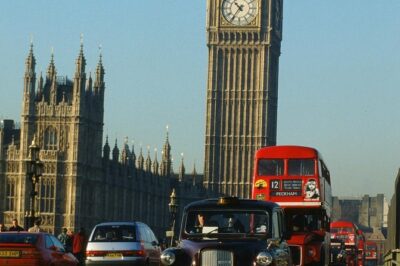
London Sightseeing Private Black Cab Tour with Hotel Pick Up
Read our review →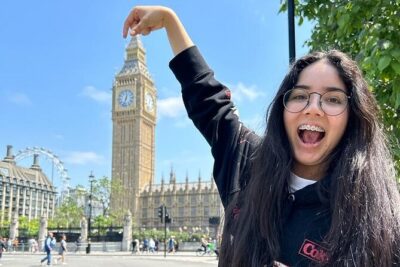
The Ultimate 6-hour Private Tour of London in an Iconic Black Cab
Read our review →
Black Taxi Tour of London: Classic Sightseeing Bespoke & Fun
Read our review →
Harry Potter Black Taxi Private Tour of London with Hotel Pickup
Read our review →
Private London Highlights Tour in a Black Cab: 2, 4, or 6 Hours
Read our review →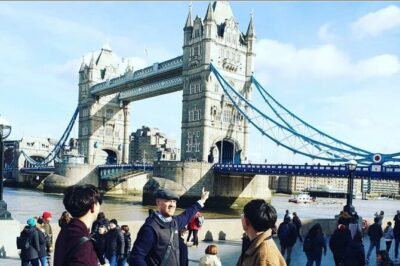
Browse the lists this tour appears in