
Reviewed · PHOTOGRAPHY SESSIONS
Discover Photography
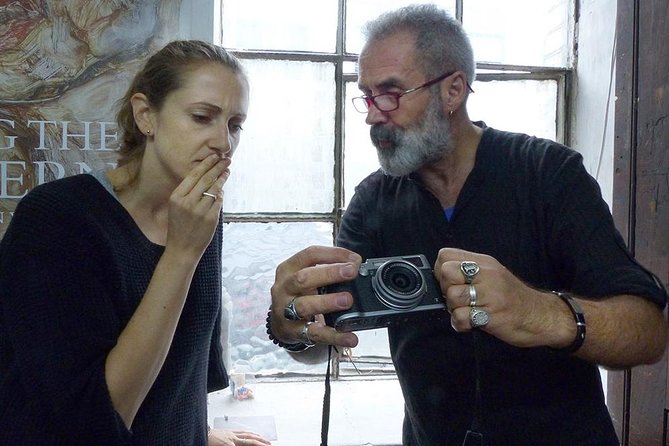
The most useful part of Discover Photography is its hands-on approach. You do not just hear a list of camera terms, you practice aperture and shutter speed while an award-winning photographer helps you see how each setting changes the final picture. I like the practical exercise, and I like the small group limit of 12, which gives you a fair chance to ask questions.
I also like that the course covers the often-overlooked details, from white balance and colour temperature to focal length and perspective. Tutors such as Vehbi Koca and Pierre are praised for clear explanations and a willingness to work with different cameras. The main drawback is simple: you need a DSLR or compact camera with manual settings to get the most from the class, and the non-refundable booking policy leaves little room for a change of plans.
Key points to know before booking
- A real introduction to manual control: Learn how aperture, shutter speed, and ISO work together instead of relying only on automatic mode.
- Small class size: The group is limited to 12 people, a useful balance between shared instruction and personal help.
- Hands-on camera practice: A practical exercise lets you see the effects of aperture and shutter speed in your own photographs.
- Useful lens advice: Focal length, angle of view, perspective, and depth of field are all included.
- Experienced instruction: The course is led by an award-winning photographer, with Vehbi Koca and Pierre named as tutors connected with the sessions.
- Easy London meeting point: The class begins and ends at Westland Place Studios, near public transportation.
Turning a two-hour class into better photographs
Many visitors carry a camera capable of far more than they realize. The trouble is that modern cameras make it easy to stay in automatic mode forever. Discover Photography is designed to change that in a short, focused session lasting about two hours and 30 minutes.
You begin with the basic controls that shape a photograph. Aperture affects how much light enters the camera and how much of the image appears sharp from front to back. Shutter speed controls how long the sensor records light, which also changes the way movement appears. ISO affects the camera’s sensitivity to light.
These settings are not separate tricks. They work together to create an exposure. A wider aperture may let you photograph in lower light and produce a shallow depth of field. A faster shutter speed can help freeze movement, while a slower speed can create blur. ISO gives you another way to balance the exposure when the light or other settings limit your choices.
That relationship is the heart of the class. You are not simply told which button to press. You learn why you would choose one setting over another, then try it yourself.
For a beginner, this is valuable because camera manuals often explain functions without showing how they affect a picture. Here, the goal is to connect the technical choice with the visual result. You should leave with a clearer sense of what your camera is doing and how to make deliberate choices.
A few more London trips to weigh up
- Professional Photoshoot in London Photographer
★ 5.0 · 102 reviews - Private landmarks photoshoot for families and couples
★ 5.0 · 92 reviews - Professional Private Photoshoot in London
★ 5.0 · 63 reviews
Aperture and shutter speed in a practical exercise
The practical exercise is likely the most important part of the session. Photography terms make more sense once you can compare the results on your own camera.
You will explore how changing the aperture affects depth of field. This helps you understand why some photographs show a narrow area of sharpness while others keep more of the scene in focus. You will also see how shutter speed changes the appearance of movement and the amount of light recorded.
This sort of practice is especially useful if you have tried manual mode before and found it confusing. You can make a setting, check the result, and adjust it with guidance nearby. The course is not built around memorizing a fixed recipe. It shows you how to respond to the picture in front of you.
You should bring the camera you actually plan to use on future trips. Familiarity matters. A lesson on someone else’s camera may teach the idea, but using your own controls gives you a better chance of remembering the process later.
The supplied information does not specify a particular outdoor route or a list of London photo stops. That is worth noting. This is best understood as a camera skills class based at Westland Place Studios, with practical work included, rather than a sightseeing walk that happens to include photography.
Lenses, focal length, and the way a scene changes
The class also explains how lenses affect what you see. Focal length influences the angle of view, while perspective changes how objects relate to one another in the frame.
This matters when you are taking travel photographs. A lens with a wider angle can include more of a scene. A longer focal length can give you a narrower view. The lesson helps you understand that choosing a lens is not only about bringing an object closer or fitting more into the frame. It also affects the way the picture feels.
You will also cover depth of field, which connects closely with lens choice and aperture. This gives you more control over where the viewer’s eye goes. Even if you later continue using an automatic mode, understanding these choices helps you select the right setting when the camera makes an unhelpful decision.
The course is aimed at beginners, so you do not need to arrive with a technical background. Still, you should expect to handle basic camera controls during the session. If your camera is locked to automatic operation, much of the class will be less useful.
The equipment requirement is clear: bring a DSLR or compact digital camera with manual settings. Since one account of a session focused on iPhone photography, you may want to confirm directly with Westland Place Studios if you intend to bring a phone rather than a qualifying camera. The stated course information specifically emphasizes DSLR and compact cameras with manual control.
White balance and colour temperature without the jargon
Exposure is only part of a good photograph. The course also covers colour temperature and white balance, two settings that can change the mood and accuracy of your images.
Different types of light can make a scene appear warmer or cooler. If you have ever taken a picture that looks too blue or too yellow compared with what you saw, white balance is part of the reason. Learning this setting helps you understand why the camera sometimes needs direction.
This topic is easy to overlook because automatic white balance often produces an acceptable result. But travel photography puts you in changing conditions, and the camera may not always judge the colour as you would. A basic grasp of colour temperature lets you correct the problem rather than accept it.
I like that this subject appears alongside aperture, shutter speed, and lenses. It keeps the course from becoming a narrow lesson about exposure only. You get a wider foundation in how a digital camera records a scene.
Same country, a completely different day out:
- Stonehenge, Windsor Castle, and Bath from London
★ 4.5 · 18,662 reviews - London Big Bus Hop-On Hop-Off Tour with Optional River Cruise
★ 3.5 · 10,803 reviews - London Small Group Tour of Historical Pubs
★ 5.0 · 10,422 reviews - Stonehenge, Windsor Castle and Bath with Pub Lunch in Lacock
★ 4.5 · 7,402 reviews
Automatic, semi-automatic, and manual modes
You do not have to treat manual mode as a badge of honor. Sometimes automatic settings are useful, especially when you need to work quickly. The important skill is knowing when to let the camera decide and when to take control.
Discover Photography covers automatic, semi-automatic, and manual operation. That makes the class more practical for a beginner than a lesson that pushes you straight into full manual mode.
Semi-automatic modes can be a good bridge. You might control the aperture while the camera chooses a matching shutter speed, or control the shutter speed while the camera handles the aperture. This lets you focus on one creative decision at a time.
Full manual operation gives you the most control, but it also asks you to understand the exposure relationship. The course aims to help you move between these modes with purpose. You should come away knowing that manual settings are tools, not obligations.
The strongest value here is confidence. Once you understand what the camera is changing, you can correct it. That is far more useful than simply knowing where the manual button is located.
Composition, perspective, and making a picture clearer
Technical settings do not automatically produce a good photograph. Composition is included to help you decide how to arrange the picture itself.
The course covers angle of view and perspective, which influence how the subject sits within the frame. These ideas can make a major difference when you photograph buildings, people, objects, or scenes in London. A small change in position or lens choice can alter the relationship between foreground and background.
You will also consider how depth of field directs attention. A technically correct exposure may still feel flat or cluttered if the frame has no clear point of interest. The class connects camera operation with the decisions that make an image easier to read.
Do not expect a full professional photography program in 150 minutes. There is not enough time to explore every subject in depth. But the selected topics give you a sound starting point: exposure, lens choice, colour, composition, and camera modes.
Working with a small group and named tutors
The maximum group size is 12. That is small enough to keep the session from feeling like a lecture hall, while still allowing a mix of questions and examples.
The instruction is led by an award-winning photographer. Vehbi Koca is described as a tutor who explains ideas simply, uses clear methods, and is willing to experiment with different cameras. That is important for a mixed group, since beginners rarely arrive with identical equipment or the same level of confidence.
Pierre is also connected with a session focused on iPhone photography. That class helped participants understand the phone’s photo settings and included time for questions. Since the main course information calls for a DSLR or compact camera with manual settings, you should treat the phone session as a separate format or confirm the equipment rules before booking.
The teaching style appears suited to people who want direct help rather than a formal lecture. Still, group instruction has limits. You may need to wait briefly while the tutor helps someone else, and two and a half hours can pass quickly when several people have different cameras.
The Westland Place Studios meeting point
The class starts at Westland Place Studios3, 11 Westland Place, London N1 7LP, and ends back at the same meeting point. It is near public transportation, which makes it practical to reach without arranging a private transfer.
Because the activity returns to its starting point, you do not need to plan for a separate finish location. That is useful if you have another London plan afterward. Allow enough time to find the studio and settle in, though the supplied details do not give a recommended arrival time.
The location also sets expectations. This is a studio-based photography course with practical work, not a tour that carries you between major London sights. If your main goal is to photograph famous landmarks with a guide, this may not fit. If your goal is to understand your camera before the rest of your trip, the meeting point is less important than the instruction.
Is $95.80 good value for 150 minutes?
At $95.80 per person, the class is not a cheap casual activity. Its value depends on what you want from it.
For a complete beginner, the price can make sense if the course prevents weeks of frustration. Learning the relationship between aperture, shutter speed, and ISO in a small group can save you from relying on trial and error. The award-winning photographer and practical exercise add value beyond a basic self-guided tutorial.
The cost is harder to justify if you already understand exposure and can comfortably use manual settings. In that case, much of the class may repeat familiar material. You should also factor in the camera requirement. The price does not include a suitable camera, so you need to bring your own equipment.
I would see this as a focused skills purchase, not a sightseeing bargain. You are paying for instruction and guided practice. The strongest return comes when you use the techniques afterward, perhaps during the rest of your London visit or on future trips.
The rating attached to the experience is 4.8 from four ratings, a positive signal, though the sample is small. The most useful praise centers on clear teaching, practical help, and the tutors’ ability to answer questions across different cameras.
Who should book Discover Photography?
This course is a good match for an adult beginner who owns a camera with manual settings and wants to move beyond automatic mode. It also suits someone who learns best by trying a setting, checking the result, and asking a tutor to explain what happened.
You will get the most from it if you arrive with a specific problem. Perhaps your indoor photographs look too dark, your backgrounds are never blurred, or moving subjects come out soft. A clear question gives the tutor something concrete to address.
The minimum age is 18. Children can participate only when accompanied by an adult, and both must have paid tickets. The activity is near public transportation, and most people can take part according to the supplied participation information.
I would not book it as a general London attraction. There is no stated landmark route or sightseeing program. Book it because you want camera instruction, then use your new skills during the rest of your trip.
The booking is non-refundable and cannot be changed for any reason. The activity also requires a minimum number of participants. If that minimum is not reached and the session is canceled, you are offered another date or experience, or a full refund. That makes it wise to confirm your schedule before paying.
Should you book this photography class?
Book Discover Photography if your camera has manual controls and you want a clear, practical introduction to exposure, lenses, composition, colour, and camera modes. The 12-person limit, named tutors such as Vehbi Koca and Pierre, and the hands-on exercise give it more substance than a simple talk.
Skip it if you want a guided photo walk through London, if you already use manual settings with ease, or if your only camera is a phone and you have not confirmed that it is accepted for your chosen session. At $95.80, the class earns its price through useful instruction, not sightseeing. For the right beginner, that can be money well spent.
FAQ
How long does Discover Photography last?
The course lasts approximately two hours and 30 minutes.
How much does the course cost?
The listed price is $95.80 per person.
Where does the photography course begin?
It begins at Westland Place Studios3, 11 Westland Place, London N1 7LP, UK.
Where does the activity finish?
The activity ends back at the meeting point.
How many people can join the class?
The group has a maximum of 12 participants.
What type of camera should I bring?
You need a DSLR camera or a compact digital camera with manual settings to get the most from the course.
What photography topics are covered?
The class covers lenses, composition, colour temperature, white balance, semi-automatic and manual modes, depth of field, aperture, shutter speed, focal length, angle of view, perspective, and exposure.
Is the course suitable for beginners?
Yes. It is described as a beginner photography course introducing manual camera settings and basic photography principles.
What is the minimum age?
The minimum age is 18. Children must be accompanied by an adult, and both need paid tickets.
Can I cancel or change my booking?
The experience is non-refundable and cannot be changed for any reason. If the provider cancels because the minimum number of participants is not reached, you will be offered another date or experience, or a full refund.
Just added around London
- Private The Beatles Taxi Tour in London★ 5.0 · 12 reviews
- Dinner and Jazz Cruise on the River Thames★ 4.0 · 140 reviews
- Airport Coach Service from Heathrow to Oxford★ 3.5 · 67 reviews
- The Alfred Hitchcock London Walk with Sandra Shevey★ 5.0 · 15 reviews
- Tower of London & 30+ London Sights Walking Tour★ 4.5 · 33 reviews
- Thames Beachcombing★ 4.5 · 100 reviews
- Ted Lasso Tour of Richmond★ 5.0 · 152 reviews
- Ted Lasso London Taxi Tour★ 5.0 · 5 reviews
Photography Sessions, compared.
Professional Photoshoot in London Photographer
Read our review →
30 Major London Attractions Walking Tour With Photos
Read our review →
Browse the lists this tour appears in