
Reviewed · JACK THE RIPPER TOURS
Interactive Jack the Ripper Night Walk: London’s Murder Mystery
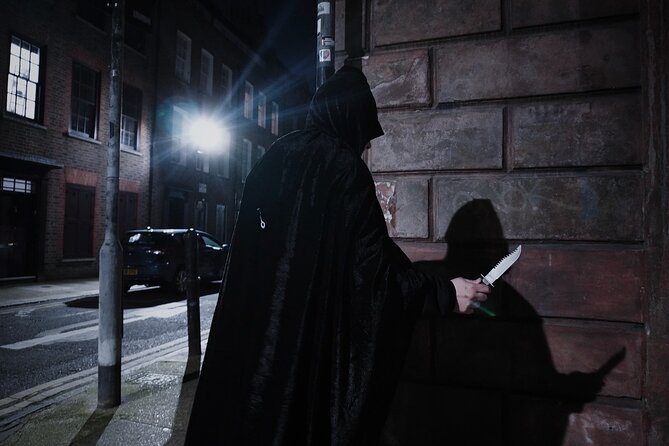
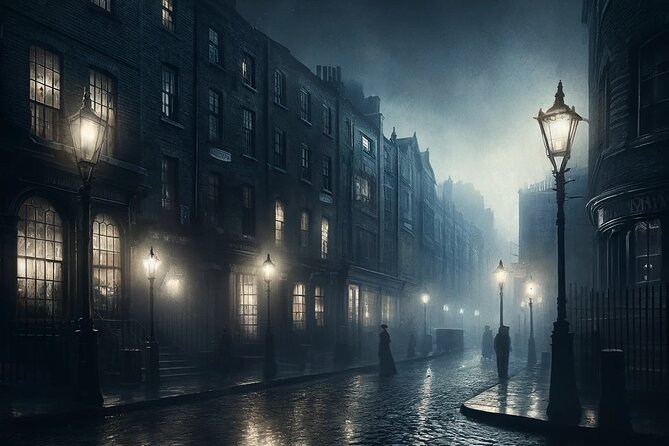
The most compelling part of this tour is the setting. After dark, Whitechapel’s narrow lanes, old courtyards, and quiet corners give the Jack the Ripper story a strong sense of place. You follow the case through streets tied to the victims, the police investigation, and the long-running mystery of the killer’s identity.
I like the way the walk gives proper attention to the women caught in this brutal story, rather than treating the murders as a simple puzzle. I also like the route from Brick Lane to Mitre Square, which lets you see how poverty, crime, shelter, pubs, and crowded East London shaped the case. The main drawback is that the tour ends away from its starting point, and one past attendee found it hard to hear the guide at times.
Key points to know before you book
- The route ends at Mitre Square: You do not return to St Marys Whitechapel Church, so plan your way onward from the final stop.
- Seven main stops shape the walk: Brick Lane, Princelet Street, Puma Court, The Ten Bells, Gunthorpe Street, Goulston Street, and St Botolph’s Aldgate lead into the final scene at Mitre Square.
- The women’s stories receive real attention: The tour covers Annie Chapman, Martha Tabram, Catherine Eddowes, and the wider dangers faced by women in Victorian East London.
- Guides bring different strengths: Tyson is noted for keeping the group involved, while Sadie’s approach gives the women’s stories an empowering focus. Lisa and Jess also lead the walk.
- You get more than a name-and-date talk: Old photographs and reports are included as a download, adding useful material after the walk.
- A private option is available: The standard group can include up to 25 people, while a private upgrade offers a more personal format.
Why this Whitechapel walk works after dark
Jack the Ripper’s crimes are often reduced to a list of grisly details and a parade of suspects. This walk has more value when it places those crimes in the streets where people lived, worked, drank, sought shelter, and tried to survive.
You begin near St Marys Whitechapel Church Memorial and move through Whitechapel and Spitalfields. The route lasts about two and a half hours, with roughly 17 minutes assigned to each main stop. That timing gives the guide enough room to explain a location without turning every pause into a long lecture.
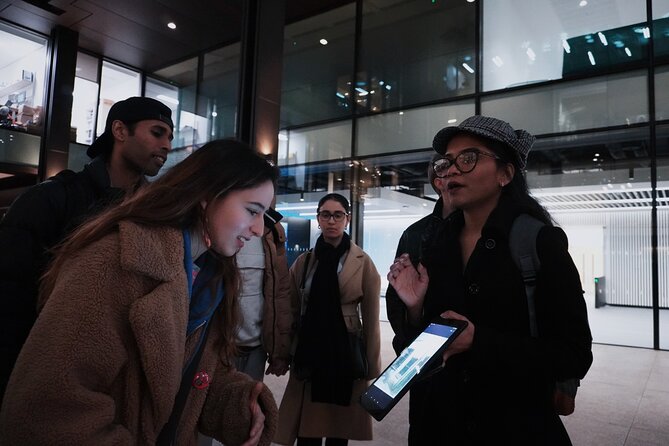
The evening setting adds atmosphere, but it also asks something of you. You need to stay close to the group, listen carefully, and keep an eye on the route. One useful practical point is sound. A past participant found the guide difficult to hear at times, so standing near the guide is sensible, especially in a group of up to 25 people.
The subject is grim. This is not a light London sightseeing walk with a spooky theme added on top. The best parts focus on the victims, social conditions, and police evidence. If you prefer crime stories handled with some care, the guides named in the tour feedback suggest a range of styles. Tyson is praised for remembering people’s names and using questions to keep the group involved. Sadie is known for presenting the women’s stories with energy and respect. Jess is described as funny, patient, and clear, while Lisa is noted for helping with questions and practical matters.
More Jack the Ripper Tours in London:
- London Jack the Ripper Guided Tour with Ripper-Vision
★ 4.5 · 4,840 reviews - London Jack The Ripper Guided Walking Tour
★ 5.0 · 3,131 reviews - Ultimate Jack the Ripper : Guided Tour of London
★ 5.0 · 1,495 reviews
Brick Lane: from curry houses to Victorian poverty
Brick Lane now draws people for street art and curry restaurants, but the tour asks you to picture a very different street. In the 1880s, this area formed part of one of London’s most troubled slums.
Here you learn how poverty, crime, and desperation shaped daily life. That context matters because the Ripper case did not unfold in an empty horror set. It happened among overcrowded streets and people with few safe choices.
I find this a strong opening because it broadens the subject. You are not simply hunting for a killer. You are looking at the conditions that left poor women exposed to violence and made police work harder. Brick Lane also gives you a useful contrast between modern East London and the world the tour describes.
The stop lasts about 17 minutes and is free to enter because the walk takes place in public streets. Do not expect a museum visit here. The value comes from the guide’s explanation and your ability to connect the modern street with its past.
Princelet Street and the story of Annie Chapman
Princelet Street has old brick buildings and a cobbled character that can make the 1880s feel close at hand. The tour links the street to the Ripper’s movements and to Annie Chapman’s life.
This is one of the places where the walk’s physical setting does useful work. A written account can tell you about a murder, but standing in an old East London street gives you a clearer sense of scale and distance. You begin to understand how quickly a person could move from a pub or lodging house into a quiet side street.
The discussion of Annie Chapman also helps keep the story grounded in a real person. The tour does not treat her only as a case number. Her life is part of the wider account of women living with poverty and danger.
Princelet Street is atmospheric, but the quiet surroundings can create a listening problem if you drift too far from the guide. Stay near the front of the group. The guide’s words are more important than simply taking in the buildings.
Puma Court: a narrow place with an uneasy past
Puma Court is presented as one of the most unsettling alleys in Spitalfields. Its tight passage and dim corners make it easy to understand why the tour pauses here to discuss vulnerability.
The point is not that this alley is proven to be a Ripper crime scene. Instead, it helps you think about the kinds of places where a person could be isolated from help. That distinction matters. A good mystery walk separates documented evidence from atmosphere and speculation.
This stop also gives the guide a chance to talk about the victims’ exposure to danger. The silence and narrow walls can make the subject feel immediate, but the strongest discussion should remain focused on the human cost rather than the thrill of fear.
As with the other stops, admission is free. You are walking through public streets, not entering a paid attraction. Wear shoes suitable for two and a half hours on foot, and keep your attention on the guide rather than treating every alley as a photo stop.
A few more London trips to weigh up
- Tour for Muggles The Ultimate Harry Potter Walking Tour in London
★ 5.0 · 4,684 reviews - Changing of the Guard Guided Walking Tour in London
★ 5.0 · 1,793 reviews - The Great British Rock and Roll Walking Tour
★ 5.0 · 1,371 reviews - Westminster Guided Walking Tour with Abbey Entry
★ 5.0 · 1,282 reviews
The Ten Bells: the pub tied to the case
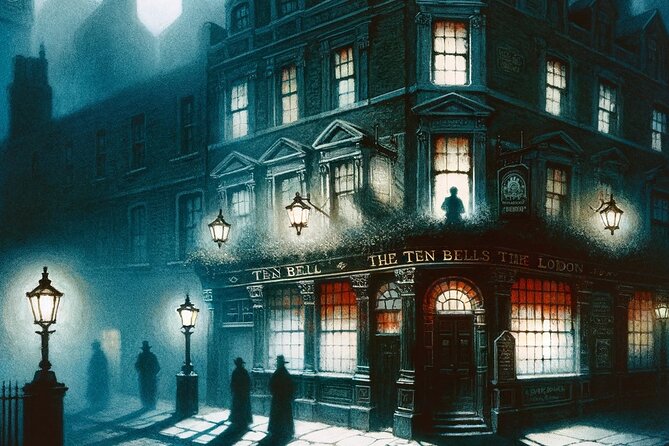
The Ten Bells is one of the most recognizable locations on the route. Several victims were last seen alive in connection with the pub, and the group gathers outside to discuss their final hours.
This is a useful stop because it connects everyday social life with the case. A pub was not simply a backdrop. It was part of the network of places where people met, searched for work, found company, or made choices under severe financial pressure.
The tour stays outside, so do not book this expecting an included drink or an interior visit. The building’s importance comes from the stories attached to it and from the guide’s account of what happened before the murders.
The subject can become sensational here, particularly because a pub is an easy visual hook. I prefer the tour’s broader approach, which places the location within the victims’ lives and the dangers of the area. You can also ask questions, and the guides are expected to handle the mystery rather than force a single answer.
Gunthorpe Street and Martha Tabram
Gunthorpe Street is connected to the murder of Martha Tabram. She is not officially listed among the canonical Ripper victims, but many people believe she may have been the first.
That uncertainty is exactly why this stop is useful. It shows you that the case is not a neat file with every fact settled. Some murders may fit the pattern, while others remain disputed. The guide can explain the reasons for including Tabram and the limits of the evidence.
The narrow passage also reinforces the physical danger faced by women in the area. Still, you should listen for the difference between a confirmed connection and a theory. The mystery is engaging, but it should not erase the facts that are known about Martha Tabram’s death.
This is a good point to ask questions if your guide invites them. One of the tour’s recurring strengths is its willingness to discuss uncertainty. The final answer to the question of Jack the Ripper’s identity remains unknown, and the walk does not promise a false solution.
Goulston Street and the disputed clue
At Goulston Street, the focus shifts from the victims to the investigation. The tour examines a bloodied piece of apron found after the double murder and a cryptic chalk message that caused fierce debate among investigators and later historians.
This stop helps explain why the case has lasted so long. The evidence is suggestive, but its meaning is not simple. A clue can seem decisive until you ask who found it, how it was recorded, and what else might explain it.
You also get a sense of how quickly rumor and fear could spread through London. The chalk message became part of the public drama, but the tour encourages you to consider what the police actually knew at the time.
Old photographs and reports are available as a download, which is a welcome addition. You can revisit the evidence later instead of trying to remember every detail while walking. For anyone who enjoys the investigative side more than the ghost-story mood, Goulston Street may be one of the most rewarding stops.
St Botolph’s Aldgate: safety beside danger
St Botolph’s Aldgate stood near the edge of Whitechapel and provided shelter to many women during the Victorian era. The tour uses the church to show how close a place of safety could be to streets where women faced serious danger.
This is an important change of tone. The Ripper story is often told through violence alone, but St Botolph’s Aldgate points to the systems of help available at the time, however limited they were. It also gives you a clearer picture of the choices available to women who had nowhere secure to sleep or work.
The church’s location helps you read the neighborhood in a different way. A woman might seek help at the church and still be only steps from danger. That contrast gives the stop emotional weight without needing extra drama.
Like the other locations, this is an outdoor stop with no admission charge. The guide’s storytelling carries the visit, so the quality of the explanation matters more than a formal display or preserved interior.
Mitre Square and Catherine Eddowes
The walk finishes at Mitre Square, where Catherine Eddowes was murdered. This is the final stop and the point where the case’s violence reaches its most shocking moment.
Ending here gives the route a clear shape. You begin with the social setting of Brick Lane, follow locations tied to the victims and investigation, and finish at one of the most serious crimes in the case. The final scene is not just a puzzle answer. It is a reminder of the human cost behind the legend.
Mitre Square is also where you need to think about your onward plans. The tour does not return to the starting point at St Marys Whitechapel Church. That is not a major problem if you have checked the map before setting out, but it can catch you off guard if you assume the walk loops back.
The end point is given as Mitre Square, London EC3A 5DE. From there, you will need to orient yourself for your next destination. The tour’s one-way design works well for covering several connected locations, but it makes a little advance planning worthwhile.
What the $22.99 price gives you
At $22.99 per person, the tour is priced like an affordable guided city walk rather than a major attraction. There is no separate admission cost for the seven listed stops, so you are mainly paying for the guide’s interpretation, route planning, and the downloadable historical material.
I consider that fair value if you want more than a self-guided list of murder sites. The guide links places, people, evidence, and social conditions in a way that is difficult to recreate from a quick internet search. The fact that guides answer questions and use different presentation styles also adds value.
The price is less convincing if you only want photographs of old streets or already know the case in detail. In that situation, the mystery itself may offer fewer surprises. The tour works best when you care about London’s past, enjoy weighing uncertain evidence, or want a structured evening walk through Whitechapel.
Group discounts are available, and a private upgrade can make sense if you want more control over the pace or a more personal discussion. The regular group can hold a maximum of 25 people, which is large enough for energy and questions but small enough to follow a guide through the route.
Who will enjoy this tour most
I would recommend this walk to adults and older children who are comfortable with serious subject matter. It suits people who like urban history, true crime, Victorian London, and walks that connect buildings with individual lives.
It is also a good choice for repeat visitors to London. Brick Lane, Princelet Street, and the lanes of Spitalfields show a side of the city that you might miss on a standard sightseeing route.
You may want to choose something else if you dislike murder stories, find graphic crime upsetting, or want a relaxed stroll with frequent sitting breaks. The walk lasts about two and a half hours, and the subject remains central throughout.
The tour is offered in English, uses a mobile ticket, and most people can participate. Since the group stays outdoors and the route ends at a different location, check the route and meeting details before you leave your hotel.
Should you book the Jack the Ripper night walk?
Book it if you want an atmospheric but fact-focused walk through Whitechapel, with attention to the victims and the uncertainty surrounding the case. The route covers meaningful locations, the price is reasonable for a guided two and a half hour experience, and the guides bring distinct strengths. Tyson, Sadie, Lisa, and Jess are all associated with particularly useful qualities, from audience involvement to patient storytelling.
Think twice if you want a definitive answer to the killer’s identity. You will leave with more clues, context, and questions, not a solved mystery. Also plan your journey from Mitre Square, stay close enough to hear the guide, and consider the private option if a smaller, more personal format matters to you.
FAQ
How long is the Interactive Jack the Ripper Night Walk?
The walk lasts approximately two hours and 30 minutes.
How much does the tour cost?
The listed price is $22.99 per person. Group discounts are available.
Where does the tour begin?
The meeting point is St Marys Whitechapel Church Memorial on Unnamed Road, London E1 1FE, United Kingdom.
Where does the tour end?
The tour ends at Mitre Square, London EC3A 5DE. It does not return to the starting point.
What locations are included?
The route includes Brick Lane, Princelet Street, Puma Court, The Ten Bells, Gunthorpe Street, Goulston Street, St Botolph’s Aldgate, and the final stop at Mitre Square.
Is the tour offered in English?
Yes. The experience is offered in English.
How large is the group?
The regular tour can include a maximum of 25 people.
Can I book a private tour?
Yes. You can upgrade to a private tour for a more personal experience.
What is the cancellation policy?
You can cancel at least 24 hours before the start time for a full refund. Cancellations or changes made less than 24 hours before the start time are not refunded or accepted.
More Evening Experiences in London
- London by Night Bus Tour with Christmas Lights and Live Guide
★ 4.5 · 2,040 reviews - London by Night Sightseeing Tour – Open Top Bus
★ 4.5 · 1,060 reviews - London by Night Sightseeing Open Top Bus Tour with Live Guide
★ 4.5 · 977 reviews - River Thames Evening Cruise with Sparkling wine and Canapés
★ 4.0 · 569 reviews
Just added around London
- Private The Beatles Taxi Tour in London★ 5.0 · 12 reviews
- Airport Coach Service from Heathrow to Oxford★ 3.5 · 67 reviews
- The Alfred Hitchcock London Walk with Sandra Shevey★ 5.0 · 15 reviews
- Dinner and Jazz Cruise on the River Thames★ 4.0 · 140 reviews
- Tower of London & 30+ London Sights Walking Tour★ 4.5 · 33 reviews
- Thames Beachcombing★ 4.5 · 100 reviews
- Ted Lasso London Taxi Tour★ 5.0 · 5 reviews
- Ted Lasso Tour of Richmond with Private Guide★ 5.0 · 25 reviews
Jack the Ripper Tours, compared.
London Jack the Ripper Guided Tour with Ripper-Vision
Read our review →
Ultimate Jack the Ripper : Guided Tour of London
Read our review →
London Jack The Ripper Small-Group Walking Tour
Read our review →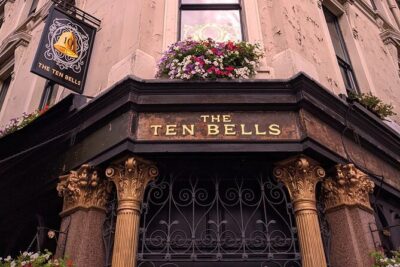
The Original Jack the Ripper Coach Tour of Haunted London
Read our review →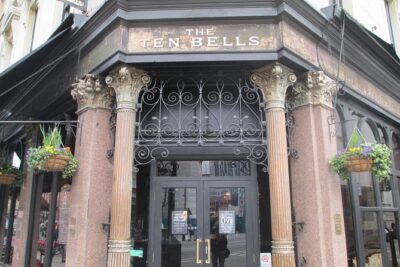
Browse the lists this tour appears in