
Reviewed · TREASURE HUNTS AND CITY GAMES
Interactive Treasure Hunt London – City of London/Southwark
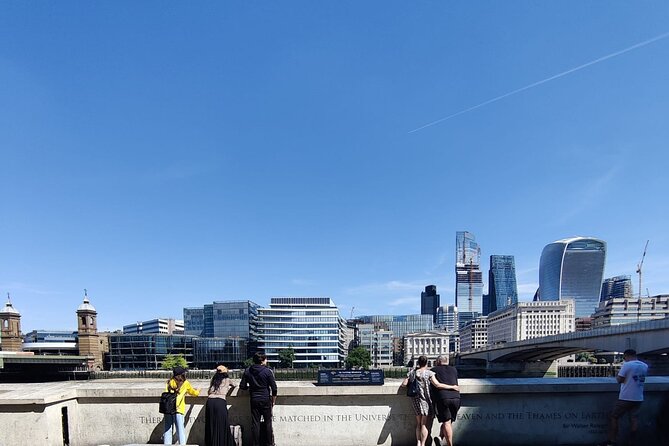
Southwark’s riverfront is full of famous sights, but this three-hour puzzle walk sends you after the less obvious stories: chewed-up bridge artwork, medieval pleasure grounds, frozen fairs, a sinister bishop, and a steampunk fantasy. The route begins near St. Paul’s and finishes back at the same point.
I like the freedom to stop at a market or pub when you need a break, and I like the choice of Classic, Relaxed, or Spanish clues. You can also change difficulty during the game, which helps if the riddles prove too easy or too hard.
The main catch is distance. This is not a short stroll, and a past player found that some clues did not line up perfectly with their locations. You will also need a working phone signal to reach each requested spot, so keep that in mind before setting out.
Key points to know before you go
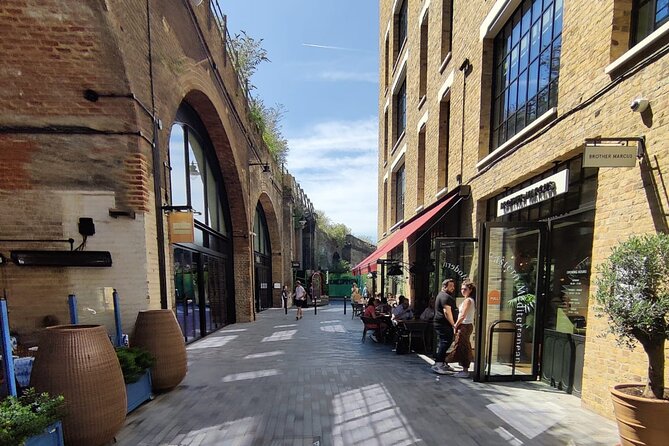
- A self-guided trail from St. Paul’s: Start at St. Paul’s, Cheapside, then follow the app through the City and Southwark before returning to the meeting point.
- A puzzle route with unusual subjects: Expect clues about the unifier of England and Scotland, the inventor of dawn, medieval entertainment, frozen fairs, and a sinister bishop.
- A break at a historic market: The route includes time to stop at one of London’s best-known markets, plus possible pub and refreshment stops.
- Three clue styles: Choose Classic, Relaxed, or Spanish, then switch formats during the game if your group changes its mind.
- Private and flexible: Only your group plays, with up to five people included in one game.
- Bring patience and a charged phone: The walk can be long, and one reported problem involved clues that did not quite match the location.
Starting near St. Paul’s and leaving the guidebook behind
The meeting point is St. Paul’s, Cheapside, London EC2V 6AA. That puts you in the City of London, close to one of the capital’s most recognizable landmarks and within easy reach of public transport.
You do not meet a live guide. Instead, you download the chosen app and follow the trail on your phone. The route gives you clues, riddles, and short pieces of information as you move. This setup works well if you prefer to pause for a coffee, take photos, or spend extra time at a spot without holding up a group.
It also means you are responsible for the pace and navigation. If your group gets stuck on a clue, there is no guide standing nearby to explain the answer. That can be part of the fun, especially with a competitive group, but it can also slow the walk.
The route returns to the starting point. That is useful if you leave coats, shopping, or other items nearby, though you should still plan for a substantial outing rather than a quick activity before lunch.
More Treasure Hunts and City Games in London
- London Soho Food Tour with 7+ Tastings of Delicious Hidden Gems
★ 5.0 · 366 reviews - Private London Tour with a Local: Custom Highlights & Hidden Gems
★ 5.0 · 119 reviews - Highlights & Hidden Gems With Locals: Best of London Private Tour
★ 5.0 · 93 reviews
Solving clues about kings, invention, and London’s past

The opening puzzles introduce historical figures and ideas through riddles rather than a standard spoken talk. One clue involves the person known as the unifier of England and Scotland. Another points toward the inventor of dawn.
Those descriptions are intentionally indirect. You are not simply handed a name and a date. You work out what the clue means, then connect it to the place in front of you. That gives the walk a small sense of discovery without asking you to research London before arriving.
I find this approach best for people who enjoy learning in short bursts. You get a fact, solve a problem, look around, and move on. It will not replace a full City of London history walk, but it can make you notice details you might otherwise pass without a glance.
The tradeoff is that a riddle depends on wording and location. A clue that feels clever to one person may feel vague to another. Since one player reported that some clues did not quite match their locations, you should allow extra time and avoid assuming every answer will be obvious on the first try.
Crossing a bridge covered in chewed-up artwork
A memorable part of the route takes you across a bridge decorated with chewed-up artworks. This is one of the activity’s more unusual visual stops, and it gives the puzzle trail a clear sense of place.
The artwork is not presented as a generic photo stop. It becomes part of the game, with the group looking closely at the bridge and its surroundings to solve the next stage. That simple task can change the way you cross a familiar London bridge. Instead of hurrying from one bank to the other, you search for details.
The route also promises striking views along the River Thames. Riverside sections are a strong reason to choose this experience, especially if you want photos and a change from the narrow streets around the City.
Still, river views do not make the walking effortless. The path includes several districts and a bridge crossing, and the full outing lasts about three hours. Wear sensible shoes and keep enough time in your day to complete the route without rushing.
Entering medieval London’s pleasure district
The trail then carries you into the area connected with Medieval London’s pleasure district. Here, the focus shifts from grand landmarks to the city’s less polished past.
You can expect clues tied to frozen fairs, a sinister bishop, and the entertainment culture of medieval London. These subjects give the route a playful edge, but they also show why a puzzle walk can be useful in a city where major sights often dominate the conversation.
This section is likely to appeal to you if you prefer odd details to a list of famous dates. The route does not focus only on royal buildings or major churches. It brings in strange, unsettling, and entertaining pieces of London’s past, helping you see Southwark as a place with its own character.
The tone is not described as a formal history lecture, so do not book it expecting a long explanation at every stop. The information arrives as part of the clues. You will get small facts and prompts while moving through the area, not a sustained talk from a historian.
Same country, a completely different day out:
- Stonehenge, Windsor Castle, and Bath from London
★ 4.5 · 18,662 reviews - London Big Bus Hop-On Hop-Off Tour with Optional River Cruise
★ 3.5 · 10,803 reviews - London Small Group Tour of Historical Pubs
★ 5.0 · 10,422 reviews - Stonehenge, Windsor Castle and Bath with Pub Lunch in Lacock
★ 4.5 · 7,402 reviews
A market stop gives the walk breathing room
One of the practical strengths of the route is its stop at a historic market. The activity also allows time to recharge at a market, pub, or other spots along the way.
That matters because three hours of walking and problem-solving can wear down a group. A market stop gives you a natural chance to pause, get food or a drink, and reset before tackling the next clue. It also keeps the experience connected to ordinary London life rather than making every stop feel like a staged attraction.
You should treat the pause as flexible rather than a guaranteed meal break with reserved seating. The activity information does not promise a food tasting, table booking, or included refreshments. You pay for the self-guided game, while any food or drink is your own expense.
For families or friends with different energy levels, this flexibility is useful. One person can browse while another sits down. A group that enjoys the puzzles can move on quickly, while a group that wants a longer break can take it, within the limits of the app and the overall route.
Sculptures, river views, and a steampunk finish
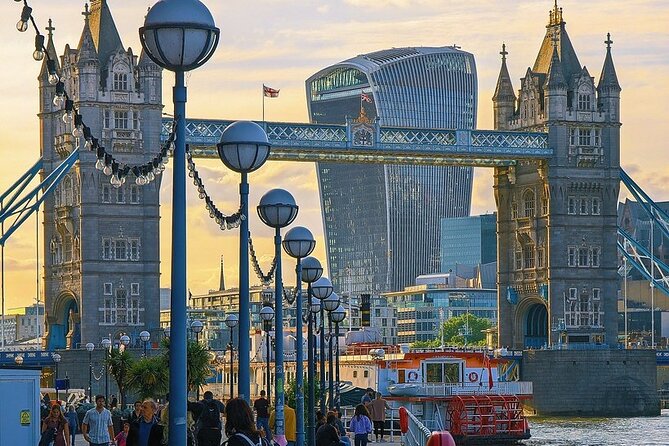
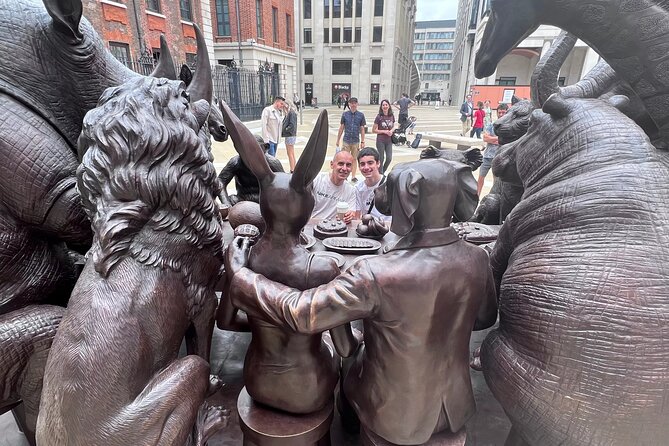
The trail includes several impressive sculptures, along with the river scenes and bridge artwork. These stops add visual variety to the history clues.
The mention of a steampunk fantasy hints at a playful closing section rather than a purely historical finale. You are moving between real places and imaginative prompts, so the experience should feel different from a normal walking tour. The exact details of the steampunk element are not specified, but it forms part of the final group of puzzles and sights.
This mix is valuable if you want an activity that keeps changing its mood. One moment you are thinking about medieval London, and the next you are studying public art or solving a word puzzle. It prevents the walk from becoming a simple march between plaques.
The activity is less suitable if you want every stop to have a clear, polished interpretation. The fun comes from working things out. If your ideal tour includes a guide who explains why each object matters, this may feel thin in places.
Classic, Relaxed, or Spanish clues
You can choose from three clue formats: Classic, Relaxed, and Spanish. The ability to change your set of clues at any time during the game is especially useful for mixed groups.
Classic clues appear to be the standard option. Relaxed clues should suit a group that wants a gentler challenge, while Spanish clues make the activity more accessible to Spanish-speaking players. The supplied details do not define the exact difference between the formats, so I would not assume that Relaxed means shorter or that Spanish changes the route itself.
Changing the format mid-game can save the day if the group loses momentum. A difficult puzzle may be enjoyable for one person and frustrating for four others. Being able to adjust the clues keeps the focus on enjoying the walk rather than proving who can solve the hardest riddle.
The private format helps here. Only your group participates, so you can debate an answer, stop for a photo, or admit defeat without slowing strangers down. The game allows up to five people, making it a good fit for a small family, a couple with friends, or a compact sightseeing group.
How much walking and phone use should you expect?
The duration is about three hours, and the route covers parts of both the City of London and Southwark. The description specifically advises a moderate level of physical fitness. In plain terms, plan for a long urban walk with repeated stops to read clues, search for details, and cross between areas.
One important practical warning concerns phone signal. A past participant had trouble reaching a requested location when the phone could not get a signal. That does not mean you will have the same problem, but it makes preparation worthwhile.
Charge your phone fully before starting. Download the app and chosen clues in advance if the system permits it, and keep your phone easy to reach. The activity is built around mobile access, so a dead battery or poor connection can turn a fun puzzle into a frustrating navigation task.
Public transport is nearby, which helps you reach the starting point. Service animals are allowed. The activity requires good weather, and poor weather can lead to a different date or a full refund. Even with that policy, bring suitable clothing for a London walk, since the experience depends on being outdoors for much of the three hours.
Is $24.07 a fair price?
At $24.07 per person, the price is reasonable if you value a private activity and plan to use the full route. A group of up to five can play together, so the cost works best when several people share the experience rather than when one person books alone.
You are paying for the app-based trail, puzzle design, and the chance to explore two central London districts without doing your own research. You are not paying for a guide, transport, food, drinks, or entry to a separate attraction.
That makes the value depend on your preferred travel style. I would choose this over a standard audio walk if I wanted active participation and friendly competition. I would choose a guided walk instead if I wanted detailed explanations, expert answers on the spot, and fewer navigation duties.
The current score is 3.6 out of 5 from five ratings. That small sample suggests you should keep expectations sensible. The strongest appeal is the mix of puzzles, unusual sights, river views, and flexible pacing. The main risk is that a clue may not feel perfectly matched to the place, or that the long walk may be more demanding than expected.
Who will enjoy All Gone South most?
This activity fits you best if you:
- Like solving riddles and working as a team
- Prefer self-guided sightseeing to a fixed group schedule
- Want to see Southwark and the City of London in one outing
- Enjoy odd historical details, public art, and riverside scenery
- Need clues in Spanish or want to adjust the difficulty
- Are happy using a phone for navigation and game play
It may not be right for you if you dislike walking, want a live guide, or prefer a carefully scripted route with every clue precisely tied to a landmark. The long distance and possible phone signal problems are worth taking seriously.
Families should consider the ages and patience of the children in the group. The activity information does not provide a minimum age or say that it is designed specifically for children. A group that enjoys word games will likely get more from it than a group hoping for a simple sightseeing stroll.
Booking, cancellation, and the final call
You receive confirmation when you book, and free cancellation is available until 24 hours before the local start time. Changes made inside that 24-hour window are not accepted, and a late cancellation is not refunded. Weather-related cancellation brings the option of another date or a full refund.
I would book this for a small group that wants to make a game of London rather than follow a guide holding an umbrella. The private format, flexible clue levels, market pause, and unusual subjects give it a useful edge.
I would skip it if your day is tightly scheduled or your phone connection is unreliable. Give yourself the full three hours, wear comfortable shoes, and treat the route as an active puzzle walk, not a short introduction to Southwark.
For the right group, $24.07 buys a playful way to connect St. Paul’s, the Thames, Southwark’s medieval past, public art, and a market stop. Just bring patience for the occasional imperfect clue and enough energy to keep walking.
FAQ
Where does the treasure hunt start?
It starts at St. Paul’s, Cheapside, London EC2V 6AA, UK.
Where does the activity finish?
The activity ends back at the meeting point.
How long does the treasure hunt take?
The experience lasts approximately three hours.
Is this a guided group tour?
No. It is a private, self-guided activity using an app, and only your group participates.
How many people can play?
You can add up to five people to the game.
What clue formats are available?
The clues are available in Classic, Relaxed, and Spanish formats. You can change the clue set during the game.
Just added around London
- Private The Beatles Taxi Tour in London★ 5.0 · 12 reviews
- Dinner and Jazz Cruise on the River Thames★ 4.0 · 140 reviews
- Airport Coach Service from Heathrow to Oxford★ 3.5 · 67 reviews
- The Alfred Hitchcock London Walk with Sandra Shevey★ 5.0 · 15 reviews
- Thames Beachcombing★ 4.5 · 100 reviews
- Tower of London & 30+ London Sights Walking Tour★ 4.5 · 33 reviews
- Ted Lasso London Taxi Tour★ 5.0 · 5 reviews
- Ted Lasso Tour of Richmond with Private Guide★ 5.0 · 25 reviews
Treasure Hunts and City Games, compared.

Fun, Flexible Treasure Hunt Around Manchester with Cryptic Clues & Hidden Gems
Read our review →
Fun, Flexible Treasure Hunt Around York with Cryptic Clues & Hidden Gems
Read our review →
Fun, Flexible Treasure Hunt Around Bath with Cryptic Clues & Hidden Gems
Read our review →
Fun, Flexible Treasure Hunt Around Oxford with Cryptic Clues & Hidden Gems
Read our review →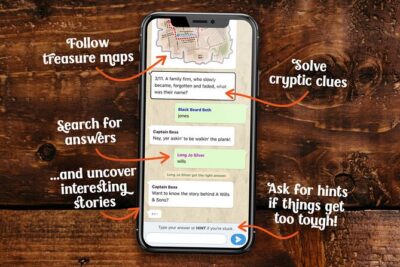
Fun, Flexible Treasure Hunt Around Birmingham with Cryptic Clues & Hidden Gems
Read our review →
Fun, Flexible Treasure Hunt Around Chester with Cryptic Clues & Hidden Gems
Read our review →
Fun, Flexible Treasure Hunt Around Brighton with Cryptic Clues & Hidden Gems
Read our review →
Fun, Flexible Treasure Hunt Around Cambridge with Cryptic Clues & Hidden Gems
Read our review →Browse the lists this tour appears in