

Reviewed · ENGLAND
Isle of Man Wildlife & Scenic Adventure with Wildlife enthusiast
The best part of this Isle of Man tour is its range. In one long day, you move from high sea cliffs and a seal-watching point to dune heath, a historic harbor, the island’s northern tip, and the open slopes of Snaefell. Wildlife is the main aim, but the scenery keeps changing.
I like the private format, especially if you have a short stay or a particular interest in birds. I also like that the guide carries both binoculars and a spotting scope, so you are not left trying to identify a distant bird with your phone. The main consideration is simple: seven and a half hours in a vehicle with several short stops can feel busy, and lunch is not included.
Key points to know before booking
- Seven distinct habitats in one day: Cliffs, shore, harbor, dunes, heath, northern beaches, and uplands all feature.
- A private tour for up to four people: You can ask for pickup and drop-off arrangements that suit your plans.
- Guide Louise brings a marine biology background: Expect attention to coastal wildlife as well as birds.
- Look for seasonal species: Choughs, terns, waders, orchids, and hen harriers are not guaranteed year-round.
- The Sound and Point of Ayre offer seal chances: Atlantic grey seals may be in the water or resting ashore.
- Bring food or budget for a refreshment stop: Lunch and drinks are your responsibility.
A full-island wildlife day with real variety
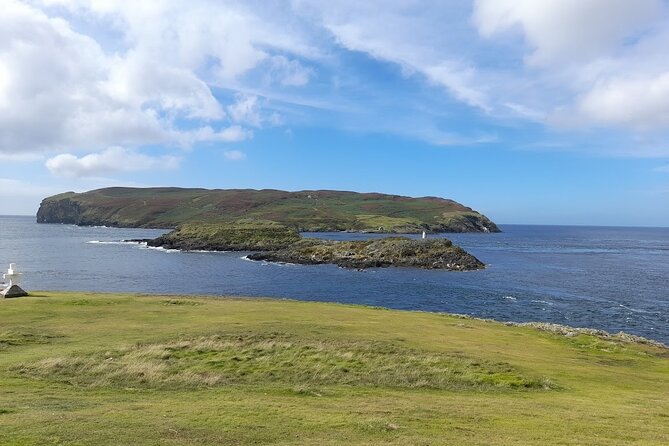
This is not a single-site bird walk. It is a broad survey of the Isle of Man’s natural side, with the guide using the day’s travel time to connect several very different places.
The tour lasts about seven hours and 30 minutes, including the drive between stops and time for refreshments. That matters because the island’s wildlife is spread out. You are not spending half a day waiting at one viewpoint. Instead, you get a series of chances, each with its own birds, coast, or habitat.
The private vehicle is air-conditioned and limited to your group of up to four. That gives you room to ask questions, adjust the pace where possible, and focus on birds, marine life, scenery, or local history. The guide is a Blue Badge driver guide with a background in marine biology, and Louise is the named guide associated with the experience.
I would choose this tour for a small group that wants a guided introduction to the island without hiring a car. It also makes sense for anyone arriving by ferry who wants a structured day rather than trying to connect remote coastal spots by public transport.
A few more England trips to weigh up
- Guided Wildlife and Sea Cave Kayak Safari in English Riviera
★ 5.0 · 121 reviews - Lincolnshire: ARK Wildlife and Dinosaur Park Entry Ticket
★ 4.2 · 3 reviews
Douglas Head: cliffs, wildflowers, and peregrine country
The first stop is Douglas Head, reached via Marine Drive on the island’s southeast coast. The appeal here is immediate: high cliffs, wide views over the Irish Sea, and a chance to scan traditional peregrine falcon habitat.
Peregrines are never a sure thing, so think of this as a good setting for searching rather than a guaranteed sighting. The guide can help you watch the cliff faces and open sky, while the spotting scope gives you a better chance of checking distant ledges.
Choughs may also be seen along the cliffs near Douglas. These red-billed, dark-plumaged members of the crow family are a special target for bird watchers, and the surrounding wildflowers add interest even when the birds stay out of sight.
You may also keep watch for passing marine life from the coast. The stop lasts about 30 minutes, so it is short and focused. Wear shoes suitable for uneven coastal ground, and keep in mind that exposed cliff areas can feel very different from sheltered Douglas.
Langness Peninsula: seasonal birds on open shore
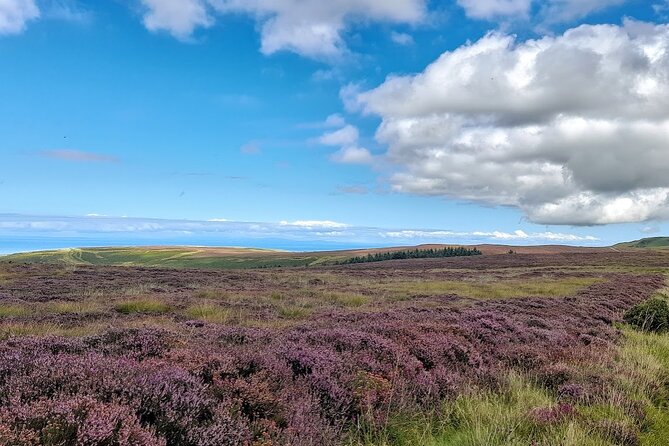
Langness Peninsula is an Area of Special Scientific Interest, and the tour gives you about 45 minutes to look for birds in its coastal habitats. The bird list changes with the season, which is one reason timing matters on this experience.
Possible sightings include skylarks, curlews, choughs, and several kinds of waders. Skylarks can be hard to spot because their song may come from somewhere above the open ground, while curlews are more distinctive with their long, curved bills and ringing calls.
Waders are another good reason to bring patience. These birds may be spread along the shore, so the spotting scope can be useful when they are too far away for a clear look. You are not promised a particular species, but the habitat gives the guide several sensible things to search for.
This is also one of the stops where the tour’s UNESCO reference appears in the description. The practical point for you is that Langness is being treated as a serious nature area, not simply as a scenic drive-by. Still, 45 minutes is enough for a sample, not an exhaustive bird survey.
The Sound: Calf of Man views and grey seals
At The Sound Cafe, you look across to the Calf of Man, a nature reserve separated from the main island by water. The setting combines rocky shores, low heath, and broad coastal views, creating another useful place to scan for wildlife.
Atlantic grey seals are a major draw here. You may see them bobbing offshore or watch for other marine life passing through the channel. The distance and weather will affect what you can make out, so the guide’s optics are especially helpful at this stop.
Bird species are also part of the search. The low heath and shore can attract different birds from those found around Douglas Head or Langness, which is the real strength of the route. You are sampling habitats rather than repeating the same coastal view.
The stop lasts about 45 minutes and includes a cafe visit. Lunch is not included, so this can be a sensible point to arrange a snack or drink, though you should not treat the tour price as covering refreshments.
Same country, a completely different day out:
- Stonehenge, Windsor Castle, and Bath from London
★ 4.5 · 18,662 reviews - London Big Bus Hop-On Hop-Off Tour with Optional River Cruise
★ 3.5 · 10,803 reviews - London Small Group Tour of Historical Pubs
★ 5.0 · 10,422 reviews - Beatles Magical Mystery Tour
★ 5.0 · 9,266 reviews
Peel: castle walls, black guillemots, and a working harbor
Peel gives the day a welcome change of pace. This historic fishing town has an ancient castle, a marina, and coastal habitats, with about one hour to explore the area and look for wildlife.
The harbor is particularly useful for spotting black guillemots. These birds nest in the harbor walls and can be seen plunging beneath the water in the marina. A sheltered harbor can make bird watching easier than an exposed cliff, especially if the sea is rough.
You can also search for gulls, waders, and eider ducks. Resident bottlenose dolphins and Atlantic grey seals are listed as possible marine sightings, though neither should be considered certain. The guide can help you know where to look, but wildlife remains wildlife.
Peel is also the stop most likely to appeal to a mixed group. Someone who is less interested in birds can enjoy the castle, marina, and town setting while you keep your binoculars ready. The one-hour allowance gives this stop more breathing room than the shorter coastal visits.
The Ayres: shingle, dunes, orchids, and lichen heath
The Ayres National Nature Reserve brings a different kind of scenery. Its protected habitats include shingle, sand dunes, and lichen heath, with orchids possible at the right time of year.
The reserve is a good reminder that wildlife tours are not only about large or dramatic animals. Much of the interest here is in the plants and smaller life supported by the habitat. Orchids are seasonal, and flowering conditions can vary, so visit with curiosity rather than a checklist of guaranteed sightings.
The hedgerows are described as being left with minimal management, allowing flora and fauna to build up. For you, that means the stop may reward slower observation. Look along the edges and low vegetation rather than expecting everything to appear in the open.
You have about 45 minutes here. That is enough to get a feel for the reserve and search for plants, but not enough for a long walk across every habitat. Ask the guide how far you will walk before setting out, especially if you prefer a gentler day.
Point of Ayre: the island’s northern edge
Point of Ayre is the northernmost point of the Isle of Man. It is only 14 miles from Scotland, and its northern plain was formed from sand and gravel deposited during and after the last Ice Age.
That geological detail explains the broad, low character of the area. Instead of cliffs, you find lichen heath and shingle beaches, habitats that support a different set of birds and marine life.
Depending on the season, you might look for choughs, nesting terns, waders, and other seabirds. Grey seals are often seen bobbing in the water or resting on shore. This may be one of the most rewarding stops for a patient wildlife watcher, since you have open views and several possible targets.
The stop lasts about 45 minutes. Bring a coat even on a mild day, since the northern tip can be exposed. The lighthouse adds a clear visual marker, but this is mainly a nature stop rather than a formal lighthouse tour.
Snaefell: upland views and birds of prey
The final listed stop takes you into the remote uplands of Snaefell. The setting shifts sharply again, from beaches and saltwater to open high ground.
The main wildlife goal is birds of prey, including the elusive hen harrier. This is another seasonal and luck-dependent search. You may see nothing, or you may get a memorable sighting, but the value lies partly in learning how the guide reads the open country and chooses places to scan.
The Snaefell stop lasts around 30 minutes, making it more of a final viewpoint and wildlife check than a long upland walk. The remote setting adds a sense of scale after a day spent around the coast.
Because the route includes seven stops, Snaefell also shows the trade-off built into the tour. You cover a lot of ground and see varied habitats, but you do not spend several hours at any one site. Birders seeking one target species may prefer a more specialized, slower outing.
What the private format is worth
The cost is $569.03 per group of up to four, not per person. At full capacity, that works out to about $142.26 each for roughly seven and a half hours, private transportation, a Blue Badge driver guide, and use of binoculars and a spotting scope.
That is reasonable if four people share the booking and want a custom day. For one or two people, the per-person cost rises sharply, so the value depends on how much you care about having a private vehicle and guide rather than joining a larger group.
The tour’s strongest practical feature is flexibility. Pickup can be arranged at a convenient location, and the drop-off point does not have to match the pickup point. The listed starting point is the Isle of Man Steam Packet Company Ferry Travel Shop at the Sea Terminal in Douglas, which makes the tour workable for ferry arrivals.
The operator asks you to make contact by email, media message, or telephone message for exact pickup instructions. Confirm those details before the day, especially if you want to be collected somewhere other than the ferry terminal.
The stated opening hours are Monday through Saturday from 9:00 AM to 10:30 AM during the listed operating period. The tour itself runs much longer than that window, so treat those hours as the booking or start-time range and confirm your exact departure time directly.
Lunch and refreshments are not included. The schedule allows time for refreshment stops, but you should bring money for food or carry a snack and water.
Who will get the most from this tour
I would recommend it most strongly to:
- Small groups of up to four who want a private day out
- Bird watchers who enjoy several habitats and seasonal possibilities
- Visitors without a car
- Ferry passengers who want pickup and a return to the meeting point
- Families or mixed-interest groups who want scenery, history, and wildlife together
- People who value an informed guide with marine biology experience
It may be less suitable if you want a relaxed, single-location hide experience. The route is ambitious, and the short stops mean frequent transitions. It is also not the right choice if you need a guaranteed sighting of peregrines, seals, dolphins, choughs, or hen harriers.
The tour has a perfect five-star rating from seven recorded reviews, and the strongest praise centers on the guide’s responsiveness, information, and ability to adjust to personal interests. That matches the private design of the experience. If you want seabirds and seals, say so. If the group cares more about plants, coastal scenery, or island history, mention that before setting off.
Practical details before you reserve
Confirmation is received at booking. Service animals are allowed, and the tour is near public transportation. Most people can participate, but the route includes coastal viewpoints and natural ground, so ask about walking requirements if mobility is a concern.
The activity is offered in English. It ends back at the meeting point unless you arrange a different drop-off in advance.
Cancellation is free if you cancel at least 24 hours before the start time. Changes or cancellations made inside that window are not accepted or refunded, with cut-off times based on Isle of Man local time.
Should you book the Isle of Man wildlife tour?
Book it if you want one private day that links the island’s best-known wildlife settings, from Douglas Head and Peel to The Sound, Point of Ayre, and Snaefell. The mix of coastal birds, grey seals, plants, uplands, and historic places gives you a useful first look at the island’s natural character.
I would especially choose it for a group of four, since the price then makes much more sense. Go with realistic expectations: wildlife sightings depend on season and conditions, and the pace favors variety over long observation. Bring layers, food money, and patience, then tell Louise what you most want to see.
FAQ
How long does the Isle of Man wildlife tour last?
The tour lasts approximately seven hours and 30 minutes, including travel between stops and time for refreshments.
How many people can join the private tour?
The price covers one private group of up to four people. Only your group participates.
Where does the tour start?
The stated meeting point is the Isle of Man Steam Packet Company Ferry Travel Shop at the Sea Terminal in Douglas, Isle of Man IM1 2RF.
Can I arrange pickup somewhere else?
Yes. Pickup can be arranged at a convenient location with exact meeting instructions provided by email, media message, or telephone message.
Can the drop-off point differ from the pickup point?
Yes. The drop-off point does not need to be the same as the pickup point and can be arranged for your convenience.
Is lunch included?
No. Lunch and refreshments are not included, although the schedule allows time for refreshment stops.
What wildlife might I see?
Depending on the season and conditions, you might see peregrine falcons, choughs, skylarks, curlews, waders, black guillemots, eider ducks, terns, seabirds, Atlantic grey seals, bottlenose dolphins, and birds of prey such as hen harriers.
Does the guide provide binoculars?
Yes. The guide has binoculars and a spotting scope for the group to use.
Is the tour available in English?
Yes. The experience is offered in English.
What is the cancellation policy?
You can cancel at least 24 hours before the start time for a full refund. Cancellations or changes made less than 24 hours before the start time are not accepted, and the local Isle of Man time zone sets the cut-off.
Just added around England
- Private The Beatles Taxi Tour in London★ 5.0 · 12 reviews
- Dinner and Jazz Cruise on the River Thames★ 4.0 · 140 reviews
- Airport Coach Service from Heathrow to Oxford★ 3.5 · 67 reviews
- The Alfred Hitchcock London Walk with Sandra Shevey★ 5.0 · 15 reviews
- Tower of London & 30+ London Sights Walking Tour★ 4.5 · 33 reviews
- Thames Beachcombing★ 4.5 · 100 reviews
- Ted Lasso London Taxi Tour★ 5.0 · 5 reviews
- Ted Lasso Tour of Richmond with Private Guide★ 5.0 · 25 reviews