
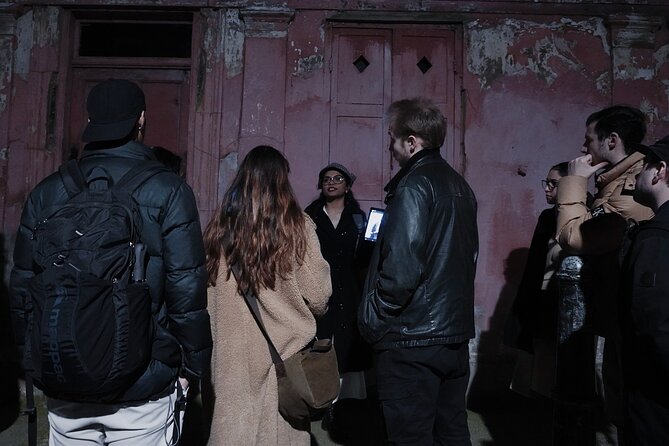
Reviewed · JACK THE RIPPER TOURS
Jack the Ripper: Night Murder Mystery Walking Tour in London
Jack the Ripper’s story is best understood on foot, after dark, in the narrow streets of Whitechapel. This 2.5-hour night walk links the murder sites, pubs, churches, and passageways that shaped the case, turning a grim London story into a moving lesson about poverty, policing, and the women whose lives are often pushed aside.
I like two things in particular. First, the route follows the events in sequence, which makes the tangled case easier to follow. Second, the guides put real attention on the victims and their daily lives, not just on the killer’s identity. The main consideration is simple: you will walk for most of the tour, with few places to sit, and nighttime crowds or poor weather can make it harder to hear.
Key points before you book
- The route moves through seven Whitechapel locations, including Brick Lane, Princelet Street, Puma Court, Gunthorpe Street, Goulston Street, St Botolph without Aldgate, and the Ten Bells.
- The storytelling follows a chronological order, helping you see how the case developed and why certain theories gained ground.
- The women at the center of the story receive serious attention, with discussion of their lives, vulnerability, and the social failures of Victorian London.
- The final stop at the Ten Bells adds atmosphere, connecting the pub with several victims and the neighborhood’s past.
- The group can include up to 25 people, so you get a shared walking-tour feel rather than a private guide.
- The $22.93 price is fair for London, especially for a two-and-a-half-hour evening walk led in English.
A night walk through Whitechapel’s darker past
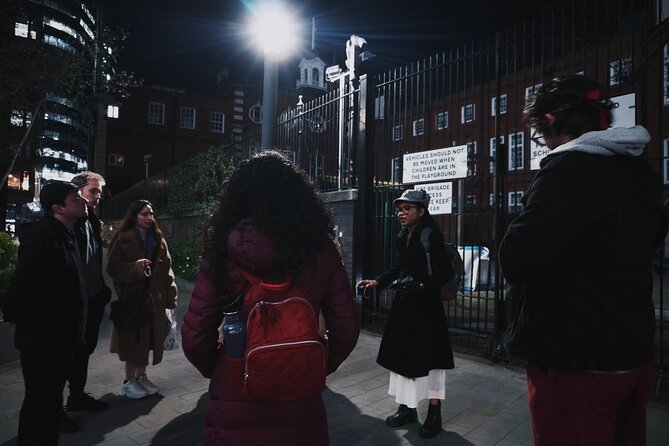
This is not a museum talk with a few old photographs. You move through the streets where the case unfolded, stopping at places that still give you a sense of the district’s old shape. Some buildings have changed, but narrow lanes and tight corners remain. That physical setting matters. It helps explain how witnesses could lose sight of someone quickly, how vulnerable people could disappear into the night, and why the police struggled to control the area.
The tour is aimed at people who enjoy crime stories, mystery, and London history. I would also recommend it to anyone who wants to see an East London district that sits outside the usual first-time route of Westminster, the South Bank, and the Tower.
The experience is interactive rather than purely scripted. You are asked to weigh clues and theories as you move from one location to the next. The guide acts as a specialist in the Ripper case, but the strongest parts are likely to be the wider context: overcrowded housing, poverty, unsafe work, and the limited protection available to women living on the edge of Victorian society.
The subject is violent, so this is not a light family stroll. Still, the best guides handle it with restraint. Hadi, Kory, Tyson, Dougal, Korhan, Lisa, Anahita, Kody, and other guides have been praised for clear storytelling, humor used carefully, and respect for the victims. Guide quality can vary by departure, but the recurring strength is the care taken with a difficult subject.
More Jack the Ripper Tours in London:
- London Jack the Ripper Guided Tour with Ripper-Vision
★ 4.5 · 4,840 reviews - London Jack The Ripper Guided Walking Tour
★ 5.0 · 3,131 reviews - Ultimate Jack the Ripper : Guided Tour of London
★ 5.0 · 1,495 reviews
Brick Lane sets the Victorian scene
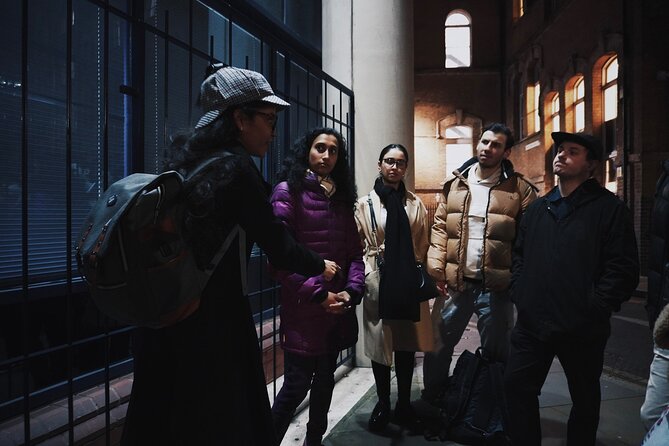
The walk begins at St Marys Whitechapel Church Memorial, near the eastern end of the route. From there, the first major stop is Brick Lane, now known for food, art, and nightlife, but once part of a crowded and impoverished Victorian district.
Here, the guide explains the conditions that formed the backdrop to the murders. Overcrowding, poverty, and desperation were not just background decoration. They shaped where people slept, how they earned money, and why some women had few safe choices.
I like this opening because it prevents the tour from turning into a simple hunt for a famous murderer. You begin with the neighborhood and the people who lived in it. That gives the later crime scenes more meaning.
The stop lasts about 17 minutes. There is no admission charge, since the tour takes place outdoors, but you should expect to remain on your feet. Brick Lane can also be busy, so stay close enough to hear the guide.
Princelet Street and the lives behind the names
Princelet Street is narrower and quieter than Brick Lane. Its older feel makes it a useful place to picture Whitechapel before modern traffic, shops, and redevelopment altered the area.
The discussion here turns toward the women affected by the case, including Annie Chapman. Instead of treating her as a name in a list, the guide places her within the social conditions of the time. That approach is one of the tour’s most worthwhile features.
You may hear theories and case details, but the focus remains human. I appreciate that balance. True crime can easily make victims into plot points. This stop gives the story a slower pace and asks you to think about what their lives were like before the crimes made them famous.
Princelet Street is also a good example of why an evening walk works better than a bus tour for this subject. You are close to the walls and passageways. The atmosphere comes from the setting itself, not from theatrical effects.
Puma Court shows how quickly a person could vanish
Puma Court has changed little since the 19th century, making it one of the more atmospheric pauses along the route. Its narrow form helps you understand how streets and alleys could offer cover after dark.
The guide uses the space to explain how someone might slip away from view. That does not prove any theory about the killer, of course, but it gives you a clearer sense of the practical problems facing witnesses and police.
This is where the walking format earns its price. You are not simply told that the area was confusing or enclosed. You are standing in a place where those qualities are still visible.
There is no ticketed entrance, but Puma Court can feel tight when several tour groups gather. If your guide is speaking while facing away from the group, move closer. One visitor specifically found parts of the commentary hard to hear, and narrow streets, traffic, and other groups can make this a real issue.
A few more London trips to weigh up
- Tour for Muggles The Ultimate Harry Potter Walking Tour in London
★ 5.0 · 4,684 reviews - Changing of the Guard Guided Walking Tour in London
★ 5.0 · 1,793 reviews - The Great British Rock and Roll Walking Tour
★ 5.0 · 1,371 reviews - Westminster Guided Walking Tour with Abbey Entry
★ 5.0 · 1,282 reviews
The Ten Bells connects the case to everyday Whitechapel
The Ten Bells is the most recognizable pub stop on the route. It is closely linked with several of the women associated with the Ripper case, who are believed to have visited the pub shortly before their deaths.
The tour finishes its discussion at the pub’s exterior, using the building to talk about final hours, local drinking culture, and the way this place became tied to the case. The pub gives the story an everyday setting. These were not remote crimes in an empty quarter. They happened in a lived-in district, near shops, homes, churches, and places where people met.
You should not expect a pub-based tasting or a reserved indoor session. The stop is an outdoor talk at the doors, and the tour continues through the streets. If you want to linger inside afterward, you can treat that as a separate part of your evening.
For me, the Ten Bells is valuable because it brings together the tour’s main themes: place, memory, and the risk of turning tragedy into entertainment. A good guide can acknowledge the pub’s fame while keeping attention on the women and the world they inhabited.
Gunthorpe Street and the question of Martha Tabram
Gunthorpe Street is described as the place where Martha Tabram was murdered. Her death is often discussed in connection with the Ripper case, though experts disagree about whether she should be counted among the canonical victims.
That uncertainty makes this one of the most useful stops for the mystery side of the walk. You are not handed a neat answer. Instead, the guide examines the clues, the timing, and the reasons some specialists include Tabram while others do not.
This is a good point to listen for distinctions between established facts and later theories. The case is full of claims that have grown more dramatic with age. The strongest guides separate what is documented from what is possible.
The narrow passage also reinforces the route’s visual side. You can picture why the location mattered without needing elaborate staging. The setting carries much of the mood, especially under cloudy or chilly skies.
Goulston Street and the famous apron clue
Goulston Street is tied to one of the case’s most debated pieces of evidence: a bloody piece of apron associated with Catherine Eddowes. Nearby, a chalk message was found, leading to arguments about its meaning and whether it was connected to the killer at all.
This stop shifts the tour from physical crime scenes to police work and public fear. A single object and a few words could generate enormous pressure, especially in a city already anxious about further attacks.
The guide explains the competing interpretations and the conspiracy theories that followed. I like this part because it shows how difficult the investigation was. Evidence can be real without proving the conclusion people attach to it.
You will probably want to take photographs along the route, and this is one of the more memorable locations for that. Do so quickly and stay with the group. The tour has a maximum of 25 people, which keeps it more manageable than a very large street crowd, but you still need to listen for instructions.
St Botolph without Aldgate puts the victims first
At St Botolph without Aldgate, the story pauses near a church associated with vulnerable women seeking refuge. This stop gives the guide room to discuss the limits of Victorian charity and the ways society failed women living with poverty, unstable work, and little protection.
This is among the most thoughtful sections of the walk. The Ripper’s name has become famous, but the women he is associated with often remain secondary in popular accounts. Here, the guide can return attention to their circumstances and dignity.
The church also provides a natural pause late in the route. You have covered several locations, heard different theories, and followed the story through its sequence of events. The stop helps connect individual crimes to wider social problems.
One practical warning: this is a walking tour with very little seating until the end. If you have limited stamina, plan accordingly. The route is manageable for most people according to the activity details, but it is still a 150-minute evening walk.
The final stretch and the case’s unanswered questions
The supplied meeting information lists the end at Mitre Square in the City of London, while the route also uses the Ten Bells and nearby Whitechapel locations as key closing points. The final section keeps the focus on the last known movements, the police evidence, and the theories that still surround the case.
The exact identity of Jack the Ripper remains unresolved. That is part of the appeal, but it is also why a good guide must avoid presenting speculation as fact. Several guides, including Kory and Tyson, have been praised for staying with the known sequence while still explaining the leading theories.
You may also hear about other killings in the area and why the Ripper case received more lasting attention than similar crimes. That comparison helps explain how newspapers, public fear, and the mystery of an unidentified killer shaped the story’s long afterlife.
The conclusion is not simply a dramatic reveal. Expect a chance to think through the evidence and, with some guides, continue chatting about theories after the formal walk ends.
Guide style can make or break the evening
The strongest feature of this experience is the guide. Names praised in the feedback include Tyson, Kory and Korey, Dougal, Hadi, Korhan, Korhn Yasin, Kody, Lisa, Anahita, and Doogle. They are described as prepared, friendly, funny at suitable moments, and careful to keep the group together.
Several guides have added London history, old neighborhood photographs, newspaper details, and building information beyond the basic murder case. That extra material gives you a better feel for East London in the period and keeps the tour from becoming a string of grisly facts.
I also value the reports of guides waiting briefly for people when transport problems or Tube closures caused delays. That sort of care matters on a night walk.
Still, do not expect every moment to be effortless. One account noted that the guide was sometimes hard to hear, especially when looking away while speaking. Stay near the front, ask the guide to repeat a point, and let people behind you hear as well.
Is $22.93 good value for London?
At $22.93 per person, this is a reasonably priced London activity. You get roughly two and a half hours of guiding, several historic locations, and an organized route through an area you might not explore on your own at night.
The value is strongest if you want interpretation rather than simply a self-guided walk. You could visit many of these streets for free, but you would miss the chronology, case connections, competing theories, and social context.
Group discounts may make the price more appealing for couples, families with older children, or friends traveling together. The maximum group size is 25, so this is not a private experience, but it is still more personal than a huge open street gathering.
Because the activity is booked around 33 days ahead on average, popular evening times may fill early. If this is important to your London plans, reserve before you arrive rather than treating it as a last-minute spare-night option.
What to wear and how to prepare
The tour operates outdoors at night. Bring warm layers, comfortable walking shoes, and rain protection. One group completed the walk through torrential rain, and another described a chilly, cloudy evening, so London weather can affect both comfort and atmosphere.
Use the mobile ticket and arrive at the stated meeting point, St Marys Whitechapel Church Memorial on Unnamed Road, London E1 1FE. The tour is offered in English.
Most people can participate, and service animals are allowed. Since the experience involves continuous walking and limited seating, contact the provider before booking if you have concerns about the route or standing time.
Free cancellation is available until 24 hours before the start time for a full refund. Inside that 24-hour window, the payment is not refunded and changes are not accepted.
Who should book this Whitechapel walk?
I would book this if you enjoy historical mysteries, true crime, Victorian London, or guided walks with a strong sense of place. It is also a smart choice if you have already seen the main central London sights and want an evening activity in East London.
The tour suits curious adults and older children who can handle serious subject matter. It is less suitable if you dislike stories of violent crime, need frequent seating, or want an indoor activity protected from rain.
You should also choose it for the guide-led context, not only for spooky atmosphere. The best parts are the victim-centered storytelling, the chronological route, and the careful discussion of uncertainty. The darkness adds mood, but the history gives the walk its lasting value.
FAQ
How long is the Jack the Ripper walking tour?
The tour lasts approximately 2 hours and 30 minutes.
How much does the tour cost?
The listed price is $22.93 per person. Group discounts are available.
Where does the tour begin?
The meeting point is St Marys Whitechapel Church Memorial, on Unnamed Road, London E1 1FE, UK.
Where does the tour end?
The end point is listed as Mitre Square, London EC3A 5DE, UK.
What language is the tour offered in?
The tour is offered in English.
How many people can join the group?
The activity has a maximum group size of 25 people.
Is the tour suitable for most people?
Yes. The activity information says most people can participate. It is an outdoor walking tour, so you should be ready to walk and stand for much of the 2.5 hours.
Can I cancel for a full refund?
Yes. You can cancel at least 24 hours before the start time for a full refund. Cancellations or changes made within 24 hours are not accepted, and the payment is not refunded.
Should you book it?
Book this Jack the Ripper night walk if you want a well-priced, place-based look at Whitechapel and prefer careful storytelling to a simple ghost tour. The victim-centered approach, chronological route, and strong guide roster give it more substance than a list of lurid tales.
Skip it if you want a short, seated, indoor activity or if dark crime stories are not for you. For everyone else, bring a coat, stay near the guide, and allow the streets themselves to explain why this case has held London’s attention for so long.
More Evening Experiences in London
- London by Night Bus Tour with Christmas Lights and Live Guide
★ 4.5 · 2,040 reviews - London by Night Sightseeing Tour – Open Top Bus
★ 4.5 · 1,060 reviews - London by Night Sightseeing Open Top Bus Tour with Live Guide
★ 4.5 · 977 reviews - River Thames Evening Cruise with Sparkling wine and Canapés
★ 4.0 · 569 reviews
Just added around London
- Private The Beatles Taxi Tour in London★ 5.0 · 12 reviews
- Dinner and Jazz Cruise on the River Thames★ 4.0 · 140 reviews
- Airport Coach Service from Heathrow to Oxford★ 3.5 · 67 reviews
- The Alfred Hitchcock London Walk with Sandra Shevey★ 5.0 · 15 reviews
- Tower of London & 30+ London Sights Walking Tour★ 4.5 · 33 reviews
- Thames Beachcombing★ 4.5 · 100 reviews
- Ted Lasso Tour of Richmond with Private Guide★ 5.0 · 25 reviews
- Ted Lasso Tour of Richmond★ 5.0 · 152 reviews
Jack the Ripper Tours, compared.
London Jack the Ripper Guided Tour with Ripper-Vision
Read our review →
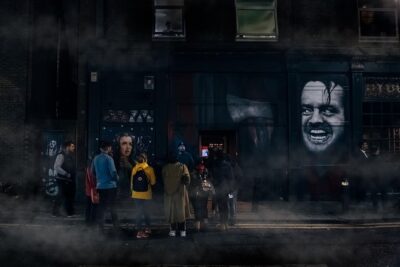
Ultimate Jack the Ripper : Guided Tour of London
Read our review →
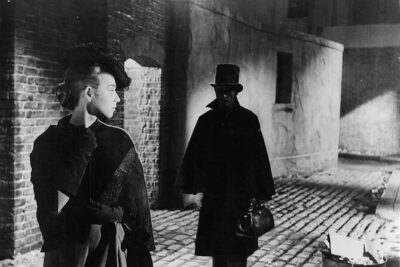
London Jack The Ripper Small-Group Walking Tour
Read our review →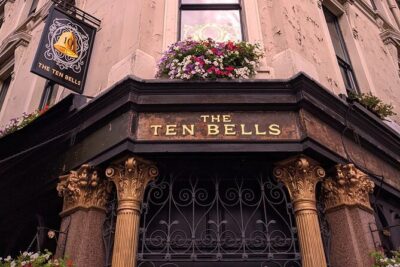
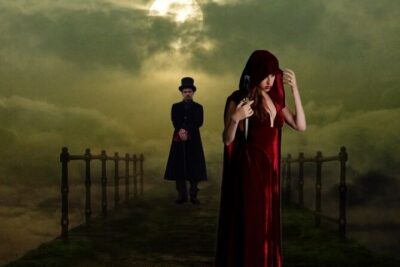
The Original Jack the Ripper Coach Tour of Haunted London
Read our review →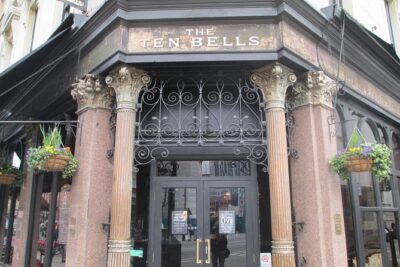
Browse the lists this tour appears in