
Reviewed · JACK THE RIPPER TOURS
Jack the Ripper Walking Tour with Expert Ripperologist
The most gripping part of this Jack the Ripper walking tour is that you follow the actual streets where the 1888 murders unfolded, from St Botolph’s Church and Mitre Square to Hanbury Street and the Ten Bells. The route links the crimes to Whitechapel’s poverty, crowded lodging houses, policing problems, and surviving street patterns rather than treating the case as a simple horror story.
I like the victim-focused approach, and I like the way the guides use a 14-inch backlit tablet to show photographs of the women, crime scenes, and old Whitechapel. Guides including Lindsey, Jenny, and Paul bring different personalities to the walk, while the costume adds a modest theatrical touch without turning the whole evening into a stage show.
The main drawback is the group size, which can reach 30 people. Most of the route involves walking and standing for more than two hours, and the subject includes murder, mutilation, and poverty. This is not a casual sightseeing stroll, and the limited toilet access may matter to some people.
Key points at a glance

- Follow the double event in Mitre Square: Hear how Elizabeth Stride and Catherine Eddowes were killed within roughly 45 minutes of each other.
- See streets that still frame the story: Wilkes Street, Brick Lane, Hanbury Street, and the area around the Ten Bells help connect the case to present-day London.
- Learn about the victims and their world: The tour gives substantial attention to the women, witnesses, poverty, crime, and overcrowding of Whitechapel.
- Use the backlit tablet as a visual guide: Historical photographs and images of the murder sites make the vanished setting easier to picture.
- Finish near Liverpool Street Station: The end point at the London Fruit and Wool Exchange is about a five-minute walk from Liverpool Street.
- Plan for an adult audience: No children under 15 are allowed, and those aged 16 or 17 must attend with an adult.
Walking into 1888 at St Botolph’s Church
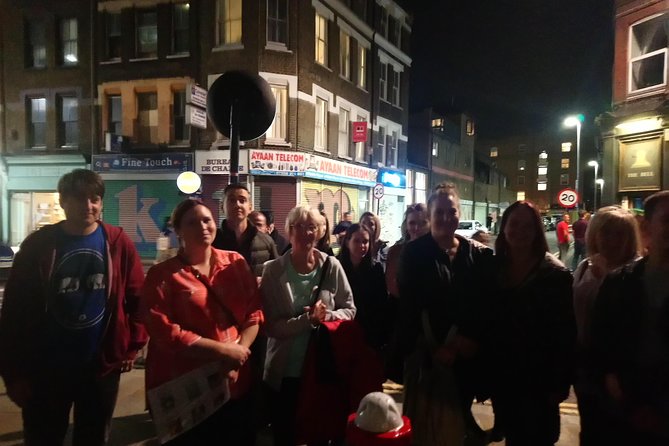
The tour begins outside St Botolph’s Aldgate, near Aldgate Station. This is a useful starting point because the area sits close to the old boundary between the City of London and Whitechapel, a distinction that mattered greatly in 1888.
Your guide introduces the setting outside the church, sometimes called the Prostitutes Church because women once solicited on the island where it stood. You then move a short distance to Aldgate Square, where the guide explains daily life in poor Whitechapel.
This opening matters. Without it, the murders can seem like isolated crimes committed in a spooky old district. The walk instead places them among overcrowded housing, low wages, crime, homelessness, and people living close to the breadline. I find this social background one of the strongest parts of the experience because it gives the victims and witnesses a human setting.
The first stop lasts only about five minutes, followed by roughly ten minutes at Aldgate Square. You are not entering the church, and admission is not charged at these stops. Wear shoes that can handle pavement and keep your attention on the guide, since the group moves through active city streets.
More Jack the Ripper Tours in London:
- London Jack the Ripper Guided Tour with Ripper-Vision
★ 4.5 · 4,840 reviews - London Jack The Ripper Guided Walking Tour
★ 5.0 · 3,131 reviews - Ultimate Jack the Ripper : Guided Tour of London
★ 5.0 · 1,495 reviews
Mitre Square and the night of the double murder
Mitre Street and Mitre Square provide the tour’s most important crime scene. Here, just inside the City of London boundary, the guide discusses Elizabeth Stride, known as Long Liz, and Catherine Eddowes.
Stride was the first victim killed on the night often called the double event. Eddowes was murdered only about 45 minutes later. The short distance between the two locations, along with the division between the City of London Police and the Metropolitan Police, helps explain the confusion and pressure surrounding the investigation.
This stop is especially useful if you already know the basic case but want to understand the geography. A map can show you two points, but standing on the streets and hearing how the police moved through the area gives the sequence more shape.
The tour spends about ten minutes here. The guide also uses images on the tablet, allowing you to compare the modern streets with photographs and illustrations connected to the case. The images are part of the appeal, but they may be upsetting. This is a serious crime story, not a light ghost walk.
Petticoat Lane and the policing boundary
The route continues toward Petticoat Lane Market, now known as Middlesex Street. The market itself is not the main point. The important detail is that this road marked the boundary between the City of London and the Metropolitan Police area.
That division becomes a recurring thread. Different police forces worked on different sides of the boundary, and the border affected communication, jurisdiction, and the search for the killer. A five-minute stop here is brief, but it makes the later discussion of the investigation easier to follow.
You will not need to buy a market ticket, and the tour does not appear to include time for shopping. Treat this as a history stop rather than a market visit.
Goulston Street and the case’s most famous clue
At Goulston Street, the guide takes you to the doorway where the only major clue found along the police route was discovered. The group follows the general path taken by officers who were searching for the killer after the murders.
This is one of the places where the tour moves from the victims to the investigation. The location helps you picture the urgency of the night and the police effort to connect evidence to a suspect. The guide’s use of old images is useful here, since the modern doorway and surrounding streets do not automatically reveal what happened in 1888.
The stop lasts about ten minutes. Expect to stand outside, listen, and look closely. This is not an indoor museum visit, so rain and traffic can affect how comfortable the discussion feels.
A few more London trips to weigh up
- Tour for Muggles The Ultimate Harry Potter Walking Tour in London
★ 5.0 · 4,684 reviews - Changing of the Guard Guided Walking Tour in London
★ 5.0 · 1,793 reviews - The Great British Rock and Roll Walking Tour
★ 5.0 · 1,371 reviews - Westminster Guided Walking Tour with Abbey Entry
★ 5.0 · 1,282 reviews
Martha Tabram and the early Whitechapel murders
From Wentworth Street, you view Gunthorpe Street and the spot where Martha Tabram was found murdered on August 7, 1888, in George Yard Buildings. She is now considered by some researchers to be the most likely first victim linked to Jack the Ripper.
The wording matters because the case has never been fully settled. The walk does not need to pretend that every connection is certain. Tabram’s inclusion gives you a wider view of the murders and shows how the list of possible victims has changed as research has developed.
This stop takes about ten minutes. You will be looking toward the location rather than entering a preserved crime scene. That is typical of the route: the value comes from the guide’s explanation, the old photographs, and the relationship between the places.
Thrawl Street, Brick Lane, and Mary Ann Nichols
The next section leads to Brick Lane and the corner of Thrawl Street, opposite the Frying Pan pub. Here you hear about Mary Ann Nichols and her final drink before she walked down Whitechapel Road toward Bucks Row, behind Whitechapel Station, where she was murdered.
This part of the route connects an ordinary social setting with the fatal walk that followed. It also lets the guide talk about pubs, lodging houses, and the limited choices available to women living in poverty.
The stop lasts about ten minutes. Brick Lane is an active part of modern East London, so expect a city atmosphere rather than a silent, frozen-in-time scene. That contrast is part of the experience. You are hearing about a dark past while present-day London continues around you.
Hanbury Street and the murder of Annie Chapman
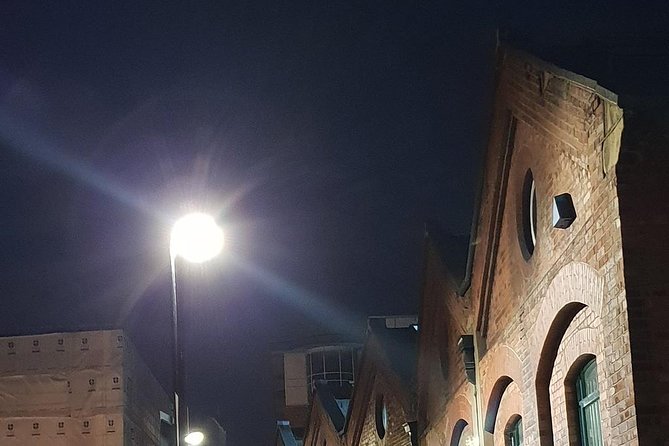
You then continue up Brick Lane and turn into Hanbury Street. Annie Chapman was murdered in the back yard of number 29 Hanbury Street, making this one of the route’s most direct links to a specific address.
The guide explains what happened at the site and uses photographs to show how the area looked in the period. The tablet is particularly helpful at stops such as this one. You can see the victim and the old surroundings while standing in the modern street, which makes the account easier to follow than a purely spoken lecture.
About twelve minutes are spent here. The subject is graphic, so you should think carefully about your comfort level before booking. The presentation is intended to explain the crime and remember the victims, but the details are not softened into a family-friendly story.
Wilkes Street, Puma Court, and the Dear Boss letter
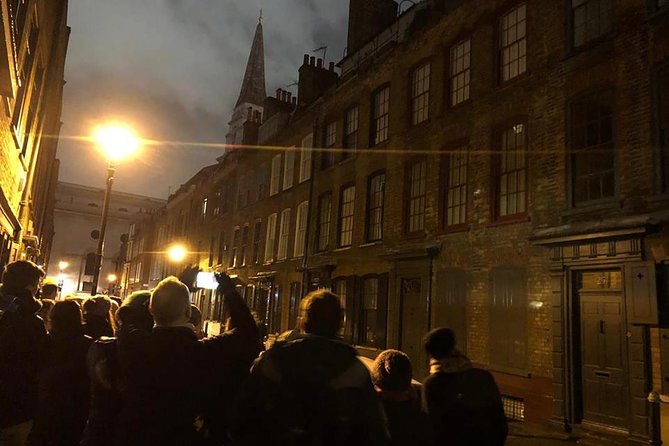
Wilkes Street offers one of the route’s most atmospheric stretches. It is described as a street that has changed little since the 1800s, and the group continues toward Puma Court.
Here the guide discusses the Dear Boss letter, one of the most famous pieces of correspondence associated with the Ripper case. This stop lasts about five minutes, so the treatment is likely to be concise rather than a long study of handwriting, authorship, and later claims.
Wilkes Street is also a reminder that the tour is not only about crime scenes. You are walking through a mix of surviving lanes and modern city streets, with the physical layout helping you understand why Whitechapel remains so closely tied to the case.
The Ten Bells and Itchy Park
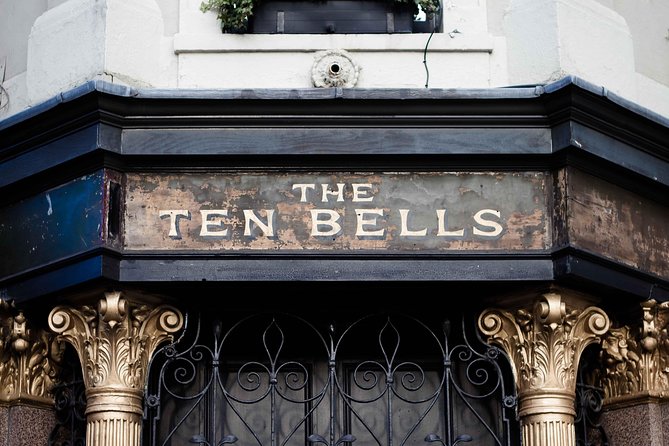
Opposite the Ten Bells, the guide talks about Mary Kelly’s favorite pub. You also see Christchurch Graveyard, once known as Itchy Park, where homeless people would sleep during the day.
The Ten Bells is a familiar name in Ripper lore, but this stop works best when the pub is treated as part of the neighborhood rather than as a spooky attraction. The nearby graveyard adds context about homelessness and public space, both of which shaped life in the area.
You spend about five minutes here. The tour does not include a pub visit, drink, or meal, so plan those separately. This is also a busy area, and the group may need to gather closely so everyone can hear.
Old Spitalfields Market and the Lusk letter
The route finishes its main historical sequence near Old Spitalfields Market and the London Fruit and Wool Exchange. In the entrance, the guide discusses the letter sent to George Lusk, head of the Whitechapel Vigilance Group.
This stop widens the story again. Lusk and the vigilance group reflect the fear and local action that followed the murders. Residents did not simply wait for the police. They formed groups, searched the streets, and tried to protect the neighborhood when confidence in official efforts was low.
About eight minutes are spent near the market, followed by the final section in the square behind the Fruit and Wool Exchange. The area is a practical ending point because Liverpool Street Station is about a five-minute walk away.
Mary Kelly and the final stop
The tour ends with Mary Kelly, described as Jack the Ripper’s last victim, killed on November 9, 1888. The final discussion takes place in the square behind the London Fruit and Wool Exchange and lasts about 20 minutes.
Ending with Kelly gives the walk a clear final chapter, though the case itself remains unresolved. The guide may also discuss suspects and offer a view of what kind of person could evade police officers and volunteer vigilantes. If you want a long, suspect-by-suspect investigation, ask about the emphasis at the start. The main weight of the walk is on the victims, the neighborhood, and the circumstances that allowed the murders to happen.
The final location is convenient for onward travel. Your guide directs you toward Liverpool Street Station, where several Underground lines are available.
What the guides and visuals add
The guides use costumes to create a period feel, but the strongest feature is the presentation of evidence and images. Lindsey is praised for years of experience, an upbeat manner, and witty touches. Jenny is described as punctual and clear, with a strong grasp of both the murders and the period. Paul is also noted for an engaging presentation.
The quality can vary slightly with the individual guide, as it does on any walking tour. Still, the shared format is clear: you get a spoken account supported by photographs of the victims, locations, and surrounding area on a backlit tablet.
I especially value the care given to the women who were killed. The presentation does not treat them only as names in a murder puzzle. It places them within difficult social conditions and gives you a better sense of their lives and vulnerability.
Price, group size, and practical comfort
At $23.61 per person, the tour is fairly priced for two and a half hours of guiding in central London. You are paying for a structured route, a specialist subject, visual material, and a guide who connects the sites into one story. Since the tour uses public streets and free outdoor locations, the value depends mainly on the quality of the explanation.
The maximum group size is 30. That is not intimate, and one person found a 20 to 25-person group larger than preferred. The guide uses a microphone, which should help with hearing, but you may still want to stay near the front at busy stops.
Book ahead if your dates are fixed. The tour is often reserved around 40 days in advance. It runs in English and uses a mobile ticket.
You should be able to walk and stand for more than two hours. Toilets are very limited along the route, so use facilities before meeting at Aldgate Station. No children under 15 are allowed, and anyone aged 16 or 17 must attend with an adult.
Free cancellation is available up to 24 hours before the start time. Cancellations made inside that window are not refunded, and the tour requires a minimum number of participants. If that minimum is not reached, you are offered another date or a full refund.
Who should book this Whitechapel walk
I would choose this tour if you enjoy unsolved cases, social history, old photographs, and walking tours that connect events to real streets. It suits adults who want more than the Hollywood version of Jack the Ripper and who are comfortable hearing graphic details.
It is less suitable if you want a polished indoor attraction, a quiet private guide, or a long discussion centered on suspects. A private tour is available for people seeking individual attention or a different balance of topics, but this standard experience is designed for a larger group.
The route also works well if you have already visited central London’s major sights. Whitechapel, Aldgate, Brick Lane, Spitalfields, and the area near Liverpool Street offer a different side of the city, and the walk gives you a reason to explore them with purpose.
Should you book the Jack the Ripper Walking Tour?
At 4.8 out of 5 from 204 ratings, with 97 percent of customers recommending it, this is a strong choice for a focused London walking tour. The best reasons to book are the victim-centered storytelling, the period context, the visual tablet presentation, and the chance to trace the route on foot.
Go in expecting a serious murder-history walk, not a family ghost tour. Check the weather, wear comfortable shoes, arrive early at Aldgate Station, and stay close enough to hear the guide. If a 30-person maximum feels too large, consider the private option instead.
For dark-history fans who want a clear, grounded account of the Whitechapel murders, the $23.61 price offers good value.
FAQ
Where does the Jack the Ripper tour start?
It starts outside Aldgate Station on Aldgate High Street, London EC3N 1AH.
Where does the tour end?
It ends at 66 to 68 Bell Lane, inside the square of the London Fruit and Wool Exchange on Brushfield Street. Liverpool Street Station is about a five-minute walk away.
How long does the walking tour last?
The tour lasts approximately two hours and 30 minutes.
What language is the tour offered in?
The tour is offered in English.
How much does the tour cost?
The listed price is $23.61 per person.
Is the tour suitable for children?
No children under 15 are allowed. Participants aged 16 or 17 must attend with an adult.
Do I need to be physically fit for the tour?
You need a moderate level of physical fitness because the experience involves walking and standing for more than two hours.
Are toilets available during the walk?
Toilet access is very limited along the route. It is wise to use facilities before the tour begins.
How many people can join the tour?
The maximum group size is 30 people. A private tour is available for those who want individual attention.
What happens if I need to cancel?
You can cancel up to 24 hours before the start time for a full refund. Cancellations or changes made less than 24 hours before the start time are not accepted for a refund.
Just added around London
- Private The Beatles Taxi Tour in London★ 5.0 · 12 reviews
- Dinner and Jazz Cruise on the River Thames★ 4.0 · 140 reviews
- Airport Coach Service from Heathrow to Oxford★ 3.5 · 67 reviews
- The Alfred Hitchcock London Walk with Sandra Shevey★ 5.0 · 15 reviews
- Tower of London & 30+ London Sights Walking Tour★ 4.5 · 33 reviews
- Thames Beachcombing★ 4.5 · 100 reviews
- Ted Lasso London Taxi Tour★ 5.0 · 5 reviews
- Ted Lasso Tour of Richmond with Private Guide★ 5.0 · 25 reviews
Jack the Ripper Tours, compared.
London Jack the Ripper Guided Tour with Ripper-Vision
Read our review →
Ultimate Jack the Ripper : Guided Tour of London
Read our review →
London Jack The Ripper Small-Group Walking Tour
Read our review →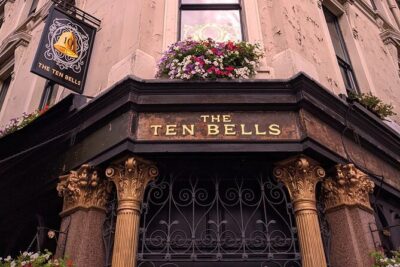
The Original Jack the Ripper Coach Tour of Haunted London
Read our review →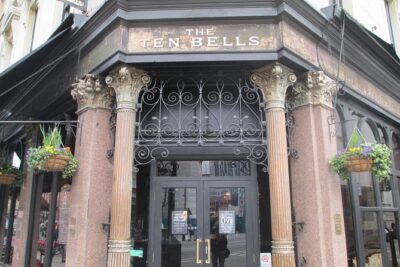
Browse the lists this tour appears in