
Reviewed · CITY TOURS
Private Sightseeing Walking Tour of The City Of London
The most interesting thing here is the way the City of London keeps its past in plain sight. In three hours, you move from Roman Londinium and the medieval London Stone to the Bank of England, Harry Potter filming locations, and the dome of St. Paul’s. Guide Dewi is known for humor, unusual stops, and adjusting the walk to suit your requests.
I like the private format, especially for families or small groups who want to ask questions without holding up strangers. I also like the route’s mix of famous sights and easy-to-miss places, including St. Dunstan in the East and the small chamber that houses the London Stone. The main consideration is simple: this is an outside walking tour, and you do not go inside the Tower of London or St. Paul’s Cathedral.
Key points at a glance
- Sixteen or more landmarks in three hours: The route packs in major sights without trying to turn each one into a full museum visit.
- A private guide for up to 15 people: Your group receives the guide’s full attention, with room for questions and requests.
- Roman, royal, wartime, and financial London: The stories range from Londinium and the Great Fire to the Merchant Navy and the Bank of England.
- Excellent photo stops: St. Dunstan in the East, Leadenhall Market, the Thames, and One New Change all offer strong photo opportunities.
- A useful first look at the City: You finish at St. Paul’s with a clear sense of which places deserve a longer visit later.
- Central start and finish: The walk begins at The Monument and ends outside St. Paul’s Cathedral.
Why this City of London walk works
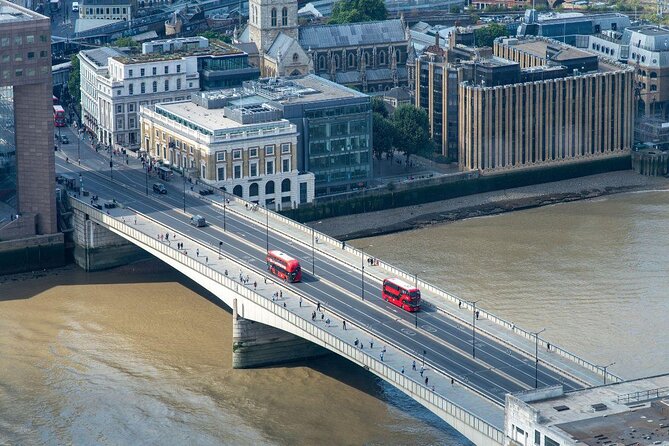
The City of London is small in area but enormous in historical importance. This is where Roman London began, where the Great Fire reshaped the streets, and where Britain’s financial power still operates from grand old buildings.
A good walking tour here should do more than point at famous facades. It should help you understand why the streets look the way they do. This one follows that idea well. You see the Tower, London Bridge, and St. Paul’s, but you also pause at places most first-time visitors would pass without noticing.
The private setup makes a real difference. Your group can ask about family history, architecture, wartime London, film locations, or the odd detail that catches your eye. Dewi is the named guide associated with this experience, and his approach includes humor, broad factual knowledge, and flexibility when guests want to spend more time on a particular subject.
The pace is active but not frantic. Several stops last only five or 10 minutes, while St. Dunstan in the East, Leadenhall Market, St. Magnus the Martyr, Mansion House, and St. Paul’s receive about 20 minutes each. You should be comfortable walking for roughly three hours on city streets.
A few more London trips to weigh up
- Tour for Muggles The Ultimate Harry Potter Walking Tour in London
★ 5.0 · 4,684 reviews - London Jack The Ripper Guided Walking Tour
★ 5.0 · 3,131 reviews - Changing of the Guard Guided Walking Tour in London
★ 5.0 · 1,793 reviews
Starting at The Monument and Trinity Square
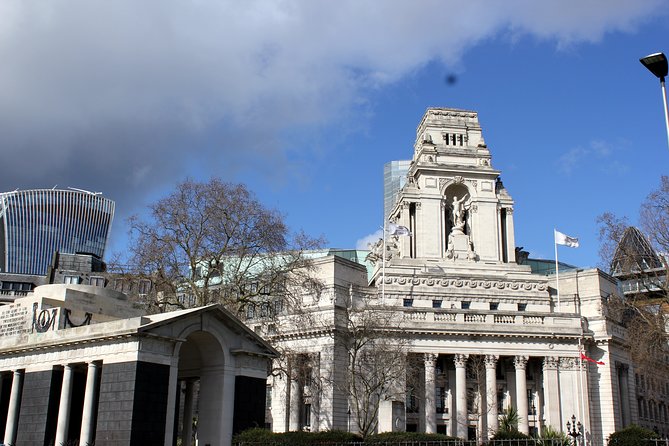
The official meeting point is The Monument, at 18 Fish Street Hill. The route also begins around Trinity Square, where you can view 10 Trinity Square, the former home of the Port of London Authority.
The building recalls a time when London was one of the world’s busiest ports. It also hosted the United Nations’ inaugural reception, giving your guide an opening to connect local architecture with international events.
Nearby, a Merchant Navy memorial honors sailors lost during the First and Second World Wars. This is a useful reminder that Britain’s survival depended not only on soldiers and factories but also on ships bringing food, fuel, and supplies into the country.
I like this opening because it avoids jumping straight to the standard postcard sights. You begin with trade, shipping, and war, three forces that shaped London long before the modern financial district appeared.
The Tower of London from the outside

You see the Tower of London from outside rather than entering it. That limitation matters. If you want the Crown Jewels, prison cells, execution sites, and royal apartments, you will need to buy a separate admission ticket and return on your own.
Still, the outside explanation gives you a useful framework before a later visit. The Tower has served as a royal palace, prison, execution site, and high-security treasure house. Your guide also covers its links with London Zoo, the Kray twins, and Rudolf Hess, the deputy leader of Nazi Germany who was imprisoned there during the Second World War.
This is the kind of stop that works best as an overview. You get a compact explanation of why the Tower matters, then keep moving. The tradeoff is that anyone hoping to explore the fortress itself may find the 20-minute treatment too brief.
St. Dunstan in the East and the Great Fire
St. Dunstan in the East is one of the route’s best stops. The church began in the 12th century, and Sir Christopher Wren later added its tower. Bomb damage left the building in ruins, and the remains now form a public garden.
The effect is striking. Ivy and open sky fill spaces that once held a church roof, while stone arches frame the City’s modern buildings. You receive about 20 minutes here, enough time for photographs and an explanation of how fire, flooding, and bombing changed London over the centuries.
This stop gives you a break from traffic and hard pavement. It also shows why London cannot be understood through intact buildings alone. Sometimes the gaps tell the story more clearly.
Same country, a completely different day out:
- Stonehenge, Windsor Castle, and Bath from London
★ 4.5 · 18,662 reviews - London Big Bus Hop-On Hop-Off Tour with Optional River Cruise
★ 3.5 · 10,803 reviews - London Small Group Tour of Historical Pubs
★ 5.0 · 10,422 reviews - Stonehenge, Windsor Castle and Bath with Pub Lunch in Lacock
★ 4.5 · 7,402 reviews
Leadenhall Market and Roman Londinium
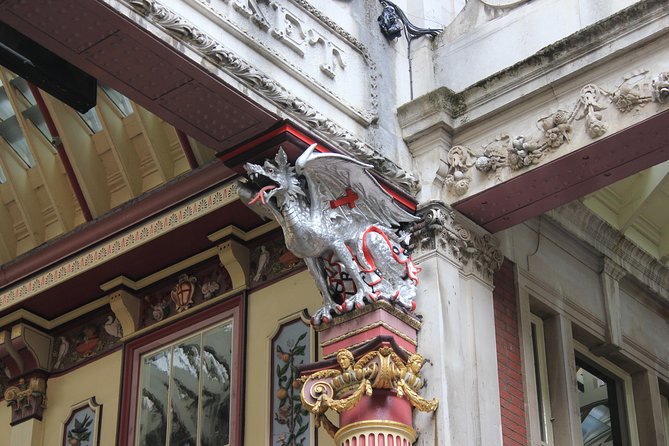
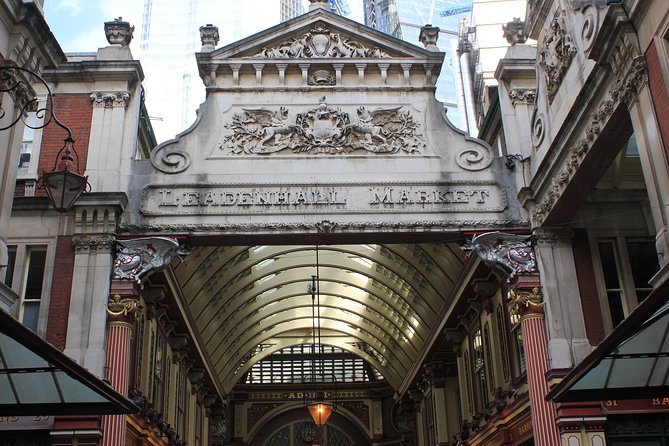
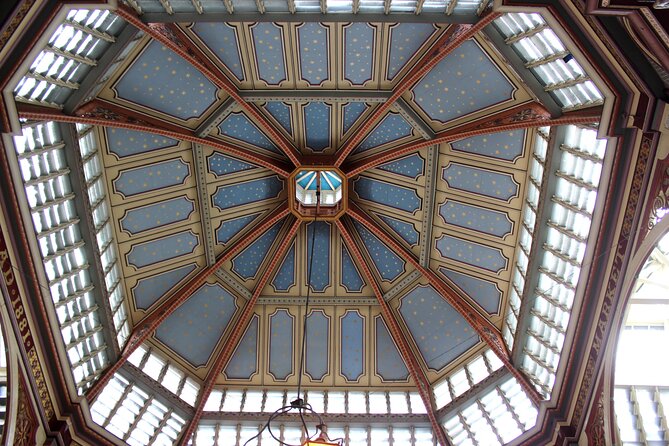
Leadenhall Market occupies the site associated with the Roman Forum of Londinium. Today, its Neo-Gothic ironwork and painted details create a grand covered arcade in crimson, green, gold, and silver.
The market takes its name from the lead-roofed hall that once occupied the site. The present design came from Victorian architect Sir Horace Jones, and the setting will be familiar to Harry Potter fans because it appeared in Harry Potter and the Philosopher’s Stone.
You have around 20 minutes to look around and hear how the market was used. That timing is practical. It lets you appreciate the roof and details without pretending that a short walking tour can cover every shop, food stall, and architectural feature.
If you are interested in photography, this is one of the strongest locations on the route. Look upward as well as down the central passage. The color and structure do most of the work.
London Bridge, Tower Bridge, and HMS Belfast
The route includes London Bridge and views across the River Thames. From this area, you can see the Tower of London, Tower Bridge, and HMS Belfast.
Your guide explains London Bridge’s long importance. For centuries, it was the only bridge across the Thames in London. The story reaches back to a Roman pontoon bridge and includes the popular claim that an 18th-century bridge helped reinforce the British habit of driving on the left.
The walk also brings in HMS Belfast, a former Royal Navy cruiser that served during the D-Day landings and the Korean War. It is part of the United Kingdom’s Historic Fleet, and the guide explains why.
This stop lasts about 10 minutes, so expect a viewing point rather than a full riverfront history lesson. The benefit is a broad orientation to the Thames and its landmarks. The drawback is that river views can feel short if you want plenty of time for photographs.
The Monument and London’s great rebuilding
The Monument to the Great Fire of London commemorates the disaster of 1666 and the rebuilding that followed under Charles II.
The story is more complicated than the nursery rhyme most people know. Your guide discusses why the fire spread, the conspiracy theories that grew around it, and the practical problems Sir Christopher Wren faced while trying to rebuild London.
You receive about 10 minutes here. That is enough for the main facts and a quick look at the column, but not enough to explore every argument about the fire. The real value is the connection between disaster and design. London’s streets, churches, and commercial center were shaped by what happened after the flames died out.
St. Magnus the Martyr and the old bridge
St. Magnus the Martyr was rebuilt after the Great Fire by master mason George Dowdeswell under Wren’s supervision. The church also appears in literary references, including Charles Dickens’s Oliver Twist.
The interior is known for its decorative detail, but the most unusual feature for this tour is the replica of old London Bridge. It helps you picture how crowded and difficult the former bridge was to cross.
The stop lasts around 20 minutes, giving you more time than at several outdoor viewpoints. I find this kind of stop especially useful because it turns an abstract story into something physical. Instead of simply hearing that the bridge was packed with buildings and traffic, you can see a model that gives the description scale.
The London Stone and Oxford Court
The London Stone is easy to miss. It is now protected behind glass, but it is regarded as London’s oldest surviving treasure. The stone was associated with the center of Roman Londinium, where proclamations and important public events took place.
Stories later connected it with King Arthur and Excalibur, as well as the belief that London’s prosperity depended on keeping it safe. The stone has attracted attention for at least 500 years, even though most people now walk past its display without realizing what it is.
This is exactly the kind of small discovery that justifies a guided walk. Without local direction, you could pass the site in seconds.
Oxford Court adds another less obvious layer. It marks the former site of St. Swithin’s Church and recalls the wife of Edmund Mortimer, daughter of the last Welsh Prince of Wales, Owain Glyndwr. Her story helps explain how London drew people from Wales and the other countries of the United Kingdom.
Mansion House, the Royal Exchange, and the Bank of England
Mansion House is the official home of the Lord Mayor of London. Its Georgian exterior is the main attraction here because the interior is not open to the public on this walk.
From nearby, you can view the Royal Exchange. Elizabeth I opened the building, which became one of the world’s oldest stock exchanges and one of the earliest shopping centers still in active use.
The Bank of England follows naturally. You have only about five minutes at this stop, but the guide uses the time for memorable stories about the bank’s gold vaults, including how the vault was accidentally broken into and how old and new security methods work together.
The buildings around Bank can look formal and intimidating. The guide’s job here is to translate finance into human stories: gold, markets, the Lord Mayor, and the machinery that manages Britain’s economy.
Ye Olde Watling and One New Change
Ye Olde Watling is a 17th-century pub built for workers involved in constructing nearby St. Paul’s Cathedral. It is also associated with Sir Christopher Wren, who may have used part of the building as a drawing room.
You do not receive a pub meal or dedicated dining stop as part of the experience. Instead, the building gives you a glimpse of the working world behind Wren’s grand cathedral.
At One New Change, you can reach a free roof terrace with views of St. Paul’s, The Shard, Tate Modern, Shakespeare’s Globe, and the Thames. The guide can take a group photograph here, and the 15-minute pause gives you a better chance to enjoy the view.
This is one of the route’s most practical stops. It provides a clean visual link between old and new London, and it is a good place to check your photos before the final stretch.
The College of Arms and film locations
The College of Arms is the oldest heraldic college in the world. Its 17th-century building is connected with genealogical research and the creation of coats of arms for new members of the British aristocracy.
The guide also explains the College’s connection with the James Bond film On Her Majesty’s Secret Service. Nearby streets have appeared in James Bond, Doctor Who, Mission Impossible, and Harry Potter productions.
Film fans will appreciate this section, but it is not only about movies. The College of Arms helps explain how Britain’s old systems of titles, family lines, and symbols continue to function.
You spend around 10 minutes here. That is enough to view the building and hear the key points, but not to conduct genealogical research or enter for an extended visit.
Ending outside St. Paul’s Cathedral
The final destination is St. Paul’s Cathedral, designed by Sir Christopher Wren. The tour ends outside, and admission is not included.
This finish is well chosen. After seeing Wren’s work in churches, ruins, markets, and rebuilding stories, you reach his greatest London landmark. You will have context for the cathedral before deciding if you want to return for the interior, crypt, galleries, or dome.
The tour does not provide time to explore inside. Think of the final stop as an introduction and a photo opportunity, not a cathedral visit. If St. Paul’s is high on your list, schedule a separate visit.
Price, group size, and practical value
The listed price is $171.09 per group of up to 15 people. That makes the value depend heavily on your group size. For 10 to 15 people, the per-person price can be quite reasonable for a private three-hour guide. For one or two people, it is a much more expensive way to see the City than joining a group walk.
The strongest part of the price is the personal attention. You are not simply paying for transportation or entry tickets. You are paying for someone to connect scattered places and answer your questions as you walk.
The tour is offered at several morning and afternoon departure times. The meeting point is central and easy to find, and hotel pickup can be requested. Confirmation arrives at booking, mobile tickets are accepted, and service animals are allowed.
Wear comfortable shoes and expect moderate physical effort. The exact route includes many short walking sections, pauses at outdoor sites, and a few places where you will want to stop for photos. Free cancellation is available until 24 hours before the start time. Changes or cancellations inside that period are not refunded.
Who should book this walk?
I would choose this experience for a first visit to London, especially if you want to understand the City before returning to its major attractions alone.
It suits families because the guide can adjust the explanation and keep the walk focused. It also works well for history fans, architecture enthusiasts, film-location hunters, and anyone who prefers a local guide to a large group.
You should think twice if your main goal is to enter the Tower of London or St. Paul’s Cathedral during the three hours. Neither admission is included, and the schedule is designed for exterior views and short visits.
The tour is also less suitable if you dislike walking or want a slow, unstructured morning. The route covers at least 16 landmarks, so the experience favors variety and connections over long visits at individual sites.
Should you book it?
Book it if you want a private introduction to London’s oldest commercial district, with famous landmarks balanced by small discoveries such as the London Stone, St. Dunstan in the East, and the replica at St. Magnus the Martyr.
The best value comes with a larger group, when the flat price is shared among several people. Bring good shoes, allow extra time after the tour for the Tower or St. Paul’s, and tell your guide what interests you most. Dewi’s flexible, humorous style is especially useful when you want more than a standard checklist of sights.
Skip it only if you need full interior access to the main attractions or prefer to explore at your own pace. For a concentrated three-hour orientation with a personal guide, this is a thoughtful way to get your bearings in the City of London.
FAQ
How long is the walking tour?
The tour lasts approximately three hours.
How many landmarks will I see?
The tour covers at least 16 London landmarks, including the Tower of London, London Bridge, St. Paul’s Cathedral, Leadenhall Market, the Bank of England, and the College of Arms.
Is this a private tour?
Yes. Only your group participates, and the group can include up to 15 people.
Where does the tour begin?
The meeting point is The Monument, at 18 Fish Street Hill, London EC3R 6DB.
Where does the tour finish?
The walk finishes outside St. Paul’s Cathedral, at St. Paul’s Churchyard, London EC4M 8AD.
Does the tour enter the Tower of London?
No. The Tower of London is explained from the outside, but entry is not part of the walk.
Is admission to St. Paul’s Cathedral included?
No. The tour ends outside St. Paul’s Cathedral, and admission is not included.
Are there morning and afternoon departures?
Yes. Multiple morning and afternoon departure times are offered.
Can I cancel for a refund?
Yes. You can cancel at least 24 hours before the local start time for a full refund. Cancellations or changes made less than 24 hours before the start are not accepted or refunded.
Just added around London
- Private The Beatles Taxi Tour in London★ 5.0 · 12 reviews
- Dinner and Jazz Cruise on the River Thames★ 4.0 · 140 reviews
- Airport Coach Service from Heathrow to Oxford★ 3.5 · 67 reviews
- The Alfred Hitchcock London Walk with Sandra Shevey★ 5.0 · 15 reviews
- Tower of London & 30+ London Sights Walking Tour★ 4.5 · 33 reviews
- Thames Beachcombing★ 4.5 · 100 reviews
- Ted Lasso London Taxi Tour★ 5.0 · 5 reviews
- Ted Lasso Tour of Richmond with Private Guide★ 5.0 · 25 reviews
City Tours, compared.



Liverpool City Sights Hop On Hop Off City Tour – 24hr Ticket
Read our review →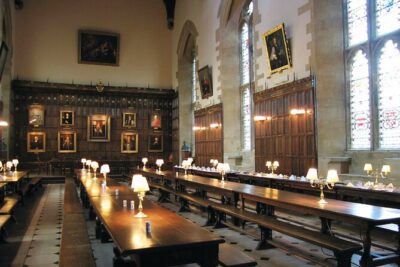
1.5-hour Oxford City and University Walking Tour
Read our review →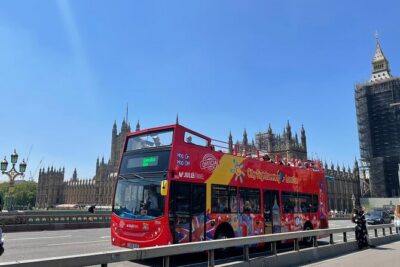
City Sightseeing London Hop-On Hop-Off Bus Tour & Bookable Extras
Read our review →

City Sightseeing Oxford Hop-On Hop-Off Bus Tour
Read our review →
Browse the lists this tour appears in