
Reviewed · BRIGHTON TOURS
Seven Sisters Tour
The best part of this private Seven Sisters tour is that it treats the cliffs as only one chapter of Sussex. You get the famous views at Seaford Head and Birling Gap, but also Devil’s Dyke, quiet villages, old churches, a 1,600-year-old yew, country pubs, and the mysterious Long Man of Wilmington.
I like the flexible pace and the local focus. Guide Colin is praised for being patient, friendly, and willing to adjust stops when the weather turns blustery. I also like the easy pickup from your Brighton hotel, Airbnb, or Brighton Station. The main drawback is the packed 4 to 6 hour schedule. You can see a lot, but optional walks, lunch, brewery stops, and tastings may require choices rather than a leisurely visit to everything.
Key points to know before booking
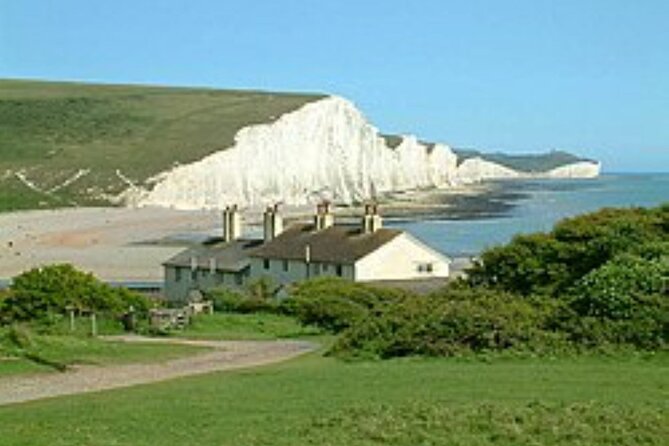
- Seven Sisters from the quieter Seaford side: Walk about 10 minutes to a classic view of the white cliffs, Coastguard Cottages, and Cuckmere Valley.
- A private day with Colin: Your group travels alone, with pickup, bottled water, light refreshments, WiFi, and an air-conditioned vehicle included.
- More than a cliff photo stop: Devil’s Dyke, village churches, old inns, a brewery, a vineyard, and the Long Man of Wilmington round out the day.
- Several optional walks: You can walk at Seaford Head, from Belle Tout Lighthouse to Birling Gap, and along Birling Gap beach.
- A strong choice for history fans: The route includes a Victorian attraction, a wartime cable hut, smugglers’ pubs, medieval churches, and ancient yew trees.
- Plan for changing weather: The tour requires good weather, and the open cliff paths can be windy even when Brighton feels calm.
Why this Seven Sisters tour is different
Many trips from Brighton focus on one cliff viewpoint, then hurry back. This tour uses the Seven Sisters as a starting point for a wider look at East Sussex. The day moves from high chalk ridges to the coast, then inland through small villages and the Cuckmere Valley.
That variety matters. If you only want a quick photograph of the cliffs, a shorter transfer may suit you better. If you want to understand the area’s geology, old villages, smuggling tales, churches, and rural life, this route gives you far more to work with.
The vehicle is private, so only your group takes part. That gives you room to ask questions, skip a stop, or spend more time at a view that catches your interest. Colin is the named guide, and the strongest praise centers on his care, humor, local stories, and attention to comfort.
The tour costs $205.67 per person. That is not a budget outing, but the price includes private transportation, pickup and drop-off within Brighton, a guide, bottled water, light refreshments, and WiFi. For a small group splitting the cost, the value is better than it first appears. Lunch, alcohol, and any paid food or drink at optional stops cost extra.
Other Brighton days people book alongside this one:
- SEA LIFE Brighton Admission Ticket
★ 4.0 · 468 reviews - Brighton Bar Crawl
★ 5.0 · 377 reviews - The Brighton story – walking tour
★ 5.0 · 251 reviews
Devil’s Dyke and the making of a chalk valley
The first major stop is Devil’s Dyke, a V-shaped dry valley about 100 metres deep. You walk around the top while hearing how this unusual feature formed and why it became a major Victorian attraction in the mid-1800s.
The valley was shaped by solifluction and river erosion during a very cold period more than 14,000 years ago. Snow covered the South Downs, and frozen chalk below the surface stopped meltwater from soaking into the ground. The wet upper soil slid downhill, while later river action helped finish the valley.
You do not need to be a geology expert to enjoy the stop. The point is that the broad Downland scenery has a physical story beneath it. Devil’s Dyke also gives you a useful introduction to the area’s long appeal as a place for fresh air, walking, and grand views.
The walk is around the top, so wear shoes with a good grip. The tour is not described as a strenuous hike, but this is open country, and weather can change quickly.
Seaford Beach and the shifting shingle
At Seaford Beach, the focus turns from chalk hills to coastal engineering. The beach is made of shingle, and those pebbles move along the shore through longshore drift. That natural movement has created a continuing challenge for the town.
Bulldozers and dumper trucks are used to redistribute the shingle, especially near the Terminal Groyne. The work helps maintain the beach as a sea defense and protects the town from erosion and flooding.
This is a short but useful stop because it shows that the coast is not fixed. The cliffs, beach, sea, and protective structures are all part of a changing system. You may find this less scenic than the main cliff viewpoints, but it adds practical context to what you are seeing.
Seaford Head for the classic Seven Sisters view
The main Seven Sisters viewpoint comes at Seaford Head Nature Reserve, managed by Sussex Wildlife Trust. From the parking area, the best viewpoint is about a 10-minute walk away, and the walk is optional.
This is the place for the familiar view of the Seven Sisters cliffs, the Coastguard Cottages, the Cuckmere River Valley, and the open mouth of the Cuckmere Estuary. It is one of the strongest photo stops on the route, especially if you want the cliffs arranged in a broad sweep rather than seen from directly below.
The reserve is also valuable for its plants, birds, and insects. It protects one of the last undeveloped river mouths on England’s south coast, so the stop is about conservation as well as scenery.
Give yourself time here if views and photography are your priority. The listed visit is about 45 minutes, which is enough for the short walk and photographs, but not for a long ramble through the reserve. Wind can also make the headland feel much colder than expected.
Nearby, Cable House 14 adds a curious piece of coastal history. Built in 1900, it served as a relay station for telegraph messages carried under the sea to France. During the Second World War, it was converted into a gun emplacement to help defend Cuckmere Haven from invasion.
Same country, a completely different day out:
- Fun, Flexible Treasure Hunt Around Brighton with Cryptic Clues & Hidden Gems
★ 5.0 · 154 reviews - City Sightseeing Brighton Hop-On Hop-Off Bus Tour
★ 4.5 · 152 reviews - The Hunt: Team Activity in Brighton, Sussex
★ 5.0 · 149 reviews - Handcrafted Donuts & Tea: Brighton’s Artisan Sweet Treat Tour
★ 5.0 · 127 reviews
Belle Tout Lighthouse and the walk to Birling Gap
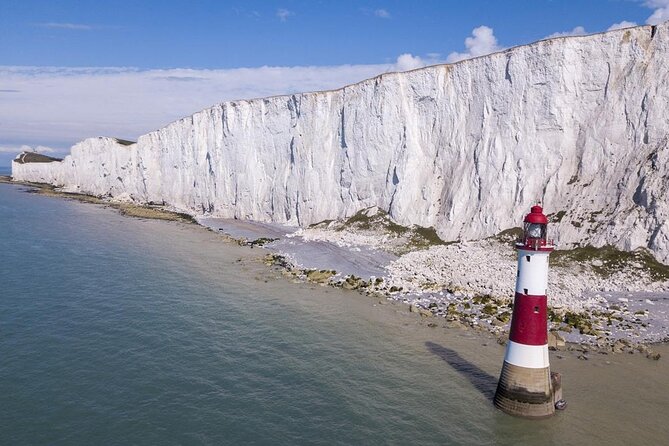
The drive continues along the coast road to Birling Gap, with a stop at Belle Tout Lighthouse Lookout. The lighthouse began operating in 1834, with two keepers working around the clock.
Its position was chosen so the light could be seen from 20 miles out at sea. The cliff edge would hide the light from ships that came too close to shore, but the site had a serious flaw: cloud often covered the lighthouse. It stopped operating in 1900, when Beachy Head Lighthouse took over its work.
The recommended walk from Belle Tout down along the cliffs to Birling Gap takes about 20 minutes and is optional. This is one of the most appealing active parts of the tour, but it needs sensible shoes and suitable weather. You can also remain with the vehicle if you prefer to save your legs for the beach.
The stop itself lasts about 25 minutes. If you choose the walk, be aware that the overall schedule becomes tighter. This is a good example of the tour’s flexibility, but also of its time limits.
Birling Gap from sea level

Birling Gap gives you a different view of the Seven Sisters. Instead of looking across at the cliffs from above, you see them from sea level and can walk along the beach for photographs.
The visitors centre offers a place to stop for a snack or drink. This can be a useful break after the headland walks, though the tour does not include lunch or alcohol.
The beach is made of stones and shingle, so comfortable footwear will make a difference. Check the time and listen to your guide before walking far along the shore. The listed stop is about 30 minutes, and the tide and walking pace can affect how much beach you can cover.
East Dean, the Tiger Inn, and a country lunch
East Dean is a Downland village centered on a village green, with a medieval church, war memorial, and the long-established Tiger Inn. The pub dates back to the 15th century and has links with local smugglers.
You can stop for a full country pub lunch or simply have a quick drink. Lunch is optional and not included, so ask about timing and menu choices when you plan your day. The inn serves ales, wines, and food, making it a natural place to pause between the coast and the inland villages.
The Tiger Inn is not just a convenient restaurant. Its age and setting help explain how village pubs worked as meeting places for farmers, soldiers, walkers, smugglers, and local residents. If you want a traditional pub experience, this is one of the most appealing choices on the route.
Long Man Brewery and Sussex sparkling wine
The tour can include an optional stop at Long Man Brewery, a local beer brewery with a cafe. This is a good addition for people who want a taste of modern Sussex food and drink, but it may not be the best use of time if your main aim is walking or church architecture.
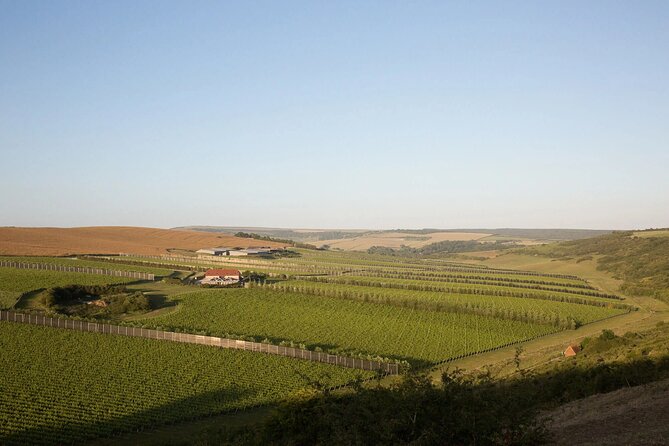
There is also an optional complimentary tasting at a cellar door shop producing English sparkling wine. The single-site Sussex vineyard sits on a south-facing slope in the South Downs, where the chalk soil, aspect, and local climate suit sparkling wine production.
These tastings are optional, and alcohol is not included in the tour. They work best for adults who enjoy local produce and do not mind giving up some sightseeing time. You should not expect to fit every optional stop into a short 4-hour version of the outing.
Wilmington’s ancient yew and the Long Man
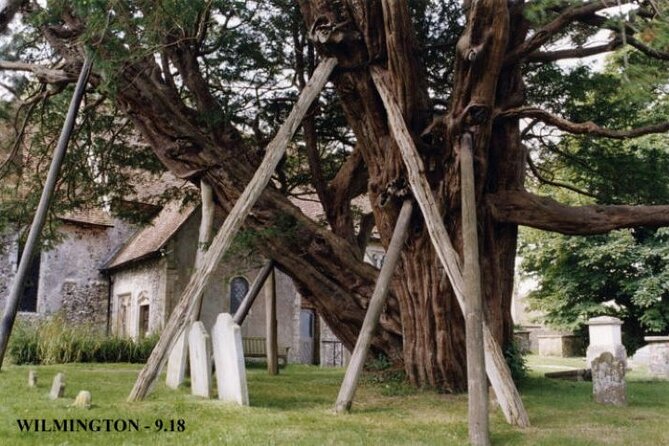
Wilmington is a Downland village with Saxon origins. At the church, you can see a yew tree estimated to be about 1,600 years old, with a trunk girth of roughly 23 feet.
The guide points out an important warning: the red yew berries are poisonous because of the seed inside. You should not eat them. The tree is a fine reminder that the oldest objects in Sussex are often living ones, not buildings or monuments.
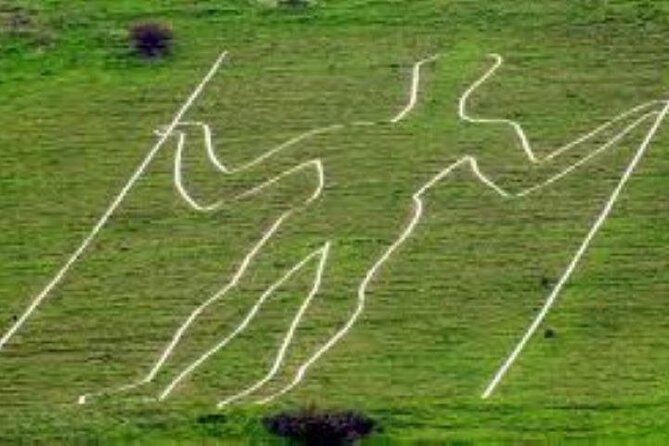
Above Wilmington, the Long Man of Wilmington is cut into the steep slopes of Windover Hill. The figure holds two staffs and has puzzled historians for centuries. It may be prehistoric, Roman, Anglo-Saxon, medieval, or even a later artistic work connected with Wilmington Priory.
You only have about five minutes at the Long Man itself, so this is mainly a quick viewing and explanation stop. The figure can be hard to make out from the ground, but its mystery gives the drive an extra touch of character.
Lullington and the smallest church stop
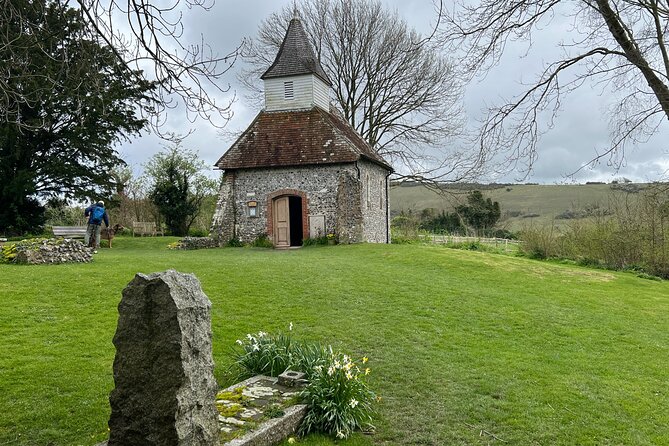
Lullington offers a quiet change of pace. Its tiny church dates back to the 13th century, although a larger church once occupied the site before fire destroyed it. The present building is described as one of the smallest churches in England and the smallest in Sussex.
The churchyard has views over the surrounding countryside, and the church is open daily. There is no parking at the church, but walking from Alfriston takes about 15 to 20 minutes. On this private tour, your guide handles the transport between stops, so you are not expected to make that walk unless you choose to explore on foot.
Allow about 15 minutes here. This stop suits you if you like small, atmospheric buildings more than grand monuments. It may feel too brief if you want to study the church in detail.
St Andrew’s, Alfriston, and the Cuckmere Valley
The Church of St Andrew was founded in the 1360s beside the Cuckmere River and near the Old Clergy House, the first National Trust property. Built largely as one project, it avoids the jumble of later additions found in many old parish churches.
Inside, the high arches and relatively few memorials create a spacious feel. The church has become known as the Cathedral of the South Downs, a large name for a building in a small village. Six bells sit below the spire, allowing ringers to work from the centre of the church, a rare arrangement in England.
Alfriston itself is a good place to slow down. The sightseeing stop lasts about 30 minutes, enough to look around the village and absorb its old streets without turning the visit into a long shopping break.
Much Ado Books is a particularly pleasant optional-feeling stop within the village visit. The two-floor shop sells new, vintage, antiquarian, and secondhand books. A former builders’ yard now includes a book-filled shepherd’s hut and a bower of bargain paperbacks.
The George Inn provides another link with the past. It was first licensed in 1397, while parts of the flint and half-timbered building date to about 1250. The oldest part of the inn has an inglenook fireplace, oak floors, and Sussex hop bines on the walls. Smugglers’ tunnels are said to lead from its cellars, and the pub serves food in its garden and heated terrace.
You can stop at The George for a quick look or a drink, but the tour does not include lunch or alcohol. With so many choices in and around Alfriston, ask Colin which stop best fits your interests and remaining time.
Timing, transport, and comfort
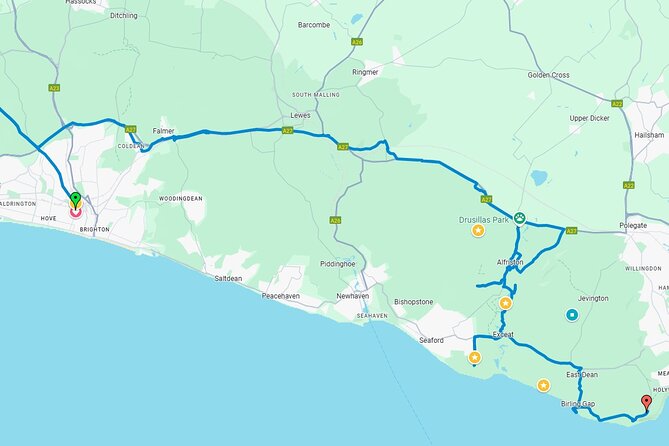
The advertised duration is approximately 4 to 6 hours, with a 9:30 a.m. start. That range is important. A short version can cover the main viewpoints and a few inland stops, while a longer day gives you more room for walks, lunch, books, beer, or wine.
Pickup and drop-off are offered at hotels and Airbnbs within Brighton. If you arrive from London by train, pickup can also be arranged at the train station. You can meet at your hotel reception or outside the entrance to Brighton Station.
The air-conditioned vehicle, bottled water, light refreshments, private transportation, and onboard WiFi make the long sequence of stops easier. Service animals are allowed, and most people can take part. Still, several stops involve uneven ground, beach stones, or cliff paths, so your comfort will depend on the walk you choose.
The tour is offered in English. Confirmation comes at booking, and free cancellation is available up to 24 hours before the start time. Poor weather can lead to a different date or a full refund, and the same applies if the minimum number of participants is not met.
Who should book this private Sussex outing?
I would choose this tour if you want variety without renting a car. It combines the major Seven Sisters views with smaller places that are awkward to reach by public transport, including Lullington, Wilmington, East Dean, and the rural churches.
It also suits a family or small group that values flexibility. Colin’s reported approach is patient and attentive, which matters when one person wants a walk, another wants a pub, and someone else mainly wants photographs.
You may want a different experience if you want a full-day coastal hike. This outing uses a vehicle between many short stops, and the walking sections are optional and limited. It is also not the cheapest way to see the cliffs if you only want one viewpoint.
Should you book the Seven Sisters Tour?
Book it if you want the famous chalk cliffs plus the quieter Sussex stories around them. The strongest parts are the Seaford Head view, the choice of walks at Belle Tout and Birling Gap, and the inland stops that reveal old churches, pubs, books, local drinks, and unusual monuments.
At $205.67 per person, the tour earns its price through private pickup, a dedicated guide, transport, and a broad route. To get the best value, decide in advance what matters most: cliff walks, village history, lunch, beer, wine, or photography. You cannot linger everywhere in a 4 to 6 hour window.
For a flexible private day with Colin, this is a strong way to see more of Sussex than the usual cliff stop allows.
FAQ
Where does the Seven Sisters tour start?
The tour begins at 9:30 a.m. Pickup is available from your hotel or Airbnb within Brighton, or you can meet outside the entrance to Brighton Station. Pickup from the train station can also be arranged for people arriving from London by train.
How long does the tour last?
The experience lasts approximately 4 to 6 hours. The exact pace depends on the stops and optional walks or food and drink breaks you choose.
Is the tour private?
Yes. This is a private activity, so only your group participates.
What is included in the price?
The price includes hotel or Airbnb pickup and drop-off within Brighton, a tour guide, an air-conditioned vehicle, private transportation, bottled water, light refreshments, and WiFi onboard.
Is lunch included?
No. Lunch and alcoholic drinks are not included. You can choose an optional lunch or drink at the Tiger Inn in East Dean, and there are optional stops at Long Man Brewery and a Sussex sparkling wine cellar door.
What happens if the weather is poor?
The experience requires good weather. If it is canceled because of poor weather, you can choose a different date or receive a full refund. You can also cancel for a full refund if you do so at least 24 hours before the start time.
Just added around Brighton
- Handcrafted Donuts & Tea: Brighton’s Artisan Sweet Treat Tour★ 5.0 · 127 reviews
- Sussex Birdwatching Private Guided Day Tour★ 5.0 · 13 reviews
- The Hunt: Team Activity in Brighton, Sussex★ 5.0 · 149 reviews
- Ultimate Shooting Taster Session in Brighton★ 5.0 · 33 reviews
- Stonehenge and Bath – Day Tour from Brighton★ 4.5 · 68 reviews
- The Brighton Food and Beer Walking Tour Min 8 people★ 5.0 · 8 reviews
- Skate + i360 Journey★ 5.0 · 6 reviews
- Sussex Vineyard & Winery Bus Tour on Iconic Vintage London Bus★ 4.5 · 89 reviews
Brighton Tours, compared.

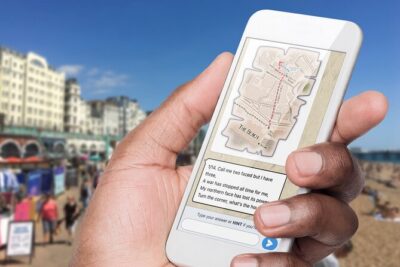
Fun, Flexible Treasure Hunt Around Brighton with Cryptic Clues & Hidden Gems
Read our review →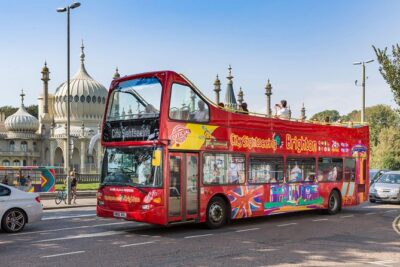
City Sightseeing Brighton Hop-On Hop-Off Bus Tour
Read our review →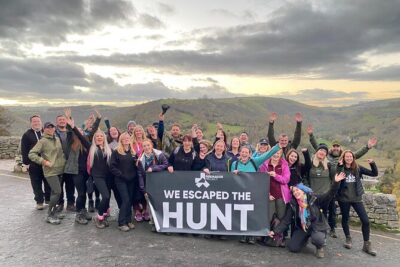

Handcrafted Donuts & Tea: Brighton’s Artisan Sweet Treat Tour
Read our review →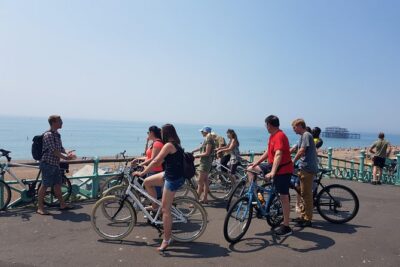
Browse the lists this tour appears in