

Reviewed · THAMES RIVER CRUISES
Shakespeare in the City Walk – In Shakespeare’s footsteps North of the Thames
Shakespeare’s London is not confined to the Globe. This lively two-hour walk follows the playwright through streets north of the Thames, from Blackfriars to Barbican, uncovering former homes, lost theatres, church links, family troubles, and monuments most visitors pass without noticing. Guide Declan, a former professional actor, adds full spoken performances to the history.
I like the small-group feel, with no more than 15 people per booking, and the way the route links real places to Shakespeare’s money, marriage, religion, children, and working life. I also like the value: $20.83 buys a guided walk, live entertainment, and a fresh view of central London. The main drawback is pace. Two hours on foot, in all weather, calls for decent shoes and moderate fitness.
Key points at a glance
- Actor-led storytelling: Declan performs complete speeches, including a haunting farewell from Shakespeare’s final play.
- A different central London: The walk avoids a standard Globe-focused route and explores Blackfriars, Cheapside, London Wall, and Barbican.
- Unusual sights: See a speech-inspired totem pole, a praying Shakespeare sculpture, old monastery remains, and a little-noticed Shakespeare statue.
- Useful start and finish: Meet outside Blackfriars Underground Station and finish at Barbican Underground Station, served by three Underground lines.
- Strong value: At $20.83 per person, the price is modest for a two-hour private-feeling experience with a specialist guide.
- Best for curious adults and older children: The recommended child age is 10 and above, and children must be with an adult.
Why this Shakespeare walk feels different
The appeal here is not simply seeing a plaque and hearing that Shakespeare once lived nearby. Declan builds a picture of the man behind the plays: a successful businessman, a husband who may have had mixed feelings about marriage, a father dealing with very different fortunes among his daughters, and a Londoner with links to churches, pubs, theatres, lawyers, actors, and royalty.
That makes the walk useful even if you are not a Shakespeare expert. You get literary context, but you also get a street-level look at London. The route asks where Shakespeare slept, prayed, drank, worked, raised his family, and built his reputation.
The live performance matters. A speech on a page can feel remote. Hearing Declan, who worked as a professional actor, deliver complete passages gives the words a human rhythm. The tour ends with a beautiful passage about farewell, which gives the final stretch a clear emotional shape rather than simply stopping at the last historical fact.
More Thames River Cruises in London:
- High-Speed Thames River Speedboat in London
★ 5.0 · 3,971 reviews - London Tootbus Hop on Hop off Bus Tour and Thames River Cruise
★ 4.0 · 3,834 reviews - Westminster to Greenwich Sightseeing Thames Cruise in London
★ 4.5 · 2,969 reviews
Meeting Declan at Blackfriars
Your meeting point is outside Blackfriars Underground Station at 11:00 a.m. Use the station on the Circle and District lines. The instructions are important: do not go south of the river to Blackfriars Overground Station. The correct meeting point is at the Underground station, which has one exit, and Declan will be nearby with a rucksack sign showing Shakespeare’s face.
This is a practical start for a central London walk, but give yourself enough time to check the station name. Blackfriars has two separate rail and Underground locations, and arriving at the wrong one could create a rushed beginning.
From there, the route heads east and north through the City. The end point is Barbican Underground Station, on the Circle, Metropolitan, and Hammersmith & City lines. You do not need to return to Blackfriars after the walk, which is handy if you plan to continue sightseeing in the City or head elsewhere by Tube.
Blackfriars and the theatre Shakespeare knew
The opening stops set up Shakespeare’s place in London. A Shakespeare statue that many people miss provides a chance to consider his popularity and the conspiracy theories surrounding his authorship. The emphasis here is sensible: enjoy the plays, but do not let speculation overwhelm the documented life and work.
You then visit a church connected with the original Blackfriars Theatre. The story explains why attending a performance there was expensive and why the audience would have been more exclusive than the crowds at an open-air playhouse. It also turns toward Shakespeare’s own finances, showing how successful he became.
At Ireland Yard, you see the remaining fragment of the Blackfriars Monastery. This is a small physical remnant, not a grand monument, so its value comes from the explanation around it. Declan connects the setting with themes that return in Shakespeare’s writing, giving you a reason to pay attention to a fragment that could otherwise look easy to miss.
Carter Lane provides a quieter change of mood. It links Shakespeare with King James and gives the group a calmer place to listen. The contrast is useful: this is not a march from one major landmark to another. Much of the pleasure comes from small corners where the connection only becomes clear once someone points it out.
A former Shakespeare home and a praying sculpture
At Saint Andrew’s Hill, the walk brings together several threads. You hear about the site of a Shakespeare house in London and what happened to it. The location is also tied to a play believed to have been written there, which gives the stop a direct link between a physical address and the work itself.
A nearby church contains a hidden sculpture of Shakespeare praying. The tour also introduces an important document and the researcher connected with it, along with the area’s links to Richard III. This is one of the more layered sections of the route, so people who enjoy documentary clues and historical detective work will get the most from it.
The drawback is that some stops depend on careful listening rather than dramatic scenery. If you want famous buildings and big views every few minutes, this may feel understated. If you like the idea of finding meaning in a church detail or an old address, it is exactly the kind of stop that makes the walk worthwhile.
A few more London trips to weigh up
- Tour for Muggles The Ultimate Harry Potter Walking Tour in London
★ 5.0 · 4,684 reviews - London Jack The Ripper Guided Walking Tour
★ 5.0 · 3,131 reviews - Changing of the Guard Guided Walking Tour in London
★ 5.0 · 1,793 reviews - The Great British Rock and Roll Walking Tour
★ 5.0 · 1,371 reviews
The strange totem pole on Queen Victoria Street
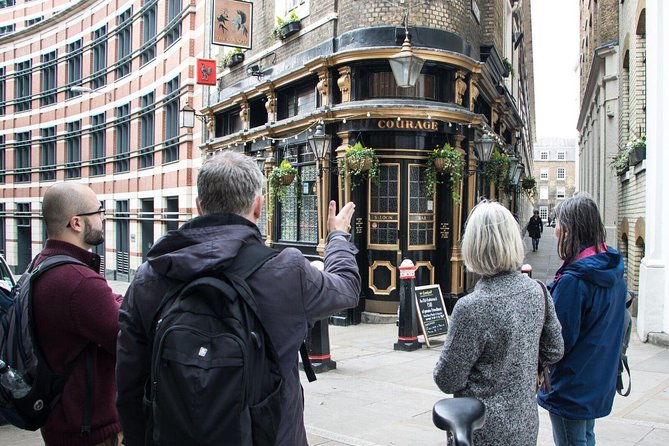
One of the route’s most unusual sights comes on Queen Victoria Street. Here you find a totem pole made from a famous speech by Shakespeare. It is the sort of odd monument you would almost certainly walk past without understanding, and it gives the tour a welcome burst of visual surprise.
Declan performs the entire speech at this point. That is a major reason to choose this walk instead of reading about the same place on a phone. The performance turns an unconventional public artwork into a moment of theatre.
The next stop brings you to the College of Arms and Shakespeare’s family coat of arms. Declan explains why the honour arrived two months too late, adds a joke by Ben Jonson at Shakespeare’s expense, and brings in details about Shakespeare’s children. The focus shifts from the famous writer to the family’s social ambitions and personal story.
Plaques, daughters, and the clues left behind

At another point on Carter Lane, a plaque opens up the subject of Shakespeare’s generosity. The stop also makes a good case for looking again at dusty attics and overlooked records. Old documents can change how we understand a person, especially when the surviving evidence is scattered across churches, homes, and family papers.
The discussion of Shakespeare’s two daughters is particularly useful because it avoids treating the family as a single footnote. Their fortunes were very different, and the contrast adds a personal scale to a man usually discussed through plays and quotations.
This portion of the walk helps balance the public Shakespeare with the private one. You are not only following literary fame. You are also following property, family ties, money, and the choices that shaped his later life.
St Paul’s Cathedral without going inside
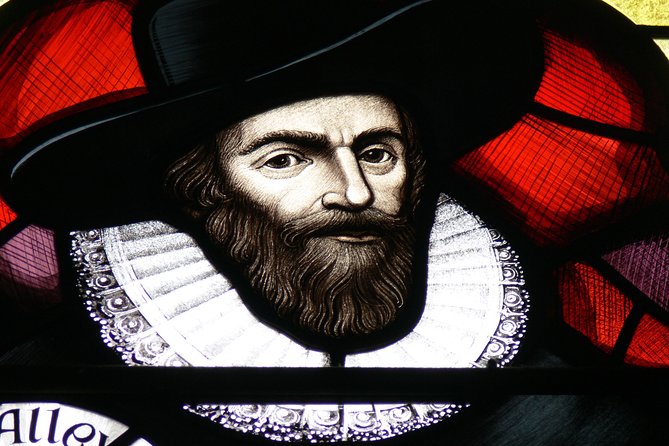
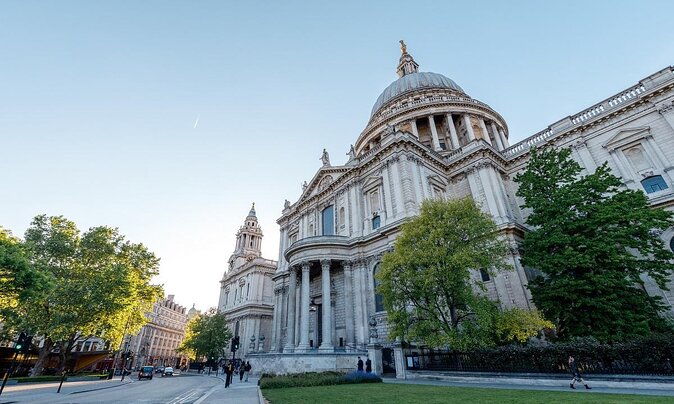
The route then reaches St Paul’s Cathedral. You do not go inside, so do not book this expecting a cathedral visit or interior tour. The stop instead uses the magnificent exterior as a setting for a striking revelation about Shakespeare, along with discussion of his best-selling work, his sonnets, and a careful interpretation of his sexuality.
That last subject is handled as interpretation rather than simple certainty, which is the right approach for a historical figure whose private life cannot be fully recovered. The talk also turns to four cosmic words from Shakespeare that Declan particularly loves. The exact power of the moment depends on hearing the words in context, but the theme fits the tour’s larger interest in Shakespeare’s sense of mortality, time, and the universe.
St Paul’s is also a useful landmark for orientation. It gives the route a grand visual pause before the walk moves back into tighter City streets.
Cheapside, Shakespeare’s vocabulary, and the pub connection
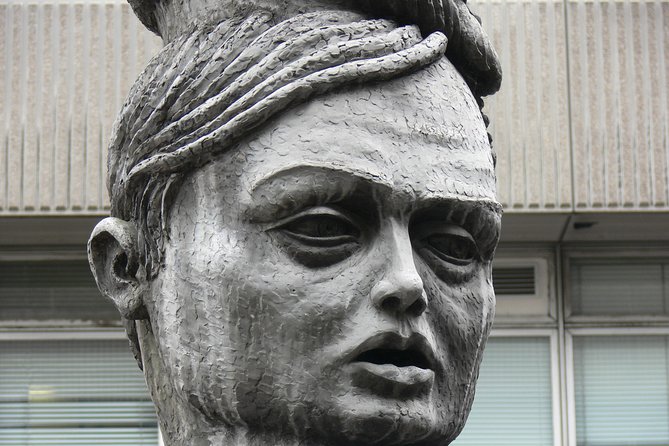
At Cheapside, Declan looks at Shakespeare’s remarkable vocabulary and the limits of vocabulary alone. The point is not simply that Shakespeare used many words. It is that word choice, structure, performance, and the needs of an audience all matter.
You also learn about a pub where Shakespeare drank and who else drank there. This is the sort of ordinary detail that makes the past easier to picture. A famous writer becomes a person with regular places, social habits, and connections to other London figures.
The discussion then turns to Shakespeare’s religion and the idea that he may have been lonely and reclusive. Again, this is not a simple portrait of a cheerful public celebrity. The route keeps asking you to consider the private man behind the public success.
Love Lane and the men who preserved the plays
Love Lane brings a bust of Shakespeare and the men who honoured him. Their work matters because, without it, some of the plays we know today would not have survived in the same form. Declan also discusses Shakespeare’s writing style and the ways his work was shaped for performance.
The location has a playful trap. Do not get too starry-eyed about the name Love Lane. The tour uses the street name to add humour, but the stop is really about memory, preservation, and the people who helped secure Shakespeare’s place in the theatre canon.
This is another good example of the route’s method. You get a physical object, a local name, a literary question, and a joke in one short stop. The walk rarely lingers long enough for the subject to become heavy.
London Wall and the marriage story
At London Wall, you hear about Shakespeare’s second house and why he ended up in this part of the City. The story then turns to his marriage, including how he made the match and later regretted it.
This is the kind of material that may appeal most to people who want a less polished portrait. Shakespeare is not presented only as a genius whose life unfolded neatly around his art. His domestic decisions, property choices, and personal tensions all form part of the story.
Because the walk covers several subjects quickly, you may want to note down names or ideas that you would like to explore later. The format gives you a broad picture rather than a long lecture on any single document.
St Giles Cripplegate and a farewell from the stage
The final historical stop is St Giles Cripplegate, a church Shakespeare knew. Here the tour brings in two of the best-known actors of his age and the sad story of Shakespeare’s brother Edmund.
Declan then performs another complete passage, this time from Shakespeare’s last play. The speech concerns saying goodbye, making it a fitting close to a route about memory, disappearance, and the surviving traces of a life.
Afterward, Declan walks with the group toward Barbican Underground Station for anyone who wants to accompany him. This is a considerate finish because it helps you reach the transport system rather than leaving you to find the station alone.
Price, pace, and practical value
At $20.83 per person, the tour offers solid value if you care about Shakespeare, London history, or guided storytelling. You are paying for about two hours with a professional guide, live performances, and a route that includes places you would not easily connect by yourself.
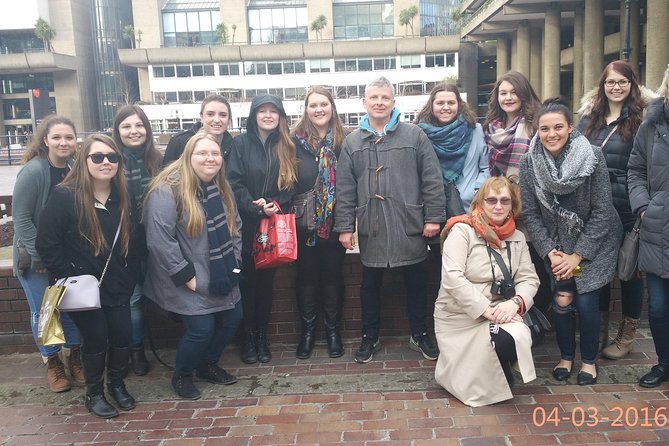
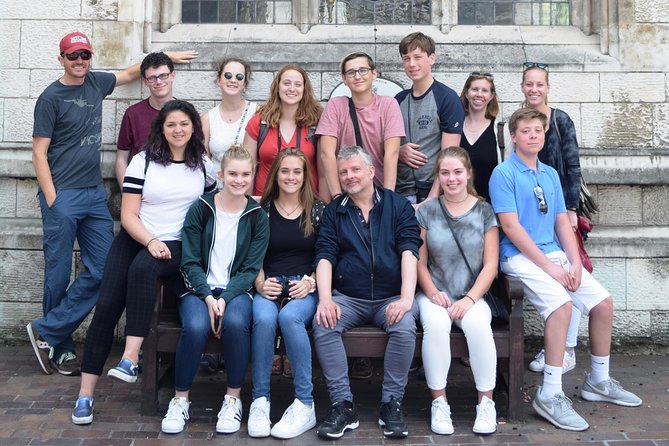
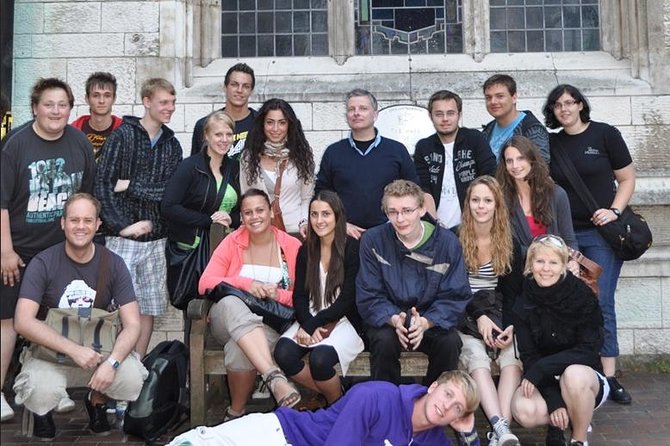
The maximum is 15 people per booking, while the activity can operate with up to 45 people overall. Ask about the group arrangement if keeping the experience especially intimate matters to you. A smaller group makes it easier to hear performances and ask questions, while a larger overall departure could feel less personal.
The walk operates in all weather. Wear shoes suited to two hours on foot and bring clothing for rain, wind, or sun. The stated fitness level is moderate, and children must be accompanied by an adult. The recommended age is 10 and above, which makes sense given the literary subjects, walking pace, and discussion of adult relationships and sexuality.
A mobile ticket keeps the arrival simple. Confirmation is provided when you book, and free cancellation is available until 24 hours before the start time. After that cutoff, refunds and changes are not accepted.
Who should book this walk?
I would choose this for a Shakespeare fan who has already seen the obvious London sights and wants something more local and specific. It also suits a first-time visitor who enjoys guided walks that connect streets to people rather than simply ticking off landmarks.
The route is a good match for:
- Readers, theatre fans, and students of literature
- London residents who want a fresh City walk
- Families with older children aged 10 and above
- Visitors who enjoy unusual monuments and overlooked historical traces
- Anyone who values live storytelling over a standard audio guide
I would be more cautious if you want to go inside St Paul’s, visit the Globe, sit down often, or focus mainly on grand architecture. This is a walking-and-speaking experience. The best parts come from Declan’s explanations and performances, not from collecting admission tickets.
Should you book Shakespeare in the City Walk?
Book it if you want Shakespeare connected to real London streets, family decisions, churches, money, pubs, actors, and final farewells. The route is specific, the price is modest, and Declan’s former acting career adds something a standard history walk cannot easily provide.
Skip it if your main goal is a performance inside a theatre or a slow architectural tour. For everyone else, this is a smart way to spend two hours north of the Thames, especially if you are happy to walk in uncertain weather and listen closely at modest-looking sites.
FAQ
Where does the Shakespeare in the City Walk start?
It starts outside Blackfriars Underground Station in London at 11:00 a.m. Use the Underground station on the Circle and District lines, not Blackfriars Overground Station south of the river.
Where does the walk finish?
The walk finishes at Barbican Underground Station on Aldersgate Street. Barbican is served by the Circle, Metropolitan, and Hammersmith & City lines.
How long does the tour last?
The walk lasts approximately two hours.
Who guides the experience?
The guide is Declan, a former professional actor who provides the walking commentary and performs complete Shakespeare speeches during the route.
Is the tour suitable for children?
Children must be accompanied by an adult. The recommended age is 10 and above.
Does the tour operate in bad weather?
Yes. The walk operates in all weather conditions, so you should dress appropriately.
Can I cancel for a full refund?
Yes, if you cancel at least 24 hours before the experience start time. Cancellations or changes made less than 24 hours before the start time are not refunded or accepted.
Just added around London
- Private The Beatles Taxi Tour in London★ 5.0 · 12 reviews
- Dinner and Jazz Cruise on the River Thames★ 4.0 · 140 reviews
- Airport Coach Service from Heathrow to Oxford★ 3.5 · 67 reviews
- The Alfred Hitchcock London Walk with Sandra Shevey★ 5.0 · 15 reviews
- Tower of London & 30+ London Sights Walking Tour★ 4.5 · 33 reviews
- Thames Beachcombing★ 4.5 · 100 reviews
- Ted Lasso London Taxi Tour★ 5.0 · 5 reviews
- Ted Lasso Tour of Richmond with Private Guide★ 5.0 · 25 reviews
Thames River Cruises, compared.
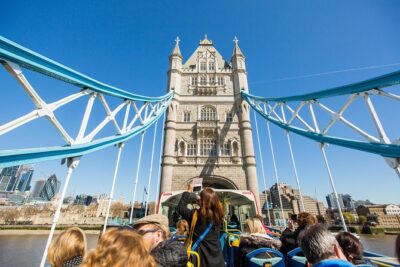
London Tootbus Hop on Hop off Bus Tour and Thames River Cruise
Read our review →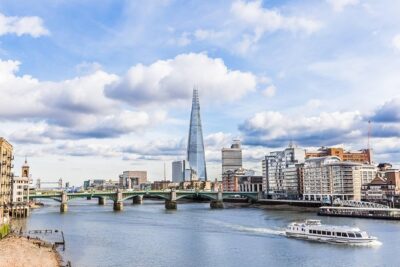
Westminster to Greenwich Sightseeing Thames Cruise in London
Read our review →

Uber Boat – Single Journey River Thames Cruise
Read our review →
Hop-On Hop-Off Sightseeing River Cruise on the Thames
Read our review →
Lunch River Cruise on the Thames with 2-Course Meal
Read our review →
Browse the lists this tour appears in