
Reviewed · WORKSHOPS
Silver Ring Workshop in Kent, England
Making a ring from a plain strip of silver is the clever part of this Canterbury experience. In about three hours, Annie guides you through sawing, stamping, torch work, forging, soldering, filing, and polishing until you leave wearing something made by your own hands. The workshop takes place in a private studio at 76 Castle Street, not in a large class with strangers.
I like the one-to-one teaching and the clear, practical pace. Annie demonstrates each stage on her own piece, then lets you repeat it on yours. I also like the personal choices built into a simple design: you can add texture, pattern, or stamps, so the finished ring feels like yours rather than a standard craft project.
The main consideration is the extra materials charge. The advertised price is $131.95 per person, but silver is billed separately at roughly $10 to $30 per ring, depending on weight. Designs are for beginners, so signet rings and elaborate styles are not part of the session.
Key points to know before booking
- You make the ring yourself: Annie guides you, but you handle the main tools and techniques.
- The session is private: One person or two people share the workshop, making it a good choice for couples, friends, or a special gift.
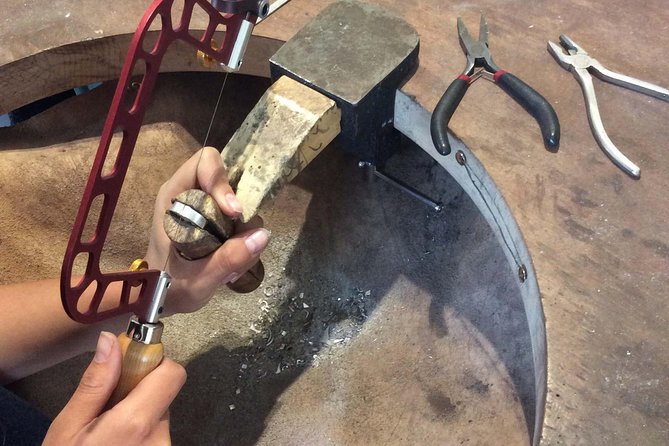
- The process is hands-on: You saw, texture, anneal, forge, solder, file, buff, and polish the silver.
- Simple designs work best: You can personalize the surface, but signet rings are not offered in this beginners class.
- Budget for silver separately: Materials cost an additional $10 to $30 per ring, based on the finished weight.
- The location is easy to fit into a Canterbury visit: The studio is near public transport and a multistory car park, with sessions running Thursday through Saturday from 10 a.m. to 1 p.m.
Starting at 10 a.m. on Castle Street
Your morning begins at 76 Castle Street, Canterbury, where the workshop ends as well. The studio is in a gallery inside an old building, giving the activity a more personal setting than a commercial craft center. It is also close to a multistory car park and public transport, which matters if you are fitting this around a day in Canterbury.
Sessions run Thursday through Saturday from 10 a.m. to 1 p.m. The published duration is about three hours, though sessions for one or two people can last between two and three hours. I would keep the rest of your morning flexible. The final polishing stage may be quick, but you do not want to rush a project that you have paid to make and take home.
Annie begins by discussing basic ring designs and measuring your finger. This early talk is useful because a ring has to be comfortable as well as attractive. You are not simply picking a finished style from a menu. You are deciding how plain or marked you want the surface to be within the limits of a first-time project.
You receive an apron and a drink before sitting at the workbench. Coffee and tea are included, a small touch that helps the session feel like a relaxed private lesson rather than a timed production line.
A few more England trips to weigh up
- Surf Lesson
★ 5.0 · 349 reviews - London Traditional English Scone Making and Tea Workshop
★ 5.0 · 271 reviews - Beginner Surf Lesson in Newquay, Cornwall
★ 5.0 · 215 reviews
From flat silver to a personal design
The first working stage is sawing the silver to length. This sounds simple, but it is the point where your ring begins to take shape. The length must relate to your finger measurement, and you will work under Annie’s direction rather than guessing.
Next comes the decorative part. You can pattern, texture, or stamp the silver to give it a personal mark. This is where two simple rings can become very different. One person might prefer a quiet, smooth band, while another may want a more visible surface pattern or stamped detail.
The workshop keeps the designs manageable for beginners. That is a strength, not a weakness. A complicated ring could leave you watching the instructor do most of the work. Here, the limits help you finish a wearable piece within the session.
You should not book this expecting to produce a large signet ring or a highly detailed piece with several components. The appeal is the direct transformation from a small piece of metal into a clean, personal band. If your ideal ring needs stones, a raised face, or complex construction, this class will feel too basic.
Learning why the torch matters
Before the silver can be shaped, it needs to be annealed. Annie explains why the metal must be softened during the process and teaches you how to use the torch. This is one of the more interesting parts of the class because you are not just following a craft recipe. You learn how heat changes the material and why that makes the next stage possible.
Using a torch may sound intimidating if you have never worked with metal. Annie’s method is built around demonstration, then repetition. She shows the action on her own piece, explains what is happening, and lets you try it on your ring.
That teaching style is especially helpful if you are nervous about making a mistake. The point is not to hand you tools and hope for the best. You get an explanation of each step, along with patient guidance when your first attempt needs correcting.
Left-handed participants are accommodated. One person found it easier to move to Annie’s workbench for one process, and the adjustment was handled without fuss. That is worth noting if you usually struggle in workshops designed around right-handed demonstrations.
Forging the band into shape
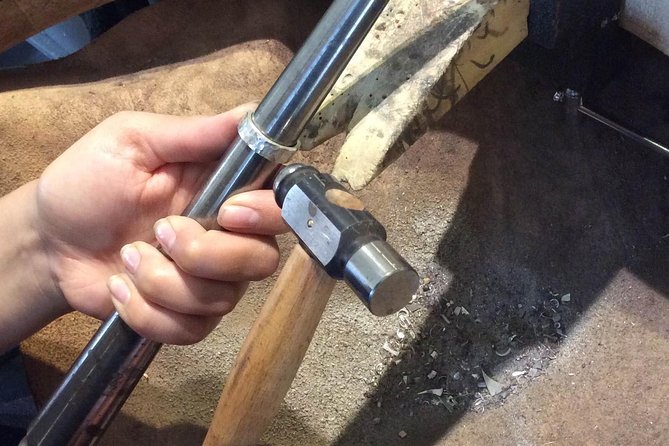
Once the silver has been annealed, you forge it into a ring shape. You then saw it to the correct size so the ends meet properly for soldering. This is a physical stage, but the supplied information does not suggest a strenuous activity. Most people can participate, and service animals are allowed.
Forging is also where the strip begins to look like jewelry instead of raw material. You can see the form changing under your hands, which gives the workshop its strongest sense of progress. The ring is still rough at this point, but the basic object is now clear.
The process rewards patience. You are working toward a small object, and small errors can show clearly on a narrow band. Annie’s role is to keep the work safe and help you make decisions without taking over.
For couples, this stage can carry extra meaning. People have used the workshop to make rings for anniversaries and even wedding rings. The simple format suits a shared project because both people can work through the same stages while still producing different results.
Same country, a completely different day out:
- Stonehenge, Windsor Castle, and Bath from London
★ 4.5 · 18,662 reviews - London Big Bus Hop-On Hop-Off Tour with Optional River Cruise
★ 3.5 · 10,803 reviews - London Small Group Tour of Historical Pubs
★ 5.0 · 10,422 reviews - Beatles Magical Mystery Tour
★ 5.0 · 9,266 reviews
Soldering the join
With the ring shaped and sized, it is ready to be soldered. Annie explains how the join works, then you use the torch to connect the two ends. This is the stage that turns a curved strip into a continuous ring.
Soldering is a real jewelry-making skill, not just a decorative extra. The join must be cleaned and finished later, so the session gives you a useful glimpse of the precision behind handmade silver work.
You should expect Annie to provide close help here. Torch work requires care, and a first attempt may not look perfect before the filing stage. That is normal. The workshop is structured so the rough parts can be cleaned up rather than treated as final flaws.
The experience is not a demonstration where the artisan quietly makes your ring while you watch. You use the torch yourself, under instruction. That matters when you are weighing the price. You are paying for studio time, materials, guidance, and a finished piece, but also for the chance to learn a process you can remember long after the ring is on your finger.
Filing, buffing, and the satisfying final polish
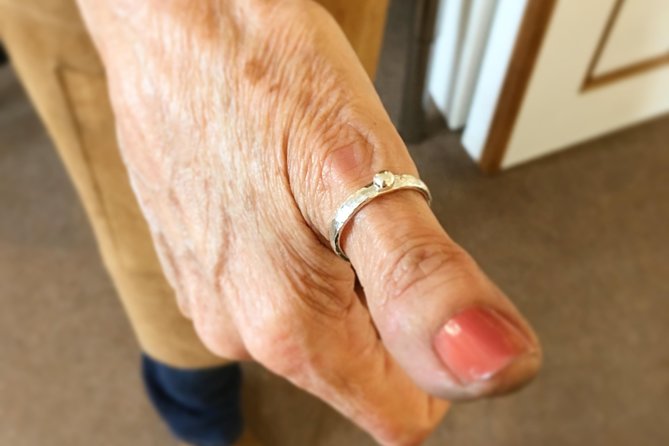
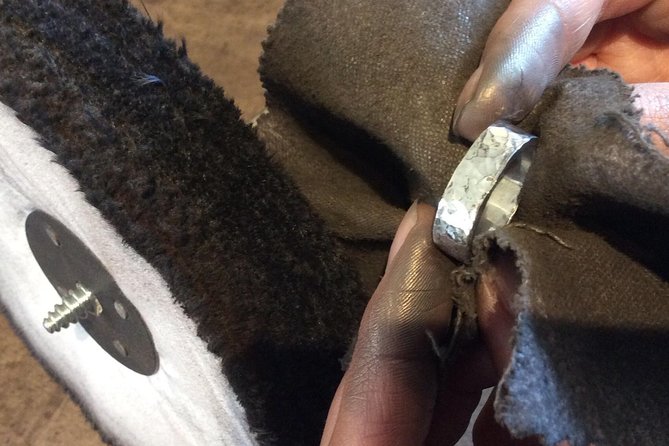
After soldering, you use metal files to clean the join. You buff away scratches and polish the whole ring until it is ready to wear. This final stretch may be less dramatic than the torch, but it has a big effect on the finished piece.
A dull, marked band gradually becomes bright and smooth. The change is easy to appreciate because you have seen every stage. You started with a rough strip and end with a ring that looks like a piece of jewelry rather than a workshop exercise.
The final polish also helps explain why handmade jewelry costs what it does. There are many small stages between raw metal and finished silver, and several require time and care. Even a plain band involves measuring, cutting, surface work, heat, shaping, joining, filing, and polishing.
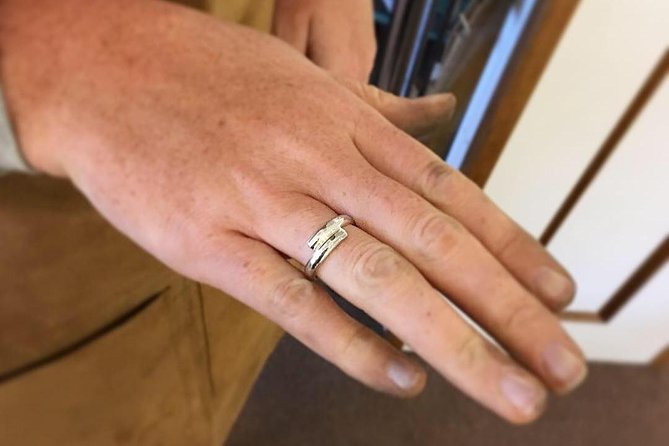
You take the completed ring home and wear it immediately. That makes this a stronger souvenir than something bought from a shop. Its value is not only the silver. It carries the memory of the morning and the knowledge that you made the object yourself.
Annie’s teaching style and the private format
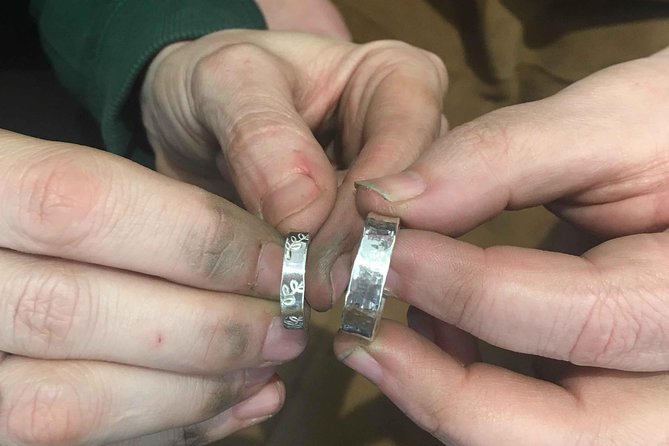
Annie is the main reason this workshop works so well for beginners. She gives clear instructions, demonstrates each technique, answers questions, and allows time for you to work through the steps. Her manner is patient and encouraging without making the class feel childish.
The private setup is important. Only your group participates, and the session is intended for one or two people. You can ask questions freely, pause when a technique feels unfamiliar, and make choices about texture or stamping without competing for attention.
For two people, the format works well as a birthday gift, anniversary activity, Christmas present, or couple’s project. You can make rings for each other, matching bands, or two designs that suit your separate tastes. For one person, it offers a quiet way to focus on a creative task during a Canterbury visit.
The tradeoff is that this is not a lively group class. If you enjoy meeting a roomful of people and comparing projects, the private format may feel too contained. The reward is much more direct help and more control over your own piece.
What the $131.95 price really covers
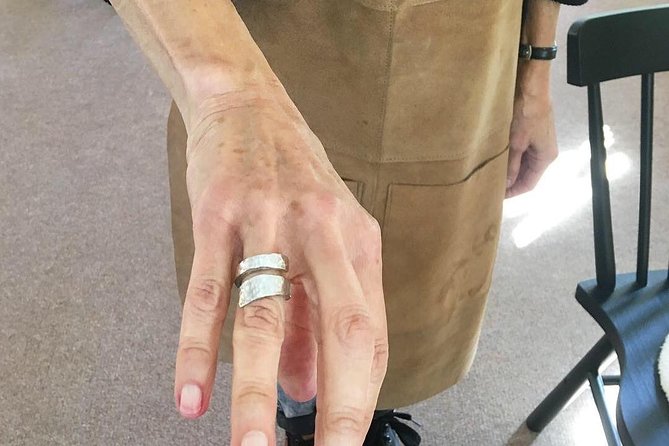
The experience costs $131.95 per person. Coffee or tea, an apron, instruction, and the workshop itself are included. Silver is not included, with an additional charge of about $10 to $30 per ring based on the final weight.
That puts the likely total at roughly $141.95 to $161.95 per person. The exact materials bill depends on how much silver your ring uses, so it is sensible to treat the extra charge as part of the real cost rather than an optional surprise.
The price is not the cheapest way to buy a silver band. It can be good value if you want a private lesson, a finished piece, and a memorable activity in one package. It is less appealing if you only want a low-cost souvenir or prefer a complex design that the beginners format cannot provide.
The workshop also gives you context for handmade jewelry prices. One participant commissioned another piece from Annie after seeing how much handwork went into a ring. You may come away with a better sense of why a small silver object can require several hours of skilled labor.
Planning your Canterbury morning
Book ahead if your dates are fixed. The activity is often reserved around 80 days in advance, and sessions are limited to Thursday, Friday, and Saturday mornings. Confirmation is sent within 48 hours, subject to availability.
The meeting point is central enough to pair with other time in Canterbury, but the workshop itself takes most of a morning. I would avoid scheduling a tightly timed attraction immediately afterward. You need time to reach the studio, settle in, work carefully, and finish the ring.
The location is near public transport and a multistory car park. Most people can participate, and service animals are permitted. Specific physical requirements are not provided, so contact the operator if you have concerns about using workshop tools or standing and working at a bench.
Free cancellation is available if you cancel at least 24 hours before the start time. Cancellations or changes made within 24 hours are not accepted for a refund, with cut-off times based on local time.
Who will enjoy this ring-making class
I would choose this for someone who likes making things, wants a personal memento, or prefers an activity with a clear result. It works particularly well for couples, siblings, close friends, and anyone looking for a thoughtful gift.
It also suits a first visit to Canterbury when you want more than sightseeing. The class gives you an activity to remember, and the finished ring keeps that memory close. It can even suit a solo visitor, since the private setting gives you Annie’s full attention.
I would think twice if you need a highly elaborate design, dislike hand tools, or want a large social class. Beginners are welcome, but the experience still asks you to participate. You will not simply point to a style and wait for it to appear.
Should you book the Canterbury silver ring workshop?
Book it if you want to learn a genuine craft process and leave with a simple ring you can wear. Annie’s patient demonstrations, the private format, and the chance to use the tools yourself make the experience feel personal rather than staged.
Before paying, remember the extra silver charge and the design limits. For the right person, the total cost buys far more than a ring. It buys a morning of making, a lesson in basic silversmithing, and a small piece of Canterbury that you created yourself.
FAQ
Where does the silver ring workshop take place?
The workshop starts and finishes at 76 Castle Street, Canterbury, CT1 2QD, UK.
How long does the workshop last?
Sessions for one or two people last between two and three hours. The scheduled session runs from 10 a.m. to 1 p.m.
What days is the workshop available?
The workshop is offered Thursday through Saturday, from 10 a.m. to 1 p.m.
Is the workshop private?
Yes. This is a private activity, and only your group participates.
Is the silver included in the price?
No. Materials cost an additional $10 to $30 per ring, depending on the finished weight. The minimum charge for a basic ring is $10.
What techniques will I learn?
You will learn to saw the silver, create texture or stamped details, anneal the metal, use a torch, forge the ring into shape, solder the join, file it, buff scratches, and polish the finished piece.
Can I make a signet ring?
No. This is a beginners workshop, so ring designs are kept simple and signet rings are not offered.
Can I cancel for a full refund?
Yes, if you cancel at least 24 hours before the experience start time. Cancellations or changes made less than 24 hours before the start time are not accepted for a refund.
Just added around England
- Private The Beatles Taxi Tour in London★ 5.0 · 12 reviews
- Dinner and Jazz Cruise on the River Thames★ 4.0 · 140 reviews
- Airport Coach Service from Heathrow to Oxford★ 3.5 · 67 reviews
- The Alfred Hitchcock London Walk with Sandra Shevey★ 5.0 · 15 reviews
- Tower of London & 30+ London Sights Walking Tour★ 4.5 · 33 reviews
- Thames Beachcombing★ 4.5 · 100 reviews
- Ted Lasso London Taxi Tour★ 5.0 · 5 reviews
- Ted Lasso Tour of Richmond with Private Guide★ 5.0 · 25 reviews
Workshops, compared.

London Traditional English Scone Making and Tea Workshop
Read our review →


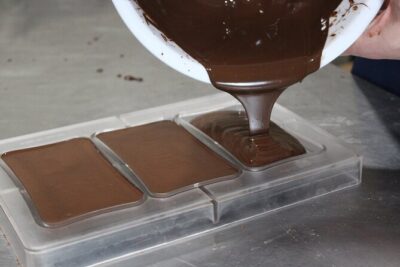
Chocolate Bar Making Workshop – York Cocoa Works
Read our review →
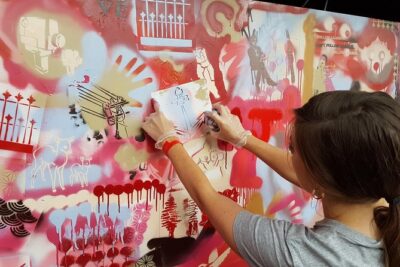
Street Art Tour and Spray Painting Workshop in London
Read our review →Browse the lists this tour appears in