Reviewed · TOURS
The Freemasons Tour of London
London’s oldest stories are often tucked behind an ordinary doorway or down a narrow lane. This private tour follows that idea from Clerkenwell to Freemasons’ Hall, linking Knights of St John, Templars, plague pits, monastic ruins, and Freemasonry in one brisk morning.
I like the personal format and the sheer range of places covered. You get hotel pickup, a guide who can answer questions, and sights that large groups often pass without noticing. The main drawback is pace: 22 stops in about three hours means many visits are brief, and several attractions are viewed from outside.
Key points at a glance
- A private route from Farringdon to Freemasons’ Hall: You see Clerkenwell, the City, Temple, Fleet Street, Lincoln’s Inn, and Covent Garden in one connected walk.
- Kevin may lead your tour: He is described as a lifelong Londoner with long experience guiding visitors through lesser-known corners of the city.
- Medieval orders shape the story: Knights of St John and the Templars provide the main thread, with churches, gates, weapons, and old religious sites along the way.
- The pace is brisk: Many stops last only five minutes, so expect short explanations and exterior views rather than long museum visits.
- The day depends on opening hours: The Museum of the Order of St John is closed Mondays and Tuesdays, Charterhouse is closed Mondays, and the Freemasons Museum is closed Mondays.
- The price favors a small group: At $253.66 per person, the tour makes more sense for people who value a private guide, hotel pickup, and specialized subject matter.
From Clerkenwell’s well to the Knights of St John
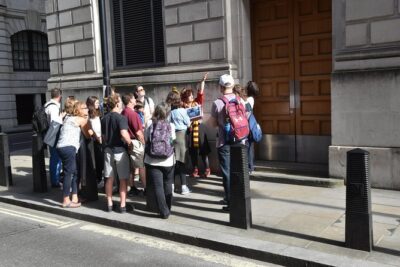
The tour begins at 9:30 a.m. at Farringdon Station, unless you arrange pickup from a Central London hotel. From there, you start in Clerkenwell, an area with an unusually strong connection to religious orders, political movements, and London’s old trades.
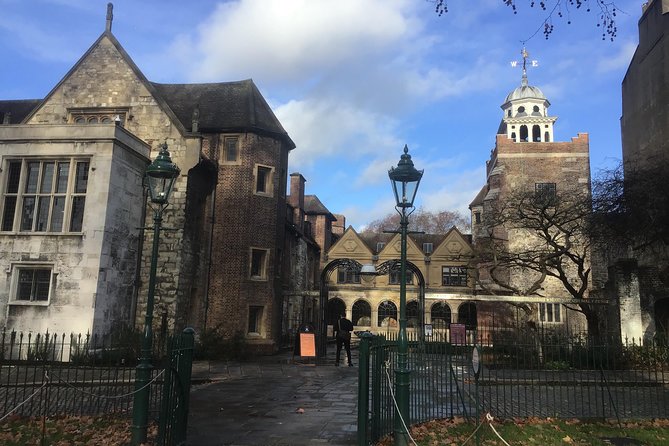
The first stop is Clerk’s Well, a small but important piece of local history. This old well gave Clerkenwell its name and is easy to miss if you are simply walking toward the City. Five minutes here will not feel like a major sightseeing stop, but it sets the tone: the guide is looking for clues in the street rather than only taking you to famous monuments.
Nearby, the Marx Memorial Library adds a different layer to Clerkenwell. The working institute reflects the area’s communist past. Admission is not included, and the stop is brief, so you should think of it as a street-level explanation rather than a full visit.
The route then reaches St John Priory Church and its garden. The garden includes traditional medicinal plants, and you will also see a surprising old military weapon. That pairing captures the character of the tour well. Sacred sites are not presented as isolated buildings. They are tied to medicine, war, charity, politics, and daily life.
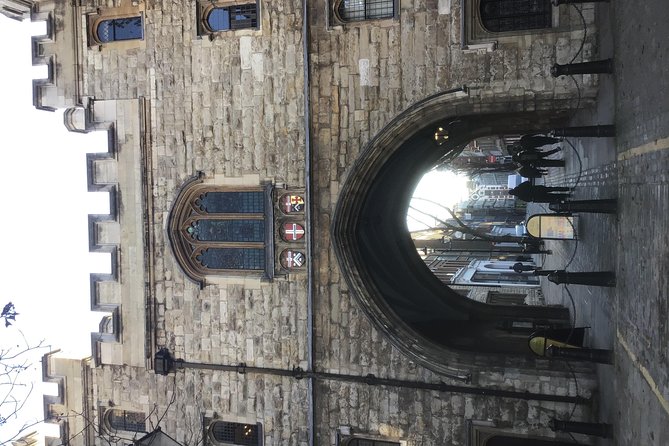
St John’s Gate follows. This impressive gatehouse once marked the entrance to the compound of the Knights of St John, a military religious order. The building gives you a clear sense of how much of medieval London survives in fragments rather than grand, complete districts.
Other London days people book alongside this one:
- Stonehenge, Windsor Castle, and Bath from London
★ 4.5 · 18,662 reviews - London Big Bus Hop-On Hop-Off Tour with Optional River Cruise
★ 3.5 · 10,803 reviews - London Small Group Tour of Historical Pubs
★ 5.0 · 10,422 reviews
The Order of St John and Charterhouse
The Museum of the Order of St John is one of the more substantial stops. You will see the old gatehouse associated with the Knights of St John and have a quick look at its collection of weapons and armor. Admission is included, but the visit lasts only about 15 minutes, so do not expect enough time for a slow museum visit.
This is one place where the tour’s subject becomes easier to follow. The Knights of St John were not simply monks, and they were not simply soldiers. Their presence connects London to the wider medieval world of crusading orders, hospitals, and military power. A good guide can make that complicated background understandable without turning the morning into a lecture.
Next comes Charterhouse Square and the Charterhouse. The square marks the site of one of London’s large plague pits, and the route enters the chapel. You may also see a recently discovered skeleton identified as a victim of the Black Death.
That is a powerful stop, but it is also one to approach with care. The subject is grim, and the visit is short. Charterhouse is closed on Mondays, so check the day before booking if this part matters to you. The itinerary can still function as an outdoor walk, but an important interior experience may not be available.
Ancient churches around Smithfield
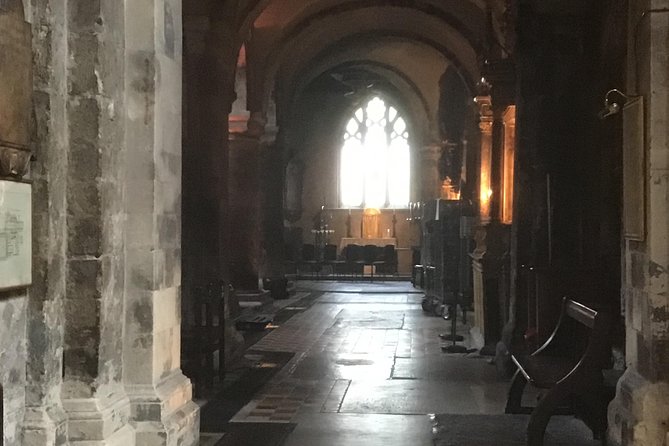
Church of St Bartholomew the Great is among London’s oldest churches. It was founded by a crusader, which fits the tour’s wider theme, and its age gives you a useful sense of how much medieval London was altered, rebuilt, or lost.
Admission is not included, and the scheduled stop is only five minutes. You will need to accept a quick look rather than a full church visit. If you like old religious buildings, you may want to return independently after the tour.
The nearby St Bartholomew’s Gatehouse dates back almost 800 years. It is the kind of building that can disappear into the surrounding streets unless someone points it out. This is where a private guide is useful. You can ask why the gatehouse matters, how it fits with the church, and what survives from the old religious complex.
The William Wallace Memorial brings a Scottish connection to the route. You will see the place associated with Wallace’s execution, along with other events linked to this historic site. The stop lasts about 10 minutes and gives the guide room to connect medieval power, punishment, and the long political story between England and Scotland.
At Christchurch Greyfriars Church Garden, you see the remains of an old monastic building beneath the shadow of St Paul’s Cathedral. The garden offers a quieter pause amid central London, though again, the scheduled five minutes is enough for an explanation and a look around, not a long rest.
St Paul’s, Blackfriars, and the old City gates
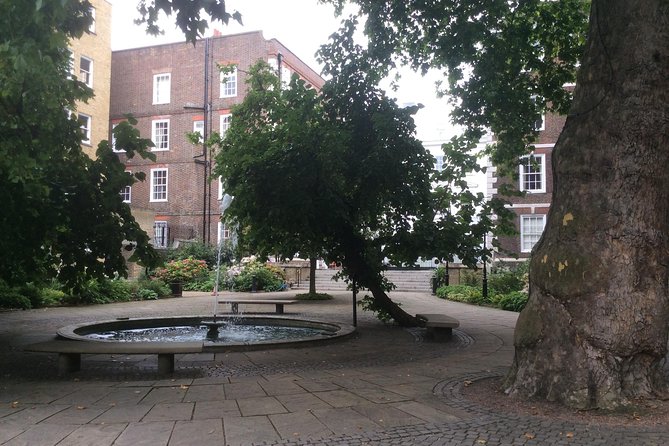
Christopher Wren’s Temple Bar is another short stop with a dark past. It was once a gate into the City of London, and its history includes public punishment and grim displays. The tour uses it to show that city gates were more than decorative entrances. They helped control movement and could serve as warnings.
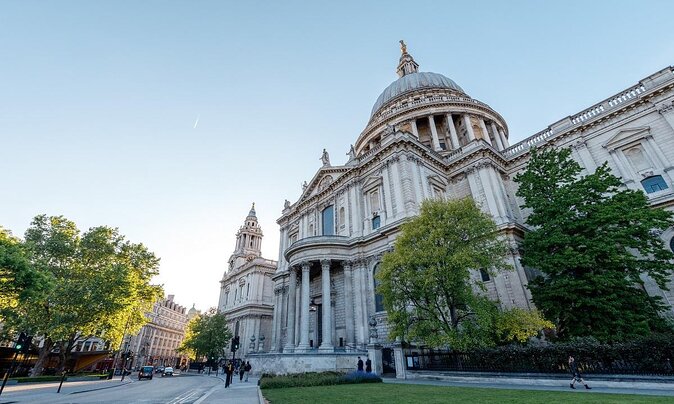
You also see St Paul’s Cathedral, one of London’s defining buildings. The itinerary allows only five minutes and does not include admission, so the cathedral is an exterior landmark here, not a cathedral tour. That distinction matters if you want to see the interior or climb to the galleries.
The route continues to Blackfriars, where a tiny yard and narrow alley preserve what remains of the institution that gave the district its name. It is a good example of the tour’s preference for fragments and clues over major attractions.
The Crypt on the Green provides another glimpse of a lost monastic building. It is off the main tourist path, but it lies directly along the route toward the Temple area. Admission is not included, and the stop is brief. You will get the most from it if you enjoy piecing together London’s past from remnants rather than expecting a fully restored monument.
Same country, a completely different day out:
- Stonehenge, Windsor Castle and Bath with Pub Lunch in Lacock
★ 4.5 · 7,402 reviews - Tower of London and Crown Jewels Exhibition Ticket
★ 4.5 · 6,677 reviews - Thorpe Park Admission Ticket
★ 4.0 · 5,915 reviews - Stonehenge, Windsor Castle and Bath Full Day Guided Tour
★ 4.5 · 5,346 reviews
Temple Church and the Templar story
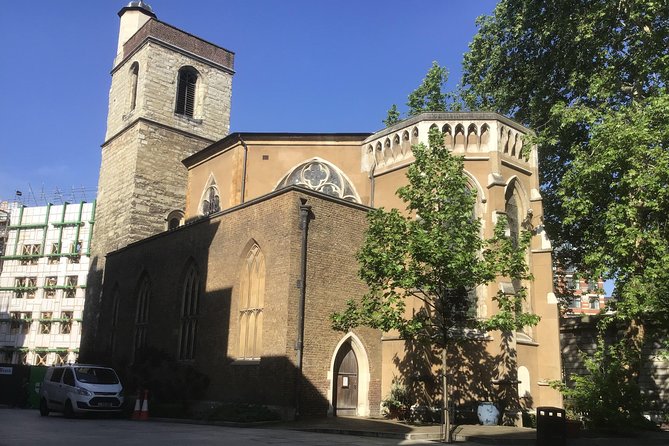
Middle Temple Lane leads you into one of the most atmospheric parts of the walk. Middle Temple is a beautiful, quiet area often used in television and films, including Downton Abbey. The five-minute visit is short, but the lane and surrounding courtyards make a welcome change from the traffic and crowds outside.
Temple Church is the main Templar stop. Built in a style inspired by what the Templars saw in the Holy Land, it later gained fresh attention because of The Da Vinci Code films. Today, the church is once again a peaceful place rather than a pop-culture pilgrimage site.
Admission is included, and the scheduled 15 minutes gives you more time here than at most stops. The guide should explain the church’s connection to the Knights Templar and the model that inspired its design. One point worth keeping clear is that the church was modeled on the Church of the Holy Sepulchre, not Solomon’s Temple. If precise historical detail matters to you, ask questions and listen carefully to the explanation.
Inner Temple follows, offering another tranquil refuge in central London. The area is part of the Inns of Court, and the route lets you see a part of the city that many people walk past without entering. Admission is included according to the tour details.
Fleet Street, Dickens, and an old Masonic meeting place
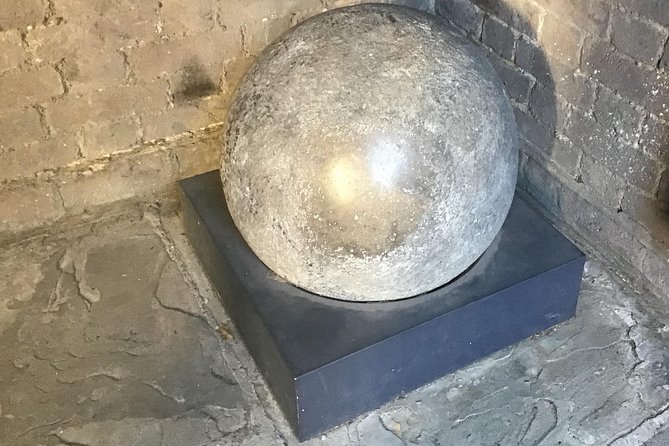
Fleet Street brings the walk into a more familiar London setting. Once the center of the British newspaper trade, it has a strong identity even after the newspapers moved away. The tour also points out a long-lost ruin connected with a famous monastic order.
The nearby Old Curiosity Shop is associated with Charles Dickens and is described as London’s oldest shop. You pass by rather than receive a full shop visit, and admission is not included. It is a small stop, but it adds a literary thread to a morning otherwise focused on military and religious history.
The Seven Stars is a tiny old pub that once served as an early meeting place for Freemasons. This is one of the most useful stops for understanding that Freemasonry was not only a grand hall or an abstract secret society. Its story also belongs to ordinary streets, pubs, working districts, and personal networks.
Lincoln’s Inn is the final major historic precinct before Freemasons’ Hall. You pass through what is described as the largest square in London, though it is rarely visited by tourists. The guide also explains the Great Fire of London here.
The square gives you a sense of London’s legal world and its quieter courtyards. It is another reason to choose this tour if you have already seen the major landmarks and want help finding places you would not easily identify alone.
Freemasons’ Hall and the end of the walk
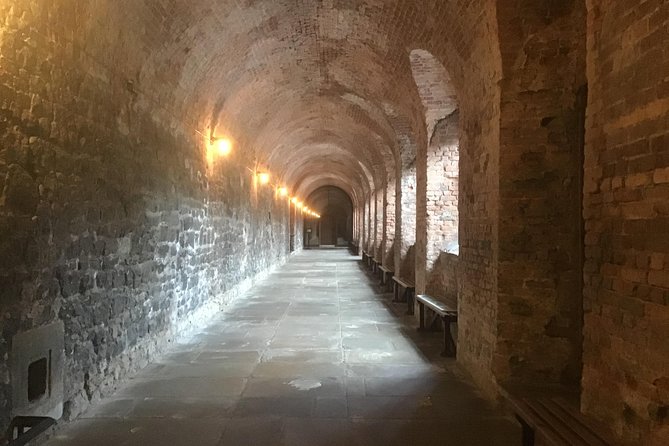
The tour ends at Freemasons’ Hall on Great Queen Street. This is the headquarters of the United Grand Lodge of England and the Supreme Grand Chapter of Royal Arch Masons of England. It also serves as a meeting place for Masonic lodges in the London area.
The scheduled stop lasts about 15 minutes. The Freemasons Museum is closed on Mondays, so the day of your visit affects what you can see. The tour details specifically note the closure, and the Museum of the Order of St John is also closed Mondays and Tuesdays. For the fullest version of the experience, avoid Monday and Tuesday.
The end point is practical. Freemasons’ Hall is a short walk from Holborn and Covent Garden Underground stations, as well as the attractions of Covent Garden. You can continue sightseeing without needing to cross London to get back to your hotel.
What the private format is worth
The listed price is $253.66 per person. That is a serious cost for a three-hour tour, especially since several stops are free or viewed from outside. The value rests mainly in the private format, the specialized route, the hotel pickup, and the guide’s ability to explain places you might otherwise miss.
You are not paying for a long museum session or a standard highlights walk. You are paying for access to a connected story about London’s military orders, churches, plague sites, old institutions, and Freemasonry. The cost makes more sense if you are sharing the tour with a small group, since only your party participates.
Hotel pickup is offered from Central London accommodation. The guide meets you in the reception area, then travels with you by Underground or taxi to Farringdon. Tube tickets before and after the tour are not included, so plan for that extra cost.
The tour is booked an average of 68 days ahead, which suggests you should not leave it until the last minute if your dates are fixed. Confirmation is sent within 48 hours, subject to availability.
Is the walking pace right for you?
You need a moderate level of physical fitness. The route covers a long stretch of central London and includes streets, lanes, squares, church grounds, and historic precincts. Even though the tour lasts only about three hours, the number of stops means you will spend much of the time walking and listening.
The itinerary includes 22 stops. Many are allocated only five minutes, while a few receive 10 or 15 minutes. That format is ideal if you like variety and quick historical connections. It is less suitable if you want to sit quietly in each church, read every museum label, or take detailed photographs.
The private setting helps. You can ask for clarification, slow down briefly, or focus on the subjects that interest you most. One guide, Kevin, is described as a lifelong Londoner with long experience in the city and a strong personal interest in its past. His strongest qualities are his enthusiasm, local pride, and willingness to answer many questions.
One practical point comes from the way the tour is organized. A guide once returned with a participant to the hotel because of concerns about getting back. That shows the private arrangement can offer flexibility, but you should still tell the operator about timing needs before the walk begins.
Who should book this London tour?
I would choose this tour if you have already seen the Tower, Westminster, and the main royal sights, and now want a more specialized morning. It suits people who enjoy medieval orders, church architecture, old London institutions, military history, plague stories, Dickens, and Freemasonry.
It is also a good choice for a small family or group that wants one guide rather than a large crowd. The route has enough variety to hold the attention of people with different interests, though the subject matter can become serious when the walk reaches plague pits, executions, and religious conflict.
I would hesitate if this is your first and only London sightseeing experience. You see St Paul’s Cathedral and several famous districts, but you do not receive a full visit to the capital’s major attractions. You also need to be comfortable with quick stops and some admission exclusions.
Free cancellation is available up to 24 hours before the start time for a full refund. Changes or cancellations inside that 24-hour window are not accepted for a refund.
Should you book it?
Book this tour if you want London’s lesser-seen medieval and Masonic corners explained by a private guide, and if the $253.66 price fits your group. The strongest parts are the connected route, hotel pickup, Temple Church, the Order of St John sites, Charterhouse, and the quiet legal precincts around Middle Temple and Lincoln’s Inn.
Skip it if you prefer a relaxed pace, major interiors, or a lower-cost group walk. For the best version, choose a day when both museums are open, arrive ready to walk, and treat the tour as a guided introduction to places you may want to revisit at greater length.
FAQ
How long is the Freemasons Tour of London?
The tour lasts approximately three hours and begins at 9:30 a.m.
Where does the tour begin?
It begins at Farringdon Station on Cowcross Street. You can also arrange pickup from a Central London hotel.
Where does the tour end?
The tour ends at Freemasons’ Hall on Great Queen Street, a short walk from Holborn and Covent Garden Underground stations.
Is hotel pickup included?
Yes. Pickup from your Central London hotel is included. The guide meets you in the hotel reception area and travels with you by Underground or taxi to Farringdon.
Are Tube tickets included?
No. Tube tickets used before and after the tour are not included.
Is this a private tour?
Yes. Only your group participates in the activity.
Which museums are closed on certain days?
The Museum of the Order of St John is closed Mondays and Tuesdays. Charterhouse is closed Mondays, and the Freemasons Museum is closed Mondays.
What is the cancellation policy?
You can cancel at least 24 hours before the local start time for a full refund. Cancellations or changes made less than 24 hours before the start time are not accepted for a refund.
Just added around London
- Private The Beatles Taxi Tour in London★ 5.0 · 12 reviews
- Dinner and Jazz Cruise on the River Thames★ 4.0 · 140 reviews
- Airport Coach Service from Heathrow to Oxford★ 3.5 · 67 reviews
- The Alfred Hitchcock London Walk with Sandra Shevey★ 5.0 · 15 reviews
- Tower of London & 30+ London Sights Walking Tour★ 4.5 · 33 reviews
- Thames Beachcombing★ 4.5 · 100 reviews
- Ted Lasso Tour of Richmond with Private Guide★ 5.0 · 25 reviews
- Ted Lasso Tour of Richmond★ 5.0 · 152 reviews
Tours, compared.
London Big Bus Hop-On Hop-Off Tour with Optional River Cruise
Read our review →


Oxford University Walking Tour With University Alumni Guide
Read our review →
Stonehenge, Windsor Castle and Bath Full Day Guided Tour
Read our review →
London Jack the Ripper Guided Tour with Ripper-Vision
Read our review →