
Reviewed · CAMBRIDGE TOURS
The Original Uncomfortable Cambridge™ Tour
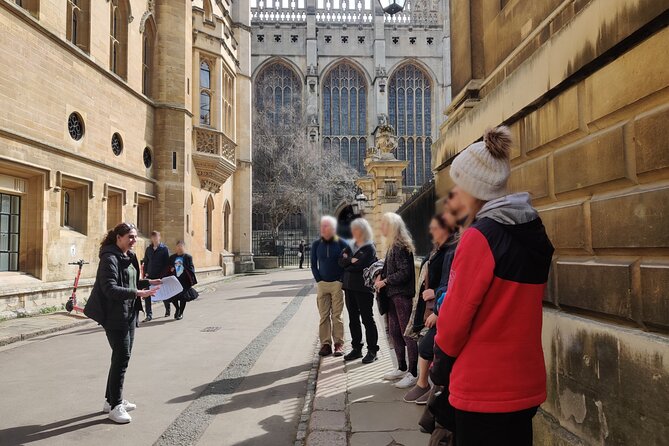
Cambridge looks polished on the surface, with college courts, river views, and grand medieval buildings. This tour asks you to look again, at who paid for the university, who was excluded from it, and whose stories were left out. It is less about famous façades and more about the power behind them.
I like the small group, capped at 15, because it gives a student guide room to ask questions and keep the discussion human. I also like the direct style: guides such as Shubham and Malak have been praised for making the information thought-provoking, interactive, and easy to follow in short bursts.
The main drawback is that this is a walking tour, not a college-entry tour. Admission to the colleges is not included, and the subject matter can be uncomfortable. You should also be comfortable walking for 90 minutes, often outdoors.
Key points to know before you book
- Cambridge’s difficult stories come first: The tour covers university donations, slavery, race, women’s membership, colonial legacies, and LGBTQIA+ memory.
- A student guide leads the walk: You may be guided by someone such as Shubham or Malak, with a style that aims to question rather than recite.
- The group is limited to 15 people: That is small enough for conversation without turning the walk into a private tour.
- The route connects eight important stops: You visit King’s College, Great St Mary’s, Trinity Hall, the Backs, Darwin College, Queens’ College, and St Catharine’s College before returning to King’s.
- College admission costs extra: You see and discuss the buildings from outside, but entry to the named colleges is not part of the $27.56 price.
- It takes about 90 minutes: Meet at the Cambridge Tourist Information Centre and finish at King’s Parade.
A different way to read Cambridge
The Original Uncomfortable Cambridge Tour is built around a simple idea: a university can be beautiful and still have a troubling past. That makes this a useful companion to a traditional Cambridge sightseeing walk.
You will not get a standard roll call of famous graduates and architectural dates. Instead, the route looks at the relationship between the university and the city, the people who were kept outside its doors, and the way institutions remember or avoid difficult subjects.
That change in focus matters. Cambridge’s colleges often present themselves through old buildings, traditions, and academic achievement. This walk adds the questions that those traditions can hide. Who had access to education? Who funded it? Who benefited from the university’s status? Whose objects and stories are still being debated?
The tone is serious, but it is not meant to be a lecture. The guide presents the material in short sections and invites discussion. That format suits the subject well. You can listen, ask questions, and keep moving before the information becomes too heavy.
The 4.9 rating from 51 reviews and 98 percent recommendation rate suggest that the approach is landing well. Still, the real appeal is not the score. It is the chance to see familiar Cambridge places with a sharper understanding of the people and decisions connected to them.
Other Cambridge days people book alongside this one:
- Cambridge University Walking Tour by Alumni™ Kings College Option
★ 5.0 · 2,336 reviews - Cambridge University With Alumni: Optional Kings College Entrance
★ 5.0 · 1,987 reviews - Punting Tour in Cambridge
★ 4.5 · 1,690 reviews
Starting at King’s College, then looking beyond the postcard
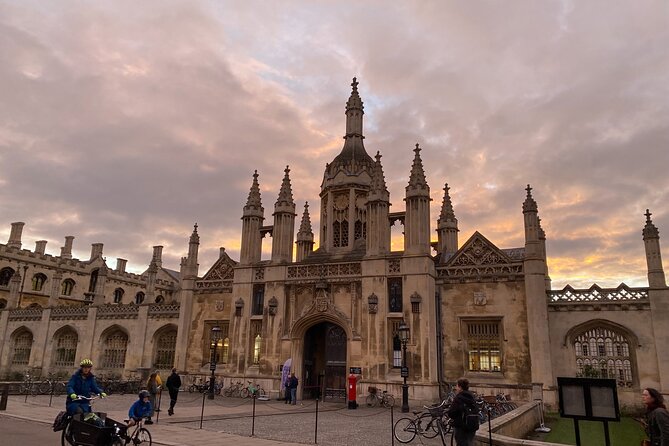
You meet your student guide at the front of King’s College. The first 10 minutes set the tone for the whole experience.
King’s is one of Cambridge’s most recognizable sights, so it is a sensible place to begin. You get your bearings quickly, then move away from the usual postcard treatment. The college is not simply a pretty landmark. It becomes part of a discussion about memory, identity, and the way institutions present themselves.
The tour returns to King’s at the end, so the opening and closing discussions frame the walk. The first visit is outside, and admission is not included. If you want to see the interior, you will need to arrange that separately.
That is worth noting when you compare prices. The $27.56 fee pays for the guided discussion and route, not a combined college admissions package.
Great St Mary’s and the old city university divide
The first substantial stop is Great St Mary’s Church, where you spend about 15 minutes discussing medieval tensions between the city and the university.
This is one of the strongest early stops because it gives the rest of the walk a local foundation. Cambridge was not simply a university floating above an ordinary town. The university and the city had competing interests, and those tensions shaped daily life and authority.
Great St Mary’s is also a practical location for this topic. It sits at the heart of Cambridge, close to the university buildings and public streets. You can better understand how tightly the two communities were placed beside each other, even when their rights and privileges were not equal.
Admission to the church is free for the tour. The stop is short, but it gives you useful context before the walk turns toward money, power, and social exclusion.
Trinity Hall and the money behind the institution
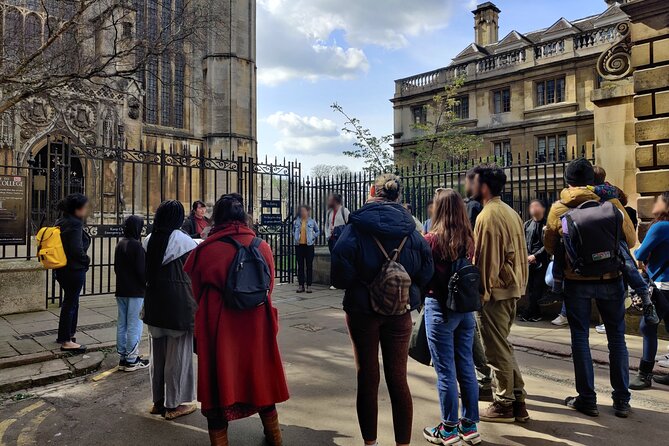
At Trinity Hall, the guide speaks in front of the Old Schools building about problematic donations to the university. Allow around 10 minutes here.
This is where the tour moves from medieval conflict to the question of funding. Universities rely on gifts, endowments, and wealthy supporters, but money can carry a history of its own. A donation may help build a college or support scholarships while also connecting the institution to exploitation or unequal systems.
The point is not simply to label a donor as good or bad. It is to ask how Cambridge handles money with an uncomfortable past. That is a useful question for anyone visiting historic institutions, especially when grand buildings can make their origins seem cleaner than they were.
You do not enter Trinity Hall on this route. The discussion takes place outside, so comfortable shoes and a clear view of the guide matter more than a college ticket.
Same country, a completely different day out:
- Shared Guided Punting Tour of Cambridge
★ 5.0 · 787 reviews - Cambridge Walking & Punting Tour by Alumni™ King’s College Option
★ 4.5 · 698 reviews - Shared Punt Tour – Cambridge
★ 5.0 · 540 reviews - Creepy Cambridge – Cambridge’s Most Entertaining Ghost Walk
★ 5.0 · 366 reviews
The Backs and Oliver Cromwell’s complicated legacy
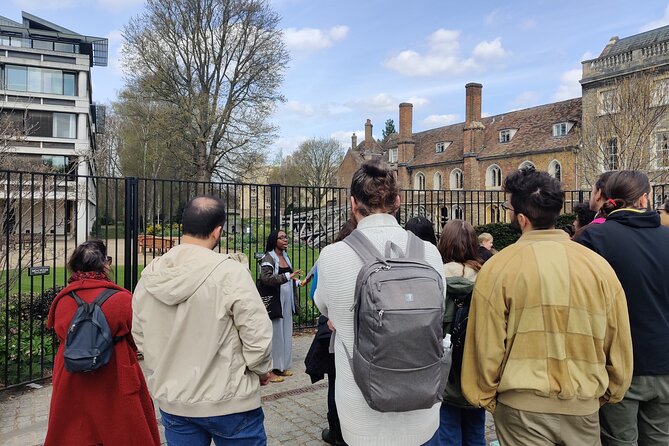
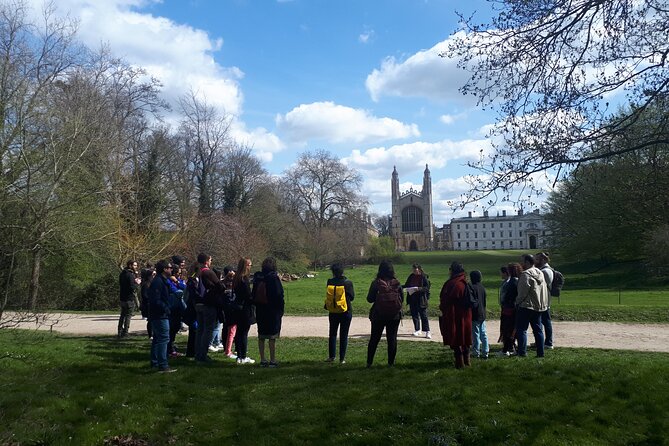
The walk continues to the Backs for about 20 minutes. This is the longest single stop, and it focuses on the English Civil War and the legacy of Oliver Cromwell.
The Backs provide a change of pace. Instead of standing among narrow streets and college fronts, you have a more open setting connected with Cambridge’s famous views. Yet the subject is not decorative. The English Civil War raised major questions about monarchy, Parliament, religion, and power.
Oliver Cromwell remains a difficult historical figure, and the tour uses his connection to Cambridge to examine how public memory works. People can be celebrated for one part of their legacy and criticized for another. The guide’s job here is not to force a simple verdict, but to give you enough context to understand why the subject remains disputed.
Because this stop lasts 20 minutes, it may feel like one of the more demanding sections. If you prefer history presented as a neat line of heroes and villains, this approach may frustrate you. If you like examining competing viewpoints, it should be one of the more useful parts of the walk.
Darwin College and the long fight for women’s membership
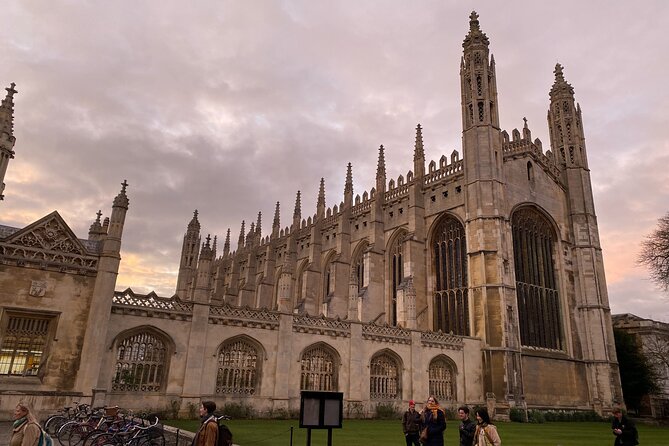
Opposite the site of the former New Hall College, now Darwin College, the guide uses a map of Cambridge’s colleges to explain women’s journey toward full membership of the university. Plan on 10 minutes here.
The subject is bigger than simply asking when women were allowed to study. It also concerns status, recognition, and equal membership within an institution that had long been shaped around men.
The stop helps you see Cambridge as a collection of colleges with different histories rather than one single organization. The map makes that structure easier to follow, especially if this is your first visit.
Darwin College itself is not included as an admission stop. You are learning about the location and its connection to women’s education from outside. That keeps the pace brisk, though anyone wanting a detailed architectural visit will need another tour.
Queens’ College and the history of Black students
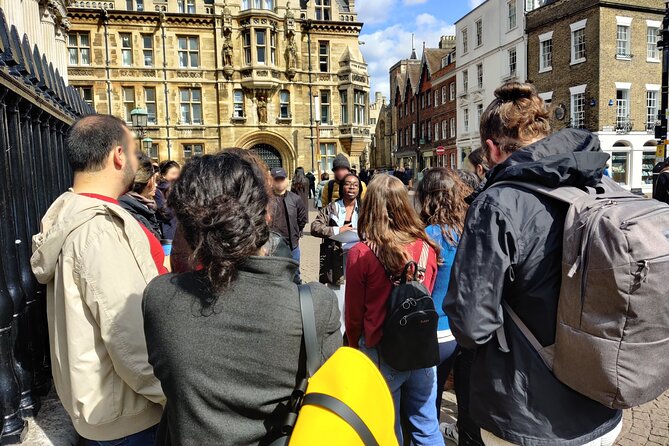
At Queens’ College, the tour spends about 15 minutes discussing the history of Black students at Cambridge University.
This stop brings race and access into the center of the walk. A university may welcome students in principle while still presenting barriers through admissions, traditions, social customs, and institutional attitudes. Looking at the experiences of Black students makes those barriers easier to see.
Queens’ College is an effective setting because the conversation stays connected to a real college rather than floating as a general lecture about British education. You are asked to consider how a historic institution changes, and how much work remains when old customs and new expectations meet.
You do not enter Queens’ College with this ticket. If seeing college interiors is important to you, budget for separate admission and check each college’s opening arrangements. The tour itself is about the story attached to the place.
St Catharine’s and the debate over objects and enslavement
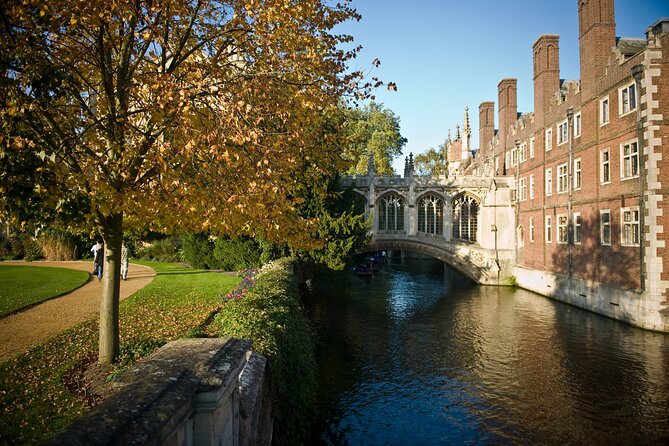
The next 15-minute stop is at St Catharine’s College. Here, the guide discusses controversies involving histories of enslavement and the repatriation of objects.
This is an important distinction. The subject is not only what happened in the past, but also what institutions do with the evidence and objects connected to that past today. Questions of ownership, display, return, and responsibility have no easy answer, and the tour treats them as live debates rather than settled footnotes.
The stop can help you think differently about museum pieces, college collections, and grand institutions across Britain. An object may have artistic or academic value, but that does not erase the circumstances in which it was taken or acquired.
Again, St Catharine’s is discussed from outside. The experience gives you historical context, not entry to the college.
Back at King’s, LGBTQIA+ history and memory
The walk finishes at King’s Parade, returning to King’s College for about 15 minutes. The final discussion focuses on LGBTQIA+ histories and memory.
Ending here gives the route a clear structure. You start with one of Cambridge’s most famous sites, move through questions about authority and exclusion, then return to the same setting with another way of understanding it.
The closing subject also broadens the tour’s idea of belonging. The walk has already considered city residents, women, Black students, and people affected by colonial wealth. LGBTQIA+ history adds another layer, asking how institutions remember people whose lives were often ignored, hidden, or treated as controversial.
King’s Parade is also a convenient finish in central Cambridge. You are not returned to the Tourist Information Centre, so plan your next move from King’s. The end point is close to the city’s central sights and public transport connections.
What the $27.56 price really buys you
At $27.56 per person, this is reasonably priced for a 90-minute small-group walk, especially if you value interpretation more than entry tickets. The strongest part of the product is the student guide’s framing of the places, not access to the buildings.
A group limit of 15 is a real advantage. A larger crowd would make an interactive discussion harder, particularly when the guide is asking questions about race, gender, class, empire, and memory. With 15 people or fewer, you have a better chance of hearing the guide and joining in.
The price is less attractive if your main goal is to tour college interiors. Admission to Trinity Hall, New Hall College or Darwin College, Queens’ College, St Catharine’s College, and King’s College is not included. You should treat this as a discussion-led walking tour, then add separate college visits only if they fit your budget and schedule.
The mobile ticket is convenient, and confirmation arrives when you book. The tour is offered in English. Group discounts may help if you are booking for several people.
Who will get the most from this walk
I would choose this tour if you have already seen the usual Cambridge sights and want a more questioning account of the university. It also works well as a first tour if you prefer social history and current debates to architectural detail.
It suits:
- Visitors who want context behind famous colleges
- People interested in race, gender, class, empire, and LGBTQIA+ history
- Local residents seeking a fresh look at familiar streets
- Students and families with older children who enjoy discussion
- Small groups that prefer an interactive guide
- Anyone who wants a short walk that fits around other Cambridge plans
You may want another experience if you need step-free access, dislike outdoor walking, or mainly want to enter the colleges. The tour is not recommended for people who have difficulty walking, and it requires good weather.
The subject matter also deserves a little preparation. This is not a light sightseeing loop. The tone can be serious, and the tour asks you to consider uncomfortable facts rather than smooth them over.
Timing, meeting point, and practical planning
The full experience lasts about one hour and 30 minutes. You meet at the Cambridge Tourist Information Centre at The Guildhall, 11 Peas Hill, Cambridge CB2 3PP.
Arrive with enough time to find the meeting point. The route ends at King’s Parade, Cambridge CB2, rather than at the starting location. That is useful if you plan to continue sightseeing near King’s College, but it matters if you have parked or left luggage near the Tourist Information Centre.
Wear comfortable shoes. You move between several central sites, and the tour is not recommended if walking is difficult. Service animals are allowed, and the route is near public transportation.
The tour needs good weather and a minimum number of participants. If poor weather or low numbers force cancellation, you are offered another date or experience, or a full refund. You can cancel for a full refund up to 24 hours before the start time. Cancellations or changes inside that 24-hour window are not accepted.
Should you book The Original Uncomfortable Cambridge Tour?
Book it if you want Cambridge presented as a living institution with difficult connections, not just a row of attractive colleges. The small group, student guide, short format, and strong interactive style make the $27.56 fee good value for people who care about context.
Skip it if your priority is entering college buildings, hearing only traditional sightseeing stories, or avoiding serious discussions about exclusion and institutional responsibility.
For many visitors, the best plan is to use this walk as a thoughtful introduction, then choose one or two college interiors separately. You will leave with more questions than a standard tour, which is exactly the point.
FAQ
How long does The Original Uncomfortable Cambridge Tour last?
The tour lasts approximately one hour and 30 minutes.
Where does the tour begin?
It begins at the Cambridge Tourist Information Centre, The Guildhall, 11 Peas Hill, Cambridge CB2 3PP, UK.
Where does the tour finish?
The tour finishes at King’s Parade, Cambridge CB2, near King’s College.
Is admission to the colleges included?
No. Admission to Trinity Hall, Darwin College, Queens’ College, St Catharine’s College, and King’s College is not included.
How many people can join the tour?
The group has a maximum of 15 participants.
Can I cancel for a full refund?
Yes. You can cancel up to 24 hours before the experience start time for a full refund. If the tour is canceled because of poor weather or because the minimum number of participants is not reached, you will be offered another date or experience, or a full refund.
Just added around Cambridge
- Tangential Cambridge: Group Walking Tour of Sights and Highlights★ 5.0 · 79 reviews
- Explore Cambridge Student Life & Top Colleges Walking Tour★ 3.5 · 18 reviews
- Scholars & Secrets of Cambridge: Self-Guided Puzzle Adventure★ 3.5 · 19 reviews
- Town Food Tour in Saffron Walden★ 5.0 · 32 reviews
- Cambridge University Ghost Tour by Alumni™★ 5.0 · 117 reviews
- Fun, Flexible Treasure Hunt Around Cambridge with Cryptic Clues & Hidden Gems★ 5.0 · 142 reviews
- Private Chauffeur Punt Tour★ 5.0 · 106 reviews
- Private | Cambridge University Colleges Guided Punting Tour★ 4.5 · 13 reviews
Cambridge Tours, compared.
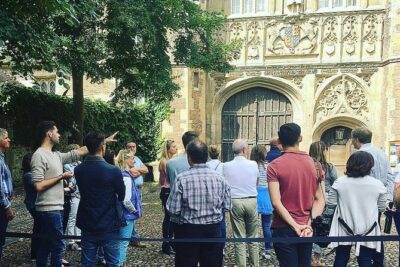
Cambridge University Walking Tour by Alumni™ Kings College Option
Read our review →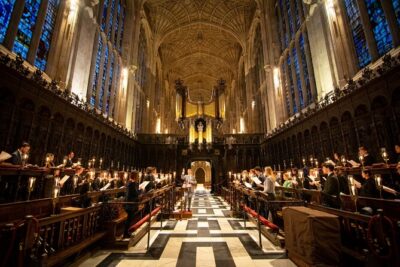
Cambridge University With Alumni: Optional Kings College Entrance
Read our review →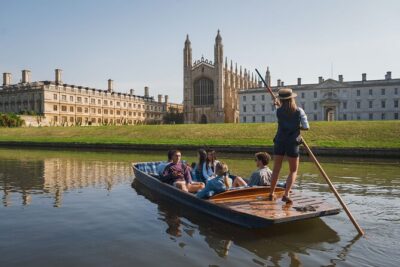
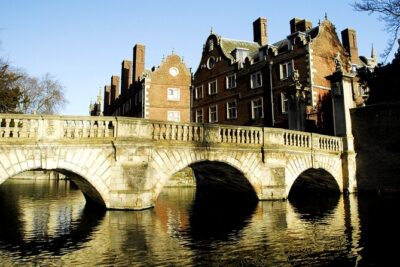
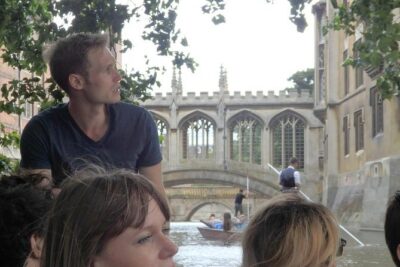
Cambridge Walking & Punting Tour by Alumni™ King’s College Option
Read our review →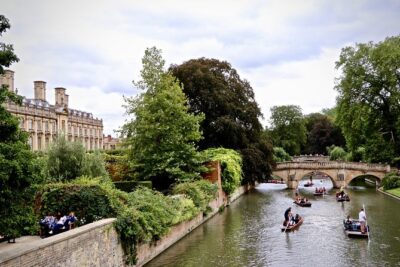
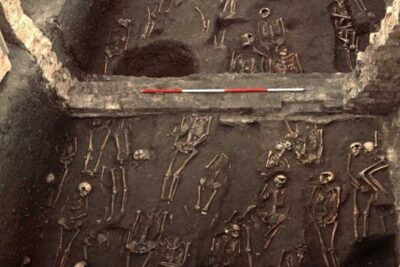
Creepy Cambridge – Cambridge’s Most Entertaining Ghost Walk
Read our review →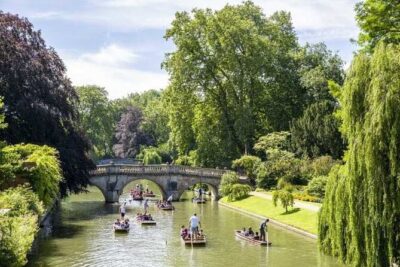
Browse the lists this tour appears in