Reviewed · WALKING TOURS
Burnings, Butchery & Black Death: A Walking Tour of London’s Bloody Past
London’s darker past is not locked away in a museum. It sits under your feet, behind ordinary doors, and along streets most people hurry through. This two-hour walk connects plague pits, medieval religious sites, public executions, old markets, Victorian sanitation, and the Great Fire of 1666.
I especially like the focus on lesser-known corners of the City of London, rather than another tour built around Jack the Ripper. I also like the small group limit of 15, which matters when a guide is explaining details on a narrow lane or outside a busy church. The main consideration is the subject matter: deaths, disease, burning, butchery, and poor living conditions are central to the tour, so it is not a light sightseeing stroll.
Key points to know before you book
- Charterhouse begins the story with a monastery and plague pit, giving the walk an immediate connection to medieval disease and death.
- Smithfield Market has more than 1,000 years of meat-trading history, along with stories of executions and wartime damage.
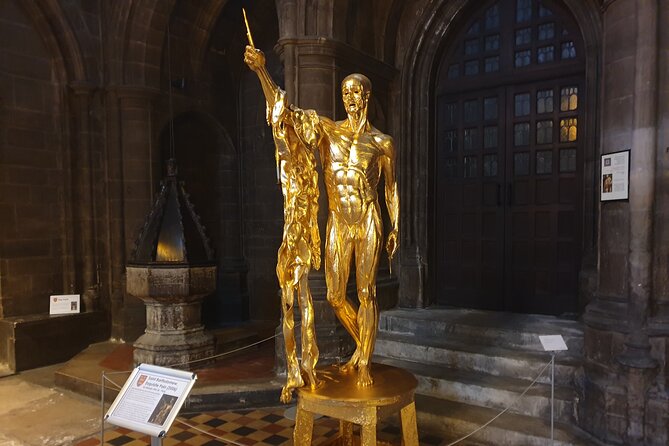
- The route finds old places hidden in plain sight, including Cloth Fair, St. John’s Gate, Ye Olde Mitre, and the Golden Boy of Pye Corner.
- Guide Tom brings a strong local focus, mixing dates and events with filming locations, pub advice, and quick answers to questions.
- A maximum of 15 people keeps the tour personal, though the walk still covers a lot in about two hours.
- The price is $27.73 per person, a fair deal if you value interpretation and access to overlooked parts of central London.
Why this walk feels different from a standard London tour
Many London walks gather around the most famous names and repeat the same familiar tales. This one takes a tighter route through the City and Smithfield area, using grim events to explain how London grew, suffered, rebuilt, and changed.
You will cover more than 1,000 years, from the Middle Ages through Victorian times. That is a lot of ground in two hours, so expect a brisk series of stops rather than long visits inside each place. The value comes from the links between them. A monastery leads to plague. A meat market leads to executions and public health. A buried river leads to Victorian engineering.
The tour is offered in English and uses a mobile ticket. It is limited to 15 people, which should help you hear the guide in busy streets and ask questions without waiting for a large group to move along. Several stops are viewed from outside, while admission is included at the Church of St. Bartholomew the Great.
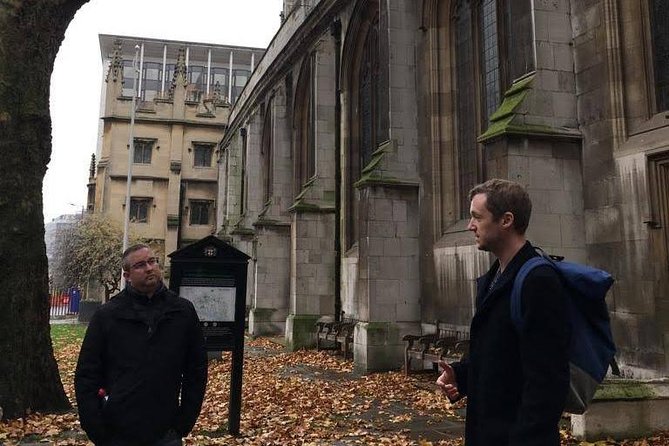
Tom is the guide named most often in the available information. His approach combines hard facts with humor and local observations. Expect more than dates and names. He may point out filming locations, explain the origins of St. John Ambulance, connect the area to bomb damage during the Blitz, and suggest places to eat or have a drink afterward.
A few more London trips to weigh up
- Tour for Muggles The Ultimate Harry Potter Walking Tour in London
★ 5.0 · 4,684 reviews - London Jack The Ripper Guided Walking Tour
★ 5.0 · 3,131 reviews - Changing of the Guard Guided Walking Tour in London
★ 5.0 · 1,793 reviews
Charterhouse and the first plague stories
The walk begins near Underground Ltd on Aldersgate Street, close to Barbican. The first stop is Charterhouse, a fourteenth-century monastery connected with a plague pit.
This is a strong opening because it sets the tone without resorting to theatrical tricks. London’s worst disasters were not distant events in some remote corner of England. They shaped the ground beneath this part of the city and changed how people worshipped, worked, buried their dead, and feared illness.
You have about 10 minutes here. That is enough for an explanation and orientation, but not a full visit to the site. Keep your expectations realistic: this is a guided look at the place and its story, not a long indoor museum session.
Smithfield Market and the cost of doing business
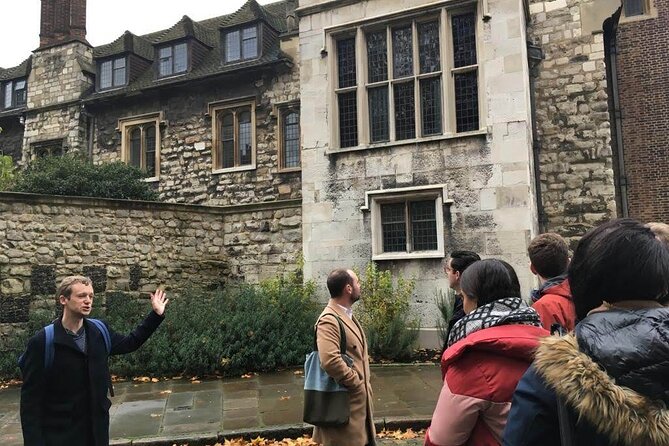
From Charterhouse, the route reaches Smithfield Market, a meat market with more than 1,000 years of history. The market is one of the walk’s most useful stops because it shows how commerce and violence once sat close together.
The name Smithfield brings to mind meat, trade, and crowded streets, but the area also carries memories of public punishment and execution. Here, the tour can move from what London ate to how London punished. That contrast helps you understand the old city as a working place, not merely a collection of grand monuments.
The 10-minute stop is short, so listen for the details that help you picture the market’s changing role. The area also suffered bomb attacks during the Blitz, another layer in its long story. You are looking at a modern working district shaped by medieval trade, public spectacle, wartime danger, and later rebuilding.
If you expect a quiet market visit, you may find this stop less satisfying. It is about context rather than shopping or food tasting.
St. John’s Gate and the Knights Hospitallers
St. John’s Gate was once home to the medieval Knights Hospitallers. The order’s name connects the site to care for the sick, religious life, and military duty, all themes that fit this tour’s interest in the harsher side of London.
The building gives the walk a welcome change of mood after Smithfield. You are no longer hearing only about markets and punishment. You are considering how medieval institutions handled illness, charity, faith, and power.
The stop also connects to the origins of St. John Ambulance, a detail that brings a medieval site into the modern world. This is one of the tour’s strengths: old stones are not treated as dead scenery. They are used to show how ideas and institutions can survive in altered form.
Same country, a completely different day out:
- Stonehenge, Windsor Castle, and Bath from London
★ 4.5 · 18,662 reviews - London Big Bus Hop-On Hop-Off Tour with Optional River Cruise
★ 3.5 · 10,803 reviews - London Small Group Tour of Historical Pubs
★ 5.0 · 10,422 reviews - Stonehenge, Windsor Castle and Bath with Pub Lunch in Lacock
★ 4.5 · 7,402 reviews
Cloth Fair and William Wallace
Cloth Fair is a quiet alley with a noisy past. This is exactly the kind of place you could pass without noticing if you were exploring alone. Its narrow scale makes the stories feel close, even when the events belong to another age.
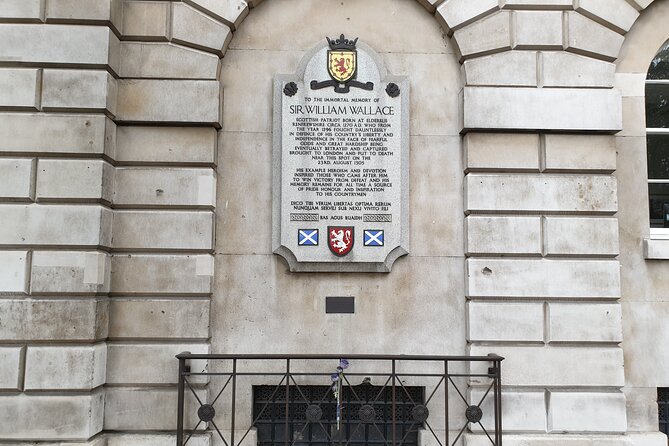
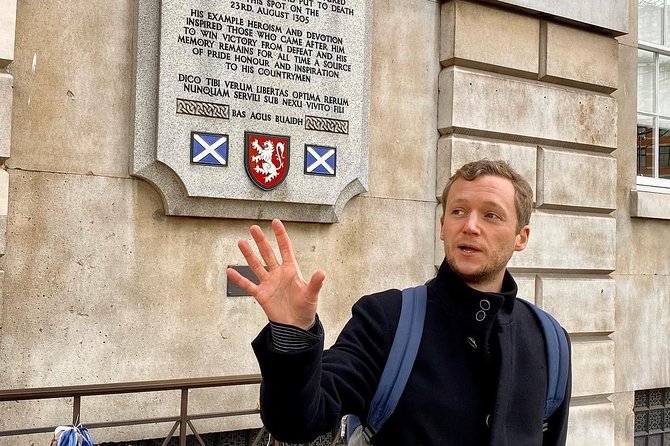
The route then reaches the William Wallace Memorial, dedicated to the Scottish figure also known as Braveheart. The stop gives the tour a clear political and execution-related thread, and it adds a well-known name without turning the whole walk into a film-history tour.
That balance is useful. You get a famous character, but the setting remains local and specific. You are not simply told who Wallace was. You are shown where his story connects with London’s own record of punishment and spectacle.
St. Bartholomew the Great, London’s oldest surviving parish church
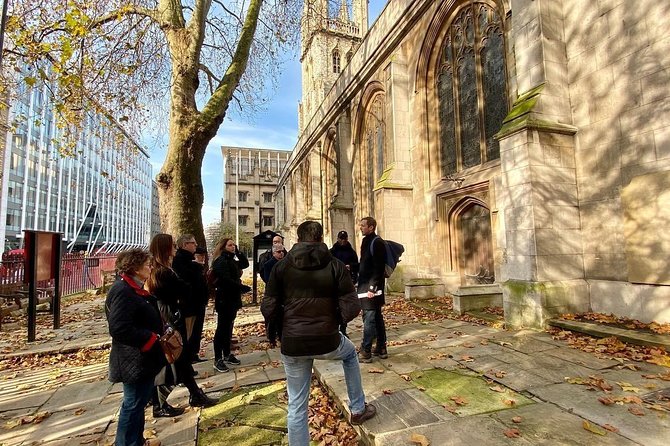
The Church of St. Bartholomew the Great is the only listed stop with admission included. It is described as London’s oldest surviving parish church, making it one of the main visual rewards of the walk.
Inside, you can expect a more atmospheric pause from the busy streets. The church anchors the surrounding stories in a real medieval building, not just a plaque or a modern road name. Its age helps explain why so much of this neighborhood feels layered.
The church has also appeared in filming locations, a detail Tom may connect to the buildings you pass. That kind of aside works well here because it adds a modern point of recognition without replacing the main subject.
Allow for a quick visit rather than a long architectural study. The tour has nine other stops to cover, and the overall pace needs to stay moving.
The Golden Boy and London’s Great Fire
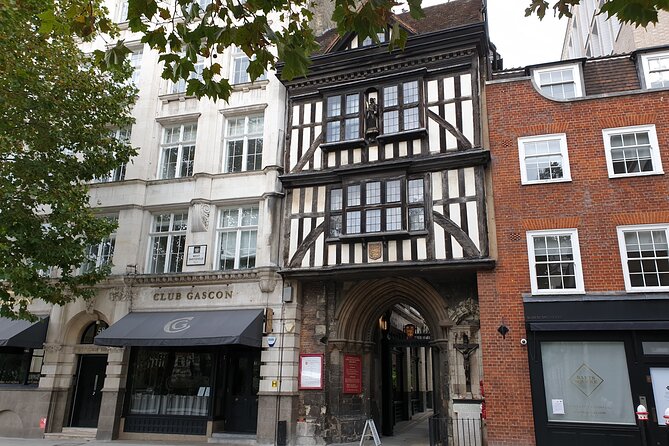
The Golden Boy of Pye Corner marks the spot where the Great Fire of 1666 died out. It also connects with eighteenth-century ghost hysteria, giving the stop a strange mix of disaster, memorial, and superstition.
This is a good example of how the walk uses small monuments to explain major events. The Golden Boy is easy to miss, yet it points to one of the defining catastrophes in London’s story. The ghost tales add a look at how people responded to fear after the physical danger had passed.
You will spend about 10 minutes here. The stop is not a reconstruction of the Great Fire, so the guide’s explanation is important. Look closely, listen for the local detail, and use the moment to connect the monument with the streets around it.
Holborn Viaduct and the River Fleet
At Holborn Viaduct, the tour turns to the River Fleet, described as Victorian London’s largest open-air sewer. This stop shifts the subject from sudden catastrophe to the everyday health problems created by a growing city.
The buried river explains why modern London can hide such unpleasant stories beneath elegant streets and infrastructure. It also shows the practical side of urban history. London’s leaders had to deal with waste, disease, crowding, and water management, not just royal ceremonies and fine buildings.
I find this section especially valuable because it moves beyond bloodshed. The tour is not only about famous deaths. It is also about the systems that made city life dangerous and the efforts to make it safer.
The viaduct is a public urban site, so do not expect a visible open river or a preserved sewer. The interest lies in learning what once ran below and beside the streets.
Ye Olde Mitre and a fitting finish
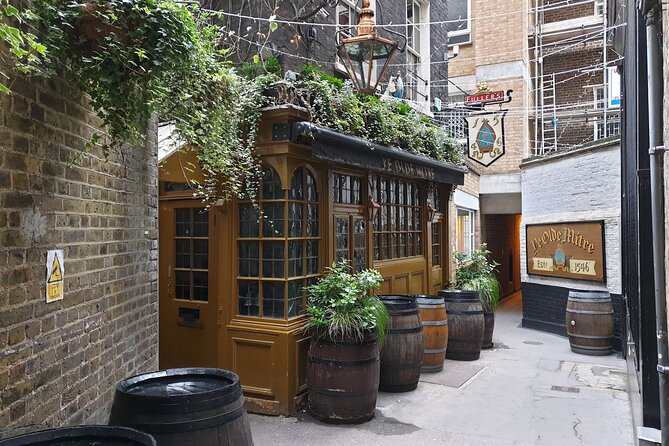
Ye Olde Mitre is tucked down an alleyway and described as a hidden pub with a long atmosphere. The tour ends on Ely Place, around the corner from Farringdon Station, placing you near this pub and the final part of the route.
This is a useful ending because it gives the walk a social payoff. After two hours of grim stories, you have the option of staying in the area for food or a drink. Tom has also offered dining and pub suggestions, which can save you from ending the experience with no idea where to go next.
The pub itself is not included as a meal or tasting, so budget separately if you want to stop there. Some people may consider that a missed opportunity, especially after hearing about the place. Others will appreciate being given a good local option without paying for a fixed lunch.
The end point at Ely Place is practical. It is close to Farringdon Station and easier for continuing around London than returning to the starting point.
St. Bartholomew’s Hospital and the human side of medicine
The final listed stop is the St. Bartholomew’s Hospital Museum, described as the oldest surviving hospital in the country. It adds another important piece to the area’s story: how London cared for the sick while facing plague, injury, poverty, and overcrowding.
A hospital is a fitting final subject for a tour that began with a plague pit and passed through the Knights Hospitallers. The route traces changing responses to illness, from medieval religious care to later medical institutions.
The museum stop is allotted about 10 minutes, so you should not expect time for a full museum visit. The tour gives you a short introduction and helps you decide if you want to return on your own.
Price, pace, and group size
At $27.73 per person, this is priced below many long London sightseeing experiences. You are paying for a two-hour guided walk, not transport, food, or broad entry to a series of attractions.
The price makes sense if you want interpretation. London’s old streets are easy to walk, but the meaning of a plague pit, a small memorial, or a buried river is not always obvious. A good guide turns ordinary-looking places into a connected story.
The group limit of 15 is another reason the price feels fair. Small groups are better for narrow lanes and old churches, and Tom’s style appears suited to questions and conversation. The tour is not a private experience, but it should feel more personal than a large coach or crowd-based walk.
The walk lasts about two hours and covers many stops. It is described as not too taxing, but you should still be comfortable walking between locations and standing while the guide speaks. Good weather is required, and poor weather can lead to a new date or a full refund.
Who should book this London walk?
I would choose this tour if you have already seen the major landmarks and want a more local view of central London. It also works well early in a stay because the guide can point out places you may want to revisit, including churches, museums, pubs, and streets you would otherwise miss.
It suits:
- Adults and older children interested in dark history
- Repeat visitors who have covered the Tower and Westminster
- People who enjoy old churches, city planning, and local stories
- Film fans who like occasional location details
- Anyone who prefers a small walking group
- Visitors who want an English-language tour with a human guide
It may not suit you if you dislike stories of executions, plague, disease, or unsanitary living conditions. It is also not ideal if you want long indoor visits, a meal included in the price, or a tour focused on royal London.
You can cancel for a full refund up to 24 hours before the start time. Changes made inside that period are not accepted, and the weather policy applies if the operator cancels.
Should you book Burnings, Butchery & Black Death?
Yes, if you want London history with its gloves off. The strongest parts are the local scale, the range of subjects, and the way the route links places that can look ordinary until someone explains what happened there.
The tour earns its price through storytelling rather than expensive admissions. Tom’s approach, with humor, strong subject knowledge, filming details, and practical pub suggestions, adds personality to a compact route. The small group also gives you a better chance to hear and ask questions.
Book it if you want plague pits, old hospitals, market violence, Victorian sanitation, and forgotten lanes. Skip it if you want a gentle overview of famous sights. For a visitor ready to see the City of London as a place shaped by fear, work, illness, punishment, and survival, this is a smart two-hour choice.
FAQ
How long does the tour last?
The walking tour lasts approximately two hours.
What is the price?
The listed price is $27.73 per person.
Where does the tour start?
It starts at Underground Ltd on Aldersgate Street, Barbican, London EC1A 4JA, UK.
Where does the tour end?
The tour ends on Ely Place, around the corner from Farringdon Station.
What language is the tour offered in?
The tour is offered in English.
How many people can join the tour?
The maximum group size is 15 people.
Is the ticket mobile?
Yes. A mobile ticket is provided.
Is admission included at the sites?
The tour includes admission to the Church of St. Bartholomew the Great. The other listed stops are shown with no admission charge, and the tour itself is included in the booking.
Can I cancel for a refund?
You can cancel at least 24 hours before the start time for a full refund. Cancellations or changes made less than 24 hours before the start time are not accepted for a refund. If poor weather causes the tour to be canceled, you will be offered another date or a full refund.
Just added around London
- Private The Beatles Taxi Tour in London★ 5.0 · 12 reviews
- Dinner and Jazz Cruise on the River Thames★ 4.0 · 140 reviews
- Airport Coach Service from Heathrow to Oxford★ 3.5 · 67 reviews
- The Alfred Hitchcock London Walk with Sandra Shevey★ 5.0 · 15 reviews
- Tower of London & 30+ London Sights Walking Tour★ 4.5 · 33 reviews
- Thames Beachcombing★ 4.5 · 100 reviews
- Ted Lasso London Taxi Tour★ 5.0 · 5 reviews
- Ted Lasso Tour of Richmond with Private Guide★ 5.0 · 25 reviews
Walking Tours, compared.
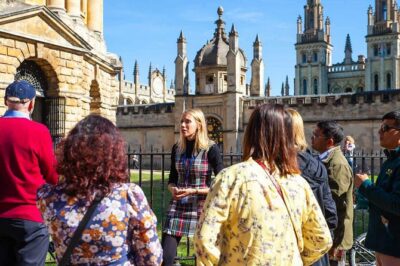
Oxford University Walking Tour With University Alumni Guide
Read our review →
Tour for Muggles The Ultimate Harry Potter Walking Tour in London
Read our review →
Cambridge University Walking Tour by Alumni™ Kings College Option
Read our review →
Blackbeard to Banksy – The Ultimate Walking Tour of Bristol
Read our review →
Air Raid Shelter + St. Nicholas Market Walking Tour
Read our review →
Walking Tour of Bath with Blue Badge Tourist Guide
Read our review →