
Reviewed · WALKING TOURS
Walking Tour of Bath with Blue Badge Tourist Guide
Bath reveals itself best on foot, and this two-hour Blue Badge tour gives you a clear first look at the city’s Roman streets, Georgian crescents, grand squares, and famous bridges. Guides including Jess, Andrew, Victoria, and Owen have led groups with humor, energy, and plenty of detail.
I like the strong route, which links major sights without wasting time, and the fact that your guide explains how Bath changed from Roman settlement to fashionable Georgian resort. The main catch is simple: you do not go inside the attractions, and the walk can include uphill sections or stairs.
Key things to know before you book
- Bath Abbey begins and ends the walk: Meet in Abbey Churchyard, then return to the same area after the circuit.
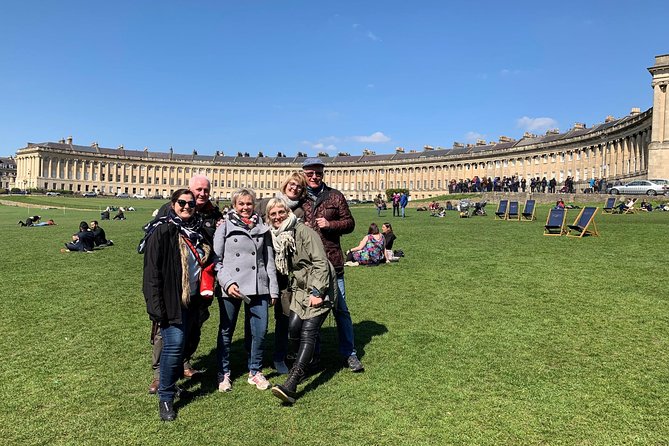
- The Royal Crescent and Circus are highlights: You get a close look at Bath’s finest Georgian architecture without paying attraction-entry fees.
- The Roman Baths are viewed from outside: The tour explains Roman Aquae Sulis, but admission is separate.
- Blue Badge guides lead the walk: Jess, Andrew, Victoria, Owen, and other certified guides are praised for clear storytelling and humor.
- The route covers a lot in two hours: It is a useful first orientation, especially if Bath is new to you.
- The group can reach 20 people: That keeps the tour more personal than a large coach outing, though busy streets and weather still matter.
A brisk introduction to Bath’s many layers
Bath is compact, but its story is not. In a few city blocks, you move from Roman bathing culture to medieval worship, Georgian town planning, literary connections, wartime damage, and modern filmscapes. This walk gives you the basic map and the larger story before you decide where to spend more time.
The tour costs $30.51 per person, which is a fair price for a certified guide and two hours of well-planned sightseeing. You are paying for interpretation rather than admission. If you would otherwise wander past the Circus or Pulteney Bridge without understanding what makes them important, the guide earns the fee quickly.
The biggest value comes from context. A pretty building is easy to photograph. It is more useful to understand how the building fits into Bath’s social and architectural history, who shaped the city, and why its streets look so carefully arranged.
A few more Bath trips to weigh up
- Roman Baths and Bath City Walking Tour
★ 4.5 · 762 reviews - Best of Bath Walking Tours – Georgian Tour
★ 5.0 · 449 reviews - Bad of Bath fun Walking Tour of Bath
★ 5.0 · 402 reviews
Meeting beside Bath Abbey
The meeting point is in front of Bath Abbey in Abbey Churchyard, at Abbey Street, Bath BA1 1LY. Look for the tour flag and A board, though bad weather can affect the meeting setup. On one difficult day, the guide used an orange and white company umbrella instead of the flag, so arrive early and pay close attention to the guide or operator’s identifying mark.
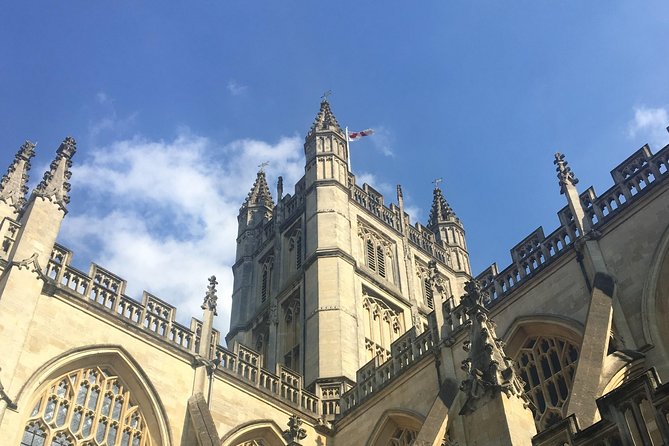
The walk starts with Bath Abbey itself. Your guide explains the Gothic church you see today, along with the earlier churches that occupied this site. You also get a quick outline of Bath’s long story, which helps the later stops fit together.
The Abbey is a useful starting point because it anchors the city both physically and historically. It also gives you an immediate lesson in a distinction that can confuse first-time visitors: an abbey, a cathedral, and a parish church are not interchangeable terms. The tour returns here at the end, when you can ask questions and clarify anything you missed.
Admission to Bath Abbey is not included. The tour stays focused on the exterior and the surrounding churchyard.
Queen Square and the marks of wartime Bath
From the Abbey, the route continues to Queen Square. Here the focus shifts to architecture and the damage Bath suffered during bombing in 1942.
Queen Square is a good place to see how Bath’s Georgian character depends on more than one grand building. The proportions, façades, and relationship between the buildings matter as much as any single doorway. Your guide adds the human and historical side of the scene by discussing the Second World War damage.
This stop helps prevent Bath from becoming a postcard-only experience. The city is famous for elegant stone terraces, but it has also endured conflict, rebuilding, and change. You get a reminder that even carefully preserved historic cities have modern scars.
No. 1 Royal Crescent and the Georgian ideal
No. 1 Royal Crescent brings you to one of Bath’s best-known architectural addresses. The tour discusses the building’s design, stories connected with it, and the culture that grew around Georgian Bath.
The Royal Crescent is best understood as a planned statement of status. Its sweeping curve is elegant, but the social message is just as important. This was architecture designed to impress, and your guide helps you read the façades as part of a wider culture of fashion, money, leisure, and social display.
You will not enter No. 1 Royal Crescent on this walk. That limitation matters if you want furnished interiors or a more intimate look at Georgian domestic life. Still, seeing the crescent as part of the walking route lets you place it within the city instead of treating it as an isolated museum.
Same country, a completely different day out:
- Stonehenge, Avebury & the Cotswolds from Bath (Small group)
★ 5.0 · 798 reviews - Fully Guided Bath Ghost Tours
★ 5.0 · 539 reviews - The Cotswolds Tour From Bath (Small group)
★ 5.0 · 349 reviews - Bath Tootbus Hop-on Hop-off Sightseeing Bus Tour
★ 4.5 · 247 reviews
The Circus, where design becomes urban theatre
The Circus is another major Georgian set piece. The stop covers architecture, stories, and history, with time to take in the unusual circular arrangement.
This is one of the places where a guide adds real value. On your own, you see a handsome circle of stone buildings. With explanation, you can pay attention to the repeated details, the scale of the façades, and the way the space was designed to create a sense of grandeur.
The Circus and Royal Crescent work well together because the tour lets you compare two different forms of Georgian planning. One sweeps outward in a long arc. The other gathers buildings around a central space. The walk is not only about isolated sights. It shows you how Bath was built as a connected city.
Pulteney Bridge and the River Avon
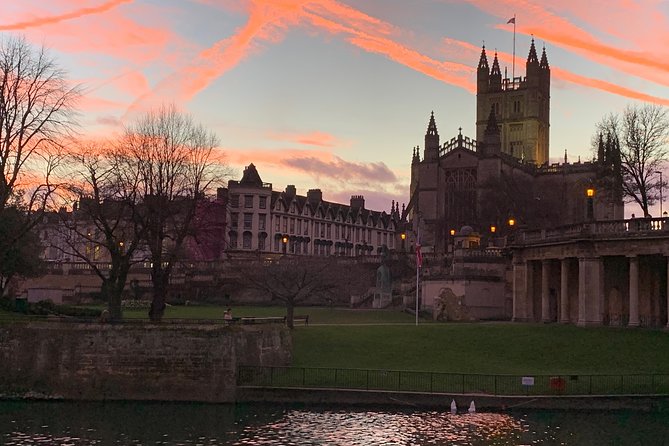
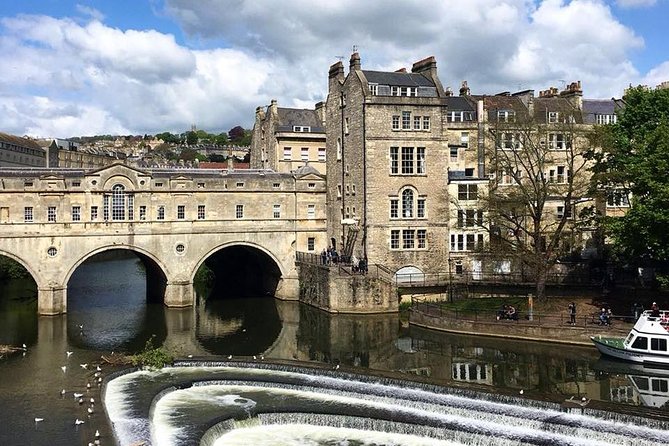
Pulteney Bridge changes the mood. Here, the route brings in architecture, local stories, the river, history, and filmscapes.
The bridge is famous for its unusual design and its shops built into the structure. The river adds another layer, making this a more open and scenic pause after the enclosed urban spaces around the Circus and Royal Crescent.
The filmscape angle is a nice touch for anyone interested in how Bath appears on screen. The guide does not simply point out a bridge and move on. You get a sense of why this particular view has such visual power.
This is also a useful orientation point. By this stage, you have seen Bath’s upper Georgian terraces and central squares, and Pulteney Bridge helps you understand the river’s role in the city’s layout. Bring a camera, but do not let the photo stop distract you from the explanation.
Sally Lunn’s and the older city beneath the Georgian one
The stop at Sally Lunn’s Museum brings attention back to Bath’s earlier buildings, stories, and history. It is a reminder that Georgian Bath was built over an older city rather than created from nothing.
The location helps show the mix of architectural periods you encounter in central Bath. Grand terraces get most of the attention, but the older lanes and buildings provide the texture between those formal set pieces.
The museum itself is not included as an admission visit. You are seeing the setting and hearing the story, then moving on. That is useful for planning: if Sally Lunn’s is on your personal must-see list, save time after the walk rather than assuming the tour includes entry.
Back to Bath Abbey for questions and perspective
The route returns to Bath Abbey before the final Roman stop. Your guide gives an overview of the walk and allows time for questions.
This return is more useful than it may sound. After two hours of new names, dates, buildings, and stories, you have a chance to connect the pieces. Ask about the Royal Crescent, the Roman settlement, the Abbey, or places you want to revisit.
The guides are repeatedly praised for making the walk feel like a conversation rather than a speech. Jess is especially noted for high energy, humor, and enthusiasm. Andrew is described as witty and precise with questions, while Victoria and Owen are also singled out for strong explanations and engaging delivery.
Of course, guides vary from day to day, so do not book expecting one named person unless your confirmation specifically says so. The consistent feature is the Blue Badge qualification and the company’s roster of experienced local guides.
The Roman Baths from the outside
The final stop is at the entrance to the Roman Baths. Here you discuss the Roman occupation of Bath, known in Roman times as Aquae Sulis.
This is the natural ending because it brings the city’s story back to its earliest major chapter. The Abbey and Roman Baths sit together in the same central area, making the contrast especially clear: one represents Christian worship and medieval rebuilding, while the other points to Roman engineering, bathing, and religious life.
You do not enter the Roman Baths during the walking tour. Admission is not included, and this is the one limitation most likely to affect your schedule. If you want to visit inside, you need to buy a separate ticket and allow extra time.
Plan this carefully if you have only one day in Bath. The walk is a good first activity, but adding the Roman Baths afterward may leave you rushing through the interior. If the Baths are your top priority, consider allowing a generous block of time after the tour instead of trying to squeeze in a quick visit.
What the two-hour format does well
Two hours is enough to cover Bath’s main central sights without turning the outing into an endurance test. The route is structured, circular, and efficient. You get a broad introduction rather than a long stop at every building.
I like this format for a first morning in Bath. It gives you a mental map, then leaves the rest of the day for the Roman Baths, Bath Abbey, lunch, shopping, or a museum. Morning and afternoon departures also make it easier to fit around a train journey or another booking.
The pace is generally described as comfortable, but this is still a city walking tour. You may cover a fair amount of ground, and one direct account points out uphill stretches and stairs. Wear sensible shoes and be ready for changing weather.
The tour requires a moderate level of fitness. It is not presented as an accessible route for every mobility level, and the supplied information does not promise step-free access throughout. If you have mobility concerns, ask the provider before booking.
Guide quality and group size
A Blue Badge Tourist Guide is a strong reason to choose this walk. The qualification signals formal training and local expertise, but the more important question is how that expertise reaches you. Here, the praised qualities are enthusiasm, humor, accurate answers, and the ability to keep a group involved.
Jess receives particularly strong attention for making history lively and personal. Andrew is valued for detailed answers and wit. Victoria is praised for combining extensive knowledge with humor, and Owen for covering a lot of ground while keeping the information clear.
The maximum group size is 20 people. That is small enough for questions and easier listening than a large city group, though it is not a private tour. On wet or windy days, you may need to stay close to hear clearly and identify the guide.
Dogs are welcome if well behaved, and service animals are allowed. The meeting area is near public transportation, which is helpful if you are arriving by train or local bus.
Is $30.51 good value?
At $30.51, this is not the cheapest way to stroll around Bath, but it is reasonably priced for two hours with a qualified guide. The value depends on how much you want interpretation.
You can walk past the Abbey, Circus, Royal Crescent, Pulteney Bridge, and Roman Baths on your own for free. You cannot easily replace the guide’s connected explanation of how Roman, medieval, Georgian, wartime, and modern Bath fit together.
I would book it if you are visiting Bath for the first time, have limited time, or enjoy architecture and social history. I would skip it if you prefer to explore silently at your own pace or plan to spend the whole day inside attractions.
The tour also saves you from spending your first hour figuring out the city’s layout. That practical benefit is easy to overlook. Afterward, you know which places deserve a closer visit and which streets are worth wandering.
Weather, timing, and booking advice
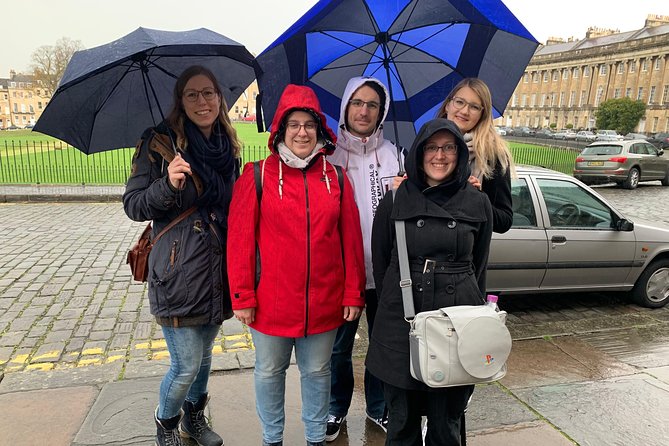
This experience requires good weather. If poor weather causes cancellation, you are offered another date or a full refund. Even when the tour runs in drizzle, bring waterproof clothing, since much of the experience takes place outdoors.
You can choose a morning or afternoon departure. Morning is best if you want to use the tour as your orientation and visit the Roman Baths or Abbey afterward. An afternoon departure works well if you arrive later or want a slower start.
The tour is often booked well ahead, with an average booking time of about 25 days in advance. That does not guarantee every departure sells out, but it is a useful sign to reserve early for a fixed Bath itinerary.
Free cancellation is available until 24 hours before the start time. Cancellations or changes inside that window are not refunded or accepted, so check your train plans and weather-sensitive schedule before the deadline.
Who should take this Bath walk?
I would recommend it to first-time visitors, history fans, architecture lovers, and anyone with only a day in Bath. It also suits people who want a lively guide rather than a recorded audio tour.
Families can benefit from the stories and manageable duration, especially if children enjoy buildings, Roman history, or films. Dogs are welcome when well behaved, though you still need to manage the streets and group pace.
The tour is less suitable if you want interior visits, a fully private experience, or a route designed around limited mobility. It is also not the best choice if you dislike walking in uncertain weather.
Should you book the Walking Tour of Bath?
Book it as your Bath introduction. The route covers the city’s signature sights, the guides bring real energy, and the price is fair for two hours of well-informed local storytelling.
Just keep your expectations clear. You are getting an outdoor orientation, not admission to the Roman Baths, Bath Abbey, No. 1 Royal Crescent, or Sally Lunn’s Museum. If you want to explore those interiors, schedule them separately.
My best plan would be to take the walk early, ask the guide for advice on what to revisit, then choose one or two attractions for a slower visit. That approach gives you both the city’s big picture and time for the details.
FAQ
Where does the Walking Tour of Bath start?
It starts in front of Bath Abbey in Abbey Churchyard, Abbey Street, Bath BA1 1LY, United Kingdom.
Where does the tour end?
The walk ends back at the meeting point, in front of the Roman Baths and Bath Abbey area.
How long does the tour last?
The tour lasts approximately two hours.
What language is the tour offered in?
The tour is offered in English.
Is admission to Bath Abbey included?
No. The walking tour discusses Bath Abbey from the outside, but admission is not included.
Can I enter the Roman Baths during the tour?
No. The route views the entrance and discusses the Roman settlement, but Roman Baths admission is not included.
Does the tour enter No. 1 Royal Crescent?
No. The tour covers the building’s architecture, stories, and culture from the walking route. Entry is not included.
How many people can join the tour?
The maximum group size is 20 people.
Are dogs and service animals allowed?
Service animals are allowed, and well-behaved dogs are welcome with responsible owners.
What happens if bad weather cancels the tour?
If the experience is canceled because of poor weather, you will be offered a different date or a full refund.
Just added around Bath
- Wells, Cheddar Cheese and Cheddar Gorge – Private Day Trip from Bath★ 5.0 · 10 reviews
- BATH: 2-Hour Bath Walking Tour of Bridgerton Filming Locations★ 5.0 · 99 reviews
- The Splendour of Georgian and Victorian Era Bath: A Self-Guided Audio Tour★ 4.0 · 3 reviews
- Secrets of Stonehenge Private Half-Day Tour from Bath★ 5.0 · 6 reviews
- Stonehenge and Bath City Tour – Private tour from Bath★ 5.0 · 33 reviews
- Private Guided Ghost Tour of Bath★ 5.0 · 20 reviews
- Private Tour of Quintessential Wiltshire and Cotswold Villages★ 5.0 · 14 reviews
- Stonehenge Private Full-Day Tour from Bath for 2-8 guests★ 5.0 · 23 reviews
Walking Tours, compared.

Oxford University Walking Tour With University Alumni Guide
Read our review →
Tour for Muggles The Ultimate Harry Potter Walking Tour in London
Read our review →
Cambridge University Walking Tour by Alumni™ Kings College Option
Read our review →
Blackbeard to Banksy – The Ultimate Walking Tour of Bristol
Read our review →
Air Raid Shelter + St. Nicholas Market Walking Tour
Read our review →
Changing of the Guard Guided Walking Tour in London
Read our review →
Shadows of York: Ghost Walk and Horrible History.
Read our review →Browse the lists this tour appears in