
Reviewed · WALKING TOURS
Best of Bath Walking Tours – Georgian Tour
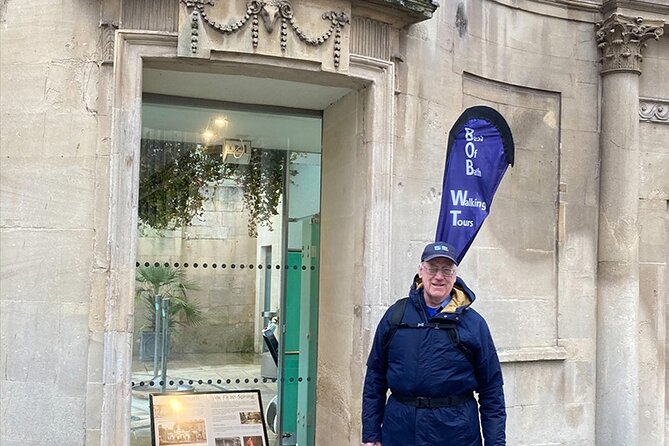
Bath’s Georgian buildings make more sense when you see how they fit together. This 2 to 3 hour walk with Bob, a warm and witty local guide, links Queen Square, the Circus, Royal Crescent, Pulteney Bridge, and other central sights into one clear story.
I like the small group limit of 15, which makes it easier to ask questions, and I like that the tour focuses on people and everyday stories as much as grand façades. The main consideration is that it is an outdoor walking tour, and entry to places such as the Roman Baths and Assembly Rooms costs extra.
Key points at a glance
- See Bath’s Georgian set pieces in one walk: Queen Square, the Circus, Royal Crescent, Pulteney Bridge, and the Assembly Rooms all feature.
- Meet at Bath Abbey at 1 p.m.: The tour begins and ends in Abbey Churchyard, a handy central location.
- Expect a relaxed pace: The walk usually takes about two hours, though questions and conversation can extend it.
- Hear the stories behind the buildings: Bob explains architects, residents, social life, hot springs, and Bath’s changing fortunes.
- Small groups keep it personal: The maximum group size is 15 people.
- Budget for separate admissions: The walk itself includes exterior viewing, while selected indoor attractions charge their own entry fees.
Why Georgian Bath is best understood on foot
Bath can look almost too polished at first glance. The honey-colored stone, broad crescents, and grand squares are beautiful, but a self-guided stroll can leave you seeing a series of handsome buildings without understanding the plan behind them.
This tour gives that plan a human shape. You move through the city as Georgian Bath expanded, connecting John Wood the Elder’s ideas with the work of his son, the social world of balls and gambling, and the practical business of attracting people to the mineral springs.
I especially like the focus on architectural details you might walk past alone. One particularly useful part of the experience is the attention to features below eye level, including an old medieval path near the river and the line of the ancient city wall. Those are the details that reward a slower walk through Bath.
The route also reaches beyond architecture. You hear about the people who built, lived in, and used the city. That makes the Circus and Royal Crescent feel less like museum pieces and more like parts of a working town.
A few more Bath trips to weigh up
- Walking Tour of Bath with Blue Badge Tourist Guide
★ 5.0 · 1,877 reviews - Roman Baths and Bath City Walking Tour
★ 4.5 · 762 reviews - Bad of Bath fun Walking Tour of Bath
★ 5.0 · 402 reviews
Starting at Bath Abbey’s churchyard
The meeting point is Abbey Churchyard, in front of Bath Abbey, officially the Abbey Church of Saint Peter and Saint Paul. Arrive ready to walk, since this is a sight-led tour rather than a talk delivered from one fixed spot.
The abbey gives you a fitting starting point. Its story reaches back to the seventh century, with later changes in the tenth, twelfth, and sixteenth centuries. You begin among the layers of Bath rather than jumping straight into the Georgian period.
From here, the walk moves through the central streets and squares. The location is near public transportation, and returning to the same place at the end is useful if you have onward plans in Bath.
The start time is 1 p.m., so this works well as an afternoon introduction after arriving by train or spending the morning at another attraction. One person with a few hours before catching a train found the roughly two-hour format a particularly good fit.
The Roman Baths and Bath’s hot springs
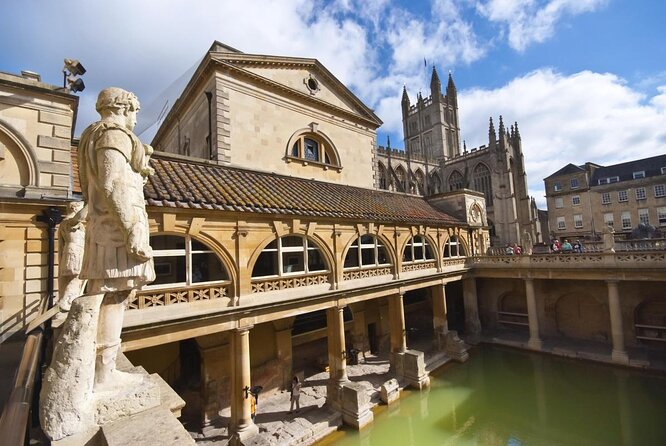
The Roman Baths receive a brief stop, about five minutes, from outside. The entrance fee is not included, so you should treat this part of the walk as an explanation and orientation rather than a visit inside the museum.
That distinction matters. If the Roman Baths are high on your list, you may want to book separate admission and return at another time. The guided walk helps you understand why the site matters, but it does not replace the indoor visit.
The Roman temple here dates from around 60 to 70 AD, during the first decades of Roman Britain. The natural springs shaped Bath for centuries, and the area was altered several times after the Roman period, including during the early and late Middle Ages.
The tour connects the springs to Bath’s later reputation as a place of healing and fashion. You get a useful bridge between Roman Bath and Georgian Bath, rather than treating them as unrelated attractions.
The Royal Mineral Water Hospital
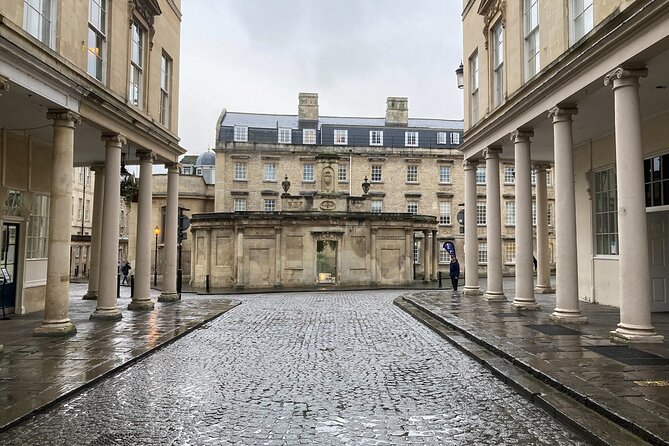
The Royal Mineral Water Hospital gets another short stop, with about five minutes devoted to its story. Construction began in 1737, at a time when faith in the healing power of Bath’s waters was joined by growing interest in scientific explanations.
This is a valuable pause because it shows that the springs were not only a tourist draw. They shaped medical institutions, local income, and the city’s public identity.
The stop is viewed as part of the walk, and admission is not included. If you want to explore the building inside, plan for a separate visit and check its own arrangements.
Same country, a completely different day out:
- Stonehenge, Avebury & the Cotswolds from Bath (Small group)
★ 5.0 · 798 reviews - Fully Guided Bath Ghost Tours
★ 5.0 · 539 reviews - The Cotswolds Tour From Bath (Small group)
★ 5.0 · 349 reviews - Bath Tootbus Hop-on Hop-off Sightseeing Bus Tour
★ 4.5 · 247 reviews
Queen Square begins the Georgian sequence
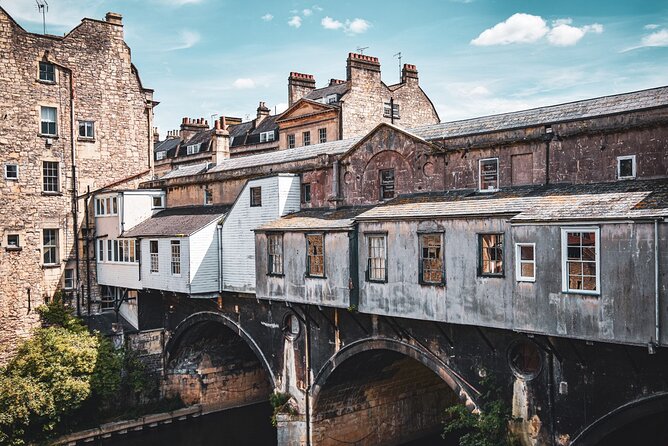
Queen Square is one of the clearest places to understand Bath’s planned Georgian expansion. Its buildings are Grade I listed, and the square forms the first part of a larger architectural sequence that continues toward the Circus and Royal Crescent.
Here, Bob can explain how a square, a circular space, and a sweeping crescent work together. The value is not just in hearing dates and names. You begin to see how Georgian designers used repeated façades, open space, symmetry, and carefully framed approaches to create a sense of order.
Queen Square is also a good point to pause and look around. The buildings may appear uniform from a distance, but small differences become easier to notice when someone directs your attention.
The stop is free and outdoors. It is short, about five minutes in the planned schedule, but the walk allows questions, so the actual pace can vary.
The Assembly Rooms and Georgian social life
The Assembly Rooms represent the social side of Bath’s fashionable period. The upper rooms opened in 1771 and hosted balls, concerts, and gambling. Jane Austen and Charles Dickens were among the famous literary figures connected with Bath’s social world, along with the nobility of the period.
The building is important because it helps explain why people came to Bath. The city was not simply a place to take the waters. It was also a place to see and be seen, meet potential partners, attend music and dancing, and take part in the rituals of fashionable society.
The tour spends around five minutes here, and admission is not included. That makes this another stop where you should decide if you want a separate indoor visit.
I like the balance here. Instead of treating Georgian architecture as a dry subject, the guide ties it to social rules and the people who used these rooms. That is the kind of context that helps a grand building stay in your memory.
The Circus, where the design becomes the lesson
The Circus is one of Bath’s most memorable spaces. It is a circular ring of large townhouses, designed by John Wood the Elder and built between 1754 and 1768. Three entrances open into the circle, and the arrangement ensures that a classical façade faces you as you enter from each one.
This is the point where the tour’s architectural theme becomes especially clear. Look across the curve and notice how the repeated fronts create unity, even though the buildings are separate homes.
The guide’s explanation also helps you understand the ambitions behind the design. Bath’s planners were not merely putting up attractive houses. They were creating a city that suggested classical ideals, social rank, and cultivated taste.
You spend about ten minutes here, outdoors, with no admission charge. It is one of the best places on the walk for photographs, but the explanation is more useful than a quick picture alone.
Royal Crescent and No. 1
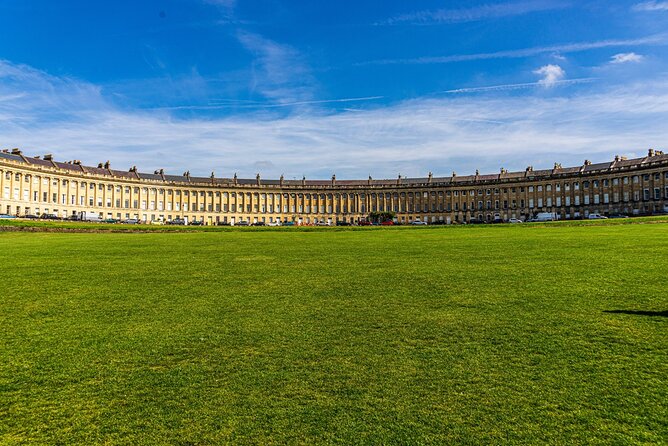
Royal Crescent is Bath’s grandest Georgian sweep: 30 terraced houses arranged in a broad crescent. John Wood the Younger designed it, and construction took place between 1767 and 1774.
The curve gives the building a theatrical quality, but the tour helps you look past the postcard view. The façade is the part most people notice, while the relationship between the front elevation, the open space, and the houses behind it tells a fuller story about Georgian planning.
No. 1 Royal Crescent is treated as a separate point, with about ten minutes allocated to the area. Entry is not included, so you can make your own choice about adding the museum to your day.
This stop suits anyone interested in architecture, period interiors, or the world associated with Jane Austen. It also suits people who simply want to understand why Bath’s most famous view looks the way it does.
Gravel Walk and the smaller details
The route includes Gravel Walk and other parts of central Bath that are easy to miss if you follow only the main streets. This is where a local guide adds real value.
The tour is not limited to the most famous façades. Bob points out side details, old routes, and places connected with the city’s past. The path below street level near the river, running beside the old city wall, is exactly the sort of feature you might never notice without someone showing it to you.
The route has also included places linked with recent filming, including locations associated with Bridgerton. That can be a fun extra, but it does not replace the main focus on Bath’s architecture and history.
The pace is described as gentle and comfortable. You should still expect a moderate level of fitness, since you will be on your feet for around two hours and moving through city streets.
Pulteney Bridge and the river
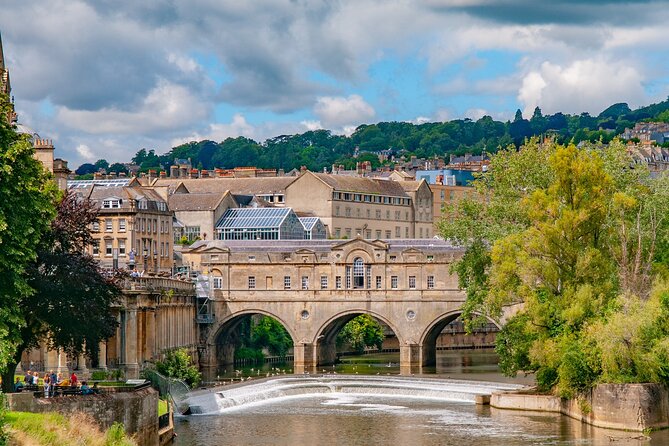
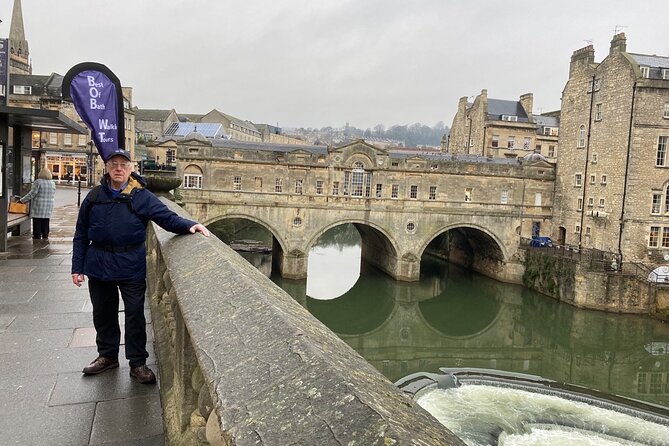
Pulteney Bridge gives the tour a strong finish before it returns toward Bath Abbey. Completed in 1774, the bridge crosses the River Avon and was built to connect Bath with land owned by the Pulteney family, which they hoped to develop.
Its most unusual feature is the row of shops built across the full span on both sides. Designed by Robert Adam in the Palladian style, it feels more like a street suspended over the river than a simple crossing.
The stop lasts about five minutes and is free to view. I would take a moment here to look through the shopfronts and down toward the water. It is a good reminder that Georgian design served commercial aims as well as visual ones.
Bath Guildhall Market and the return
The Guildhall Market provides a change of mood after the grand squares and crescents. It is an indoor market in a handsome building, with stalls to browse. The market has been established since 1284.
You spend about five minutes here, enough to look around without turning the walk into a shopping trip. The stop gives you a glimpse of Bath as a lived-in city, not only a collection of historic monuments.
The walk ends back in Abbey Churchyard. Bob stays available for further discussion, and the final conversation can be useful if you want suggestions for what to see next. Since the scheduled walk is about two hours but can run longer when the group asks questions, leave some flexibility after the stated finish.
Bob’s guiding style
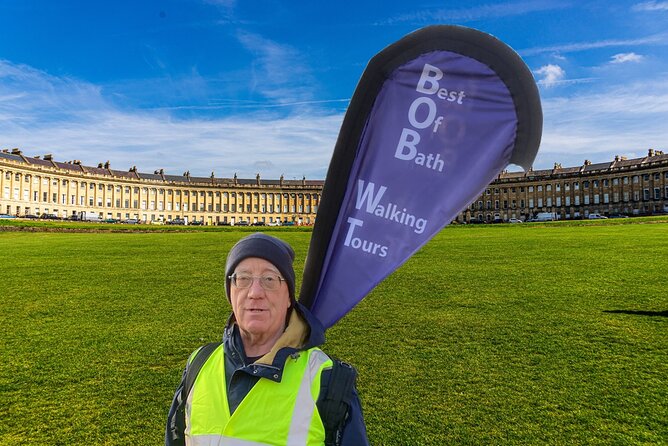
Bob is the central reason this tour feels personal rather than mechanical. His approach combines detailed knowledge of Bath with dry humor and a willingness to answer questions.
I like that the talk is not overloaded with facts. The strongest parts connect buildings with the people behind them, then leave room for questions. If Bob is unsure about a point, he is comfortable saying so, which makes the experience feel more trustworthy than a nonstop stream of confident claims.
He also keeps an eye on the group and checks the pace. That matters on a walking tour, especially when ages and fitness levels differ. The maximum group size is 15, small enough for a more direct exchange without making the tour private.
The experience can also be flexible in small ways. Bob has shown extra locations when time and circumstances allowed, including a filming spot that was not part of the main route. Do not count on every extra, but it is worth asking questions and staying curious.
Price, timing, and what you actually receive
At $27.73 per person, the tour is priced as an affordable introduction to Bath. You are paying for roughly two hours of focused guiding, local interpretation, and navigation through a city whose architectural plan is not always obvious from street level.
The value is strongest if you are new to Bath or have limited time. A self-guided walk costs nothing, but it also gives you no help with the connections between the Roman springs, Georgian expansion, medical institutions, social life, and commercial development.
The price does not cover entry to the Roman Baths, Assembly Rooms, No. 1 Royal Crescent, or the Royal Mineral Water Hospital. That is not a flaw, but you should include those costs in your day’s budget if you want to go inside.
The tour is offered in English and uses a mobile ticket. Free cancellation is available up to 24 hours before the 1 p.m. start time. Poor weather or failure to reach the minimum number of participants can lead to a new date or a full refund.
Who should book this Bath walk
I would choose this tour if you want a clear introduction before exploring Bath on your own. It is especially useful for:
- First-time visitors who want to get their bearings quickly.
- People interested in Georgian architecture and city planning.
- Jane Austen and period-drama fans who want historical context alongside filming references.
- Visitors with only an afternoon or a few hours before a train.
- Anyone who prefers stories and conversation to reading plaques alone.
You may want a different plan if your main goal is extended indoor time at the Roman Baths or No. 1 Royal Crescent. Those attractions are only brief stops on this walk, and their admission fees are separate.
The tour also suits independent visitors who have already walked around Bath. A guide can still point out features you missed, including older paths, wall remnants, and architectural details that are easy to overlook.
Should you book Best of Bath’s Georgian Tour?
Book it if you want Bath to become more than a series of pretty stone buildings. Bob’s tour gives you the names, dates, design ideas, social setting, and local stories that make Queen Square, the Circus, Royal Crescent, and Pulteney Bridge easier to read.
At $27.73, it is a sensible way to spend an afternoon, particularly if you have not visited Bath before. Just remember that this is a walking introduction, not a set of indoor admissions. Wear comfortable shoes, keep your schedule flexible, and reserve separate time and money for the Roman Baths or other museums you want to enter.
FAQ
Where does the Georgian Tour start?
The tour starts in Abbey Churchyard, Bath BA1, in front of Bath Abbey.
What time does the tour begin?
The stated start time is 1 p.m.
Where does the tour finish?
The walk ends back at Abbey Churchyard, the same place where it begins.
How long does the tour last?
The tour lasts approximately 2 to 3 hours. The main walk is planned for about two hours, but questions and discussion can extend the finish.
How much does the tour cost?
The listed price is $27.73 per person.
Is the tour offered in English?
Yes. The tour is offered in English.
Are attraction admission fees included?
No. Admission to places such as the Roman Baths, the Assembly Rooms, No. 1 Royal Crescent, and the Royal Mineral Water Hospital is not included.
How many people can join the tour?
The maximum group size is 15 travelers.
Can I cancel for a refund?
Yes. You can cancel at least 24 hours before the experience start time for a full refund. Changes or cancellations made less than 24 hours in advance are not accepted for a refund.
Just added around Bath
- Wells, Cheddar Cheese and Cheddar Gorge – Private Day Trip from Bath★ 5.0 · 10 reviews
- BATH: 2-Hour Bath Walking Tour of Bridgerton Filming Locations★ 5.0 · 99 reviews
- The Splendour of Georgian and Victorian Era Bath: A Self-Guided Audio Tour★ 4.0 · 3 reviews
- Secrets of Stonehenge Private Half-Day Tour from Bath★ 5.0 · 6 reviews
- Stonehenge and Bath City Tour – Private tour from Bath★ 5.0 · 33 reviews
- Private Tour of Quintessential Wiltshire and Cotswold Villages★ 5.0 · 14 reviews
- Stonehenge Private Full-Day Tour from Bath for 2-8 guests★ 5.0 · 23 reviews
- Private Guided Ghost Tour of Bath★ 5.0 · 20 reviews
Walking Tours, compared.
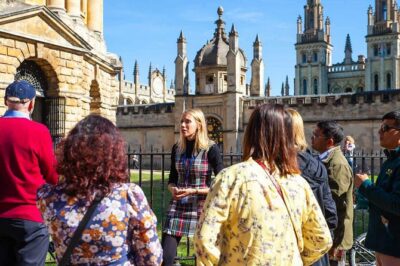
Oxford University Walking Tour With University Alumni Guide
Read our review →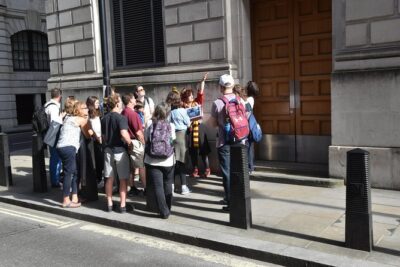
Tour for Muggles The Ultimate Harry Potter Walking Tour in London
Read our review →
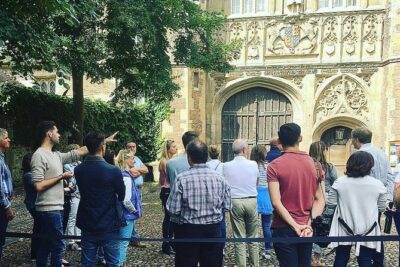
Cambridge University Walking Tour by Alumni™ Kings College Option
Read our review →
Blackbeard to Banksy – The Ultimate Walking Tour of Bristol
Read our review →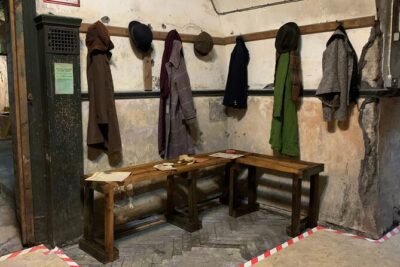
Air Raid Shelter + St. Nicholas Market Walking Tour
Read our review →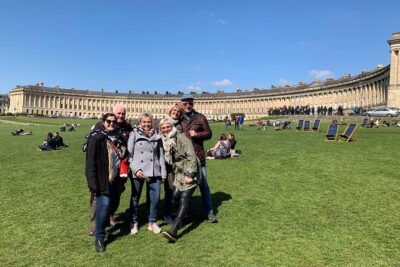
Walking Tour of Bath with Blue Badge Tourist Guide
Read our review →
Changing of the Guard Guided Walking Tour in London
Read our review →Browse the lists this tour appears in