Reviewed · WALKING TOURS
London: Churchill & World War 2 Walking Tour
London’s wartime story comes alive on foot, one government building and memorial at a time. This tour follows Winston Churchill’s public and private connections to Westminster, from the statue in Parliament Square to the church where he married Clementine, then finishes outside the famous Churchill War Rooms.
I like the compact central-London route, which links major sights without requiring a bus or Tube transfer during the walk. I also like the mix of military and civilian stories, including the Battle of Britain Memorial and the Women of World War II Memorial. The main catch is important: the Churchill War Rooms are exterior only, so you must buy a separate ticket if you want to enter the bunker.
Key points at a glance
- Churchill’s London in one walk: Follow his wartime story through Downing Street, Parliament Square, Whitehall, and the Treasury.
- The Churchill War Rooms are not included: The tour ends outside the entrance, making it easy to visit afterward if you reserve admission separately.
- A strong memorial route: See the Battle of Britain Memorial, Women of World War II Memorial, and Cenotaph.
- Personal details add character: The walk includes Churchill’s marriage at St Margaret’s Church and stories connected to his favorite pub.
- Good value at $19.01: You pay for a guided introduction to several central sights, not for museum admission.
- Plan for steady walking: The route lasts about 2 to 3 hours and is not suitable for prams, buggies, or people with walking or mobility difficulties.
Why Churchill’s wartime London works best on foot
Many London visitors see Westminster as a collection of grand buildings. This walk gives those buildings a clear role in the events of World War II. Parliament becomes the place where Churchill rallied the country. Downing Street becomes the center of government. The Cenotaph becomes more than a familiar Whitehall landmark.
That connection is the real value of the tour. You are not simply looking at façades and taking photographs. You are hearing how political decisions, military planning, public morale, and personal sacrifice came together in a small part of central London.
The experience is conducted in English and lasts roughly two to three hours. It begins at Embankment station at 1:30 pm, then moves through Westminster before ending at King Charles Street, in front of the Churchill War Rooms. A group limit of 25 people keeps it from becoming an enormous parade, though the exact feel will depend on the day’s attendance.
At $19.01 per person, the price is modest for London. You are paying for a guided walk, not a full museum visit, so the best comparison is with other short city walks. If you want context before exploring Westminster on your own, the cost is reasonable. If you expected entry to the underground bunker, it will feel incomplete unless you add that visit separately.
A few more London trips to weigh up
- Tour for Muggles The Ultimate Harry Potter Walking Tour in London
★ 5.0 · 4,684 reviews - London Jack The Ripper Guided Walking Tour
★ 5.0 · 3,131 reviews - Changing of the Guard Guided Walking Tour in London
★ 5.0 · 1,793 reviews
Starting at Embankment and heading toward Whitehall
The meeting point is Embankment station on Embankment Place. This is a practical starting location near the Thames and central London transport network, but give yourself enough time to find the correct spot before the 1:30 pm start.
The route then heads toward the heart of British government. Walking is useful here because the important sites are close together, yet their connections are easy to miss when you rush between them. A guide can point out how the political center, military administration, and national memorials fit together.
The walk is not designed for a slow, casual stroll with long café breaks. The itinerary allows only a few minutes at some stops, so expect short explanations, photographs, and continued movement. Wear comfortable shoes and bring weather protection. The tour operates outdoors for most of its duration.
Churchill War Rooms: a powerful finish, but only from outside
The Churchill War Rooms are the most obvious attraction for many people booking this experience. During World War II, this underground complex served as the nerve center of British operations. Churchill, his staff, and government officials worked below ground while London faced bombing.
The tour does not take you inside. You see the exterior and finish at the entrance, but admission is not included. That distinction is repeated in the booking information for good reason, since the name of the experience can easily lead you to assume that the museum is part of the price.
I would treat this walk and the Churchill War Rooms as two linked activities. Take the guided walk first, then enter the museum afterward if you have a separate ticket. The walk gives you a wider Westminster setting, while the museum lets you spend much more time with the bunker itself.
The tour allocates about 10 minutes to this stop. That is enough for orientation and a useful explanation, not enough for the underground exhibition. If the bunker is your main reason for visiting, reserve an entry time independently and allow additional time beyond the two to three hour walk.
Downing Street and the machinery of government
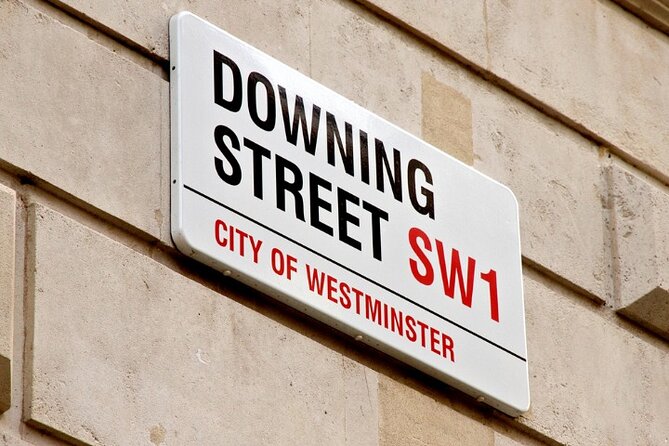
At 10 Downing Street, you reach one of the world’s most recognizable political addresses. No. 10 is the Prime Minister’s residence and office, while No. 11 is associated with the Chancellor of the Exchequer. Together, the addresses represent the practical center of British government.
The stop lasts about 10 minutes and does not include admission. The point is not to tour the interiors. Instead, you hear how government leadership operated during wartime and how Churchill’s role connected political authority with military decision-making.
This is a useful stop for anyone interested in more than battle dates. One particularly good feature of the experience is that the story includes Britain’s government as well as Churchill himself. That broader angle helps explain how wartime Britain functioned, rather than reducing the period to a single heroic figure.
Same country, a completely different day out:
- Stonehenge, Windsor Castle, and Bath from London
★ 4.5 · 18,662 reviews - London Big Bus Hop-On Hop-Off Tour with Optional River Cruise
★ 3.5 · 10,803 reviews - London Small Group Tour of Historical Pubs
★ 5.0 · 10,422 reviews - Stonehenge, Windsor Castle and Bath with Pub Lunch in Lacock
★ 4.5 · 7,402 reviews
Parliament Square and Churchill’s determined bronze figure
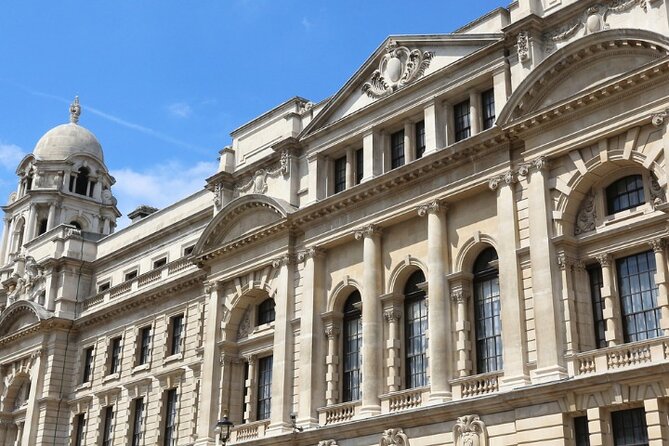
The Winston Churchill statue in Parliament Square provides one of the walk’s clearest photo stops. Churchill is shown in a military overcoat, leaning on his cane, with the Houses of Parliament nearby.
The statue is free to view and the stop lasts about five minutes. That may sound brief, but the setting does much of the work. You can look from Churchill toward the parliamentary buildings and understand why this location was chosen for the memorial.
The guide’s explanation should help place Churchill within the larger defense of democracy during World War II. You will not spend long here, so listen closely and save detailed photography for the end of the explanation.
The Battle of Britain Memorial and the air campaign
The Battle of Britain Memorial honors the Royal Air Force pilots who defended Britain during the 1940 air campaign. Its bronze frieze shows scenes from the battle, with the names of airmen who served included in the memorial.
This is one of the tour’s most focused military stops. The walk gives you time to consider the human cost of the air campaign rather than treating it as an abstract chapter in a textbook. It also creates a useful contrast with the political locations earlier in the route.
The exact time allocated to this stop is not specified, so the guide’s pace may shape how long you have there. If military history is your main interest, this is a place where you may want to linger after the formal walk if the route and group schedule allow.
Parliament, wartime speeches, and continued democracy
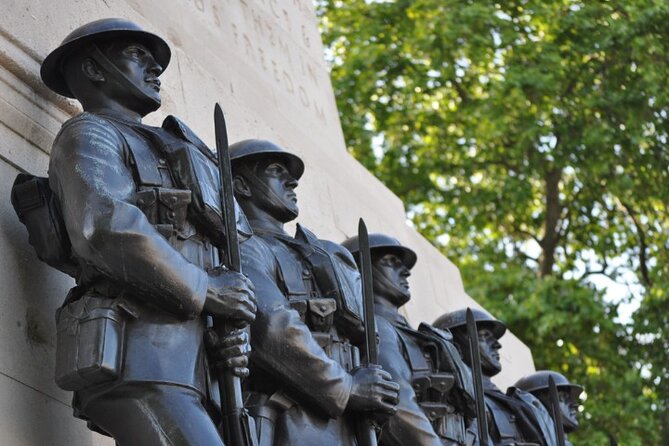
The Houses of Parliament played a major part in Britain’s wartime story. Air raids targeted the building, and the Commons chamber suffered serious damage in 1941. Parliamentary work continued despite the attacks.
Churchill delivered some of his best-known wartime speeches in Parliament, using the chamber as a place to rally the country. The building therefore carries two stories at once: physical damage from the war and the decision to keep democratic government working under pressure.
The stop lasts roughly 10 minutes. Entry is not part of the tour, so you view the exterior and hear the historical explanation from outside. That is enough to understand the location’s importance, though visitors who want to see the interior will need a separate arrangement.
I especially like this part of the route because it moves beyond Churchill as a personality. It shows how buildings, institutions, and public speeches helped maintain national purpose. You get a more balanced picture of leadership when you see the setting where those decisions were made.
The Women of World War II Memorial
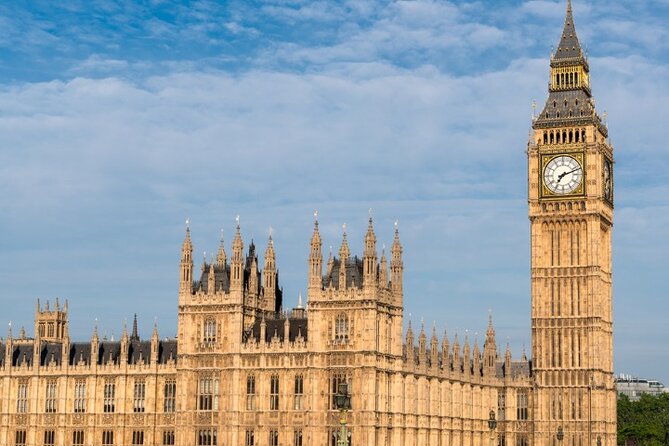
The Women of World War II Memorial honors women who served in civil defense, the armed forces, and wartime industries. The bronze figure wears overalls, representing the essential work carried out away from the front lines.
The stop lasts about five minutes and is free to view. It is short, but its place in the route matters. After hearing about Churchill, military command, and the RAF, you are reminded that the war effort depended on workers in many roles.
This memorial also broadens the tour’s focus. You are not left with a story centered only on famous men and government offices. The guide can connect the figure to the everyday labor and public service that kept Britain operating during the war.
The Cenotaph and national remembrance
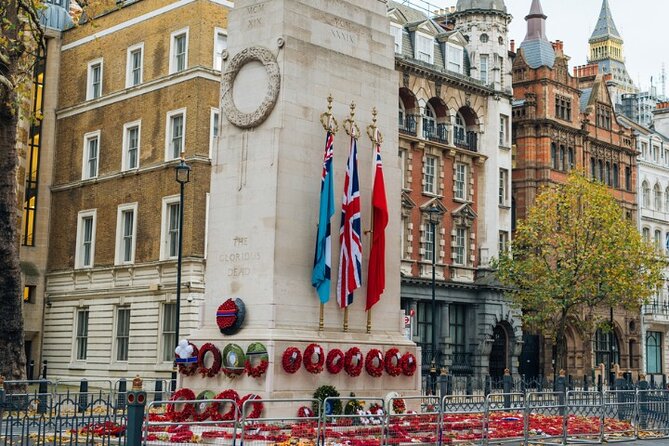
The Cenotaph is one of Whitehall’s most solemn landmarks. It commemorates British and Commonwealth soldiers killed in both World Wars and later conflicts, and it remains the focus of the annual Remembrance Day ceremony on November 11.
The stop is brief, around five minutes, but the memorial needs little decoration. Its simple form and location make it a quiet pause in the middle of the government district.
This is a place for respectful attention rather than a long lecture. The guide’s role is to explain its national meaning and connect it with the wider story of sacrifice. You will have time for a photograph, but this is not the kind of stop where rapid picture-taking feels appropriate.
The Ministry of Defence and wartime administration
The Ministry of Defence occupies the historic Main Building and handles national defense, military affairs, and defense policy. On this walk, you see the headquarters from outside and hear about its role in Britain’s security.
The stop lasts about five minutes. It is less visually dramatic than Parliament or the memorials, but it helps explain the administrative side of war. Military action depends on offices, planning, policy, and supply, not only on soldiers and speeches.
For visitors who like the mechanics of government, this stop adds useful context. For those mainly interested in Churchill’s personal life, it may feel more institutional. The short timing keeps it from slowing the route.
St Margaret’s Church and Churchill’s private life
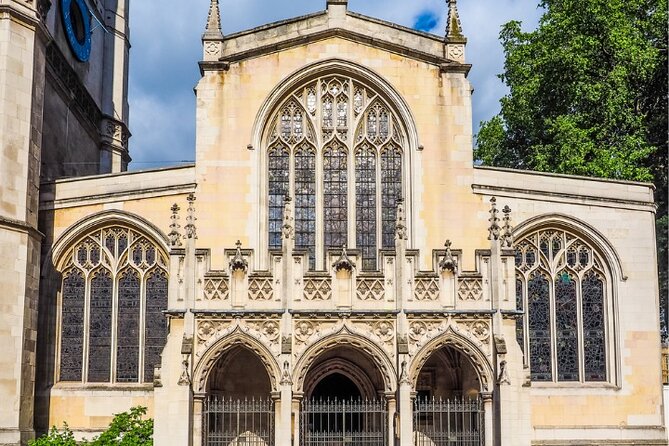
St Margaret’s Church on Parliament Square offers one of the walk’s most personal details. Churchill married Clementine Hozier there in 1908. The church is also known as the Church of the House of Commons and dates back to the 12th century.
The stop lasts about 10 minutes. Admission is not included, so you should expect an exterior visit unless you arrange separate entry. Even from outside, the connection gives the tour a welcome change of tone.
Until this point, Churchill has mainly appeared as a wartime leader. St Margaret’s brings in the man’s private life and long ties to Britain’s political and religious traditions. Stories about his favorite pub add another human detail, helping keep the walk from becoming a string of official buildings.
I find this kind of detail especially useful on a themed tour. It gives you something concrete to remember beyond speeches and military dates. The Churchill story becomes more personal without losing its political setting.
HM Treasury and the financial side of the war
The Treasury Building played an important part in wartime administration. Government departments there helped manage the war economy, direct resources, and support both military and civilian needs.
Its basement also served as an emergency hub during air raids. That detail links finance and civil protection to the same pressure faced by the military and political leadership elsewhere in Westminster.
The tour allows about 10 minutes here. The building is viewed from outside, and admission is not included. This stop may appeal most to people interested in how governments keep a country functioning during a crisis.
It also rounds out the route. You have seen the Prime Minister’s address, Parliament, military administration, and memorials. The Treasury adds the money and supply side of the story, showing that victory required sustained organization as well as courage.
Finishing at King Charles Street
The walk ends in front of the Churchill War Rooms on King Charles Street. This is convenient if you plan to continue with the museum, since you do not need to retrace your steps across Westminster.
The end point is also a practical place to make a decision. If you have a separate ticket, you can proceed to the underground exhibition. If not, you can finish the day nearby and return to the museum later, subject to its availability and your own plans.
Do not count on the walking tour itself to provide a full War Rooms visit. Its role is to explain the surrounding sites and Churchill’s place within them. The museum is an additional, paid attraction.
Who will get the most from this walk
This experience suits you if you want a short introduction to Churchill, World War II, and Westminster government. It works particularly well as a first activity in London because the route brings several major sights into one connected story.
You are likely to enjoy it most if you:
- Like political and military history
- Prefer walking tours to large indoor attractions
- Want context before visiting the Churchill War Rooms
- Have an interest in memorials and public monuments
- Can walk steadily for two to three hours
- Are comfortable following an English-language explanation
It is less suitable if you want a slow museum day, extensive time at each memorial, or a fully accessible route. The experience is not suitable for people with walking or mobility difficulties, and it is not suitable for prams, buggies, or strollers.
Service animals are allowed, and the route is near public transportation. Most people can participate, but the walking requirement should guide your decision more than the low price.
Price, group size, and practical value
At $19.01, this is an inexpensive way to add structure to a Westminster visit. The fee covers a professional guided walking tour and access to the outdoor sights, including Downing Street, Parliament, the Churchill statue, the Battle of Britain Memorial, the Women of World War II Memorial, the Cenotaph, the Ministry of Defence, St Margaret’s Church, and HM Treasury.
It does not cover the Churchill War Rooms. That is the key value question. If you only want the guided walk, the price is fair. If you expected one combined ticket for the walk and bunker, budget for the museum separately.
The group maximum is 25 people. That is small enough for a more manageable walking experience than a huge city tour, though you should still expect to stay close to the guide in busy central London.
Free cancellation is available if you cancel at least 24 hours before the 1:30 pm start time. Changes or cancellations made inside that window are not accepted for a refund, and the activity requires a minimum number of participants to operate.
Should you book the Churchill and World War II walk?
Book it if you want a reasonably priced, English-language introduction to Churchill’s London and you value connections between buildings more than extended time inside them. The route covers an impressive number of politically important sites in two to three hours, and the memorials add weight beyond the usual Churchill portrait.
Book it especially if you plan to visit the Churchill War Rooms afterward. The walk gives you the setting and wider story, while the museum supplies the underground rooms and displays. Together, they make a fuller day of Churchill’s wartime London.
Skip it if you mainly want the bunker itself, cannot walk steadily, or prefer to explore each site at your own pace. The tour is not a substitute for museum admission. It is a guided framework for understanding the streets, institutions, and memorials around Westminster.
FAQ
How long does the Churchill and World War II Walking Tour last?
The tour lasts approximately two to three hours.
Where does the tour begin?
It begins at Embankment station, Embankment Place, London WC2N 6NS.
What time does the tour start?
The scheduled start time is 1:30 pm.
Where does the tour finish?
It ends in front of the Churchill War Rooms on King Charles Street, London SW1A 2AQ.
Is admission to the Churchill War Rooms included?
No. The walking tour visits the exterior only, and entrance tickets to the Churchill War Rooms are not included.
Is the tour suitable for people with mobility difficulties or strollers?
No. The experience is not suitable for people with walking or mobility difficulties, prams, buggies, or strollers.
What is the cancellation policy?
You can cancel at least 24 hours before the experience start time for a full refund. Cancellations or changes made less than 24 hours before the start time are not accepted for a refund.
Just added around London
- Private The Beatles Taxi Tour in London★ 5.0 · 12 reviews
- Airport Coach Service from Heathrow to Oxford★ 3.5 · 67 reviews
- The Alfred Hitchcock London Walk with Sandra Shevey★ 5.0 · 15 reviews
- Dinner and Jazz Cruise on the River Thames★ 4.0 · 140 reviews
- Tower of London & 30+ London Sights Walking Tour★ 4.5 · 33 reviews
- Thames Beachcombing★ 4.5 · 100 reviews
- Ted Lasso London Taxi Tour★ 5.0 · 5 reviews
- Ted Lasso Tour of Richmond with Private Guide★ 5.0 · 25 reviews
Walking Tours, compared.

Oxford University Walking Tour With University Alumni Guide
Read our review →
Tour for Muggles The Ultimate Harry Potter Walking Tour in London
Read our review →
Cambridge University Walking Tour by Alumni™ Kings College Option
Read our review →
Blackbeard to Banksy – The Ultimate Walking Tour of Bristol
Read our review →
Air Raid Shelter + St. Nicholas Market Walking Tour
Read our review →
Walking Tour of Bath with Blue Badge Tourist Guide
Read our review →