Reviewed · WALKING TOURS
Lights, Camera, London: The Movie Locations Walking Tour
London becomes a giant outdoor film set on this two-hour walking tour, which links Piccadilly Circus, Trafalgar Square, St. Paul’s Cathedral, Millennium Bridge, and Borough Market. The clever part is not simply seeing famous streets. Your guide shows you how those places appeared on screen, often using film clips on a tablet to make the connection clear.
I like the small maximum group of 15, since it gives you room to ask questions while walking. I also like the route from the West End to Borough Market, which gives you a useful cross-section of central London rather than keeping you in one square. The main drawback is that this is a brisk city walk with 15 stops, so it suits you best if you can stay on your feet for about two hours.
Key points to know before booking
- Film clips make ordinary streets easier to recognize, especially when a location has been changed by camera angles or set dressing.
- Ryan is one named guide associated with the tour, and he is praised for combining movie facts with general London tips.
- The route runs from Piccadilly Circus to Borough Market, finishing near London Bridge Station and many places to eat.
- You see film connections across many genres, from Harry Potter and Mission Impossible to Bridget Jones and action films.
- No attraction admission is needed, but London Underground fares are not included.
- The price is about $18.67 per person, a fair rate for a small-group walk if films are a real interest of yours.
Why this film walk works better than a standard London sightseeing tour
A movie-location tour can easily become a string of vague claims about places that supposedly appeared on screen. This one has a more useful format. You see the actual street, hear what was filmed there, and can compare the location with a clip shown on the guide’s tablet.
That matters in London, where a scene may use only a doorway, a bridge, or a few seconds of street footage. The city is full of famous buildings, but the film connection is not always obvious when you are looking at the real place. A visual reference helps you spot the detail.
The route also gives you a broad look at central London. You begin amid the bright signs of Piccadilly Circus, cross the West End, pass Whitehall and the Thames, and finish among the food stalls and pubs around Borough Market. The tour is about movies, but you also get a useful first look at several key parts of the city.
The strongest guide feedback centers on Ryan. He is described as warm, well informed, and generous with practical suggestions for what to do after the walk. The tablet clips are a real part of his approach, not just a promise to name films. That makes the tour more lively for people who enjoy seeing the exact moment a location appeared on screen.
A few more London trips to weigh up
- Tour for Muggles The Ultimate Harry Potter Walking Tour in London
★ 5.0 · 4,684 reviews - London Jack The Ripper Guided Walking Tour
★ 5.0 · 3,131 reviews - Changing of the Guard Guided Walking Tour in London
★ 5.0 · 1,793 reviews
From Piccadilly Circus to Leicester Square
The meeting point is Piccadilly Circus, one of the easiest places to recognize in central London. Its large advertising screens, traffic, and crowds have earned it comparisons with Times Square. It is a fitting start for a movie walk because filming here can be difficult, given the constant movement and the need to work around busy streets.
You spend about 15 minutes here. That is enough time to take photos, hear about productions filmed in the area, and see clips of scenes that required careful permission. Do not expect a long stop focused on one film. The value is in understanding how filmmakers use a famous public space without losing the energy that makes it recognizable.
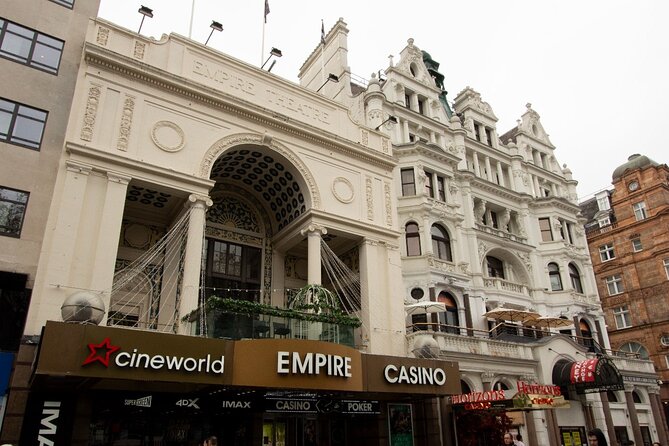
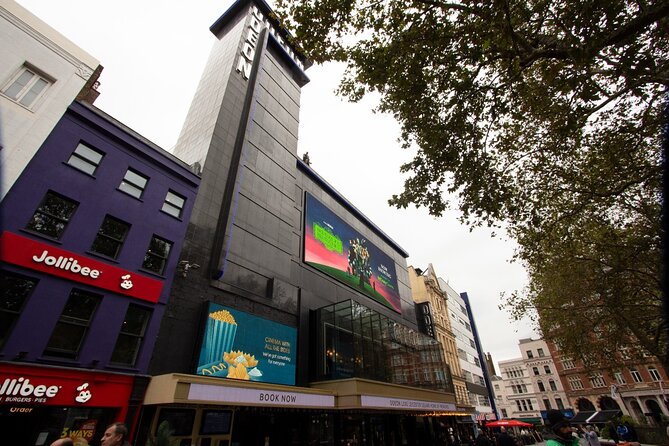
From there, the walk reaches Leicester Square, the heart of London’s cinema district. Major premieres have taken place here for more than a century, so the connection between the square and the film industry is direct. The stop lasts about five minutes, which makes sense because this is mainly a quick orientation and photo point.
The West End portion is likely to feel familiar if you have seen London in films. It is also one of the busiest parts of the route, so stay close to the guide and allow time for crossing streets. You are walking through working city streets, not a closed film backlot.
Cecil Court and Goodwin’s Court reveal quieter London
Cecil Court changes the mood. This narrow Victorian passage is associated with music figures, occult stories, and the early British film industry. Here you hear about the first motion picture projector and camera, along with the conspiracy surrounding them.
The details give the tour more substance than a simple list of film titles. You are not just being told that a scene was shot nearby. You are hearing how London’s older streets connect with the development of moving pictures themselves.
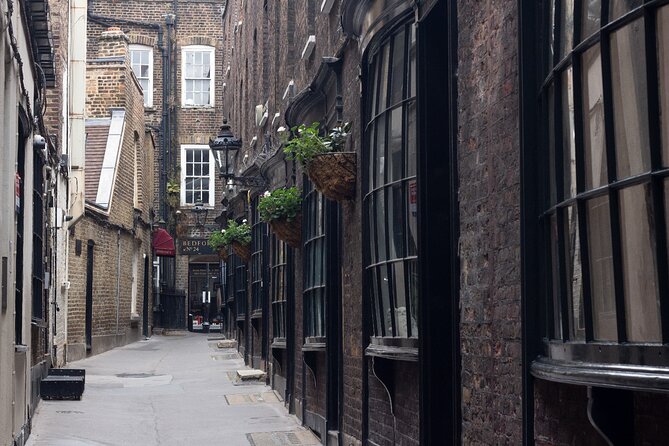
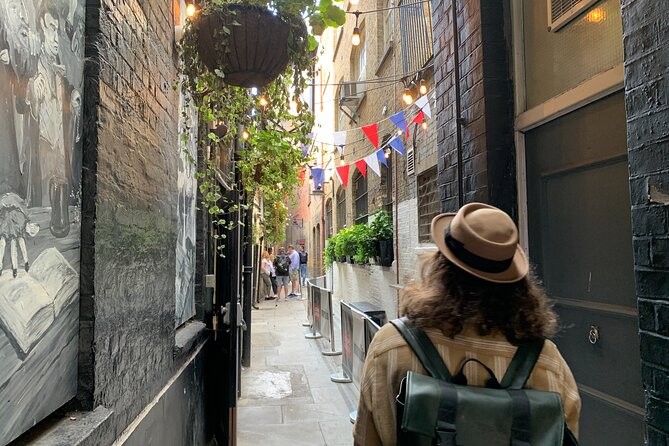
Goodwin’s Court is even smaller and more atmospheric. Its old-fashioned appearance has influenced set design, and the street has also been used for filming. This is the kind of location that can be easy to miss on your own. It does not have the scale of Trafalgar Square or St. Paul’s Cathedral, but that is exactly why it works well on foot.
These two stops are especially useful if you enjoy the look of London as much as the films themselves. The walk moves away from big public spaces and into narrow passages where architecture does much of the work. The guide’s explanation helps you understand why filmmakers might choose a tucked-away street instead of a famous landmark.
Trafalgar Square brings the big-screen scale
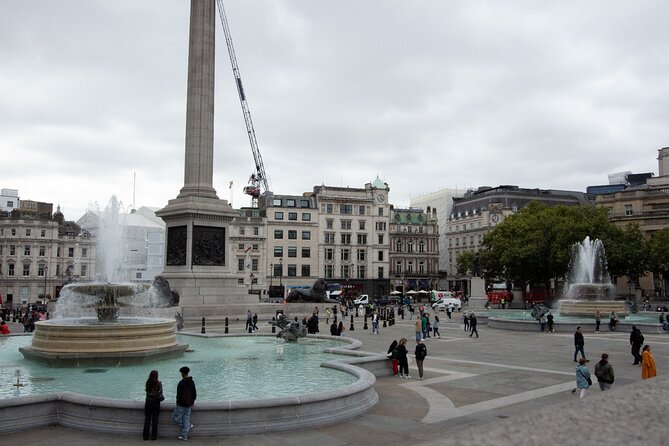
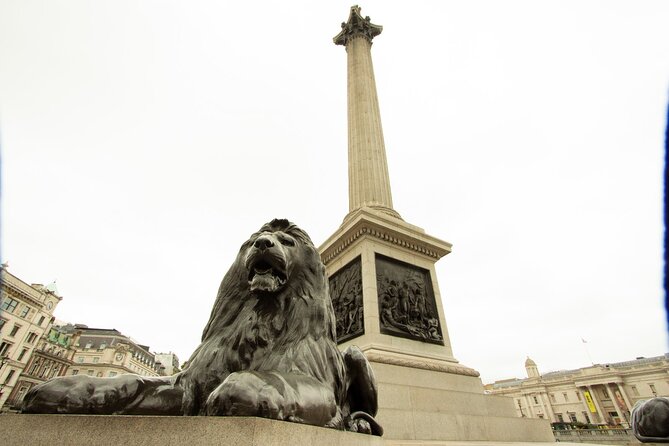
Trafalgar Square is one of London’s most recognizable public spaces, and it has appeared in action, fantasy, science fiction, and Disney productions. The square’s broad steps, fountains, columns, and surrounding buildings give filmmakers plenty of visual scale.
You have about 10 minutes here. That is long enough for a short explanation and photos, but not enough for a full history lesson about the square. This is a film-focused visit, so expect the guide to point out how different genres use the same location in different ways.
The square can be crowded and exposed, so this is one place where the small group helps. You can hear a guide more easily than you might in a large party. It is also a good photo stop, though the tour does not include entry to any attraction.
Same country, a completely different day out:
- Stonehenge, Windsor Castle, and Bath from London
★ 4.5 · 18,662 reviews - London Big Bus Hop-On Hop-Off Tour with Optional River Cruise
★ 3.5 · 10,803 reviews - London Small Group Tour of Historical Pubs
★ 5.0 · 10,422 reviews - Stonehenge, Windsor Castle and Bath with Pub Lunch in Lacock
★ 4.5 · 7,402 reviews
Scotland Yard, Corinthia London, and The Blackfriar
The next section combines police history, grand hotel architecture, and a pub with a curious past. The Metropolitan Police stop focuses on the 19th-century Scotland Yard building, once the police headquarters. This quiet pocket of London has also appeared in major films, including Harry Potter.
The stop lasts about 10 minutes. It offers a useful contrast with the larger squares. A location can look modest in person yet become important on screen through framing, sound, and story. The guide helps you see the difference between the real setting and the fictional place it represents.
Corinthia London is a five-minute stop. This high-end hotel sits close to the West End premiere circuit and attracts celebrities and film stars. Its distinctive architecture has also appeared in productions for both the cinema and television.
You will not be going inside for a hotel tour. The point is to see the exterior and hear how a real building can serve a production. It is a quick stop, so your interest in architecture and screen locations will matter more than your desire for a long look around.
The Blackfriar is a small, unusual pub that survived war and redevelopment. Its interior and exterior have a storybook quality, and the tour connects it with a secret agency handling otherworldly matters. This is another short stop, roughly five minutes, but it adds variety to the route.
The pub is a reminder that film locations are not always grand public buildings. Sometimes a compact, eccentric interior gives a production more character than a polished modern venue. You may want to note the pub for a later drink, although the tour information does not include food or drinks.
St. Paul’s Cathedral and Millennium Bridge show two Londons
St. Paul’s Cathedral needs little introduction. Its narrow corridors, Gothic interior, and staircases offer natural material for action, fantasy, and suspense films. The tour spends about five minutes here, so you should think of this as an outside location discussion rather than a cathedral visit.
Entry to St. Paul’s is not included, and the walk does not provide time for a full visit. If you want to tour the cathedral inside, plan that separately on another day or around the tour timetable. This is an important distinction for anyone expecting a ticketed attraction experience.
Millennium Bridge shifts the visual mood from old London to modern London. The bridge has become a familiar screen location, though it has also been unpopular with some local residents. Its clean lines and position across the Thames make it useful when a film needs to show the city as contemporary and exposed.
The stop is short, about five minutes. You get the best value here by looking at the bridge as a piece of film design. Think about how a production uses the river, skyline, and movement across the span to signal danger, speed, or a changing city.
The Mission Impossible stretch along the Thames
Outside Tate Modern, you hear about Tom Cruise pursuing Henry Cavill across the top of Blackfriars Bridge. This is one of the tour’s most recognizable modern action connections. The area around the old converted power station provides a strong industrial setting, while the river and bridges add motion and height.
Again, the stop is brief. You are not entering Tate Modern, and the tour does not promise an indoor art visit. That keeps the route moving, but it also means you should not book this expecting museum time.
The Anchor pub brings a different film story. This old riverside pub appeared in the first Mission Impossible film and is connected with another production surrounded by controversy. The guide can explain the location’s role, while you also get a look at one of the Thames’s older drinking houses.
The pub is a good example of why this route is more than a superhero or blockbuster checklist. It includes recognizable action films, older buildings, local atmosphere, and stories that may be complicated or disputed. If you prefer a simple list of cheerful movie facts, the mention of controversy may feel less comfortable. If you like context, it adds a more honest edge.
Bridget Jones and the finish at Borough Market
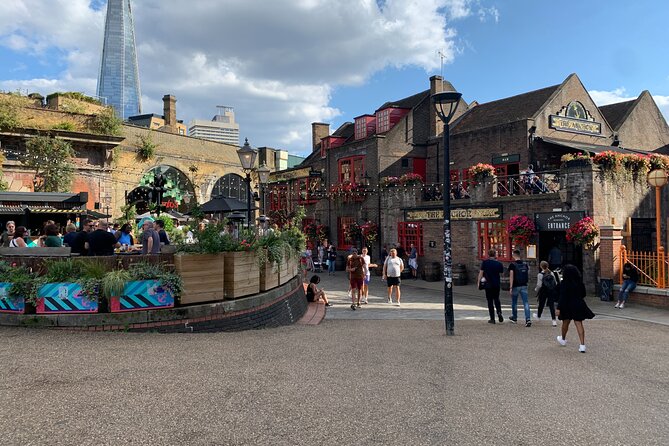
The Globe Tavern sits beside Borough Market and is linked with Bridget Jones, one of Britain’s best-known romantic comedy characters. This stop will appeal most to people who enjoy British film and television, since the connection depends on recognizing the pub as part of the character’s world.
The final stop is Borough Market, one of London’s oldest food markets. It is a practical ending because you can eat, browse food stalls, or continue exploring the area once the walk finishes. The route ends at 18 Stoney Street, close to London Bridge Station and within walking distance of other central London sights.
The guide also reveals the story behind a magical pub, which gives the ending a bit of theatrical flavor. Since the tour ends at a food market, you can continue your London day without needing another major transfer.
I like this finish more than a return to the starting point. A point-to-point route saves you from retracing your steps and leaves you in a useful part of London. The tradeoff is that you need to plan your transport after the tour if you are staying near Piccadilly Circus or another part of the city.
Is $18.67 good value for two hours?
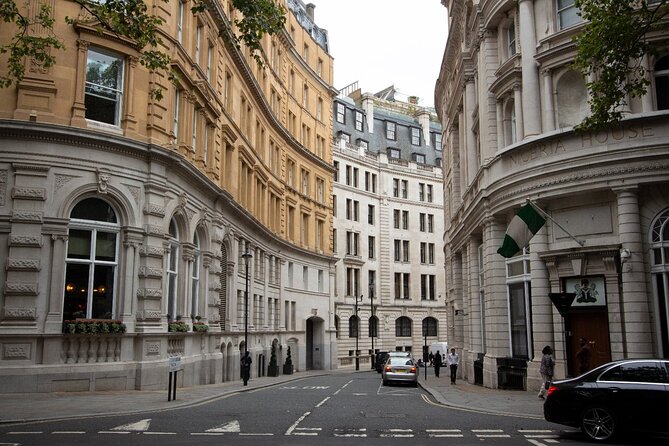
At about $18.67 per person, this is priced below many longer guided London activities. The cost covers an English-speaking guide and the tablet used to show film clips. You are not paying for attraction admission, and every stop listed is free to view from the street.
The value depends on how much you want the movie angle. If you already plan to walk through the West End, across the Thames, and around Borough Market, the tour adds structure and film context to places you might otherwise pass without noticing. It also saves you the work of researching which productions used each location.
For a serious film fan, the clips are the key benefit. They make the price easier to justify because the guide is not only talking. You get a visual comparison between the real street and the finished scene.
For someone mainly interested in royal history, art museums, or detailed architectural tours, the value is less certain. The stops are short, and the walk does not include interior admissions. You are buying a focused story about London on screen, not a general introduction to every major attraction.
The tour is booked an average of 40 days ahead, so I would not leave it until the last minute if your dates are fixed. The group maximum is 15, which helps explain why the experience can feel more personal than a large bus or walking tour.
Practical details that affect your day
The tour lasts about two hours and requires a moderate level of physical fitness. You move through busy central streets and cover a point-to-point route, so comfortable shoes matter. The information does not give a precise distance, and the schedule includes many short stops, so expect a steady walking pace rather than a relaxed café stroll.
The meeting point is Piccadilly Circus. Check the exact address and local time before setting out, since this area has several exits and can be confusing if you are rushing. The ending is at Borough Market, near London Bridge Station.
An English guide leads the walk, and a tablet is included. London Underground fares are not included, so budget separately for any train or Tube journey you need before or after the experience. Service animals are allowed, and the tour is near public transportation.
Free cancellation is available if you cancel at least 24 hours before the start time. Changes or cancellations made inside that window are not accepted for a refund.
Who should book this London movie tour?
I would choose this for a film fan who wants to see real London streets without spending half a day inside a museum. It also suits a repeat visitor who has already seen the main landmarks and wants a fresh reason to walk through familiar parts of town.
Families with older children may enjoy the tablet clips, especially if they know Harry Potter, Mission Impossible, or Bridget Jones. The walk could also work well for a solo visitor who wants a guide and an easy way to ask questions while seeing several central neighborhoods.
I would be more cautious if you have limited mobility, dislike busy streets, or want long stops at each landmark. The route is active, the group keeps moving, and the tour only pauses for a few minutes at many locations.
Should you book Lights, Camera, London?
Book it if films are central to the way you enjoy a city. The guide’s clips, the mix of famous squares and small streets, and the finish at Borough Market give this walk a clear purpose. Ryan’s approach, combining movie scenes with everyday London advice, is particularly useful if you want more than a list of filming addresses.
Skip it if you want to enter St. Paul’s Cathedral, visit Tate Modern, or spend serious time at each landmark. Those places appear as locations from the outside, not as included attractions.
For about $18.67, this is a well-priced, tightly focused walk with a small group and a strong route. I would book ahead, wear good shoes, and leave your schedule open after Borough Market so you can eat and explore rather than rushing straight away.
FAQ
How long does the Lights, Camera, London tour last?
The tour lasts approximately two hours.
Where does the tour begin?
It begins at Piccadilly Circus in London.
Where does the tour end?
It ends at 18 Stoney Street near Borough Market. London Bridge Station is nearby.
Is public transportation included?
No. London Underground fares are not included in the tour price.
How many people can join the tour?
The tour has a maximum group size of 15 people.
Is the tour offered in English?
Yes. The experience includes an English-speaking guide and a tablet.
Just added around London
- Private The Beatles Taxi Tour in London★ 5.0 · 12 reviews
- Dinner and Jazz Cruise on the River Thames★ 4.0 · 140 reviews
- Airport Coach Service from Heathrow to Oxford★ 3.5 · 67 reviews
- The Alfred Hitchcock London Walk with Sandra Shevey★ 5.0 · 15 reviews
- Thames Beachcombing★ 4.5 · 100 reviews
- Tower of London & 30+ London Sights Walking Tour★ 4.5 · 33 reviews
- Ted Lasso London Taxi Tour★ 5.0 · 5 reviews
- Ted Lasso Tour of Richmond with Private Guide★ 5.0 · 25 reviews
Walking Tours, compared.
Oxford University Walking Tour With University Alumni Guide
Read our review →
Tour for Muggles The Ultimate Harry Potter Walking Tour in London
Read our review →
Cambridge University Walking Tour by Alumni™ Kings College Option
Read our review →
Blackbeard to Banksy – The Ultimate Walking Tour of Bristol
Read our review →
Air Raid Shelter + St. Nicholas Market Walking Tour
Read our review →
Walking Tour of Bath with Blue Badge Tourist Guide
Read our review →