Reviewed · WALKING TOURS
Crime and Policing London Walking Tour
London’s crime story comes alive on this 2-hour-15-minute walk through Covent Garden, Charing Cross, Whitehall, and Westminster. You’ll hear about the Bow Street Runners, unsolved murder, espionage, wartime policing, and the creation of the Metropolitan Police from former officer Francis Mullan or guide David.
I like the way the tour combines major sights with police history, so you see Trafalgar Square and Downing Street while learning what happened around them. I also like the personal angle: Francis draws on his years in policing and brings real historic police regalia for you to examine.
The main consideration is the subject matter. This is a crime tour, so stories can involve murder and mayhem. The walk is gentle, but you’ll still be outdoors for more than two hours, and the tour requires good weather.
Key points to know before you book
- Former police officers lead the walk: Francis Mullan and David add practical insight that you will not get from a standard sightseeing guide.
- The route connects central London’s big sights: Begin near Covent Garden and finish close to Westminster Underground Station and New Scotland Yard.
- Crime stories range from old to current: Expect early policing, famous murders, espionage, Sherlock Holmes, wartime London, and ongoing cold cases.
- Historic police equipment is part of the experience: You get the chance to examine real items of police regalia.
- The pace is gentle: Toilet and refreshment stops can be made if needed, though comfortable shoes remain a good idea.
- The group is limited to 20 people: That should make it easier to hear the guide and ask questions.
Why this London crime walk feels different
Many London sightseeing walks sweep past famous buildings and give you a date, a name, and a quick photo stop. This one uses the city streets as a police casebook. You are not simply looking at old buildings. You are hearing why certain places mattered to law enforcement, how policing developed, and what happened when public order broke down.
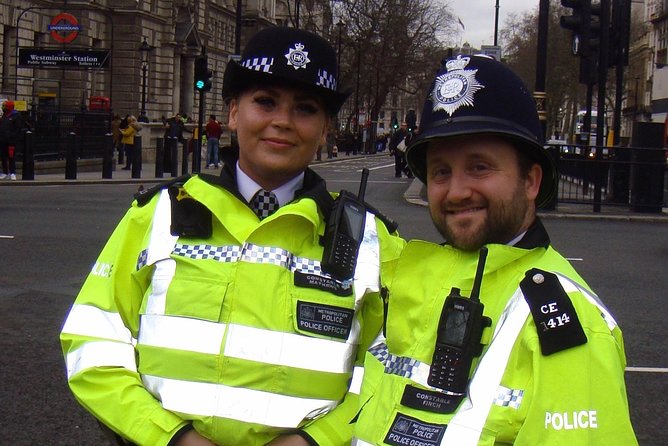
Francis Mullan is a former police officer, and that background shapes the tour. He explains police work through both London history and his own experience. David also leads the walk and is praised for answering questions clearly, including questions outside the immediate subject.
That personal element is especially useful if you have a connection to law enforcement. One review came from someone whose husband was a retired US peace officer, and the comparison between British and American policing added another layer to the outing. You do not need a police background, though. The stories also cover London’s politics, famous characters, crime cases, and familiar places.
The tour has earned a five-star rating from 100 reviews, with 100 percent recommending it. That is a strong record, but the better reason to consider it is the repeated praise for the guide’s storytelling, the manageable pace, and the mix of personal experience with history.
A few more London trips to weigh up
- Tour for Muggles The Ultimate Harry Potter Walking Tour in London
★ 5.0 · 4,684 reviews - London Jack The Ripper Guided Walking Tour
★ 5.0 · 3,131 reviews - Changing of the Guard Guided Walking Tour in London
★ 5.0 · 1,793 reviews
Bow Street and the birth of organized policing
Meet at Covent Garden Underground Ltd on Long Acre, near Covent Garden, then walk to Bow Street. The first stop lasts about 10 minutes and introduces one of the most important early police institutions in London.
Bow Street Police Station and Magistrates Court were tied to the Bow Street Runners, a famous group often linked with the early development of professional policing. The point here is not just that an old police station once operated in the area. You learn how policing began to take a more organized form and why Bow Street became central to law and order.
This opening gives the rest of the walk a useful framework. London policing did not appear fully formed. It developed through courts, patrols, detectives, and changing ideas about public safety. Seeing the setting helps you place later stories in context.
There is no admission charge at this stop, and the tour remains outdoors. If you enjoy social history and the development of public institutions, Bow Street may be one of the most rewarding early stops.
Aldwych, espionage, and an unsolved murder
The walk continues into the Aldwych area for about 10 minutes. Here, the subject turns darker, with the site of one of London’s saddest unsolved murders and stories involving international espionage and murder.
This is where the tour moves beyond a general account of police organization. The guide connects individual cases with the wider world in which they occurred. Crime in London has not always been local. Some cases reach across borders, involve political tension, or leave investigators without a final answer.
The appeal of this stop depends on your taste. If you like unresolved cases and the less polished side of city history, it should hold your attention. If you prefer a light sightseeing walk, the subject may feel grim. The tour does not disguise that it deals with serious crime.
Charing Cross and London’s famous blue lamp
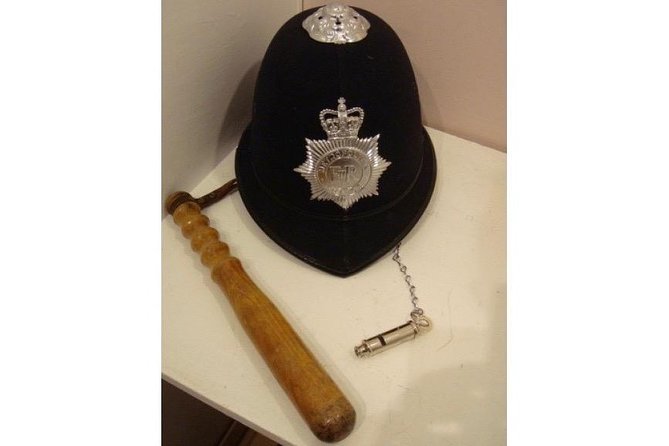
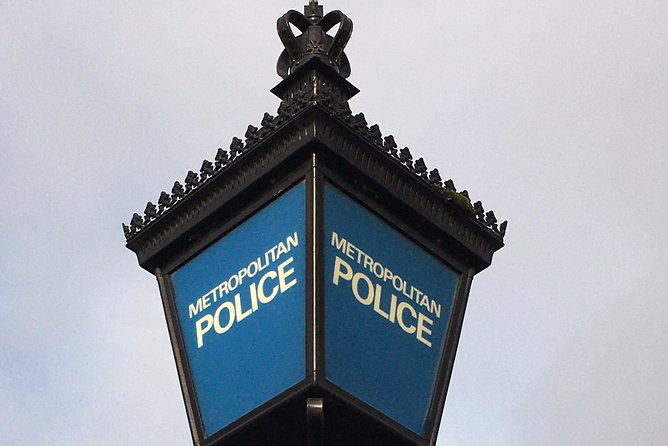
At Charing Cross, the tour spends another 10 minutes on stories of murder and disorder. You also see one of Europe’s busiest police stations and learn about the famous blue lamp associated with London policing.
Charing Cross is a useful stop because it combines a busy modern setting with the older machinery of public order. The guide can show you how a police station fits into a major transport and commercial area, then shift into stories of crime and police response.
The blue lamp is a small detail, but that is part of the fun. London’s policing identity is built from recognizable signs, buildings, uniforms, and symbols. Examining these details gives the walk a visual thread.
Since Charing Cross is a busy part of central London, the group may need to pause close together while the guide talks. That is normal for a city walk, but staying alert to foot traffic will make the stop easier.
Same country, a completely different day out:
- Stonehenge, Windsor Castle, and Bath from London
★ 4.5 · 18,662 reviews - London Big Bus Hop-On Hop-Off Tour with Optional River Cruise
★ 3.5 · 10,803 reviews - London Small Group Tour of Historical Pubs
★ 5.0 · 10,422 reviews - Stonehenge, Windsor Castle and Bath with Pub Lunch in Lacock
★ 4.5 · 7,402 reviews
Northumberland Avenue and the Sherlock Holmes pause
Northumberland Avenue brings a 20-minute break and one of the tour’s more playful subjects: the Sherlock Holmes Pub. The fictional detective was created by Arthur Conan Doyle, himself an interesting figure, and the pub provides a natural place to discuss Holmes, detective work, and London’s long fascination with crime-solving.
The description includes a stop for a drink at the pub. The tour price covers the walking experience and has no admission charge listed, so you should not assume that a drink is included. Still, the pause offers a chance to rest and take in a famous literary connection before continuing.
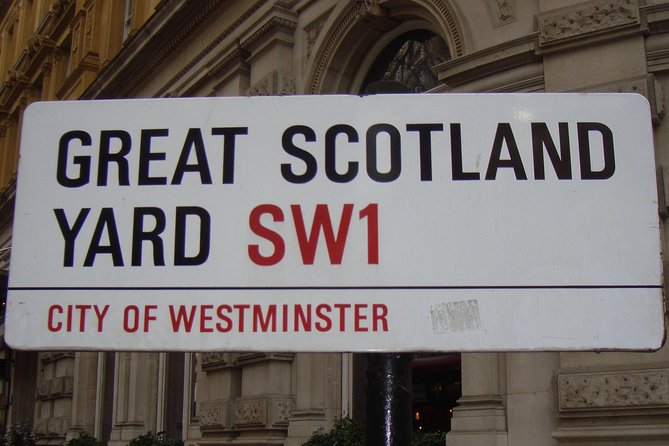
This is also where you cross toward Great Scotland Yard. The route moves from fiction to the real institutions that helped shape London policing. That contrast is one of the walk’s strengths. Holmes may be imaginary, but his London is tied to real streets, real police work, and real public interest in investigation.
The 20-minute stop is the longest pause on the route. If you need a toilet or refreshment break, this is likely the most natural point to ask, since the tour notes that such stops can be arranged if required.
Trafalgar Square and the smallest police station
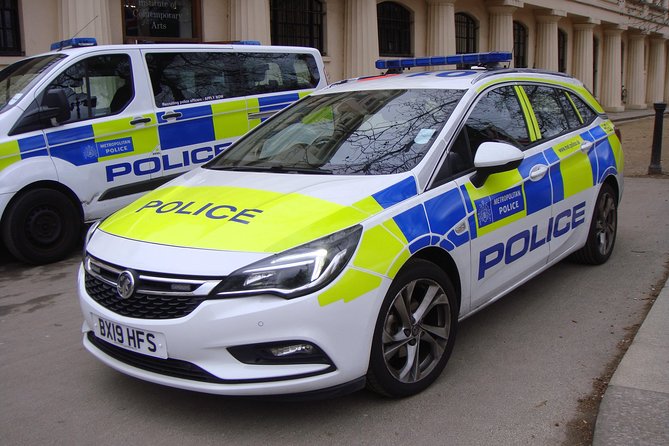
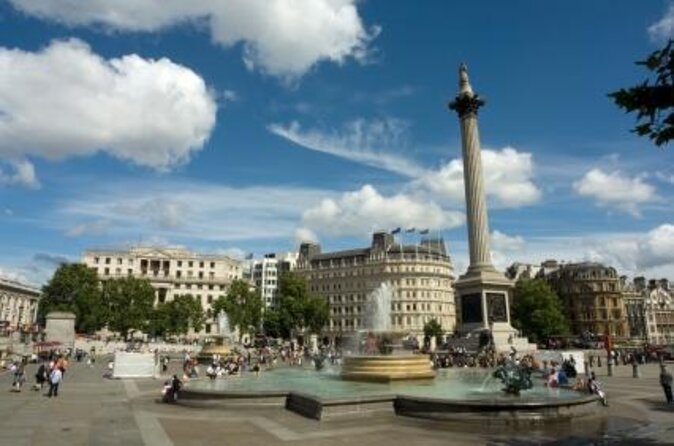
Trafalgar Square is not treated simply as a photo stop. For about 10 minutes, you hear about national celebrations, demonstrations, and riots that have taken place here under the watch of what is described as the world’s smallest police station.
This stop shows how policing is about more than solving crimes. Crowds, protests, public ceremonies, and political gatherings all require planning and control. Trafalgar Square has been a stage for national life, and the police presence reflects that role.
The small police station is the sort of detail you could easily miss while hurrying between the National Gallery and Whitehall. A guide who points it out gives you a new way to read the square. After the tour, you may find yourself noticing similar small pieces of civic infrastructure elsewhere in London.
Whitehall, Downing Street, and policing in wartime
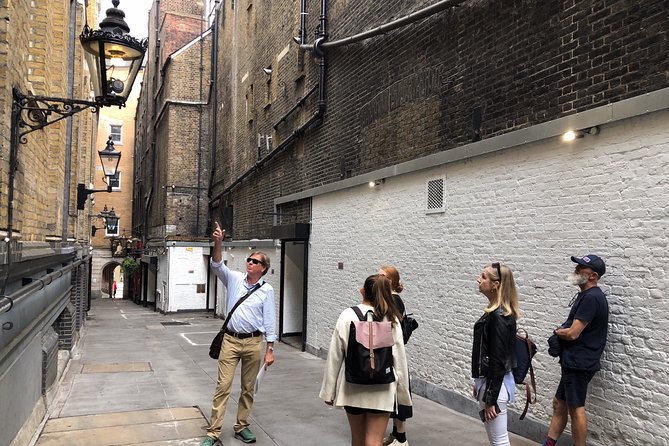
The route continues through Whitehall, the center of British government. Over about 10 minutes, the guide points out Downing Street and discusses women in policing and the role of police during wartime London.
This section broadens the story again. Policing is not only about patrols and arrests. It also reflects changes in society, including the growing role of women in police work. The wartime material adds another angle, showing how police duties shift during national emergencies.
Downing Street gives the stop political weight, but the focus remains on policing rather than government sightseeing. You should expect an explanation of the area and its connection to police work, not an interior visit.
Whitehall is also a practical part of the route because it leads toward the finish near Westminster. One useful feature of this walk is that it leaves you in a prime area for more sightseeing. You can continue toward Westminster Abbey, Big Ben, Buckingham Palace, Trafalgar Square, or nearby restaurants and pubs after the tour.
Great Scotland Yard and the Metropolitan Police
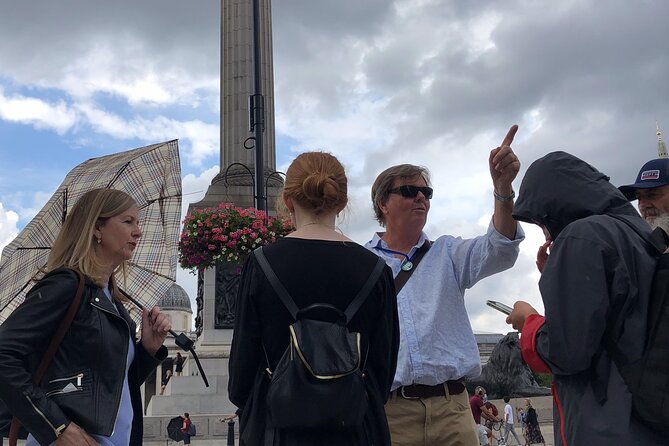
Great Scotland Yard receives its own 10-minute stop. This is the former headquarters associated with the creation of the London police, and it gives the tour its clearest institutional landmark.
You also see the Metropolitan Police and its iconic revolving sign. These are short stops, but they matter because they put the names and symbols of London policing in front of you. Great Scotland Yard is familiar even to people who have never visited London, thanks to books, television, and news reports. The walk explains the real place behind the name.
The itinerary lists Great Scotland Yard and the Metropolitan Police as separate stops, even though they are closely connected in the final part of the route. Do not expect a long building visit or an indoor museum experience. The value is in the guide’s explanation, the street setting, and the chance to connect the famous name with the actual development of the Metropolitan Police.
The tour ends at 35 Victoria Embankment, close to New Scotland Yard and Westminster Underground Station. From here, you have access to the Tube, buses, and riverboats, along with pubs, bars, and restaurants.
What the guide adds to the experience
The guide is the heart of this walk. Francis Mullan’s former police career lets him explain police work from firsthand experience, while David is also noted for his ability to explain details and handle questions.
That does not mean the tour is a technical lecture. The most useful feature is the mix of large events and small personal details. You hear about the development of policing, then get an example from the guide’s own time on the force. You hear about old cases, then learn about more recent cold cases and current police concerns.
The question-and-answer style matters. One family found the pace easy to follow and had plenty of time to ask questions. Another parent joined because a daughter wanted to go, then ended up enjoying the walk personally. That tells you something important about the audience: the tour is not limited to crime enthusiasts.
The guides also seem willing to answer questions beyond the basic route. That is useful if you have a particular interest in British police procedure, detective fiction, historic cases, or comparisons with policing in other countries.
Pace, group size, and practical comfort
The walk lasts approximately two hours and 15 minutes, with a gentle pace. The route includes several 10-minute stops and one 20-minute stop, so it is not a nonstop march.
Comfortable footwear is still recommended. Central London has busy streets and hard surfaces, and you will be standing as well as walking while the guide speaks. The tour notes that refreshment and toilet stops are available if required, but it is sensible to arrive prepared.
The maximum group size is 20 people. That is small enough for a more personal feel without making the tour private. It should also help you hear the guide, though busy streets can affect how easy it is to gather around each stop.
The experience requires good weather. If poor weather causes cancellation, you are offered another date or a full refund. Service animals are allowed, the tour is near public transport, and most people can participate.
Is $48.61 good value?
At $48.61 per person, this is not the cheapest way to spend two hours in London. The price makes more sense if you value a specialist guide rather than a basic orientation walk.
You are paying for a focused subject, a former police officer’s perspective, historic police items, and a route through several central districts. You also see places you might already plan to visit, including Trafalgar Square, Whitehall, and Scotland Yard. That gives the tour two jobs: it teaches you something specific and helps you get your bearings in central London.
The value is strongest for a first or second visit, when you want familiar sights explained in a new way. It also works well for families with older children, adults interested in crime stories, history fans, and anyone connected to police or justice work.
The price is less attractive if you want indoor attractions, museum admission, or a broad overview of London. There are no paid site entries listed, and the walk is built around outdoor storytelling. You should also budget separately for any drink at the Sherlock Holmes Pub.
The tour is often booked about 46 days ahead. That suggests you should reserve early if your London dates are fixed, particularly since the group is capped at 20 people.
Who should book this walk?
I would choose this tour if you want London history with a clear theme and a guide who can speak from professional experience. It is especially suitable if Sherlock Holmes, unsolved cases, policing, wartime London, or the darker side of city history already interests you.
It is also a good choice for a mixed group. One person can come for the crime stories, another for the famous landmarks, and another for the chance to compare British policing with police work elsewhere. The gentle pace helps keep the walk manageable, and the finish near Westminster makes it easy to continue exploring.
I would think twice if you dislike murder stories or want a relaxed walk with no serious subject matter. I would also avoid scheduling it immediately before a timed attraction, since the walk lasts about two hours and 15 minutes and outdoor city conditions can affect the pace.
Should you book the Crime and Policing London Walking Tour?
Book it if you want more than a list of famous London buildings. Francis Mullan and David bring a police officer’s perspective to Bow Street, Charing Cross, Trafalgar Square, Whitehall, and Scotland Yard, while the route adds useful sightseeing value.
The strongest reasons to go are the personal police stories, the historic police regalia, and the unusual mix of crime cases, espionage, detective fiction, politics, and wartime duty. The main limits are the outdoor format, serious subject matter, and the fact that the price does not include an indoor attraction or a drink.
For a curious visitor who enjoys stories with a real sense of place, this is a focused and worthwhile way to spend part of a London day. Cancel at least 24 hours before the start time for a full refund. Late cancellations are not refundable, and changes made within 24 hours are not accepted.
FAQ
How long does the Crime and Policing London Walking Tour last?
The tour lasts approximately 2 hours and 15 minutes.
Where does the tour begin?
The meeting point is Covent Garden Underground Ltd on Long Acre, London WC2E 9JT.
Where does the tour finish?
The tour ends at 35 Victoria Embankment, near New Scotland Yard and Westminster Underground Station.
Who leads the tour?
The experience provider is Francis Mullan. The tour may be led by Francis or David, both of whom are associated with the experience, and Francis is a former police officer.
What places do you see on the tour?
The route includes Bow Street, the Aldwych area, Charing Cross, Northumberland Avenue, Trafalgar Square, Whitehall, Great Scotland Yard, and the Metropolitan Police.
Is the tour suitable for most people?
The tour is taken at a gentle walking pace, and most people can participate. Comfortable footwear is recommended, and service animals are allowed.
Is anything included besides the walking tour?
You have the opportunity to examine real historic items of police regalia. Gratuities are not included, and you may tip the guide if you wish.
What is the cancellation policy?
You can cancel up to 24 hours before the start time for a full refund. If poor weather or an insufficient minimum number of participants causes cancellation, you are offered a different date or a full refund.
Just added around London
- Private The Beatles Taxi Tour in London★ 5.0 · 12 reviews
- Airport Coach Service from Heathrow to Oxford★ 3.5 · 67 reviews
- The Alfred Hitchcock London Walk with Sandra Shevey★ 5.0 · 15 reviews
- Dinner and Jazz Cruise on the River Thames★ 4.0 · 140 reviews
- Tower of London & 30+ London Sights Walking Tour★ 4.5 · 33 reviews
- Thames Beachcombing★ 4.5 · 100 reviews
- Ted Lasso London Taxi Tour★ 5.0 · 5 reviews
- Ted Lasso Tour of Richmond with Private Guide★ 5.0 · 25 reviews
Walking Tours, compared.
Oxford University Walking Tour With University Alumni Guide
Read our review →
Tour for Muggles The Ultimate Harry Potter Walking Tour in London
Read our review →
Cambridge University Walking Tour by Alumni™ Kings College Option
Read our review →
Blackbeard to Banksy – The Ultimate Walking Tour of Bristol
Read our review →
Air Raid Shelter + St. Nicholas Market Walking Tour
Read our review →
Walking Tour of Bath with Blue Badge Tourist Guide
Read our review →