Reviewed · WALKING TOURS
Private Spy Walking Tour of London
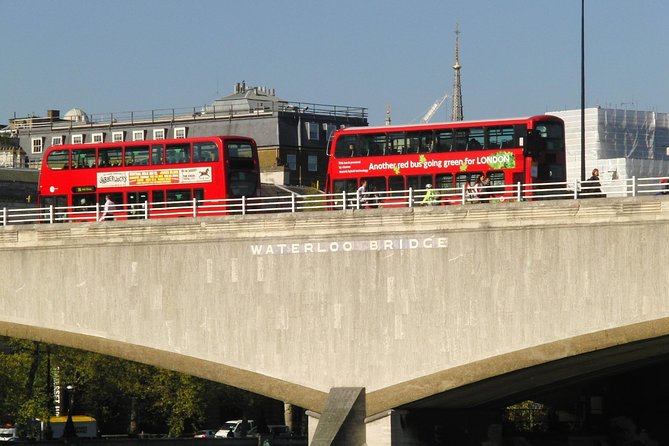
The most chilling stop comes early: Waterloo Bridge, where Bulgarian dissident Georgi Markov was killed by a ricin pellet fired from a needle-tipped umbrella. From there, this private London walk follows spies, double agents, wartime plots, and the real buildings that helped shape the James Bond world.
I like the mix of serious espionage history and familiar film connections. I also like the private format, which lets your guide adjust the pace and answer questions instead of marching a large crowd from one landmark to the next. The possible catch is transport: you will need to pay separately for Tube, train, or bus rides during the route.
Key points to know before booking
- The Markov assassination at Waterloo Bridge: Learn how a tiny poisoned pellet turned an ordinary umbrella into a murder weapon.
- Real spy stories behind famous places: The Savoy, Whitehall, Parliament Square, and MI6 all take on a more secretive character.
- A private group of up to 15: You get a guide for your own party rather than joining a mixed walking group.
- Public transport is part of the route: Bring a contactless card, Oyster card, or Apple or Android Pay for the included bus and train connections.
- Guides add personality: Eian was praised for his friendly manner and personal escort to the Underground, while Michael was described as especially well informed about London’s spy past.
- A three-hour outing with moderate walking: The tour is stroller-friendly and service animals are welcome, but you should be comfortable walking and using public transport.
London’s spy story begins with an umbrella
Meet at WatchHouse Somerset House, in the East Wing of Somerset House, for a tour that quickly leaves postcard London behind. You are not simply looking at grand façades. You are hearing how ordinary streets, hotels, government offices, bridges, and memorials became part of international espionage.
The route begins at Waterloo Bridge, one of the best places to set the tone. In 1978, Georgi Markov, a Bulgarian writer and broadcaster who had defected to the West, was attacked with a specially altered umbrella. A ricin pellet was fired into his leg, and he died several days later.
The supplied tour details connect the killing to Russian agents working at the request of Soviet intelligence. The story is memorable because the weapon sounds like a thriller invention, yet the setting was an everyday London bridge. Your guide uses that contrast well: spy work was not always tuxedos, car chases, and coded messages. Sometimes it was a quick encounter in a public place with a weapon no one noticed.
You spend about 10 minutes here. That is enough time for the story and the setting, but not enough for a long stop or a private investigation of the area. Think of Waterloo Bridge as a sharp opening scene rather than a major sightseeing break.
A few more London trips to weigh up
- Tour for Muggles The Ultimate Harry Potter Walking Tour in London
★ 5.0 · 4,684 reviews - London Jack The Ripper Guided Walking Tour
★ 5.0 · 3,131 reviews - Changing of the Guard Guided Walking Tour in London
★ 5.0 · 1,793 reviews
The Savoy, James Bond, and a wartime secret
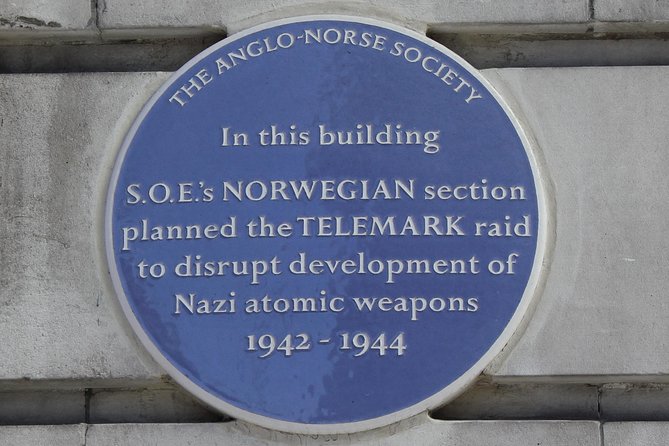
The Savoy offers a different kind of spy story. This is the grand hotel stop, with links to Ian Fleming, the creator of James Bond, and to Fleming’s own intelligence work. The tour also ties the hotel to a surprising story about the Christmas tree tradition in Trafalgar Square.
That detail gives the stop a lighter tone after the Markov assassination. You get a sense of how London’s public traditions and private networks can overlap. The hotel was also a favored wartime residence for a spy whose identity was kept so closely guarded that even Winston Churchill did not know who he was.
You spend around 10 minutes here. The Savoy is still a working luxury hotel, so this is mainly an exterior storytelling stop rather than a hotel tour. I like that limitation. The building supplies the atmosphere, while the guide provides the context.
If you come mainly for James Bond, this is one of the most useful parts of the walk because it connects fiction to the real intelligence work that influenced Fleming. If you prefer military history, the wartime spy story gives the stop more weight than a simple film-location visit.
Edith Cavell’s memorial and a story that changed shape
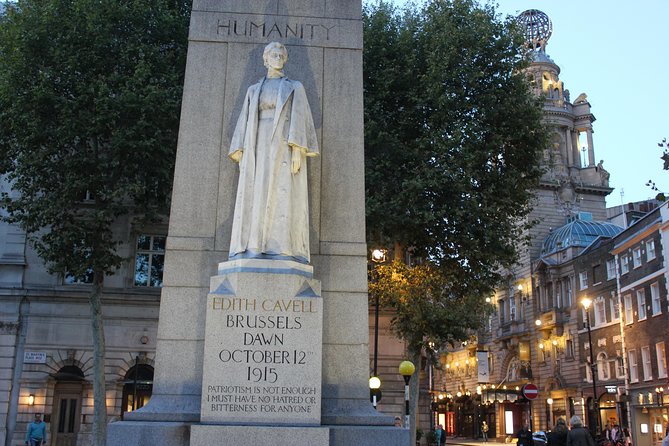
At the Edith Cavell Memorial, the tour turns to the First World War. Cavell was a British nurse working in occupied Belgium. She was executed by German authorities on charges of spying, while the British government denied that she had been involved in espionage.
For many years, Cavell was presented as a martyr and a symbol of German cruelty. Newly declassified documents suggest a more complicated account. That shift matters because it shows how governments shape public memory during wartime, and how later evidence can force people to reconsider a familiar national story.
You spend about 10 minutes at the memorial. This is not just a stop for a quick photograph. It gives the tour a moral question to carry forward: where does humanitarian work end and intelligence work begin, especially in occupied territory?
The subject is serious, and the guide’s explanation will matter here. Eian and Michael are the named guides associated with the experience, and both were praised for their ability to explain London’s intrigue in a clear, engaging way. The tour is strongest when it lets these stories remain complicated instead of reducing them to heroes and villains.
A warning from Canada in 1919
At the High Commission of Canada, you hear about a Canadian MI6 spy who warned the British government about the possibility of another war with Germany as early as 1919. It is a short stop, listed at about five minutes, but it makes an important point.
The end of one war did not end intelligence work. Governments were already watching political and military developments, trying to work out whether peace would last. This stop also reminds you that British intelligence was never only a London or English operation. Its work depended on people and links across the wider British and international system.
The building itself is not presented as a museum. You are stopping outside, hearing the story, then moving on. That is typical of this tour: the city is your setting, and the guide turns ordinary places into evidence of a larger story.
Same country, a completely different day out:
- Stonehenge, Windsor Castle, and Bath from London
★ 4.5 · 18,662 reviews - London Big Bus Hop-On Hop-Off Tour with Optional River Cruise
★ 3.5 · 10,803 reviews - London Small Group Tour of Historical Pubs
★ 5.0 · 10,422 reviews - Stonehenge, Windsor Castle and Bath with Pub Lunch in Lacock
★ 4.5 · 7,402 reviews
Naval intelligence at the Old Admiralty Building
The Old Admiralty Building brings together several of the tour’s biggest themes. Parts of the Directorate of Naval Intelligence were based here during both World Wars. You learn how this secretive military body helped create two of Britain’s best-known secret services.
The stop also covers intelligence decoded at the building that helped bring the United States into the First World War. That is a major claim in the story, and it shows why intelligence was not a side activity. Information gathered and interpreted in offices like these could alter alliances and change the course of a war.
Then comes the most theatrical tale: a plan involving a dead body that fooled the Germans. The operation inspired the British musical The Man Who Never Was, described here as the best-reviewed British musical of all time. The story is a good reminder that some of the most effective deception plans rely on patient preparation rather than action-movie drama.
You spend about 10 minutes at the Old Admiralty Building. The value is in the explanation, not in entering a restricted government site. If you enjoy military organization, codebreaking, and deception plans, this should be one of the more satisfying stops.
Whitehall, Downing Street, and the machinery of secrecy
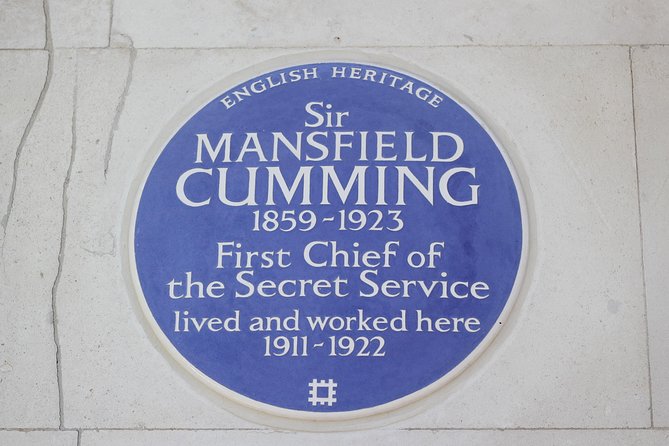
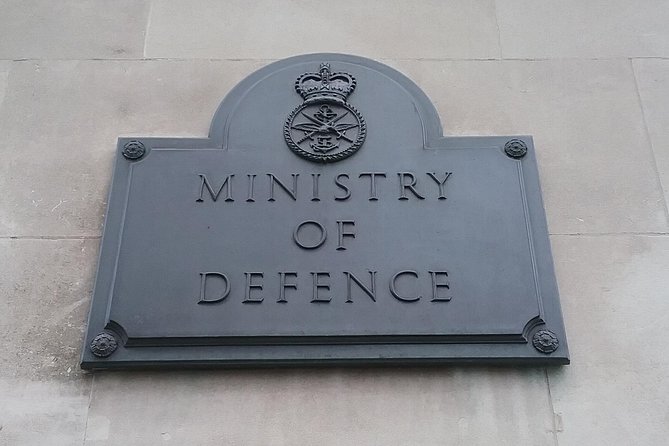
Whitehall receives the longest stop, about 30 minutes, and it deserves the extra time. This is the center of British government, with links to Downing Street, the Admiralty, the first head of the Secret Service, and the police forces assigned to stop foreign spies during the First and Second World Wars.
The attraction here is density. Several parts of the British state sit close together, and the guide can explain how political leaders, military offices, police work, and intelligence agencies connected. You are not looking at a single spy story. You are seeing the machinery around espionage.
Downing Street and the Admiralty are especially useful reference points because they bring secret work into contact with visible government. Intelligence decisions were not made in a fantasy headquarters far from public life. They affected the offices and streets around the center of power.
This part may appeal most to visitors who enjoy political history. It is less about gadgets and more about institutions, responsibility, and who had authority to act. The guide’s ability to answer questions matters here, and the private format gives you more room to ask them.
Churchill, Parliament, and the spy beneath Westminster
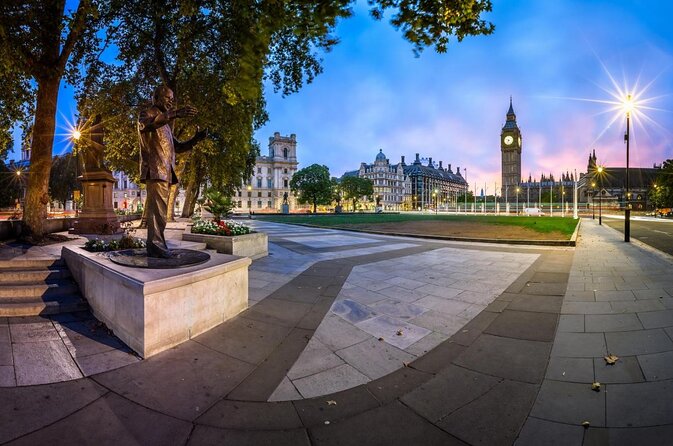
Parliament Square shifts the focus to Winston Churchill and his leadership during the Second World War. The tour explains how Churchill changed the role and impact of espionage through decisive wartime direction.
You also discuss parliamentary oversight of Britain’s intelligence services and the way the United Kingdom works with international allies. That makes the stop feel current without leaving the historical subject. Intelligence agencies may operate in secret, but democratic governments still need systems for supervision and accountability.
The square also opens the door to a memorable burial story: a spy who ended up buried in Westminster Abbey, one of Britain’s best-known UNESCO World Heritage sites. The contrast is striking. A person tied to secret work is resting in a place visited by millions, surrounded by some of the most public names in British history.
After roughly 15 minutes, you board a famous London double-decker bus toward MI6. Your ticket for this transport is not included. You need Apple Pay, Android Pay, an Oyster card, or a contactless card that works on the TfL network.
The MI6 view from Riverside Walk Gardens
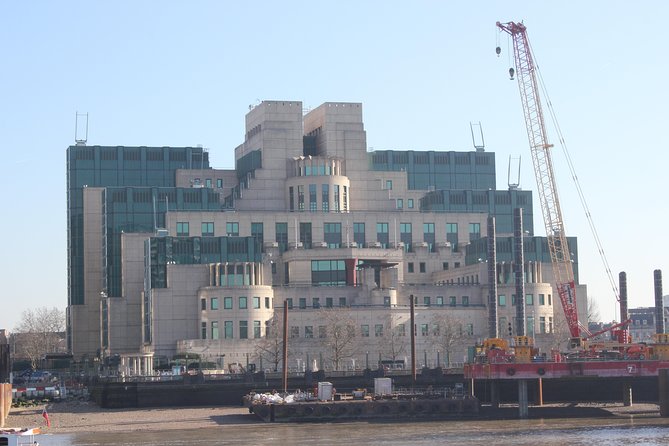
Riverside Walk Gardens is the final major sightseeing stop. From here, you get a view of the Security Intelligence Service, usually written as MI6, and hear how it works with MI5, the Security Service, and GCHQ, the Government Communications Headquarters.
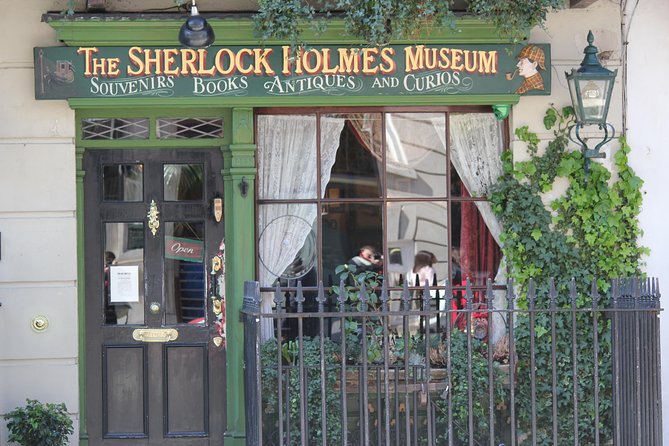
This is where the real-world and screen versions of espionage meet. MI6 headquarters has appeared in James Bond films and in television shows such as Sherlock. The view gives you a useful way to separate film fantasy from the work of actual intelligence organizations.
You spend about 20 minutes here, taking photographs and listening to the explanation. The stop is likely to please casual Bond viewers as much as serious spy-history fans because you do not need a technical background to follow it.
The route then crosses Vauxhall Bridge and uses the train to Waterloo, followed by a short walk to the final location described in the tour plan. The meeting information says the tour finishes at Vauxhall Bridge, so check the precise end point when you book or meet your guide. Either way, you should plan for the outing to involve public transport and more than one walking segment.
What the private format is worth
The price is $245.48 per group of up to 15 people. That is a different calculation from a per-person walking tour. For two people, it is a costly private outing. For a full group, the per-person price becomes much more attractive.
The private setup is valuable if your group has a shared interest in espionage, James Bond, military history, or London government. You can ask about a story that catches your attention, and your guide does not need to follow the needs of strangers. This is especially useful for families or friends with mixed levels of interest, since a good guide can explain the basics without making serious history fans feel left behind.
The six published ratings are all five-star ratings, with particular praise for the guides’ personal approach. Eian was described as friendly, unhurried, and willing to escort a participant to the Underground at the end. Michael was praised for his command of London’s spy stories and for making the subject enjoyable for the whole group.
Those details help define the tour better than the price alone. You are paying for a guide who can connect scattered places and keep the walk human. Still, you should budget for public transport on top of the tour price.
Pace, access, and practical planning
The tour lasts about three hours and requires a moderate level of physical fitness. You will walk between several central London sites, stand during outdoor explanations, board a bus, cross a bridge, and take a train.
The experience is stroller-friendly, and service animals are welcome. The information does not promise a fully step-free route, so if someone in your group needs specific access arrangements, ask before booking.
Wear shoes that can handle a city walk and keep your transport payment ready. Since the route uses the TfL network, a contactless card, Oyster card, or Apple or Android Pay will make the day simpler. The guide is included, but admission tickets are not needed at the listed stops.
Free cancellation is available if you cancel at least 24 hours before the start time. Changes or cancellations made less than 24 hours before the start are not refunded or accepted.
Who should book this London spy tour?
I would choose this for a private group that wants stories, not just landmarks. It suits a serious spy-history fan, but it also works for someone whose main connection is James Bond and who wants to learn where the fictional world came from.
It is less suitable if you want indoor museum visits, a slow architectural walk, or a route with no public transport. Much of the value comes from listening to the guide outside government buildings, memorials, bridges, and hotel façades.
The tour also works well early in a London visit because Whitehall, Parliament Square, Westminster Abbey, the Savoy, and MI6 become easier to place afterward. You will not see every spy-related site in London, but you will get a strong three-hour framework for understanding how secrecy shaped the city.
Should you book it?
Book this private spy walking tour if you want real espionage stories tied to recognizable London places, especially the Markov assassination, Edith Cavell, wartime deception, Whitehall, and MI6. The guide’s personality is a major part of the value, and the named guides Eian and Michael have been praised for being engaging, clear, and considerate.
Think twice if your group is small and price-sensitive, or if you dislike walking combined with buses and trains. For a larger private group, the $245.48 group rate makes more sense. For Bond fans, history buffs, and curious visitors who want London to feel more secretive than usual, this is a strong choice.
FAQ
Where does the Private Spy Walking Tour of London start?
It starts at WatchHouse Somerset House, Somerset House East Wing, London WC2R 1LA, UK.
Where does the tour finish?
The meeting information says the tour finishes at Vauxhall Bridge in Vauxhall, London. The route description also mentions taking a train to Waterloo for the final location, so confirm the exact end point with the provider.
How long is the tour?
The experience lasts approximately three hours.
What is the price?
The price is $245.48 per group for up to 15 people.
Is public transportation included?
No. Travel on the TfL network is not included. You need Apple Pay, Android Pay, an Oyster card, or a contactless card for the bus and train sections.
Is the tour private?
Yes. Only your group participates, with a maximum group size of 15 people.
Is the tour suitable for people using a stroller?
The experience is stroller-friendly. Service animals are also allowed.
What is the cancellation policy?
You can cancel for a full refund up to 24 hours before the experience start time. Cancellations or changes made less than 24 hours before the start are not accepted and are not refunded.
Just added around London
- Private The Beatles Taxi Tour in London★ 5.0 · 12 reviews
- Dinner and Jazz Cruise on the River Thames★ 4.0 · 140 reviews
- Airport Coach Service from Heathrow to Oxford★ 3.5 · 67 reviews
- The Alfred Hitchcock London Walk with Sandra Shevey★ 5.0 · 15 reviews
- Tower of London & 30+ London Sights Walking Tour★ 4.5 · 33 reviews
- Thames Beachcombing★ 4.5 · 100 reviews
- Ted Lasso London Taxi Tour★ 5.0 · 5 reviews
- Ted Lasso Tour of Richmond with Private Guide★ 5.0 · 25 reviews
Walking Tours, compared.
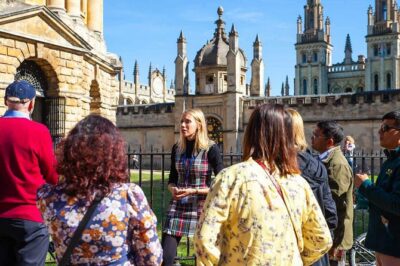
Oxford University Walking Tour With University Alumni Guide
Read our review →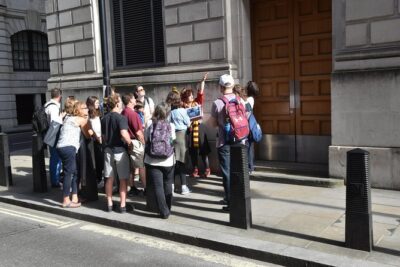
Tour for Muggles The Ultimate Harry Potter Walking Tour in London
Read our review →
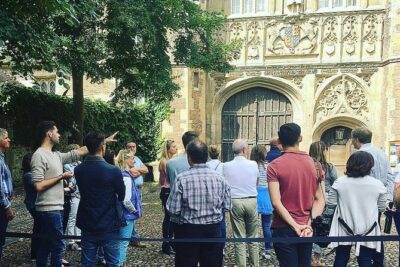
Cambridge University Walking Tour by Alumni™ Kings College Option
Read our review →
Blackbeard to Banksy – The Ultimate Walking Tour of Bristol
Read our review →
Air Raid Shelter + St. Nicholas Market Walking Tour
Read our review →
Walking Tour of Bath with Blue Badge Tourist Guide
Read our review →