
Reviewed · MUSEUMS
Private Tour : 3 Amazing London Art Galleries 1 tour 1 guide
London gives you an unusual art bargain: three major galleries with free general admission, yet very little time to see everything well. This private tour helps you focus. You move from da Vinci, Botticelli, and Rembrandt at the National Gallery to royal portraits, then modern art and the vast Turbine Hall.
I like the one-guide format, since you can ask about a painting instead of waiting for an audio guide to catch up. I also like the flexible morning or afternoon departure and the pre-tour updates. The main drawback is the pace: three galleries in roughly three hours means each stop gets about an hour, and you must pay for your own travel between them.
Key points to know before booking
- Three very different collections: Old Masters, British portraits, and modern art give you a quick tour of London’s art scene.
- Private attention: Only your group of up to four takes part, so questions and discussion can shape the visit.
- About one hour per gallery: This is a highlights tour, not a full museum visit.
- Transport is extra: Bring a topped-up Oyster card, travel card, or contactless debit or credit card.
- Check the final gallery: The description refers to Tate Modern and its Turbine Hall, but the stop is also labeled Tate Britain.
- A guide who explains, not just points: Kathy is praised for vivid descriptions of the art, its framing, and its setting.
Why this three-gallery plan works
This tour makes sense if you want a first look at London art without spending half a day wandering from room to room. The galleries cover different periods and purposes, so you get useful contrast. At the National Gallery, you are looking at paintings made for churches, courts, and private patrons. At the National Portrait Gallery, the subject is the person and the story attached to that face. At Tate Modern, the art may be abstract, enormous, or frankly puzzling.
That variety keeps the three hours moving. You are not spending the whole morning with one school of painting. A good guide can also give you a framework for looking: how to read a religious scene, how a royal portrait creates authority, or why a large modern installation takes up so much space.
The private setup is especially useful for mixed groups. If one person wants technique, another wants history, and a third wants to know why a painting is famous, you can ask as you go. Kathy is praised for strong communication and vivid explanations of the artwork, framing, and setting. Those details matter because a famous painting can look surprisingly small, dark, or crowded when you first see it.
Still, keep your expectations sensible. Three hours is enough for a guided introduction, not enough to see each collection properly. You will need to accept that some rooms and artists will be skipped.
A few more London trips to weigh up
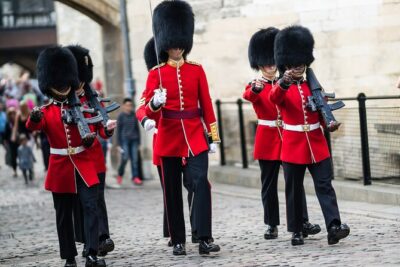
- Tower of London and Crown Jewels Exhibition Ticket
★ 4.5 · 6,677 reviews - Chelsea FC Stadium Tours and Museum
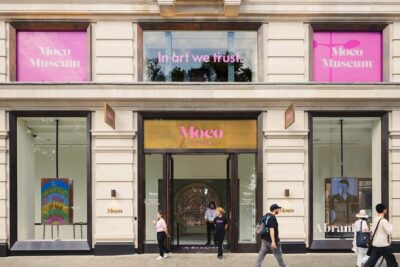
★ 5.0 · 1,908 reviews - Official tickets: Moco Modern & Contemporary Art Museum
★ 4.5 · 1,157 reviews
Starting with Leonardo at the National Gallery
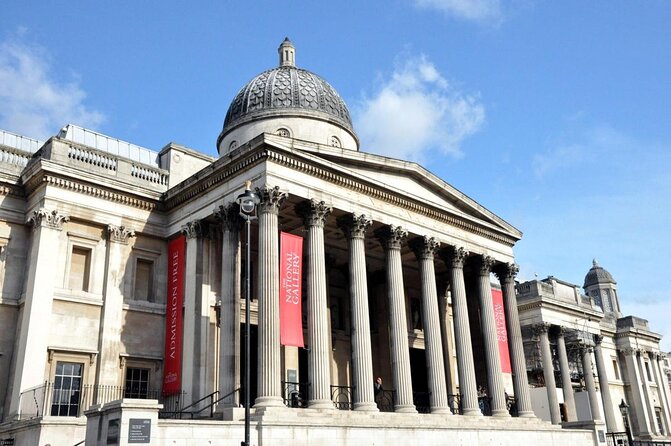
The tour begins at the National Gallery on Trafalgar Square, a useful central meeting point served by buses, taxis, and the London Tube. This is the natural place to start because it gives you an immediate look at European painting from earlier centuries.
The collection includes works associated with Botticelli, Leonardo da Vinci, Rembrandt, and Van Gogh. The supplied description also mentions several other major artists, but your guide will decide which works fit the day and the group’s interests. Ask at the beginning if there is a particular painting you do not want to miss.
An hour here can pass quickly. You might spend several minutes on a single work, looking at the faces, gestures, lighting, and small objects that carry the story. A guide can point out what to notice before you have time to get lost in the room labels.
The National Gallery is also a good place to learn how paintings were made and displayed. The reference to framing and setting in Kathy’s explanations suggests a broader approach than simply naming the artist. You can ask why a painting is hung where it is, how the frame affects your view, or what the original audience might have understood immediately.
The tradeoff is selection. The gallery houses one of the world’s great painting collections, but this tour only gives you a short introduction. If da Vinci or Van Gogh is your main reason for booking, tell the guide early. Otherwise, the hour may be shaped by the guide’s preferred route.
General admission to the gallery is included, and the activity is designed for wheelchair users. The meeting point is outside or near the National Gallery at Trafalgar Square, so arrive with enough time to find the guide rather than rushing in at the last moment.
Meeting monarchy and public figures at the National Portrait Gallery
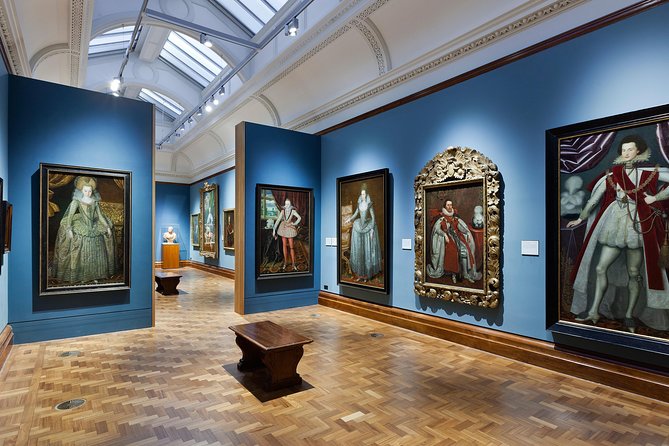
The second stop changes the question from what is this painting showing to who is this person. The National Portrait Gallery holds portraits from the late Middle Ages to the present day, including figures connected with the British monarchy and public life.
Here, you can expect attention on the people behind the images. Some portraits are about power, rank, and ceremony. Others reveal how an artist wanted a sitter to be remembered. The collection includes artists from Holbein to Hockney, so the style changes as much as the subjects do.
The mention of portraits 500 years old gives this stop a useful time span. You are not just looking at a line of royal faces. You are seeing how clothing, posture, symbols, and expression changed over centuries. A guide can connect the portrait to the character, event, or public role represented.
This gallery may be the most rewarding stop for people who enjoy stories. A portrait gives you a person to follow, and the guide can explain the setting around that person. You might find this more immediately accessible than abstract modern art, especially if your group includes someone who is unsure about galleries.
Again, one hour places a limit on the visit. The National Portrait Gallery is large, and the tour cannot cover every famous sitter. If British monarchy is your priority, say so. If you prefer modern British artists, ask how much time can be given to later works.
The gallery is included in the tour, and wheelchair users can take part. Since the tour is private, the guide can adjust the emphasis more easily than a large scheduled group can.
Tate Modern, the Turbine Hall, and a naming problem
The final stop is described as Tate Modern, the former Bankside Power Station beside the Thames. The highlight is the Turbine Hall, a huge interior space that runs through the building and is designed to make large-scale modern and contemporary art feel physically imposing.
The artists named for this section include Cézanne, Bonnard, Matisse, Picasso, Rothko, Dalí, Pollock, Warhol, and Bourgeois. That list signals a broad introduction rather than a single movement. You may move from bold color and fractured form to huge fields of paint, dreamlike imagery, or sculpture that changes the way you read the room.
This is where a private guide can be most helpful. Older paintings often provide clues through recognizable people and objects. Modern art may ask you to think about shape, material, scale, or emotion instead. You can ask direct questions without feeling that you are holding up a group.
The Turbine Hall itself is a major part of the visit. It gives you a sense of scale that a standard gallery room cannot. Even if one work does not appeal to you, the building and its height create a strong final impression.
There is an important detail to check before you book: the stop is labeled Tate Britain in one part of the description, while the text clearly describes Tate Modern, its former power station setting, and the Turbine Hall. Tate Britain and Tate Modern are different museums. Contact the provider before the tour and confirm the exact final destination, route, and meeting arrangements.
This matters because the travel plan changes depending on which Tate you visit. The activity says transportation between galleries is not included, so you need to be ready to make the journey yourself. The tour also says it ends back at the meeting point, which is another point worth confirming, since the final gallery is described elsewhere in the route.
Same country, a completely different day out:
- Stonehenge, Windsor Castle, and Bath from London
★ 4.5 · 18,662 reviews - London Big Bus Hop-On Hop-Off Tour with Optional River Cruise
★ 3.5 · 10,803 reviews - London Small Group Tour of Historical Pubs
★ 5.0 · 10,422 reviews - Stonehenge, Windsor Castle and Bath with Pub Lunch in Lacock
★ 4.5 · 7,402 reviews
Transport between galleries is part of the work
The galleries are not presented as one connected museum complex. You must travel between them, and the price does not include those journeys. Bring a topped-up Oyster card, a travel card, or a contactless debit or credit card.
That arrangement can work well for independent visitors who already understand London transport. It is less convenient if you are arriving tired, carrying luggage, or traveling with someone who needs extra time. Ask the guide for the exact order and approximate transfer plan before setting out.
The meeting point is the National Gallery on Trafalgar Square. Buses, taxis, and the Tube all serve the area, and the activity offers either a morning or afternoon start. The three-hour length is manageable, but allow extra time around it for transport, security, and finding the correct entrance.
You should also keep water and a small snack with you. Food and snacks are not included, and a full morning or afternoon of walking between galleries can be tiring. There is no need to bring an audio guide, since the private guide provides the commentary, but you may want your phone ready for pre-tour messages and meeting updates.
What the $307.96 group price really buys
The price is $307.96 for a group of up to four people. That works out to about $77 per person for four, or about $154 per person for two. Since general entry to these public galleries is not the main expense, you are paying primarily for the guide’s time, planning, and private attention.
For a group of four, the value is easier to see. You receive roughly three hours of guiding, and everyone can ask questions without joining a crowded public tour. For one or two people, the price is harder to justify unless art is a major trip priority or you want a focused introduction.
The included admission is still useful because it keeps the visit simple. You do not need to arrange separate gallery tickets for the planned stops. Your own transport and food remain extra, so build those costs into your budget.
The tour is booked, on average, 45 days ahead. That suggests you should not leave it until the last day of a short London visit, especially if you need a particular morning or afternoon. Confirmation is provided when you book, and pre-tour updates from the guide are a helpful feature. Read those messages carefully, especially because of the Tate Modern and Tate Britain wording.
Who will get the most from this tour
I would recommend this experience to a first-time London visitor who wants a clear introduction to major art collections without spending a full day in one museum. It also suits a family or small friend group with different art interests, since the private guide can respond to questions and adjust the conversation.
It is a good fit if you like stories, artists, and historical context but do not want to rely on wall text. Kathy’s praised style, with attention to vivid description, framing, and setting, sounds particularly useful for someone who wants help looking rather than a list of dates and names.
I would be more cautious if you are a serious art specialist. You may find one hour per gallery too brief, and you might prefer to choose one museum and spend several hours there. The same is true if you dislike changing transport during a cultural visit.
The tour is private, and only your group participates. Most people can take part, service animals are allowed, and all three galleries are described as accessible to wheelchair users. You should still raise any specific mobility needs with the provider before booking, since the route between buildings is not included and may require public transport or a taxi.
Should you book the three-gallery art tour?
Book it if you want a guided sampler of London’s major art museums and value conversation more than a slow, exhaustive visit. The strongest reasons are the private format, the range of artists, and the chance to hear clear explanations of works by artists such as Leonardo, Rembrandt, Van Gogh, Holbein, Hockney, Picasso, Rothko, and Warhol.
Before paying, confirm three things: who your guide will be, exactly which Tate gallery you will visit, and how the group will travel between stops. Also make sure your group size is close to four, since the fixed group price offers better value then.
The one serious warning is communication. One scheduled visit ended badly when the guide did not appear and the cancellation was not communicated in advance, although a refund was provided. Because of that, keep an eye on your messages and contact the provider if you have not received the promised pre-tour update.
If you want a friendly, focused introduction and can handle a brisk schedule, this is a sensible choice. If you want hours with one collection, choose a single-gallery tour instead.
FAQ
Where does the tour start?
It starts at the National Gallery, Trafalgar Square, London WC2N 5DN, UK.
Where does the tour end?
The activity information says it ends back at the meeting point.
How long does the tour last?
The tour lasts approximately three hours, with about one hour planned for each gallery.
Which galleries are included?
The tour includes the National Gallery, the National Portrait Gallery, and a Tate gallery. The description refers to Tate Modern and its Turbine Hall, but another section labels the stop Tate Britain, so confirm the final gallery before booking.
Are gallery admissions included?
Yes. Admission tickets for the three planned gallery stops are included.
Is transportation between galleries included?
No. You must pay for travel between the galleries and should bring a topped-up Oyster card, travel card, or debit or credit card for payment.
Is this a private tour?
Yes. Only your group takes part, with a maximum group size of four people.
Is the tour wheelchair accessible?
Each gallery is described as accessible for wheelchair users. The activity also says most people can participate.
Can I cancel for a full refund?
Yes. You can cancel up to 24 hours before the experience begins for a full refund. Changes or cancellations made less than 24 hours before the start time are not accepted for a refund.
Just added around London
- Private The Beatles Taxi Tour in London★ 5.0 · 12 reviews
- Airport Coach Service from Heathrow to Oxford★ 3.5 · 67 reviews
- The Alfred Hitchcock London Walk with Sandra Shevey★ 5.0 · 15 reviews
- Dinner and Jazz Cruise on the River Thames★ 4.0 · 140 reviews
- Tower of London & 30+ London Sights Walking Tour★ 4.5 · 33 reviews
- Thames Beachcombing★ 4.5 · 100 reviews
- Ted Lasso London Taxi Tour★ 5.0 · 5 reviews
- Ted Lasso Tour of Richmond with Private Guide★ 5.0 · 25 reviews
Museums, compared.
Tower of London and Crown Jewels Exhibition Ticket
Read our review →
Official tickets: Moco Modern & Contemporary Art Museum
Read our review →
British Museum London Guided Tour Semi-Private 8ppl Max
Read our review →
The British Museum London – Exclusive Guided Museum Tour
Read our review →

Skip the Line: Liverpool Beatles Museum – The perfect tribute to the Beatles
Read our review →Browse the lists this tour appears in