

Reviewed · MUSEUMS
The Postal Museum Admission Ticket
The best part of The Postal Museum is hidden below street level: Mail Rail, a small underground train that once carried letters beneath London. The ride turns a dry subject into a proper adventure, with facts and scenes along the route. Above ground, you can handle interactive displays, inspect old postal equipment, and see how communication shaped everyday life.
I like the museum’s lively approach, especially the pneumatic tubes and working-style models that give children something to do rather than simply look at glass cases. I also like the unusual social stories, including the Voices of Resistance: Slavery and Post in the Caribbean exhibit. The main drawback is that the attraction is split between two buildings, and some visitors have found the signs easy to miss.
The train is dark, loud, and tight in places, so it may unsettle very young children or feel cramped if you are tall. Check the Mail Rail operating status before you go, since maintenance or weather-related closure can remove the experience’s biggest draw.
Key points before you book
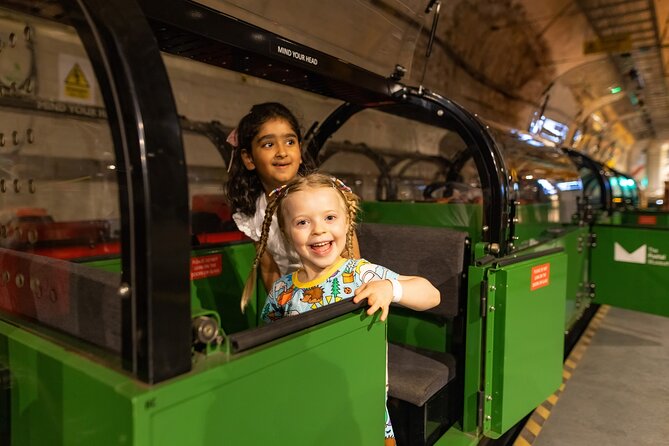
- Mail Rail is the headline attraction: Ride London’s former underground postal railway through dim tunnels with a narrated, story-led presentation.
- Two buildings require a little planning: The railway and its related displays are across the road from the main museum.
- Interactive exhibits suit families: Children can explore models, delivery systems, stamps, and pneumatic tubes rather than only read labels.
- Allow two hours if you can: A rushed visit may leave you skipping the main museum after the train ride.
- The train has real limits: It can be loud, dark, and uncomfortable for taller people, with one report from a 5-foot-11 visitor noting the low roof.
- Accessibility needs checking: The museum areas have step-free access, but the overall visit requires walking unaided for at least 100 metres on uneven surfaces and climbing at least 70 steep steps.
Why Mail Rail makes postal history exciting
London’s old postal railway is the reason to make time for this museum. The compact train carries you through the tunnels once used to move mail beneath the city, turning a practical piece of infrastructure into a short theme-park-style history lesson.
You do not simply sit in a carriage and watch a tunnel wall. The route uses sound, lighting, and information to explain how the railway worked and why it mattered. The effect is especially good for children, who may have little interest in postal systems until the floor begins to move.
The ride lasts only part of your visit, but it gives the museum a clear focus. You see the underground operation first, then the displays above ground make more sense. The old railway is not just a novelty. It shows how London tried to keep letters moving through a crowded city before modern delivery systems took over.
The train is small. If you are tall, expect a close fit, and keep the low roof in mind. It is also dark and can be loud, which may worry children who prefer gentle, quiet attractions. For a sensitive child, an autistic visitor, or anyone with hearing difficulties, check the museum’s accessibility resources before booking. An audio-described introduction is available, and the museum provides information for autistic visitors.
A practical tip: make Mail Rail your first target. If the ride has a queue or fixed timing, taking care of it early protects you from missing it at the end of the day. Afterward, cross to the main building and explore at your own pace.
A few more London trips to weigh up
- Tower of London and Crown Jewels Exhibition Ticket
★ 4.5 · 6,677 reviews - Chelsea FC Stadium Tours and Museum
★ 5.0 · 1,908 reviews - Official tickets: Moco Modern & Contemporary Art Museum
★ 4.5 · 1,157 reviews
The railway building across the road

The Mail Rail section is not in the same building as the main Postal Museum. This sounds minor, but it affects how you plan the visit. Clear directions matter, and signage has not always been easy to spot, so take a moment to understand where the railway entrance and main exhibition are located.
The railway building contains more than the ride itself. You can see hands-on displays about the underground network and examine details from the workers’ world. One especially effective touch is the material left in station lockers when the line closed. Small personal traces like these give the system a human feel that machinery alone cannot provide.
The railway displays also help explain what you have just experienced. Rather than treating Mail Rail as a quick amusement, the museum shows the people, tools, and working conditions behind the service. That extra layer is worth your time, particularly if you are interested in transport, engineering, or London’s working life.
Families may spend longer here than expected. Children can handle interactive elements and watch the story unfold through models and demonstrations. If you have a young train fan, this part may be enough to justify the ticket by itself. One parent took a seven-year-old who had grown tired of museums during a European holiday, and the child still rated Mail Rail awesome. That tells you something about the ride’s appeal.
Five centuries inside the main Postal Museum
The main museum traces roughly 500 years of postal communication. It covers the first stamps, delivery systems, postal workers, transport, and the changing role of communication in British society.
The subject is broader than letters and parcels. The post carried news, connected families, supported business, and helped governments communicate across distance. The museum uses the postal service to show how ordinary people stayed connected as Britain and the wider world changed.
I like that the displays do not focus only on famous inventions. A five-wheeled cycle, old mail equipment, airmail items, and everyday delivery tools help show the service in practical terms. You get a sense of the physical work involved, from sorting and transporting mail to reaching homes and communities.
The first stamps are a natural highlight, but the interactive sections are what keep the visit moving. You can expect models and touchable displays that explain how postal systems functioned. The pneumatic tubes are particularly popular. They make an invisible process visible, and children tend to return to them more than once.
The museum is bright and approachable rather than solemn. It works for adults who want social history and for children who need activity. I would still avoid treating it as a quick 60-minute stop. A family may need two to three hours, especially if children are allowed to investigate each interactive display properly.
The social side of the postal service
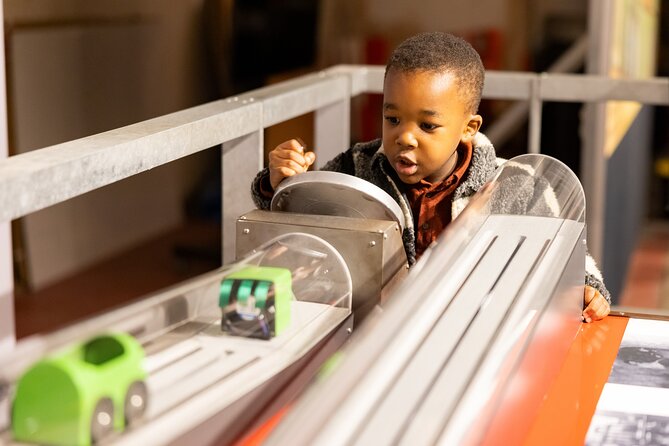
The Postal Museum is strongest when it connects postal systems to real people. The Voices of Resistance: Slavery and Post in the Caribbean exhibit adds an important wider view, showing that postal networks were tied to power, colonial society, and resistance as well as personal letters.
This is a useful counterweight to the cheerful machinery and train ride. You can enjoy the fun elements while also seeing that communication systems reflect the society around them. If you have an interest in Black history, Caribbean history, or the political role of the post, set aside time for this exhibit rather than passing through quickly.
Older visitors may find another connection in the changing role of postal workers. For much of the 20th century, postmen and women were familiar figures in local communities. They delivered news, benefits, letters, and parcels, and often formed part of the neighborhood’s daily rhythm.
That makes the museum a good place for grandparents and children to talk together. An eight-year-old may see only an old uniform at first, while a grandparent can explain how life felt when letters mattered more and digital messages did not exist. The museum gives both generations something to bring to the conversation.
The archive is another possible addition, but it is not open every day. It is available on the second Saturday of each month, so do not assume you can visit it during a standard museum admission. If your date lines up, it may offer a quieter change of pace from the family displays.
Same country, a completely different day out:
- Stonehenge, Windsor Castle, and Bath from London
★ 4.5 · 18,662 reviews - London Big Bus Hop-On Hop-Off Tour with Optional River Cruise
★ 3.5 · 10,803 reviews - London Small Group Tour of Historical Pubs
★ 5.0 · 10,422 reviews - Stonehenge, Windsor Castle and Bath with Pub Lunch in Lacock
★ 4.5 · 7,402 reviews
How much time you need
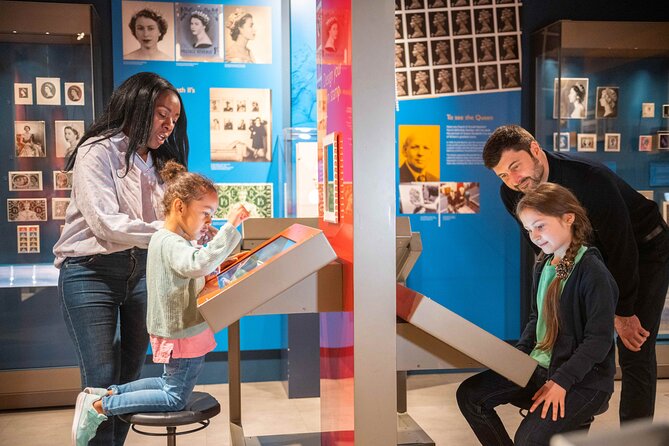
The stated visit length is about 90 minutes to two and a half hours. I would plan for the upper end if you are visiting with children, want to ride Mail Rail, and intend to see both buildings.
A quick visit could work like this:
- Ride Mail Rail first.
- Explore the railway building’s hands-on displays.
- Cross to the main museum.
- See the stamp, cycle, airmail, and social history exhibits.
- Finish with the sections your family finds most interesting.
The danger is spending too long waiting for the train and then rushing through the main collection. During a busy school holiday period, a family reported waiting around 20 minutes for the ride. That is not a long delay, but it matters if you have a train to catch or another timed booking.
Give yourself extra time if your children like interactive models. The museum can feel manageable at first, then expand once you stop to try each feature. A family that expected a short outing ended up needing nearly three hours.
The museum is also a sensible rainy-day choice. Much of the visit takes place indoors, and the train adds movement to an otherwise museum-based outing. Still, the experience provider notes that good weather is required and that poor weather can lead to cancellation or a different date. Check conditions and operating notices before setting out.
Price, extras, and overall value

The admission price is listed at $25.55 per person. That is not a bargain in the way a free national museum is, and one visitor felt the admission should have been free. You are paying for a specialist museum plus a distinct underground train ride, not simply entry to a collection.
For the right visitor, the price makes sense. Mail Rail gives the museum something most London museums cannot offer, and the activity works for adults and children together. The interactive displays also help stretch the visit beyond a short ride.
Two additional costs are worth noting. Annual entry to the museum exhibitions costs £2 per person, and Sorted! The Postal Play Space for children aged 0 to 8 costs £4.50 per person. These are not included in the admission ticket, so families with young children should check the total before booking.
An audio guide is available as an upgrade. Since the museum covers a large subject across two buildings, the guide may appeal if you want more background and do not want to read every display panel. It is offered in English.
The café is convenient, but I would keep expectations modest. It is family-friendly and useful for a pause, yet the food selection may be limited and hot food may not always be available. If you need a proper lunch, check what is being served on the day rather than relying on the café for a full meal.
Who will enjoy this most

I would choose The Postal Museum for families with school-age children, train enthusiasts, transport fans, and anyone who wants a London museum with a strong hands-on element. It also suits adults interested in communication, social change, engineering, and the daily life of postal workers.
The attraction is particularly good for mixed-age groups. A child can enjoy the train and pneumatic tubes while an adult studies stamps, airmail, social history, or postal labor. That balance is harder to find than it sounds.
It may be less suitable if you want a quiet, traditional museum with long stretches of artwork or uninterrupted reading. Mail Rail is a compact ride, the museum can be lively, and some exhibits are designed for active participation.
Consider your physical needs carefully. The museum’s spaces have step-free access, but the Mail Rail ride itself is an exception. You must be able to walk unaided for at least 100 metres on uneven surfaces in low light and climb at least 70 steep steps. Accessible toilets are gender-neutral, and a Changing Places facility is available. Service animals are allowed.
Children must be accompanied by an adult. The attraction is near public transportation, and the experience is offered in English.
What happens if Mail Rail is closed

The train is the main reason many people book, so a closure can change the value of the visit. Planned maintenance has caused the ride to stop operating in the past, and poor weather can also affect the booking.
Check the museum website before you go, especially if Mail Rail is the main purpose of your day. Do not assume that a ticket guarantees the ride will run under every condition.
If the ride is closed because of poor weather, you are offered a different date or a full refund. The general ticket is otherwise non-refundable and cannot be changed for personal reasons. That makes it important to choose your date carefully and check notices before committing.
If the ride is operating, do it first. If it is not, the museum still offers interactive displays, postal machinery, social history, and family activities, but you should decide in advance if that reduced visit is worth the cost for your group.
Should you book The Postal Museum?
Book it if you want an unusual London outing that combines a small underground railway with hands-on museum exhibits. Mail Rail is the clear star, and the main building gives the ride context rather than leaving it as a stand-alone novelty.
I would especially recommend it for families with children aged around six and up, train fans, and adults who enjoy social history. Allow at least two hours, find both buildings, and check the train status before leaving.
I would hesitate only if you dislike enclosed rides, need a fully quiet attraction, are very tall, or have a tight schedule. For everyone else, this is a fair-priced, good-weather-dependent museum visit with enough variety to keep both children and adults interested.
FAQ
How long does a visit to The Postal Museum take?
The visit takes approximately 1 hour 30 minutes to 2 hours 30 minutes. Families who want time for the interactive displays may need closer to three hours.
Is Mail Rail included with admission?
The admission includes access to the museum and the Mail Rail experience. Mail Rail is located in a separate building across the road from the main museum.
Is The Postal Museum suitable for children?
Yes. The museum has family-friendly interactive exhibitions, and children often enjoy the Mail Rail train, models, and pneumatic tube displays. Children must be accompanied by an adult.
Is an audio guide available?
Yes. You can upgrade your booking to add an English-language audio guide.
Is The Postal Museum accessible?
All museum spaces have step-free access. The Mail Rail building also has step-free access except for the ride. You must be able to walk unaided for at least 100 metres on uneven surfaces with minimal lighting and climb at least 70 steep steps.
Are there facilities for families?
The museum has an accredited family-friendly café, gender-neutral accessible toilets, and a Changing Places facility. Sorted! The Postal Play Space is available for children aged 0 to 8 for an additional £4.50 per person.
Can I cancel or change my ticket?
The experience is non-refundable and cannot be changed for any reason. If it is canceled because of poor weather, you will be offered another date or a full refund.
Just added around London
- Private The Beatles Taxi Tour in London★ 5.0 · 12 reviews
- Dinner and Jazz Cruise on the River Thames★ 4.0 · 140 reviews
- Airport Coach Service from Heathrow to Oxford★ 3.5 · 67 reviews
- The Alfred Hitchcock London Walk with Sandra Shevey★ 5.0 · 15 reviews
- Tower of London & 30+ London Sights Walking Tour★ 4.5 · 33 reviews
- Thames Beachcombing★ 4.5 · 100 reviews
- Ted Lasso Tour of Richmond with Private Guide★ 5.0 · 25 reviews
- Ted Lasso Tour of Richmond★ 5.0 · 152 reviews
Museums, compared.

Tower of London and Crown Jewels Exhibition Ticket
Read our review →

Official tickets: Moco Modern & Contemporary Art Museum
Read our review →
British Museum London Guided Tour Semi-Private 8ppl Max
Read our review →
The British Museum London – Exclusive Guided Museum Tour
Read our review →

Skip the Line: Liverpool Beatles Museum – The perfect tribute to the Beatles
Read our review →
Browse the lists this tour appears in