
Reviewed · MUSEUMS
National Maritime Museum Private Tour
The most arresting moment comes early: Turner’s Battle of Trafalgar puts you face to face with a dramatic view of Britain’s naval past. From there, the tour moves through Nelson’s personal story, the East India Company’s trading links, Britain’s role in the slave trade, and the elegant Queen’s House. This is a story-led museum visit, not simply a walk past display cases.
I like the privacy of a tour limited to your own group, especially when you are visiting with children or have a keen history fan in the family. I also like the range: Nelson, global trade, slavery, lighthouses, and royal art all appear in one afternoon. The main caution is pace. Three and a half hours is useful for orientation, but the museum has enough to keep you busy much longer.
Key points to know before booking
- Turner’s Battle of Trafalgar opens the tour with a major painting and a strong introduction to Britain’s naval story.
- Nelson’s actual jacket is on display, linking the famous admiral to the final moments of his life aboard HMS Victory.
- The Atlantic Slavery gallery is direct and serious, covering England’s role in the slave trade rather than presenting maritime success alone.
- Queen’s House adds art and royal history, including the Armada Portrait of Elizabeth I during a 45-minute visit.
- Your group stays private, so you can ask questions and set the pace more easily than on a large shared tour.
- The café break matters, since the afternoon is long and food and drinks are not included in the price.
Starting beside Nelson’s Ship in a Bottle
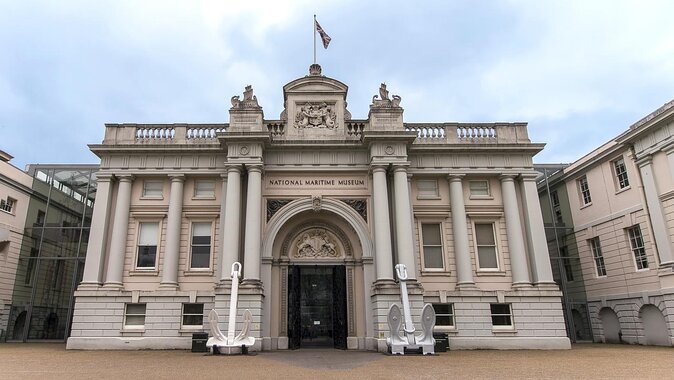
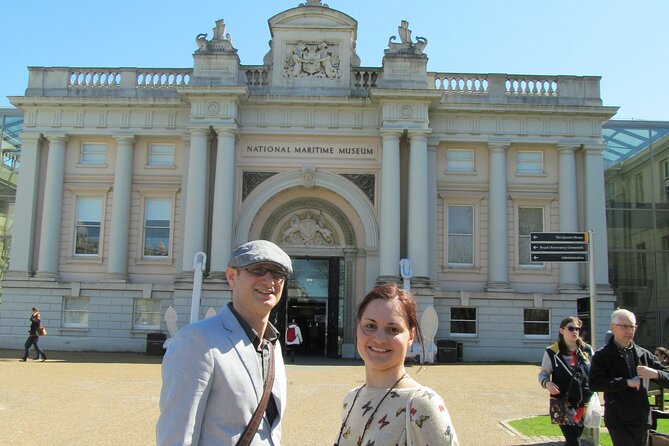
Meet at 12:30 p.m. beside Nelson’s Ship in a Bottle, at the southern entrance to the National Maritime Museum on the observatory side. This is a practical meeting point, but Greenwich has several museums and landmarks close together, so give yourself time to find the correct entrance.
The unusual sculpture is a fitting place to begin. It presents HMS Victory inside a large bottle, a playful object that leads into the much bigger subjects of the tour: naval power, exploration, trade, and empire. Your guide should help connect the museum’s objects rather than leave you to guess why one gallery follows another.
Because this is a private activity, the experience can be more responsive than a standard group walk. If your children are absorbed by interactive displays, you can spend a little longer there. If your group has come mainly for Turner or Nelson, you can ask for more context around those works.
The meeting time gives you a fixed afternoon plan. That is helpful if you are building a day around Greenwich, but it also means you should not arrive late. One person who reached the museum late found there was simply too much to see in the remaining time. That is a useful warning: the schedule is generous for a guided introduction, not for every gallery in the building.
A few more London trips to weigh up
- Tower of London and Crown Jewels Exhibition Ticket
★ 4.5 · 6,677 reviews - Chelsea FC Stadium Tours and Museum
★ 5.0 · 1,908 reviews - Official tickets: Moco Modern & Contemporary Art Museum
★ 4.5 · 1,157 reviews
Turner’s Battle of Trafalgar brings the naval story to life
The first major stop is J. M. W. Turner’s Battle of Trafalgar, painted in the early 1820s. You get more than a quick look at a famous canvas. The guide explains the scene and its place in the story of Britain’s naval victories.
Turner did not make this a neat, tidy record of battle. The painting is dramatic and emotional, with ships, smoke, damage, and human cost competing for your attention. That makes it a good opening piece because it gives you a sense of how national memory is shaped. Naval history is not only dates and admirals. It is also public image, grief, triumph, and the way a country chooses to tell its story.
I would pay close attention here, even if you are not usually drawn to paintings. The guide’s narration can help you read the work as both art and historical evidence. Without that context, you might simply see a large maritime battle scene and move on.
The museum uses a lot of display cases and object-based galleries. Some people will appreciate the quiet, orderly approach. Others may find parts of the building plain and less theatrical than museums such as the Mary Rose museum. This tour is strongest when your guide supplies the human stories that the room design may not always provide.
Nelson’s jacket makes a famous figure personal
Next comes the Nelson, Navy, Nation gallery, where you see the jacket Admiral Horatio Nelson wore when he was mortally wounded aboard HMS Victory. This is one of the tour’s most powerful objects because it turns a national hero into a real person.
The jacket is not just a military item. It is connected to the moment when Nelson’s life ended and his victory at Trafalgar became part of British memory. Seeing the clothing he was wearing brings the story down from the level of monuments and schoolbook summaries.
This section should work well for families because it gives younger visitors a clear question to consider: what can one object tell us about a person and an event? It also gives history fans a firm anchor before the tour widens to trade and empire.
The name Nelson can dominate a Greenwich visit, so it is useful that the guide does not stop with the admiral. The route moves from one celebrated naval figure to the systems that supported Britain’s power. That shift is important. Ships and commanders mattered, but so did money, cargo, labor, ports, and international trade.
The Trade Gallery explains how sea power connected the world
The Trade Gallery looks at Britain’s links with the Far East and the origins of those connections through the East India Company. This is where the tour moves beyond battles and famous names.
You can expect the guide to place maritime travel in a wider economic setting. Ships carried goods, but the trade also shaped politics, wealth, and daily life. The East India Company is a useful subject for that discussion because it connects commercial ambition with the reach of British power overseas.
This portion will suit you if you want more than a parade of ship models and naval uniforms. It asks you to think about what made long-distance sea travel valuable and who benefited from it. The subject can also be more demanding than the Nelson material, so families may want to ask the guide for examples suited to younger listeners.
Some displays may feel formal rather than highly theatrical. One harsh assessment of the museum found the rooms sterile and the glass cases uninspiring, while another praised the quality and range of expedition objects. Both reactions are understandable. The collection rewards attention, but it may not constantly entertain you with large-scale visual effects.
That is why the private format has real value here. You can ask why a particular object matters, how it relates to the East India Company, or what the museum wants you to notice. A good guide can make a quiet case more meaningful.
Same country, a completely different day out:
- Stonehenge, Windsor Castle, and Bath from London
★ 4.5 · 18,662 reviews - London Big Bus Hop-On Hop-Off Tour with Optional River Cruise
★ 3.5 · 10,803 reviews - London Small Group Tour of Historical Pubs
★ 5.0 · 10,422 reviews - Stonehenge, Windsor Castle and Bath with Pub Lunch in Lacock
★ 4.5 · 7,402 reviews
The Atlantic Slavery gallery adds necessary honesty
The Atlantic Slavery gallery is one of the most important stops because it presents Britain’s role in the slave trade directly. It prevents the tour from becoming a simple celebration of naval victories, exploration, and empire.
Expect the mood to change. The gallery deals with exploitation, violence, forced movement, and the economic systems that supported slavery. It is not a light family attraction, but older children and teenagers may benefit from the clear historical setting, especially when a guide can explain difficult subjects in plain language.
I would not rush through this section. The maritime story makes little sense without acknowledging the human cost of trade and imperial power. The gallery also gives you a chance to ask questions that are harder to raise when exploring alone.
The tour’s wider range is a strength here. Turner and Nelson show how Britain remembered naval success. The Trade Gallery shows how maritime connections produced wealth and influence. The Atlantic Slavery gallery makes you face the suffering tied to those systems. Together, these stops provide a more useful picture than a one-sided naval display.
Lighthouses bring the subject back to everyday safety
The tour also covers lighthouses and their history in the United Kingdom. This may sound like a smaller subject after Trafalgar and the Atlantic slave trade, but it adds a practical side to maritime history.
Lighthouses represent the infrastructure that made sea travel possible and safer. They remind you that maritime history is not only about famous voyages. It also involves warnings, navigation, engineering, maintenance, and the people who worked in difficult places to protect ships.
This can be a good reset after the seriousness of the slavery gallery. You are still thinking about the sea, but now through the problems of navigation and survival. The guide’s stories matter here, since the appeal of lighthouse history often lies in the human details behind the structures.
Take a café break before Queen’s House
About halfway through the tour, you have time for coffee or tea at the museum café. Food and drinks are not included, so plan to pay separately. The pause is welcome because the activity lasts around three and a half hours and asks you to concentrate across several very different subjects.
The café has also been used for a larger meal, including fish and chips, but you should treat that as an optional purchase rather than part of the tour. If you need a proper lunch, allow enough time and budget for it.
This break is not wasted time. It gives your group a chance to compare impressions and decide what you most want to ask about in the second half. With a private guide, that conversation can shape the rest of the visit.
Queen’s House changes the mood with royal art
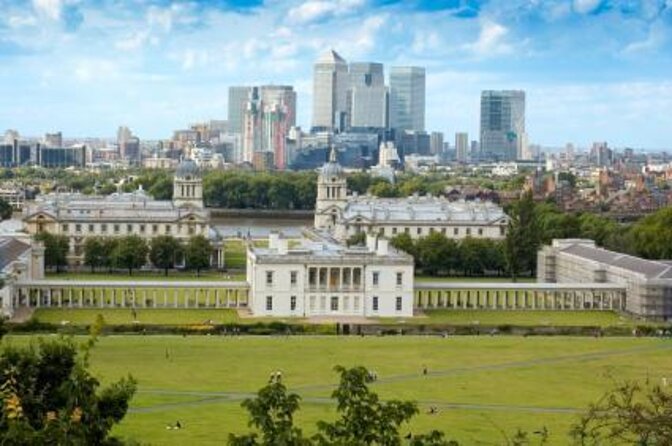
The final named stop is Queen’s House, with about 45 minutes set aside for the visit. The building offers a marked contrast to the museum galleries, shifting from naval objects and trade to royal art and architecture.
The highlight is the Armada Portrait of Queen Elizabeth I. The painting presents Elizabeth after the defeat of the Spanish Armada and is packed with political imagery. Even if you know little about Tudor England, the portrait gives you plenty to examine: costume, symbols, ships, and the way royal power was presented.
Forty-five minutes is enough for a focused visit, but not enough to see every room at leisure. That is fine if you treat Queen’s House as a concentrated finale rather than a full independent museum visit. The contrast helps round out the afternoon. You finish with a portrait that shows how England wanted its power to be seen, after spending much of the tour examining how that power worked at sea.
The route ends back at the meeting point. The supplied details also repeat the museum route under Greenwich Royal Tours, so you should not expect that label to mean a separate additional attraction. The clearly described sites are the National Maritime Museum and Queen’s House.
Is $237.59 per person fair value?
At $237.59 per person, this is not a budget museum visit. The National Maritime Museum itself lists free admission for the main museum portion, while admission to Queen’s House is included in the tour. You are paying mainly for the private guide, the structured route, and the explanations that tie the objects together.
That can be worthwhile for a family, a couple with limited time, or a small group that wants to ask plenty of questions. A private tour also saves you from spending the first hour working out which galleries best match your interests.
The value is weaker if you enjoy reading every label alone or plan to spend most of a full day in the museum. Since the museum has a large collection, you may want to return after the tour or continue exploring independently if time permits. The guided route gives you a strong framework, but it cannot cover everything.
The rating of 4.1 from eight recorded reviews suggests a generally positive but not universal response. That fits the experience itself. The subject matter is excellent, the guide can add real warmth, and the private setup is useful. Yet the museum’s presentation may feel too quiet or traditional if you want large interactive screens and dramatic effects in every room.
Past comments specifically praise guides named Graham and Wendy for clear explanations, helpful pacing, and engaging stories. Guide quality is likely to shape your day, so use the private format well. Ask questions, mention the ages and interests in your group, and say if you want more time with art, naval objects, trade, or social history.
Who should book this Greenwich tour?
I would recommend it most strongly to:
- Families with older children or teenagers who benefit from stories and a clear route
- History fans interested in Nelson, Turner, exploration, trade, and empire
- Visitors with only part of a day for Greenwich
- Small groups who prefer privacy and direct contact with a guide
- Anyone who wants the Atlantic Slavery gallery explained with care
You may want to skip it if you prefer a highly theatrical museum experience or want to move at your own pace. The museum has interactive displays, and younger visitors may enjoy them, but there may not be as many screen-based activities as some families expect.
You also need a moderate level of physical fitness. The tour lasts several hours and involves moving through museum spaces, though the supplied information does not give a detailed accessibility plan. Children must be accompanied by an adult, and at least two people are required per booking.
The practical booking details that matter
The experience is offered in English and uses a mobile ticket. Confirmation arrives when you book. It is near public transportation, which makes Greenwich practical to reach, but the information provided does not name a specific station or route.
The start time is 12:30 p.m., and the activity returns to the meeting point. Food and drinks are extra, so bring room in your budget for the café. Free cancellation is available until 24 hours before the local start time. After that point, refunds are not provided, and changes are not accepted.
Should you book it?
Book this tour if you want a private guide to connect Greenwich’s naval triumphs with trade, slavery, navigation, and royal art. The best parts are the personal objects, especially Nelson’s jacket, Turner’s battle painting, and Elizabeth I’s Armada Portrait. The Atlantic Slavery gallery also gives the afternoon needed balance.
Do not book it expecting an all-singing, all-screen museum show. Some rooms may feel restrained, and three and a half hours only gives you a guided sample of a very large collection. For a family or history-minded group that values clear stories and a well-chosen route, the price can make sense. For independent museum explorers, free admission and a self-guided visit may offer better value.
FAQ
How long does the National Maritime Museum private tour last?
The tour lasts approximately three hours and 30 minutes, including a café break and the visit to Queen’s House.
What time and where does the tour begin?
It begins at 12:30 p.m. beside Nelson’s Ship in a Bottle at the southern, observatory-side entrance to the National Maritime Museum, London SE10 8QY.
Is this a private tour?
Yes. Only your own group participates, and a local English-speaking guide leads the experience.
Is admission included?
Admission to Queen’s House is included. The National Maritime Museum portion is listed as free admission. Food and drinks are not included.
What will I see at the National Maritime Museum?
The route includes Turner’s Battle of Trafalgar, the Nelson, Navy, Nation gallery, Nelson’s wounded jacket, the Trade Gallery, the Atlantic Slavery gallery, and displays about the history of lighthouses in the United Kingdom.
Can I cancel for a full refund?
Yes, if you cancel at least 24 hours before the experience start time. Cancellations or changes made less than 24 hours before the start time are not accepted for a refund.
Just added around London
- Private The Beatles Taxi Tour in London★ 5.0 · 12 reviews
- Dinner and Jazz Cruise on the River Thames★ 4.0 · 140 reviews
- Airport Coach Service from Heathrow to Oxford★ 3.5 · 67 reviews
- The Alfred Hitchcock London Walk with Sandra Shevey★ 5.0 · 15 reviews
- Tower of London & 30+ London Sights Walking Tour★ 4.5 · 33 reviews
- Thames Beachcombing★ 4.5 · 100 reviews
- Ted Lasso London Taxi Tour★ 5.0 · 5 reviews
- Ted Lasso Tour of Richmond with Private Guide★ 5.0 · 25 reviews
Museums, compared.

Tower of London and Crown Jewels Exhibition Ticket
Read our review →
Official tickets: Moco Modern & Contemporary Art Museum
Read our review →
British Museum London Guided Tour Semi-Private 8ppl Max
Read our review →
The British Museum London – Exclusive Guided Museum Tour
Read our review →


Skip the Line: Liverpool Beatles Museum – The perfect tribute to the Beatles
Read our review →Browse the lists this tour appears in