Reviewed · SELF-GUIDED TOURS
Soho London Private Music Self-Guided Tour
Soho’s music story is packed into a few compact streets, from Mozart and Tin Pan Alley to punk, jazz, and David Bowie. This self-guided audio walk begins at the Dominion Theatre and leads you through places linked with The Beatles, The Rolling Stones, Jimi Hendrix, Adele, the Sex Pistols, and more.
I like the freedom to start whenever your day allows, and I like the three weeks of unlimited access, which lets you repeat a favorite section or pause for lunch. The tradeoff is that several venues have closed or changed use, so much of the experience depends on listening to the audio rather than seeing preserved interiors.
Key points to know before you go
- Denmark Street is the musical core: Spend time around Tin Pan Alley, Regent Sounds, No. 6 Denmark Street, and the former 12 Bar Club.
- The route covers more than rock: You’ll hear stories about jazz at Ronnie Scott’s, punk at the Sex Pistols’ old address, classical music at Mozart’s plaque, and pop history at former theatres and studios.
- Evren provides the English audio: The app includes narration, maps, GPS directions, photos, videos, and recommendations.
- You set the pace: The walk takes about two hours, but you can stop, pause, or repeat sections during the three-week access period.
- Many stops are viewed from the street: Former venues such as the Astoria, Borderline, Marquee Club, and 2i’s Coffee Bar no longer operate in their original form.
- The low price suits independent explorers: At $12.47 per person, the tour costs less than most guided walks, but you give up live questions and personal storytelling.
Soho is one of London’s best areas for a music walk because the streets are close together and the stories overlap. A recording studio may sit beside a guitar shop, a theatre, a pub, or an ordinary apartment front. The area does not present its musical past in one neat museum. You find it in plaques, shopfronts, old addresses, and buildings that have changed hands.
This tour gives that scattered story a useful shape. It begins north of Soho at the Dominion Theatre on Tottenham Court Road, moves through Denmark Street, then loops past theatres, gardens, pubs, clubs, record shops, and former studios before finishing at Trident Audio Post on Great Pulteney Street.
The format is private but not guided in person. Your group uses the app alone, following GPS directions and listening to Evren’s English narration. That matters if you prefer to stop for photographs, browse a record shop, or linger over a pub lunch without keeping pace with a guide.
Start at the Dominion Theatre on Tottenham Court Road
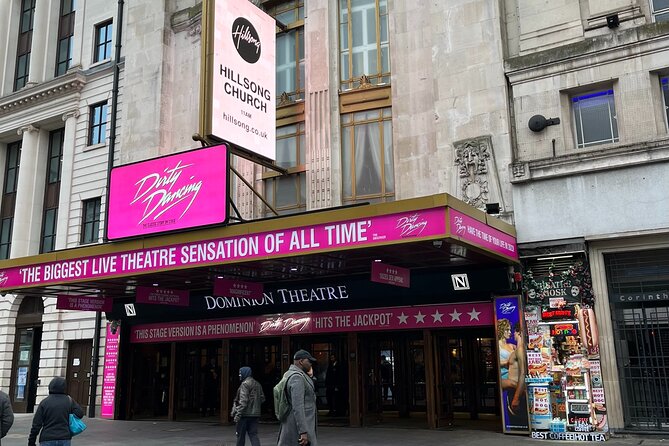
The Dominion Theatre makes a suitably grand opening point. This West End venue has hosted musicals and concerts, including a noted performance by David Bowie. You begin with the link between Soho’s commercial theatre world and its music business, rather than with a simple list of famous bands.
The start point is at 268 to 269 Tottenham Court Road. The tour operates every day from midnight to 11:30 p.m. in the stated operating period, so you have wide scheduling freedom. Still, a daylight start is likely to make the street details easier to see, especially at former venues and plaques.
From here, the route takes you toward the former Astoria Theatre. The Astoria once hosted many major bands and artists and helped launch careers in the British music industry. Since it has closed, you should expect the audio to supply much of the meaning. This is an early reminder that the walk is partly about what used to be here, not only what you can enter today.
A few more London trips to weigh up
- Westminster Abbey Entrance Ticket Including Audio Guide
★ 4.0 · 661 reviews - Windsor Castle Tour from London with Transportation & Audio Guide
★ 3.5 · 222 reviews - London Panoramic Open Top Bus Tour with Audio Guide
★ 4.0 · 209 reviews
Denmark Street and Britain’s Tin Pan Alley
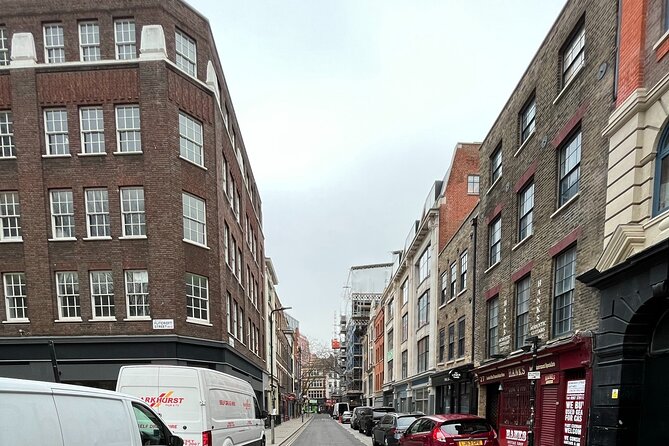
Denmark Street is the main event. Known as Britain’s Tin Pan Alley, it brought songwriters, publishers, recording studios, music shops, and performers into one short stretch. Allow roughly 20 minutes here, though music fans may want longer.
The street’s appeal is its concentration. Elton John and the Rolling Stones are connected with its studios, and the route points out places tied to both the creative and commercial sides of popular music. You are not just hearing about performers. You are seeing where songs were written, instruments sold, records made, and publishing deals handled.
Regent Sounds Studio is one of the strongest stops. It was associated with the Rolling Stones’ first album and sessions by The Beatles. The building is now a guitar shop, which gives the location an active musical use even though it no longer functions as the historic studio described in the tour.
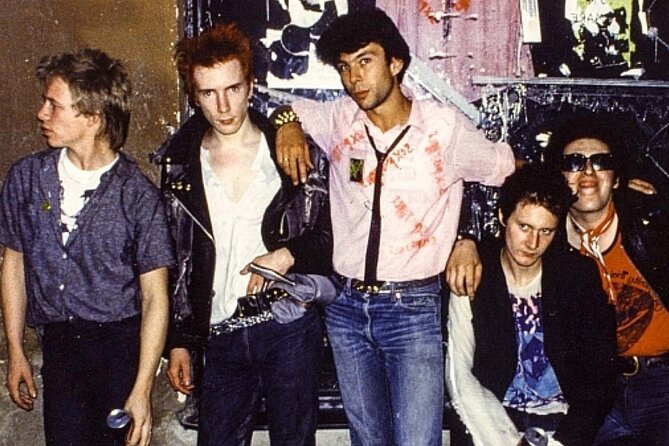
No. 6 Denmark Street carries a different mood. The Sex Pistols lived and recorded there in the 1970s. It helps explain how Denmark Street moved from polished songwriting and studio work into the rawer, rebellious sound of punk.
The former 12 Bar Club adds the grassroots angle. It was known for early performances by Adele and The Libertines. Unlike the large theatres, it represents the small-room circuit where new performers could test songs before reaching wider audiences. The club is no longer presented as an operating venue, so again, you are following a historical trail through a changing neighborhood.
Publishers, cafés, and the business behind the songs
Several Denmark Street stops widen the story beyond performers. Mills Music was an early music-publishing business and had links with artists including Jimmy Page and David Bowie. KPM Publishing, part of the KPM Music House, represents another less visible but important part of the industry, with music used in records, film, and television.
These stops are valuable because they explain why Soho mattered even when no famous person was onstage. Songs need publishers, recording rooms, instruments, and places where writers meet. The route gives you that working backdrop.
La Giaconda was a café frequented by David Bowie, Jimi Hendrix, and Elton John during the 1960s. It was a meeting place for musicians and songwriters, and its story gives Denmark Street a social side. You may find this kind of stop more evocative than a formal museum display because it connects music with ordinary habits: coffee, conversation, and waiting for the next opportunity.
The walk also includes Forbidden Planet, the large comic, science fiction, fantasy, and cult entertainment retailer. Its music connection is indirect, so this is a lighter stop. It reflects Soho’s broad creative culture rather than adding another major chapter to the music story. The suggested visit is about five minutes, making it easy to keep moving if your main interest is music.
West End theatres and the changing city
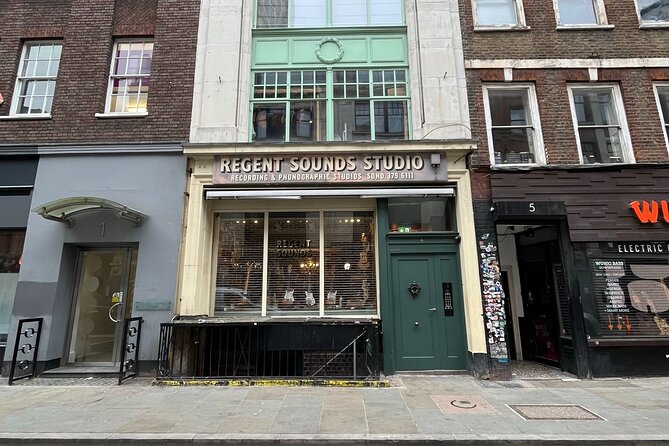
The Phoenix Theatre provides another link between popular music and stage performance. David Cassidy performed in Blood Brothers there, adding a pop-star connection to this well-known West End venue.
Phoenix Gardens follows as a five-minute pause. This community garden is not a music site, but it offers a quiet break among Soho’s streets. I like its place in the route because a two-hour city walk benefits from a moment of calm. You can listen, look around, and reset before the next cluster of stories.
The former Saville Theatre, now the ODEON Covent Garden, connects the 1960s concert scene with Brian Epstein, The Beatles’ manager. The Beatles and Jimi Hendrix performed there. The building’s current cinema use means you should treat it as an exterior history stop, not as a preserved concert hall.
Macaris Guitar Shop, now an Apple Store, tells a similar story. Macaris supplied guitars to aspiring players and established stars for decades. The current shop use makes the point clearly: Soho’s music addresses can survive while the businesses inside them change.
Foyles Book Shop is another indirect stop. Its cultural role and large music section make it relevant, but it is not a major performance site. If you enjoy music biographies, scores, and music history, you may want to browse. If you are focused only on recording studios and clubs, this is an easy place to keep the audio running while you walk.
Same country, a completely different day out:
- Stonehenge, Windsor Castle, and Bath from London
★ 4.5 · 18,662 reviews - London Big Bus Hop-On Hop-Off Tour with Optional River Cruise
★ 3.5 · 10,803 reviews - London Small Group Tour of Historical Pubs
★ 5.0 · 10,422 reviews - Stonehenge, Windsor Castle and Bath with Pub Lunch in Lacock
★ 4.5 · 7,402 reviews
Soho Square, The Dog and Duck, and Mozart
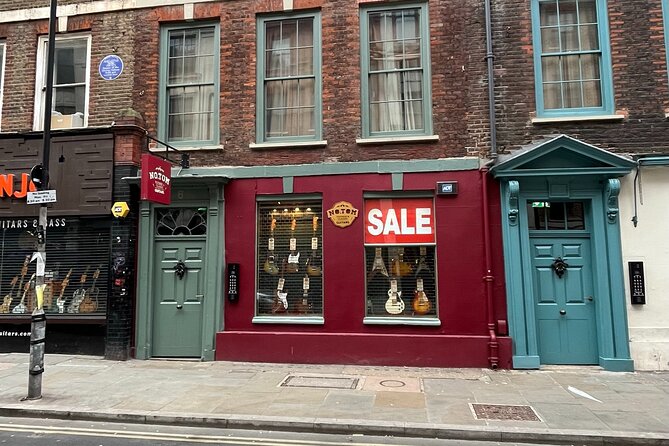
Soho Square brings together several strands of the walk. A building overlooking the square is owned by Paul McCartney, and the area has hosted secret performances, including two by Prince in one night. Music-industry offices also surround the square, showing how creative work remains part of Soho’s daily fabric.
The suggested time here is about five minutes. I would use it as a place to pause and take stock of the route so far. You have moved from theatres and Tin Pan Alley into recording, publishing, punk, and celebrity performance.
The Dog and Duck is a traditional English pub with broad historical associations. Its direct music connection is limited, but it supplies a sense of Soho as a place where people meet and stories circulate. The tour allows about five minutes, enough for a look at the exterior or a possible drink if your timing suits.
The Mozart Blue Plaque adds an older layer. Mozart was eight when he lived at the Soho address and composed his first symphony in 1764. The building is now a private residence, so you cannot treat it as a museum visit. The plaque alone carries the story, but it makes a useful point: Soho’s musical past reaches far beyond electric guitars and pop fame.
Ronnie Scott’s and the jazz chapter
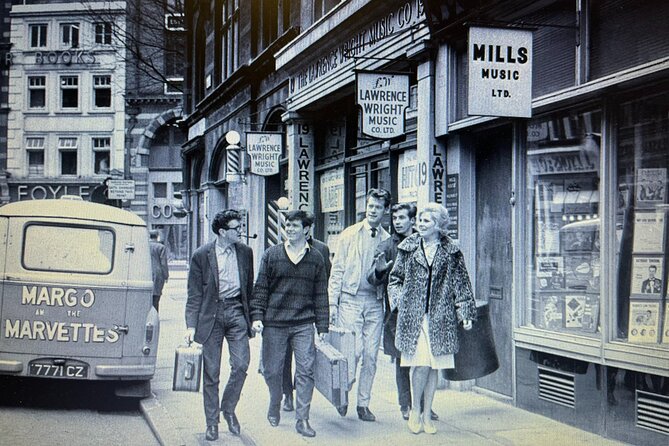
Ronnie Scott’s Jazz Club is one of the route’s most important active venues. Founded in 1959, it has hosted major jazz artists including Miles Davis, Ella Fitzgerald, and Nina Simone.
The tour suggests about five minutes here, which is enough to identify the club and hear its place in London jazz. If you want more than a street-level look, you would need to arrange a separate visit. The self-guided tour does not include entry or a performance.
This is where the route broadens nicely. Soho is not only Beatles anecdotes and rock history. Ronnie Scott’s gives the area a serious jazz identity and helps explain why the district has drawn musicians from different scenes and generations.
From 2i’s Coffee Bar to the Marquee Club
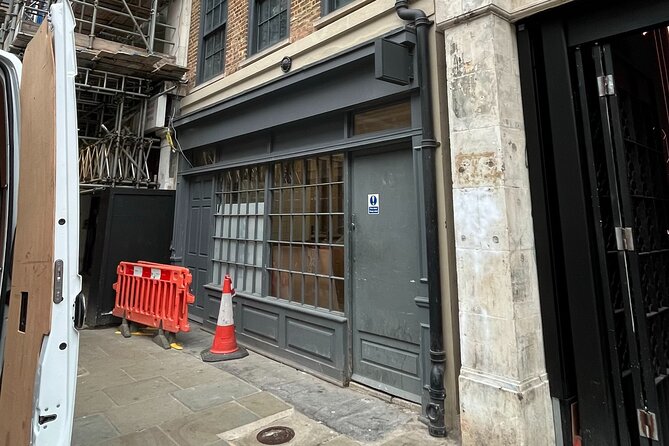
The former 2i’s Coffee Bar marks the birthplace of British rock and roll. Cliff Richard and Tommy Steele were discovered there, and its importance comes from the way a small coffee bar could help unknown performers find an audience.
The café no longer stands, so this is another story best understood through the audio and the surrounding streets. That pattern may frustrate anyone expecting original interiors, but it also reflects the reality of urban music history. Many key places were never built to become museums.
The Marquee Club adds a major 1960s chapter. The Rolling Stones and The Who played early shows there, and the Wardour Street venue sat at the center of London’s changing music culture. It has closed, but its influence remains one of the reasons this part of Soho matters to rock fans.
These former venues make the route especially useful for anyone who wants context. You learn not only where famous artists performed, but also how small clubs, cafés, and theatres helped shape careers.
Reckless Records and Trident Studios
Reckless Records is the most practical stop for shoppers. This independent store carries second-hand vinyl, CDs, and DVDs. The route allows about 10 minutes, but your spending and browsing time are entirely up to you.
I would save room in your schedule here. A record shop is not just a photo stop. It gives you a chance to connect the stories in the audio with actual music, perhaps by searching for an album mentioned along the way. The tour does not promise a particular stock selection, so think of it as an opportunity rather than a guaranteed find.
The final destination is Trident Audio Post at 33 Great Pulteney Street. The location connects with Trident Studios, where David Bowie’s Hunky Dory and albums by The Beatles were recorded. Trident functioned as a creative center where artists developed records that later became widely known.
Ending here works well. The route begins with the public face of music at the Dominion Theatre and finishes with the technical work of recording. Afterward, you are free to continue around Soho at your own pace.
How the app format affects the experience
Evren’s audio guide is delivered through the app, with no computer-generated voice. Alongside the narration, you receive maps, directions, GPS routing, photos, videos, recommendations, and information about each stop.
The main benefit is control. You can start at a convenient time, pause the route, and return to it during the three-week access period. If you are staying in London for several days, you could split the walk into two shorter outings or repeat Denmark Street after learning the wider story.
The main limitation is the lack of a live guide. You cannot ask a follow-up question, request a pub recommendation in the moment, or adjust the route through conversation. You should also check the Before You Go section of your ticket and follow the activation instructions carefully. The booking reference is not the code used to activate the tour.
The walk is offered in English. Service animals are allowed, public transport is nearby, and most people can take part. Since the experience is self-guided, your group is the only group participating in your app session.
Is $12.47 a fair price?
At $12.47 per person, this is an inexpensive way to add structure to a few hours in Soho. The value is strongest if you care about music and want more than a casual wander past famous streets.
You are paying for an organized route, researched narration, GPS directions, visual material, and repeat access for three weeks. A live guide would offer more conversation and flexibility, but it would also cost more. Here, the low price lets you decide how much time to give each stop.
The non-refundable policy deserves attention. You cannot cancel or change the booking for a refund, so choose your date carefully even though the tour itself offers broad daily operating hours.
Who should book this Soho music walk?
I would recommend it to independent visitors who enjoy music, city walks, and stories about places that have changed. It suits a solo explorer, a couple, or a private group that prefers not to follow a guide holding a flag.
It is especially useful for fans of The Beatles, The Rolling Stones, David Bowie, Jimi Hendrix, punk, jazz, and British rock and roll. You do not need to know all those artists beforehand. The route gives enough connections to make Soho feel newly legible, and one particularly strong response praised the way it revealed how much rock and roll history is packed into the area.
I would hesitate if you need guaranteed access to historic interiors or want a performance included. Many stops are former venues, private buildings, or businesses now operating under another name. The experience is about interpretation, location, and atmosphere, not entry tickets.
Should you book it?
Book this tour if you want a low-cost, flexible introduction to Soho’s music story and are happy to use your phone as your guide. Give Denmark Street extra time, keep the three-week access window in mind, and plan for a route that mixes active businesses with places known mainly through the past.
Skip it if you want a personal guide, long visits inside venues, or a tightly scheduled group walk. For music fans who value freedom and strong local context, though, the route offers a smart way to turn ordinary Soho streets into a series of meaningful addresses.
FAQ
How long does the Soho London Private Music Self-Guided Tour take?
The tour takes approximately two hours. You can pause or revisit sections during the three weeks of unlimited app access.
Where does the tour start?
It starts at the Dominion Theatre, 268 to 269 Tottenham Court Road, London W1T 7AQ, United Kingdom.
Where does the tour finish?
It finishes at Trident Audio Post, 33 Great Pulteney Street, London W1F 9NP, United Kingdom. You are free to continue exploring Soho afterward.
Is there an in-person guide?
No. This is a self-guided private activity for your group. Evren provides the English-language audio through the app.
What does the app include?
The app includes a map, directions, GPS route, audio narration, videos, photographs, recommendations, and information about the stops.
Is the tour available in languages other than English?
The experience is offered in English.
Can I cancel or change the booking?
No. The experience is non-refundable and cannot be changed for any reason. Check the Before You Go section of your ticket, and note that the booking reference is not the activation code.
Just added around London
- Private The Beatles Taxi Tour in London★ 5.0 · 12 reviews
- Dinner and Jazz Cruise on the River Thames★ 4.0 · 140 reviews
- Airport Coach Service from Heathrow to Oxford★ 3.5 · 67 reviews
- The Alfred Hitchcock London Walk with Sandra Shevey★ 5.0 · 15 reviews
- Tower of London & 30+ London Sights Walking Tour★ 4.5 · 33 reviews
- Thames Beachcombing★ 4.5 · 100 reviews
- Ted Lasso Tour of Richmond with Private Guide★ 5.0 · 25 reviews
- Ted Lasso Tour of Richmond★ 5.0 · 152 reviews
Self-Guided Tours, compared.
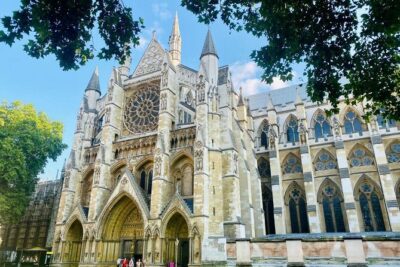
Westminster Abbey Entrance Ticket Including Audio Guide
Read our review →
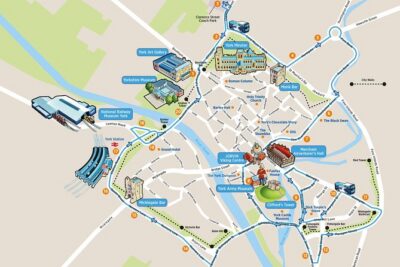
Golden Tours York Hop-on Hop-off Open Top Bus Tour with Audio Guide
Read our review →
Windsor Castle Tour from London with Transportation & Audio Guide
Read our review →
London Panoramic Open Top Bus Tour with Audio Guide
Read our review →
Emirates Stadium and Arsenal Museum Entrance Ticket Including Audio Guide
Read our review →
Private Self-Guided Dinky Door Hunt in Cambridge
Read our review →