
Reviewed · WALKING TOURS
90 Minute Classic Walking Tour of Oxford
Oxford reveals itself best on foot, one college gate, medieval lane, and curious student tradition at a time. This tour takes you from the Martyrs’ Memorial through the university quarter, past the Bodleian Library, Radcliffe Camera, Bridge of Sighs, Carfax Tower, and several old colleges in roughly 90 minutes.
I like the small maximum group of 10, which makes it easier to hear the guide and ask questions. I also like the way the route mixes famous sights with quieter corners such as Magpie Lane and Queens Lane. The main drawback is that it is primarily an outdoor orientation walk, and entry to some attractions is limited or not included. Rain can also affect the experience.
Key points at a glance
- Small groups: No more than 10 people, with a more personal feel than large city walks.
- Strong local storytelling: Guides including Nick, Andrew, and Graham bring in college traditions, famous former students, architecture, and unusual Oxford tales.
- Useful first-day introduction: The route helps you decide what to visit afterward, including museums, colleges, and towers.
- Classic Oxford sights: See the Bodleian Library, Radcliffe Camera, Bridge of Sighs, High Street, and Carfax Tower.
- Easy central walking: The route covers narrow lanes and busy streets, with no major hills noted.
- Good family age range: Children are welcome, but the tour is not suitable for infants or children under seven.
Why a small Oxford walking tour works
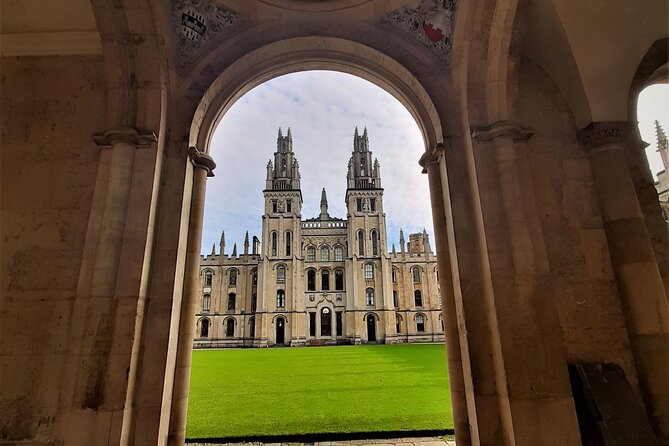
Oxford can feel confusing at first. Its colleges sit beside shops, churches, libraries, cafés, and ordinary streets, but the boundaries are not always clear. A guide gives you the basic map in your head, then adds the stories that make the stonework meaningful.
The maximum group size is 10. That matters here because many stops involve looking up at a building while the guide explains what happened there. In a large crowd, you may struggle to hear or keep up. A small group also gives you a fair chance to ask about college life, architecture, famous names, or what to do next.
The guides named in the feedback include Nick, Andrew Parker, and Graham. Their styles may differ, but the consistent pattern is clear: expect a warm, conversational approach rather than a lecture. Nick is praised for his memory for dates, enthusiasm, humor, and ability to adjust the walk to a group’s interests. Andrew is described as interactive and especially good at adding facts beyond the planned route. Graham has also been praised for adapting the pace to a visitor’s needs.
You should allow 90 minutes at a minimum, but the experience can run closer to two hours. That extra time may depend on questions, group pace, and what the guide can show you that day.
A few more Oxford trips to weigh up
- Oxford University Walking Tour With University Alumni Guide
★ 5.0 · 6,905 reviews - 1.5-hour Oxford City and University Walking Tour
★ 4.5 · 1,383 reviews - Harry Potter Walking Tour of Oxford Including New College
★ 4.5 · 930 reviews
Starting at the Martyrs’ Memorial

The meeting point is the Martyrs’ Memorial at 13 Magdalen Street. Tours begin at 11 a.m. and 2 p.m. daily, so arrive with enough time to find the monument and gather before departure.
The memorial recalls three Anglican clerics burned at the stake for heresy in the 16th century. It is an effective starting point because it immediately places Oxford in a period of religious conflict, political pressure, and dangerous changes in belief. You are not simply beginning beside a convenient landmark. You are beginning with a story about power and punishment.
The first stop is brief, about five minutes, and admission is free. That short time is typical of this walk: you get context at several major sites rather than spending the whole tour inside one building.
The Bodleian Library and Oxford’s scholarly world
From the memorial, the route moves toward the Bodleian Library and the Scholastic Quadrangle. The Bodleian is one of Oxford’s defining institutions, and the guide explains how the university’s famous research library grew after the upheaval of the Reformation.
This is a good example of what a guided walk adds. You can admire the old stone buildings on your own, but the historical sequence is easy to miss. The library is tied not only to books and scholars, but also to the religious changes that reshaped England and its institutions.
The stop is listed as about five minutes and free of charge. Do not assume this means a full interior library visit. The walk focuses on seeing the setting and understanding its place in Oxford. If you want to tour the Bodleian rooms, you will need to arrange that separately.
Wren’s architecture and the first public museum
The route continues past the first major project by Christopher Wren, the renowned English architect. The building dates from 1669 and gives you a chance to connect Oxford with a major chapter in English architectural history.
You also see the first purpose-built public museum, described as highly significant in the cultural history of the Western world. These stops broaden the tour beyond colleges and famous student names. Oxford is not only an academic town. It is also a place where scientific collections, public learning, architecture, and religious institutions developed side by side.
Because the walk covers many locations quickly, you will get an introduction rather than a detailed architectural study. That is a fair trade for a first visit. You can note the buildings that catch your interest and return later with more time.
Same country, a completely different day out:
- Oxford Official University & City Tour
★ 5.0 · 1,134 reviews - City Sightseeing Oxford Hop-On Hop-Off Bus Tour
★ 4.5 · 1,042 reviews - Oxford Sightseeing River Cruise Along The University Regatta Course
★ 4.5 · 652 reviews - Afternoon Tea Sightseeing River Cruise in Oxford
★ 5.0 · 583 reviews
The Bridge of Sighs and Oxford’s famous High Street
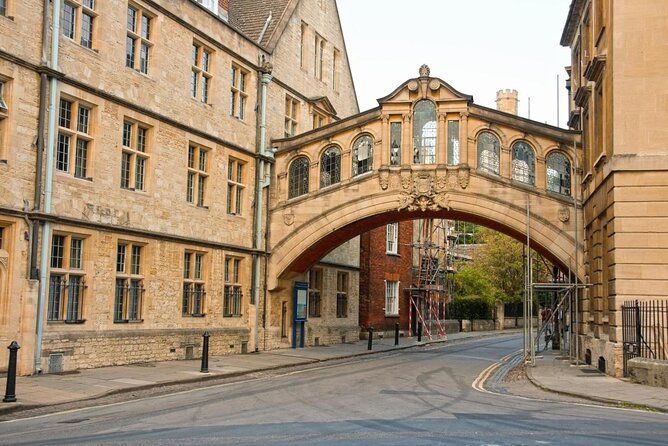
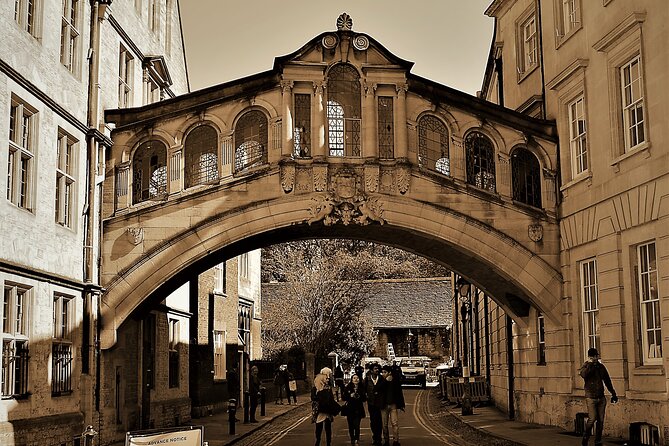
The Bridge of Sighs, built in 1913, adds a touch of romance to the route. Its ornate shape is one of Oxford’s most photographed views, though its name often leads people to expect a much older structure. The guide can put the bridge into context and explain how it connects the city’s college buildings.
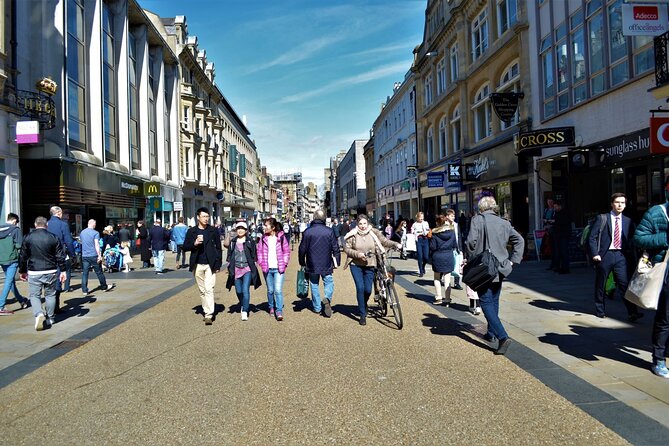
High Street then turns the walk into an open-air history lesson. You pass colleges linked with figures such as C. S. Lewis, Percy Bysshe Shelley, Bob Hawke, and Bill Clinton. Their names help show the range of Oxford’s influence, but the street is just as interesting for its architecture, which reaches across several centuries.
This section can be busy, especially around the central shopping streets. Stay close to the guide and listen for instructions when the group crosses roads or pauses near college entrances.
Magpie Lane and Radcliffe Square
One of the route’s best changes of pace comes on Magpie Lane, a narrow, winding passage leading toward the High Street. Its tight scale gives you a better sense of old Oxford than a broad avenue can. It is also a reminder that the university is woven into the city rather than separated from it.
Radcliffe Camera is the visual centerpiece of the walk. Set in Radcliffe Square, it is surrounded by some of Oxford’s most recognizable university buildings. The guide stops here for about 10 minutes, giving you time to look around and understand why this square feels like the heart of the university precinct.
You will not receive admission to the Radcliffe Camera as part of the tour. The value is in seeing the building in its setting and learning how the university’s spaces fit together. If you want photographs, this is one of the places where it pays to pause instead of rushing after the group.
Christ Church views and college spaces

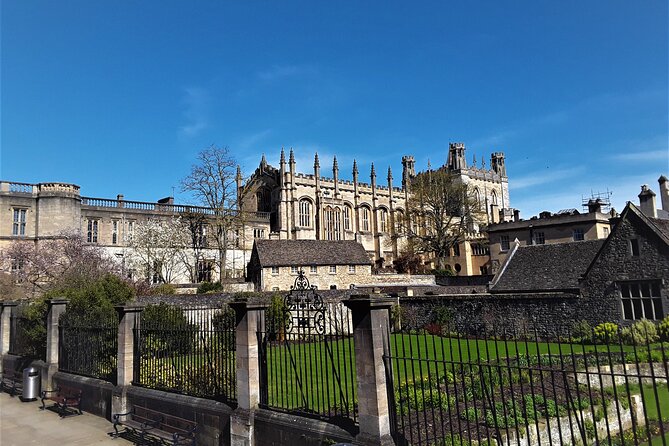
Another section enters through the St Aldates gate and includes views of Christ Church, the Meadow Building, Merton Field, the Dean’s Garden, Dead Man’s Walk, and the Kissing Gate. The route also recalls James Sadler, who became the first English aeronaut.
This portion gives you glimpses of college life and grounds that are easy to overlook when you are focused only on major facades. Access can vary, and the supplied details do not promise entry to every space on every departure. Still, the chance to see some college interiors or restricted areas may arise, as several participants describe visits to colleges, a guild, and All Souls chapel.
That uncertainty is worth keeping in mind. Oxford colleges operate as working academic institutions, not simply tourist sites. Gates may close, ceremonies may take place, or access may change. A guide can still provide a useful view from outside and explain what you can visit later.
Carfax Tower and the center of old Oxford
Carfax Tower is a 23-meter-high bell tower and the remaining landmark of a 12th-century church. It offers city views from the top, but admission is not included in the tour.
The tower is a useful orientation point. From the ground, it helps you understand the relationship between the university quarter and the old commercial center. If you want to climb it, plan that as a separate visit and check the time required. The walking tour itself does not pause for an included ascent.
The route ends back at the Martyrs’ Memorial, so you are not left in an unfamiliar part of town. Guides can also offer information about onward transport, accommodation, and things to do after the walk. That makes the tour particularly useful early in your stay.
Queens Lane, St Edmund Hall, and New College

The final section passes Queen’s College before entering Queens Lane, sometimes called the most haunted site in Oxford. Treat that as local legend rather than a promise of ghosts, but the lane’s narrow turns and old walls give it a suitably atmospheric setting.
You also pass St Edmund Hall, described as the last medieval hall in Oxford, the ancient St Peter’s Church in the East, and New College, which was built on a plague pit. These details show how much of Oxford’s past remains embedded in ordinary routes through the city.
This back-street section is one of the reasons I would choose a guided walk over a simple list of landmarks. You might find these lanes on a map, but without context they can seem like shortcuts. With a guide, they become part of the story of medieval Oxford, college expansion, disease, religion, and student life.
What the guides do best
The strongest part of this experience is the human guide. Nick, Andrew, and Graham are repeatedly described as warm, funny, patient, and able to explain complicated history in an approachable way.
Andrew’s style appears especially interactive. He checks whether the group has time for extra sights and adds facts outside the core route. That is useful if you have a flexible afternoon and want suggestions for the next stop.
Nick is known for making dates and facts easy to follow, while also adjusting the material to the interests of the people in front of him. One family found the tour worked across ages from 15 to 64, with student traditions and filming connections adding interest for younger visitors. Graham has been praised for accommodating a disabled participant.
The experience is offered in English only. Most people can participate, and the walk has been described as easy, with no hills. You should still expect uneven historic streets, narrow lanes, and time spent standing outdoors.
Price, timing, and practical value
At $38.82 per person, this is not the cheapest way to see Oxford’s streets. It is also not simply a paid stroll from one photograph to the next. You are paying for a small group, a local guide, a clear route through a confusing center, and enough background to help you use the rest of your day well.
The value is strongest if you are visiting Oxford for the first time, have only a few hours, or want help choosing what to explore on your own. It is less useful if you already know the university quarter well or prefer to read at your own pace.
The tour is mobile-ticketed and confirmation arrives at booking. It is near public transportation, and it starts and ends at the same place. Free cancellation is available until 24 hours before the start time. If poor weather cancels the walk, you can receive another date or a full refund.
Dogs are not allowed on university and college property. Service animals are allowed. Children are welcome, but infants and children under seven should not join.
Who should book this Oxford walk?
I would choose this tour for:
- First-time Oxford visitors who want a clear introduction.
- People with limited time before a train, lunch, or afternoon visit.
- Families with older children and teenagers.
- Anyone who prefers stories and conversation to a self-guided route.
- Visitors who want practical suggestions for what to do afterward.
- People who value a small group and the chance to ask questions.
I would think twice if your main goal is a long interior visit to the Bodleian, Radcliffe Camera, or Christ Church. The walk gives you views, context, and possible access to selected college spaces, but admission is not guaranteed across the route. Carfax Tower is also extra.
Should you book the 90 Minute Classic Walking Tour?
Book it if you want to get your bearings quickly and understand why Oxford’s lanes, colleges, libraries, churches, and museums matter. The small group is a real advantage, and the route covers a strong collection of central sights without demanding a full day.
Choose the 11 a.m. departure if you want to use the guide’s suggestions for the afternoon. Choose 2 p.m. if your morning is already occupied. Bring comfortable shoes, allow up to two hours, and dress for changeable weather.
This is a particularly good first activity in Oxford. It will not replace a full college visit or museum tour, but it can help you make better choices afterward. For $38.82, that orientation and personal guidance make the walk a sensible purchase for most first-time visitors.
FAQ
Where does the Oxford walking tour start?
The tour starts at the Martyrs’ Memorial, 13 Magdalen Street, Oxford OX1 3AE, United Kingdom.
What time does the tour begin?
Tours begin daily at 11 a.m. and 2 p.m.
How long does the walking tour last?
The stated duration is about 1 hour 30 minutes to 2 hours.
How many people can join the tour?
The maximum group size is 10 people.
Is admission to Carfax Tower included?
No. Admission to Carfax Tower is not included.
Are children allowed on the tour?
Children are welcome, but the activity is not suitable for infants or children under seven.
Can I bring a dog?
Dogs are not allowed on university and college property. Service animals are allowed.
Just added around Oxford
- Natural History Museum Tour – by Uncomfortable Oxford™★ 4.5 · 17 reviews
- Harry Potter PUBLIC Tour + Self Guided Christ church Daily 12.45★ 5.0 · 82 reviews
- Oxford Harry Potter Film Locations Walking Tour by Alumni™★ 4.5 · 100 reviews
- Private Cotswold Village Tour – 4th & 5th guest travel FREE★ 5.0 · 92 reviews
- Cotswolds Private Day Tour★ 4.5 · 152 reviews
- Undiscovered Cotswolds Private Tour★ 5.0 · 87 reviews
- River Cruise with Three Course Riverside Restaurant Dining★ 5.0 · 201 reviews
- Fun, Flexible Treasure Hunt Around Oxford with Cryptic Clues & Hidden Gems★ 5.0 · 202 reviews
Walking Tours, compared.

Oxford University Walking Tour With University Alumni Guide
Read our review →
Tour for Muggles The Ultimate Harry Potter Walking Tour in London
Read our review →
Cambridge University Walking Tour by Alumni™ Kings College Option
Read our review →
Blackbeard to Banksy – The Ultimate Walking Tour of Bristol
Read our review →
Air Raid Shelter + St. Nicholas Market Walking Tour
Read our review →
Walking Tour of Bath with Blue Badge Tourist Guide
Read our review →
Changing of the Guard Guided Walking Tour in London
Read our review →Browse the lists this tour appears in