
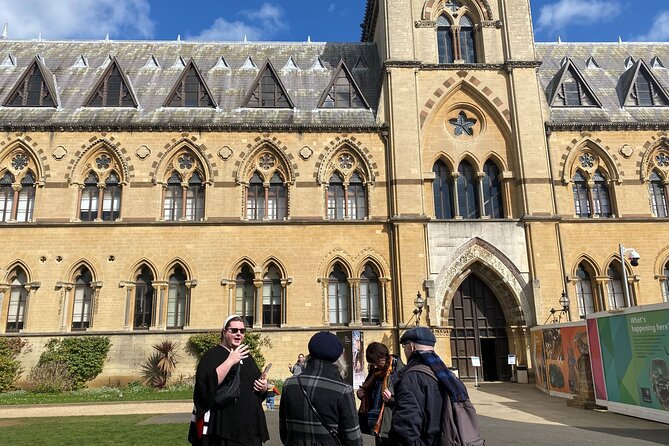
Reviewed · NATURAL HISTORY MUSEUM TOURS
Natural History Museum Tour – by Uncomfortable Oxford™
Oxford’s museums can look like quiet showcases of fossils, artifacts, and grand Victorian design. This tour asks a sharper question: Who collected these objects, and what power made that possible? Starting at the Oxford University Museum of Natural History, it links the displays to colonialism, empire, and Oxford’s own institutions.
I like the way the tour combines museum entry with a walking discussion, rather than keeping you in one gallery. I also like its conversational style. Guides such as Ffion, Devika, and Cameron have been praised for making difficult subjects accessible without turning the outing into a lecture. The main drawback is the meeting-point risk: one group waited for a guide who could not find them, so arrive early and make sure your phone number works.
Key points about the Oxford museum tour
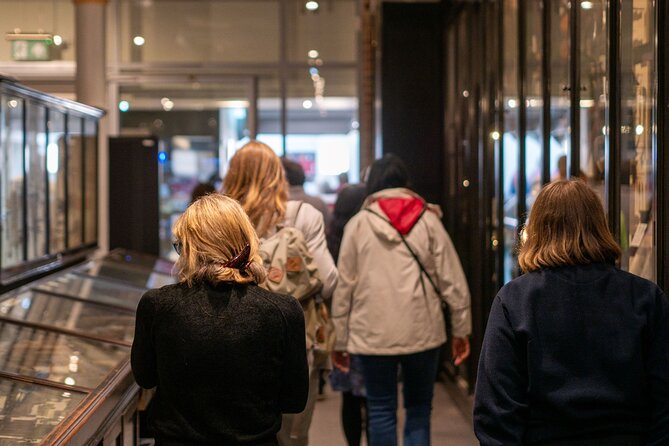
- The Natural History Museum is the starting point: Its collections provide the first link to Oxford’s colonial connections.
- The discussion continues beyond one building: The route has included the Pitt Rivers Museum and other Oxford sites.
- The subject is empire, not just architecture: You examine how Oxford benefited from and helped shape imperial systems.
- Guides encourage participation: Ffion, Devika, and Cameron have each been praised for thoughtful, well-managed discussion.
- The group is limited to 15 people: That keeps the conversation more personal than a large sightseeing group.
- The tour lasts about 90 minutes: It suits a visitor who wants substance but has other Oxford plans the same day.
Starting with Oxford’s Natural History Museum
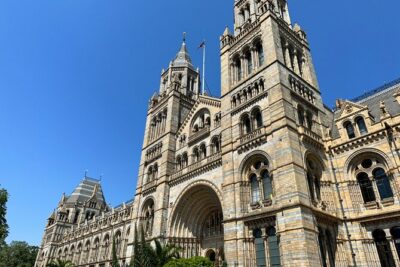
The Oxford University Museum of Natural History on Parks Road is a fitting place to begin. The building is associated with science, collecting, classification, and the Victorian confidence that the world could be measured and arranged. Those themes give the guide a useful way into the larger subject.
Your first museum stop is listed at about 15 minutes, with admission included. That is not long enough for a full museum visit, and it should not be treated as one. Instead, you use the setting as a launch point for the conversation. Look around you, listen to the guide, and expect the focus to be on the links between scientific institutions, collecting practices, and colonial power.
I appreciate this approach because it changes how you look at a familiar museum. Rather than rushing from display to display, you are encouraged to consider where specimens and objects came from, who had the authority to classify them, and how museums helped shape European ideas about the wider world.
The museum itself is also a useful first stop for practical reasons. It is easy to identify, the address is clear, and the tour ends back at the meeting point. You do not need to learn a complicated route before arriving. Still, give yourself enough time to find the front of the museum and confirm where your guide is waiting.
More Natural History Museum Tours in Oxford:
- Natural History Museum London – Exclusive Guided Museum Tour
★ 5.0 · 153 reviews - Private Guided Tour of Natural History Museum – Skip the Line
★ 5.0 · 37 reviews - Kid-Friendly Natural History Museum & Dinosaurs Private Guided Tour in London
★ 5.0 · 11 reviews
From natural history to the Pitt Rivers Museum
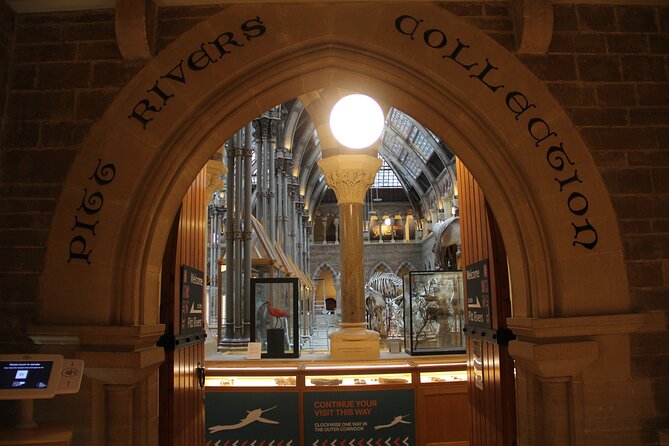
The experience is promoted as more than a single museum visit, and the route described by past participants has included the Pitt Rivers Museum as well as other Oxford locations. That wider route matters. The tour is not simply about objects behind glass. It connects museum collections to the colleges, donors, scholarships, buildings, and public ideas that helped make Oxford what it is.
The Pitt Rivers Museum can prompt especially important questions because of the way objects are arranged and labeled. Its displays can be visually striking, but this tour encourages you to think about the unequal relationships behind many collections. A guide may help you consider what is lost when an object is removed from its original setting and presented through a British institutional lens.
The short format means you will not examine every gallery. That is a limitation, but also a strength for a first visit. You receive a clear line of thought rather than a tiring catalogue of objects. If you want a long, detailed museum visit, plan separate time before or after the tour. If you want a guided framework for understanding what you see, the museum section should be useful.
Oxford’s beauty and its imperial connections
Oxford is easy to admire. The stone colleges, narrow streets, and academic traditions create the picture many people bring with them before arrival. Uncomfortable Oxford adds another layer by asking you to look at the institutions behind that picture.
One subject that receives particular attention is the Cecil Rhodes scholarship. The scholarship is closely linked with Oxford and with Cecil Rhodes’s own attitudes toward race and empire. The tour uses this subject to examine both the scholarship’s educational purpose and the serious problems tied to its founder and historical setting.
That balance is important. You are not being asked to ignore Oxford’s achievements, nor are you being asked to admire them without question. The point is to hold both parts together: the university can be beautiful and intellectually important while also being connected to systems that harmed and excluded people.
I find this kind of conversation most useful when it stays tied to physical places. You are not discussing empire in an abstract classroom. You are walking through the city where names, buildings, collections, and institutions still carry those connections. The result can make Oxford feel less like a polished stage set and more like a place with competing stories.
A discussion-led style, not a standard lecture
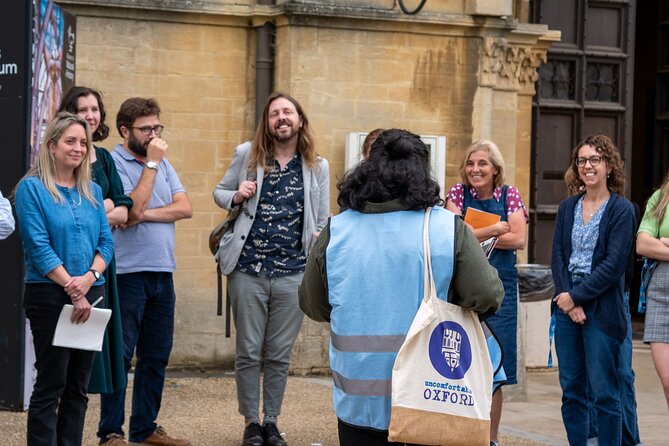
The strongest feature of this tour is the format. Your guide supplies information, then gives you room to respond. The discussions are designed to include the group, and guides have been praised for keeping people together and helping everyone take part.
That matters on a subject that can become uncomfortable quickly. A poor guide could make the experience feel like a scolding. The better approach is to explain the evidence, ask useful questions, and allow people to think aloud without turning the conversation into a contest. Ffion has been singled out for accessible explanations, while Devika was praised for sensitive group leadership. Cameron was also noted for encouraging interesting discussion.
The tone is described as respectful and not preachy. That does not mean the tour avoids hard facts. It means the guide presents them in a way that gives you room to form a considered view. You should arrive ready to listen, ask questions, and accept that the tour may challenge some comfortable assumptions about Oxford.
A discussion-led walk also means your experience can vary with the group. A lively group may produce a more active exchange. A quiet group may hear more from the guide. The maximum of 15 people is helpful here, since a smaller group gives the guide a better chance to manage the conversation.
A few more Oxford trips to weigh up
- Tower of London and Crown Jewels Exhibition Ticket
★ 4.5 · 6,677 reviews - Chelsea FC Stadium Tours and Museum
★ 5.0 · 1,908 reviews - Official tickets: Moco Modern & Contemporary Art Museum
★ 4.5 · 1,157 reviews - British Museum London Guided Tour Semi-Private 8ppl Max
★ 5.0 · 984 reviews
What the 90-minute schedule means for you
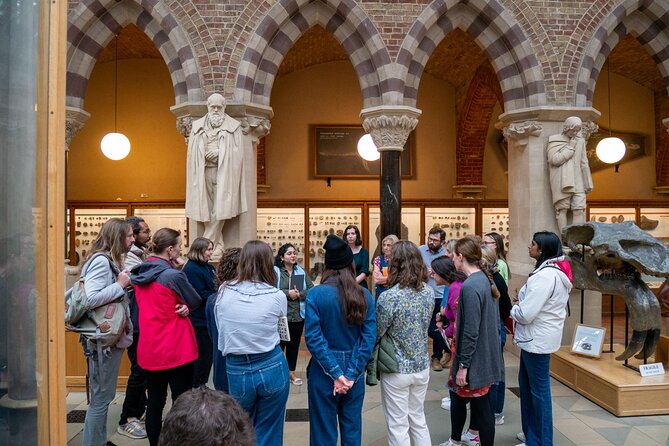
At about one hour and 30 minutes, this is a compact experience. You can fit it into a day that also includes college visits, independent museum time, or a second walking route. It is long enough to develop a serious theme, but short enough that you are unlikely to lose an entire afternoon.
The schedule also demands focus. You will not have time to stop for every object or landmark. Pay attention to the links your guide makes, and note anything you want to explore later. The tour works best as an introduction to a way of seeing Oxford, not as the final word on every colonial connection in the city.
The route begins and ends at the Oxford University Museum of Natural History. That return to the meeting point makes the outing easier to fit around other plans. It also means you can leave your museum visit until afterward if you want to spend more time with the collections once the guided portion is over.
Wear comfortable shoes, since the experience includes walking between sites. No special level of fitness is stated, and most people can participate, but you should still expect time on your feet rather than a seated museum talk.
Is $96.11 a fair price?
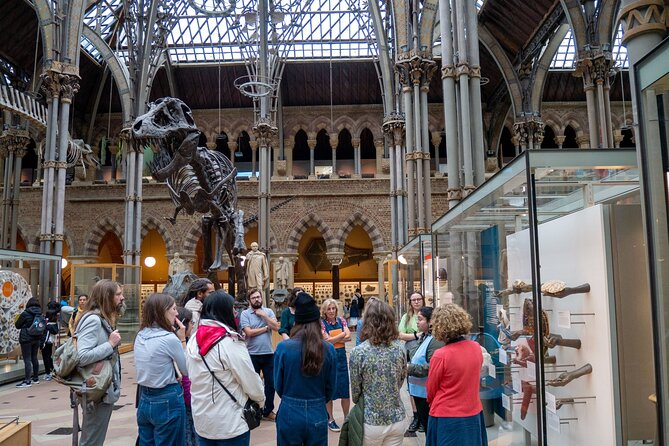
At $96.11 per person, this is not a bargain if you are judging it as a quick museum entry. The first museum stop is only about 15 minutes, and admission there is free. The price makes more sense if you value the guide’s research, the discussion, the walking route, and the connections between several Oxford institutions.
You are paying for interpretation rather than access alone. A standard sightseeing walk may point out college buildings and famous names. This experience asks why those names matter, how wealth and power shaped the university, and how museum collections fit into the story. That added context is the main source of value.
The price is easier to justify for people who want a focused, private-style experience rather than a large group outing. The activity is described as private and allows a maximum of 15 people, although you should check the exact booking arrangement for your date. Group discounts are available, which may help if you are booking for several people.
For a family, the value depends on the children. The subject is serious, and the discussion may suit older children and teenagers more than very young ones. One reported meeting problem involved a group with three children, who eventually entered the museum after waiting. That was an unfortunate situation, not a feature of the tour, but it is another reason to confirm the meeting details carefully.
Who will get the most from this experience?
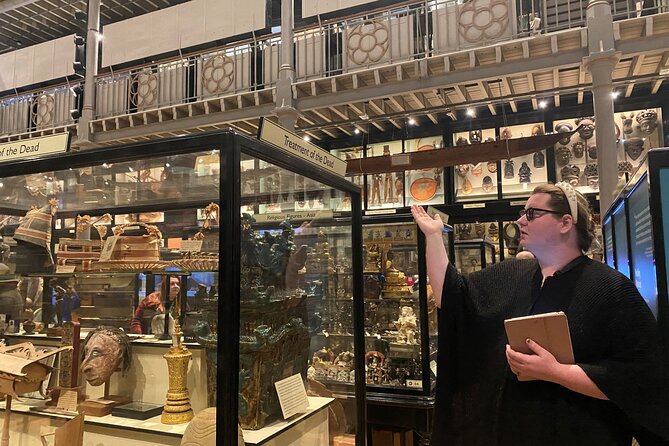
This tour suits you if you have already seen the postcard version of Oxford and want to ask harder questions. It is a strong choice for people interested in colonialism, museums, race, education, and the way institutions remember their past.
It also suits lifelong Oxford residents who feel they know the city. One participant who had lived in Oxfordshire for more than 20 years described learning more from several Uncomfortable Oxford tours than from years of local familiarity. That makes sense: local knowledge often tells you where a building is, while a thematic tour can show you how to interpret it.
Students, teachers, academics, and museum-minded visitors may find the format especially rewarding. You do not need specialist knowledge, though. The guide’s job is to provide the background and keep the discussion understandable.
This may not be the right choice if you want a light introduction to Oxford, a fast list of famous sights, or a purely architectural walk. The subject is deliberately uncomfortable. Even with a welcoming guide, you should expect to think about racism, exploitation, and the limits of traditional Oxford storytelling.
Practical details before you meet your guide
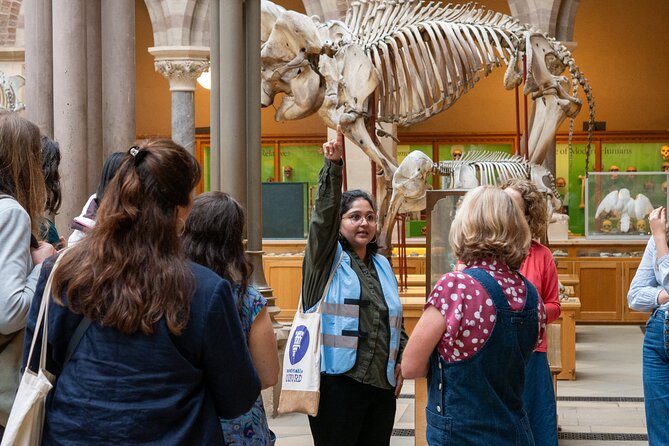
The meeting point is the Oxford University Museum of Natural History, Parks Road, Oxford OX1 3PW. The activity ends back there. It is near public transportation, and service animals are allowed.
Confirmation is provided when you book. The tour is offered in English, and a mobile ticket is available. Free cancellation applies if you cancel at least 24 hours before the local start time. If you cancel later, the payment is not refunded, and changes made within that 24-hour period are not accepted.
The one detail I would take seriously is communication on the day. A guide and a group once missed each other despite both looking for the other party for more than an hour. The company said the supplied telephone number was not connecting and offered to reschedule. To reduce the chance of a repeat, arrive at least 10 minutes early, stay at the stated entrance, and make sure the booking phone number can receive calls or messages.
Should you book the Uncomfortable Oxford museum tour?
Book it if you want Oxford explained through its connections to empire, museums, and institutional power. The strongest part is the combination of well-managed discussion and place-based context. You will not simply hear facts. You will be asked to think about what you are seeing and what the city leaves unsaid.
I would skip it if your priority is a relaxed highlights tour with little discussion. The price is high for 90 minutes, and the museum visit itself is brief. But for an independent-minded visitor who wants a more honest account of Oxford, the cost can be worthwhile, especially with a group discount and a small party.
Arrive early, keep your phone available, and come ready for a serious conversation. That is the best way to get the most from this thoughtful walk.
FAQ
Where does the Natural History Museum Tour begin?
It begins at the Oxford University Museum of Natural History, Parks Road, Oxford OX1 3PW, UK.
Where does the tour end?
The activity ends back at the Oxford University Museum of Natural History, the meeting point.
How long does the tour last?
The tour lasts approximately one hour and 30 minutes.
Is museum admission included?
The experience includes entry into several museums. The first stop at the Oxford University Museum of Natural History lists admission as free.
Is the tour offered in English?
Yes. The tour is offered in English.
How many people can join?
The activity has a maximum group size of 15 people. It is also described as a private tour intended to provide a personalized experience.
Can I cancel for a refund?
Yes. You can cancel at least 24 hours before the local start time for a full refund. Cancellations or changes made less than 24 hours before the start are not accepted for a refund.
More Historical Tours in Oxford
- London Small Group Tour of Historical Pubs
★ 5.0 · 10,422 reviews - Soho Music & Historic Pubs Tour
★ 5.0 · 1,993 reviews - Shadows of York: Ghost Walk and Horrible History.
★ 5.0 · 1,403 reviews - Private Historical Walking Tour of York
★ 5.0 · 1,324 reviews
Just added around Oxford
- Harry Potter PUBLIC Tour + Self Guided Christ church Daily 12.45★ 5.0 · 82 reviews
- Oxford Harry Potter Film Locations Walking Tour by Alumni™★ 4.5 · 100 reviews
- Cotswolds Private Day Tour★ 4.5 · 152 reviews
- Undiscovered Cotswolds Private Tour★ 5.0 · 87 reviews
- Private Cotswold Village Tour – 4th & 5th guest travel FREE★ 5.0 · 92 reviews
- River Cruise with Three Course Riverside Restaurant Dining★ 5.0 · 201 reviews
- Fun, Flexible Treasure Hunt Around Oxford with Cryptic Clues & Hidden Gems★ 5.0 · 202 reviews
- 90 Minute Classic Walking Tour of Oxford★ 5.0 · 237 reviews
Natural History Museum Tours, compared.

Natural History Museum London – Exclusive Guided Museum Tour
Read our review →
Private Guided Tour of Natural History Museum – Skip the Line
Read our review →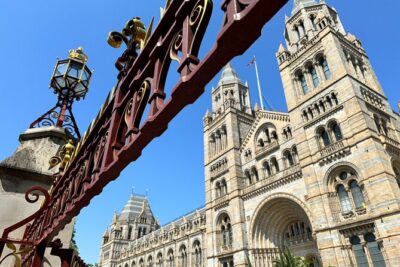
Kid-Friendly Natural History Museum & Dinosaurs Private Guided Tour in London
Read our review →
London Natural History Museum with Dinosaurs Gallery Private Tour for Kids
Read our review →Browse the lists this tour appears in