
Reviewed · TREASURE HUNTS AND CITY GAMES
An Historical Walking Tour of Brighton and its Hidden Gems
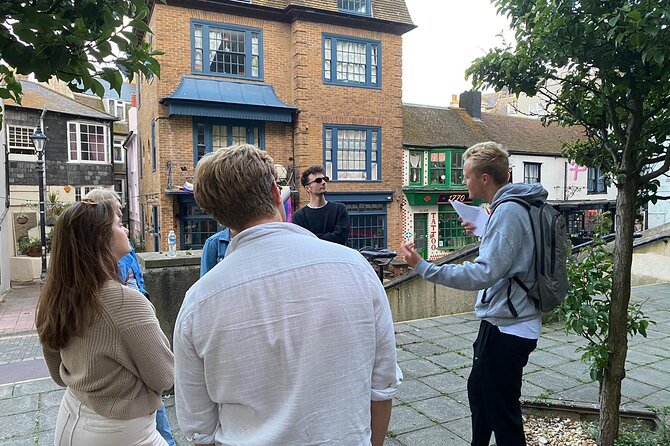
Brighton’s story changes quickly on this walk. In 90 minutes, you move from a medieval settlement to a royal seaside retreat, then on to the Mods and Rockers, street art, LGBT culture, and modern North Laine. I like the local viewpoint from Sam Sylvester, who was brought up in Brighton, and the way the route links famous sights with less polished, more revealing corners of the city.
I also like the clear six-stop structure. The walk gives you a useful first look at the Royal Pavilion, Palace Pier, seafront, Quadrophenia Alleyway, and North Laine without asking you to spend a full day. The main consideration is pace: 15 minutes at each stop is enough for stories and orientation, but not for a detailed visit inside attractions or much independent browsing.
Key points to know before you book

- Six stops in 90 minutes: The route covers Old Steine Gardens, Brighton Palace Pier, the Royal Pavilion, Brighton i360, Quadrophenia Alleyway, and North Laine.
- A genuinely local guide: Sam Sylvester grew up in Brighton and shares local anecdotes alongside the main historical points.
- History with a modern edge: The walk moves from medieval Brighton and Regency style to Mods and Rockers, street art, LGBT culture, and present-day events.
- A good first-day introduction: The route helps you understand how Brighton changed from a small settlement into a major holiday town.
- Four languages available: Sam speaks German, English, Russian, and Spanish.
- Low-cost sightseeing: At $21, the tour includes the guide, fees, and taxes, with no separate attraction admission listed.
Starting in Old Steine Gardens with Brighton’s earliest story
The walk begins at Old Steine Gardens, at 55 Old Steine, Brighton and Hove, Brighton BN1 1EH. The meeting time is 10:00 am, so you should arrive a little early and be ready to walk as soon as the group gathers.
This is a smart starting point because Old Steine gives the tour a historical anchor. Before Brighton became a fashionable resort, there was a much smaller settlement here, with medieval roots. Sam uses the gardens to explain Brighton’s early beginnings before showing how dramatically the town later changed.
I like this opening because it keeps the city’s grander buildings in perspective. The Royal Pavilion and Palace Pier can make Brighton look as if it appeared fully formed as a pleasure town. Starting with the original settlement reminds you that the resort came later, shaped by royal attention, new travel habits, and seaside fashion.
The first stop lasts about 15 minutes. That is enough time to set the scene, but do not expect a long archaeological lecture or an extended look at every historic detail. The value here is orientation. You learn what Brighton was before its transformation and gain a better frame for the rest of the walk.
More Treasure Hunts and City Games in Brighton:
- Fun, Flexible Treasure Hunt Around Brighton with Cryptic Clues & Hidden Gems
★ 5.0 · 154 reviews - Immersive City Treasure Hunt – Brighton
★ 5.0 · 5 reviews - London Soho Food Tour with 7+ Tastings of Delicious Hidden Gems
★ 5.0 · 366 reviews
Brighton Palace Pier and the rise of the seaside resort
From Old Steine, the route heads to Brighton Palace Pier. The pier is one of the city’s most familiar sights, but this tour treats it as evidence of Brighton’s sudden growth rather than just a place for amusement rides and sea views.
The central question is how Brighton changed from a backwater into a prime holiday destination. That shift is one of the most useful themes on the tour, since it explains why so much of the city feels like a mixture of old fishing town, royal retreat, Victorian resort, and modern entertainment centre.
You get around 15 minutes here. That is enough for the guide to explain the town’s development and point out the role the seafront played in Brighton’s identity. It is not enough to explore the pier itself, ride anything, or linger for photographs if the group is keeping to schedule.
I find the stop useful for visitors who have seen Brighton in pictures but do not yet understand its appeal. The pier is a straightforward visual symbol of the holiday town. Sam’s explanation connects that image to the wider story of changing leisure habits and Brighton’s new place on the English coast.
Keep in mind that this is a walking tour, not a pier attraction package. The stop includes the guide’s commentary and orientation, but food, drinks, and any personal spending are your responsibility.
The Royal Pavilion, royal taste, and an unusual Brighton identity
The Royal Pavilion is the most visually striking stop on the route. Its Indian-style palace design feels far removed from the restrained image many people associate with British royal buildings. Sam uses the pavilion to raise a lively question: how did Brighton connect an Indian-style palace with ABBA and the British royal family?
That unusual pairing gives the stop a lighter tone than a standard architectural talk. You can expect the guide to explain the pavilion’s place in royal Brighton while also showing how the building became part of the city’s wider popular culture. The tour summary does not promise entry inside the palace, so plan to view it from outside during the walk rather than expecting an interior visit.
The pavilion matters because it captures Brighton’s taste for spectacle. It is not simply an old building to photograph. It helps explain the city’s long habit of mixing formal history with playful design, celebrity, performance, and public curiosity.
The stop lasts about 15 minutes. That makes it a good introduction if you plan to return later for a full visit, but it will feel brief if the pavilion is your main reason for coming to Brighton. If you want detailed rooms, decorative arts, or a longer architectural study, set aside separate time after the tour.
For me, this is one of the strongest parts of the walk because it connects a famous landmark to the city’s broader personality. You see how Brighton’s past is not presented as something stiff or remote. It remains part of the town’s everyday visual character.
Brighton i360 and the question of the modern beach holiday
The next stop is Brighton i360, the tall seafront observation attraction. Here, the subject shifts from one building to a larger question: was Brighton the first location of the modern beach holiday?
This is a useful pause in the route because it brings the focus back to the seafront. The tour is not only about individual landmarks. It is also about why people began coming to the coast for pleasure, fresh air, entertainment, and a change from city life.
You spend about 15 minutes at this stop. The guide provides historical context and helps you understand the seafront as part of Brighton’s development. The tour does not include a ride on the i360, so you should not book this experience expecting a separate aerial view.
The stop may appeal most to visitors who want more than a list of dates and buildings. A question about the first modern beach holiday opens the door to social history. It asks you to think about how the idea of a seaside break took shape and why Brighton became such a powerful example of it.
The i360 also gives the route a clear connection between old and new Brighton. The Royal Pavilion represents royal fashion and Regency-era ambition. The i360 represents the city’s continuing effort to attract attention through bold public attractions.
A few more Brighton trips to weigh up
- LGBTQ History Tour in Brighton (semi-private)
★ 5.0 · 10 reviews - London Small Group Tour of Historical Pubs
★ 5.0 · 10,422 reviews - Soho Music & Historic Pubs Tour
★ 5.0 · 1,993 reviews - Shadows of York: Ghost Walk and Horrible History.
★ 5.0 · 1,403 reviews
Quadrophenia Alleyway and Brighton’s Mods and Rockers past
Quadrophenia Alleyway brings the tour into a more rebellious chapter of Brighton’s story. The subject here is the Mods versus Rockers riots of the 1960s and the way Brighton became linked with that conflict.
This stop gives the walk a welcome change of mood. After royal architecture and the rise of the holiday resort, you move into youth culture, music, fashion, and public disorder. The alleyway is a reminder that Brighton’s identity has never been limited to polite seaside traditions.
Sam explains how the city became a centre of the Mods and Rockers story. The tour summary does not claim that the alleyway is a large attraction, so expect a compact urban stop rather than a museum-style display. Its value comes from the story attached to the place and the way it connects Brighton with a distinct moment in British popular culture.
I especially like this part for visitors who want to understand the city’s bohemian reputation. Brighton’s modern character did not grow only from galleries, cafes, or fashionable streets. It also grew from clashes over style, music, class, and youth identity.
The stop lasts about 15 minutes. That is enough for background and local anecdotes, though anyone keen on 1960s music history may want to explore the subject further on their own. The tour gives you the setting and the main idea, not a full study of the period.
North Laine and the Brighton you see today
The final stop is North Laine, where the tour turns toward present-day Brighton. The area is associated here with eclectic shops, street art, cultural events, and the city’s LGBT culture. This brings the route back to the everyday Brighton you are likely to notice after the historic sights.
North Laine works well as an ending because it shows that the city’s character is still changing. You have moved from medieval beginnings to royal Brighton, from the traditional seaside resort to 1960s youth culture. Now you see how independent urban culture helps shape the town’s current identity.
The 15-minute stop can help you decide where to spend more time later. You might find yourself wanting to browse the shops, look more closely at the street art, or check what cultural events are taking place. Since the tour ends back at the Old Steine meeting point, you can also use the guide’s orientation to plan the rest of your day.
The wording of the tour places LGBT culture alongside cultural events and street art, rather than treating North Laine as only a shopping district. That wider view is important. Brighton’s present-day identity comes from its mix of communities, public celebrations, creative work, and strong local pride.
You should not expect a long stop at every shop or artwork. The guide keeps the group moving, and the route is designed to explain the area rather than give you free time there. If North Laine is your main interest, return after the tour with a slower schedule.
What Sam Sylvester adds to the walk
The guide is Sam Sylvester, a local historian and tour guide who was brought up in Brighton. That detail matters. A city tour can give you dates and names, but a local guide can also point out how the official story fits with the way people understand their own town.
The strongest personal detail available about Sam’s guiding style is his use of local anecdotes. He is described as arriving on time and being considerate and friendly, with a good knowledge of Brighton. Those traits matter on a short walking tour because the guide has limited time to balance facts, pace, and conversation.
Sam speaks German, English, Russian, and Spanish. You should confirm your preferred language when booking, since the tour information says he speaks all four but does not give separate departure schedules for each language.
The group can include up to 30 people. That is not a tiny private walk, so you should expect some limits on conversation and where everyone can gather. At the same time, a group of this size can still work well on a city route with open public stops. If you prefer a very personal tour with constant questions, a smaller experience may suit you better.
Is $21 good value for a 90-minute Brighton tour?
At $21, this is a reasonably priced introduction to Brighton. You are paying for a local guide, a planned route, historical interpretation, and the convenience of seeing six important areas in one short outing. All fees and taxes are included.
The value is strongest if you are visiting Brighton for the first time or have only a few hours to get oriented. You can learn how the city fits together before choosing where to return. The route also saves you from treating each landmark as an isolated photo stop.
The value is weaker if you already know Brighton well or want extended visits inside major attractions. The tour does not include meals, coffee, soft drinks, snacks, bottled water, or other refreshments. No separate entrance to the Royal Pavilion or a ride on Brighton i360 is listed either.
You should bring your own water and wear comfortable shoes. The walk is only about 90 minutes, but the route includes several outdoor stops, and the tour takes place in a busy seaside city where standing space and noise may vary.
Timing, meeting point, and practical details
The tour begins at 10:00 am in Old Steine Gardens and ends back at the same meeting point. That return is handy if you are staying in central Brighton or want to continue sightseeing from a familiar location.
Confirmation is provided when you book. The activity is near public transportation, and service animals are allowed. Most people can take part, but the information does not give a detailed route description for wheelchair users or people with limited mobility, so you should ask the provider about the exact walking conditions if that matters for your plans.
Free cancellation is available if you cancel at least 24 hours before the local start time. Cancellations within 24 hours are not refunded, and changes in that period are not accepted. The tour also requires a minimum number of participants. If that minimum is not reached and the activity is cancelled, you are offered another date or experience, or a full refund.
Because the route runs on a fixed schedule, arrive ready to walk at 10:00 am. The compact timing is one of the tour’s strengths, but it also means late arrivals could miss the opening explanation at Old Steine.
Who will get the most from this Brighton walk?
I would recommend this tour to first-time visitors, history fans, and anyone who wants a quick but thoughtful introduction to Brighton. It suits people who enjoy seeing how a city changes over time rather than simply collecting landmark photographs.
It is also a good choice if you are interested in the links between architecture, royal history, seaside holidays, youth culture, LGBT life, and street art. The six stops give you a broad view of Brighton’s personality in a short period.
Families and mixed-age groups may appreciate the range of subjects. The route includes a palace, a pier, the seafront, music-related history, and modern urban culture, so the conversation is less likely to stay on one narrow period.
I would be more cautious if you want a deep architectural tour, a full Royal Pavilion visit, or long free periods for shopping. The tour’s job is to connect places and stories. You will need extra time afterward for detailed sightseeing.
Should you book Sam’s historical Brighton walk?
Book it if you want a well-priced orientation tour led by someone with a direct local connection to Brighton. Sam Sylvester’s background, local anecdotes, and four-language ability add a personal touch to a route that covers far more than the city’s postcard sights.
The main trade-off is speed. Six stops in 90 minutes means each place receives about 15 minutes, so you get context rather than full visits. For many people, that is exactly the point: learn the shape of Brighton in the morning, then return to the Royal Pavilion, pier, or North Laine at your own pace.
At $21, I think it is a sensible choice for a first look at Brighton, especially if you value stories about how the city became what it is today. Bring water, arrive on time, and leave room in your schedule to explore your favorite stop afterward.
FAQ
Where does the Brighton walking tour start?
The tour starts at Old Steine Gardens, 55 Old Steine, Brighton and Hove, Brighton BN1 1EH, UK.
What time does the tour begin?
The stated start time is 10:00 am.
How long does the walking tour last?
The tour lasts approximately 1 hour and 30 minutes.
Where does the tour finish?
The activity ends back at the Old Steine Gardens meeting point.
What languages does Sam Sylvester speak?
Sam speaks German, English, Russian, and Spanish.
What is included in the tour price?
The price includes a specialized history and culture tour with Sam Sylvester, along with all fees and taxes. Food, drinks, bottled water, and other refreshments are not included.
More Walking Tours in Brighton
- The Brighton story – walking tour
★ 5.0 · 251 reviews - Only in Brighton Walking Tour
★ 5.0 · 29 reviews - Walking food tour in Brighton
★ 4.5 · 17 reviews - Seven Sisters Private Walking Tour (5+ ppl) Cuckmere/Beachy Head
★ 5.0 · 15 reviews
Just added around Brighton
- Handcrafted Donuts & Tea: Brighton’s Artisan Sweet Treat Tour★ 5.0 · 127 reviews
- Sussex Birdwatching Private Guided Day Tour★ 5.0 · 13 reviews
- The Hunt: Team Activity in Brighton, Sussex★ 5.0 · 149 reviews
- Ultimate Shooting Taster Session in Brighton★ 5.0 · 33 reviews
- Stonehenge and Bath – Day Tour from Brighton★ 4.5 · 68 reviews
- The Brighton Food and Beer Walking Tour Min 8 people★ 5.0 · 8 reviews
- Skate + i360 Journey★ 5.0 · 6 reviews
- Sussex Vineyard & Winery Bus Tour on Iconic Vintage London Bus★ 4.5 · 89 reviews
Treasure Hunts and City Games, compared.

Fun, Flexible Treasure Hunt Around Manchester with Cryptic Clues & Hidden Gems
Read our review →
Fun, Flexible Treasure Hunt Around York with Cryptic Clues & Hidden Gems
Read our review →
Fun, Flexible Treasure Hunt Around Bath with Cryptic Clues & Hidden Gems
Read our review →
Fun, Flexible Treasure Hunt Around Oxford with Cryptic Clues & Hidden Gems
Read our review →
Fun, Flexible Treasure Hunt Around Birmingham with Cryptic Clues & Hidden Gems
Read our review →
Fun, Flexible Treasure Hunt Around Chester with Cryptic Clues & Hidden Gems
Read our review →
Fun, Flexible Treasure Hunt Around Brighton with Cryptic Clues & Hidden Gems
Read our review →
Fun, Flexible Treasure Hunt Around Cambridge with Cryptic Clues & Hidden Gems
Read our review →Browse the lists this tour appears in