
Reviewed · CITY TOURS
Birmingham City Centre Daily Walking Tour (10:30am & 2pm)
Birmingham’s story is best read on foot, where grand Victorian buildings, modern squares, war memorials, canals, and music history sit within a compact city centre. This 90-minute walking tour links those pieces into one easy route, beginning at Birmingham Cathedral and ending near the canal quarter at Ikon Gallery.
I like the relaxed pace and the chance to notice details you could easily miss from a bus or while hurrying between shops. I also like the local angle: guides such as Dee, Phil, Peter, Richard, and Carlos have brought history to life with personal stories, humour, and suggestions for what to see next. The main drawback is simple: this is an outdoor overview, so you will not have time to go inside the major buildings, and cold or wet weather can make the hour and a half feel longer.
Key points to know before you book
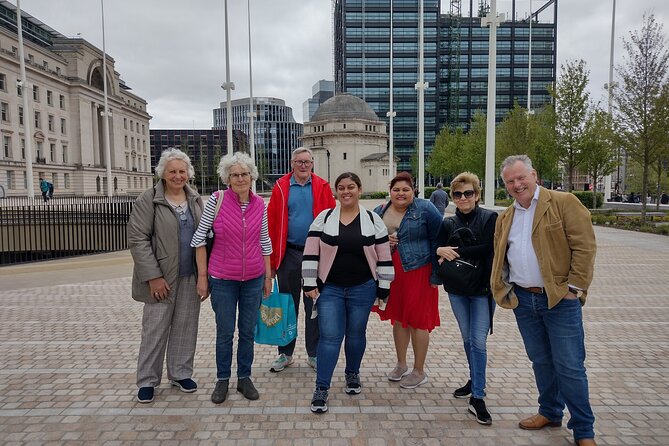
- A compact route through central Birmingham: You see cathedral gardens, civic squares, grand halls, museums, memorials, canals, and galleries without having to plan the way yourself.
- A useful first-day introduction: The walk connects Birmingham’s industrial growth, wartime experience, modern architecture, and music culture in one clear story.
- Local guides shape the experience: Dee, Phil, Peter, Richard, and Carlos are among the named guides praised for warmth, humour, local detail, and care with walking pace.
- Mostly an exterior sightseeing tour: You pause outside buildings for explanations, but admissions to places such as Birmingham Town Hall, Birmingham Museum and Art Gallery, Hall of Memory, Baskerville House, Symphony Hall, and Ikon Gallery are not included.
- Small groups, usually no more than 20: A quiet date can feel almost private, while a fuller departure should still be manageable in busy public squares.
- A meeting-point warning: The old flagpole is no longer a useful marker. Look for the wheel in Cathedral Square and a guide wearing a bright orange jacket.
Birmingham Cathedral gives you the city’s opening chapter
Meet at Birmingham Cathedral in Cathedral Square, on Colmore Row. This is a sensible starting point because the cathedral sits in the middle of the commercial centre, yet its garden offers a calmer place to begin.
Your guide uses the cathedral as a way into Birmingham’s past. The city did not begin as a grand ceremonial capital. Its importance grew through trade, manufacturing, engineering, and the energy of the Industrial Revolution. The opening talk is short, around five minutes, but it gives you a frame for everything that follows.
The meeting point deserves a little care. The former flagpole mentioned by some directions has been removed. Look instead for the wheel in Cathedral Square, and keep an eye out for a guide in a bright orange jacket. Confirmation arrives when you book, and the tour is near public transport, so reaching the centre is straightforward.
From the square, you move into St Philip’s Cathedral Garden. The cathedral was built during the Industrial Revolution and is described as one of Britain’s smallest cathedrals. That small scale makes the building easier to take in than some of England’s vast medieval churches.
This is a quick stop, not a cathedral visit. You have about five minutes to hear the essential background and look at the building and garden. If you want to explore the interior, attend a service, or spend time with the artwork, plan a separate visit after the walk.
A few more Birmingham trips to weigh up
- Birmingham Walking Tour: Canals, Victorians & Today (1:30pm)
★ 5.0 · 346 reviews - Discovering Birmingham 2 hour Walking Tour to the Jewellery Quarter
★ 5.0 · 333 reviews - Birmingham Slogging Gangs Walking Tour with Edward Shelby
★ 4.5 · 306 reviews
Victoria Square and Town Hall reveal Birmingham’s civic ambition
Victoria Square shifts the story from religious space to public power. Here, your guide points out the architecture of Victorian Birmingham and explains how the city presented itself during the 1800s.
The square is one of the places where Birmingham’s growth becomes visible. The city had become important enough to require impressive public buildings and open civic spaces. You will have time to look around, take photographs, and listen, but the stop lasts only about five minutes.
Next comes Birmingham Town Hall. Its scale was meant to signal the city’s rising status. The building also has a strong performance and public-speaking connection. Charles Dickens, Emmeline Pankhurst, Bob Dylan, the Rolling Stones, and the Beatles are all associated with appearances through its doors.
That list gives the stop a pleasing mix of politics, literature, and music. It also shows how the same building served different generations and audiences. You see the exterior on this route, and an admission ticket is not included, so do not expect an interior tour.
The short pauses work well if you want a broad first look at Birmingham. They are less suitable if you prefer to study one building in detail. I would treat the walk as a set of carefully chosen introductions, then return later to the places that catch your eye.
Museum and art square connect culture with public memory
Birmingham Museum and Art Gallery is the next major building. Even from outside, its architecture gives you a strong sense of the city’s civic confidence. The guide also discusses artists associated with Birmingham, adding a cultural thread to the industrial and political story.
Again, the stop is brief and the museum admission is not included. That is not a flaw for a city orientation, but it matters if you are booking the tour mainly to see the collections. You will need extra time and a separate visit for that.
Chamberlain Square brings the focus back to public life. Here, the guide explains Birmingham’s role in both World Wars and the sacrifices made by local people. It is a useful reminder that the city’s story is not only about factories, inventions, and grand buildings.
The next stop, Centenary Square, brings you into modern Birmingham. The tour moves from older civic architecture to newer design and present-day city life. This contrast is one of the route’s strengths. You are not shown a city frozen in the Victorian age. You see a centre that has changed, rebuilt, and added new public spaces.
The walk’s historical range is broad but not overloaded. One guide may give you more jokes or local colour, while another may focus more tightly on dates and buildings. The best guides named in the feedback, including Dee and Phil, appear to combine facts with stories rather than delivering a dry list.
The Hall of Memory adds a quiet pause
The Hall of Memory is one of the more reflective stops. It memorialises people who gave their lives for Birmingham and Britain, and its presence gives the route a quieter turn after the civic squares.
The stop is mainly about context and respect. You see the exterior, but admission is not included. Because the tour moves on after around five minutes, you should not expect a long memorial visit. If this part of Birmingham’s wartime story matters to you, note the location so you can return at your own pace.
Baskerville House follows with a different kind of story. Your guide introduces John Baskerville, whose name is closely linked to printing and type design. The building offers a chance to move from war and civic memory to the work of a Birmingham figure whose influence reaches far beyond the city.
As with several other stops, you hear the story outside. The route is not designed as a series of interior admissions, which keeps the price low and the timing reliable. It also means the value depends heavily on the guide’s ability to make a façade, name, or memorial meaningful in a few minutes.
Same country, a completely different day out:
- Entry ticket to Hoo Zoo and Dinosaur World in Telford
★ 5.0 · 591 reviews - Cadbury World Entry Ticket
★ 3.0 · 524 reviews - SEA LIFE Birmingham Admission Ticket
★ 3.0 · 218 reviews - Fun, Flexible Treasure Hunt Around Birmingham with Cryptic Clues & Hidden Gems
★ 5.0 · 167 reviews
Broad Street brings the city’s music and nightlife into view
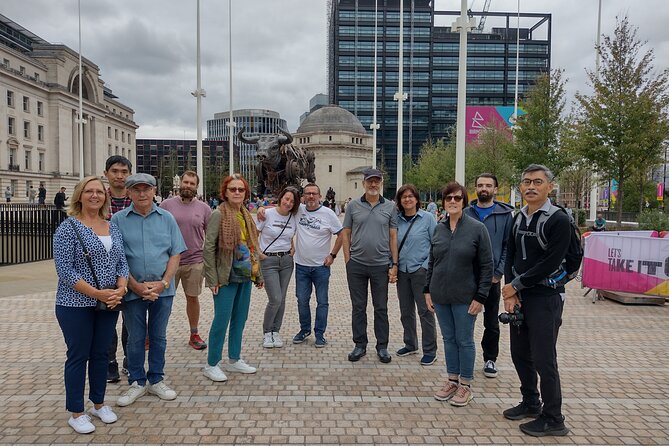
Broad Street is described as Birmingham’s walk of fame. This is where the route’s popular culture thread becomes more prominent.
The city’s connection with major performers gives the walk some welcome lightness after the wartime memorials. Guides may point out music-related details, and the route has been praised for including the Black Sabbath Bridge and canal quarter. The exact emphasis can vary with the guide and conditions, but you should expect a lively look at Birmingham’s entertainment identity.
This section also shows why walking is useful. Cars can carry you along Broad Street, but they do not encourage you to stop, look up, compare old buildings with new ones, or hear the story behind a place. On foot, you can pause without the route becoming a transport problem.
Do not expect a night out or a music museum visit. This is a short orientation, with the street used as part of a wider story about Birmingham’s public life and popular culture.
The canal route changes the pace
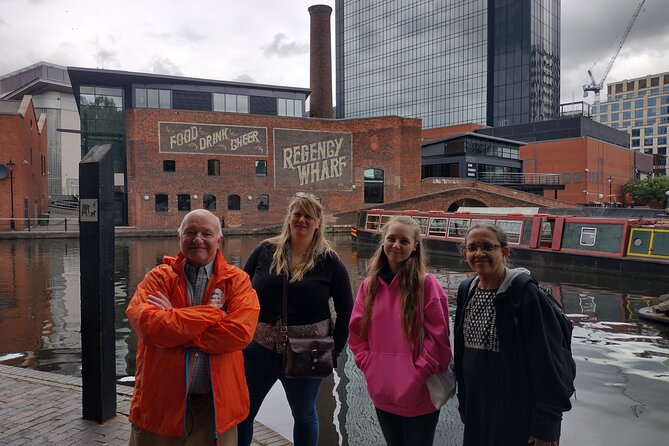
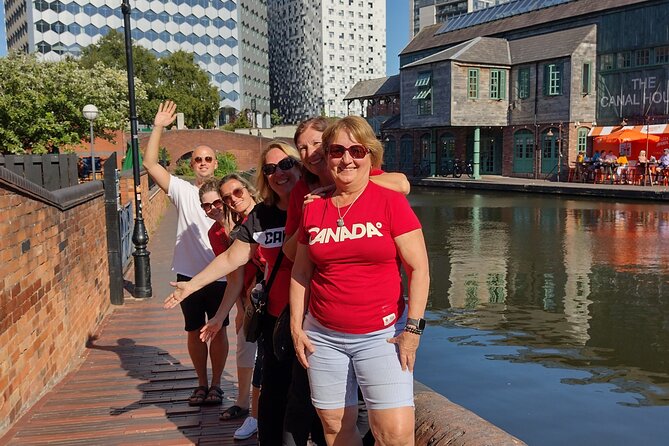
Near Symphony Hall, the walk moves alongside one of Birmingham’s industrial canals. This is one of the route’s most appealing changes of scene. The city centre’s broad roads and civic buildings give way to water, bridges, towpaths, and reminders of the canals’ role in moving goods during the industrial age.
Symphony Hall itself is another important exterior stop. Admission is not included, so the tour does not take you inside for a concert-hall visit. Instead, you get the setting and the connection between Birmingham’s industrial past and its current cultural life.
I especially like this part for the change in pace. The route is still in the centre, but the canal edge can feel less hurried than the main squares. It also gives you different photographs and a chance to see how the old canal network fits into the rebuilt centre.
Weather matters here. One cold-weather participant found the tour harder because the guide stopped in exposed, chilly corners. That is a fair warning, especially in winter. Wear a warm coat and comfortable shoes, and do not assume that a short walk will feel warm simply because it lasts only 90 minutes.
Ikon Gallery finishes old Birmingham beside new Birmingham
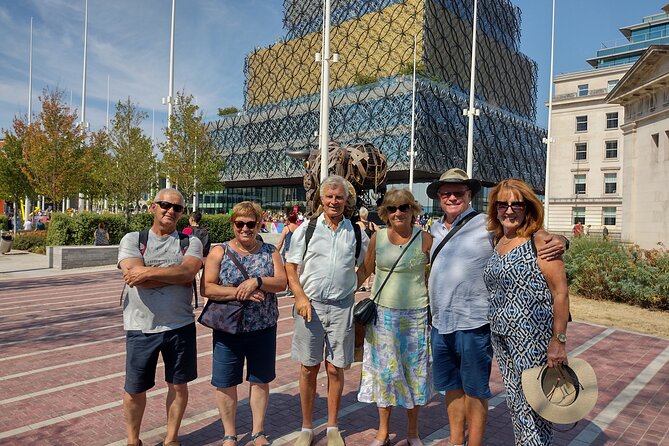
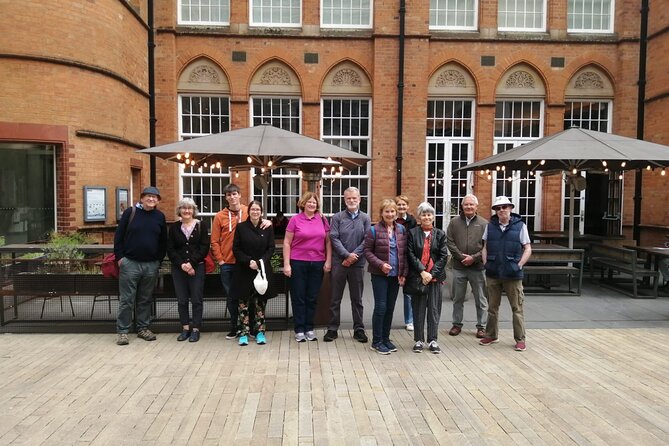
The final stop is Ikon Gallery in Oozells Square at Brindley Place. Its Neo-Gothic exterior is an amusing and useful ending because the building houses contemporary art while looking far older than its programme.
This last stop brings the tour’s main idea together: Birmingham is a city where older structures and newer uses often share the same streets. The route begins with a cathedral and Victorian civic buildings, then finishes with contemporary art and a redeveloped canal-side district.
Ikon Gallery is the endpoint, not an included gallery visit. If you want to go inside, schedule it after the tour and check its opening arrangements separately. Ending here is convenient if you plan to continue around the canal quarter, explore Brindley Place, or find somewhere to eat nearby.
The finish also gives you a practical advantage. You end away from the starting point, having crossed a useful portion of the centre rather than simply circling the cathedral. You can use the route as a map for the rest of your day.
Why the guides matter more than the short stops
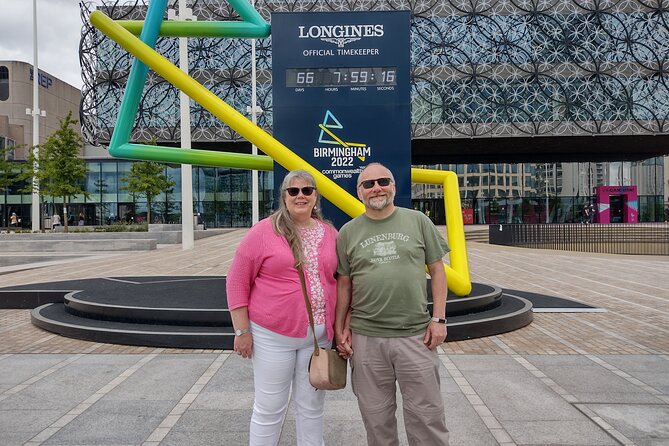
At five minutes per listed stop, the guide has little room for long lectures. That is why the person leading the walk matters so much.
Dee is repeatedly associated with a friendly, informative style and a relaxed pace. Phil is praised for local knowledge and for taking time to share a favourite city viewpoint. Peter is described as entertaining and well prepared, while Richard has offered suggestions for other parts of Birmingham to explore. Carlos has also been praised for connecting the city’s past with its importance in England.
You may not get the same guide on every departure, but these examples show what the experience is designed to provide: clear background, local stories, humour, and a practical sense of what to do next.
The guide’s care with pace can be important for mixed-age groups. One account describes a guide checking that older members were comfortable, while another family enjoyed the walk with a 10-year-old. Most people can take part, and service animals are allowed, but you should still expect continuous outdoor walking and standing.
The tour is offered in English. If you are not fluent, keep this in mind. A French-speaking group found that the guide spoke too quickly even after being asked to slow down. You may be able to ask for a slower pace, but the activity does not promise translation or another language.
What the $19.41 price really buys you
At $19.41 per person, the tour is priced as an affordable orientation rather than a full attraction package. You are paying for a guide who selects the route, explains the buildings, and adds context that would take time to assemble on your own.
The value is strongest at the start of a Birmingham visit. In an hour and a half, you can learn where the main civic buildings are, understand the connection between industry and canals, and identify places worth a longer return visit.
The price is less attractive if you want interiors, museum collections, or a specialist architectural tour. Admissions are not included at the Town Hall, Museum and Art Gallery, Hall of Memory, Baskerville House, Symphony Hall, or Ikon Gallery. In practice, the tour gives you the outside view and the story, then leaves you to decide which places deserve extra time.
With a maximum group size of 20, you are not booking a private guide, but the group should remain small enough for questions and conversation. On quiet dates, the experience may feel almost private. That can make the same price especially good value, though group size can vary.
Timing, meeting details, and cancellation rules
You can choose a 10:30 a.m. or 2 p.m. departure. The morning option works well for getting your bearings before a day of sightseeing. The afternoon option can fit after lunch or a morning museum visit.
The tour lasts approximately one hour and 30 minutes. Allow extra time before the start to find Cathedral Square, and remember that the endpoint is Ikon Gallery, not the cathedral. The route is near public transport, and confirmation is provided at booking.
Free cancellation is available up to 24 hours before the start time for a full refund. Changes or cancellations inside that 24-hour window are not accepted for a refund. The tour requires good weather and a minimum number of participants. If poor weather or low numbers cancel the experience, you are offered another date or experience, or a full refund.
Who will get the most from this Birmingham walk
I would recommend this to a first-time visitor who wants a clear city-centre introduction without a long, demanding excursion. It also suits someone who has lived near Birmingham or visited for shopping but never stopped to understand the buildings and public spaces.
Families can benefit from the short stops and changing subjects. A child may not want a long lecture about Victorian development, but cathedral gardens, grand halls, canals, music references, and modern architecture give the guide several ways to hold attention.
It is also useful for solo visitors. You get company, a planned route, and a chance to ask questions without committing to a full-day tour.
You should think twice if you dislike outdoor sightseeing in cold weather, need extensive language support, or want to spend time inside each attraction. This is a quick city walk, not a museum tour or a specialist architectural study.
Should you book it?
Book this Birmingham walk if you want a friendly first look at the city’s main sights, with history, civic architecture, canals, memorials, art, and music culture in one manageable route. The strong rating of 4.9 from 265 reviews and recommendation by 97 percent of participants fit the experience described here: the guide is the main attraction, and the best departures add humour and local colour to a well-chosen route.
I would book it near the beginning of your stay, then return to the Town Hall, museum, canal quarter, or Ikon Gallery afterward. Wear comfortable shoes, dress for the weather, and use the wheel in Cathedral Square rather than searching for the old flagpole.
Skip it if you need a private or multilingual tour, or if you want guaranteed entry to the buildings. For most visitors seeking an inexpensive, well-paced introduction to central Birmingham, it is a sensible use of 90 minutes.
FAQ
How long does the Birmingham City Centre Daily Walking Tour last?
The tour lasts approximately one hour and 30 minutes.
What time does the tour start?
You can choose a 10:30 a.m. or 2 p.m. departure.
Where does the walking tour begin?
The tour begins at Birmingham Cathedral in Cathedral Square, Colmore Row, Birmingham B3 2QB, UK.
Where does the tour finish?
The walk finishes at Ikon Gallery, 1 Brindley Place, Oozells Square, Birmingham B1 2HS, UK.
Is the tour offered in English?
Yes. The tour is offered in English.
How many people can join the tour?
The maximum group size is 20 people.
Are attraction admission tickets included?
No. Admission is not included for the Birmingham Town Hall, Birmingham Museum and Art Gallery, Hall of Memory, Baskerville House, Symphony Hall, or Ikon Gallery stops.
Can I cancel for a full refund?
Yes. You can cancel at least 24 hours before the experience start time for a full refund. Cancellations or changes made less than 24 hours before the start are not accepted for a refund.
Just added around Birmingham
- Birmingham Gangs Nighttime Historical Walking Tour with Pub Stops★ 5.0 · 53 reviews
- Fun, Flexible Treasure Hunt Around Birmingham with Cryptic Clues & Hidden Gems★ 5.0 · 167 reviews
- Private Birmingham Ghosts and Gallows Walking Tour★ 5.0 · 5 reviews
- Taste of Shrewsbury Food and Drink Tour with Guide★ 5.0 · 22 reviews
- On the Origins of Charles Darwin: A Self-Guided Audio Tour of Shrewsbury★ 4.5 · 16 reviews
- Birmingham Ghost Hunt: Haunted Self-Guide Tour & Quest★ 4.5 · 37 reviews
- Pride History of Birmingham Tour★ 5.0 · 3 reviews
- From Birmingham Stonehenge and Bath Day Tour★ 4.5 · 33 reviews
City Tours, compared.



Liverpool City Sights Hop On Hop Off City Tour – 24hr Ticket
Read our review →
1.5-hour Oxford City and University Walking Tour
Read our review →
City Sightseeing London Hop-On Hop-Off Bus Tour & Bookable Extras
Read our review →
City Sightseeing Oxford Hop-On Hop-Off Bus Tour
Read our review →
Browse the lists this tour appears in