
Reviewed · BRITISH MUSEUM TOURS
British Museum Highlights Private Tour in London including the Rosetta Stone
The British Museum can swallow a whole day before you reach its best rooms. This 2-hour-30-minute private tour gives you a route through major treasures, including the Rosetta Stone, the Parthenon Frieze, Egyptian mummies, and Sutton Hoo artifacts.
I like the direct route through a museum with more than eight million objects, and I like having a guide who can explain why a plain-looking stone changed the study of Egyptian writing. The chance to ask questions, then continue alone afterward, is another strong point.
The main catch is price. The museum itself is free to enter, so $141.56 per person pays for guidance, planning, and time saved rather than admission. Also, the published timing is a little unclear: the overall experience is listed at about 2 hours 30 minutes, while the itinerary gives 1 hour 30 minutes for the museum visit.
Key Points Before You Book
- Rosetta Stone and Egyptian mummies: See the objects most visitors hope to find, with background on writing, burial, and the Egyptian afterlife.
- Parthenon Frieze: Examine sculpture once displayed on the Acropolis in Athens and hear why it matters to classical Greek art.
- Sutton Hoo treasures: Learn how Anglo-Saxon burial objects survived centuries and escaped grave robbers.
- A private route through 70 galleries: Your guide leads the way, so you do not spend your short London visit studying floor plans.
- Guides with strong personalities: Trudy, Rob, Guy, Norma, and ZoZo have each been praised for lively explanations and careful museum navigation.
- Free cancellation: Cancel at least 24 hours before the start time for a full refund.
Why a Guide Helps Inside This Enormous Museum
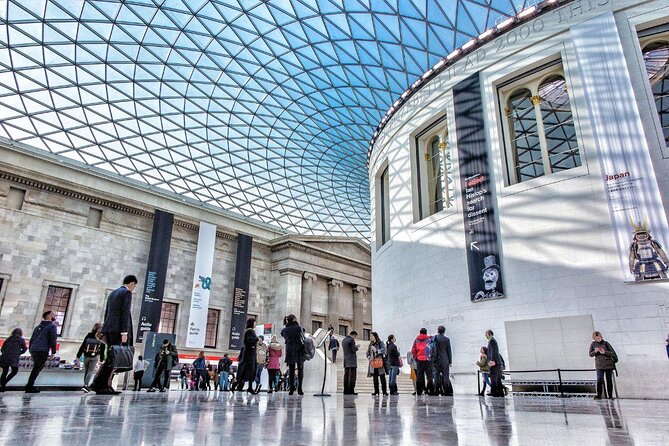
The British Museum is not a quick stroll around a single grand hall. It contains about 70 galleries and nearly one million square feet of exhibition space, with objects covering roughly two million years of human history.
You can wander in for free, but free does not mean easy. The museum’s scale creates a practical problem: you may spend much of your visit finding the next room, then reach a famous object without knowing why it matters.
I like this tour because it gives the museum a spine. You move from one major collection to another instead of trying to make sense of the whole building at once. A private guide can also adjust the pace, answer questions, and spend more time on the subjects that interest you.
That matters most if you have only half a day or one day in London. The tour does not pretend to show everything. It gives you a usable first look, then leaves you free to return to the galleries that caught your attention.
More British Museum Tours in London:
- British Museum London Guided Tour Semi-Private 8ppl Max
★ 5.0 · 984 reviews - The British Museum London – Exclusive Guided Museum Tour
★ 5.0 · 555 reviews - British Museum Guided Tour
★ 4.0 · 470 reviews
Meeting at Montague Place by the North Entrance
The meeting point is Montague Place, by the museum’s north entrance. Look for the doorway with stone lions. Your guide is supposed to hold a sign, but meeting instructions deserve care here.
Several people have had trouble locating the guide, including one case where no sign was visible and another where an old hotel name caused confusion. I would arrive early, save the tour company’s contact details before leaving your hotel, and double-check the entrance on the day.
The meeting point is near public transportation. Hotel pickup and drop-off are not included, so you make your own way to the museum and return from the meeting point when the guided portion ends.
The tour is offered in English and includes an English-speaking professional guide. Most people can take part, but the visit involves about two hours of walking, and possibly stairs. Baby strollers are not permitted on the tour.
The Rosetta Stone and the Power of Written Language
The Rosetta Stone is the natural opening star. It is not connected to the language-learning program that borrowed its name. It is a real ancient stone, and its inscriptions helped scholars decipher Egyptian hieroglyphs.
Your guide explains the role of the stone in connecting different forms of writing. That turns the object from a famous slab behind glass into a key to understanding ancient Egypt.
The stone itself is not enormous, and the area around famous objects can be crowded. A guide helps by giving you the story without asking you to stand there reading every line of the display panel.
This is also a good place to ask questions. You can ask how the writing was read, why the stone mattered, or what the inscriptions tell us about the society that produced it. On a self-guided visit, you may learn some of this from the museum text, but the guide gives you a person to engage with.
The strongest guides on this tour have been praised for explaining major objects with just enough information. That balance matters. Too little context leaves you cold, while a long lecture can make the museum feel like school.
The Parthenon Frieze and Ancient Athens
The Parthenon Frieze offers a change of scale and subject. This long sculpted work once formed part of the Acropolis in Athens. It is just over three feet high and about 525 feet long, making it one of the most striking surviving works associated with classical Greece.
You will not simply see a few isolated statues. The frieze lets you consider how sculpture worked as part of a larger architectural setting. Your guide can point out the scale, movement, and original purpose of the work, helping you see beyond individual carved figures.
The collection also includes other Greek material, and the exact route can depend on the guide and the interests of your group. If Greek history, architecture, or sculpture is your main reason for visiting, say so early. The private format is designed to let you shape part of the visit.
There is also a larger question behind this gallery: how should major works removed from their original setting be displayed and interpreted? The tour description focuses on the artistic importance of the frieze rather than promising a full debate about ownership. Still, you can raise the subject with your guide if it matters to you.
A few more London trips to weigh up
- Tower of London and Crown Jewels Exhibition Ticket
★ 4.5 · 6,677 reviews - Chelsea FC Stadium Tours and Museum
★ 5.0 · 1,908 reviews - Official tickets: Moco Modern & Contemporary Art Museum
★ 4.5 · 1,157 reviews - The Postal Museum Admission Ticket
★ 4.5 · 347 reviews
Egyptian Rooms, Mummies, and Ideas About the Afterlife
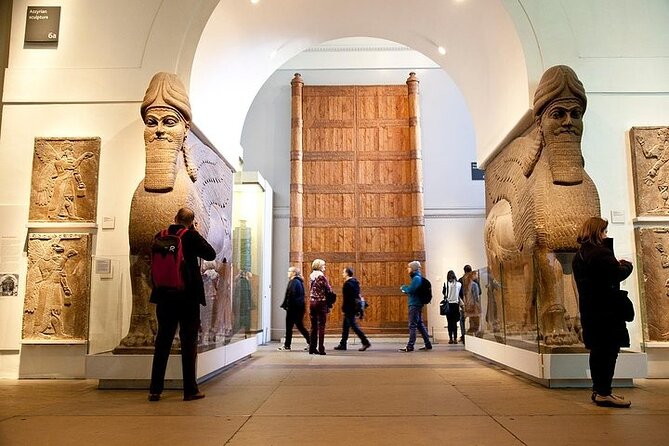
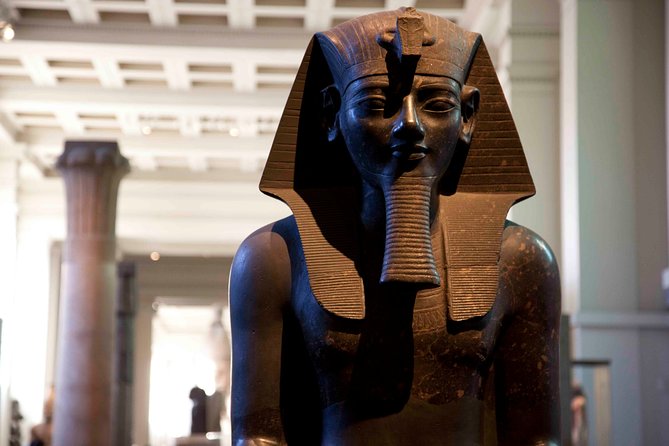
The Egyptian galleries supply some of the tour’s most memorable objects. Here you can see mummies and other material linked to ancient Egyptian beliefs about death and the afterlife.
A good explanation makes these rooms more than a parade of statues and wrapped bodies. Your guide connects burial objects with the beliefs that shaped them, helping you understand why Egyptians prepared the dead so carefully and filled tombs with objects.
The low light in some exhibition areas protects delicate material. You should respect museum instructions and avoid using a flashlight unless staff specifically permit it. One guide was criticized for using a light after being told to stop, so this is a useful reminder that seeing better is never more important than protecting the objects.
The Egyptian section can also take over the tour if you let it. If mummies are your priority, tell your guide. If you would rather spend more time with Greece, Assyria, or Britain, say that too. You are paying for a route shaped around your group, not just a fixed march from one display to another.
Sutton Hoo and Britain’s Anglo-Saxon Past
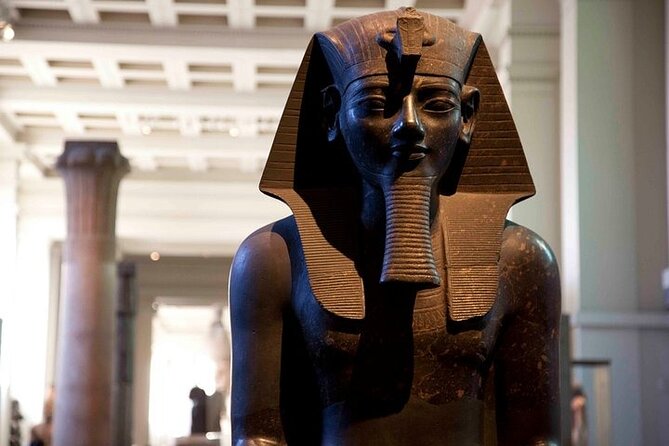
Sutton Hoo brings the story closer to Britain. The objects come from an Anglo-Saxon ship burial and offer a window into the power, wealth, and customs of early medieval society in the British Isles.
The appeal is partly archaeological detective work. These objects survived centuries, along with the danger of grave robbers, and their discovery revealed far more than isolated pieces of metal or decoration. The guide explains how the burial site was found and why the survival of the objects was so unlikely.
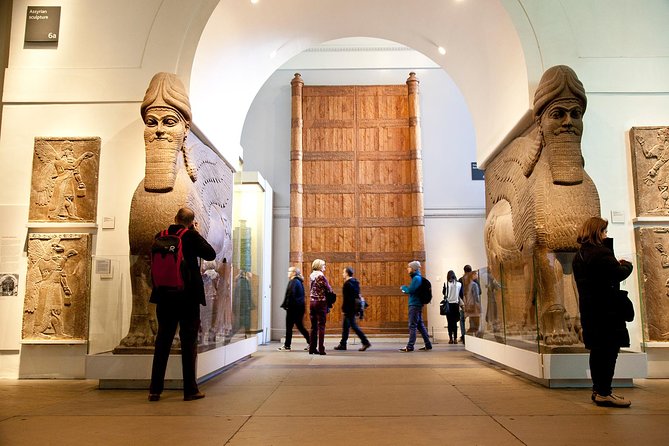
This section gives the tour a useful local balance. The British Museum is full of objects from Egypt, Greece, Assyria, and many other places, but Sutton Hoo connects the museum to Britain’s own past.
If your London visit includes time for only one major museum, this range is helpful. In a couple of hours, you can move from Egyptian writing to Greek sculpture and then to Anglo-Saxon burial customs. You do not receive a full course in any one culture, but you get a clear sense of the museum’s reach.
The Guides Make or Break the Experience
The tour’s greatest strength is the person leading it. Guides named Trudy, Rob, Guy, Norma, ZoZo, and others have been praised for warmth, enthusiasm, clear speaking, and strong command of the galleries.
Trudy, in particular, has been described as energetic and full of life, with a knack for bringing the objects into focus. Rob has been praised for arriving early, explaining the must-see pieces without overloading the group, and helping people find their way after the tour. Guy has been described as enthusiastic and engaging, while Norma has been praised for making an efficient route through a crowded museum.
Those details point to what you should expect from a good guide: not just facts, but direction. A guide can show you where to stand, explain what deserves attention, and help you return to a room later.
Results can vary. One poorly handled tour involved a guide who was hard to understand, relied too heavily on display labels, gave incorrect information, and ignored a museum instruction about lighting. Another booking failed when the guide did not appear at the meeting point.
Those incidents appear to be exceptions within a generally strong record, but they are still worth noting. A private tour costs too much to treat guide quality as a minor detail. If there is a problem at the meeting point, contact the company at once rather than waiting through the scheduled start.
Private Does Not Always Mean Completely Solitary
The activity is sold as private, meaning only your group participates. That is a major advantage for families, couples, and small groups with different interests.
You can ask as many questions as you like without worrying about holding up a large public tour. You can also tell the guide if your group needs a slower pace or wants more attention on Egypt, Greece, or British archaeology.
The experience can still feel compact. The museum is too large for a full treatment in a couple of hours, and some people have wished for more time in the galleries rather than looking at images on an iPad or listening while moving quickly between rooms.
That is not necessarily a flaw. It is a choice between breadth and depth. This tour gives you an overview of major sights. A self-guided return visit lets you spend an hour with one collection, read labels, and follow your own curiosity.
Price, Timing, and What You Are Really Buying
At $141.56 per person, this is a costly way to visit a museum with free general admission. I would not book it simply to enter the building.
I would book it to save time and reduce the mental work of planning. You are paying for a route, a private guide, answers to your questions, and a better chance of seeing the objects that brought you to the museum.
The value improves if your London schedule is tight. If you have one afternoon and want the Rosetta Stone, Parthenon Frieze, Egyptian Rooms, and Sutton Hoo, the tour can prevent a frustrating visit. It can also help on a crowded day, when moving through the building alone feels slow.
The value drops if you have a full day and enjoy reading labels at your own pace. The museum’s free entry makes a self-guided visit an attractive option, especially if you are happy to use a digital guide or printed map.
The stated duration needs attention. The experience is advertised at about 2 hours 30 minutes, but the itinerary lists 1 hour 30 minutes for the museum portion. Ask the operator to confirm the exact guided time before booking, particularly if you are planning a tight connection or another timed attraction.
Who Should Book This British Museum Tour?
I would recommend it for a first visit when you have limited time and want a clear introduction to the museum’s major collections. It also suits anyone who learns best through stories and conversation rather than labels.
Families may find the private setup useful because you can keep children moving and adjust the focus. History fans benefit from the chance to ask follow-up questions. Small groups can also split the cost in a way that makes the per-person price easier to accept.
I would hesitate if your priority is a slow, detailed study of one collection. The route covers a lot, and the museum can be warm and crowded. You need to be reasonably fit for the walking, and the no-stroller rule matters for families with very young children.
After the guided visit, use the remaining time to revisit your favorite gallery. That follow-up is where the tour earns extra value. You already know where the main rooms are, so you can explore without feeling lost.
Cancellation and Practical Details
You receive confirmation when booking. The activity includes the professional English guide and all fees and taxes, but not food, drinks, or transportation to and from the museum.
Free cancellation is available up to 24 hours before the start time for a full refund. Changes or cancellations made less than 24 hours before the start time are not accepted for a refund, and the cutoff uses London local time.
The tour is near public transportation, but you should still plan a little extra time for finding Montague Place and the north entrance. The stone lions are the useful landmark. Do not rely only on an old hotel name or a vague address.
Should You Book It?
Book this tour if you want the British Museum’s major sights explained by a personal guide and you have only a few hours. The Rosetta Stone, Parthenon Frieze, Egyptian mummies, and Sutton Hoo make a strong route through the collection, and guides such as Trudy, Rob, Guy, and Norma have shown how much a lively storyteller can add.
Skip it if you have a full day, prefer to wander, or cannot justify paying for a guided visit to a free museum. The tour is not a substitute for the entire British Museum. It is a time-saving first pass, followed by the freedom to explore on your own.
FAQ
How long does the British Museum tour last?
The experience is listed as approximately 2 hours 30 minutes. The itinerary separately lists 1 hour 30 minutes for the British Museum visit, so confirm the exact guided duration before booking.
What does the tour include?
It includes a professional English-speaking guide, all fees, and taxes.
Is museum admission included?
The tour information lists an admission ticket as included, while the British Museum itself is free to enter. The price mainly covers the private guided experience and related arrangements.
Where does the tour meet?
You meet on Montague Place by the British Museum’s north entrance, near the doorway with stone lions.
Where does the tour end?
The activity ends back at the meeting point.
Is hotel pickup included?
No. Hotel pickup and drop-off are not included, so you must make your own way to the museum.
Can I bring a baby stroller?
No. Baby strollers are not permitted on the tour.
What is the cancellation policy?
You can cancel at least 24 hours before the experience start time for a full refund. Cancellations or changes made less than 24 hours before the start time are not accepted for a refund.
Just added around London
- Private The Beatles Taxi Tour in London★ 5.0 · 12 reviews
- Dinner and Jazz Cruise on the River Thames★ 4.0 · 140 reviews
- Airport Coach Service from Heathrow to Oxford★ 3.5 · 67 reviews
- The Alfred Hitchcock London Walk with Sandra Shevey★ 5.0 · 15 reviews
- Thames Beachcombing★ 4.5 · 100 reviews
- Tower of London & 30+ London Sights Walking Tour★ 4.5 · 33 reviews
- Ted Lasso London Taxi Tour★ 5.0 · 5 reviews
- Ted Lasso Tour of Richmond with Private Guide★ 5.0 · 25 reviews
British Museum Tours, compared.
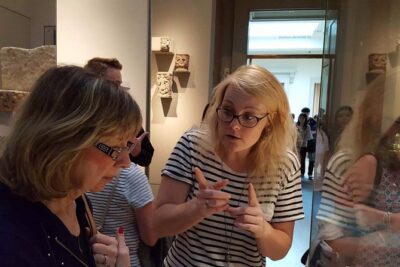
British Museum London Guided Tour Semi-Private 8ppl Max
Read our review →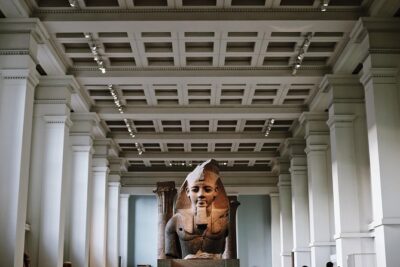
The British Museum London – Exclusive Guided Museum Tour
Read our review →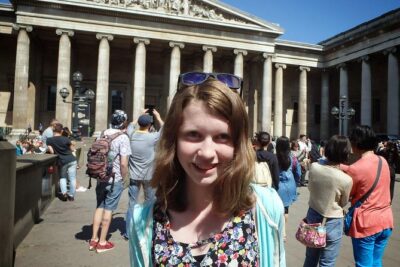
Private Guided Tour of the British Museum – Tickets Included
Read our review →
British Museum Guided Tour with Priority Timeslots(Small Group)
Read our review →
British Museum & National Gallery of London Semi-Private 8ppl Max
Read our review →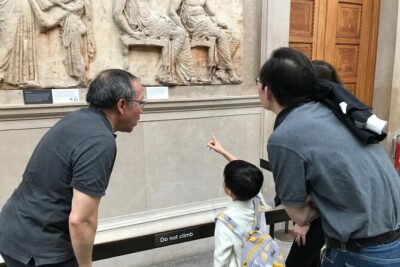
Explore Biblical Artifacts at the British Museum
Read our review →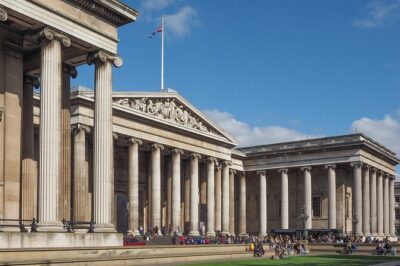
Browse the lists this tour appears in