
Reviewed · WALKING TOURS
Fascinating Walking Tours Of Roman Chester With An Authentic Roman Soldier
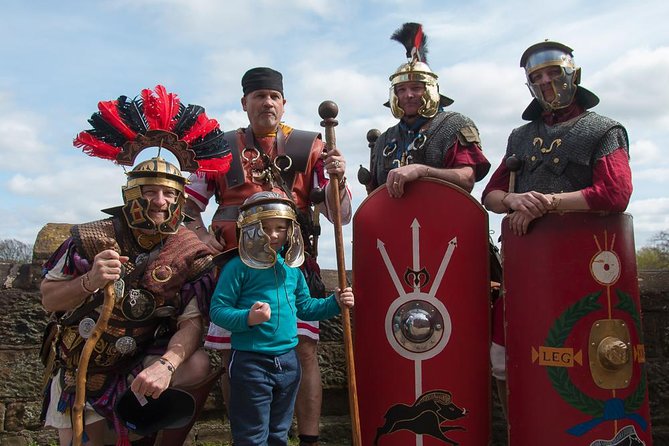
Chester’s Roman past is not locked away in a museum. It appears under a cafe, in a stretch of fortress wall, and across the broad curve of Britain’s largest Roman amphitheater. This 90-minute walking tour brings those remains together with a guide dressed as a Roman soldier, turning a city stroll into a lively lesson in military life.
I like two things in particular: the guide can explain ordinary details such as pay, ranks, hygiene, housing, and trade, and the route includes places you could easily miss on your own. The small maximum of 15 people also gives you a fair chance to ask questions. The main drawback is that it is an outdoor walk, so poor weather can cancel it, and some sections may not suit every wheelchair user.
Key points about Roman Chester

- Britain’s largest Roman amphitheater: Learn how the arena was used and what archaeology reveals about the people who fought and died there.
- Roman fortress walls over 5 metres high: Walk beside surviving sections built on the foundations of Chester’s ancient military base.
- Roman Gardens and a working hypocaust display: See original pila stones and reconstructed floors linked to Roman military baths.
- A costumed, question-friendly guide: Julius, Marcus, Gaius, Tiberius, Faustus, Hippolyta, and other guides have led tours, each adding a personal style.
- Small-group value: The tour costs $16.64 per person, lasts about 90 minutes, and allows a maximum of 15 participants.
Why this walking tour makes Roman Chester easier to understand
Chester can feel like several cities piled on top of one another. The modern shopping streets follow the old Roman fortress in places, while fragments of ancient walls sit beside ordinary buildings. Without a guide, you may notice the stones but miss the reason they are there.
That is where the Roman soldier format helps. A guide in legionary clothing gives the walk a clear focus, but the best part is not the costume. It is the practical explanation of how a Roman soldier lived, worked, was paid, trained, and kept clean. You are not simply shown a wall and told it is old. You get a sense of the people who built and used it.
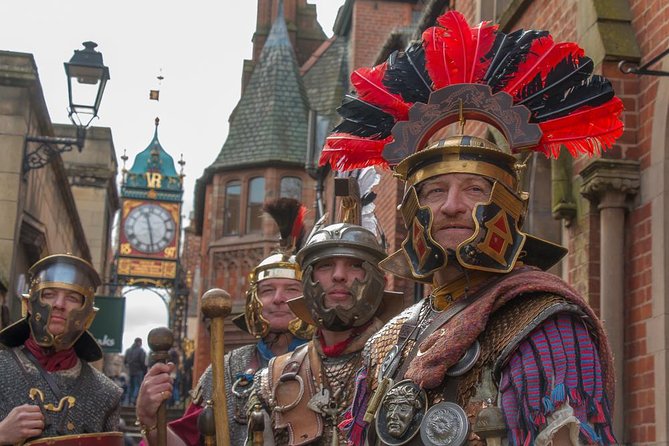
The guides use different names and personalities. Julius has been praised for combining historical detail with humor, while Marcus has explained his custom-made legionary kit and allowed people to handle reproduction and genuine artifacts. Gaius, Tiberius, Faustus, and Hippolyta have also led walks, so the tone may vary slightly from one departure to another.
That variety is useful. A guide who enjoys questions can make the walk feel like a conversation rather than a speech. It also means you should feel free to ask about something that catches your eye. The guides are used to questions from families, local residents, and people with serious academic knowledge.
A few more England trips to weigh up
- Oxford University Walking Tour With University Alumni Guide
★ 5.0 · 6,905 reviews - Tour for Muggles The Ultimate Harry Potter Walking Tour in London
★ 5.0 · 4,684 reviews - London Jack The Ripper Guided Walking Tour
★ 5.0 · 3,131 reviews
Meeting the Roman soldier at Chester Town Hall

The walk begins at Town Hall on Northgate Street, Chester CH1 2HJ. This is a practical place to meet because it is central and easy to reach by public transport.
The tour is offered in English, uses a mobile ticket, and usually has no more than 15 people. That group size matters in Chester, where some Roman remains are tucked into narrow urban spaces or below street level. A smaller group is easier to gather around a wall fragment and makes it less awkward to ask the guide to explain a detail again.
Allow a few minutes to arrive before the start time. The guide is in costume, but the meeting point is still a public city location where several activities may be taking place. Keep your booking confirmation ready on your phone.
The walk lasts about an hour and a half. It is long enough to cover several key sites without taking up your whole day. I see it working well near the start of a Chester visit, since it gives you a useful map of the Roman center before you explore the city on your own.
Chester Roman Amphitheatre: an arena built for spectacle
The first major stop is Chester Roman Amphitheatre. It is described as Britain’s biggest Roman amphitheater, and its size gives the site real impact even when the visible remains are incomplete.
Here, the guide focuses on the lives of the people who fought and died in the arena. The archaeological remains cannot tell every story, but they can show how the space was shaped and what kind of public building the Romans created. A good guide connects those physical traces with the human cost of Roman entertainment.
You should expect roughly 15 minutes at this stop. That is enough time to understand the layout and hear the main evidence, but not enough for a long archaeological lecture. If you want a detailed study of every stone, this is not a specialist excavation tour. If you want the site to make sense as part of Roman Chester, the timing works well.
The amphitheater is also a good place to notice the contrast between ancient and modern Chester. You are standing in a former military settlement while daily city life continues around you. That tension is one reason a walking guide adds value here. The remains alone do not always explain how large, busy, or important the Roman settlement was.
The fortress walls and Chester’s military backbone
The next part of the route follows sections built on the foundations of the walls of Britain’s largest Roman fortress. Some original Roman wall sections survive to more than 5 metres high.
This is one of the tour’s strongest features because the walls help you picture Chester as a military base, not just a small provincial town. The guide can explain how the fortress shaped the city and point out pieces that are easy to walk past without context.
The surviving height is especially helpful. Low foundations can be hard to read, but a wall rising several metres gives you a better feel for the scale of Roman construction. Look closely at the masonry and ask which parts are original, reconstructed, or built over later foundations. The tour is designed around archaeological evidence, so those distinctions matter.
Several people who live in Chester have found that the walk reveals parts of the city they had never noticed. That is a useful clue for independent visitors too. You may already have passed some of these remains, but the guide’s route and explanations can change how you read the streets.
The walls also give the tour a physical rhythm. You move through the modern center, stop for a story, then see a Roman feature in place. It is more memorable than receiving the same information in a room with slides.
Same country, a completely different day out:
- Stonehenge, Windsor Castle, and Bath from London
★ 4.5 · 18,662 reviews - London Big Bus Hop-On Hop-Off Tour with Optional River Cruise
★ 3.5 · 10,803 reviews - London Small Group Tour of Historical Pubs
★ 5.0 · 10,422 reviews - Beatles Magical Mystery Tour
★ 5.0 · 9,266 reviews
Roman Gardens and the hypocaust system
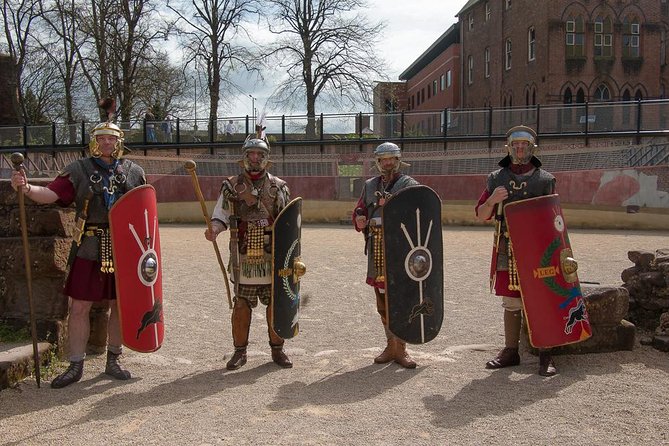
At Chester Roman Gardens, the focus shifts from defense to comfort and engineering. You see a reconstructed example of a Roman hypocaust system, using original pila stones and reconstructed or mosaic floor material found during excavations of the Roman military baths.
A hypocaust carried heated air beneath a floor. The pila stones supported the floor above the open space, allowing heat to move underneath. The guide explains how the system worked and why the original pieces have been relocated to the gardens.
This stop lasts about 15 minutes. The display is compact, but it answers a question many people have after seeing Roman walls and arenas: how did people live inside this military settlement? Baths were not a minor luxury. They were part of Roman daily life, and the remains show the technical skill needed to heat a large building.
The use of original pila stones gives the stop more weight than a completely modern reconstruction. You are looking at actual material recovered from the site, alongside pieces rebuilt to help you understand the system. The distinction between original and reconstructed sections should be clear from the guide’s explanation.
The baths also offer a reminder that archaeology is vulnerable. The guides may discuss Roman bath remains that were lost when a shopping development was built after only a short period of archaeological investigation. That story adds a modern lesson to the tour: what survives is valuable, and what disappears cannot easily be recovered.
A basement surprise and Roman remains beneath the city
One of the most memorable features described by visitors is a visit to a basement beneath a modern cafe, where Roman remains and Principia columns can be seen. The Principia was the headquarters building of a Roman fortress, so columns linked to it give you a rare glimpse of the settlement’s administrative center.
This is exactly the sort of stop that makes a guided walk worthwhile. You are unlikely to find every piece of Roman Chester by simply following the main city streets. A modern cafe is an unexpected setting for ancient stone, and the contrast makes the remains easier to remember.
The available details do not guarantee that every departure follows the same basement access arrangement. I would treat it as a possible highlight rather than the sole reason to book. If the guide offers access, listen closely to the explanation of how the pieces were found and why they are displayed there.
The route information lists 23 Little St John Street as the end location, while the directions also say that tours terminate at the Roman Amphitheater and that the guide will direct you to your next destination. Check the exact end arrangement at the start, especially if you have a restaurant booking or transport to catch.
Roman soldiers as people, not just statues
The strongest teaching on this walk concerns daily life. You can learn about a soldier’s uniform, pay, rank, personal hygiene, living quarters, risks, and trade. Those details give the fortress a human scale.
Roman soldiers were not simply anonymous figures in helmets. They had jobs, earnings, duties, routines, and long stretches of ordinary life between military danger. A guide can explain how training and service affected the men stationed in Chester and how the fortress functioned as a workplace as well as a defensive base.
The tour can also challenge simple ideas about who served in the Roman army. One guide explained that some soldiers were women from areas corresponding to modern Ukraine and Russia. The subject may lead to questions about evidence, military roles, and life inside and outside the fortress walls.
The costume helps children follow the story, but the content is not limited to children. One guide even kept an audience with a PhD in ancient history entertained and added new information. That is a good sign for adults who want more than a basic introduction.
You may be able to handle reproduction items and some genuine artifacts, depending on the guide and the conditions of the walk. That kind of contact can make the past feel more real, but listen carefully to which pieces are ancient and which are modern copies.
What the guides do best
The most consistently praised feature is the guide’s presentation. Julius is described as both informed and funny. Marcus is remembered for enthusiasm, clear explanations, and his equipment. Gaius has been praised for stories that kept the walk moving, while Tiberius made a strong effort to involve children.
That matters because 90 minutes is a long time to listen outdoors. A dry list of dates would make the route drag. Puns, stories, and questions give the information some lift without removing its serious side.
The guides also seem comfortable with mixed groups. Families, older visitors, local people, and history specialists can all find an entry point. If you have a child with you, the soldier costume and practical objects may help hold attention. If you already know Roman history, ask about the evidence behind a claim rather than settling for a general story.
One three-star experience found the group difficult because some participants wanted to display their own knowledge. That is a useful warning, not a major flaw. A walking tour depends partly on group manners. If someone dominates the conversation, you may need to wait for a quieter moment to ask your question.
Access, weather, and the practical details
The tour is near public transportation, and most people can take part. Service animals are allowed.
The route is not described as fully wheelchair accessible. An electric wheelchair user completed almost all of the tour but missed one basement section. If you use a wheelchair, contact the provider before booking and ask about the current route, surface conditions, and access to any below-street-level stop.
Wear shoes suited to city walking and check the forecast. The experience requires good weather, and a poor-weather cancellation can lead to a new date or a full refund. Chester rain is not a minor issue when your main activity takes place outdoors, so keep a little flexibility in your schedule.
Free cancellation is available up to 24 hours before the start time. Cancellations or changes made inside that window are not refunded or accepted. The tour is booked, on average, about 14 days ahead, which suggests you should reserve early if your Chester dates are fixed.
Is $16.64 good value for 90 minutes?
At $16.64 per person, this is a modestly priced way to get an organized introduction to Roman Chester. You are paying for a guide, a planned route, costume, archaeological interpretation, and access to details that are easy to miss. You are not paying for a museum admission, since the listed stops have no admission charge.
That distinction helps set expectations. The value comes from the explanation, not from an expensive ticketed attraction. If you only want to walk past the amphitheater and walls, you can do that for free. If you want to understand what you are seeing, the price is reasonable.
The small group limit strengthens the value. A maximum of 15 people is not private touring, but it is more manageable than a large crowd. You can hear the guide more clearly and ask about the stones, baths, or fortress layout.
I would book this early in a Chester stay. Then you can return to places that caught your interest and use the guide’s explanation to plan further visits. The tour is also short enough to fit between other city activities.
Who should book Roman Chester with a soldier-guide?
I would recommend it to first-time visitors who want a clear introduction to Chester’s Roman remains. It also suits families, since the costume, stories, and objects add energy to a subject that can otherwise seem distant.
Local residents may find it surprisingly useful. The route includes remains that can be overlooked during everyday walks, including material under a modern cafe and parts of the old fortress walls.
History students and serious Roman enthusiasts can enjoy it too, especially if they ask about archaeological evidence and the difference between original remains and reconstruction. Do not expect a specialist seminar, but the guides can offer more than a surface account.
I would be cautious if you dislike outdoor tours, need a fully step-free route, or have a tightly timed schedule after the walk. The weather policy and possible basement access make a little flexibility worthwhile.
Should you book this Roman Chester walking tour?
Book it if you want the Roman center explained by someone who can connect stones with daily life. The amphitheater, fortress walls, Roman Gardens, hypocaust display, and possible basement remains form a strong 90-minute introduction, while the cost stays low at $16.64.
Choose another activity if you want a long museum visit, a fully accessible route, or a detailed archaeological study of one site. For most people interested in Chester’s Roman past, though, this is an efficient and entertaining way to see the city’s oldest layer. Reserve ahead, bring weather-ready clothing, and arrive with questions.
FAQ
Where does the Roman Chester walking tour begin?
It begins at Town Hall, Northgate Street, Chester CH1 2HJ, UK.
Where does the tour finish?
The directions list 23 Little St John Street, Chester CH1 1RF, UK, and also state that tours terminate at the Roman Amphitheater. The guide will direct you to your next destination, so confirm the exact end arrangement at the start.
How long does the walking tour last?
The tour lasts approximately 1 hour and 30 minutes.
How much does the experience cost?
The listed price is $16.64 per person.
Is the tour offered in English?
Yes. The experience is offered in English and uses a mobile ticket.
What happens if bad weather cancels the tour?
If poor weather causes cancellation, you will be offered a different date or a full refund. You can also cancel for a full refund up to 24 hours before the start time.
Just added around England
- Private The Beatles Taxi Tour in London★ 5.0 · 12 reviews
- Dinner and Jazz Cruise on the River Thames★ 4.0 · 140 reviews
- Airport Coach Service from Heathrow to Oxford★ 3.5 · 67 reviews
- The Alfred Hitchcock London Walk with Sandra Shevey★ 5.0 · 15 reviews
- Tower of London & 30+ London Sights Walking Tour★ 4.5 · 33 reviews
- Thames Beachcombing★ 4.5 · 100 reviews
- Ted Lasso London Taxi Tour★ 5.0 · 5 reviews
- Ted Lasso Tour of Richmond with Private Guide★ 5.0 · 25 reviews
Walking Tours, compared.

Oxford University Walking Tour With University Alumni Guide
Read our review →
Tour for Muggles The Ultimate Harry Potter Walking Tour in London
Read our review →

Cambridge University Walking Tour by Alumni™ Kings College Option
Read our review →
Blackbeard to Banksy – The Ultimate Walking Tour of Bristol
Read our review →
Air Raid Shelter + St. Nicholas Market Walking Tour
Read our review →
Walking Tour of Bath with Blue Badge Tourist Guide
Read our review →
Changing of the Guard Guided Walking Tour in London
Read our review →Browse the lists this tour appears in