Reviewed · WALKING TOURS
John Wesley Methodist Private Walking Tour Of London
John Wesley’s story comes alive in the ordinary streets of the City of London, where a chapel, a boarding house, a prison-like churchyard, and even a place where he nursed a sprained foot all connect to the birth of Methodism. This private walk also folds in Roman ruins, medieval churches, the Peasants’ Revolt, and the unusual memorials of Postman’s Park.
I like the personal format. Stephen meets you at a Central London hotel if arranged in advance, helps with the journey to the start, and guides only your party. I also like the way the route reaches places most sightseeing walks skip, especially Bunhill Fields, Little Britain, St Alphage, and the old Methodist sites around Moorfields.
The main consideration is the $257.96 per-person price. That can make sense for a larger private group or for visitors with a strong Methodist interest, but it is a serious cost for a solo participant or a couple. The walk also includes Tube travel and a fair amount of standing, so wear good shoes and check which interiors are open.
Key points at a glance
- Wesley’s Chapel anchors the day: See John Wesley’s chapel, house, grave, and the Museum of Methodism at the beginning or end.
- Stephen provides the guiding: His friendly, personal approach helps you find the meeting point and brings Wesley’s life into the streets around you.
- The route reaches quiet historic corners: Finsbury Square, Bunhill Fields, Little Britain, and St Alphage offer a break from London’s main sightseeing circuit.
- Methodist history connects with older London: Roman walls, a medieval hospital ruin, ancient churches, and memorials to rebellion appear along the way.
- It is private and flexible: Only your group takes part, and hotel pickup and drop-off can be requested.
- The timing needs attention: The outing lasts about three hours, begins at 9:30 a.m. by default, and may start later to avoid rush hour.
Following Wesley from his chapel to his London beginnings
This is not a walk built around one grand monument. It is a chain of small places that explain how John Wesley worked, prayed, preached, married, and organized the early Methodist movement.
The tour starts at Panyer Alley in the City of London, though you can ask to meet Stephen at a Central London hotel. From there, you go by Tube to the starting area. A later start around 10:30 or 11 a.m. may be suggested so you can avoid the worst of the morning rush and use a taxi or ride service if that suits you better.
The outing is private, so you are not trying to keep up with a large group. That matters here. Several stops are plaques, church exteriors, old walls, or small spaces where the story depends on explanation rather than spectacle.
Wesley’s Chapel and the Leysian Mission provide the clearest opening. You see Wesley’s chapel, his grave, and his house, with admission to the house included through a donation. The chapel is also the return point, where you can spend extra time at the Museum of Methodism before heading to the nearest Tube station.
The schedule gives about an hour at the chapel complex at the end. That makes sense because the site deserves more than a quick photograph. If church interiors or museum displays matter to you, confirm what will be open on your date. London religious buildings can have services, maintenance, or changing opening hours.
A few more London trips to weigh up
- Tour for Muggles The Ultimate Harry Potter Walking Tour in London
★ 5.0 · 4,684 reviews - London Jack The Ripper Guided Walking Tour
★ 5.0 · 3,131 reviews - Changing of the Guard Guided Walking Tour in London
★ 5.0 · 1,793 reviews
Moorfields and the first Methodist Society
At Finsbury Square, the guide connects John Wesley and his brother Charles with George Whitefield and the open-air preaching around Moorfields. This is where the walk shifts from Wesley as an individual to Wesley as an organizer.
The stop is brief, about five minutes, but the point is not to inspect a major surviving building. The value comes from understanding the scale of Wesley’s work. He arranged meetings, visited converts, and helped form what became the Methodist Society in England.
St Botolph’s Church at Aldersgate adds another family connection. Wesley’s father, Samuel, served as curate there for a year. A window shows John Wesley field-preaching in Moorfields, and a plaque records the evangelical work linked with the Wesleys.
This stop is useful if you enjoy seeing how personal networks shaped religious movements. John Wesley’s story is not presented as a string of isolated achievements. His father, mother, brother, friends, preachers, and converts all have a place in the route.
Susanna Wesley, family ties, and the Charterhouse
St Giles Cripplegate introduces Susanna Wesley’s father, Samuel Annesley. He was expelled from this ancient church in 1662, a detail that places the Wesley family within the religious disputes of seventeenth-century England.
The church itself also gives the walk some physical weight. You are not only hearing about a family tree. You are standing at old London sites where arguments over worship and church authority had real consequences.
At Threadneedle Street, the story becomes more intimate. John Wesley married Molly Vazeille, a widow, in 1751. Shortly before the marriage, Wesley fell and badly sprained his foot. He was carried to the Vazeille home and spent a week recovering there, with Molly nursing him.
This is one of the route’s more human details. It takes Wesley out of the role of tireless preacher and places him in an awkward, dependent moment. The stop is free and brief, so you should expect a street-side explanation rather than a visit to a preserved interior.
The Charterhouse links to Wesley’s youth. He attended Charterhouse School from 1714 to 1720, and the walk visits the ancient church on the site. The 15-minute stop helps fill in the years before his Methodist work in London.
St Paul’s and the limits of the route
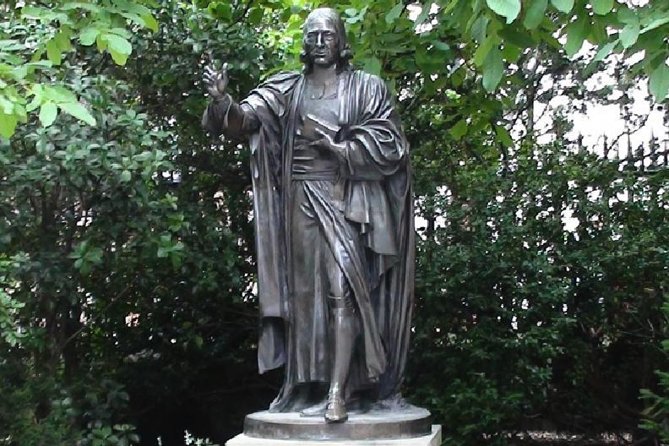
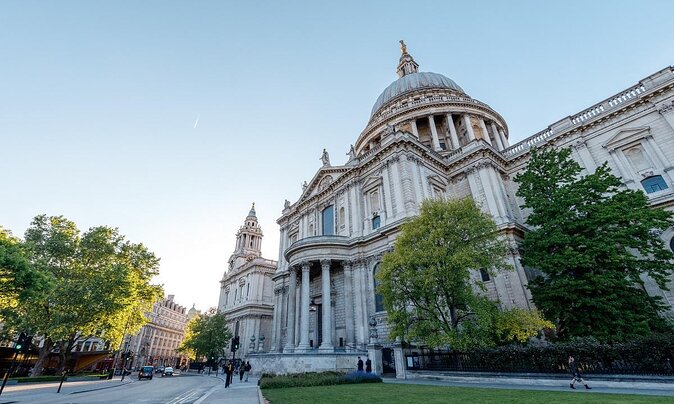
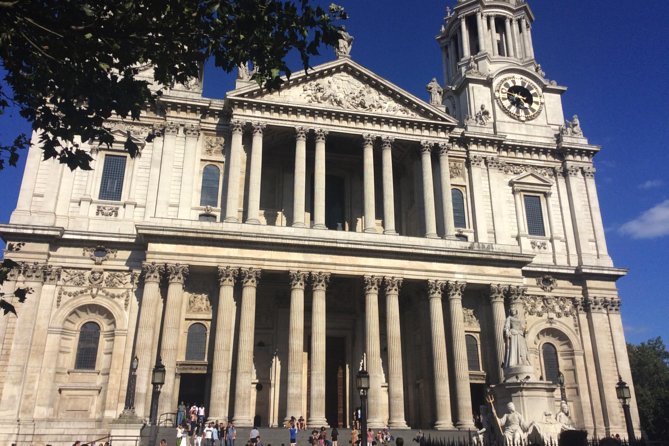
The gardens of St Paul’s Cathedral contain a statue of John Wesley, marking occasions when he preached at the cathedral. This is a good reminder that Wesley’s connection to London was not limited to small chapels and open-air gatherings.
Admission to St Paul’s Cathedral is not included. The stop is planned for about ten minutes, so you should not expect a full cathedral visit or access to the interior as part of the walk. If St Paul’s is a priority, plan a separate visit and budget for its admission.
That limitation is worth noting because the tour includes many churches, yet not every stop offers an interior visit. Some admission tickets are included, some are free, and others are not included. The route works best when you see it as an interpretive walk through locations, not as a series of full church tours.
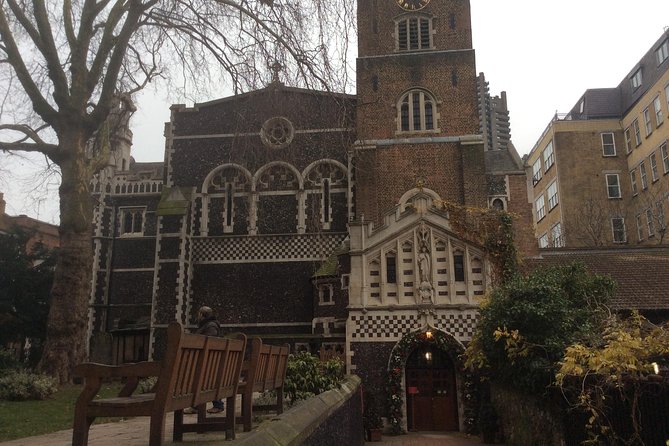
Church of St Bartholomew the Great is another important Wesley site. It was the last Anglican pulpit made available to him after other London churches blocked him from preaching. The stop is short, around five minutes, and admission is not included.
The significance here is larger than the building visit. Wesley’s movement grew partly because he was pushed outside normal church channels. The route shows that shift through specific London addresses rather than treating it as a general religious biography.
Same country, a completely different day out:
- Stonehenge, Windsor Castle, and Bath from London
★ 4.5 · 18,662 reviews - London Big Bus Hop-On Hop-Off Tour with Optional River Cruise
★ 3.5 · 10,803 reviews - London Small Group Tour of Historical Pubs
★ 5.0 · 10,422 reviews - Stonehenge, Windsor Castle and Bath with Pub Lunch in Lacock
★ 4.5 · 7,402 reviews
Roman walls, medieval ruins, and old London power struggles
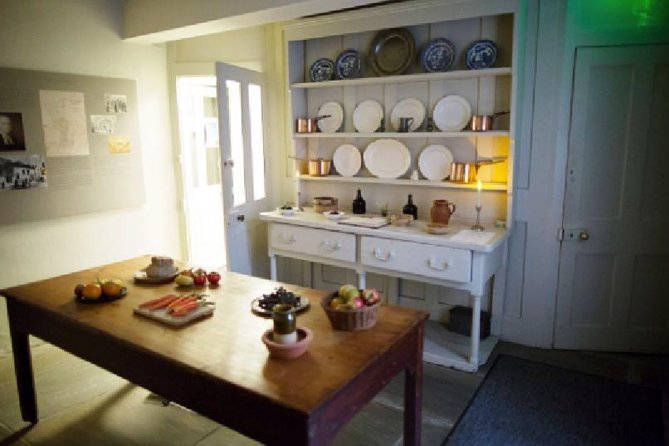
At St Alphage London Wall, the Methodist thread shares space with much older London. You see sections of the Roman wall and the remains of a hospital ruin that is nearly 1,000 years old.
This is one of the tour’s strongest features for anyone who wants more than a single-subject walk. You can follow Wesley while also getting a quick lesson in the city’s Roman and medieval layers. The stop lasts about ten minutes, and admission is included.
The Great Rising of 1381 Memorial adds another political chapter. The route passes memorials connected with the Peasants’ Revolt and a place where Anglicans were burned at the stake. These events are not part of Wesley’s biography, but they help explain the religious and social tensions that shaped London long before the eighteenth century.
The William Wallace Memorial provides another short historical pause. It marks the spot where William Wallace, the figure associated with Braveheart, was executed. The site is free to view and takes about five minutes.
These stops are not reasons to book the tour on their own. They are valuable because they keep the walk from becoming too narrow. If you know little about London’s older history, Stephen’s explanations can turn passing ruins and plaques into meaningful parts of the day.
Postman’s Park and Little Britain
Postman’s Park is a small, quiet green space with a Victorian memorial to heroic self-sacrifice. The visit lasts about five minutes and admission is included.
The memorial is a change of mood. After churches, preaching sites, and religious conflict, you pause among stories of ordinary people who died while saving others. It is also the kind of place that can be easy to miss when moving between major sights.
Little Britain marks the site of John Bray’s house. John and Charles Wesley lodged there in 1738 and 1739. The most important moments in the tour happen here: Charles Wesley’s conversion on May 21, 1738, and John Wesley’s declaration of faith on May 24 at 10 p.m.
A plaque marks the location, but the house itself is not presented as a preserved attraction. Admission is not included. You are visiting a place through its setting and the guide’s account, which makes Stephen’s storytelling particularly important.
For people interested in Methodist history, this may be the emotional center of the walk. The movement’s later chapels, societies, and preaching campaigns can be traced back to these personal turning points.
Bunhill Fields and the memory of dissent
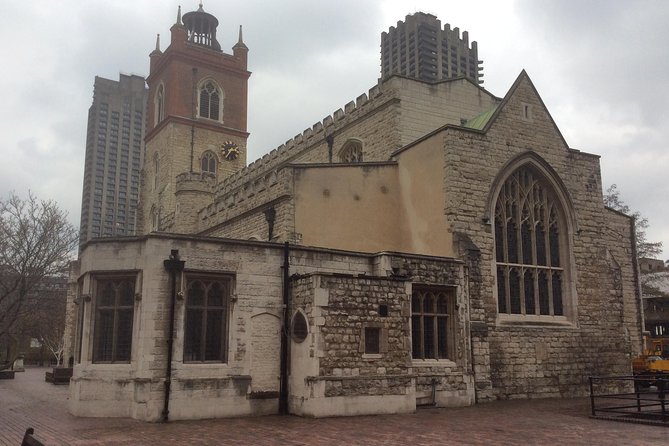
Bunhill Fields is the final resting place of Susanna Wesley, who died on July 30, 1742. William Blake and Daniel Defoe are also buried here.
The cemetery was used by Nonconformists, people outside the established Church of England. That makes it an especially fitting stop on a walk about Wesley. It reflects the religious divisions, independent congregations, and alternative traditions that shaped the world in which Methodism grew.
Admission is included, and the planned visit lasts about ten minutes. You will want to keep your expectations realistic. This is not an extended cemetery tour, but it is enough time to locate Susanna Wesley’s grave and understand why the place matters.
I especially like the way Bunhill Fields brings the family story back into focus. John Wesley is the title figure, but Susanna’s influence and presence give the route more balance. You see the people around him, not just the public preacher.
St Luke’s and the Foundery Society
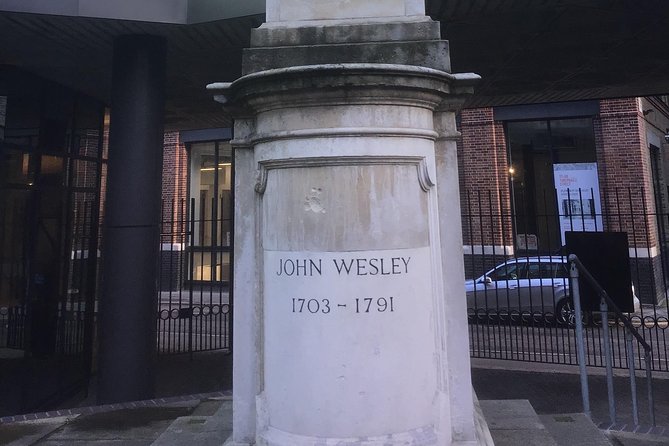
The London Symphony Orchestra now uses St Luke’s, a church consecrated in 1733. Its parish included John Wesley’s Foundery Society, whose members took communion there.
The stop lasts about five minutes, and admission is not included. Again, the important thing is the connection between a working London building and the early Methodist organization. The building’s current musical role also gives it a modern chapter without turning the tour into a concert visit.
The route keeps returning to a useful question: how did Wesley’s ideas move from preaching into an organized society? Churches, meeting places, homes, and burial grounds each answer part of it.
What the private format adds
A private tour changes the feel of a route like this. Stephen can spend more time on the sites that interest you and explain how the stops fit together. You are also free from the social pressure of a large group, which is useful at small plaques, narrow streets, and quiet churchyards.
The available comments about Stephen point to two practical strengths. He has helped visitors who had just arrived in London reach the meeting point, and he is described as friendly and conversational rather than formal. That matters when the route requires Tube travel before the walk and includes places that are not obvious tourist stops.
The experience is offered in English. Most people can take part, and service animals are allowed. It is near public transportation, but transport to and from the tour is not included in the price.
Hotel pickup and drop-off can be arranged on request, although the current safety guidance suggests meeting at the starting point and avoiding rush-hour public transport. Confirm the exact plan before you go, since the meeting point, starting time, and transport choice affect the day.
Is $257.96 per person fair?
At $257.96 per person, this is not a budget walking tour. The price is easier to justify for a private group, especially because group discounts are offered and the guide can focus on your party rather than a mixed crowd.
You are paying for access to a specialized route, private guiding, help with the London meeting arrangements, and entry to John Wesley’s house through a donation. You are not paying for a full St Paul’s Cathedral admission, general transport, or a broad London highlights tour.
For a Methodist, a church-history student, or someone tracing family and religious connections, the price may offer good value. The route reaches places you might pass without noticing, and several links would be hard to understand from a guidebook alone.
For a visitor with only one day in London, I would compare it with a general City of London walk. You will see fewer famous headline attractions here, although St Paul’s appears along the way. The payoff is detail and focus, not a checklist of major sights.
Timing, walking, and practical advice
The advertised duration is about three hours, with a 9:30 a.m. start. The route contains many short stops, from five minutes at Finsbury Square and Little Britain to 15 minutes at Wesley’s Chapel and the Charterhouse. The return visit to Wesley’s Chapel allows about an hour.
Because the stops cover a wide area, the exact pace may vary. The published stop times add up to more than a simple three-hour walk once the final chapel visit is included, so ask how much time is reserved for the walking sections and the museum.
Wear comfortable shoes. You will move between streets, church grounds, parks, and historic ruins, with time spent standing while the guide explains each location. Bring a phone with the mobile ticket and allow extra time if you are arranging hotel pickup.
Private tours are useful during periods when quiet spaces and distance from crowds matter. The operator has suggested later starts, meeting at the route rather than the hotel, and optional mask use. Those details can change, so confirm the current arrangement when booking.
Free cancellation is available up to 24 hours before the start time. Changes or cancellations inside that window are not accepted for a refund.
Who should book this London walk?
I would choose this tour if you have a real interest in John Wesley, the origins of Methodism, Nonconformist religious life, or London’s lesser-known historic places. It also suits repeat visitors who have already seen the Tower, Westminster, and St Paul’s and now want a more focused day.
It is a good match for families or church groups that want a private guide and group pricing. A 10-person group has used the format, and private guiding can make the route easier to manage than a public walking tour.
I would hesitate if you want a relaxed stroll with few stops, a full visit inside every church, or a low-cost way to see central London. The route is information-heavy, the subject is specific, and several important locations are marked by plaques or exterior views rather than major displays.
Should you book the John Wesley Methodist Tour?
Book it if the subject matters to you and you value a personal guide over a standard London highlights route. The best parts are the links between Wesley’s chapel, his family, Moorfields preaching, Little Britain, Bunhill Fields, and the Anglican churches that gradually closed their pulpits to him.
The price is high, but a private group can spread the cost, and Stephen’s help with the meeting point adds practical value for people new to London. If you are undecided, ask about the exact start time, church opening conditions, museum access, and how the three-hour schedule will be handled.
This is a specialized walk with an unusually broad view of London. You get John Wesley, but you also get Roman walls, medieval remains, old religious disputes, memorials, cemeteries, and quiet corners that most first-time sightseeing routes leave out.
FAQ
How long is the John Wesley Methodist Private Walking Tour?
The tour lasts approximately three hours. The schedule includes a return visit to Wesley’s Chapel, where you may spend about an hour exploring the chapel area and Museum of Methodism.
Where does the tour start?
The listed starting point is Panyer Alley, London EC2V 6AA. You can also request a meeting at a Central London hotel, followed by Tube travel to the tour starting point.
What time does the tour begin?
The listed start time is 9:30 a.m. A later start around 10:30 or 11 a.m. may be suggested to avoid rush hour.
Is hotel pickup available?
Yes. Pickup can be arranged from any Central London hotel, not only from a fixed list. Hotel drop-off can also be requested.
Is transportation included in the price?
No. Transport to and from the tour is not included. If hotel pickup is arranged, you travel to the starting point by Tube or another transport option agreed with the operator.
Is the tour private?
Yes. Only your group participates in the activity.
Is admission to John Wesley’s house included?
Yes. A donation for entry to John Wesley’s house is included. Some other sites have free admission, while St Paul’s Cathedral and certain church interiors are not included.
Can I cancel for a full refund?
Yes, if you cancel at least 24 hours before the experience start time. Cancellations or changes made less than 24 hours before the start are not refunded or accepted.
Just added around London
- Private The Beatles Taxi Tour in London★ 5.0 · 12 reviews
- Dinner and Jazz Cruise on the River Thames★ 4.0 · 140 reviews
- Airport Coach Service from Heathrow to Oxford★ 3.5 · 67 reviews
- The Alfred Hitchcock London Walk with Sandra Shevey★ 5.0 · 15 reviews
- Tower of London & 30+ London Sights Walking Tour★ 4.5 · 33 reviews
- Thames Beachcombing★ 4.5 · 100 reviews
- Ted Lasso London Taxi Tour★ 5.0 · 5 reviews
- Ted Lasso Tour of Richmond with Private Guide★ 5.0 · 25 reviews
Walking Tours, compared.
Oxford University Walking Tour With University Alumni Guide
Read our review →
Tour for Muggles The Ultimate Harry Potter Walking Tour in London
Read our review →
Cambridge University Walking Tour by Alumni™ Kings College Option
Read our review →
Blackbeard to Banksy – The Ultimate Walking Tour of Bristol
Read our review →
Air Raid Shelter + St. Nicholas Market Walking Tour
Read our review →
Walking Tour of Bath with Blue Badge Tourist Guide
Read our review →