Reviewed · SELF-GUIDED TOURS
London Charles Dickens Puzzle Questo and Self-Guided Tour
Charles Dickens’s London comes alive through a self-guided puzzle walk rather than a standard talk-and-follow tour. You begin at his former home on Doughty Street and work through clues that lead to pubs, theaters, churches, libraries, and old streets tied to London’s literary past.
I like the very low price and the freedom to start whenever you choose. I also like the clues, which are designed to keep you looking closely instead of simply following a guide. The tradeoff is clear: there is no human guide to explain a detail, answer a question, or rescue you if you lose the thread.
Key points to know
- Start at Charles Dickens’s former home: The route begins at 48 Doughty Street, now the Charles Dickens Museum.
- Solve clues at every stop: You must look around each location for an answer before moving on.
- Follow Dickens through several centuries of London: The route includes old inns, theaters, churches, libraries, and legal landmarks.
- Use it offline: Once prepared, the city game does not require an internet connection while you play.
- Set your own rhythm: The advertised play time is about one hour, but you can pause, take a break, or stop for a pub visit.
- Pay little for a private outing: At $8.33 per person, this suits couples, families, or small groups seeking a budget alternative to a guided walk.
Starting at Charles Dickens’s Doughty Street home
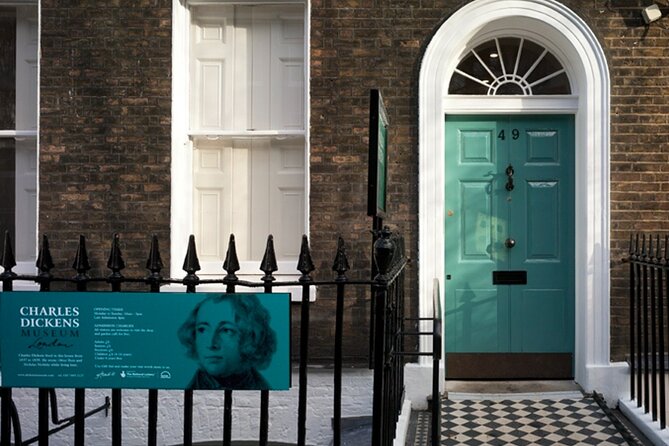
The route begins at 47 Doughty Street, beside the Charles Dickens Museum at number 48. This is the strongest opening point because Dickens lived in the Georgian terraced house from March 1837 until December 1839, a period soon after his marriage and during the early part of his rise as a writer.
Your first task is not simply to read a plaque and move on. You look around the building and nearby setting for the answer to a challenge. That small change matters. Instead of treating the street as scenery, you begin by examining it.
The museum itself is a separate author’s house museum, and admission to the museum is not listed as part of this puzzle experience. You should think of the building as the first location for the game, not automatically as an included indoor visit.
This opening also gives you a clear meeting point. Doughty Street is near public transportation, and the route ends on Fleet Street, so the walk connects two useful parts of central London. The exact walking distance between clues is not provided, so allow more than the one-hour estimate if you like to stop, take photographs, or inspect the buildings.
A few more London trips to weigh up
- Westminster Abbey Entrance Ticket Including Audio Guide
★ 4.0 · 661 reviews - Windsor Castle Tour from London with Transportation & Audio Guide
★ 3.5 · 222 reviews - London Panoramic Open Top Bus Tour with Audio Guide
★ 4.0 · 209 reviews
Vine Street and the first feel of old London
The next location is Vine Street, a road first laid out around 1686. Older maps show it running from Piccadilly toward Warwick Street, and in the early eighteenth century its main properties included a brewery and a carpenter’s yard.
This stop helps widen the story beyond Dickens himself. The puzzle is not limited to places where the author lived or wrote. It uses older streets and ordinary working sites to show the city Dickens knew: commercial, crowded, practical, and constantly changing.
You will need to search the location for the clue rather than expect a long explanation on arrival. That approach works best if you enjoy observation games. It may feel thin if you want a guide to narrate the street’s full past.
The Three Cripples and Dickens’s fictional London
One of the most memorable stops is the inn dating from 1759. Dickens gave it the fictional name the Three Cripples in 1838 and used it as Bill Sykes’s preferred drinking place in Oliver Twist.
Here the route connects a real building with Dickens’s invented world. That is exactly the sort of link that makes a literary walk useful. You are not just visiting a pub with an old date attached to it. You are seeing how Dickens took familiar London places and turned them into settings for crime, danger, and character.
The listing does not say that food or drinks are included, but the flexible format makes a pub break possible. One particularly good way to use this route is to treat the hour as a framework rather than a deadline. If the inn is open and you want a pause, stop. Just remember that opening access and service are not guaranteed by the tour details.
Staple Inn, wool, fire, and wartime damage
Staple Inn dates from 1585 and once served as a wool staple, where wool was weighed and taxed. It survived the Great Fire of London, then suffered serious damage from a Luftwaffe bomb in 1944 before restoration.
This is a strong architectural pause. You get several layers of London in one place: trade in the Tudor period, survival after the Great Fire, wartime damage, and later repair. The puzzle format asks you to inspect the building for an answer, which gives you a reason to notice details that might otherwise pass in a quick walk.
The stop also shows that the route is not a narrow Dickens biography. Dickens is the thread, but the city provides the larger subject. If you like old buildings and short historical clues, Staple Inn should be one of the more satisfying locations.
Same country, a completely different day out:
- Stonehenge, Windsor Castle, and Bath from London
★ 4.5 · 18,662 reviews - London Big Bus Hop-On Hop-Off Tour with Optional River Cruise
★ 3.5 · 10,803 reviews - London Small Group Tour of Historical Pubs
★ 5.0 · 10,422 reviews - Stonehenge, Windsor Castle and Bath with Pub Lunch in Lacock
★ 4.5 · 7,402 reviews
Lincoln’s Inn Fields and a lost theater
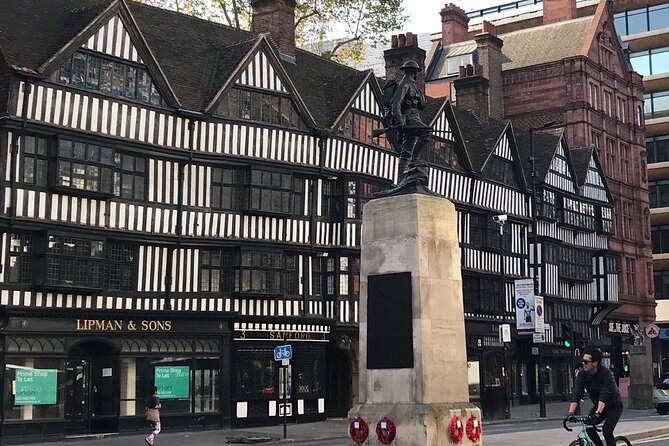
Lincoln’s Inn Fields once contained a theater that operated from 1661 until 1848. The building was demolished, and the theater began as the Duke’s Theatre after Lisle’s Tennis Court was converted for performances in 1695.
There is no longer a theater building to enter here, so this stop relies on imagination and the information provided by the clue. That can be both its appeal and its weakness. You are tracing a vanished London, but you will not see the original structure.
For anyone interested in Dickens, this location adds useful context. London’s literary culture was shaped not only by novels and newspapers but also by theaters and public performance. The stop gives the route a wider view of the city’s entertainment life.
The Maughan Library and a grand later chapter
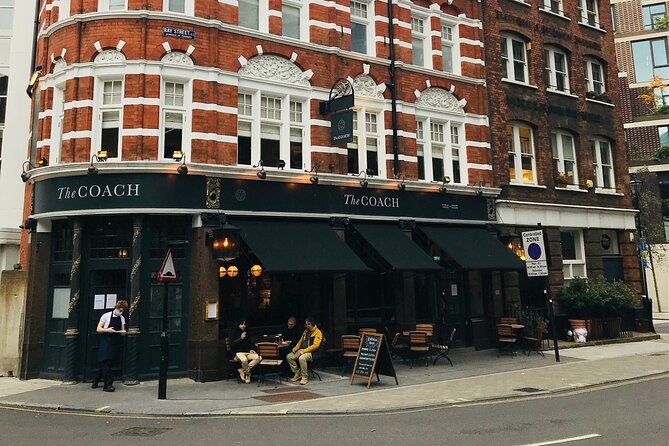
The Maughan Library occupies a Grade II* listed building designed by Sir James Pennethorne and constructed in 1851. Extensions were added between 1868 and 1900, and a later £35 million renovation made it the largest new university library in the United Kingdom since the Second World War.
This building brings you forward from Dickens’s Victorian world into a later chapter of London’s institutional architecture. It is a useful contrast to the pubs, narrow streets, and older houses earlier in the route.
You should expect an exterior puzzle stop rather than a guaranteed library visit. The tour information does not include admission or opening access. Still, the building’s scale and layered construction give you plenty to examine from outside, and the clue turns that examination into part of the game.
Dr Johnson’s House and London’s literary company
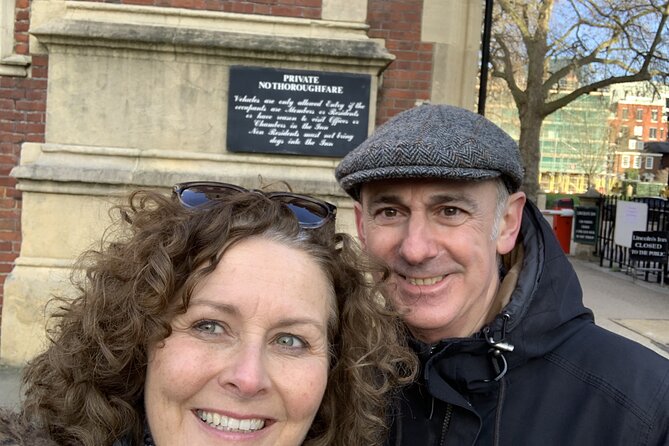
Dr Johnson’s House was probably first built for a City merchant. Samuel Johnson rented it from 1748 to 1759, making the house an important address in English literary history.
Dickens is not the only writer connected with this walk. By including Johnson’s former home, the route places Dickens in a longer line of London authors, editors, and word-makers. You are moving through a city where writers worked in rented rooms, taverns, publishing districts, and private homes.
This stop will appeal to readers who enjoy literary connections more than celebrity sightseeing. It also rewards close attention because the game asks you to find an answer at the place itself. The drawback is that the route’s brief format cannot offer the full story of Johnson’s life or work. You get a prompt and a location, not a museum lecture.
Ye Olde Cheshire Cheese after the Great Fire
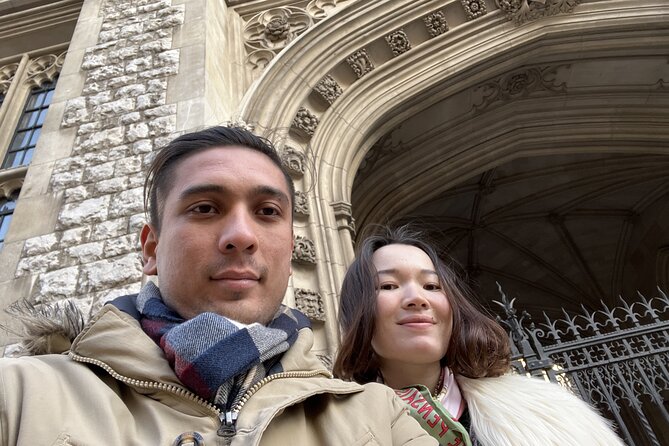
Ye Olde Cheshire Cheese was first built in the 1530s, but the original pub disappeared in the Great Fire of 1666. The present building dates from 1667, making it one of the early structures rebuilt after the disaster.
This is another stop where Dickensian London meets a much older city. The pub’s date, its survival story, and its connection to the rebuilt capital make it more than a convenient refreshment stop. It gives you a chance to picture how quickly London had to recover after the fire.
The tour does not include a meal or drink, so budget separately if you want to sit down. That is not a flaw at this price, but it is worth knowing before you set out. The route’s flexible design makes it easy to pause, yet your total time and spending can grow once you add food.
An Italian basilica with an unusual wartime story
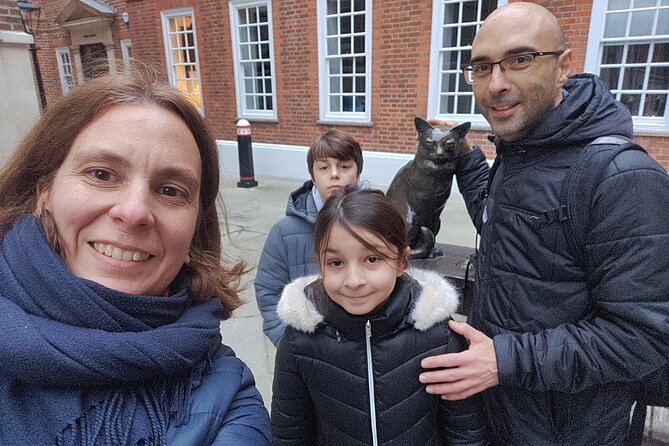
One stop is a church consecrated on April 16, 1863, as the Church of St Peter of all Nations. At the time, it was the only basilica-style church in the United Kingdom. Its organ was built in 1886 by the Belgian maker Anneesen.
The church also carries a difficult wartime story. During the Second World War, when Italian immigrants were interned, Irish Pallottines used the church. That detail gives the stop social and political weight beyond its architecture.
The supplied route details do not name the church, so you should rely on the game’s directions and clue rather than assume every stop will be obvious from the summary alone. As with the other religious buildings, respectful behavior is important, especially if services or prayer are taking place.
The Royal College of Surgeons and changing professions
The Royal College of Surgeons traces its earliest origins to the 1540s, when the Company of Barbers and the Fellowship of Surgeons joined to form the Company of Barber-Surgeons. In the eighteenth century, medicine became more academic and surgeons sought greater recognition for their expertise.
This stop shifts the route from literature to professional life. It shows how London’s institutions developed as trades became organized fields of study and public authority. That context fits Dickens’s world, a city marked by sharp class divisions, new professions, and rapid institutional change.
Again, you should expect to examine the setting and solve a challenge rather than receive a detailed lecture. If you want to visit an interior collection or museum, check separately because entry is not listed as included.
St Dunstan-in-the-West and a Romanian Orthodox chapel
The final stop is St Dunstan-in-the-West, which shares its building with the Romanian Orthodox community’s St George church. A chapel to the left of the main altar is closed by an iconostasis formerly from Antim Monastery in Bucharest and dedicated in 1966.
This is an especially distinctive ending because it brings together English church history and Romanian Orthodox worship. The building is not presented as a simple Dickens location. Instead, it adds another layer to the city’s changing communities and religious life.
The route finishes at 145 Fleet Street, a fitting address for a walk centered on writing, publishing, and London’s literary identity. The end point also gives you a practical choice: stop there, continue through the City, or use nearby transport to reach your next destination.
How the puzzle format changes the walk
At each stop, you look around for an answer before the game sends you to the next location. This creates a simple reward system: observe, solve, move on. The clues are described as neither too easy nor too difficult, which is the right balance for a casual city outing.
The strongest advantage is control. You can start at any hour, take a break whenever you want, and resume later. The experience is available every day, around the clock, and it can be played offline, so you are not forced to keep a live connection while walking.
The lack of a physical guide has two sides. You avoid a fixed group, a set pace, and the need to gather around someone speaking on a busy street. You also lose spontaneous stories, local suggestions, and help when a clue is unclear.
The game is private, so only your group participates. That makes it a good choice if you want a quiet activity with family or friends. It also removes the social side of a shared walking tour, which some people value.
Is $8.33 good value?
At $8.33 per person, this is a low-cost way to put structure around an hour in central London. You are paying for a self-guided game, not for museum admissions, drinks, transport, or a professional guide.
I see the best value in the route design. It links eleven locations that cover Dickens, Samuel Johnson, old pubs, vanished theater, churches, legal and medical institutions, and several centuries of London development. A standard sightseeing walk might cover similar ground, but this format costs far less and lets you choose the pace.
The price is less attractive if you want expert commentary. You will need to supply your own curiosity, read the clues carefully, and accept that the game may not answer every question that arises. For a first-time London introduction, I would pair it with a separate museum visit or guided walk if Dickens is your main interest.
Who should choose this Dickens walk?
I would recommend it for couples, families, friends, and independent visitors who enjoy solving clues and looking closely at buildings. It is also useful for a short free period because you do not need to reserve a fixed departure time.
The route suits people who prefer a private activity and want to avoid crowds. Service animals are allowed, and most people can participate, according to the available details. Specific information about step-free access, restroom stops, and pavement conditions is not provided, so you should check those points if they matter to you.
You should choose something else if you want a person beside you explaining every stop. This game will not replace a passionate Dickens specialist. It is best understood as a low-cost puzzle trail with literary and historical content.
Practical planning before you set out
Bring a charged phone and make sure you understand how to access the game before reaching Doughty Street. The experience is designed to play offline, which is helpful, but you still want the content ready before you begin.
Wear shoes suitable for a central London walk, and leave room for pauses. The official duration is about one hour, but the flexible design and possible pub stops make a longer outing easy.
The route is offered in English. Group discounts may be available, which can improve the price for a larger party. Confirmation arrives when you book, and the activity is available from midnight to 11:59 p.m. every day during the stated operating period.
Cancellation is free if you cancel at least 24 hours before the start time. Within 24 hours, you cannot receive a refund or make changes, so do not book a fixed time until your plans are firm.
Should you book the London Dickens puzzle?
Book it if you want a cheap, private, flexible walk that turns London sightseeing into a small game. The route has enough variety to keep an hour interesting, and the stops offer real connections to Dickens, older London, religious communities, and the city’s professional institutions.
Skip it if your priority is a live guide, a long Dickens lecture, or guaranteed indoor access to museums and churches. For everyone else, $8.33 buys a useful bit of structure, a handful of good addresses, and the freedom to stop for a pint when the clues lead you near one.
FAQ
How much does the London Charles Dickens puzzle tour cost?
The listed price is $8.33 per person. Group discounts are available.
How long does the experience take?
The advertised duration is approximately one hour. You may take breaks and resume later, so the full outing can last longer.
Where does the tour start?
It starts at 47 Doughty Street, London WC1N 2LW, United Kingdom, beside the Charles Dickens Museum at 48 Doughty Street.
Where does the tour end?
The route ends at 145 Fleet Street, London EC4A 2BU.
Is a physical tour guide included?
No. This is a self-guided experience played through a mobile device.
Do I need an internet connection during the game?
No. The city game can be played offline.
Is the activity private?
Yes. Only your group participates.
What is the cancellation policy?
You receive a full refund if you cancel at least 24 hours before the experience start time. Cancellations or changes made within 24 hours are not accepted for a refund.
Just added around London
- Private The Beatles Taxi Tour in London★ 5.0 · 12 reviews
- Dinner and Jazz Cruise on the River Thames★ 4.0 · 140 reviews
- Airport Coach Service from Heathrow to Oxford★ 3.5 · 67 reviews
- The Alfred Hitchcock London Walk with Sandra Shevey★ 5.0 · 15 reviews
- Thames Beachcombing★ 4.5 · 100 reviews
- Tower of London & 30+ London Sights Walking Tour★ 4.5 · 33 reviews
- Ted Lasso London Taxi Tour★ 5.0 · 5 reviews
- Ted Lasso Tour of Richmond with Private Guide★ 5.0 · 25 reviews
Self-Guided Tours, compared.
Westminster Abbey Entrance Ticket Including Audio Guide
Read our review →
Golden Tours York Hop-on Hop-off Open Top Bus Tour with Audio Guide
Read our review →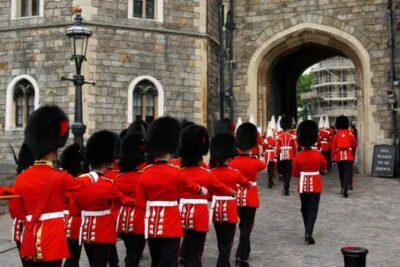
Windsor Castle Tour from London with Transportation & Audio Guide
Read our review →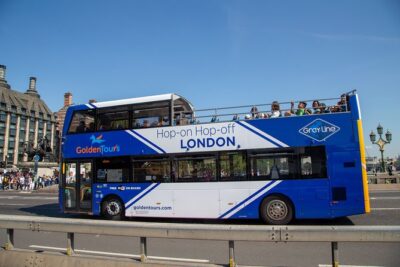
London Panoramic Open Top Bus Tour with Audio Guide
Read our review →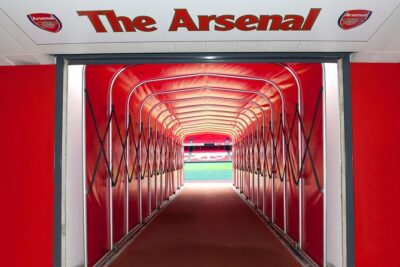
Emirates Stadium and Arsenal Museum Entrance Ticket Including Audio Guide
Read our review →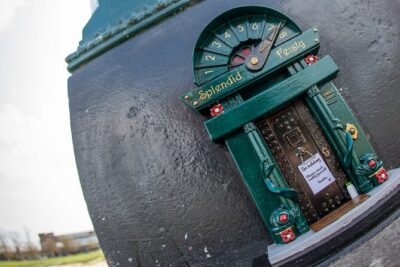
Private Self-Guided Dinky Door Hunt in Cambridge
Read our review →