

Reviewed · TREASURE HUNTS AND CITY GAMES
London’s Hidden Gems and Secret History Private Guided Tour
London’s past is hiding in plain sight here. In a single walk, you can slip from the Inns of Court to a medieval crypt, a candlelit pub, a Roman road, and the site of the Great Fire. This is London away from the big postcard stops, where a narrow alley or old cellar often tells the better story.
I especially like the private format, which lets Richard adjust the pace and spend more time on your interests. I also like the mix of serious history and odd details, from Dickens’s favorite chop house to Polly the parrot at Ye Olde Cheshire Cheese. The main drawback is simple: this is a walking tour, and three to four hours on London streets may be tiring if you have mobility limits.
Key points to know before booking
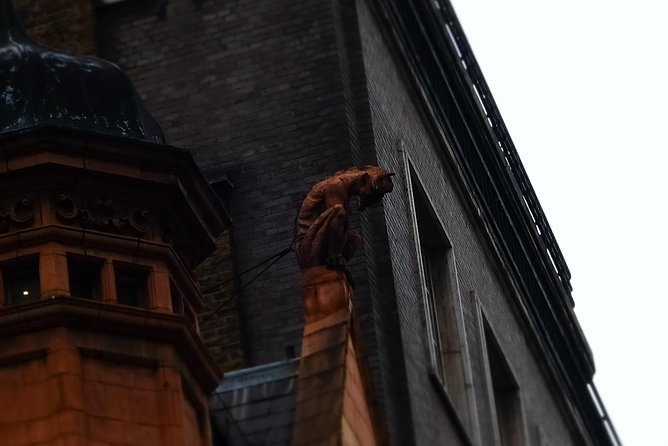
- Old London in small places: Explore legal courtyards, church crypts, Roman pavement, narrow alleys, and ancient taverns that are easy to miss alone.
- Richard’s flexible guiding: He can move quickly through subjects that do not interest you and spend longer on Dickens, literature, architecture, or London’s darker stories.
- A strong Dickens thread: See places linked with A Christmas Carol, The Pickwick Papers, and Dickens’s London life.
- A serious amount of walking: The route covers Temple, Fleet Street, Smithfield, Guildhall, the Bank area, Leadenhall Market, and the Monument.
- Useful private-tour extras: Hotel pickup and drop-off are included, while food, drinks, and the optional climb of the Monument cost extra.
- Small-group value: The listed price is $267.48 per group up to one person, so check the final group pricing carefully if you are booking for more than one participant.
Why this tour feels different from a standard London walk
Many London tours connect famous landmarks with busy roads. This one is built around the spaces between them. You pass through old courts, alleys, church grounds, taverns, and market corners where the city’s past is still easy to picture.
The route also has a useful sense of time. Roman Londinium, medieval London, the Great Fire of 1666, Victorian literature, wartime damage, and the modern financial district all appear in one morning. You are not simply looking at old buildings. You are learning why the street plan looks the way it does and how one period left traces for the next.
Richard is the guide named in the tour details, and his style suits visitors who want more than a quick fact at each stop. The strongest praise centers on his command of London’s buildings, characters, courts, and literary connections. He also tailors the walk, giving short explanations where your interest is limited and longer stories where it is strong.
That flexibility matters on a private tour. A group fascinated by Dickens can linger over the places connected with A Christmas Carol. A group more interested in Roman London, law, architecture, or gruesome public executions can steer the conversation in another direction.
More Treasure Hunts and City Games in London
- London Soho Food Tour with 7+ Tastings of Delicious Hidden Gems
★ 5.0 · 366 reviews - Private London Tour with a Local: Custom Highlights & Hidden Gems
★ 5.0 · 119 reviews - Highlights & Hidden Gems With Locals: Best of London Private Tour
★ 5.0 · 93 reviews
Temple and the Inns of Court
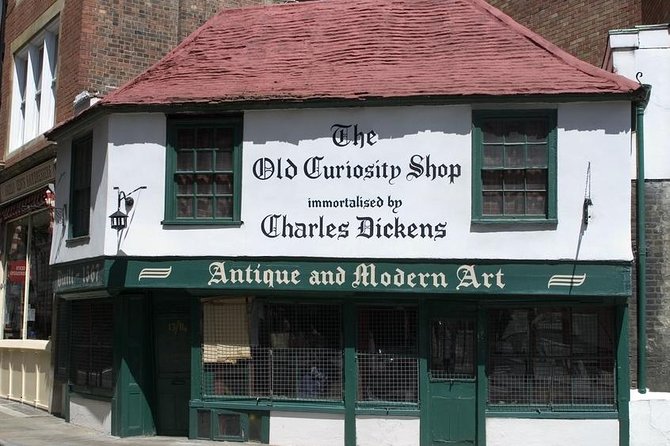
The walk is described as beginning at Temple Station, while the listed meeting point is Embankment Station. Confirm the exact starting place with Richards Tours before the morning of your tour.
From this part of London, the route heads toward the Inns of Court and the Honourable Society of the Middle Temple. These legal institutions form a quiet world inside central London. Their courtyards and passageways feel removed from the traffic, even though the main streets are close by.
The first section lasts about 45 minutes, making it one of the most substantial stops. You can expect stories about the place where Shakespeare first performed Twelfth Night, a fountain linked with Charles Dickens, and the English headquarters of the Knights Templar.
There is also a tea stop with a long history. The shop has sold tea for more than 300 years. Food and drinks are not included, so treat this as a chance to buy something rather than part of the tour price.
I like this opening because it establishes the tour’s basic rule: look closely, and London keeps changing. A court may be a legal workplace today, but it can also carry Shakespearean, religious, literary, and commercial stories at once.
St Bride’s Church and its underground remains
The route then avoids the main road and uses old passages such as Hanging Sword Alley. That change of pace is important. You are not covering ground as quickly as possible. You are following the older routes that survived beside the modern city.
St Bride’s Church is often called the Cathedral of the Press because of its long link with Fleet Street newspapers. Sir Christopher Wren remodeled the church after the Great Fire, and a bomb in the Second World War destroyed its roof.
The wartime damage led archaeologists to examine the crypts more closely. The result is one of the tour’s most unusual stops: a hidden medieval chapel, burned remains from the Great Fire, and Roman pavement in the crypt museum. Admission is included.
Allow about 20 minutes here. That is enough for a focused explanation, though anyone especially interested in archaeology or church architecture may wish the stop were longer. The church also has another claim to fame, which Richard explains during the visit.
This is a good example of the tour’s value. A church can look like one more historic building from the street. Below ground, it becomes a record of several Londons layered together.
Ye Olde Cheshire Cheese and Dickens’s favorite corner
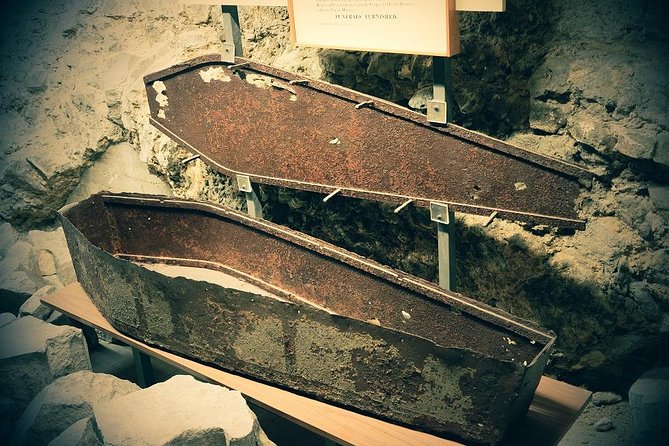
Next comes Ye Olde Cheshire Cheese, one of London’s best-known old pubs. Its cellars date to the 13th century, while the upper rooms were rebuilt in 1667. The interior has wooden paneling and a candlelit feel, and the layout has changed little since the rebuilding.
The stop lasts about 20 minutes and admission is free. You are not promised a meal or a drink, so plan on listening rather than assuming there will be time for a pub lunch. The tour does not include food or drinks.
Richard connects the pub with Charles Dickens, who warmed his feet by the fireplace, and with stories about Polly the parrot, the Hellfire Club, and some rather naughty tiles found in the 1960s. These details give the pub personality without turning the stop into a simple list of dates.
I find this kind of place more rewarding when the guide explains how it was used, not just how old it is. The worn rooms, cellar, and fireplace help make Victorian London easier to picture.
Same country, a completely different day out:
- Stonehenge, Windsor Castle, and Bath from London
★ 4.5 · 18,662 reviews - London Big Bus Hop-On Hop-Off Tour with Optional River Cruise
★ 3.5 · 10,803 reviews - London Small Group Tour of Historical Pubs
★ 5.0 · 10,422 reviews - Stonehenge, Windsor Castle and Bath with Pub Lunch in Lacock
★ 4.5 · 7,402 reviews
Smithfield Market’s darker stories

Smithfield Market is still used for its original purpose, selling meat, and it brings a sharper tone to the morning. The surrounding area is tied to the final spread of the Great Fire, executions ordered during the reign of Bloody Mary, and the execution of William Wallace, known as Braveheart.
This section also reaches into fiction. You hear about Fagin’s gang and the nearby meeting of Sherlock Holmes and Dr. Watson at St Bartholomew’s Hospital. Two surviving buildings that escaped the Great Fire are also pointed out.
The stop takes about 20 minutes and is free. It is a strong part of the walk if you like London’s less polished stories. It may be less appealing if you prefer a gentle architecture tour, since the material includes public punishment and execution.
That contrast is useful. London’s past was not only palaces, markets, and literary cafes. It was also a working city with violence, disease, trade, and public spectacle.
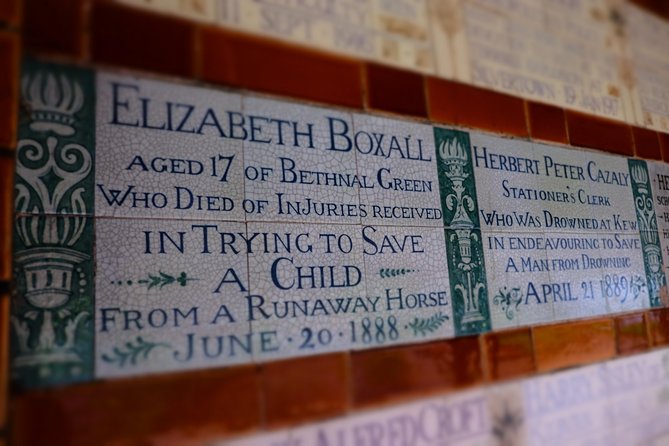
Postman’s Park and the memorial to ordinary courage
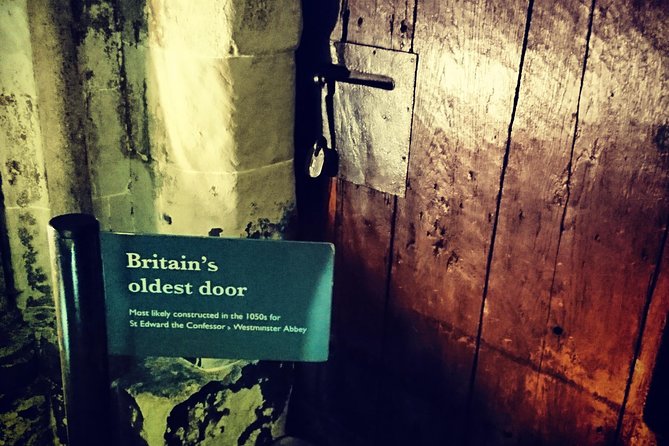
Postman’s Park is a smaller, quieter pause beside the former General Post Office. Postal workers used it for lunch, which explains its name, but the site originally served as the burial ground for St Botolph’s Church.
Richard brings you here for a memorial to London’s unsung heroes. The tour allows about 10 minutes, including time to sit on a bench while he explains the story behind it.
This is one of the stops that gives the walk emotional balance. After the grim material at Smithfield, the park turns attention toward people remembered for acts of courage rather than rank or fame.
Do not expect a large attraction or a long visit. Its value is in the story and the pause. A short stop in a modest park can be more affecting than another grand facade.
Guildhall and the Roman amphitheater
Guildhall gathers several layers of London in one place. The Romans had an amphitheater here. The Saxons built a hall where taxes were paid, and the medieval period brought the first recorded use of the name Guildhall.
The present building dates to about 1411, while the crypts are thought to reach back to the 13th century. Today, Guildhall serves as the traditional town hall of the City of London, although daily administration now takes place in newer buildings immediately to the north.
The stop lasts around 10 minutes and is free. Richard also discusses famous people who were put on trial here.
This is a concise stop, so the benefit comes from the explanation. Without context, Guildhall can seem like one historic building among many. With the Roman, Saxon, medieval, and civic story connected, it becomes a useful guide to the whole City.
The Bank of England, Royal Exchange, and Cornhill Devils
The walk then reaches the ancient heart of the financial district, often called the Square Mile. The Bank of England and Royal Exchange anchor this part of the route, while the Cornhill Devils add a stranger note.
Richard explains why the Bank of England is known as the Old Lady of Threadneedle Street. At the Royal Exchange, he connects the area with the ghostly scenes in Dickens’s A Christmas Carol, including the Ghost of Christmas Yet to Come and Scrooge’s colleagues discussing his funeral.
The stop is brief, about 10 minutes, so you will not get a full financial history of the City. Instead, you get a compact explanation of how commerce, folklore, and literature meet in this district.
For me, this section works best when you pay attention to the surrounding lanes and courts. The modern financial center is not separate from old London. It grew directly out of it.
George and Vulture, then Leadenhall Market
George and Vulture was one of Dickens’s favorite chop houses and appears more than 20 times in The Pickwick Papers. Its interior is described as nearly unchanged from Dickens’s time, and Richard explains the food Dickens favored and the nearby courts and alleys.
The stop lasts roughly 10 minutes and is free. It is another quick look rather than a dining visit, so do not count on a meal being part of the experience.
Leadenhall Market follows for about 15 minutes. It sits on the site of a Roman crossroads and is one of London’s prettiest old markets. Its ornate setting has appeared in films and novels, including the Harry Potter films. It also connects with A Christmas Carol, where Scrooge sends a boy to buy the biggest turkey on Christmas morning.
These two stops make a strong pair. George and Vulture gives you a cramped, literary interior. Leadenhall opens into a grander public market. Together, they show how London’s commercial spaces could serve both daily life and storytelling.
Ending at the Monument to the Great Fire
The tour ends near Monument Underground Station, after about 15 minutes focused on the Great Fire of London. The fire began nearby in 1666 and destroyed about 80 percent of the old City.
Richard points out areas that survived, helping you understand that the modern City is not simply a replacement for what burned. Some older streets and buildings remain because the fire did not reach every corner.
The Monument itself is not included as an admission attraction, but you can climb its 311 steps afterward if you still have energy. That optional climb provides views over London, though it adds effort after a morning of walking.
The listed end point is Monument Station on King William Street. Since the route involves many stops and some narrow passages, comfortable shoes are sensible. A past participant also noted that comfort stops could be made along the way, which is useful on a private walk.
Price, timing, and practical value
The advertised cost is $267.48 per group up to one person. That is a high price for a walking tour if you are comparing it with a large group outing. The calculation changes if you value a private guide, flexible pacing, hotel pickup and drop-off, and the chance to ask detailed questions throughout.
The tour lasts about three to four hours and starts at 10:00 a.m. The exact balance between walking and explanation can change with your interests. Because only your group participates, you can request more Dickens, more Roman London, more legal history, or more of the City’s darker stories.
Hotel pickup and drop-off are included, but the listed meeting information also gives Embankment Station as the start, while the itinerary refers to Temple Station. Confirm this point before booking. Food, drinks, and the Monument climb are not included.
The tour is offered in English and uses a mobile ticket. It is near public transportation, service animals are allowed, and most people can take part. Moderate walking is required, so tell the operator about mobility issues in advance.
Free cancellation is available if you cancel at least 24 hours before the start time. A cancellation inside that period is not refunded, and late changes are not accepted.
Who should book this London walk?
I would choose this tour if you have already seen the main sights and want the City explained through small places and strong stories. It is especially well suited to people who enjoy Dickens, Conan Doyle, Roman archaeology, old pubs, churches, law, and London’s more unsettling episodes.
It is also a good choice for a repeat visitor. One participant who had been to London more than 100 times found that about 90 percent of the places shown were new. That is a meaningful sign of how far the route moves from standard sightseeing.
You may want something else if you dislike walking, want admission to major attractions, or prefer a broad overview with grand landmarks. This is not a hop-on, hop-off substitute. Its pleasure comes from close attention, conversation, and places that are easy to pass without noticing.
Should you book it?
Book it if you want London told through courtyards, crypts, alleys, old pubs, literary scenes, and the scars of the Great Fire. Richard’s ability to tailor the material is the main reason to consider the private price.
Before paying, confirm the start point, the group pricing, and your walking comfort. If those details work for you, this is a smart choice for a repeat London visitor, a Dickens fan, or anyone who would rather find an old passage than queue at another famous landmark.
FAQ
How long does the tour last?
The tour lasts approximately three to four hours.
Where does the tour start?
The listed meeting point is Embankment Station, while the itinerary describes the walk as starting at Temple Station. Confirm the exact start point with Richards Tours before the tour.
Where does the tour end?
The tour ends at Monument Station on King William Street, near the Monument to the Great Fire of London.
Is hotel pickup and drop-off included?
Yes. Hotel pickup and drop-off from your London hotel are included.
Is the Monument climb included?
No. The walking tour ends near the Monument, and climbing its 311 steps is an optional activity with admission not included.
Can I cancel for a full refund?
Yes, if you cancel at least 24 hours before the experience start time. Cancellations or changes made less than 24 hours before the start are not accepted for a refund.
More Historical Tours in London
- Soho Music & Historic Pubs Tour
★ 5.0 · 1,993 reviews - Royal Historic Pubs Walking Guided Tour in London
★ 5.0 · 803 reviews - Private Group: Historical Pub Walking Tour of London
★ 5.0 · 660 reviews - Historic Pub Walking Tour of London
★ 5.0 · 484 reviews
Just added around London
- Private The Beatles Taxi Tour in London★ 5.0 · 12 reviews
- Dinner and Jazz Cruise on the River Thames★ 4.0 · 140 reviews
- Airport Coach Service from Heathrow to Oxford★ 3.5 · 67 reviews
- The Alfred Hitchcock London Walk with Sandra Shevey★ 5.0 · 15 reviews
- Tower of London & 30+ London Sights Walking Tour★ 4.5 · 33 reviews
- Thames Beachcombing★ 4.5 · 100 reviews
- Ted Lasso Tour of Richmond★ 5.0 · 152 reviews
- Ted Lasso London Taxi Tour★ 5.0 · 5 reviews
Treasure Hunts and City Games, compared.
Fun, Flexible Treasure Hunt Around Manchester with Cryptic Clues & Hidden Gems
Read our review →
Fun, Flexible Treasure Hunt Around York with Cryptic Clues & Hidden Gems
Read our review →
Fun, Flexible Treasure Hunt Around Bath with Cryptic Clues & Hidden Gems
Read our review →
Fun, Flexible Treasure Hunt Around Oxford with Cryptic Clues & Hidden Gems
Read our review →
Fun, Flexible Treasure Hunt Around Birmingham with Cryptic Clues & Hidden Gems
Read our review →
Fun, Flexible Treasure Hunt Around Chester with Cryptic Clues & Hidden Gems
Read our review →
Fun, Flexible Treasure Hunt Around Brighton with Cryptic Clues & Hidden Gems
Read our review →
Fun, Flexible Treasure Hunt Around Cambridge with Cryptic Clues & Hidden Gems
Read our review →Browse the lists this tour appears in