
Reviewed · MUSEUMS
Official National Gallery Highlights Guided Tour
The best thing about this National Gallery tour is its clear route through centuries of Western art. In about an hour, a Blue Badge Guide can take you from Gothic paintings and the Wilton Diptych to Botticelli, Leonardo, Rembrandt, Monet, Turner, and Van Gogh. That saves you from wandering through 700 years of art without knowing where to start.
I like the expert storytelling, especially when a guide such as Sarah Wood or Martin connects a painting to religion, politics, culture, and money. I also like the VOX headset, which matters in a crowded gallery. The main catch is time: one hour is enough for a sharp introduction, but many people want 75 or 90 minutes once the tour gets going.
Key points
- A fast route through major masterpieces: See important works from the 13th to the 19th centuries without planning your own path.
- Blue Badge guidance: Your guide is gallery-approved and accredited, with the training to place paintings in their wider setting.
- A useful art-history sequence: The route can move from Gothic art and the Renaissance through Dutch painting, Impressionism, and Van Gogh.
- VOX headset included: Hear the guide more clearly when other people fill the rooms.
- Morning and afternoon choices: You can fit the tour around other London plans.
- Groups can reach 25 people: A smaller group may feel more personal, while a full Saturday group can be harder to follow.
A one-hour route through 700 years of painting
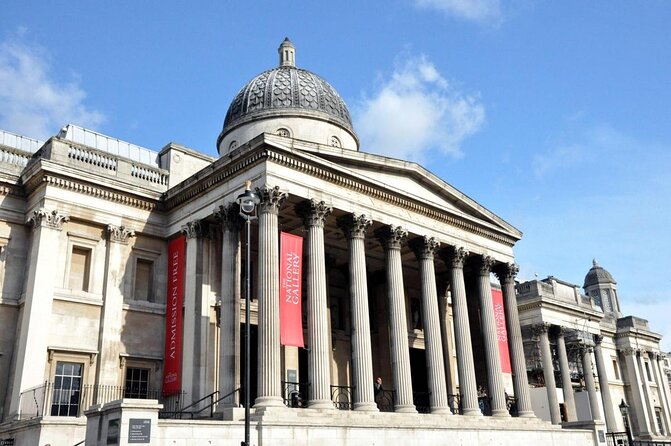
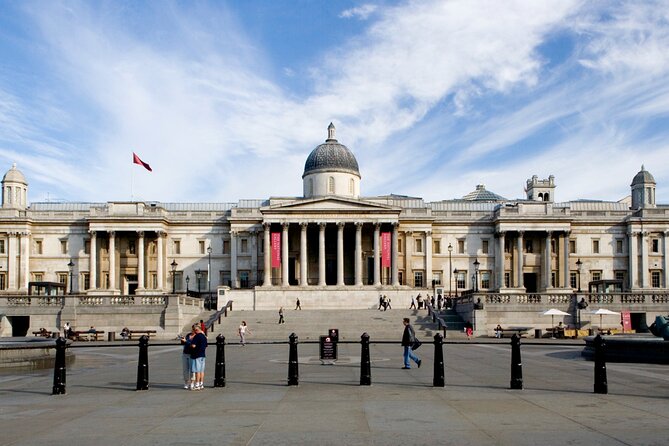
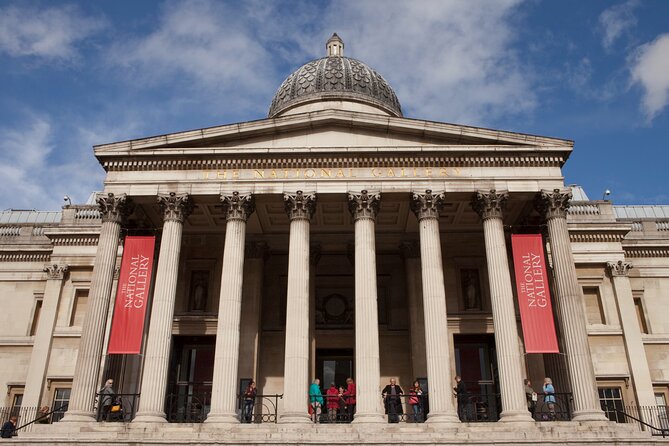
The National Gallery is a difficult place to tackle cold. Its collection covers more than 700 years, and the famous works are spread through a large Grade I listed building in the heart of London. You can spend an hour finding the entrance, checking a map, and still miss paintings you came to see.
This tour gives you a firm route and a human voice to follow. Rather than treating the gallery as a checklist of famous names, the guide links different periods together. You might begin with Gothic painting, move into the early, high, and late Renaissance, then cross into Dutch art, Impressionism, and the work of Van Gogh.
That sequence is useful because it shows change. You see how artists handled religious subjects, human figures, light, portraiture, and emotion at different points in European painting. Even if you already know the big names, the order helps the collection make sense.
The tour is listed at approximately one hour. In practice, some guides extend the visit to around 75 or 90 minutes when the group has questions or when the material needs more time. You should not count on that extra time, though. Plan your day around the advertised hour, and treat any extension as a bonus.
A few more London trips to weigh up
- Tower of London and Crown Jewels Exhibition Ticket
★ 4.5 · 6,677 reviews - Chelsea FC Stadium Tours and Museum
★ 5.0 · 1,908 reviews - Official tickets: Moco Modern & Contemporary Art Museum
★ 4.5 · 1,157 reviews
Starting with Gothic art and the Wilton Diptych
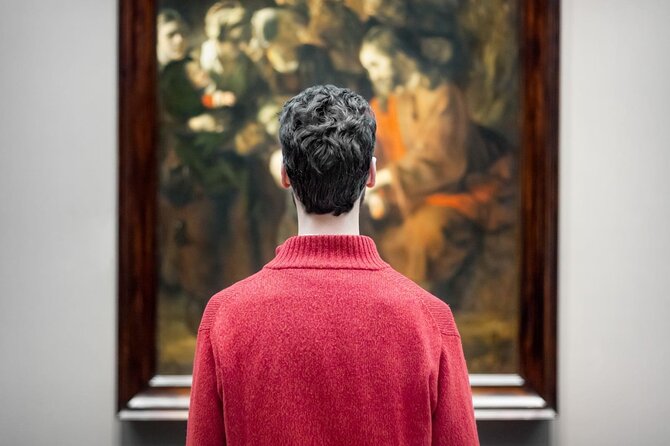
The early part of the tour may feel less familiar than the famous paintings later in the route. That is part of its value. Gothic works can seem strange at first, with their formal poses, symbolic details, and highly ordered scenes. A good guide gives you the visual clues needed to read them.
The Wilton Diptych is a particularly useful early stop. It offers a way to discuss devotional painting, royal identity, and the way pictures once served more than a purely decorative purpose. You are not simply looking at an old object. You are considering who commissioned it, how it was used, and what its symbols meant to its first audience.
This is where the guide’s wider knowledge makes a real difference. The strongest explanations do not stop at the artist or date. They connect the work to religion, politics, culture, and the finances behind art production. That approach helps you see why a painting looks the way it does.
If Gothic art is not your usual interest, this section may feel slower than Van Gogh or Monet. Give it a few minutes. It provides the foundation for the changes that follow.
Renaissance masterpieces by Botticelli, Raphael, Leonardo, and Rubens
The Renaissance section brings several familiar names into one compact route. Botticelli, Raphael, Leonardo, and Rubens each give the guide a chance to explain a different approach to composition, human expression, storytelling, and power.
Do not expect a full lecture on every artist. The tour has to keep moving, and the guide selects a limited number of works. That is the tradeoff. You get a useful frame for the paintings, but not the time to stand with each one for ten or fifteen minutes.
Leonardo is an obvious highlight, but the pleasure here comes from seeing how the works relate to one another. You may begin noticing how artists arrange figures, direct your eye, use gesture, and control the balance between background and subject. A guide can point out details that are easy to miss when you are surrounded by other visitors and trying to take photographs.
The route also shows why a highlights tour works well for a first visit. You can check off major works without spending your whole day inside the gallery, then return later to the rooms that caught your attention.
Dutch masters and Rembrandt’s self-portraits
The move into Dutch painting changes the mood. The subjects become more varied, and the guide can discuss portraiture, daily life, status, trade, and the growing market for art. This is a good point to listen for the financial and social background behind the pictures.
Rembrandt’s self-portraits provide one of the most memorable discussion points. The subject is not only what Rembrandt painted, but why he returned to his own face so often. A guide can turn those portraits into a story about artistic practice, public identity, age, and the changing way an artist presents himself.
This is also a good example of why a guided visit can be worth the price. You can look at a self-portrait and admire the brushwork on your own. A strong explanation gives you another question to carry into the next room. It makes the painting more than a famous face on a wall.
The tour’s limit is that you will not have long to compare every Dutch work in detail. If this is the period you care about most, use the tour as an introduction and save time afterward for independent viewing.
Same country, a completely different day out:
- Stonehenge, Windsor Castle, and Bath from London
★ 4.5 · 18,662 reviews - London Big Bus Hop-On Hop-Off Tour with Optional River Cruise
★ 3.5 · 10,803 reviews - London Small Group Tour of Historical Pubs
★ 5.0 · 10,422 reviews - Stonehenge, Windsor Castle and Bath with Pub Lunch in Lacock
★ 4.5 · 7,402 reviews
Monet, Constable, Turner, and the shift toward Impressionism
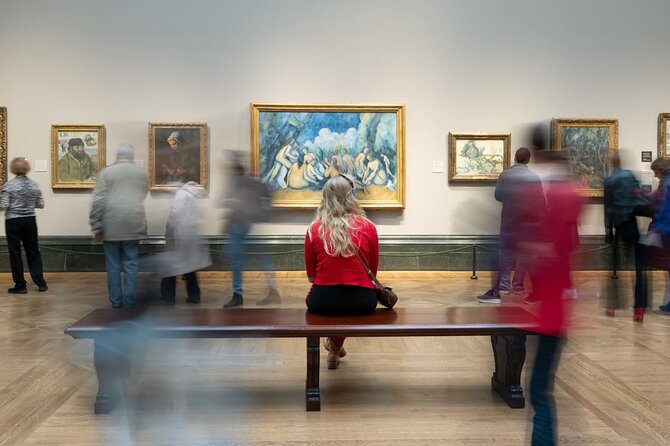
The later sections show painting becoming more concerned with light, atmosphere, movement, and the act of seeing. Monet offers a natural entry into Impressionism, while Constable and Turner help explain changes in British painting and the treatment of weather, color, and landscape.
The guide can make these links feel less abrupt. Instead of presenting Impressionism as a sudden break, the tour places it within a longer story of artists testing older rules. Turner, in particular, can help you see how loose brushwork and changing light were already pushing painting in new directions.
This part should appeal to people who do not normally think of themselves as art experts. The questions are direct: What do you notice first? How does light change the subject? Why does a painting feel immediate, even when it depicts a distant place or past event?
You may wish the tour paused longer here. Several people have found the one-hour format too brief, especially when the guide is engaging and the group has questions. That is not a flaw in the collection. It is simply the cost of trying to cover such a large range in one sitting.
Ending with Van Gogh and the emotional pull of the collection
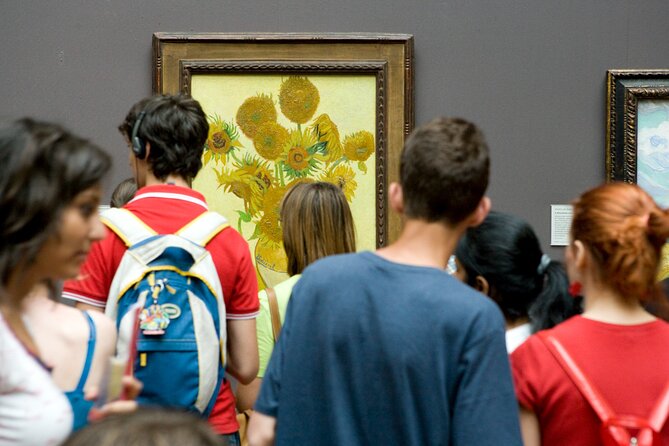
Van Gogh is a fitting final stop. After moving through centuries of changing technique and purpose, you arrive at paintings where brushwork and color can feel intensely personal. Seeing the work in person gives you a chance to study the paint surface and the force of the marks, not just the image reproduced in a guidebook.
A good guide will not reduce Van Gogh to a simple story about suffering. The stronger approach looks at the painting itself, including its color, movement, and emotional effect. The ending also gives the tour a memorable shape, moving from formal religious images to a modern artist whose brushwork can feel almost physical.
This final stop is one reason the tour suits first-time visitors. You see a broad sweep of art, but you also get a few moments that stay with you after leaving. The experience can send you back into the gallery with a better sense of what you want to explore next.
Why the VOX headset matters in a crowded gallery
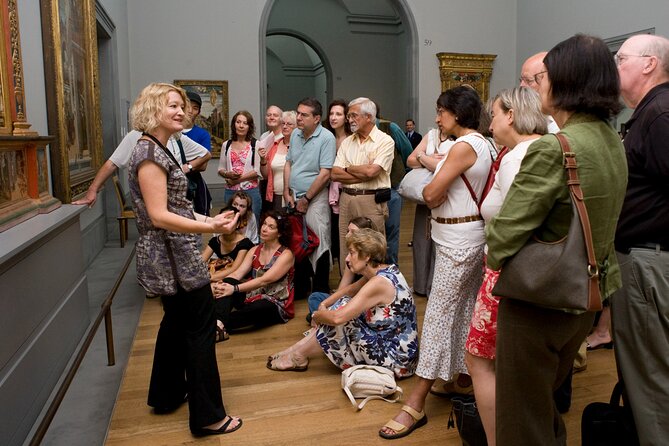
The included VOX headset is a small feature with practical value. A gallery is not a quiet classroom. Other groups, general visitors, and the size of the rooms can make it hard to hear a guide who is speaking to twenty-five people.
The headset lets you stay focused on the painting instead of standing shoulder to shoulder with the guide. Several guides speak clearly and loudly enough that the equipment may not feel essential, but it is still useful when the room gets noisy or the group spreads out.
The headset does not solve every crowd problem. If the group reaches the maximum of 25, you may still need to position yourself carefully. A full group can make it harder to get close to a painting, ask questions, or maintain eye contact with the guide.
For the best experience, arrive early and stay near the guide once the tour begins. The meeting instructions have caused confusion for some people, so check the exact meeting information before you enter. Gallery staff have helped people find a tour already in progress, but missing the first part is an avoidable nuisance.
Group size, guide quality, and the human factor
The tour can take up to 25 people, although some departures are much smaller. A group of four feels very different from a full Saturday afternoon group. With fewer people, you can usually ask more questions and stand closer to the guide. With a full group, the headset becomes more important and the pace may feel brisk.
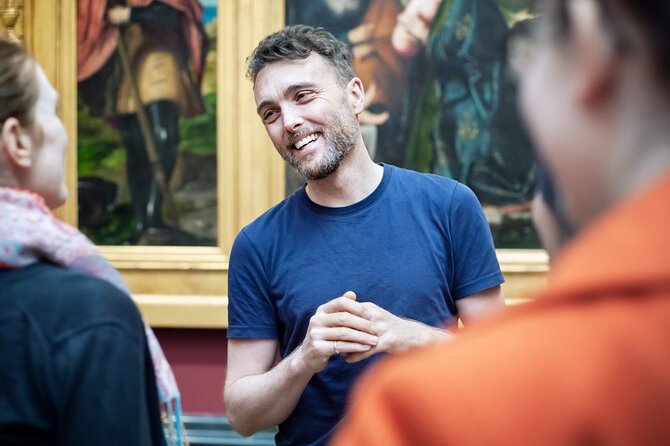
Guide quality is central to this experience. Names praised for their presentation include Sarah Wood, Martin, Mary, Alfie, and Tim. The strongest guides bring energy as well as facts. They explain technique, but they also tell you why the work mattered in its own time.
Sarah Wood, for example, is noted for linking paintings to culture, religion, and politics while taking questions patiently. Mary’s route moved from Gothic art through the Renaissance, Dutch masters, Monet, Constable, Turner, and Van Gogh. Alfie’s enthusiasm made the group wish for more time.
You should remember that the guide assigned to your departure may be different. The important point is the standard you should hope for: clear speech, a logical route, room for questions, and explanations that connect art to everyday forces such as belief, money, status, and politics.
Is $27.78 good value for an hour?
At $27.78 per person, this is not the cheapest way to enter a museum, especially since entry to the National Gallery itself is included. The price pays for the guide, the planned route, the headset, and the time saved.
I think the value is strongest if you are making a first visit, have limited time in London, or feel unsure about art. The gallery is free to enter, but a free visit does not give you a clear path through its major works. A paid guide can prevent an hour of aimless wandering and give you the tools to return on your own.
The value is weaker if you already know exactly which rooms and paintings you want to see. It is also less attractive if you prefer slow, solitary viewing. The tour does not include the semi-permanent exhibitions, and one hour cannot cover the whole collection.
Think of the experience as an orientation, not a complete museum visit. Afterward, you can stay and look around independently, but the guided portion itself is built for highlights.
Who should book this National Gallery tour?
I would choose this tour for a first-time visitor who wants structure without giving up a whole morning or afternoon. It also works well for couples, families, and art lovers who want a short refresher before exploring alone.
You do not need an art background. The route includes famous paintings, but the explanations are designed to give you context and visual clues, not test your knowledge. Most people can participate, and service animals are allowed.
I would hesitate if your main goal is one artist or one period. A broad highlights route may spend only a short time on the subjects you care about. In that case, a general orientation can still help, but you should not expect a specialist visit.
Morning and afternoon departures make it easier to fit the tour around London plans. The central location also means you can pair it with other activities nearby, although private transportation is not included.
Booking, cancellation, and practical details
Your booking confirmation is issued at the time of booking, and the tour is offered in English with a mobile ticket. The experience operates near public transportation, but private transportation is not part of the package.
Free cancellation is available up to 24 hours before the scheduled start time for a full refund. Changes or cancellations inside that 24-hour window are not accepted for a refund, and the cut-off uses London local time.
The experience requires a minimum number of people. If the provider cancels because that minimum is not reached, you are offered another date or experience, or a full refund.
Should you book it?
Book it if you want a focused introduction to the National Gallery and would value a guide who can connect Gothic art, the Renaissance, Dutch painting, Impressionism, British art, and Van Gogh in one clear hour.
Go in with realistic expectations. You will not see everything, and a full group can feel crowded. But at $27.78, the tour offers a practical shortcut into one of London’s great collections, with entry and a headset included. If you have more time, stay afterward and revisit the paintings that caught your eye.
FAQ
How long does the National Gallery highlights tour last?
The advertised duration is approximately one hour. Some departures may run to about 75 or 90 minutes, but you should plan for the stated one-hour format.
What does the tour include?
The price includes entry to the National Gallery, a Blue Badge Guide, and a VOX headset.
Is entry to the semi-permanent exhibitions included?
No. Entrance to the semi-permanent exhibitions is not included.
Which artists might I see?
The highlights can include artists such as Leonardo, Monet, and Van Gogh. The route may also cover Botticelli, Raphael, Rubens, Rembrandt, Constable, and Turner.
Is the tour offered in English?
Yes. The tour is offered in English.
How many people can join the tour?
The maximum group size is 25 people. Some departures may have fewer participants.
What is the cancellation policy?
You can cancel up to 24 hours before the start time for a full refund. Cancellations or changes made less than 24 hours before the experience are not refunded.
Just added around London
- Private The Beatles Taxi Tour in London★ 5.0 · 12 reviews
- Dinner and Jazz Cruise on the River Thames★ 4.0 · 140 reviews
- Airport Coach Service from Heathrow to Oxford★ 3.5 · 67 reviews
- The Alfred Hitchcock London Walk with Sandra Shevey★ 5.0 · 15 reviews
- Tower of London & 30+ London Sights Walking Tour★ 4.5 · 33 reviews
- Thames Beachcombing★ 4.5 · 100 reviews
- Ted Lasso London Taxi Tour★ 5.0 · 5 reviews
- Ted Lasso Tour of Richmond with Private Guide★ 5.0 · 25 reviews
Museums, compared.

Tower of London and Crown Jewels Exhibition Ticket
Read our review →
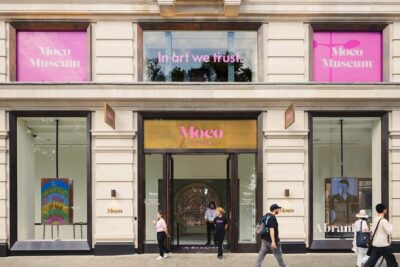
Official tickets: Moco Modern & Contemporary Art Museum
Read our review →
British Museum London Guided Tour Semi-Private 8ppl Max
Read our review →
The British Museum London – Exclusive Guided Museum Tour
Read our review →


Skip the Line: Liverpool Beatles Museum – The perfect tribute to the Beatles
Read our review →Browse the lists this tour appears in