
Reviewed · WORKSHOPS
Private DJ Class
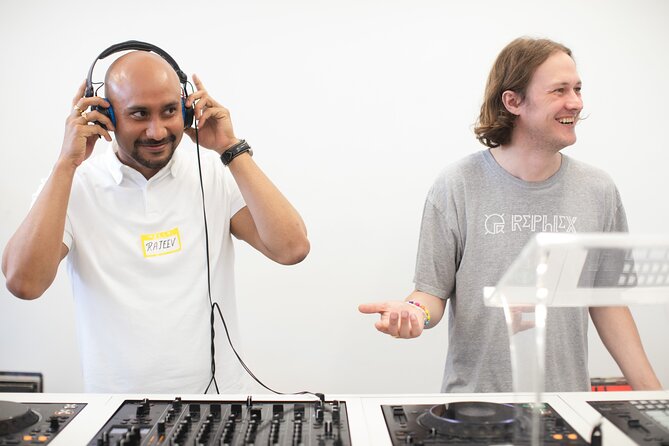
The best part of this London experience is that you get private time on professional Pioneer DJ decks, rather than standing behind a crowd or waiting for a turn. Over two hours, your trainer walks you through beatmatching, phrasing, harmonic mixing, EQ, and filters.
I like the one-to-one setup and the fact that you can make mistakes without anyone else listening. I also like the easy central meeting point on Bayham Street. The main consideration is price: at $137.13 per person, this is good value for focused instruction, but less so if you only want a quick look at DJ equipment.
Key Points
- Two hours of private instruction: Only your group takes part, so the lesson can stay focused on your needs.
- Pioneer DJ decks: You learn on industry-standard equipment rather than a basic home setup.
- Core mixing skills: Beatmatching, phrasing, harmonic mixing, EQ, and filters are all covered.
- A comfortable place to practice: You do not need to worry about other people hearing your early attempts.
- Simple London meeting point: Start and finish at 93a Bayham St, near public transportation.
- English-language lesson: Confirmation arrives at booking, and free cancellation is available up to 24 hours before the start time.
Two Hours Behind the Pioneer DJ Decks
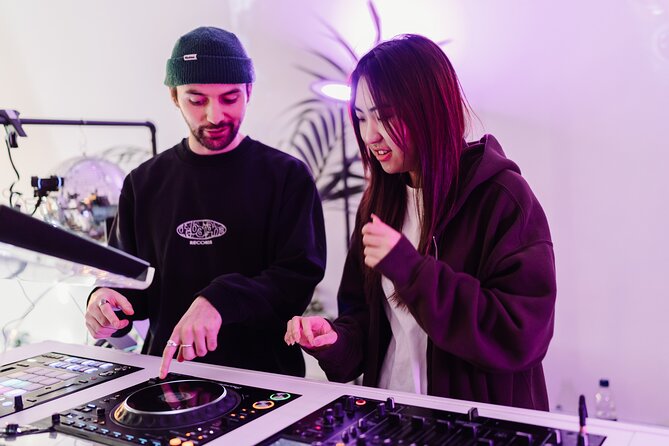
This is a practical lesson, not a nightclub visit or a quick demonstration. You spend roughly two hours learning how DJs join tracks together and control the sound as one song gives way to the next.
Your trainer introduces the main controls and helps you work through the basic process. The exact pace can depend on how quickly you pick things up, but the lesson covers beatmatching, phrasing, harmonic mixing, EQ, and filters.
That list may sound technical at first. In plain terms, you learn how to make two tracks fit in time, choose the right moment to bring in a new section, keep musical keys from clashing, and adjust the low, middle, and high parts of the sound.
I like this approach because it gives you a useful foundation instead of focusing only on pressing play and moving a crossfader. You leave with a clearer sense of what a DJ is listening for during a mix.
A few more London trips to weigh up
- London Traditional English Scone Making and Tea Workshop
★ 5.0 · 271 reviews - Street Art Tour and Spray Painting Workshop in London
★ 5.0 · 98 reviews - Street Art Walking Tour and Workshop in London
★ 5.0 · 58 reviews
Beatmatching: Making Two Tracks Move Together
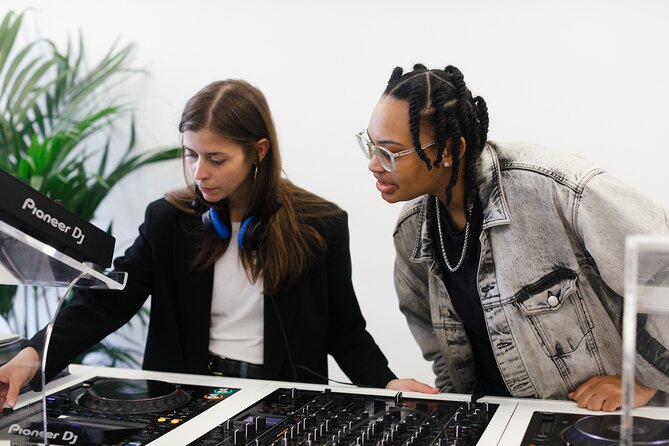
Beatmatching is the basic skill that keeps a mix from sounding messy. You adjust one track so its beats line up with another, allowing the songs to play together instead of drifting apart.
For a beginner, this is often the hardest part of DJing. Your ears must notice tiny timing differences, while your hands make small changes on the deck. With private instruction, you can ask for the process to be repeated and get help at the moment you need it.
The class uses Pioneer DJ decks, described as industry-standard equipment. That matters because the controls and workflow are closer to the tools used in serious DJ settings than the simplified controls found on some entry-level apps or home devices.
You should not expect to become a polished club DJ in two hours. You can expect to understand the task, try it with guidance, and gain a practical starting point.
Phrasing and Harmonic Mixing
Once the timing is under control, the lesson moves into musical structure. Phrasing means bringing a new track in at a sensible point, such as the start of a fresh musical section, rather than dropping it into the middle of a vocal or a build-up.
This is where the class becomes more than a technical equipment lesson. You start thinking about how tracks are built and why one transition feels natural while another feels abrupt.
Harmonic mixing adds another layer. Tracks can sound smoother when their musical keys work together, while poorly matched keys may create an unpleasant clash. You learn the idea behind choosing compatible tracks, though the amount of practice you get will depend on your pace and the trainer’s teaching plan.
I value these topics because they help you listen differently. After the class, you may notice the timing and structure in a DJ set more clearly, even if you never plan to perform yourself.
EQ and Filters Give You Control
EQ lets you shape the sound by adjusting different frequency ranges. In practical use, that can help prevent two bass lines from fighting each other or make room for the incoming track.
Filters offer another way to change the character of a transition. They can remove or soften parts of the sound and help build movement between tracks.
These tools are easy to misuse. Turning knobs at random does not create a better mix, and too much effect can distract from the music. A private lesson gives you a chance to learn what the controls do before using them in front of anyone else.
That private setting is one of the strongest reasons to book this activity. You do not need to worry about strangers hearing a rough first attempt. You can concentrate on the equipment, listen closely, and ask questions without holding up a larger class.
Same country, a completely different day out:
- Stonehenge, Windsor Castle, and Bath from London
★ 4.5 · 18,662 reviews - London Big Bus Hop-On Hop-Off Tour with Optional River Cruise
★ 3.5 · 10,803 reviews - London Small Group Tour of Historical Pubs
★ 5.0 · 10,422 reviews - Stonehenge, Windsor Castle and Bath with Pub Lunch in Lacock
★ 4.5 · 7,402 reviews
Why the Private Format Matters
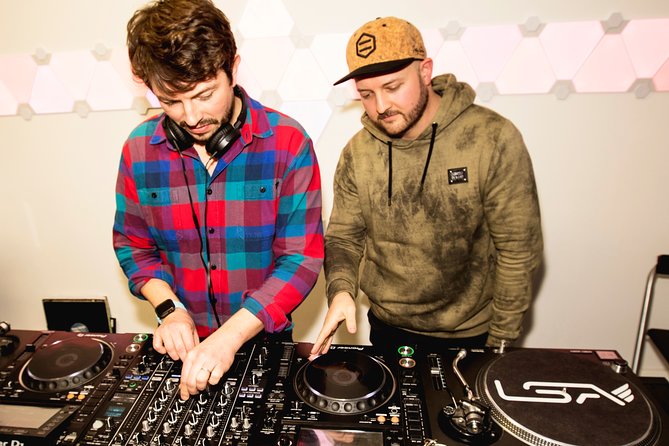
Only your group takes part. This is useful if you are new to DJing and want a calm place to learn, or if you already know a few basics and want to spend more time on a particular skill.
A shared class can be fun, but it can also mean waiting for a deck or trying to keep up with someone else’s pace. Here, the trainer’s attention is directed toward you and your group.
The setup also makes this a good activity for two people who want to learn together. You can take turns and compare what you hear, although the supplied details do not specify the maximum group size or how deck time is divided.
The lesson is described as private rather than as a performance. That distinction matters. You are paying for instruction and practice, not a finished recording, a club booking, or a night out.
Getting to 93a Bayham Street
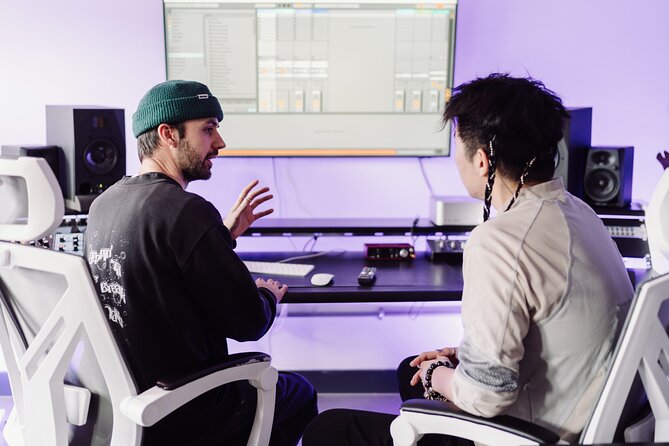
The class starts at 93a Bayham St, London NW1 0AG, and ends at the same meeting point. The location is near public transportation, so you can plan it as a compact activity within a day in London.
You should allow enough time to find the studio and arrive ready for the start. The supplied details do not give a recommended arrival time, nearby landmarks, or a detailed route, so check your confirmation for the final meeting instructions.
Because the activity returns to its starting point, you do not have to arrange a separate pickup or figure out where the lesson finishes. That is handy if you have another London plan afterward.
A mobile ticket keeps the booking simple. Confirmation is provided when you book, so you can keep the details on your phone rather than print anything.
What the Price Means in Practice
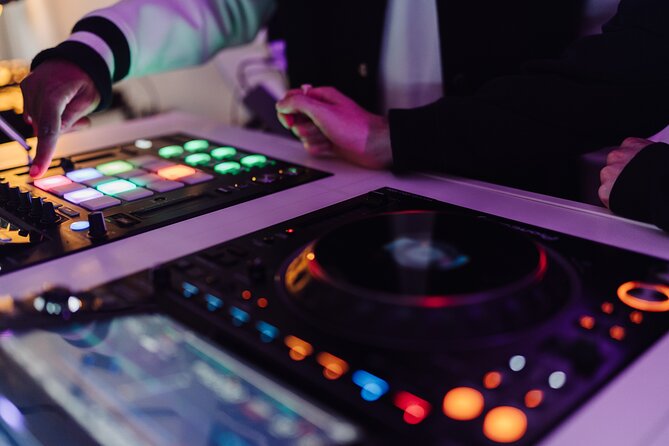
The price is $137.13 per person for about two hours. That puts the cost into the range of a paid practical lesson, not a casual entertainment stop.
The value depends on what you want. If you are genuinely curious about DJing, having focused access to professional equipment and a trainer can make the cost worthwhile. You are paying for private attention, a controlled place to practice, and a lesson that covers several important skills in a short period.
If you already own DJ equipment and regularly mix at home, the class may offer less value unless you want help with beatmatching, phrasing, or the more musical side of transitions. The supplied information does not promise a take-home recording, follow-up coaching, or a certificate, so do not book it expecting those extras.
For a London visitor, this is also a different kind of activity. You are not simply looking at a landmark. You are learning a modern creative skill in a working studio setting, which can make a useful change from sightseeing.
The activity is commonly booked about 15 days ahead. That is not a guarantee of availability, but it is a sensible reason to reserve early if your London dates are fixed.
Who Will Get the Most From This Class?
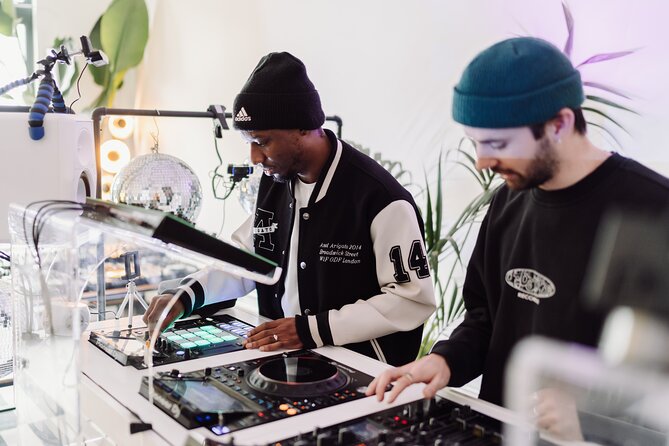
I would recommend it most strongly to beginners, curious music fans, and people who want a hands-on activity rather than a passive tour. You do not need to share the room with anyone outside your group, which can make the first attempt less intimidating.
It can also suit a parent and older child, friends, or a couple looking for a two-hour activity with a clear start and finish. The information says most people can participate, but it does not state a minimum age, so check before booking if a child will attend.
You should be comfortable taking instruction in English, since English is the offered language. You do not need to arrive as an expert, and the skills covered are the basic building blocks of mixing.
People who want a loud party atmosphere may find the lesson too instructional. Those who want to learn how the decks work will likely appreciate the focus.
The Teaching Experience and Comfort Level
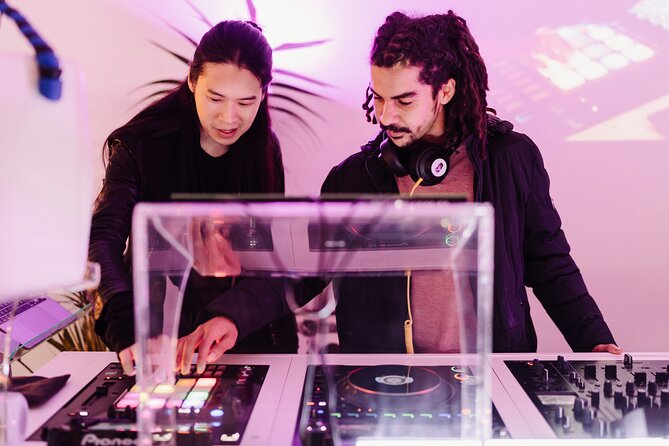
The trainer’s job here is not only to explain buttons. You need help hearing when a beat is slightly off, spotting the right moment to start a track, and understanding why a transition works.
A private lesson makes it easier to stop and ask for clarification. You can spend more time on a difficult point instead of moving on because the rest of a class is waiting.
The equipment can look complicated when you first see it. High-end software and a professional-style deck layout may feel like a lot to take in, but that is also part of the appeal. The class gives you a guided introduction rather than leaving you to work out every control alone.
The most useful attitude is to treat the session as practice, not a test. Your first blend may not sound perfect. That is exactly why a private studio lesson can be helpful.
Practical Details Before You Book
The tour is offered in English and accepts mobile tickets. Service animals are allowed, the meeting point is near public transportation, and the activity is described as suitable for most people.
Free cancellation is available if you cancel at least 24 hours before the local start time. If you cancel later, the amount paid is not refunded, and changes made within that 24-hour window are not accepted.
That policy is fairly clear, but it does mean you should confirm your London schedule before booking. The activity is private, so a late change affects a reserved lesson rather than a general departure with spare places.
The experience starts and ends at 93a Bayham St. No transport is included, and no hotel pickup is listed, so you make your own way to the studio.
A Good Two-Hour Break From London Sightseeing
London has plenty of museums, churches, markets, and historic streets. This class gives you a different way to spend two hours, with a clear task and a result you can feel as you improve.
I like the balance of technical and musical topics. Beatmatching teaches control, while phrasing and harmonic mixing help you understand why a transition sounds good. EQ and filters then show you how to shape that transition.
The class does not try to promise a complete career in DJing. Its strength is more modest and more useful: you get a guided introduction to the tools and habits that form the basis of mixing.
If your schedule is tight, the two-hour duration is easy to fit between other plans. Just remember that the experience is about learning, so you should arrive ready to concentrate rather than expecting a quick photo opportunity.
Should You Book the Private DJ Class?
Book it if you want hands-on instruction, a private room, and a chance to work on professional Pioneer DJ decks without an audience. The coverage of beatmatching, phrasing, harmonic mixing, EQ, and filters gives you a solid beginner’s outline.
I would skip it if you are looking only for nightlife, a DJ performance, or a short look at equipment. At $137.13 per person, the price makes sense when you value personal instruction and practice time.
For a music fan visiting London, this is a focused and unusual way to spend an afternoon. You will not leave as a finished DJ, but you can leave with a clearer ear, a better grasp of the controls, and a useful first lesson in how mixes are made.
FAQ
Where does the Private DJ Class start?
The class starts at 93a Bayham St, London NW1 0AG, UK.
Where does the activity finish?
The activity ends back at the meeting point on Bayham Street.
How long does the class last?
The class lasts approximately two hours.
How much does the class cost?
The listed price is $137.13 per person.
Is the DJ class private?
Yes. This is a private activity, and only your group takes part.
What equipment will I use?
You will learn on industry-standard Pioneer DJ decks.
What DJ skills are covered?
The lesson covers beatmatching, phrasing, harmonic mixing, EQing, and filters.
Is the class offered in English?
Yes. English is the offered language.
Can I cancel for a refund?
Yes. You can cancel at least 24 hours before the experience start time for a full refund. Cancellations made less than 24 hours before the start time are not refunded.
Just added around London
- Private The Beatles Taxi Tour in London★ 5.0 · 12 reviews
- Dinner and Jazz Cruise on the River Thames★ 4.0 · 140 reviews
- Airport Coach Service from Heathrow to Oxford★ 3.5 · 67 reviews
- The Alfred Hitchcock London Walk with Sandra Shevey★ 5.0 · 15 reviews
- Tower of London & 30+ London Sights Walking Tour★ 4.5 · 33 reviews
- Thames Beachcombing★ 4.5 · 100 reviews
- Ted Lasso Tour of Richmond with Private Guide★ 5.0 · 25 reviews
- Ted Lasso Tour of Richmond★ 5.0 · 152 reviews
Workshops, compared.


London Traditional English Scone Making and Tea Workshop
Read our review →



Chocolate Bar Making Workshop – York Cocoa Works
Read our review →

Browse the lists this tour appears in