Reviewed · WALKING TOURS
Shoreditch Self-Guided Walking Tour: Art, Cuisine & Culture
Shoreditch packs a remarkable amount into a short walk: Shakespeare’s first London theatre, Banksy-related street art, Victorian social housing, Brick Lane, Beigel Bake, and the old Truman Brewery all sit along this route. I like the freedom to pause, since you can stop for food, photos, or a pub without losing the guide. I also like the offline GPS map, which is useful in a city where phone signals can be patchy between buildings.
The main concern is the technology. Some users have had trouble getting the audio to start or continue, and parts of the route and images may no longer match Shoreditch as it looks today. At $6.94, it is a small gamble, but you should download the tour before setting out and bring a backup map.
Key points at a glance
- Shakespeare starts the story: Begin near the site of London’s original theatre and learn about the King’s Men.
- Street art takes center stage: See Shoreditch streets associated with Banksy and other artists.
- Food is built into the route: Brick Lane, Beigel Bake, Spitalfields Market, and local eating suggestions add a tasty side to the walk.
- You set the pace: The audio can be paused, rewound, and restarted when you need a break.
- The route links old and new Shoreditch: Victorian housing, modern buildings, graffiti, breweries, and markets appear within one compact walk.
- Technology matters: Offline maps are included, but past users have reported inconsistent audio and outdated visual directions.
Why this short Shoreditch walk works

Shoreditch is not a place you understand from one grand monument. It is a neighborhood of layers. A former brewery becomes a creative venue. A street of painted walls becomes an open-air gallery. A Victorian housing project reveals an early attempt to improve city life. A food market carries on the area’s long tradition of migration and trade.
This self-guided walk gives you a thread through those layers. It takes about 45 to 50 minutes if you move directly from stop to stop, though the whole point is that you do not have to. You can pause the narration, look closely at a mural, stop for a snack, or wander a little before returning to the route.
I find that flexibility especially useful in Shoreditch. The area rewards curiosity, but it can also feel confusing when several small streets seem to lead in the same direction. The GPS map is designed to keep you on course without requiring a live internet connection, provided you download the material first.
The audio is supplied by a local or historian, and the format aims to provide short explanations rather than a long lecture. That makes it a good fit if you want context while still keeping your eyes on the streets. It is less suitable if you want a live guide who can answer questions or adjust the route for you.
A few more London trips to weigh up
- Tour for Muggles The Ultimate Harry Potter Walking Tour in London
★ 5.0 · 4,684 reviews - London Jack The Ripper Guided Walking Tour
★ 5.0 · 3,131 reviews - Changing of the Guard Guided Walking Tour in London
★ 5.0 · 1,793 reviews
Starting with Shakespeare near Old Street
The walk begins at Old Street and first points you toward the site associated with London’s original theatre. This is a strong opening because Shoreditch’s cultural story did not begin with murals, coffee shops, or nightlife. It began with performance.
Here you learn about Shakespeare and the King’s Men, the company connected with his plays. The stop lasts about five minutes, so expect a compact introduction rather than a full theatre lecture. The value is in understanding that this part of London was already tied to popular entertainment centuries ago.
You will not enter a theatre, and there is no admission fee. The stop is an exterior orientation point, so the audio and your imagination do much of the work. Because the neighborhood has changed, do not expect every view to look exactly like an older image used in the guide.
From Old Street, the route moves into Shoreditch’s mix of pubs, side streets, businesses, and creative spaces. Starting near a major transport area also makes the walk fairly easy to fit into a day of London sightseeing.
A pub, a porter, and Shoreditch’s working past
The Old Blue Last is the second stop. This century-old pub provides a useful change of tone after the theatre story. Instead of focusing on actors and royal patrons, the narration turns to drinking culture and the tale linked with the creation of porter beer.
You spend roughly five minutes here, again from the outside unless you choose to enter on your own. Admission is free, and the pub can serve as a practical break point. The audio format lets you pause if you want to look at the building, check opening arrangements, or take a drink.
This stop helps show why Shoreditch works best as a walk rather than a list of isolated sights. The neighborhood’s story is found in ordinary buildings as much as in official landmarks. A pub can reveal how people gathered, worked, and socialized just as clearly as a museum can.
Keep your expectations sensible. The experience does not include a drink or a reserved table. It simply points out the place and explains its connection to the beer story.
Banksy, painted walls, and the problem with fixed images

The third stop brings you to the area known as Banksy’s Designated Graffiti Area. This is likely to be one of the most visually appealing parts of the route, especially if you enjoy photography or street art.
You wander along a street that became a meeting point for street artists and look for notable works. The audio gives the art a bit of context, while the GPS map guides you toward the relevant stretch. The stop is scheduled for about five minutes, but you may want longer if the walls are active and there is more to examine.
Street art creates one practical complication: it changes. Paint is covered, buildings are redeveloped, and a work that appears in an image may no longer be present. One of the clearest limitations of this experience is that some guide images and directions have become dated as Shoreditch has changed.
I would treat the art section as a chance to see what is there now, not as a promise that every pictured work survives. The guide is most useful as a framework. Your own eyes remain the final authority.
Same country, a completely different day out:
- Stonehenge, Windsor Castle, and Bath from London
★ 4.5 · 18,662 reviews - London Big Bus Hop-On Hop-Off Tour with Optional River Cruise
★ 3.5 · 10,803 reviews - London Small Group Tour of Historical Pubs
★ 5.0 · 10,422 reviews - Stonehenge, Windsor Castle and Bath with Pub Lunch in Lacock
★ 4.5 · 7,402 reviews
Arnold Circus and a Victorian social experiment

Arnold Circus adds a different kind of interest. Here the focus shifts from commercial nightlife and street art to an older residential community and an important Victorian social experiment.
The stop explores how a neighborhood was planned and what it meant to provide better living conditions during the Victorian period. The five-minute narration cannot cover every detail, but it gives you a reason to look beyond the colorful walls and notice the shape of the residential area itself.
This is one of the route’s better contrasts. Shoreditch can sometimes be presented only as a creative district, but Arnold Circus reminds you that people have lived, organized, and tried to improve daily life here for generations.
Take a moment to look around before moving on. The GPS route may tell you where to go next, but the most rewarding part of this stop is noticing the setting at your own speed. If the audio is working properly, you can pause it and discuss the social experiment with your companion.
Sclater Street, where old streets meet new buildings
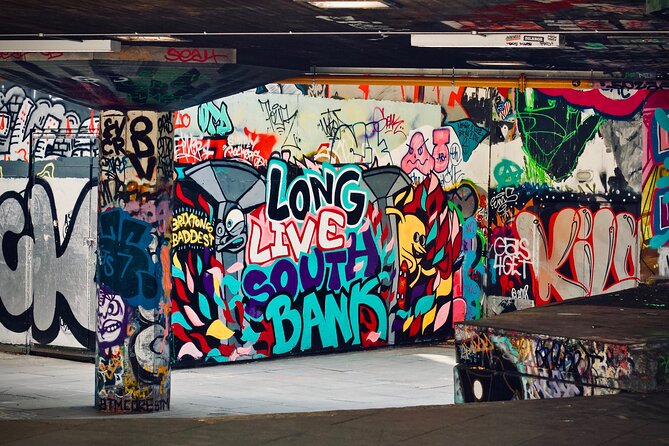
At Sclater Street, the route looks at the meeting point between contemporary architecture and urban graffiti. This is a useful stop for anyone interested in how Shoreditch has changed physically, not just culturally.
The area brings together newer construction and painted walls. That contrast is central to the neighborhood’s character, but it also points to the pressure of redevelopment. You get a quick explanation of how creative work and modern buildings now occupy the same streets.
The scheduled time is five minutes. You might find that enough for the audio, though photography can easily extend the visit. The route does not include a specialist architecture guide, so expect a broad introduction rather than technical discussion of individual buildings.
I like this stop because it asks you to read the street as a whole. Instead of hunting for one famous wall, you can look at how the buildings, signs, paint, and public spaces fit together.
Brick Lane’s many chapters
Brick Lane is the longest-feeling part of the walk, even though the formal stop is also listed at about five minutes. Its appeal comes from the number of stories packed into one street.
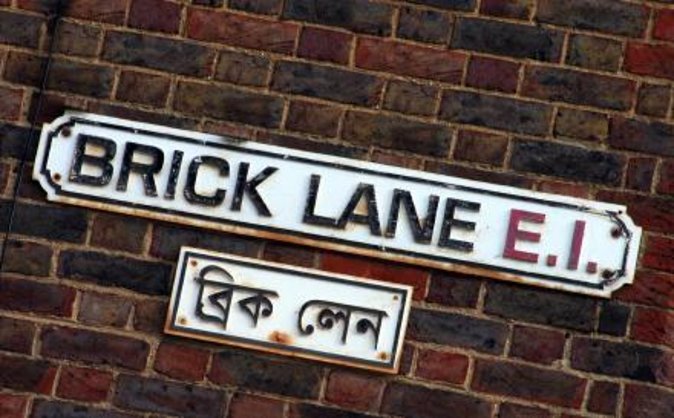
The narration explores the street’s layered past and its poetic symbolism. You can expect an explanation that connects the physical street with the communities and changes that shaped it. This is where the art, food, migration, commerce, and nightlife sides of Shoreditch begin to meet.
Brick Lane is also where you should allow extra time if you want to eat or browse. The route itself does not include meals, shopping, or reserved access. It simply places you in one of the area’s best-known corridors and suggests places to eat and drink along the way.
Do not rush this section just because the audio stop is short. The five-minute estimate refers to the guided content, not the time needed to appreciate the street. If you stop for food, pause the guide and continue when you are ready.
Beigel Bake and the edible part of the route
Beigel Bake provides the walk’s clearest food stop. A cultural walk that reaches Brick Lane without acknowledging its food would leave out a major part of the area, and this stop corrects that.
The tour points you toward the bakery and adds a culinary note to the route. The food itself is not included, so you pay separately if you decide to buy something. That keeps the base price low and gives you control over what, and when, you eat.
This is also a good example of why self-guided touring can be practical. You do not need to leave a group while someone orders food. You can pause the narration, take a break, and restart once you are ready.
The stop lasts around five minutes in the planned route, but a snack break may take longer. The tour’s suggestions for food and drink are useful, though you should remember that opening hours and queues can affect your timing.
The Truman Brewery’s change from industry to creativity
The Truman Brewery is the eighth stop and one of the route’s most important historical transitions. The narration looks at the site’s past as one of the world’s largest breweries and its creative role today.
This stop gives you a clear example of how Shoreditch has reused older industrial spaces. The brewery is not treated simply as an old building. It represents the move from large-scale production to a modern setting for creative activity, food, events, and independent businesses.
The five-minute audio segment gives you the basic story without taking over your afternoon. If you want to explore what is operating there on the day of your visit, you can do so separately, since no entry or special access is included.
I consider this stop particularly useful for first-time visitors because it connects several themes from the walk: industry, urban change, art, and the commercial life of the neighborhood. It also explains why Shoreditch feels both historic and newly made at the same time.
Fournier Street and community-led Shoreditch
Fournier Street brings the route back to architecture and community. The street illustrates Shoreditch’s culturally varied past and the role local communities have played in shaping the area.
The stop is short, but the setting gives the narration something solid to discuss. Look at the buildings and street pattern as you listen. This section works best when you treat the architecture as part of a social story, not simply as a backdrop for photographs.
The guide presents Shoreditch as a place formed by different groups over time. That wider view keeps the walk from becoming a simple hunt for famous names. You get a better sense of how streets can carry traces of many communities at once.
Again, older photographs may not match every present-day detail. Use the audio for context, then judge the current street for yourself.
Finishing at Spitalfields Market
The final stop is Spitalfields Market, at Stop K near 65 Brushfield Street. The route ends here after about ten stops, giving you a practical place to continue your day with food, shopping, or further exploration.
The market is presented as a center for London food, community, and culture. Since the tour ends in the market rather than returning you to Old Street, you finish in a place with plenty of options. That makes the route useful as a one-way introduction to Shoreditch.
The end point also gives the walk a sensible shape. You begin with London theatre and finish among food and commerce, passing through art, housing, industry, and community along the way.
You should plan your onward route before starting, particularly if you need to catch a train or meet someone elsewhere. The walk is designed to end at Spitalfields Market, not at the original meeting point.
What $6.94 buys you
At $6.94 per person, this is a low-cost way to add structure to a Shoreditch visit. You receive access to the self-guided audio tour, narration from a local or historian, offline listening, a GPS map, and suggested photo spots.
That price is good value if you want a short introduction and are comfortable managing the experience yourself. You are paying for direction and context, not a live guide, transport, food, entry tickets, or equipment.
The value improves if you use the walk as a starting point rather than a complete Shoreditch day. Follow the route, pause at Brick Lane or Beigel Bake, explore the Truman Brewery, and spend extra time where something catches your eye.
You need to provide your own mobile device and earphones. Downloading the tour before arrival is important. Although the app is intended to work offline, technical problems have affected some users, including audio that stopped after the first stop, directions that failed to load, and maps that did not clearly lead to the marked points.
Timing, group size, and practical preparation
The tour is available every day from midnight to 11:30 p.m. The listed duration is about 45 to 50 minutes, but your actual outing can be longer once you add food, photos, and pauses.
The maximum group size is listed as 10 people, but this is a self-guided experience rather than a scheduled walking group. You should think of the limit as a booking capacity detail, not as a promise of a guide-led group.
The route starts at Old Street and ends at Spitalfields Market. It is near public transportation, and most people can take part. Service animals are allowed.
Here is how I would prepare:
- Download the audio and map before leaving Wi-Fi.
- Fully charge your phone.
- Bring earphones, since they are not supplied.
- Keep a second map or phone navigation option available.
- Allow extra time for Brick Lane, Beigel Bake, and Spitalfields Market.
- Check the route visually if an image does not match the street.
Free cancellation is available if you cancel at least 24 hours before the start time. Inside that 24-hour window, the payment is not refunded, and changes are not accepted.
Who should choose this Shoreditch experience
I would choose this walk if you like setting your own rhythm and want a low-cost introduction to Shoreditch’s art, food, and past. It suits independent visitors, couples, and small groups who enjoy pausing to take photos or stopping for a snack without asking a guide to wait.
It also works for a short London visit because the route gathers several well-known areas into one connected outing. The audio keeps the walk from becoming a string of unexplained streets.
I would hesitate if you need guaranteed technical reliability, current images, or live answers from a guide. The route’s subject matter changes quickly, especially the street art, and the past problems with audio and directions are worth taking seriously.
The provider is Vidi Guides. No individual guide names are supplied, so you should expect recorded narration rather than a named guide meeting you at Old Street.
Should you book it?
Book this Shoreditch walk if the price, flexibility, and mix of subjects appeal to you. The strongest parts are the easy pace, the ability to pause and rewind, the offline map, and the way the route links Shakespeare, graffiti, Victorian housing, Brick Lane food, the Truman Brewery, Fournier Street, and Spitalfields Market.
Before booking, accept that the experience depends on your phone and the app. Download everything early, bring earphones, and keep a backup map handy. If the technology works, $6.94 buys a useful introduction to one of London’s most changeable neighborhoods. If you want a human guide or a perfectly current street-art record, spend more on a live walking tour instead.
FAQ
Where does the Shoreditch self-guided walking tour start?
The tour starts at Old Street, London.
Where does the walking tour finish?
The route ends at Spitalfields Market, at 65 Brushfield Street, London E1 6AA.
How long does the tour take?
The walking tour lasts approximately 45 to 50 minutes.
What language is the audio tour offered in?
The tour is offered in English.
Do I need Wi-Fi during the walk?
No. You can download the tour in advance and use the offline audio and GPS map.
Are earphones and a phone included?
No. You need to bring your own mobile device and earphones.
Can I cancel for a full refund?
Yes. You can cancel at least 24 hours before the experience start time for a full refund. Cancellations or changes made within 24 hours are not accepted and are not refunded.
Just added around London
- Private The Beatles Taxi Tour in London★ 5.0 · 12 reviews
- Dinner and Jazz Cruise on the River Thames★ 4.0 · 140 reviews
- Airport Coach Service from Heathrow to Oxford★ 3.5 · 67 reviews
- The Alfred Hitchcock London Walk with Sandra Shevey★ 5.0 · 15 reviews
- Tower of London & 30+ London Sights Walking Tour★ 4.5 · 33 reviews
- Thames Beachcombing★ 4.5 · 100 reviews
- Ted Lasso Tour of Richmond with Private Guide★ 5.0 · 25 reviews
- Ted Lasso Tour of Richmond★ 5.0 · 152 reviews
Walking Tours, compared.

Oxford University Walking Tour With University Alumni Guide
Read our review →
Tour for Muggles The Ultimate Harry Potter Walking Tour in London
Read our review →
Cambridge University Walking Tour by Alumni™ Kings College Option
Read our review →
Blackbeard to Banksy – The Ultimate Walking Tour of Bristol
Read our review →
Air Raid Shelter + St. Nicholas Market Walking Tour
Read our review →
Walking Tour of Bath with Blue Badge Tourist Guide
Read our review →